Many finger-grasses were wool-aliens from Australia and South Africa. They were imported as seeds tangled up in the wool or embedded in the dags that clung to the tail and rear-end of the animal. Once importation of dirty fleeces stopped (mid 20th C) they were seldom recorded.
The digitate grass genera in each of the 4 categories are separated as follows. First the paired inflorescences. There are just two genera, both rare. Paspalum distichum (left) has glumes thinner than upper lemmas. Andropogon distachyos (right) has glumes thicker than lemmas.
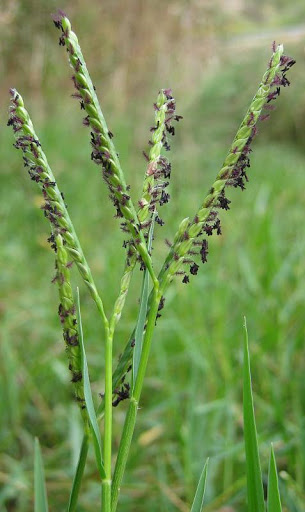
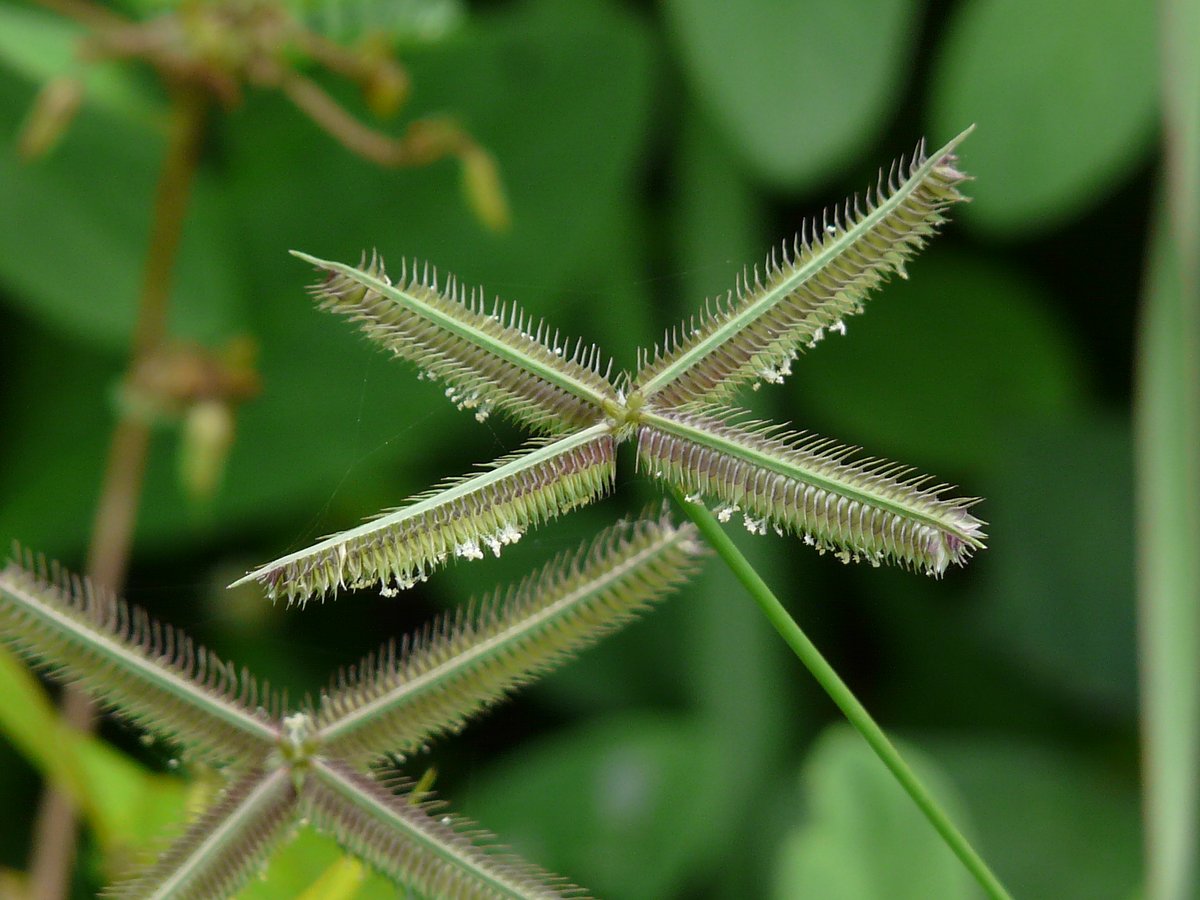
Digitate genera: 1 common (Digitaria), 1 occasional (Cynodon), 3 rare (Eleusine, Chloris & Dactyloctenium). Telling Digitaria from Cynodon is tricky (x20 ideally). Count the scales beneath the fertile floret (glumes + lemmas + paleas). Cynodon = 2 (left); Digitaria = 3 or 4 (R).
Dactyloctenium is easy because it has a bare length of rachis at the finger-tip with no spikelets (illustrated is D. aegypticum). The others have sprikelets right up to the tip.
You tell Eleusine from Chloris very simply by the lemmas: they are awned in Chloris (left) but not in Eleusine (right). Both are big genera, but only Eleusine indica is seen at all frequently in the UK these days (illustrated on next tweet)
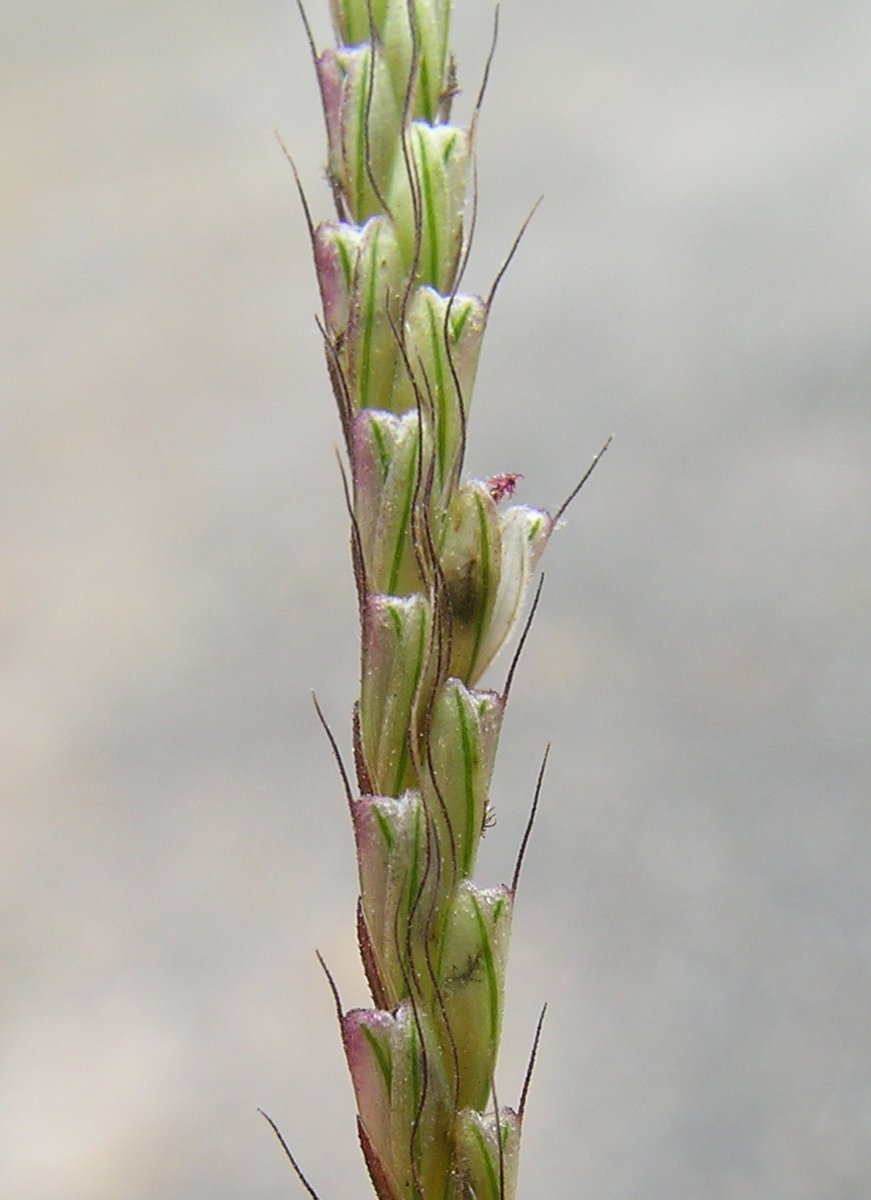
Eleusine indica (left) and Chloris divaricata (right)
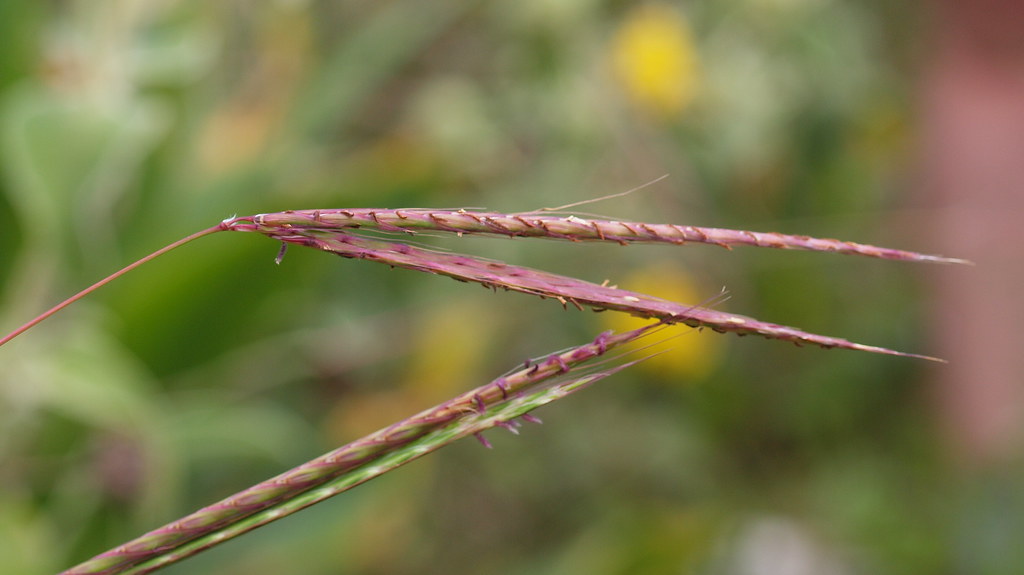
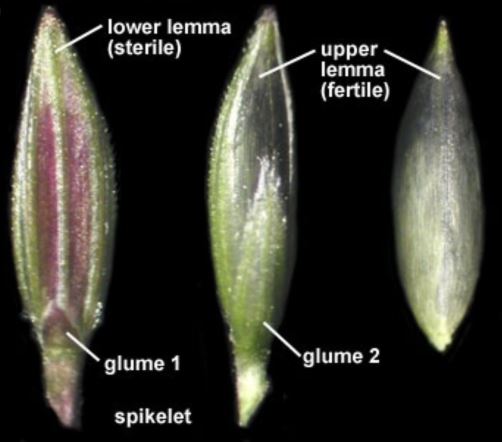
There are 3 genera with semi-digitate inflorescences: 1 common (Miscanthus) and 2 rare (Bothriochloa and Dichanthium). Miscanthus is the easiest because it has spikelets in pairs on pedicels of different lengths (L), each spikelet with 1 bisexual and 1 (lower) infertile floret.
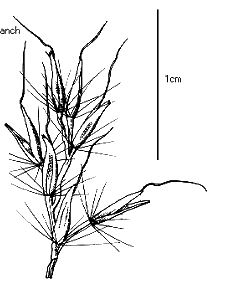
You tell Bothriochloa from Dicanthelium by a comparison of the glumes and the lemmas. Bothriochloa has glumes thicker than the lemmas, Dicanthelium has membranous glumes that are thinner than the lemmas. B. ischaemum (left); D. sericeum (right), both very rare as UK aliens.
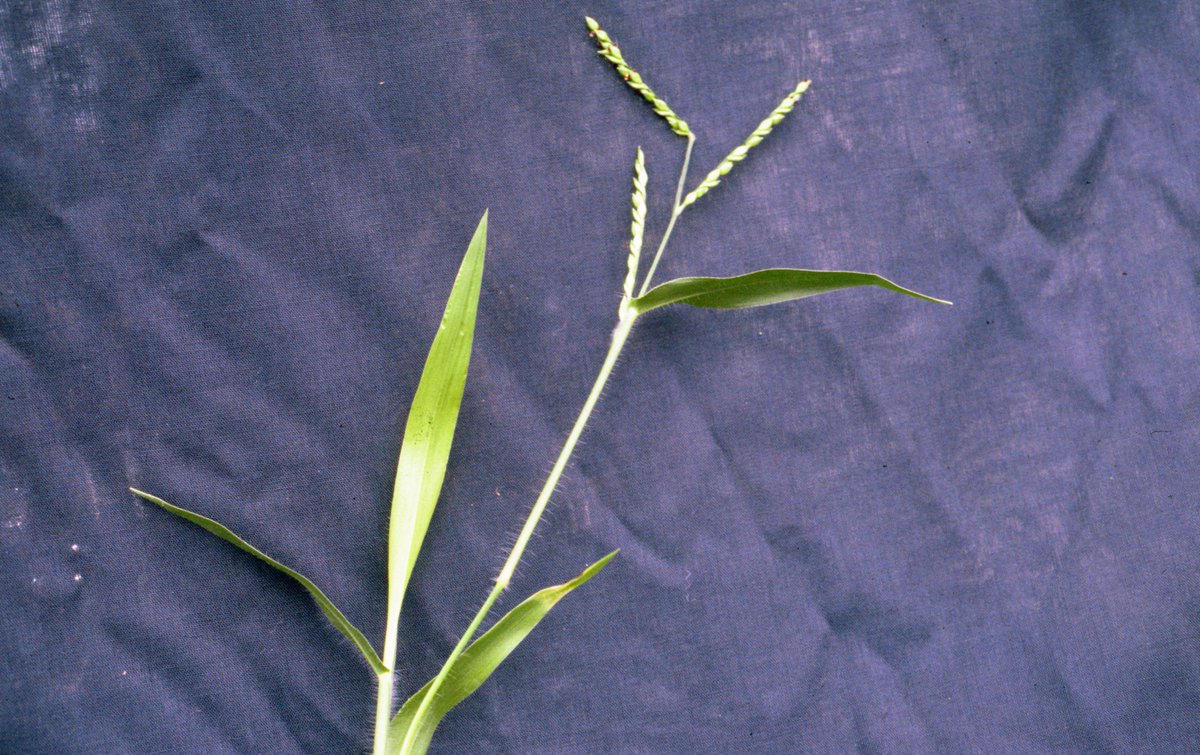
Finally, we have the finger-grasses with spaced, step-like inflorescences. There is 1 common and widespread genus (Echinochloa) and 2 rare genera (Urochloa and Brachiaria). In Echinochloa (left) at least some of the lower lemmas are awned; not so in the other two genera.
Urochloa is told from Brachiaria by the surface of the upper lemma: rugose and verrucose in Urochloa panicoides (left), smooth in Brachiaria platyphylla (right), the only species you are likely to see in Britain.
• • •
Missing some Tweet in this thread? You can try to
force a refresh

Really interesting development in the population dynamics of Ragwort at Silwood. After 4 years of rock-bottom plant numbers (2020, 2021, 2022 and 2023) when the study population looked like this:
there are real signs of a come-back in 2024:
This is what the Ragwort population has done since 1981. You can see the 8 population peaks and the subsequent crashes. Then the 4 years of essentially no plants (and no Cinnabar moths either, of course) between 2020 and 2023. Then this year 3.26 flowering stems per square metre.
This is what Ashurst looks like in a ‘ragwort year’. There are more than 10 flowering individuals per square metre.
This is what Ashurst looks like this year (1 August 2023). There’s not a single ragwort plant in sight.
So what is going on ? Between 1980 and 2019 ragwort numbers fluctuated dramatically but there were no extended periods of very low plant densities (less than 1 m-2). Since 2020 we’ve seen 4 consecutive years with exceptionally low numbers.
Identifying rushes. The three annual species of Section Tenageia can be tricky to tell apart. The common species is Juncus bufonius (left) and the two rarer species are J. foliosus (upper right) and J. ranarius (lower right).
They all have flat or inrolled bifacial (grass-like) leaves on the stem (the basal leaves are typically withered by flowering time). The diffuse panicle is interspersed with leaf-like bracts and each flower has 2 small bracteoles.
Juncus foliosus is the easiest to identify: its leaves are more than 1.5mm wide (left) and the seeds have longitudinal ridges (x20, right A).
Identifying rushes. The reason why our 31 Juncus spp. are so tricky to identify is that the genus is so complicated botanically. It’s worth starting by looking at each of the 10 Sections that are represented in UK, just so that you can see the issues involved.
Identifying grasses. It’s obviously a Brome, but which Brome is it ? First, we need to identify the genus (i.e. is it Bromus, or Bromopsis, or Anisantha or Ceratochloa ?). This is the lower half of Key H on p. 1033.
#6 Are the lemmas strongly keeled on the back (left) or not (right). Definitely not keeled, so on to #7
#7 Always a tricky one. Annual or perennial? Look at the roots and check for the absence of rhizomes. See if there are any non-flowering shoots. No rhizomes and no sterile shoots, so annual is the best bet. On to #10.
Seaside Grass Quiz. This is arranged by habitat (sand-dune, dune slack, rocks & shingle, cliff and tidal mud-flat) then by plant size within habitat (big, medium, small). Answers tomorrow.