This is an illustrated key to the species within the genus Pinus that you'll see on walks around town or rural rambles in the British Isles. There are more than 120 species world-wide of which 60 or so are commonly grown in UK collections, so this key is necessarily selective. 
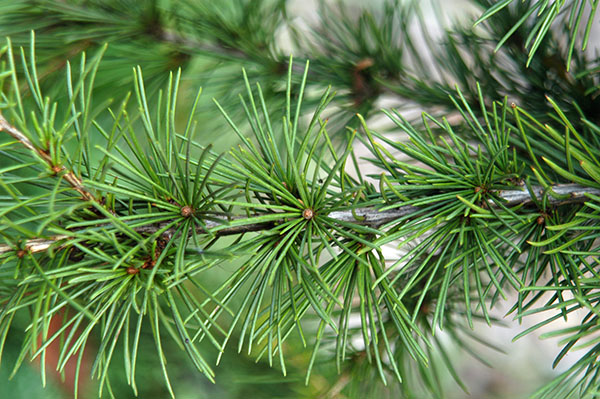
We begin with the things you need to do before you start looking for a name. First and most important, count the number of needles per bundle. Sod’s Law will be at work here, so it is a good idea to count several fascicles, ideally from different branches.
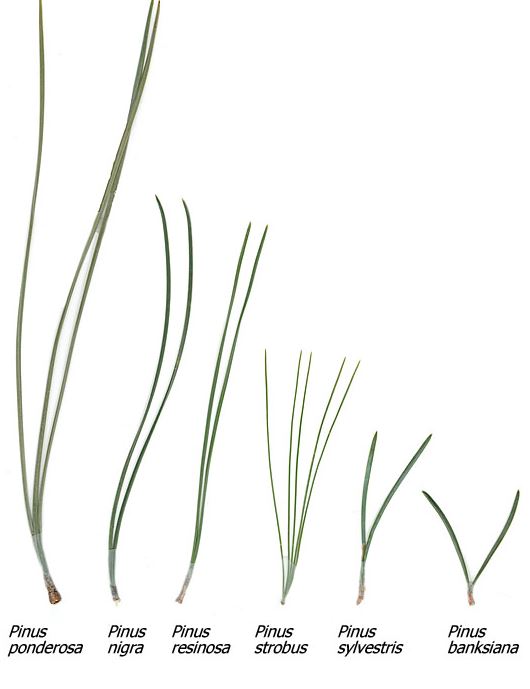
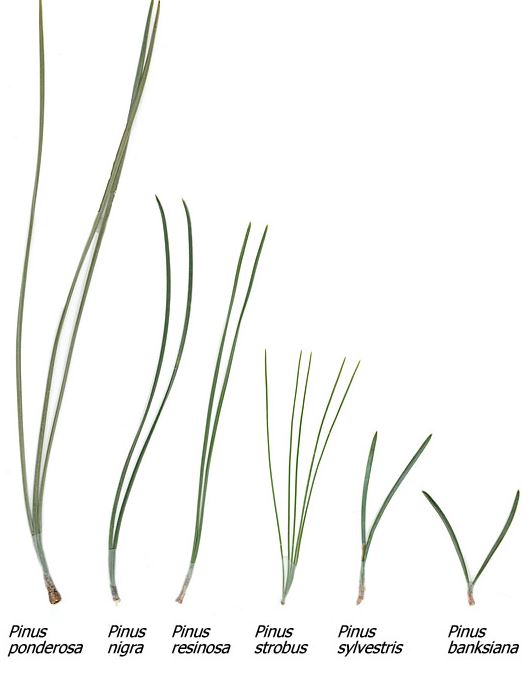
Two needles per fascicle is the common syndrome (right), and 3 the rarest. The species with 5 needles per fascicle (left) look most elegant because the individual needles are narrower
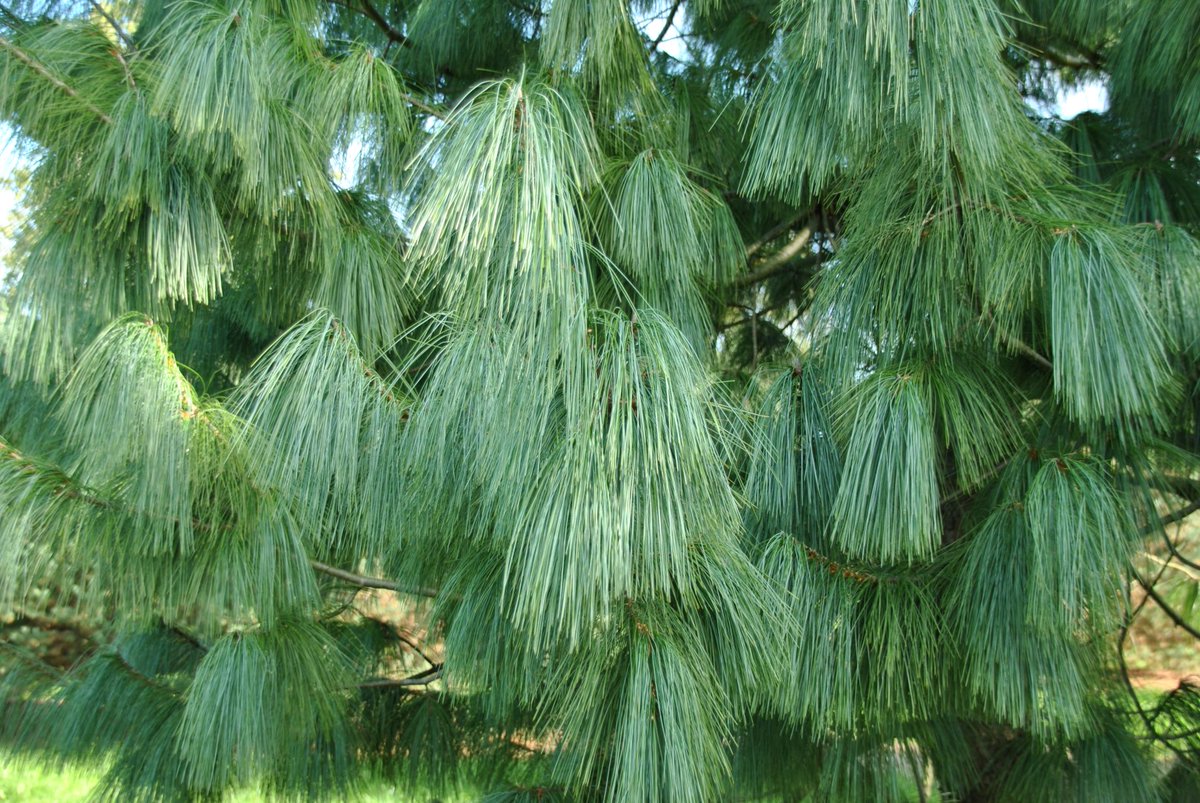
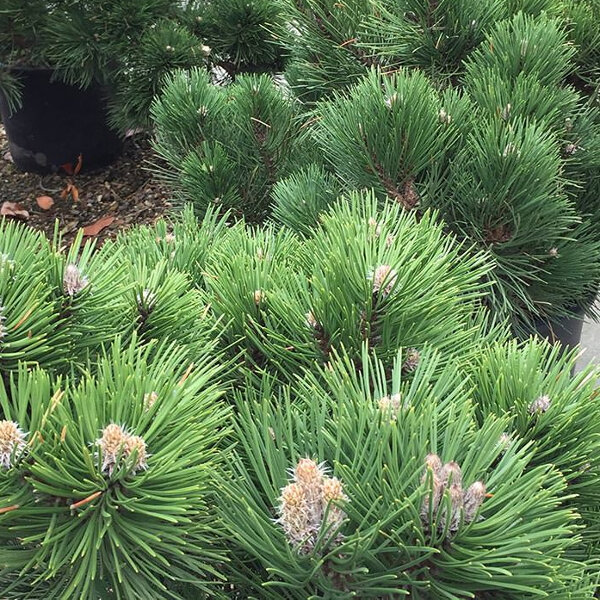
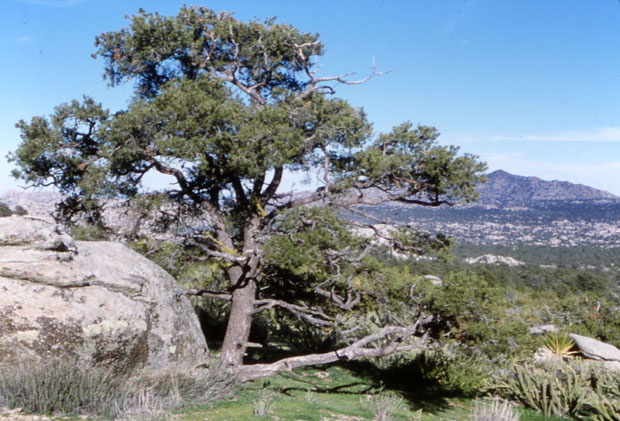
There is one species with just a single needle in each fascicle, the appropriately-named Pinus monophylla. It grows in arid mountains in the Southern Rockies, and there are three geographically separated subspecies across Utah, Nevada, California and Arizona.
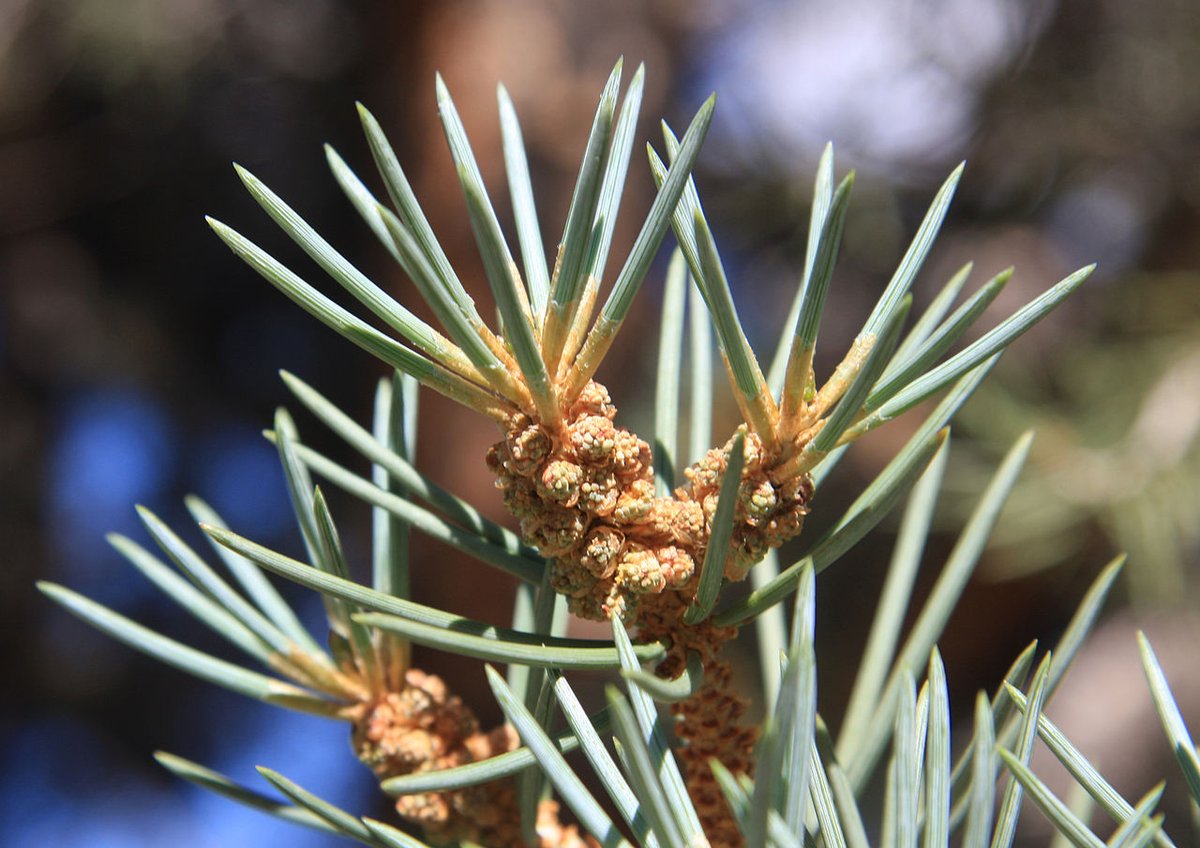
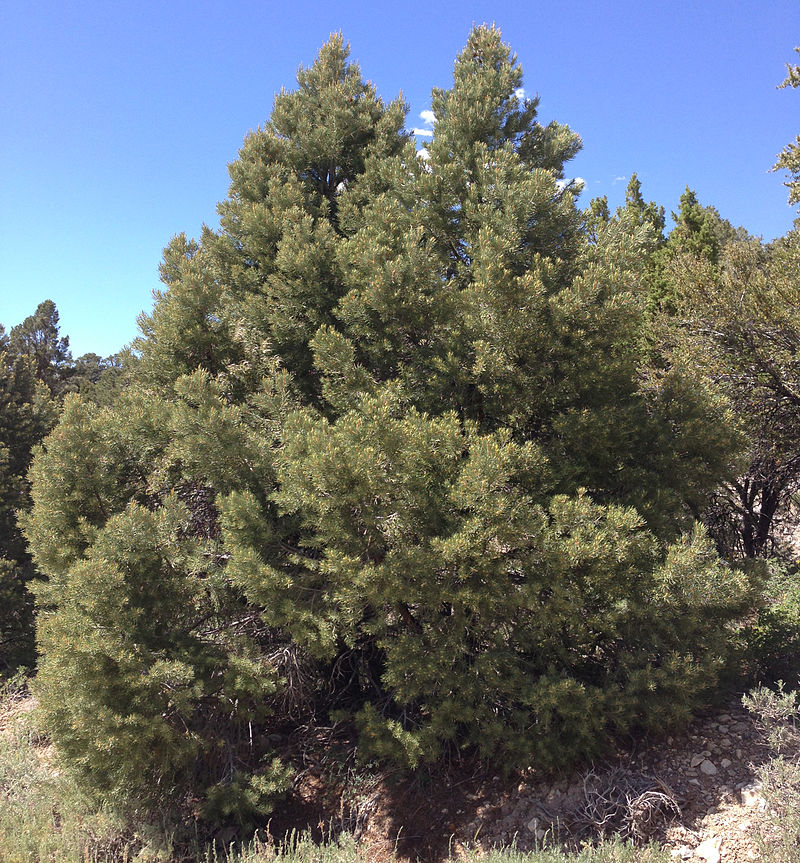
Obsessives will need to find and grow each of them: Pinus monophylla subsp. monophylla, subsp. californiarum and subsp. fallax Good luck with that.
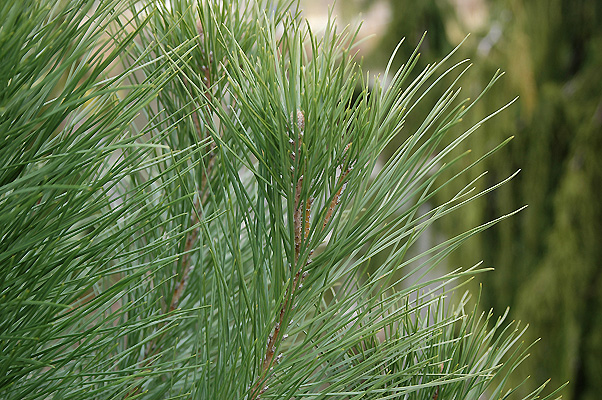
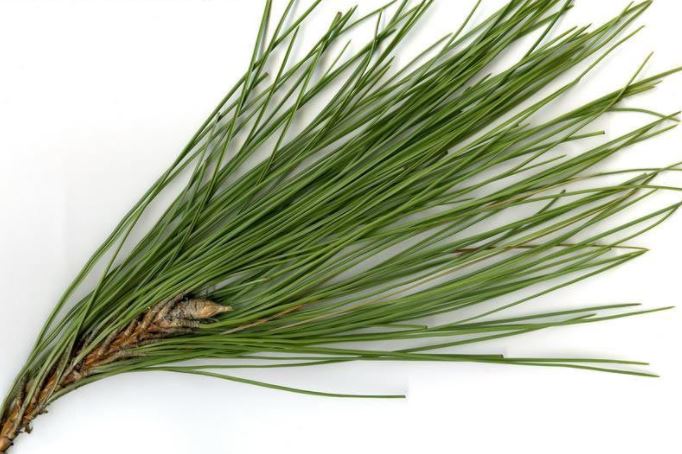
Next, measure needle length (to the neared cm) and if you have the kit to do it (micro-ruler and microscope), measure needle width (to the nearest 0.1mm). Needle width is particularly helpful in distinguishing difficult 2-needle species.
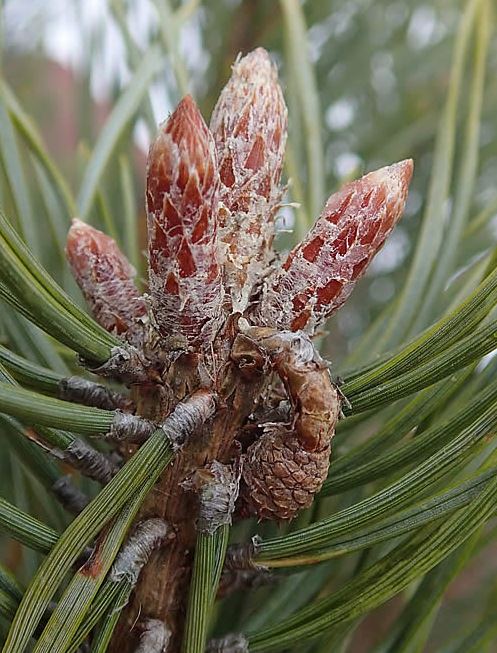
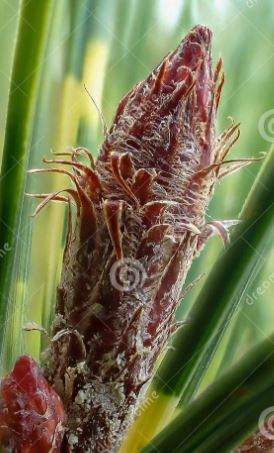
Important details to note about the size and structure of the vegetative bud at the very tip of the shoot: measure the length ,and note the tips of the bud scales (are they closely appressed to the bud (L), are they buried in resin, or are they free and bent outwards (R))?
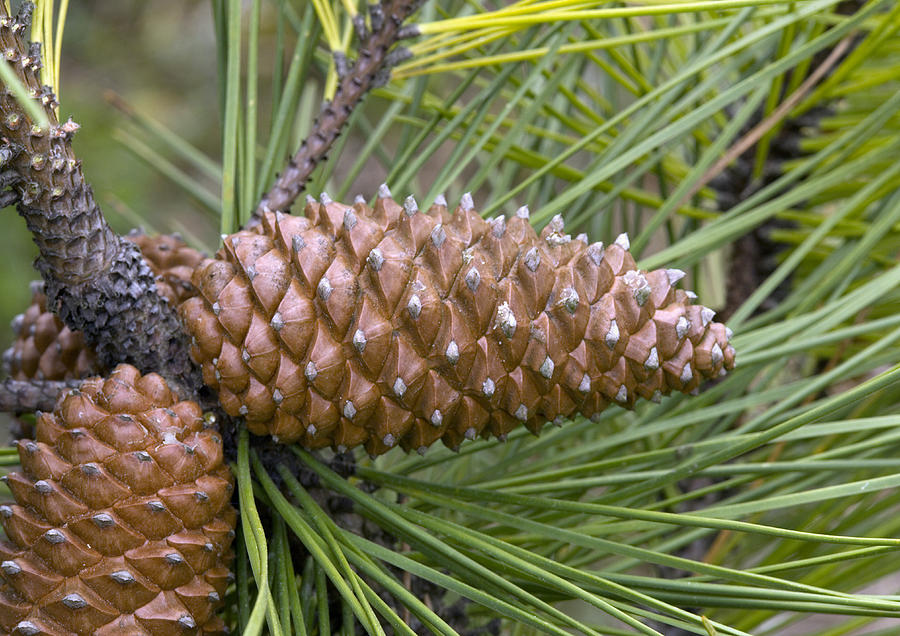
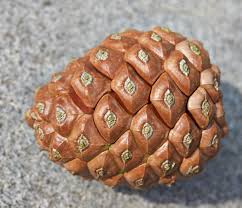
Now get a cone. If you can’t reach any from the tree, look for older ones on the ground (but bear in mind that fallen cones might come from a different species). Measure cone length and width: many species have conical cones (left) but others are more barrel-shaped (right).
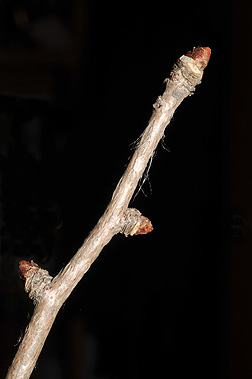
Finally, use your x10 to investigate the colour and hairiness of the young shoot: brown and hairless (left) or orange and hairy (right) ?
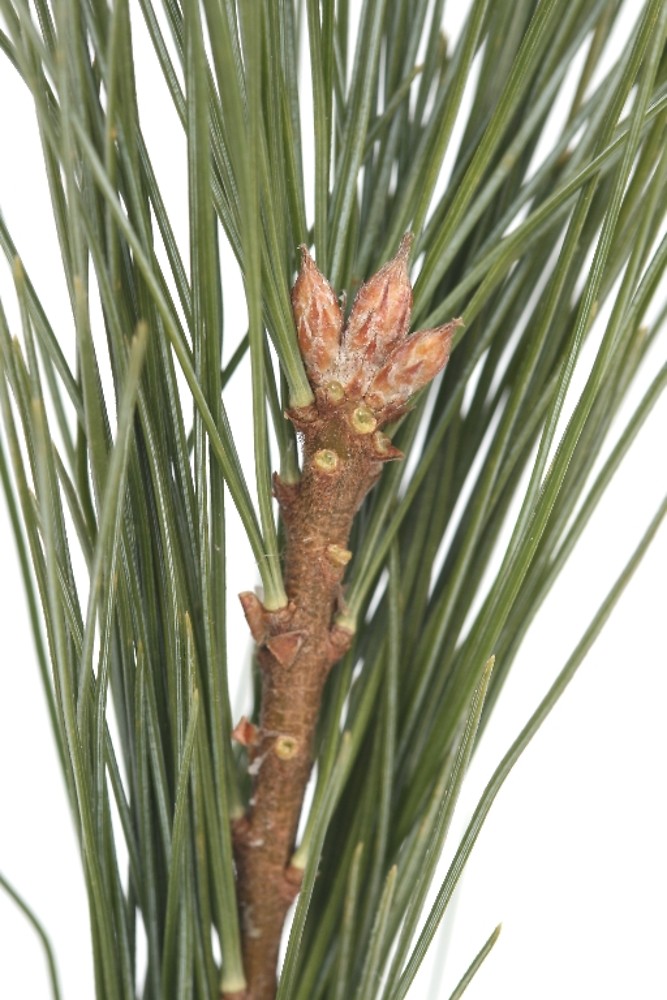
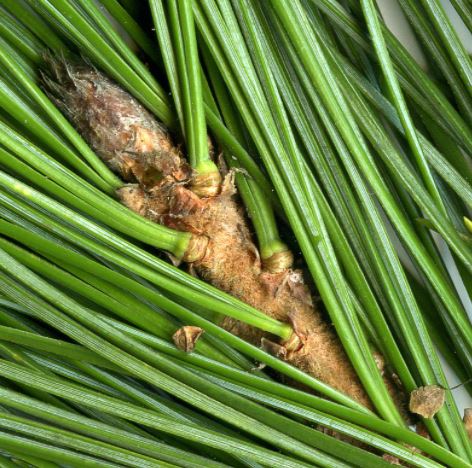
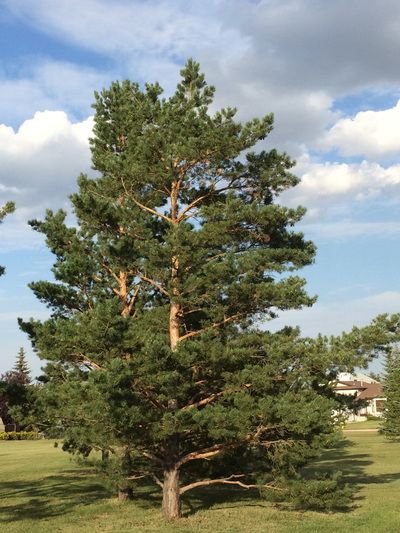
Now you are ready to start. The main thing to bear in mind is that there are very few pine species to be seen in a randomly selected part of Britain. The only pine that you are virtually guaranteed to find, wherever you live in the British Isles is Pinus sylvestris.
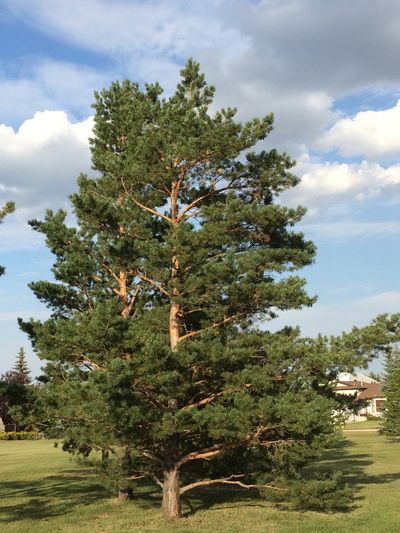
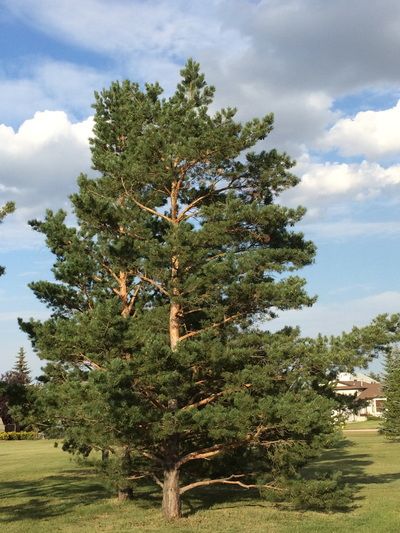
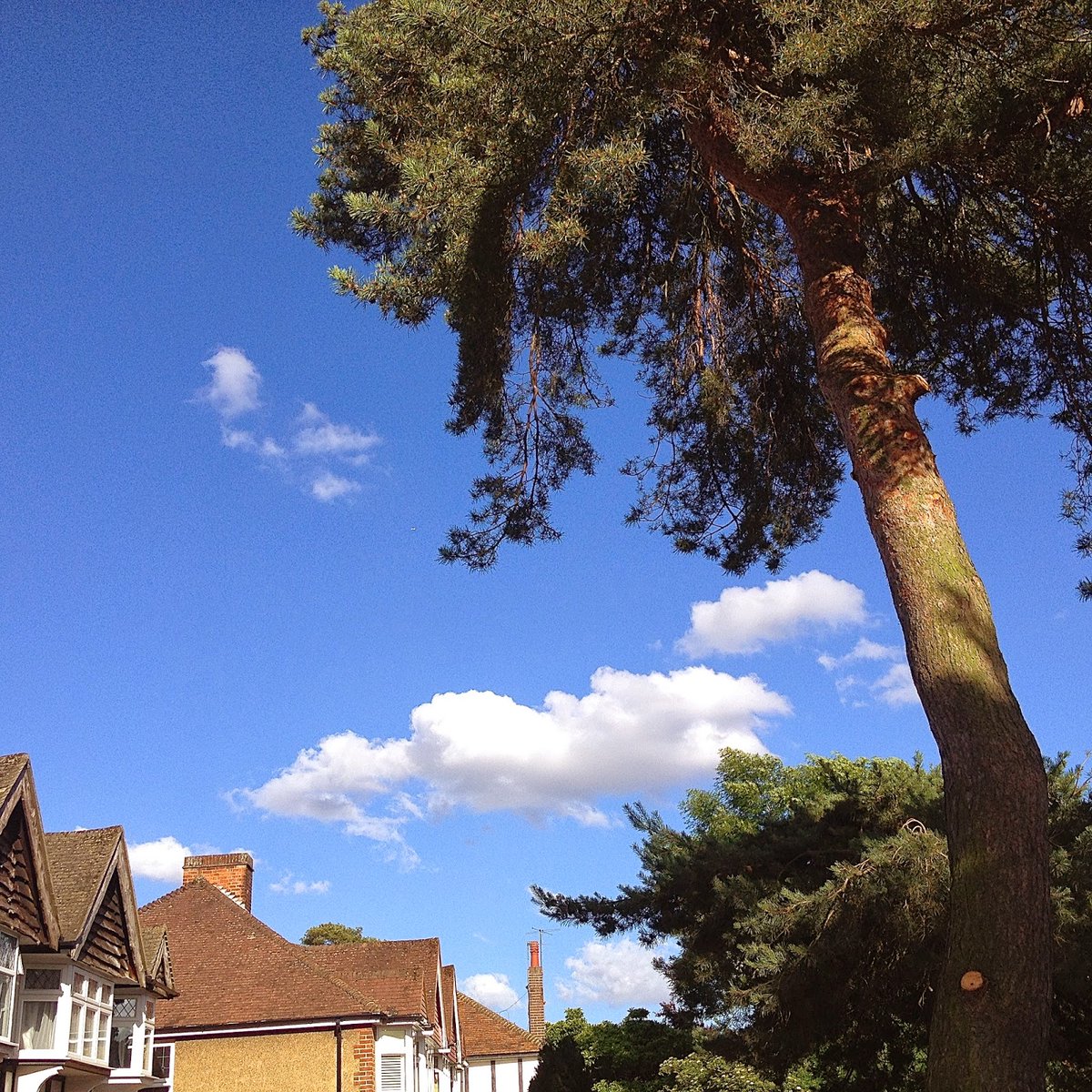
It has blue-green needles (3-7cm) in bundles of 2, and very distinctive salmon-pink bark on the upper branches of mature trees. This means that you can identify it from a very long way away, without getting out of the car.
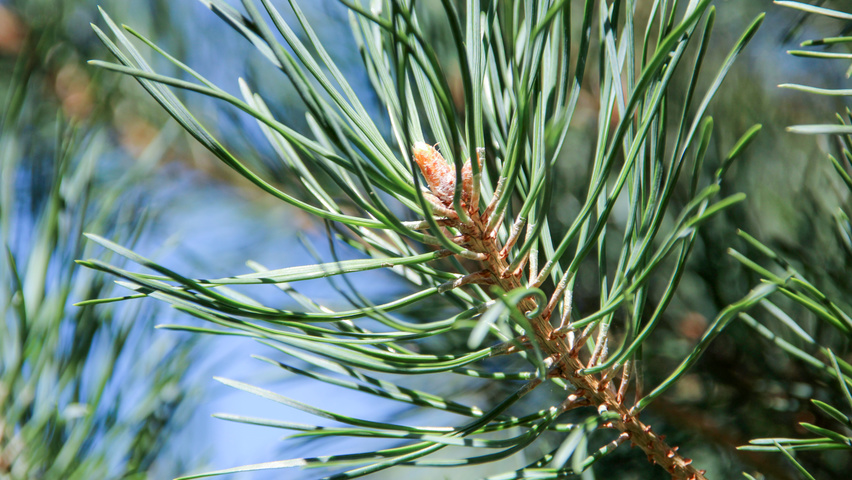
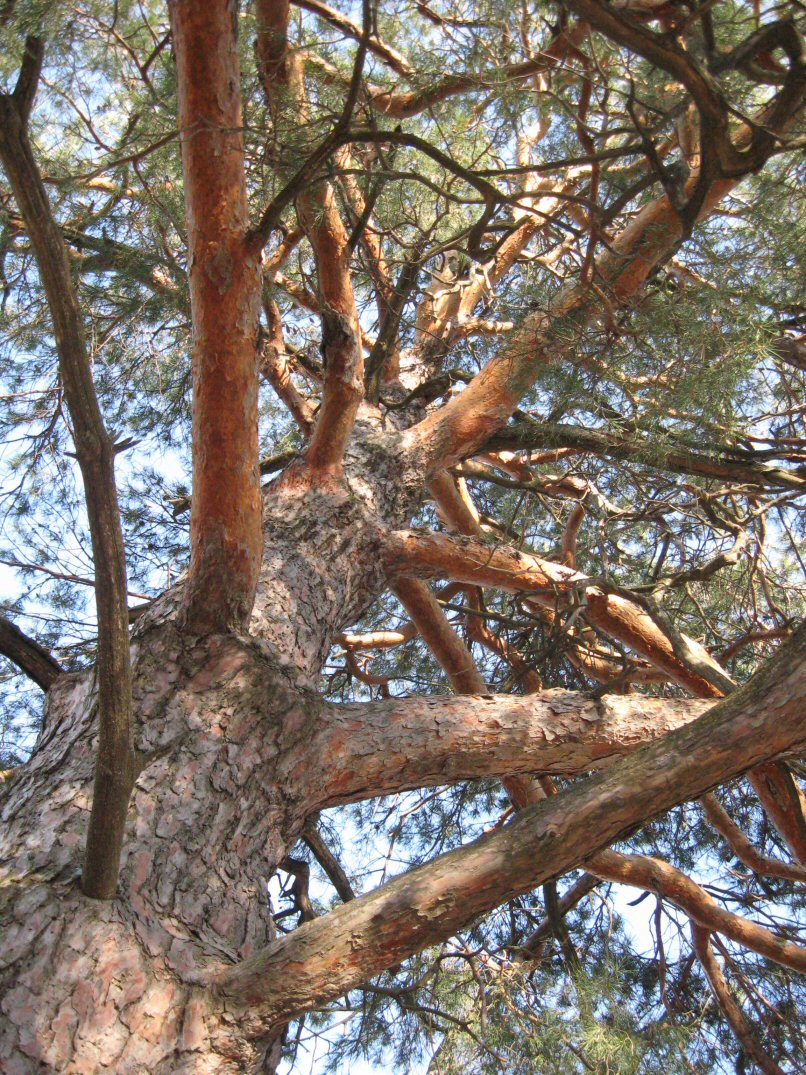
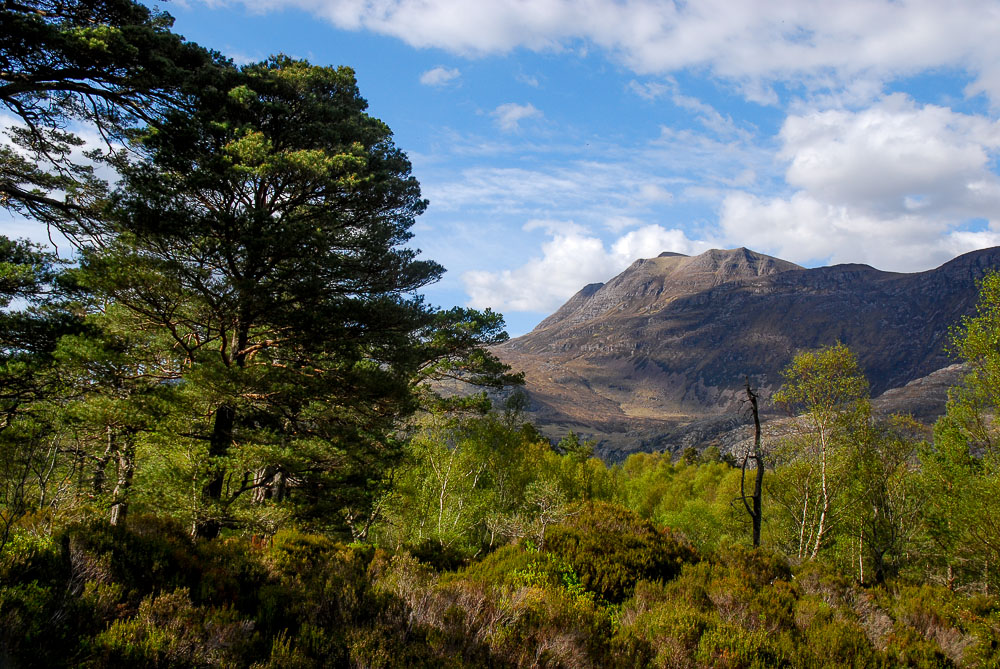
Pinus sylvestris is the native dominant of Caledonian Forest in north-central Scotland. If you haven't been to see this, you've missed one of the great natural history sights of Britain. I recommend Letterewe and Loch Maree as an introduction.
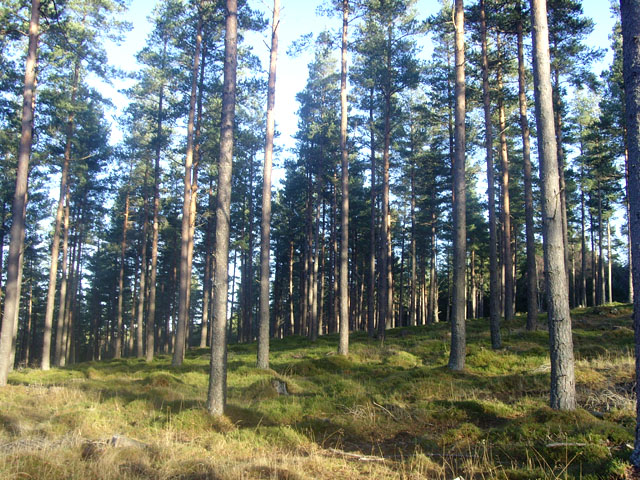
Pinus sylvestris is a very common plantation crop on acid sandy soils in southern England. Often heavily invaded by Rhododendron and Gaultheria.
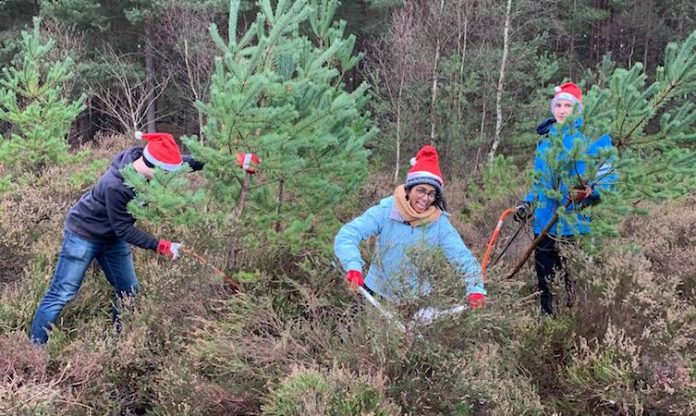
Pinus sylvestris is highly invasive and a serious pest of nature reserves on lowland heaths on acid sandy soils in England. Many hours of conservation-volunteer time are taking up in removing it (though not always wearing Santa hats)
Finally, it’s the commonest pine you’ll see in suburbia and in parks and cemeteries in town.
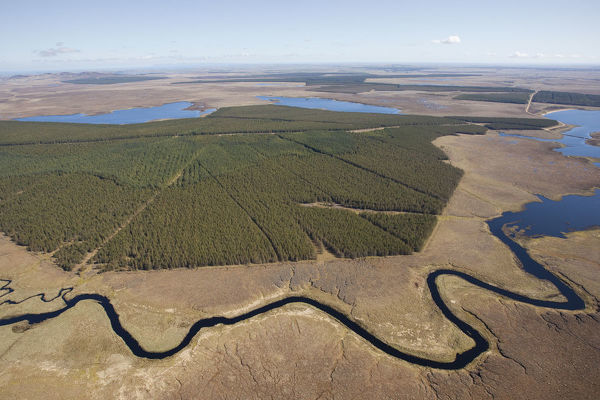
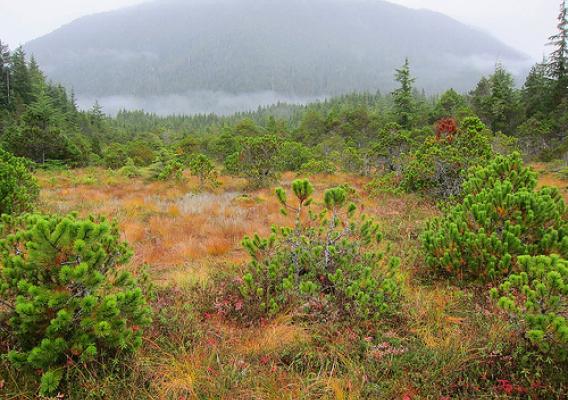
The next most common pine depends what country you are in. In Scotland it is Pinus contorta subsp. latifolia which as planted over large areas of the Flow country in Caithness and Sutherland.
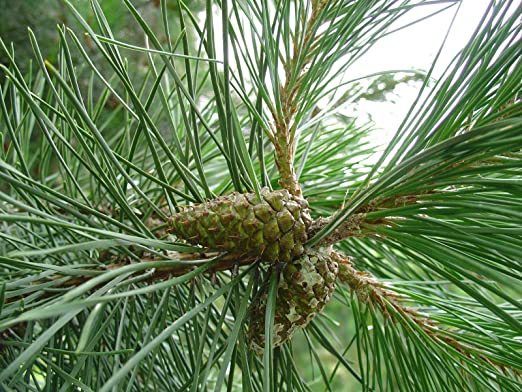
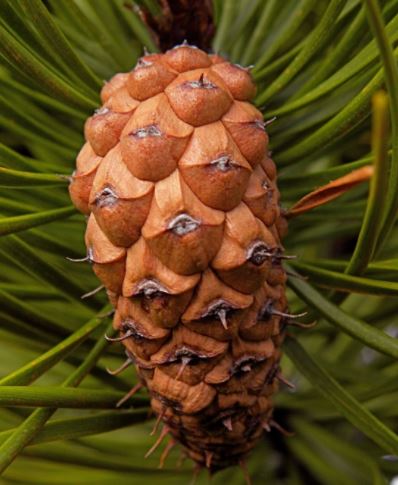
Like Scots Pine it has 2 needles per fascicle (6-8.5cm), but the leaves are bright grass green (not blue green). The key feature is that the cone scales have a long sharp spine (best seen at x10).
This planting was a protracted saga of poor genotype selection. The trees turned out to be highly prone to windthrow and susceptible to red band needle blight (Dothistroma septosporum).
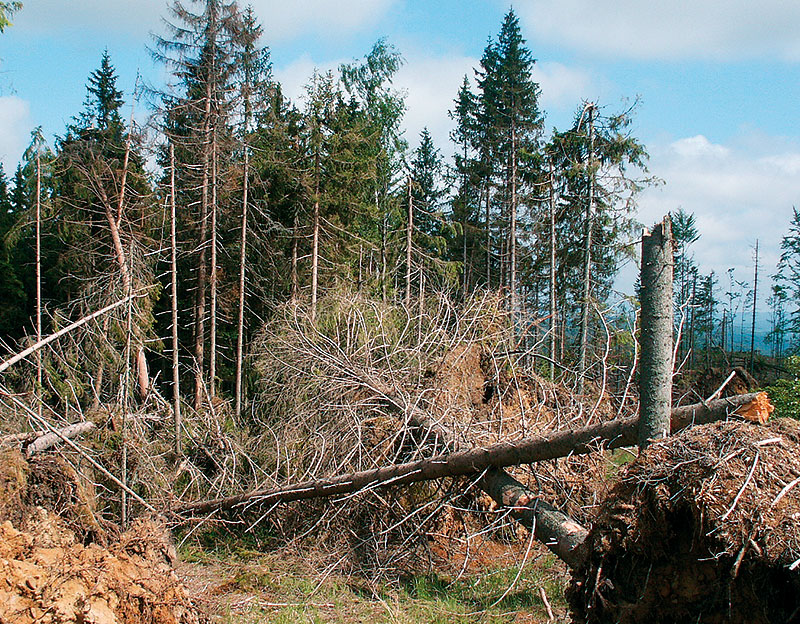
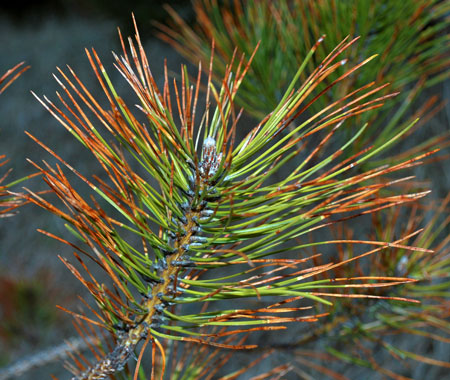
To add insult to injury Pinus contorta is now invading native wet heath communities by seeding from the plantations. Unless the authorities act quickly to remove this first generation, things will be an order of magnitude more serious once the self-sown trees get to seeding age
In England, the second most common pine is Pinus nigra, planted for ornament, as windbreaks and on dry sandy soils, in commercial plantations. It is easy to tell from Scots Pine (left) by its dark green (not blue) needles and dark grey branches (right).
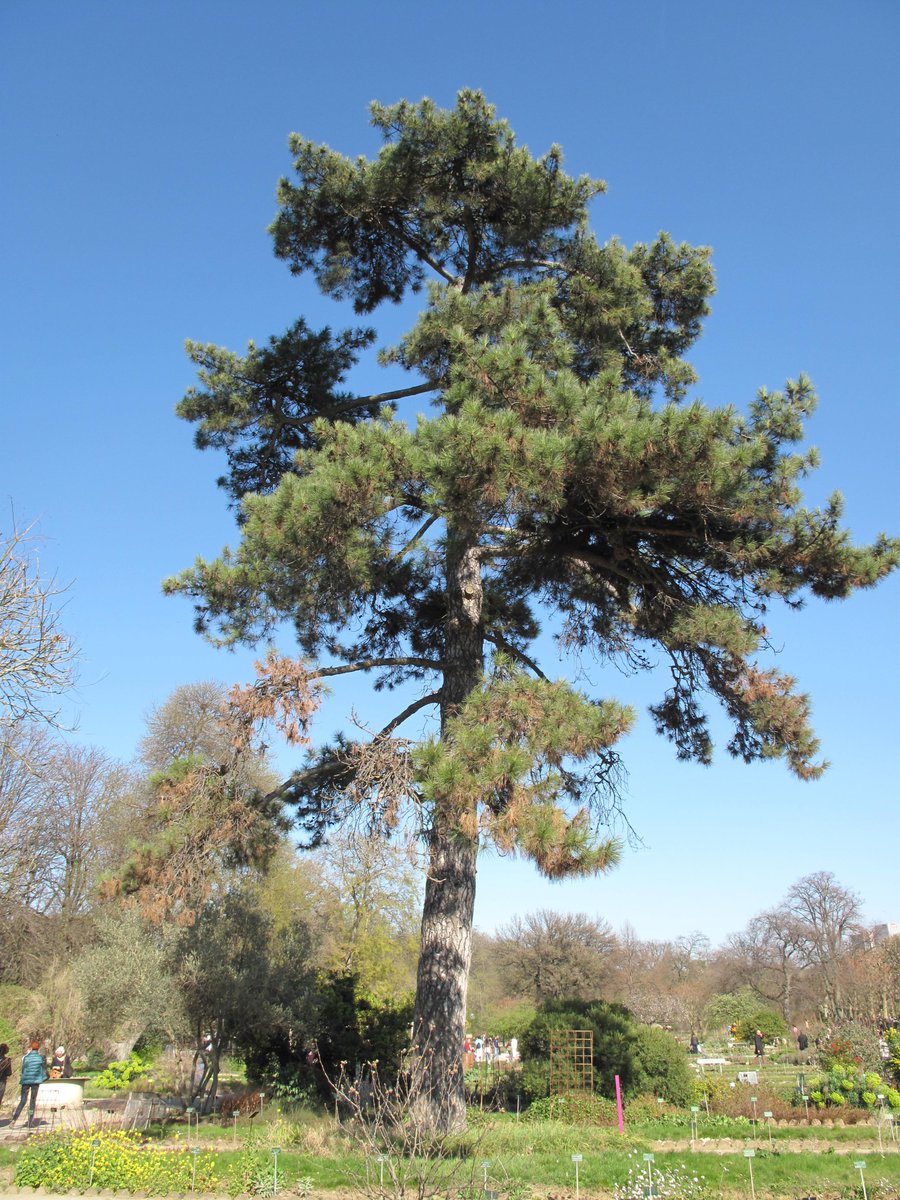
The taxonomy of Pinus nigra has turned out to be complicated because of evolution in multiple, geographically isolated refugia. The two kinds that are commonest in Britain are from Austria (subsp. nigra, left) and Corsica (subsp. laricio, right)
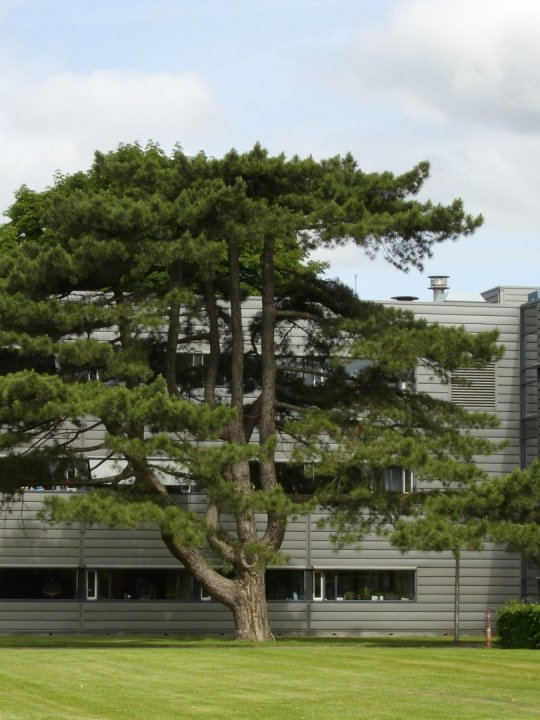
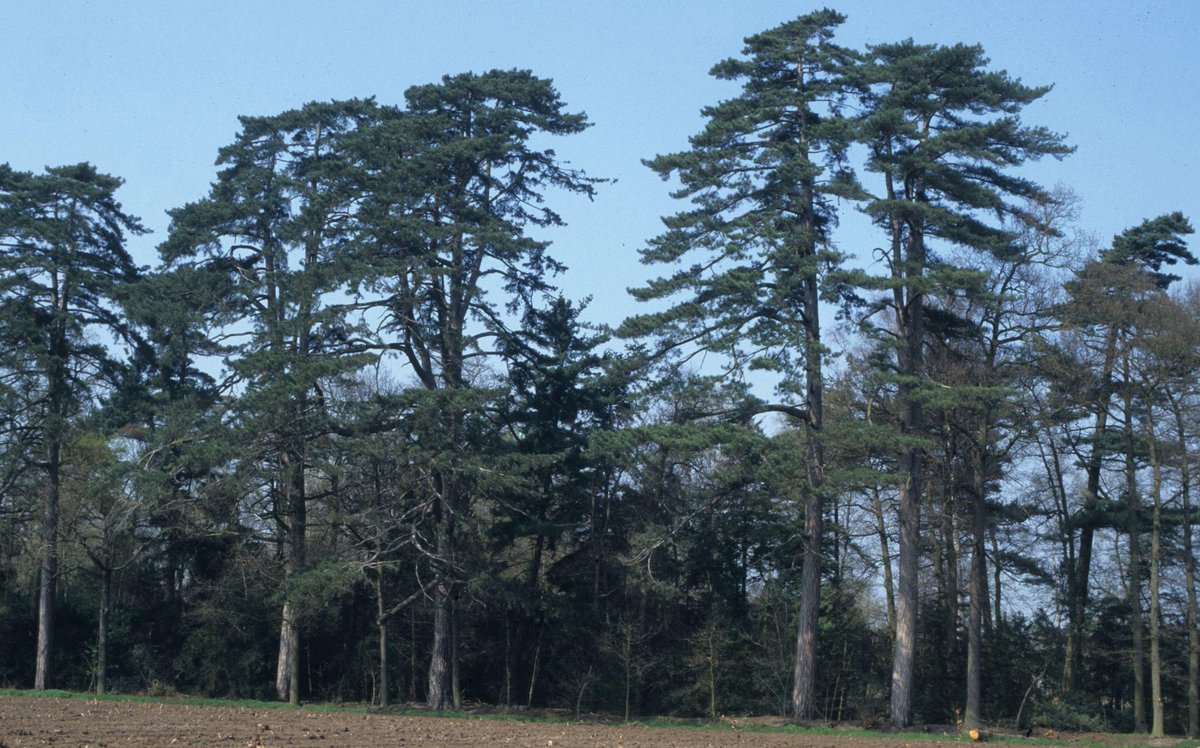
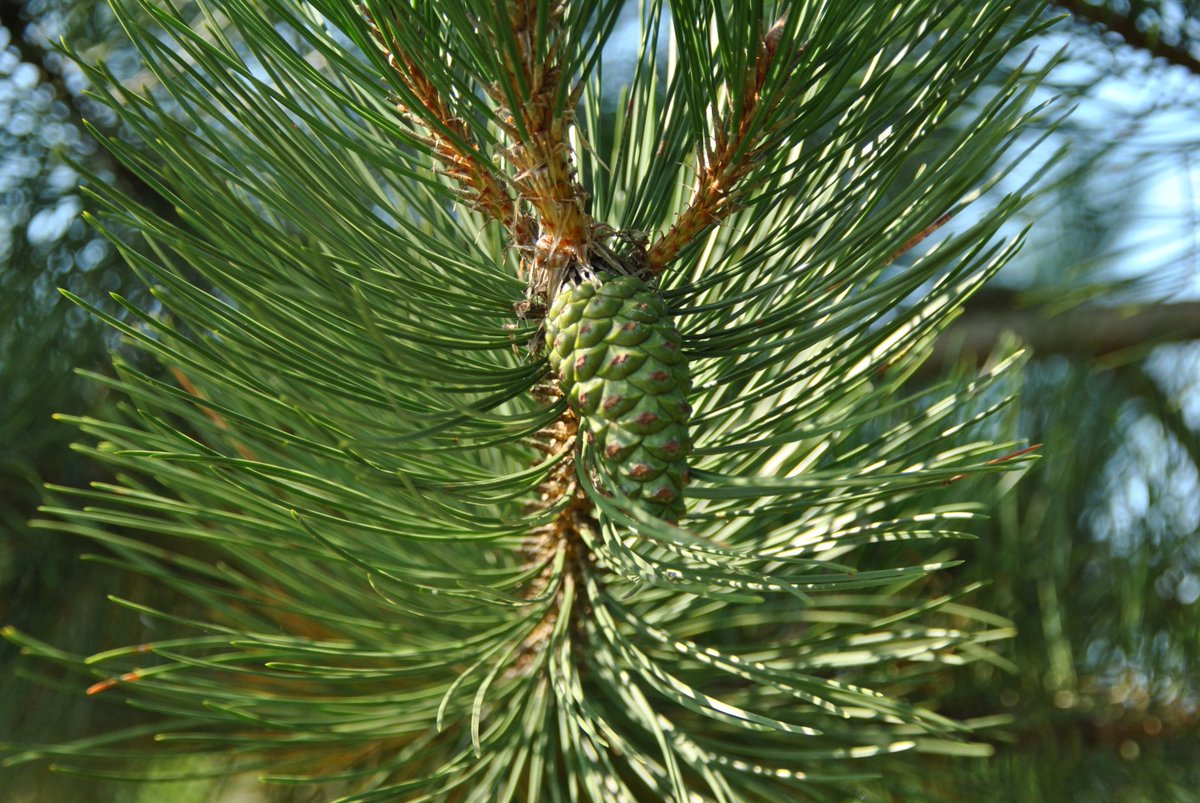
Needle length, width and flexibility are the things to note: subsp. nigra (left) are short (8-12cm), wide and brittle, with brown buds, abruptly pointed; subsp. laricio long (10-18cm), slender and flexible with white resin-covered buds.
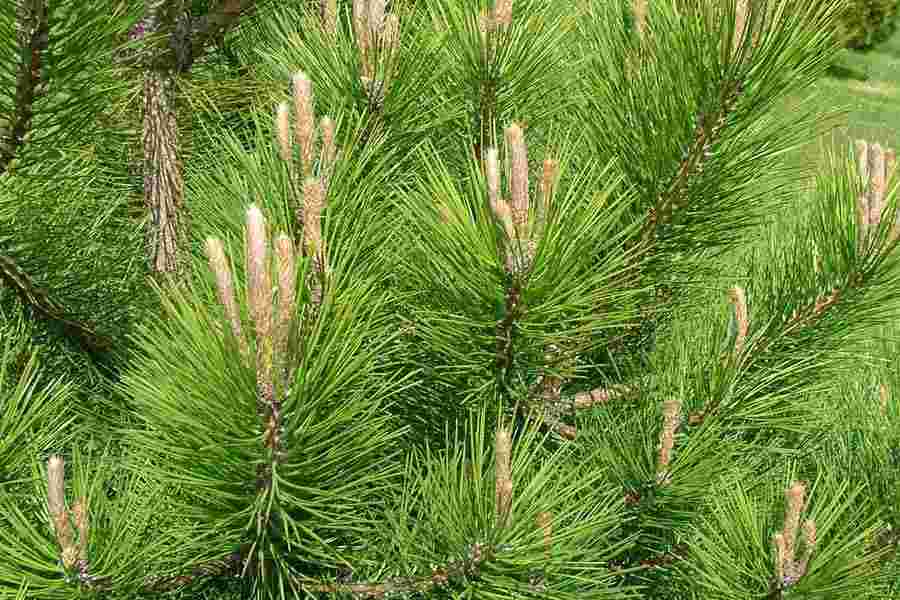
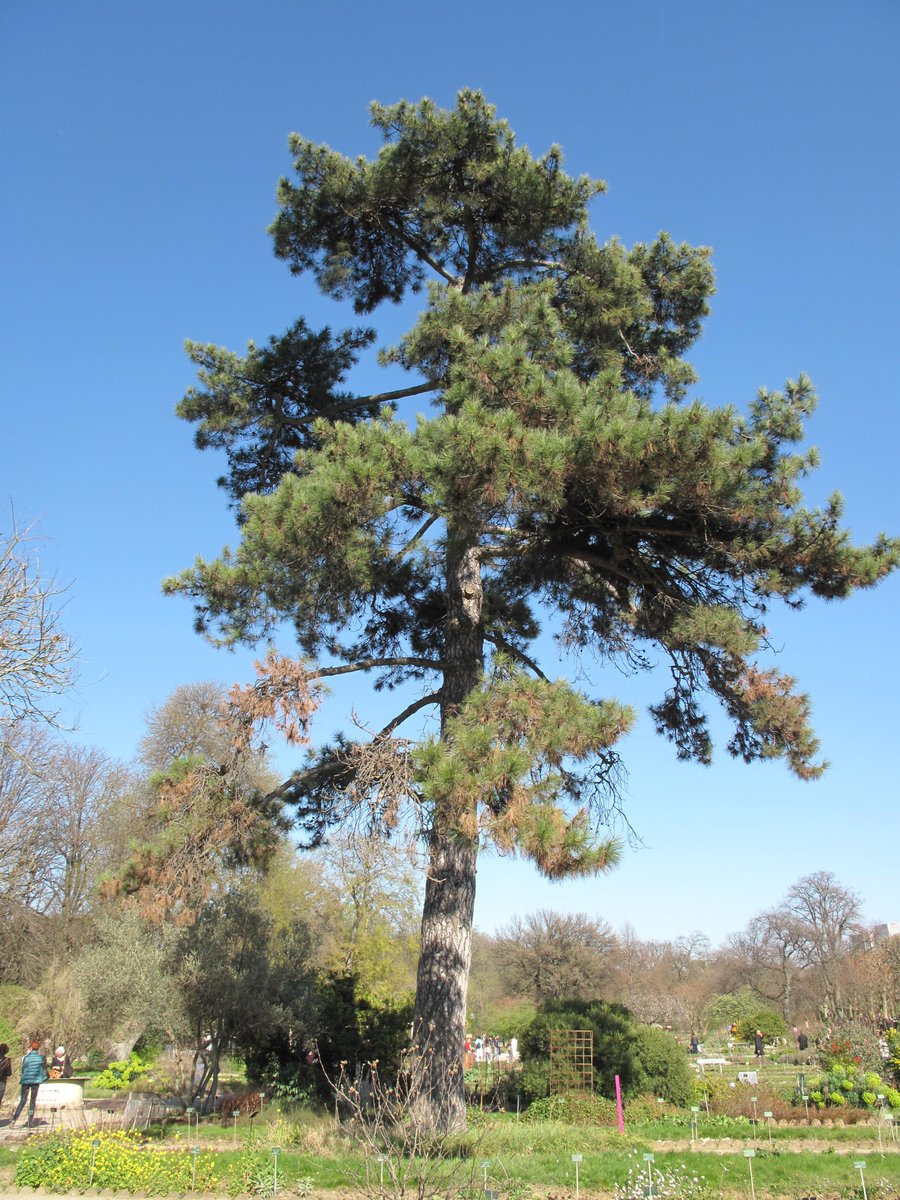
No other 2-needled pine species are as frequently seen in UK as Pinus sylvestris and P. nigra. A plant which is much grown for ornament in gardens, and quite commonly as a street tree in London is Stone Pine, P. pinea. It reminds people of romantic holidays in Rome, I suspect.
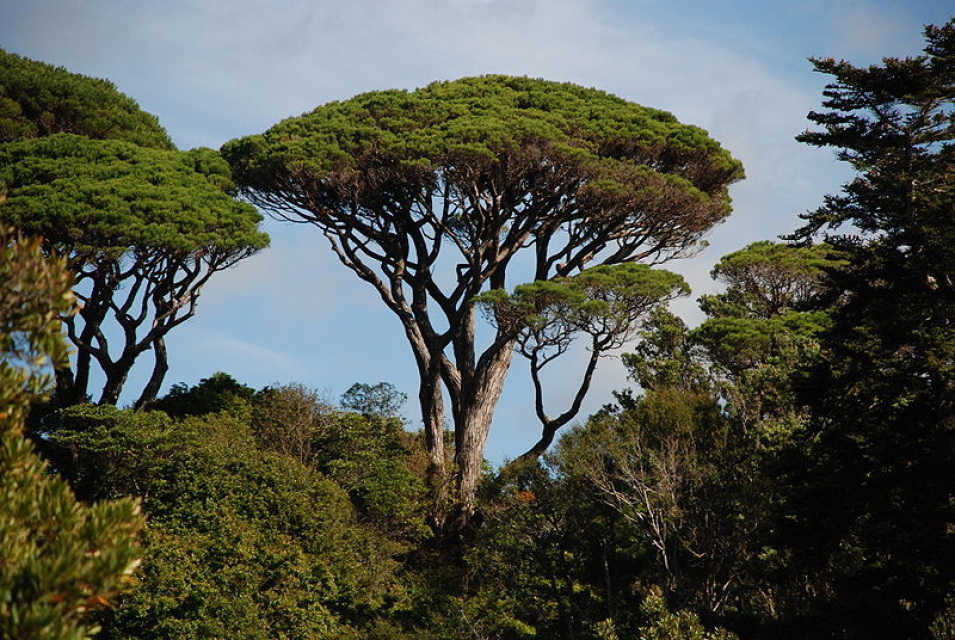
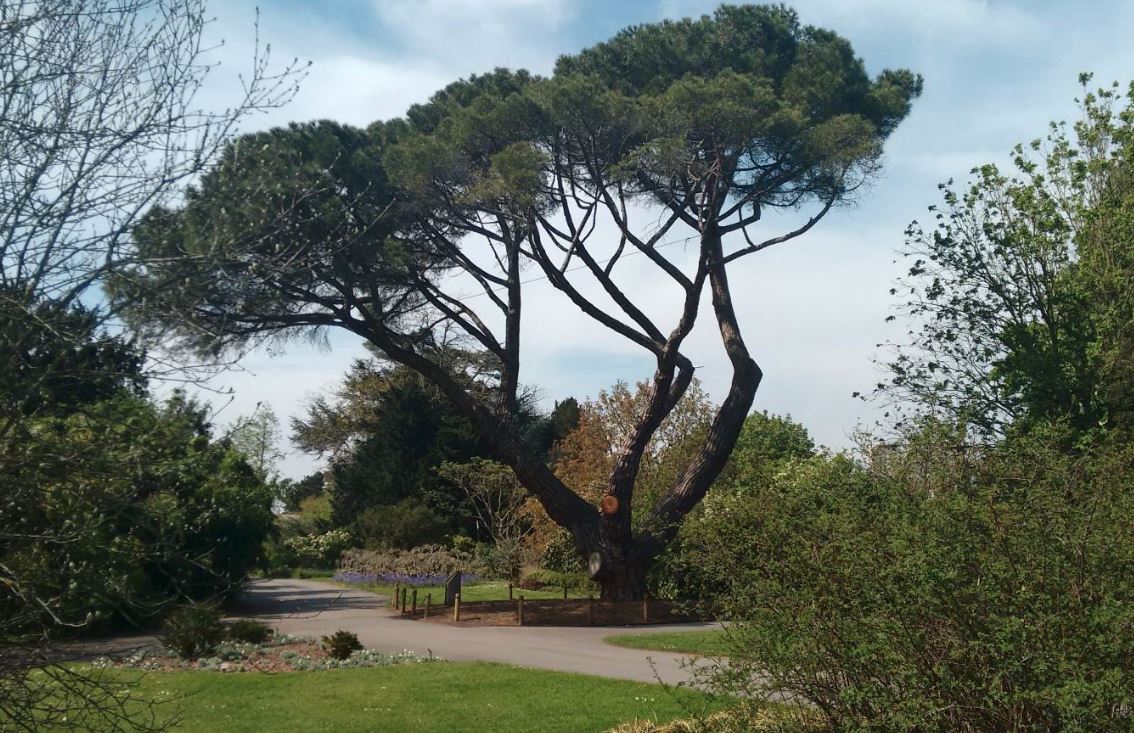
Pinus pinea needles stout and stiff, 10-15cm long (L). Bud scales with strongly decurved tips (not tightly pressed to the bud or enclosed in resin). The cone is big and fat (10x10cm) which distinguishes it from P. pinaster which has conic cones that are twice as long as wide (R)
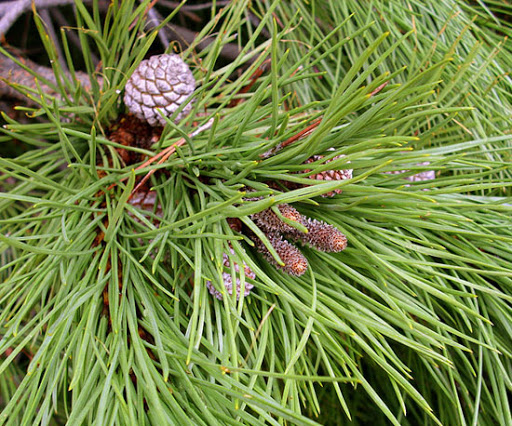
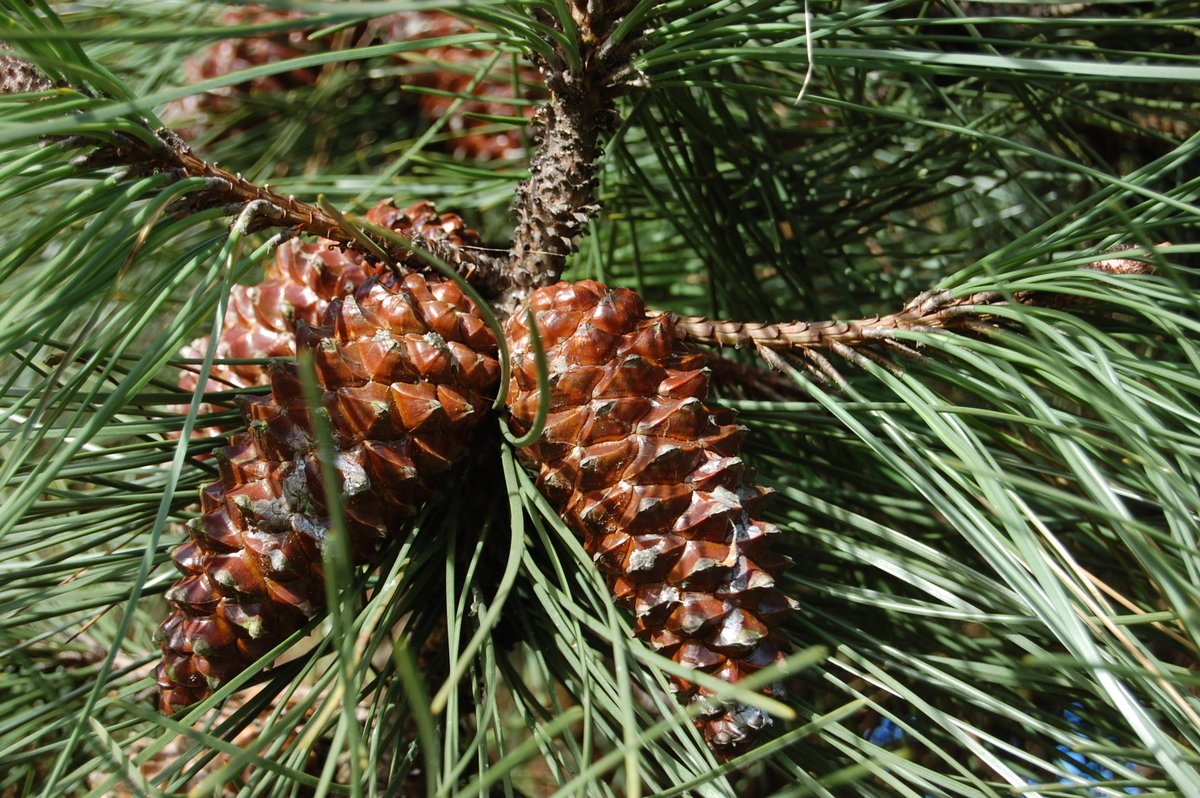
Of the rarer 2-needled species, you might find Pinus mugo or P. muricata. The former is most often seed as the dwarf cultivar 'Mops' growing in rock gardens. It is small in all its parts: needs < 8cm, female cones < 5cm.
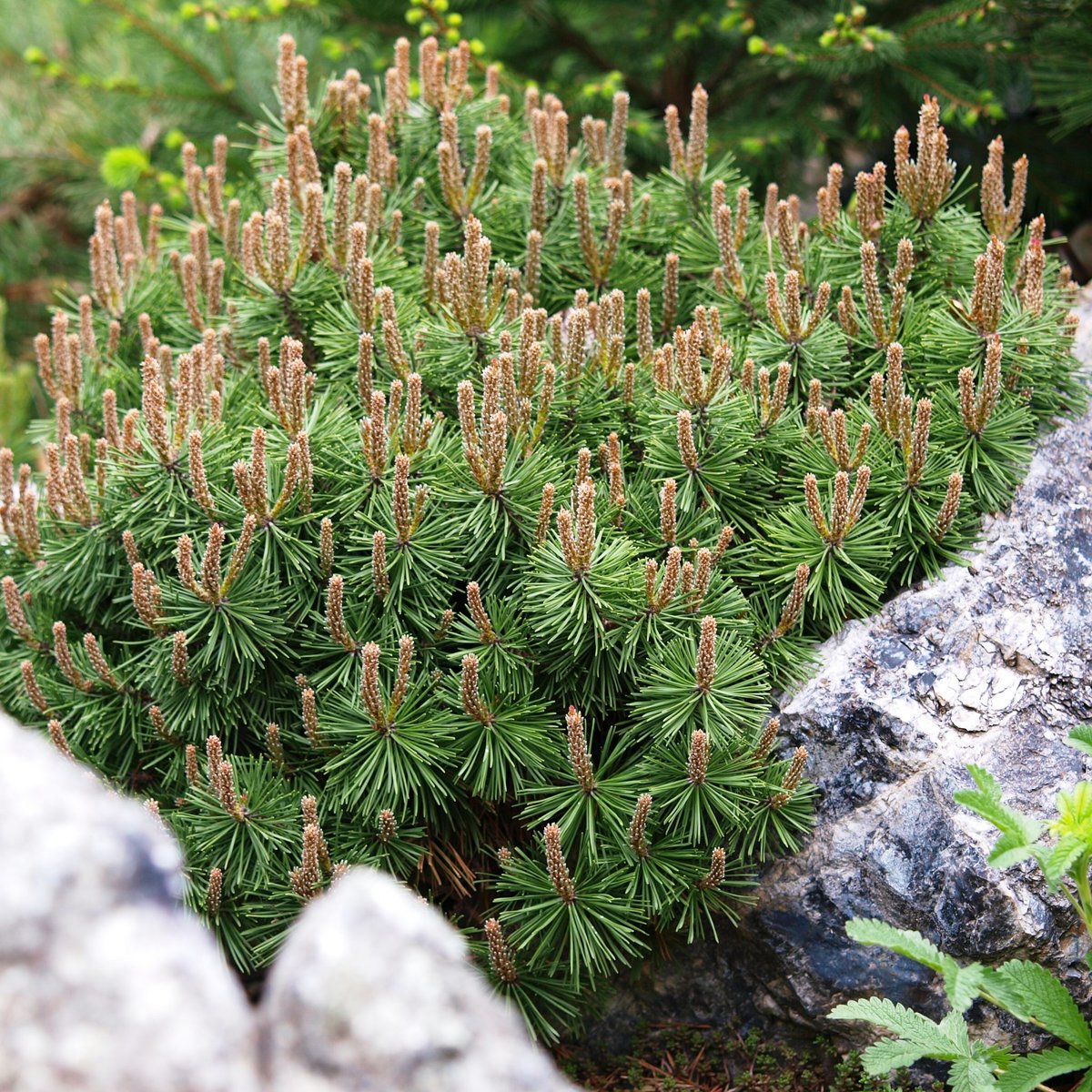
Pinus muricata is famous for having the most abundant and longest-held serotinous (fire-adapted) cones on its trunk and branches which last for up to 70 years. It is called Bishop Pine because it was discovered by Coulter in 1832 at San Luis Obispo in California.
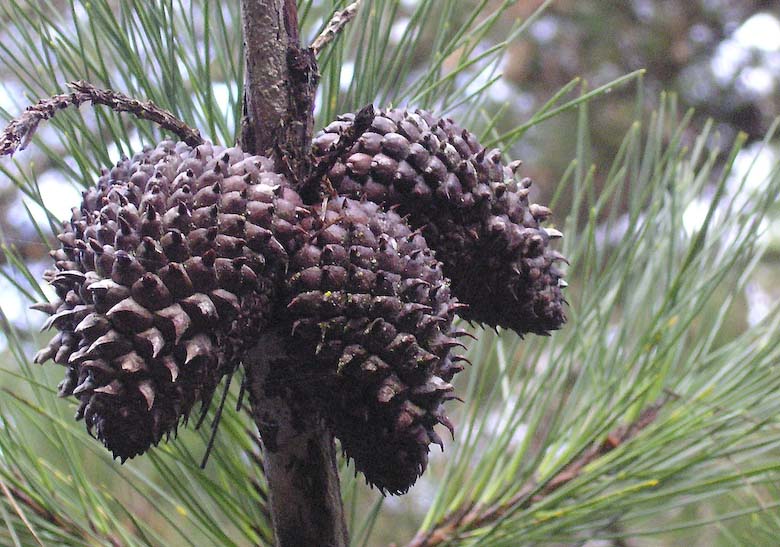
There are very few 3-needled pine species in Britain, but Monterey Pine, Pinus radiata, is one of our finest gymnosperms. It has delicate, grass green needles in a dense canopy that makes a superb windbreak, and is one of the very best free-standing specimen conifers in parkland
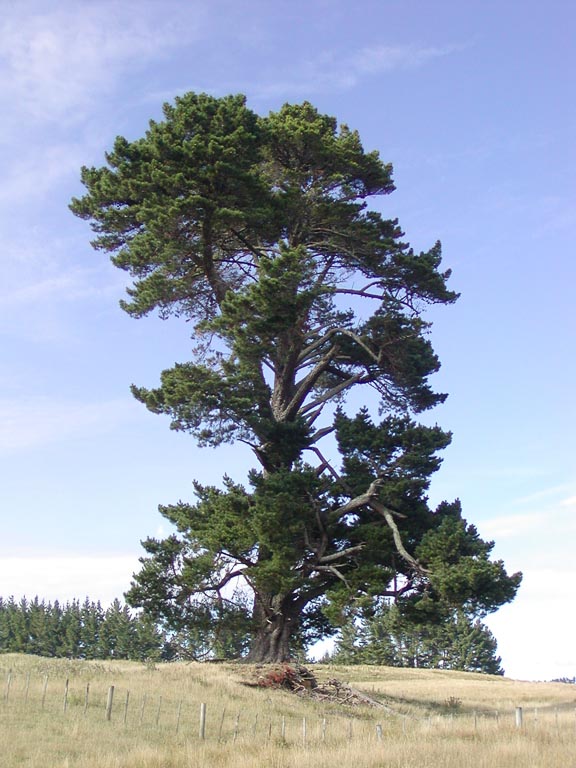
This is interesting because as a native on the Monterey Peninsula in California it is typically a gnarled and rather moth-eaten specimen
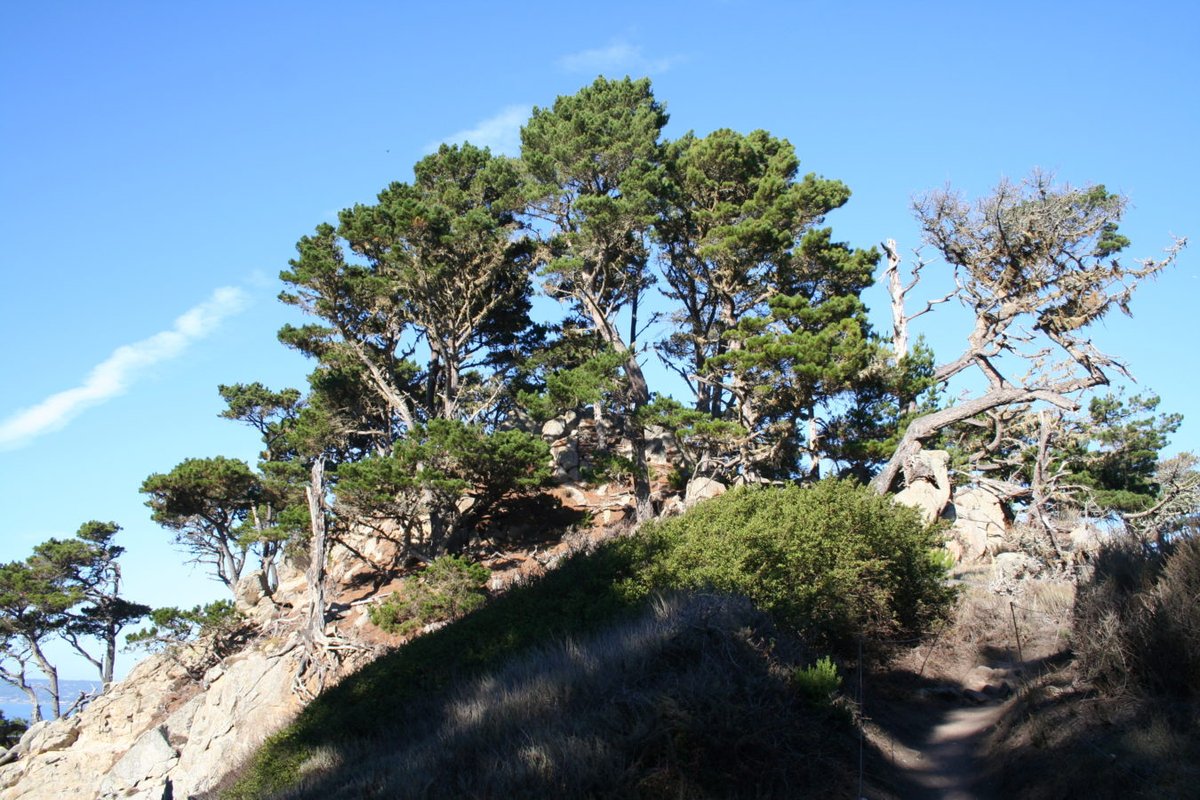
Who would guess that when freed from its insect herbivores and fungal pathogens following transport to foreign lands, it would prove to be the most productive of all commercial conifers ? It is said to be the most numerous tree in the world, so popular has it proved in forestry
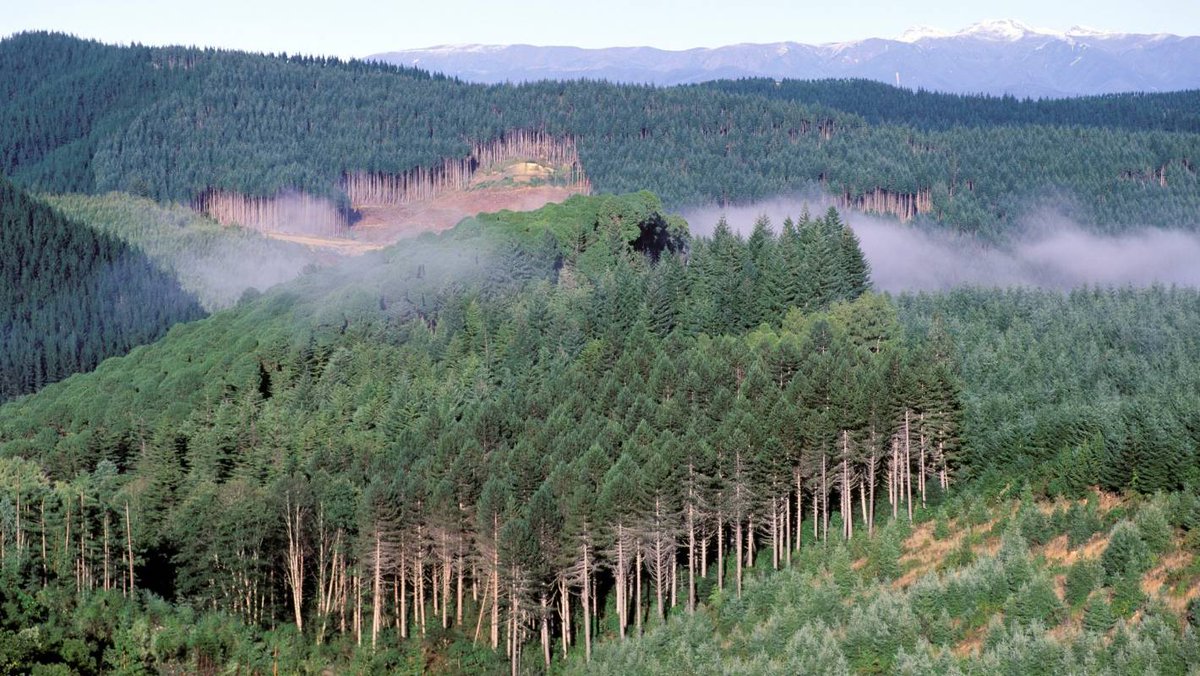
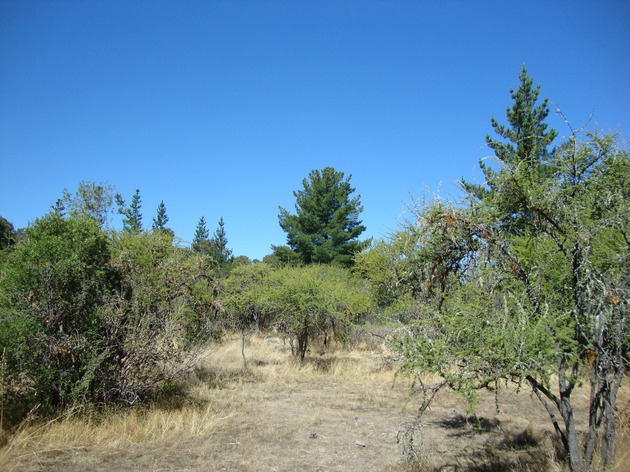
Like so many species of Pinus, Monterey Pine has proved to be highly invasive in semi-natural ecosystems when introduced for forestry. Here it is in Chile, invasive of semi-arid woodland.
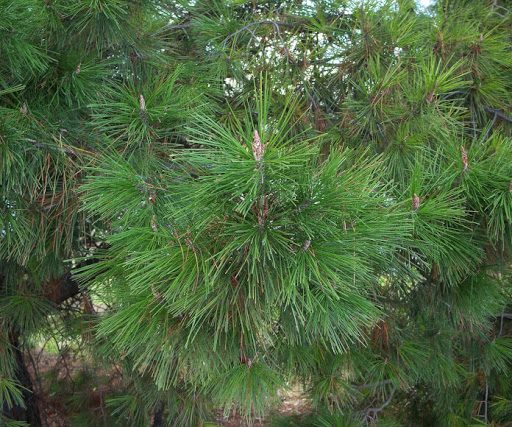
You identify Pinus radiata by its slender (up to 1mm wide) grass-green needles (10-15cm, left) and its long-persistent serotinous cones (10-12 x 8-9cm) obliquely inserted on a curved, 1cm stalk (right), pointing backwards or downwards.
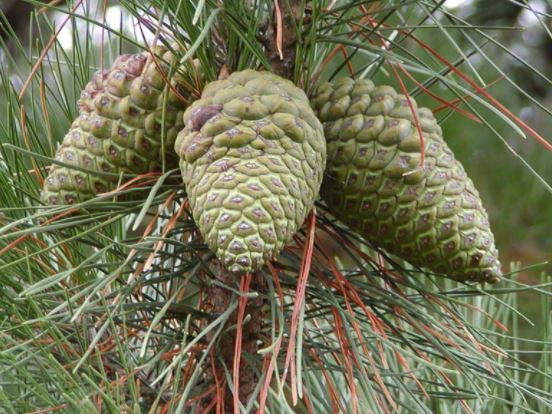
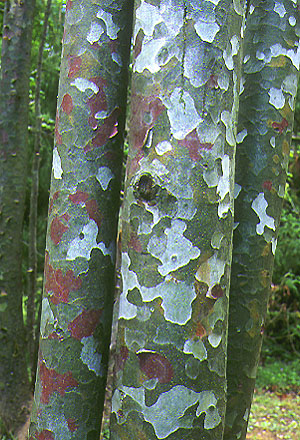
There's just 5 other 3-needle pines that you are at all likely to come across on your walks. Easiest to identify is Pinus bungeana because it has piebald flaking bark like Plane Tree. The needles are 6-8cm, hard and stiff with grey-green stomatal lines. The cone is small 4x3.5cm.
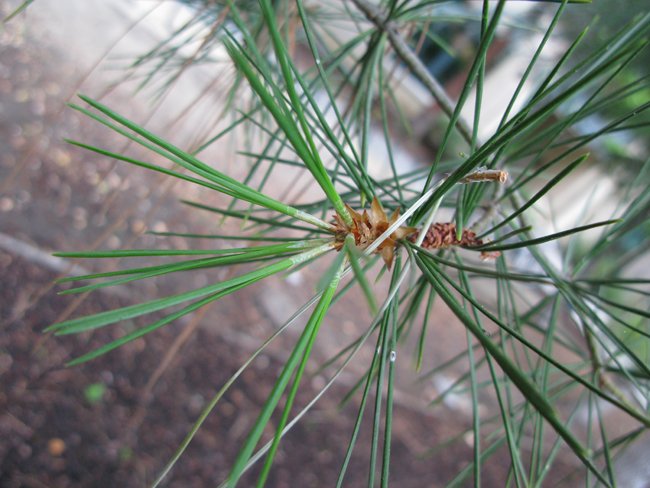
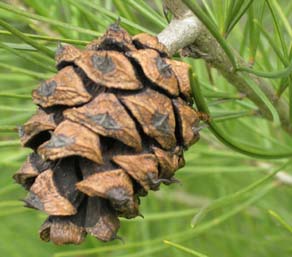
Another really easy 3-needler is Pinus coulteri. It is the gauntest of all the pines you'll see, and has the biggest cones (20-35 x 15-20cm). The needles are an impressive 25-30cm long.
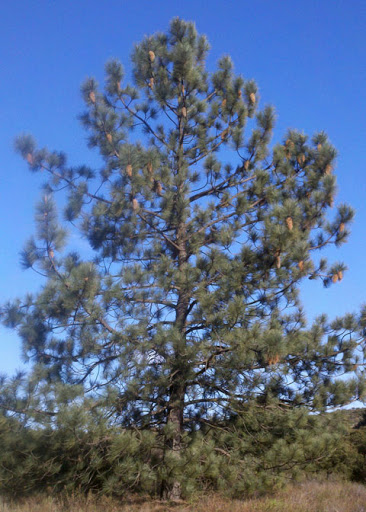
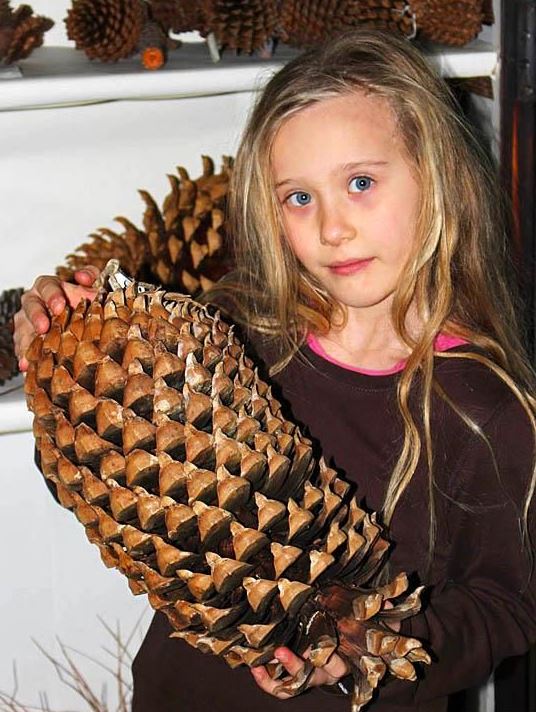
There are 3 other big, rather similar-looking 3-needle pines, but none is common. Pinus jeffreyi has blue green needles (15-23cm and deep red-brown buds (2-3 cm). The cones (18x7cm) have short, curved prickles. In Britain the bark is black (not orange as below).
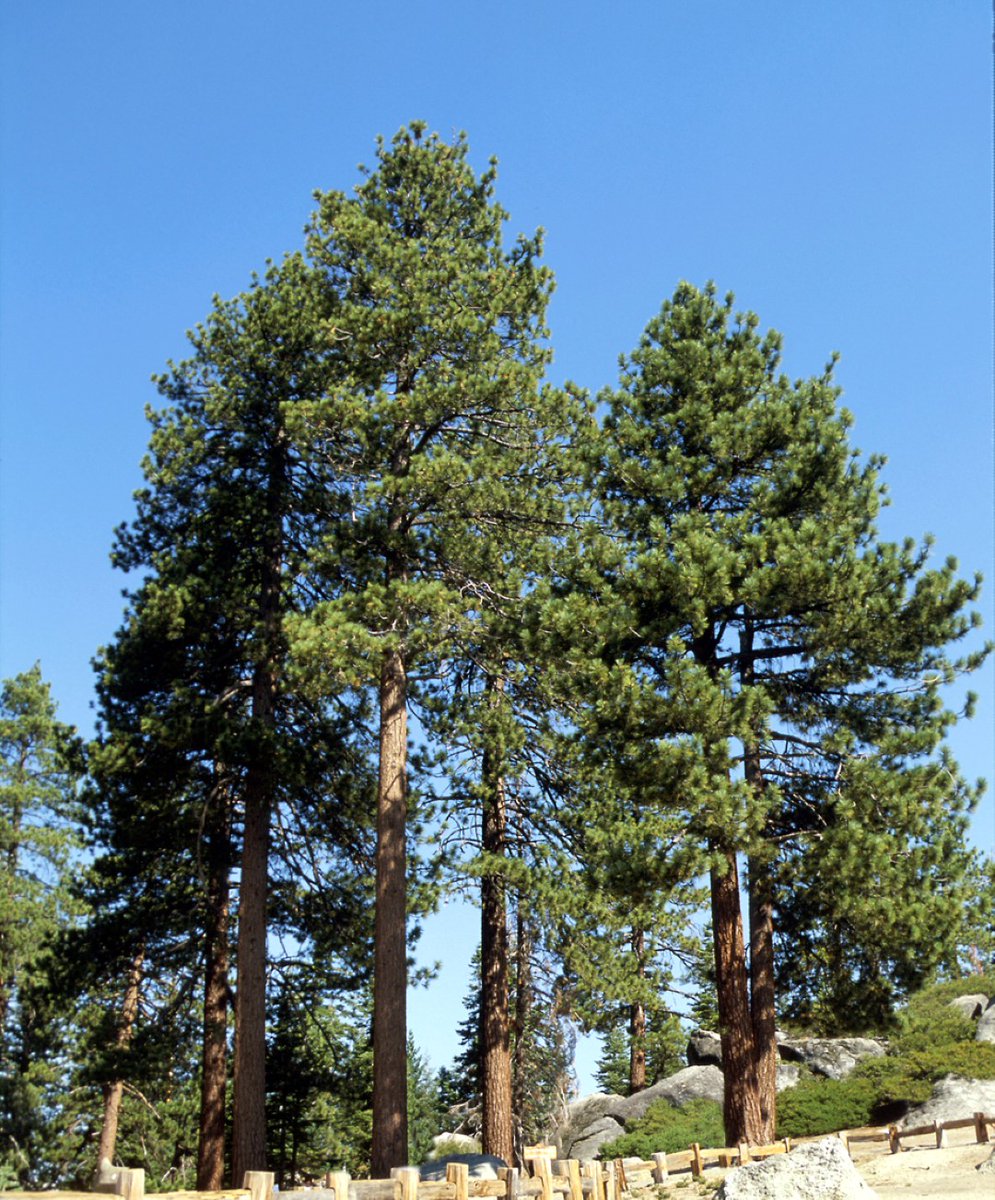
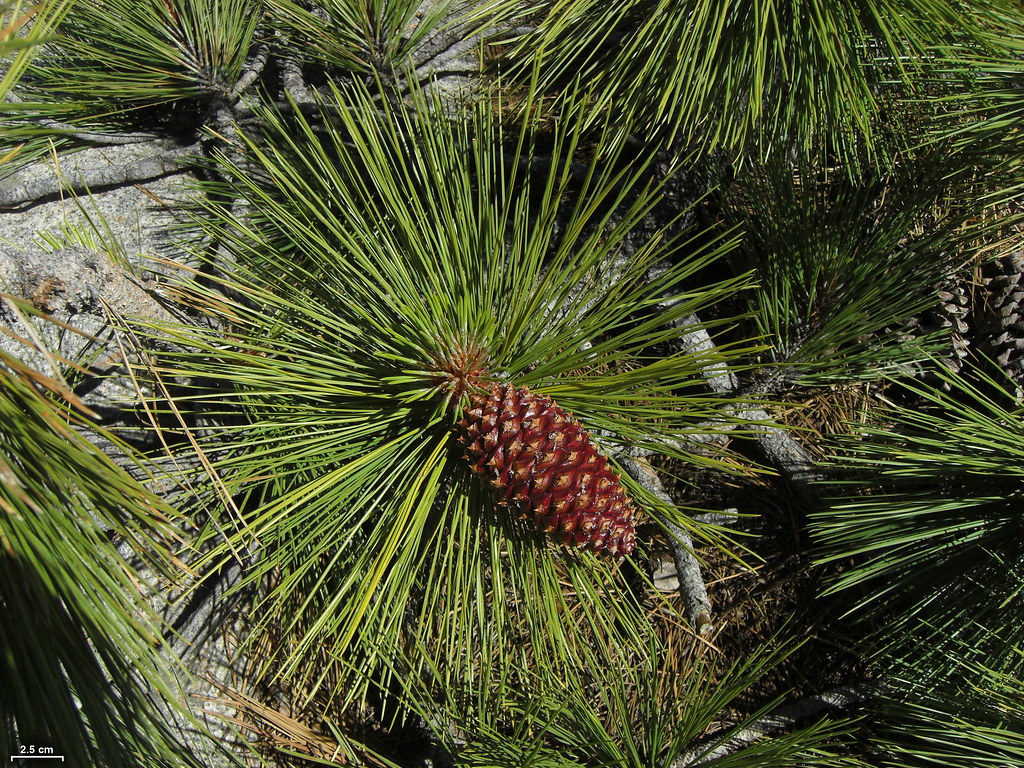
The other 2 species are Pinus ponderosa (dark green or greyish needles, resinous bud pale brown, left) and P. taeda (bright green needles, non-resinous bud, chestnut red, right). Either of these might be mistaken for P. jeffreyi from a distance.
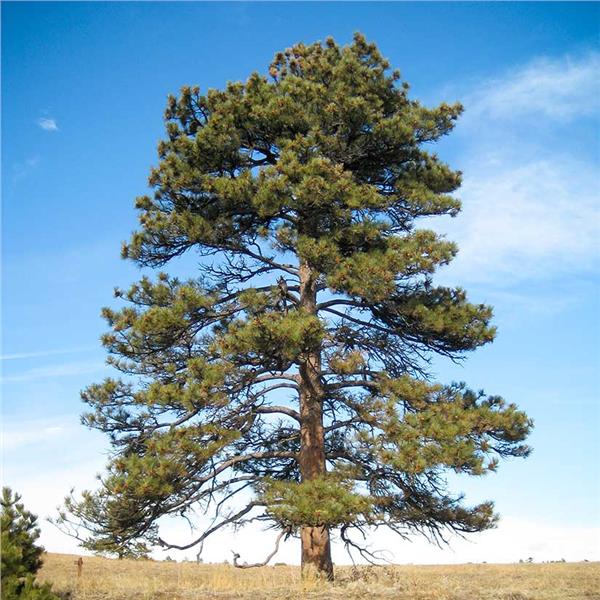
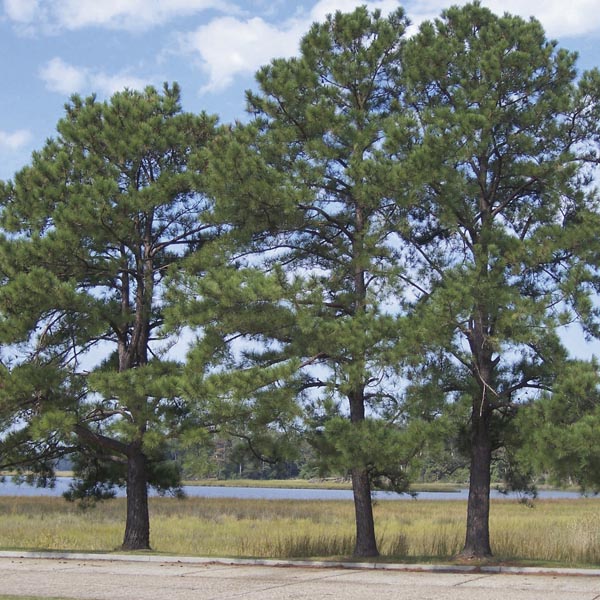
Close up, Pinus ponderosa has a central short spreading spine on the cone (left) and P. taeda has stoutly based, curved spines (right)
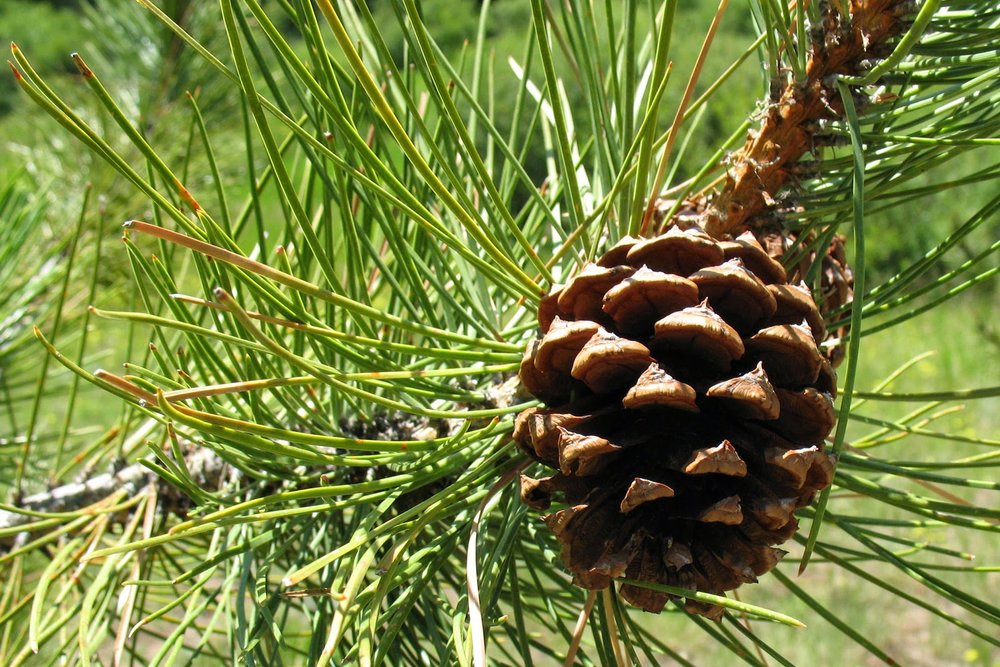
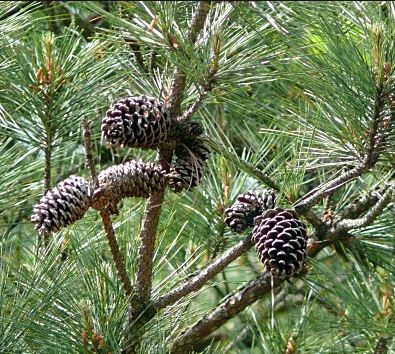
There is no really common 5-needle pine in Britain, but the one you are most likely to see in woodland is Pinus strobus which has banana-shaped cones (12-15cm) and very smooth bark stippled by horizontal lenticels. Needles (8-10cm) are slender and soft.
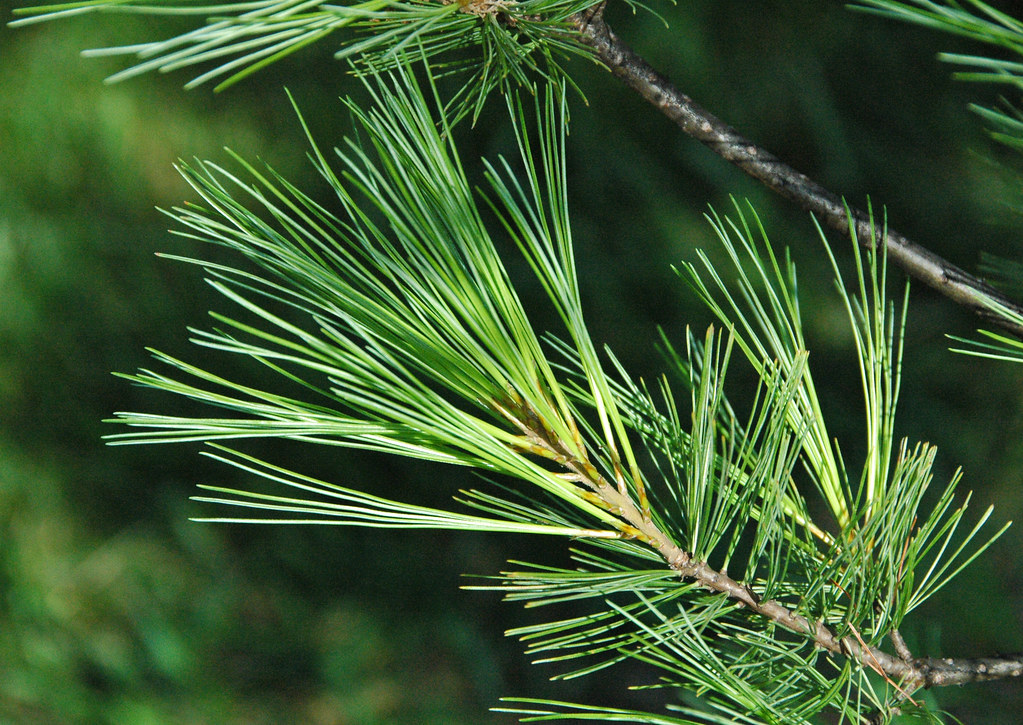
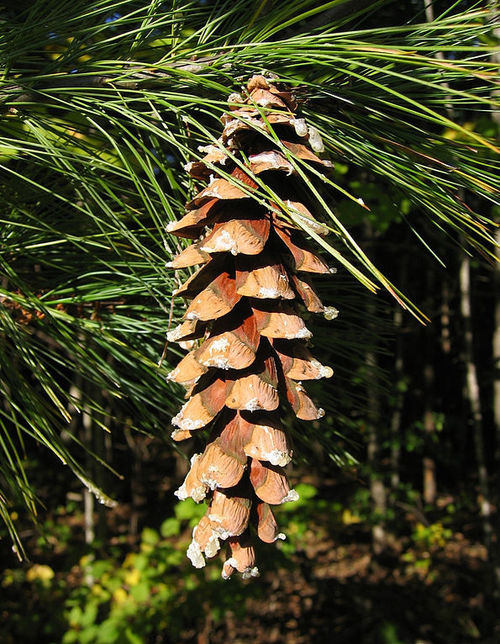
The Swiss Stone Pine, Pinus cembra, has short (7-9cm), densely set, dark shining green leaves hiding the stem, and pale pubescence. The small cones (6-8 x 6cm) are bluish purple and never open on the plant (they fall off aged 3).
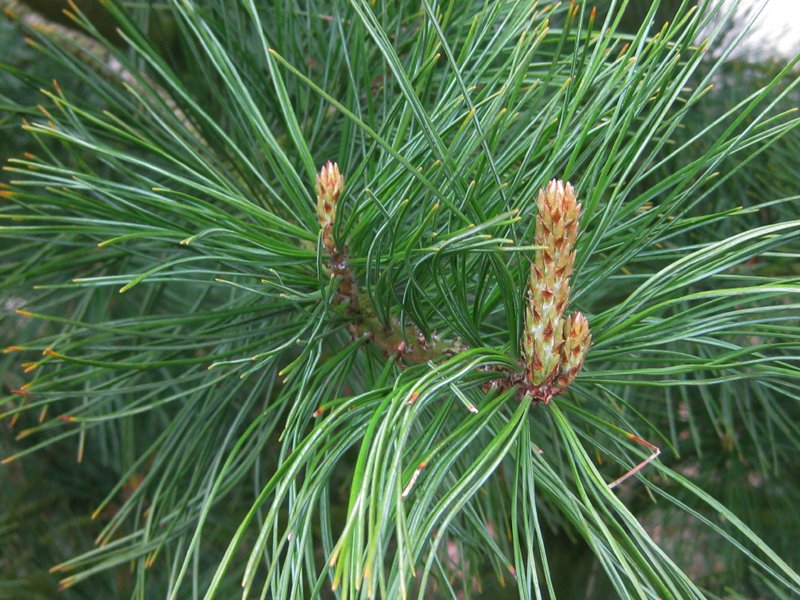
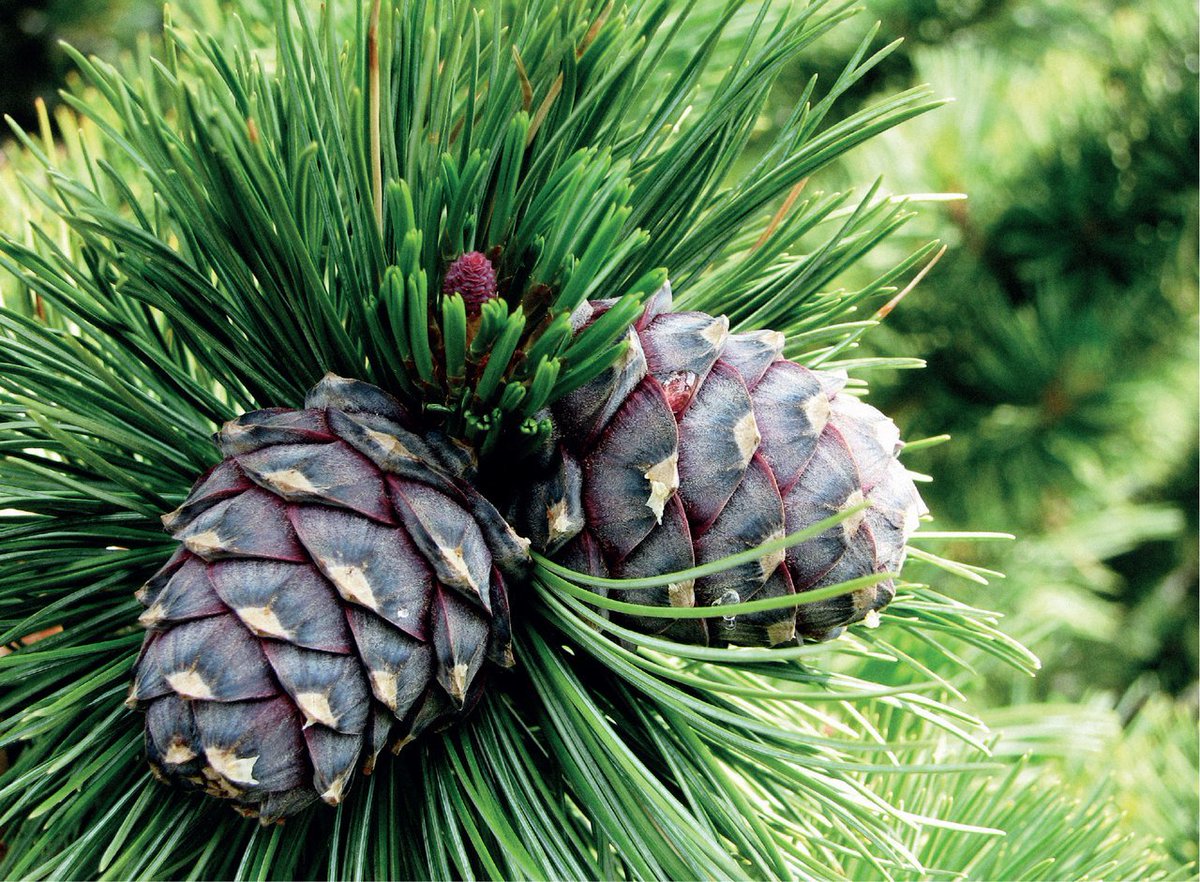
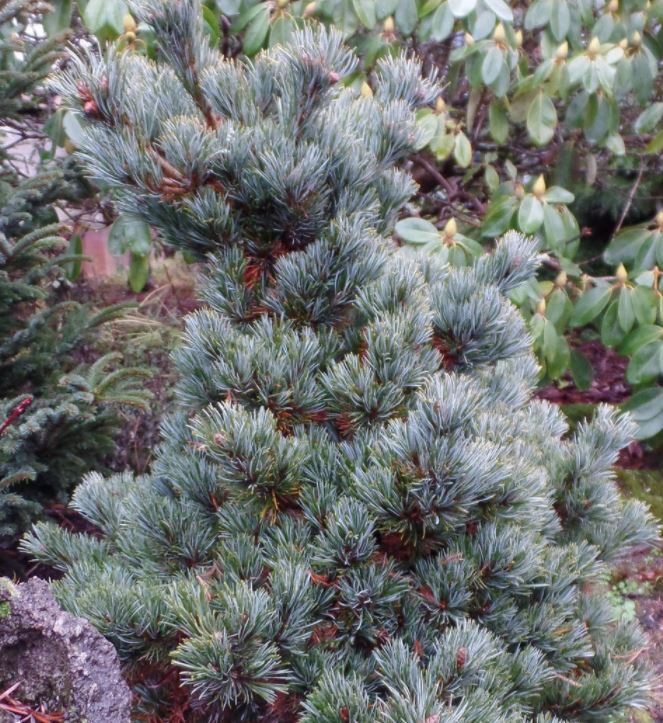
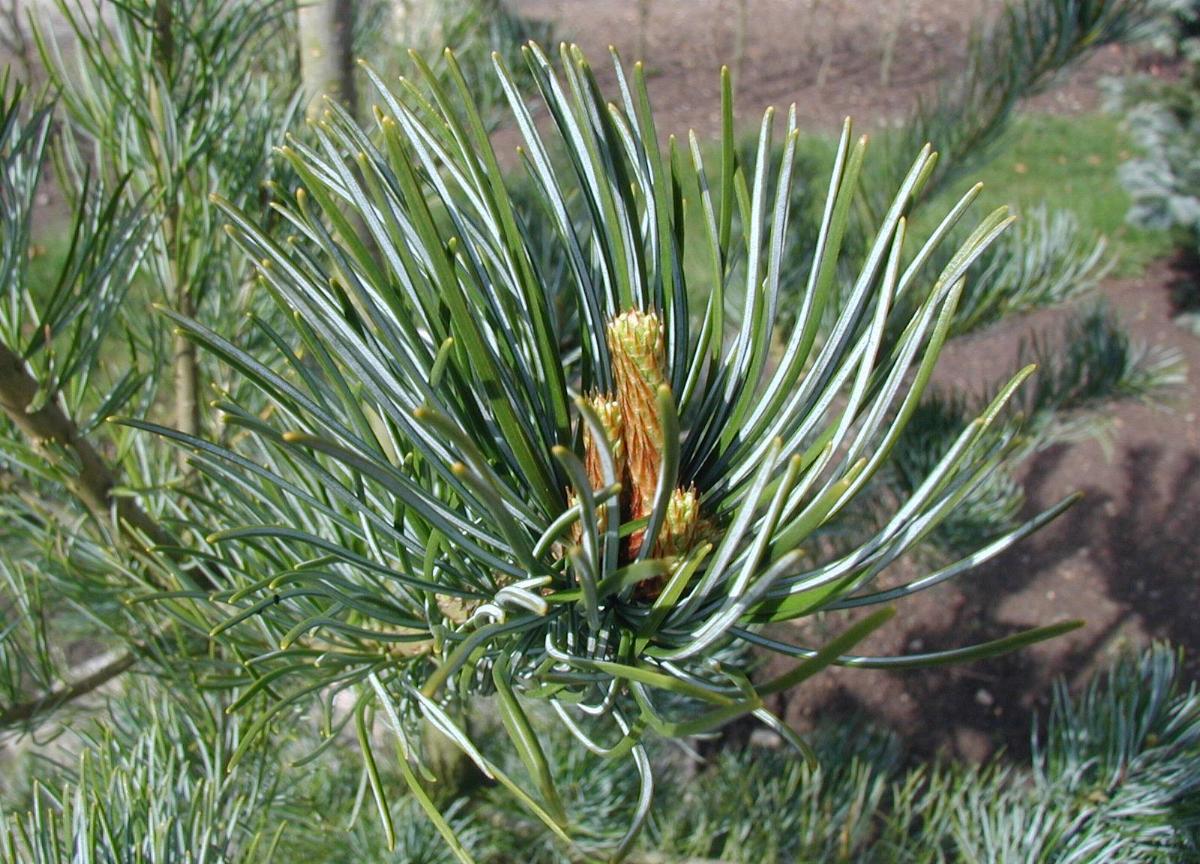
The remaining 5-needlers are likely to be seen as ornamental specimens. Look (x10) to see if the shoot is pubescent or hairless. The commonest ornamental with hairy shoots is Pinus parviflora which comes in numerous cultivars. The needles are blue and twisted. Cone squat (5cm)
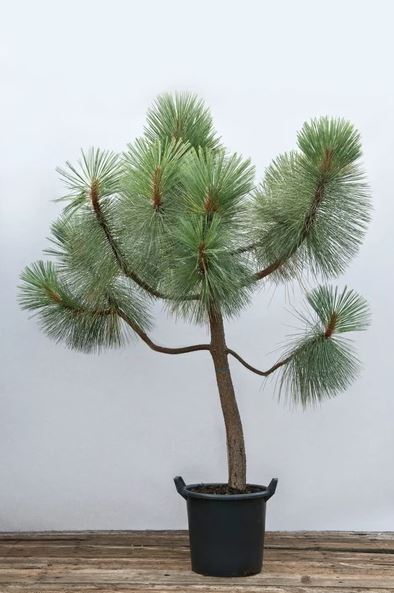
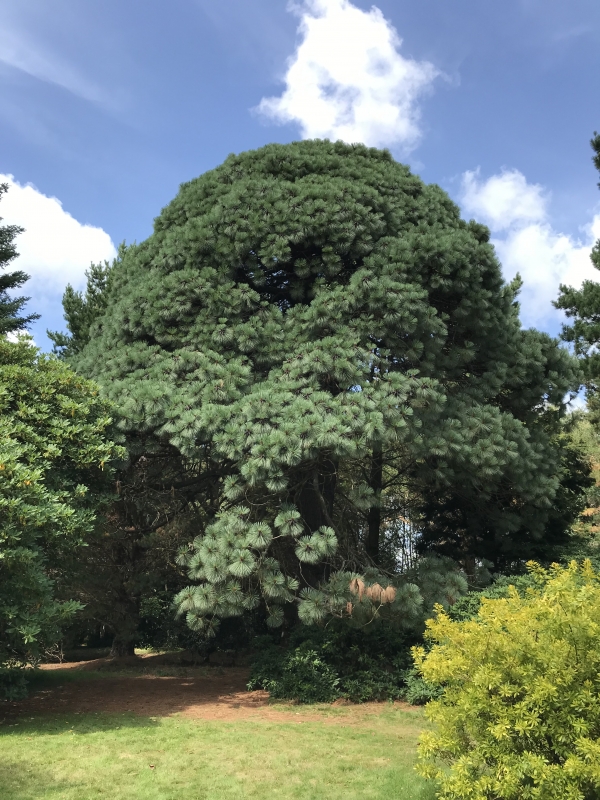
A really striking specimen that you may have seen at Chelsea Flower show is the cultivar Pinus montezumae ‘Sheffield Park’. This is destined to become much more abundant as commercial stocks are built up. The fabulous original at Sheffield Park Garden is on the right.
Finally, there is a group of very delicate 'weepy' 5-needlers with hairless stems. You are most likely to see P. wallichiana (main), but P. armandii (TR) and P. peuce (BR) (along with hybrids like P. x holfordiana) are out there, just waiting to confuse you.
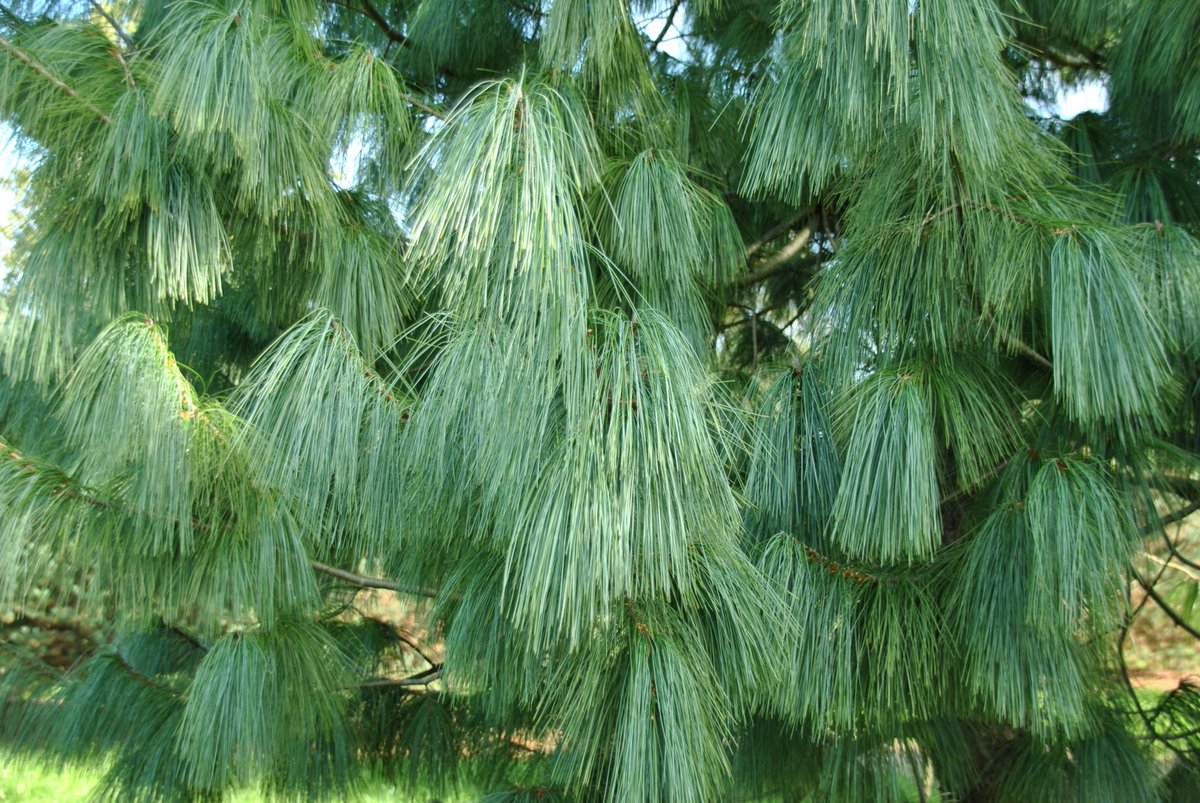
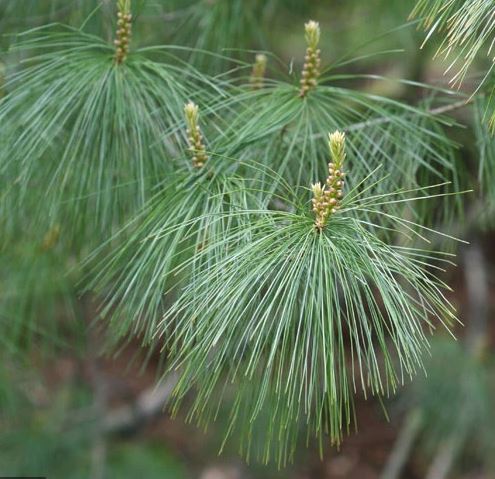
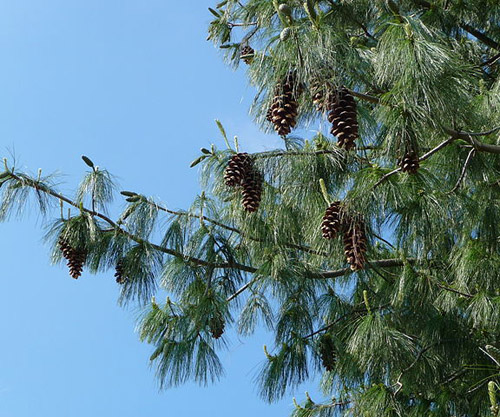
Needle length and width are important for these 5-needlers, along with shoot colour (whitish green, blue green, deep green, or bright green) and whether there is a bloom on the stem or not.
Have fun.
Have fun.
• • •
Missing some Tweet in this thread? You can try to
force a refresh