There’s been a lot of discussion over whether children can be covered under the protected characteristic of gender reassignment in the Equality Act. Here’s why this is almost certainly the the case.
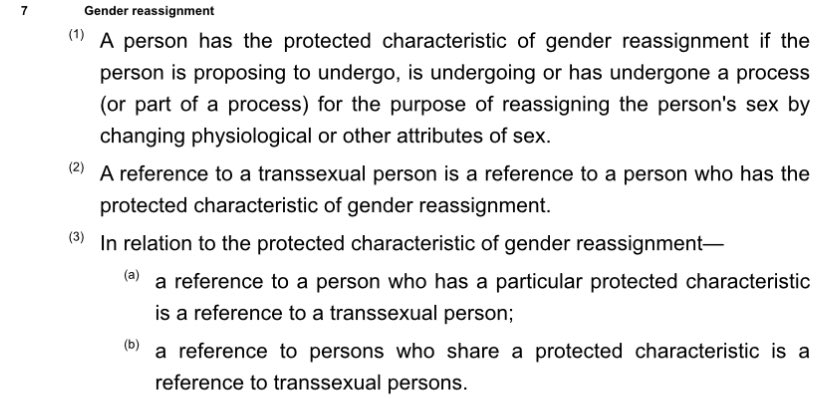
First the statutory text does not have any age limit on it which means those arguing that children cannot be covered are assuming that children cannot propose to undergo a process or part of a process of changing (what the law recognises as) attributes of sex.
This seems false on the face of it since there are many teenagers who have very clear intentions of changing several things that the law is likely to recognise as aspects of sex. Even if confined to physiological changes or getting GRCs, many teenagers propose to (and do) do this
But there is also the statutory text of the Equality Act which explicitly exempts schools from harassment obligations on the basis of gender reassignment, by implication including obligations in relation to direct and indirect discrimination.
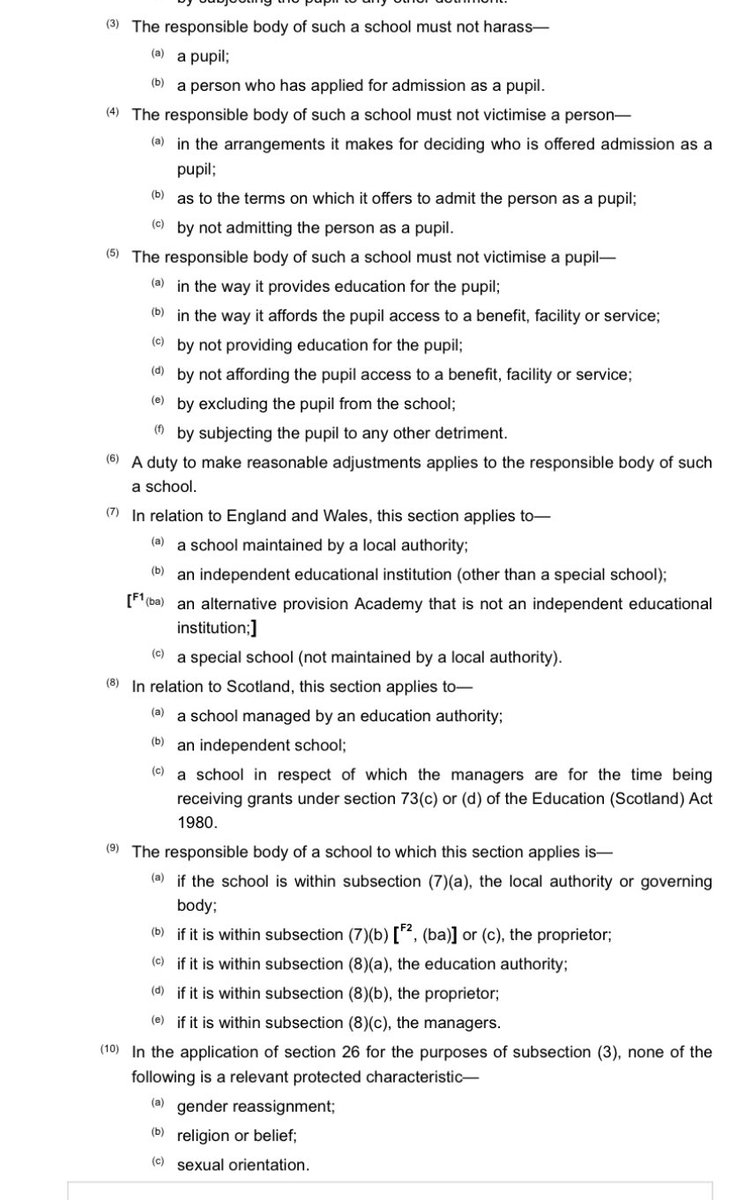
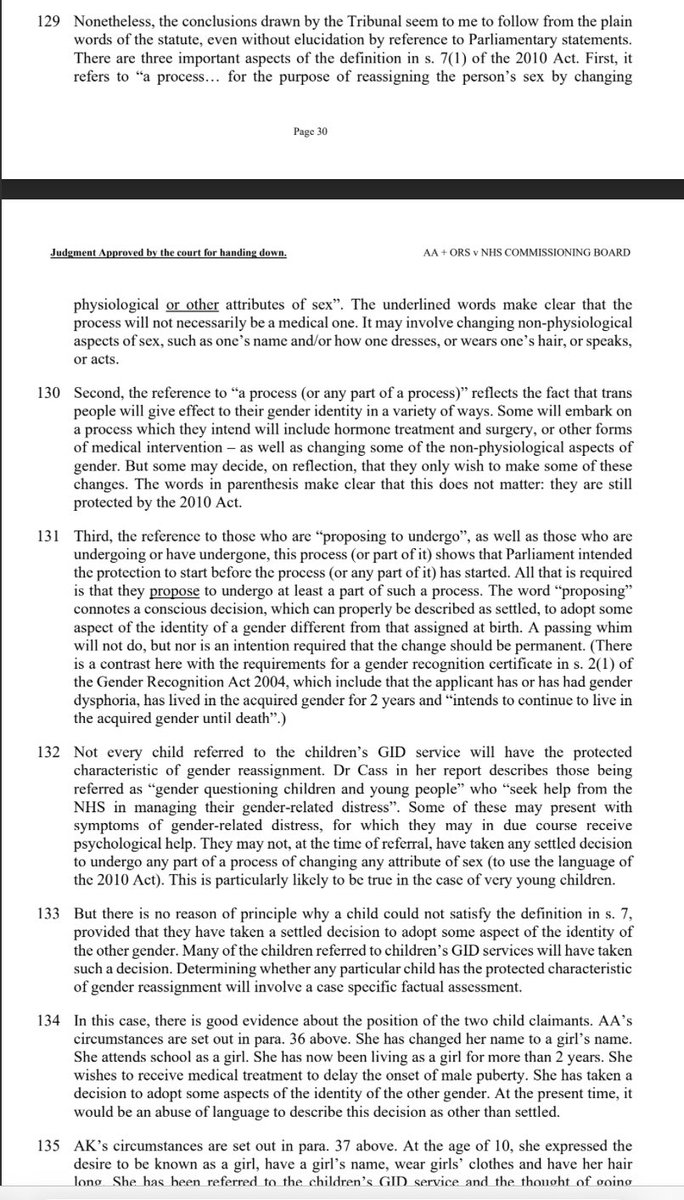
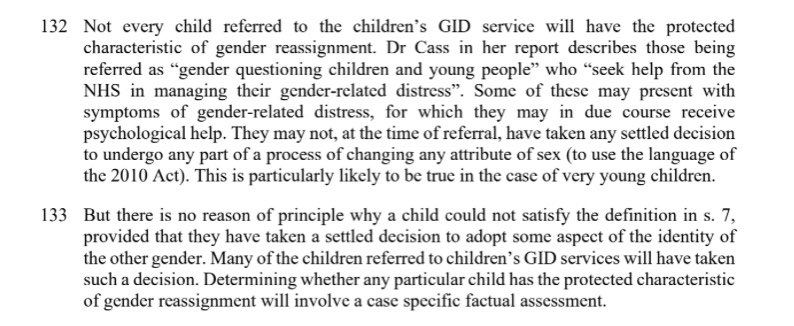
If that wasn’t enough, there is caselaw decided this year by the High Court that expressly addresses this question. Here’s what the court said:
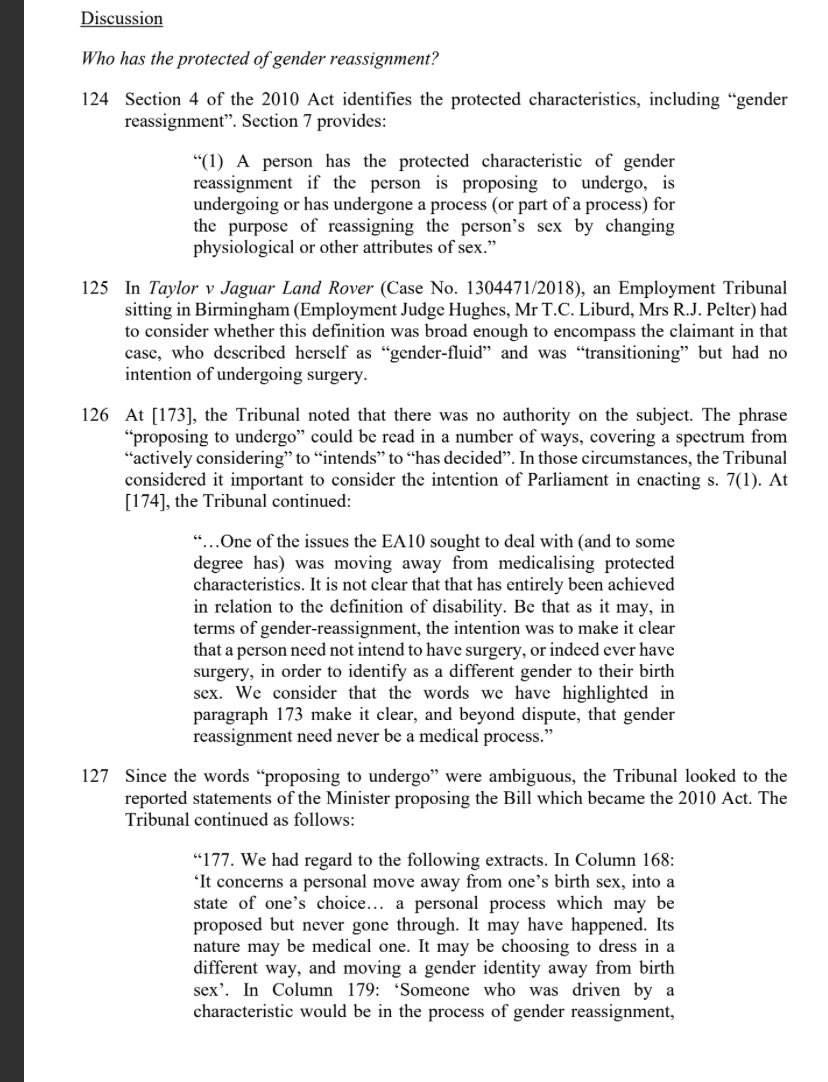
Note in particular that the court concluded that while this can’t be a fleeting whim, it is entirely possible that teenagers can come to a settled commitment to change aspects of their sex. Some people might not like this but it’s pretty clear to me that minors are covered.
• • •
Missing some Tweet in this thread? You can try to
force a refresh

First some background. The Equality Act covers a list of protected characteristics. Gender reassignment is one of them. It’s not tied to the Gender Recognition Act, you don’t need to be in the process of obtains a GRC to be protected and it almost certainly covers minors.
This means that children who are experiencing gender distress are likely protected from gender reassignment based discrimination. There is a lot of confusion and misinformation about what being protected under GR means and this is likely affecting how guidance is being drafted.
This thread seems to presume that the only purpose of equality law is to move to a position of equal treatment in all contexts. The equivalent of being colour blind, religion blind, sex blind, and so on. But that is not the purpose of the Equality Act.
Yes, the Act does set up a baseline presumption of non-discriminatory treatment. But that must be understood in light of other aspects of the Act, including indirect discrimination, positive measures, single characteristic services/associations/schools and the PSED
The Act isn’t just about individual claims, it’s also about group claims relating to combating particular disadvantage that those who share a PC might face and to ensure the rights of people to associate together and to be provided services on the basis of one PC or another
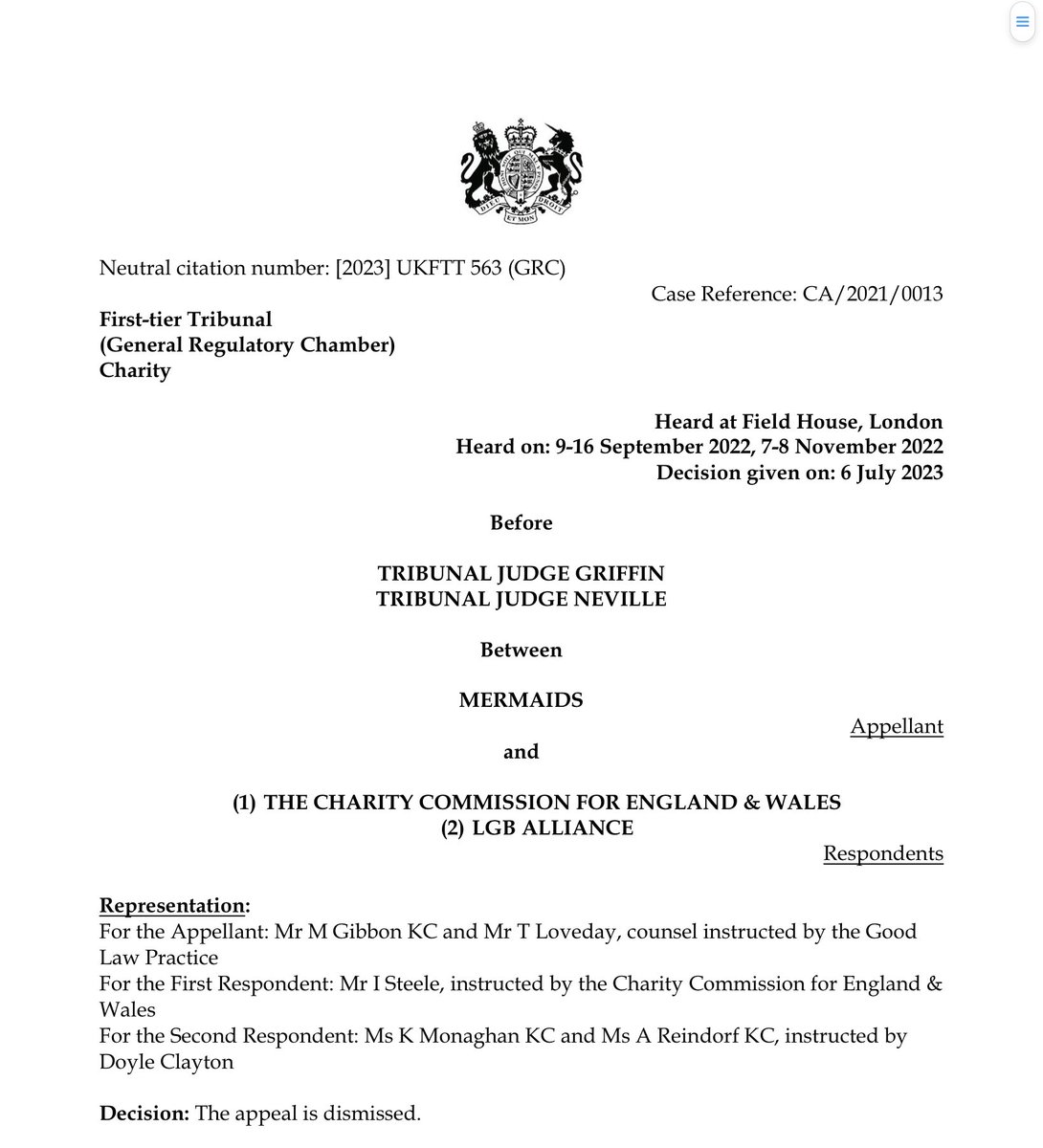
Suspending my Twitter break for a wee 🧵 on the Mermaids v LGB Alliance decision:
The first thing to note here is that the respondent is not principally LGB Alliance, it’s the Charity Commission for England and Wales. The core of this case is the decision of the Charity Commission to register LGB Alliance as a charity.
The Charity Commission is the expert body here and enjoys a presumption that it’s decisions are valid, lawful, and correct. But there is scope for some people to challenge a decision to register a charity IF (and only if) you have standing to do so.
From an equality law perspective there is no one way that any religion perceives any topic. Nevertheless many religious women feel a religious prohibition on being undressed or in intimate contexts with men outside of their families.
The law will include those women and their beliefs within the characteristic of religion and will take that seriously when assessing discrimination against those women or the equality impact of policies on them.
The same is true of women in general. While some women may be perfectly happy sharing intimate spaces with or undressing in front of biological males, many - probably most - will not. That will matter for any legal analysis of the equality impact of such policies.
Some thoughts on single-sex spaces and the question of whether they result in the exclusion of protected groups from public life. TLDR: this engages equality and inclusion concerns on both sides and that makes it complicated.
This picks up on some of what I've said in this thread. Basically, before you can decide who has been excluded and whether that is justified, you need to determine what the purpose of a single-sex space is in the first place.
Many people argue that confining single-sex spaces or services on the basis of biological sex rather than gender identity will exclude trans people from using spaces that correspond with their identity.
A short 🧵on the legal tests for something being a protected philosophical belief under the Equality Act.
In Grainger v Nicholson, Burton J set out the relevant tests. This was done in the context of determining that a conviction that climate change exists is protected under 'belief' in the Equality Act.
1. The belief must be genuinely held - it can't be something someone is pretending to believe or is manifest in trolly comments with the purpose of getting a rise out of people.