
@PCarterClimate 1/10 @PCarterClimate wrote, "This is an enormous source of amplifying feedback."
That's backward. Sea-ice coverage is a NEGATIVE (attenuating) feedback mechanism. Reduced ice coverage COOLS the ocean (and warms the air).
@PCarterClimate 2/10 Decreased polar sea ice coverage (Arctic & Southern Ocean) increases water evaporation, cooling the ocean by evaporative heat loss. It is a negative (attenuating) feedback loop:
warmer water temp → less sea ice coverage → more evaporation → cooler water temp
@PCarterClimate 3/10 Based on Nimbus-5 observations, Zwally, et al. 1983 reported that:
“...the release of heat to the atmosphere from the open water is up to 100 times greater than the heat conducted through the ice.”
sealevel.info/Zwally1983_198…
@PCarterClimate 4/10 It's an important effect, as the NSIDC explains:
“Sea ice regulates exchanges of heat, moisture and salinity in the polar oceans. It insulates the relatively warm ocean water from the cold polar atmosphere except where cracks, or leads, in the ice allow...
[cont'd]
@PCarterClimate 5/10 [cont'd]
... exchange of heat and water vapor from ocean to atmosphere in winter. The number of leads determines where and how much heat and water are lost to the atmosphere, which may affect local cloud cover and precipitation.”
nsidc.org/cryosphere/sot…
@PCarterClimate 6/10 ...and in another article NSIDC says:
“Less ice also contributes to higher air temperatures by allowing transfer of heat from the relatively warmer ocean.”
nsidc.org/arcticseaicene….
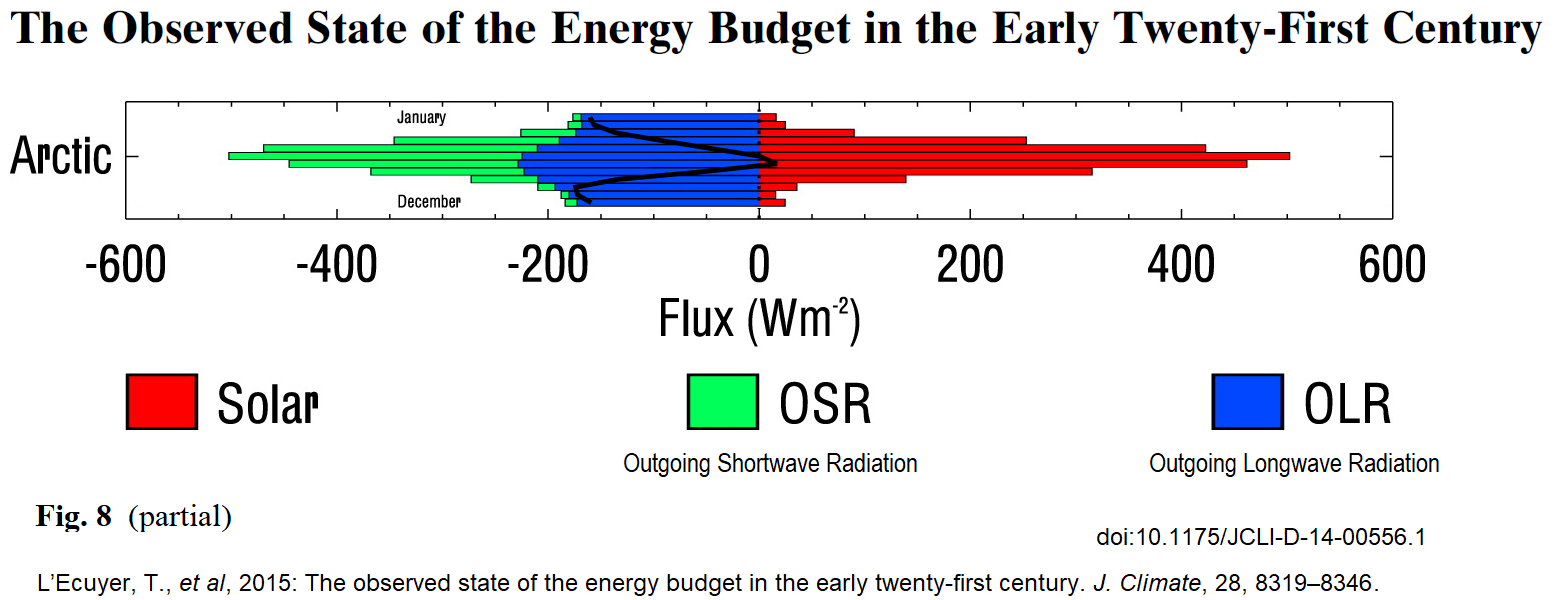
@PCarterClimate 7/10 Note that the Earth's polar regions have net-negative radiation budgets. That is, they radiate more energy than they absorb from sunlight. That is always the case in Antarctica, even in summer.
sealevel.info/2015_lecuyer_e…
@PCarterClimate 8/10 That's also true in the Arctic, except for a brief period near summer solstice, when the Sun is at its zenith, and solar radiation absorbed approximates or barely exceeds radiation emitted.
@PCarterClimate 9/10 That means reduced ice coverage increases radiant energy LEAVING the ocean MORE than it increases the amount of solar energy absorbed by it.
sealevel.info/2015_lecuyer_e…
@PCarterClimate 10/10 You can learn more about these topics here:
sealevel.info/feedbacks.html…
@PCarterClimate @rattibha @threadreaderapp @threader_app please unroll or compile this.
Share this Scrolly Tale with your friends.
A Scrolly Tale is a new way to read Twitter threads with a more visually immersive experience.
Discover more beautiful Scrolly Tales like this.