
1/Here's an article about how Trump is screwing up legal immigration to the United States, hurting our economy in the process: nytimes.com/2018/09/02/bus…
2/Trump couldn't get his restrictionist agenda passed in Congress, so he's doing what presidents always do in this gridlocked age - falling back on executive power to make a bunch of small changes that add up. 

3/Some people may look at Trump's harassment of legal immigrants and quietly think "Oh good, that means higher wages for native-born Americans."
No it doesn't. It means you just lost your doctor.
No it doesn't. It means you just lost your doctor.
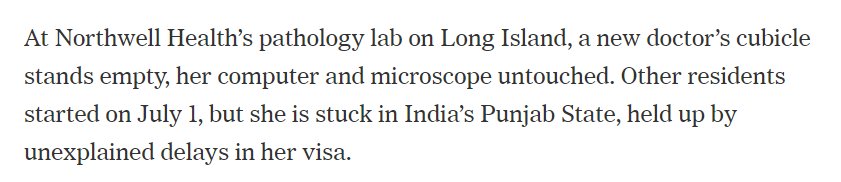
4/Policy-by-red-tape is so awful. Ugh.

5/Some immigrants are genius engineers who invent cool stuff and start companies that hire Americans, and stuff like that.
Others are humble child-care and elder-care workers.
We need both.
Others are humble child-care and elder-care workers.
We need both.

6/Everyone focuses on ICE, but it's Citizenship and Immigration Services that's harassing legal immigrants out of the country under Trump.
"Merit-based system" my ass. It's the most meritorious immigrants who they're trying to keep out. It's racial.
"Merit-based system" my ass. It's the most meritorious immigrants who they're trying to keep out. It's racial.

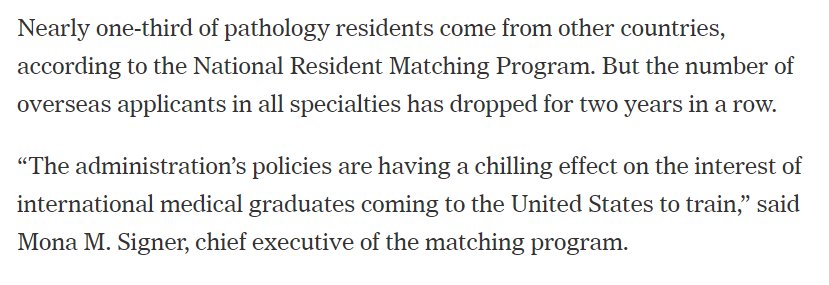
7/Oh look, they're keeping out doctors.
How the hell is that "merit-based"?
And I'm sure that's going to do wonders for the health care cost problem.
How the hell is that "merit-based"?
And I'm sure that's going to do wonders for the health care cost problem.
8/Of course, racism itself is a pretty effective anti-immigration policy.
Who'd want to immigrate to America just to be harassed by Trump's government and harassed by Trump voters in the street and in the schools?
Who'd want to immigrate to America just to be harassed by Trump's government and harassed by Trump voters in the street and in the schools?
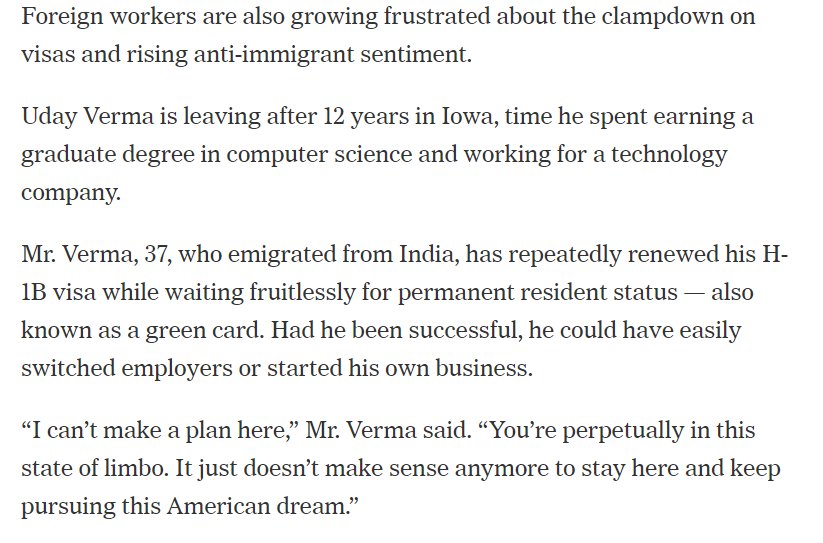
9/Canada is getting this right, and we are getting this wrong.

10/All the Trump people who say they're only upset about illegal immigration are bullshitting you.
All the Trump people who say they want merit-based immigration are bullshitting you.
You know what it's about. I know what it's about. We all know what this is about.
(end)
All the Trump people who say they want merit-based immigration are bullshitting you.
You know what it's about. I know what it's about. We all know what this is about.
(end)
• • •
Missing some Tweet in this thread? You can try to
force a refresh






