As the railways expanded across the US, several different track gauges became predominant, just as was the case in Europe (nope - the Romans nor horses bottoms had anything to do with track gauge)... #RailwaysExplained
By the 1860s, there were thousands of miles of track with gauges that didn't conform to Stephenson's original 4'8.5" - in fact only around half of the railways in the US used this gauge.
The American Civil War was the first war where railways played a crucial role, rapidly moving kit and men around where they were needed most.
Changing trains because of different gauges was no longer an annoyance - it was a matter of life or death, of winning or losing.
The predominant track gauge in the South was actually 5' gauge, so had the Confederacy won the American Civil War, the US would likely have adopted that as their standard gauge. Also other things 😬
I'll expand this thread next week, because the real explanations (yes, there are several) for where Stephenson's 4'8.5" came from are far less romantic and far more interesting than @BillHolohanSolr's horse's arse of a story #RailwaysExplained
Also... track gauge and loading gauge (see thread) are largely independent of each other.
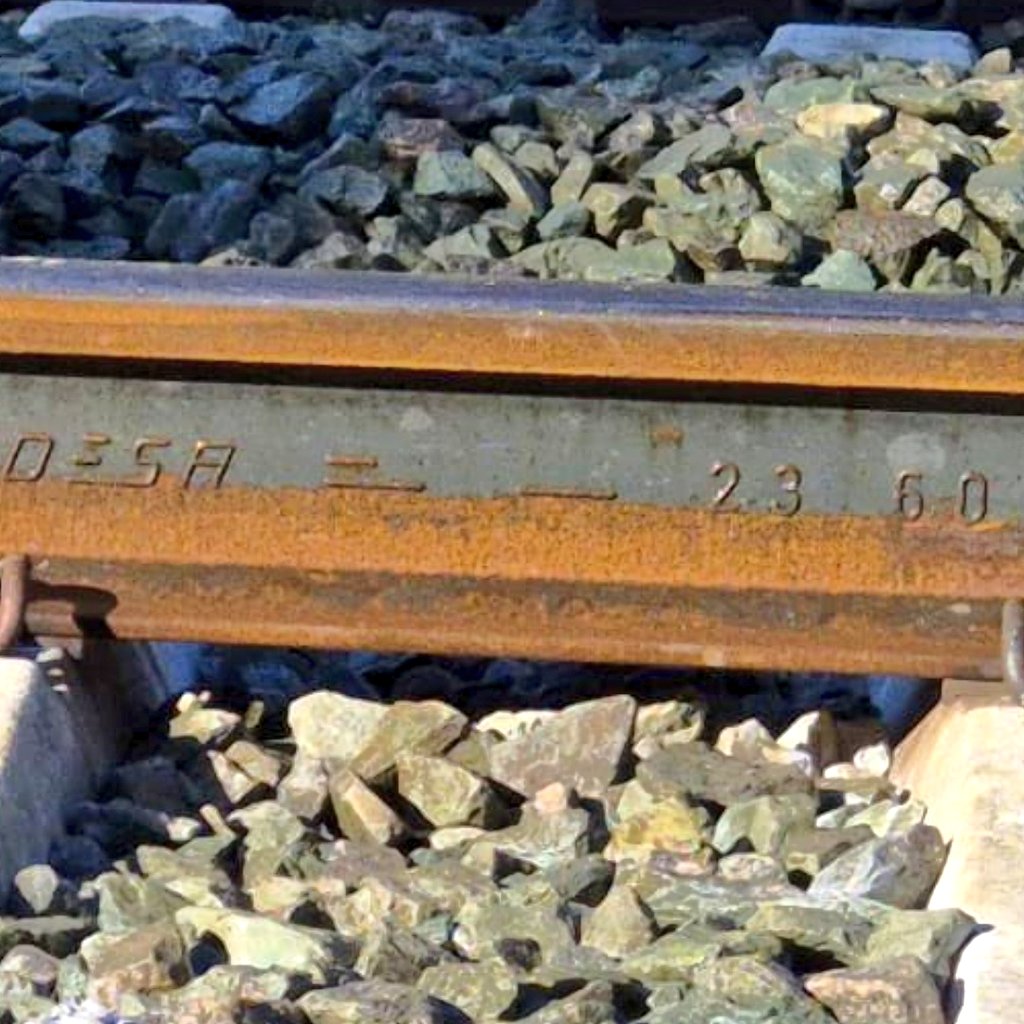
Here I'm in agreement - welding rails of two different ages together is completely routine and safe, otherwise you'd have to replace all rails all at once every time.
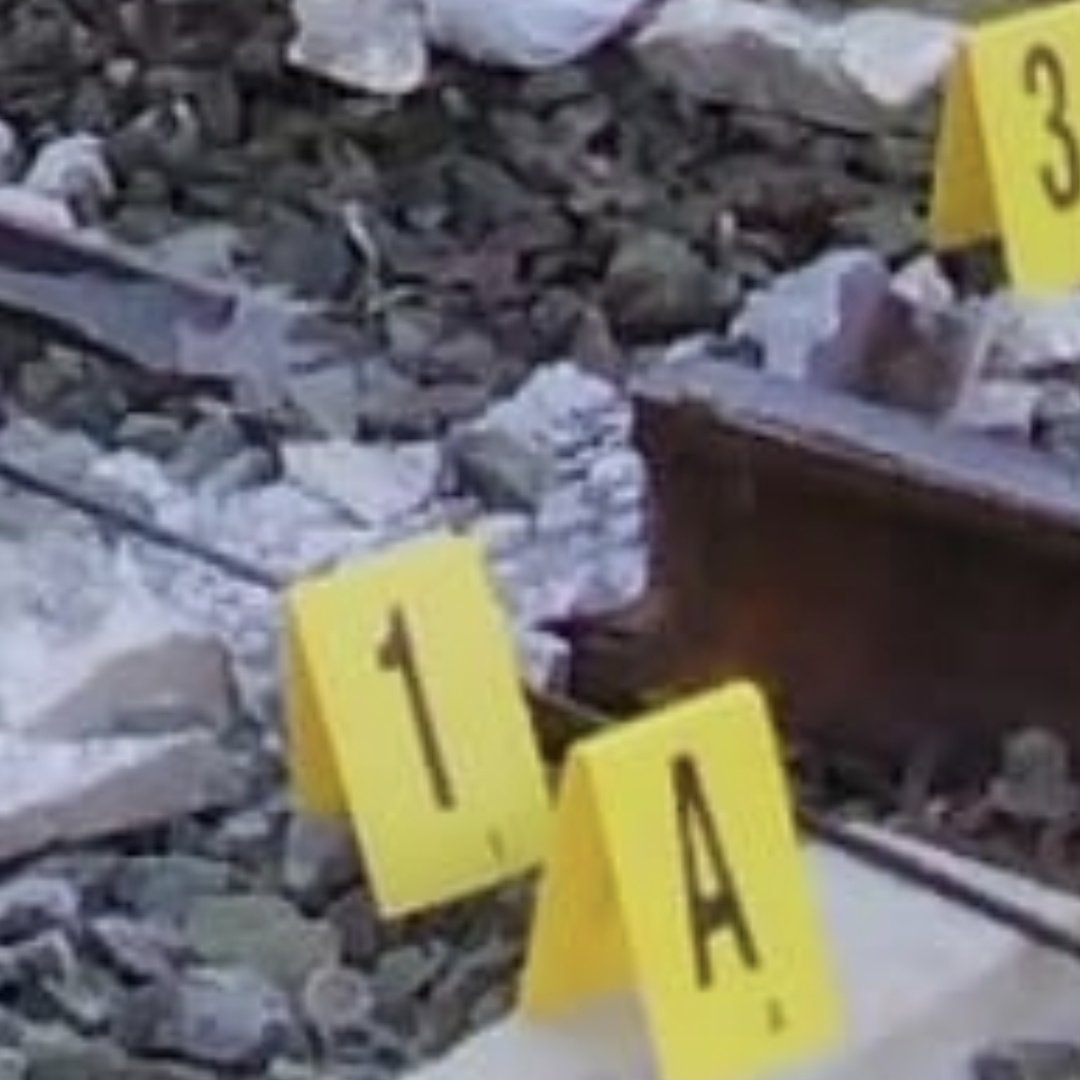
Crucially, though - it's the new rail that failed adjacent to the weld!
Deleted previous extra bit as I've spotted something that I need to verify.
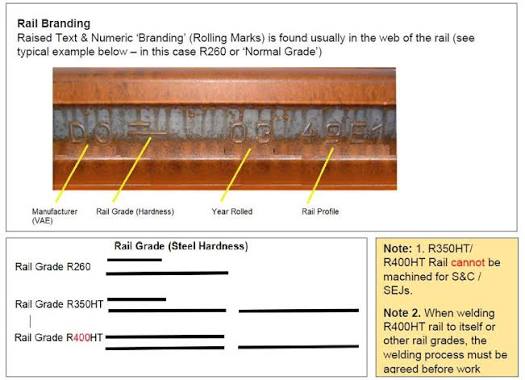
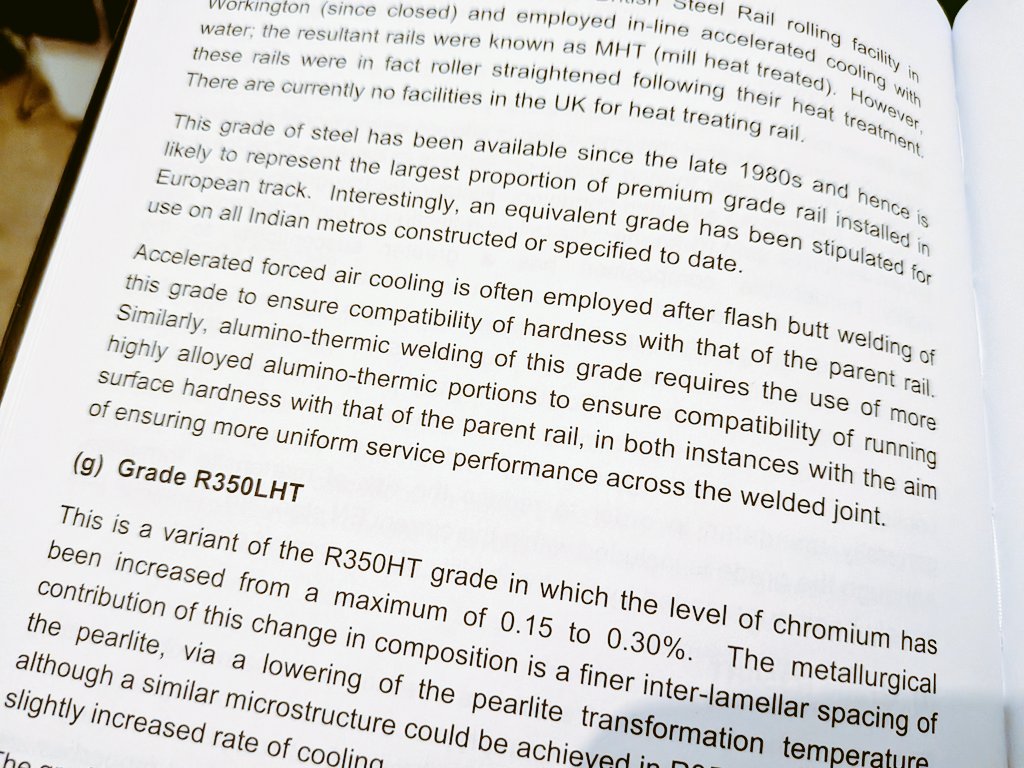
The new rail has been confirmed as R350HT as seen in the image.
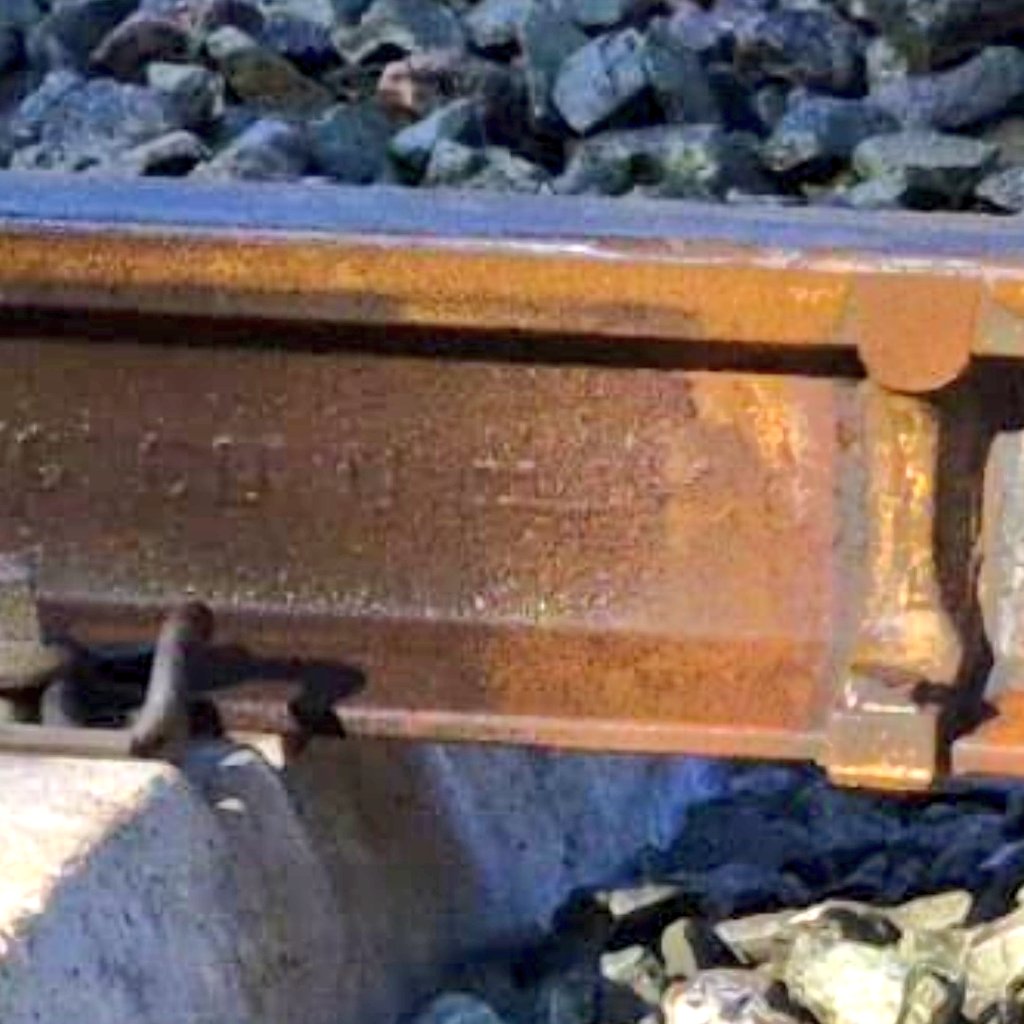
However, the old rail appears to be R260. If this is the case, then a specialist weld is required and that doesn't appear to be the case.
It's very difficult to validate this from the available images, but it would certainly be good to know what grade the older rails to the south of the weld are. Anyone with better photos or access to the material records?
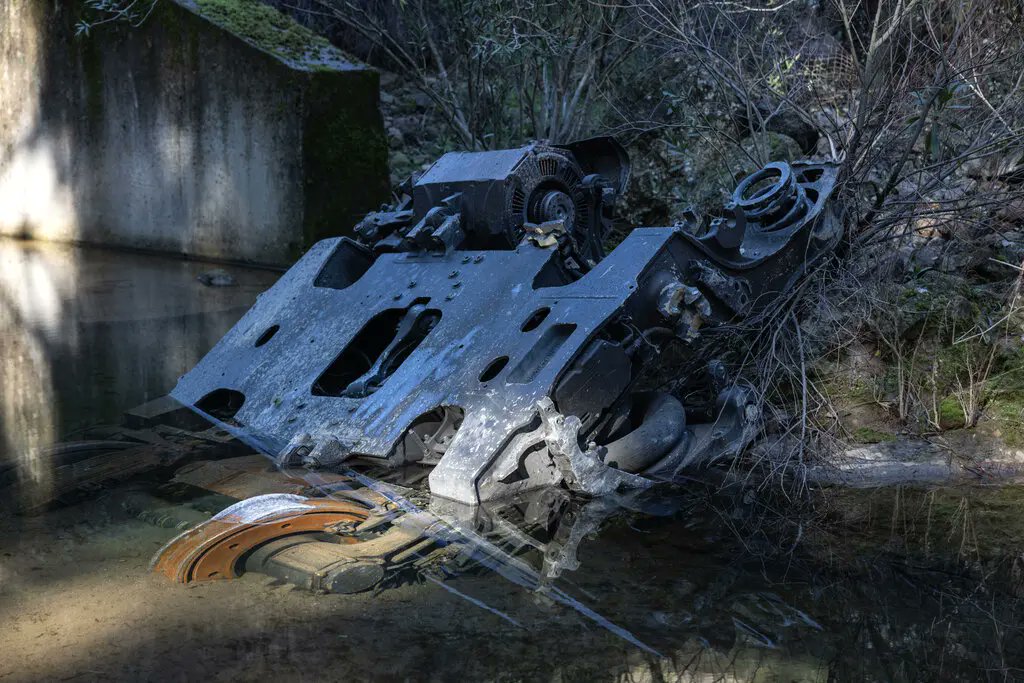
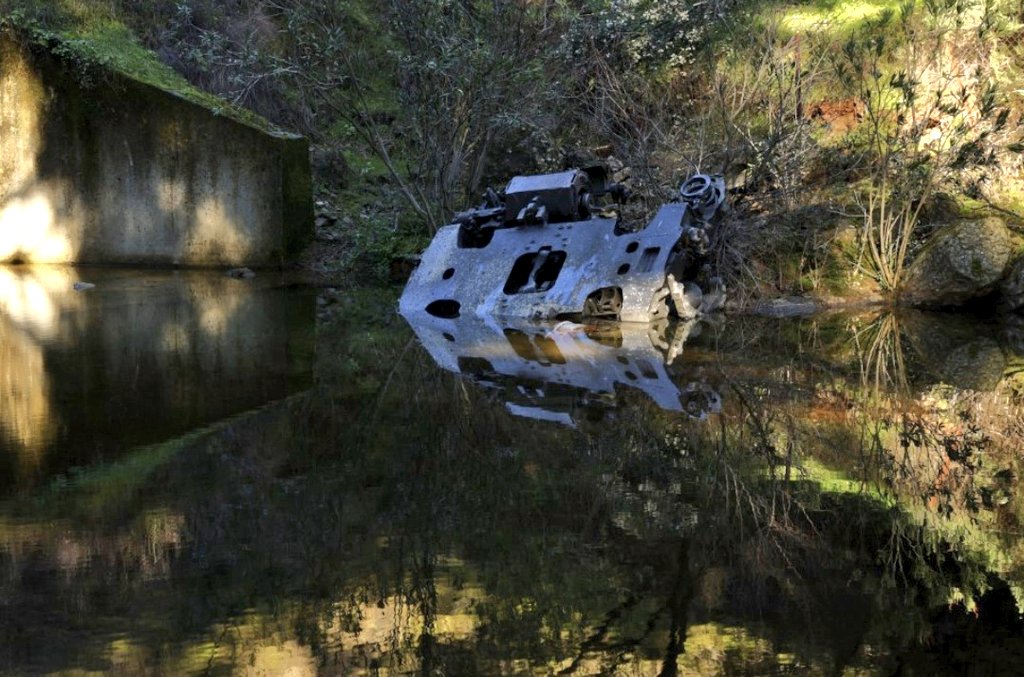
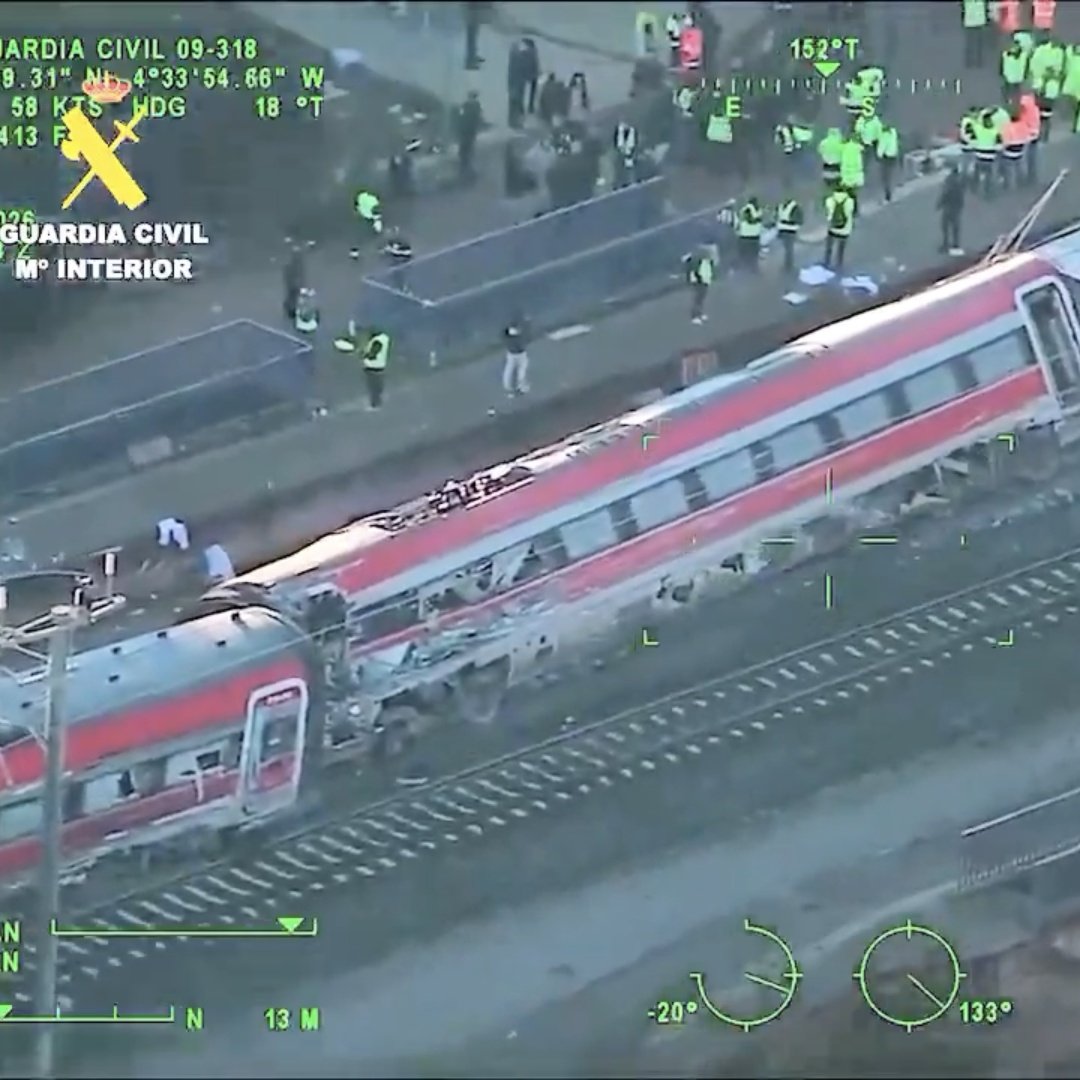
A bit of discussion about this detached bogie being a cause rather than an outcome of the Adamuz crash. It's essentially impossible for a bogie to be released from a moving train without that train already having been derailed.
It's being reported that this was found around 275m from the railway - the potentially 400km/h closing speed of the two trains when they collided will have easily created enough energy to launch the Iryo bogie that distance.
Despite their mass, bogies are often thrown loose during high energy derailments. The location of this bogie and the section of the train it departed from will help investigators establish the precise trajectories of the derailed vehicles and the energies involved.
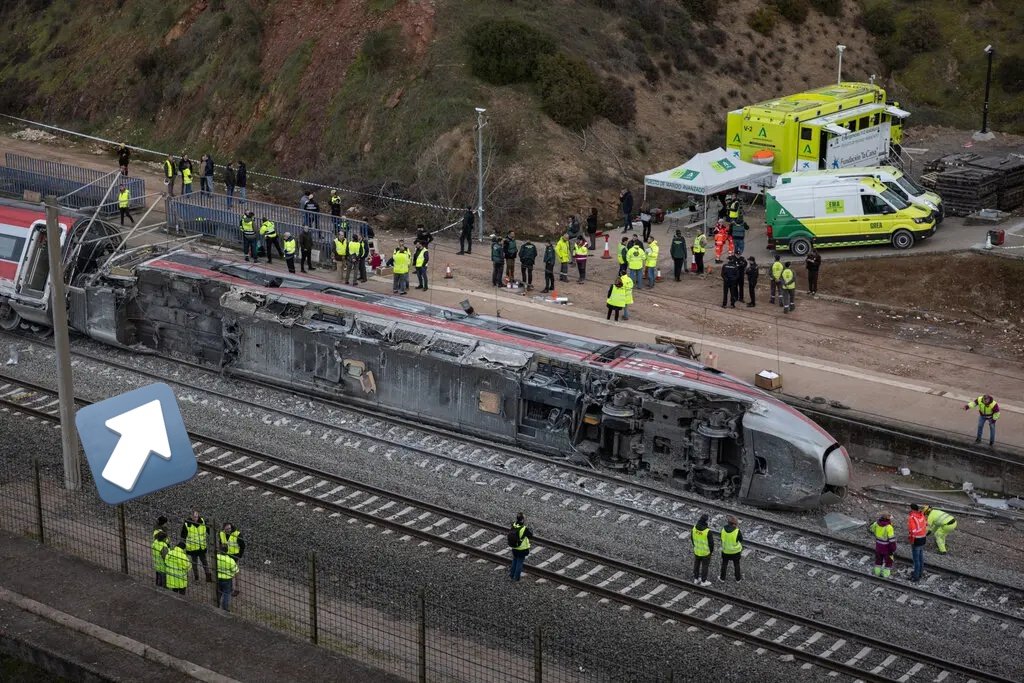
I think we're now able to build a pretty clear picture of the most likely mechanism of the train crash at Adamuz in Spain.
1️⃣
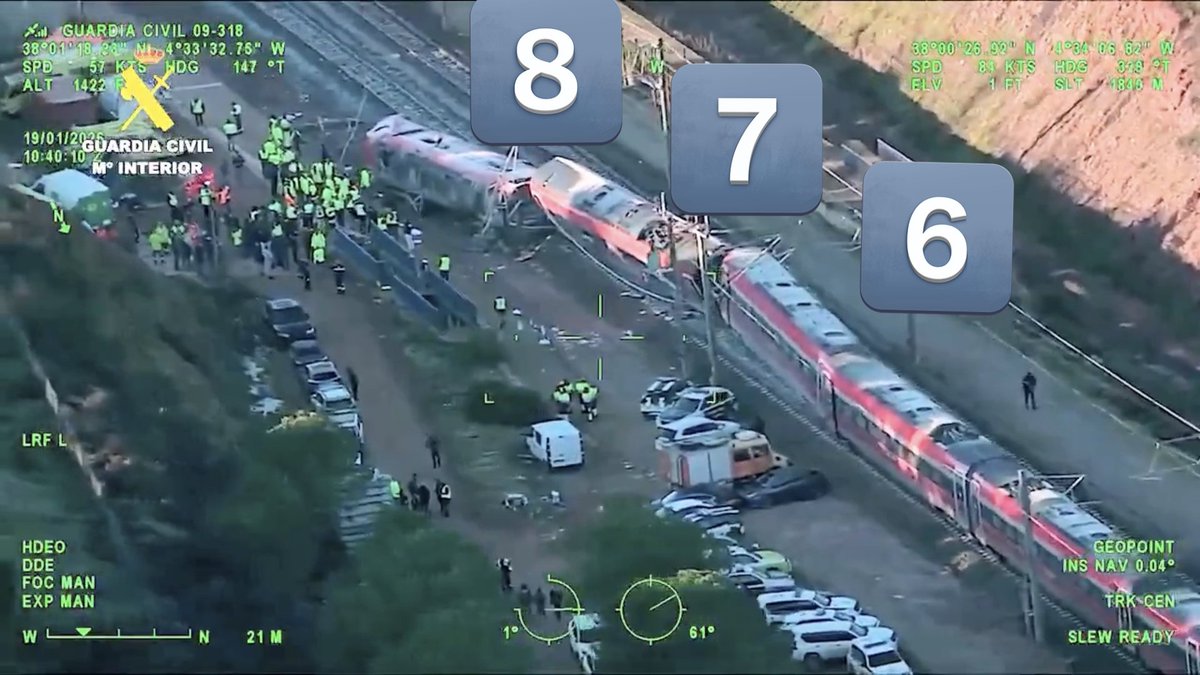
The northbound Madrid train (a red Frecciarossa 1000 operated by Iryo) passes over a rail weld, likely fractured within its heat-affected zone, that breaks under the impact of the passing train.
2️⃣
The first 5 cars of the 8-car train pass safely over the break, but repeated impacts turn a break into a catastrophic rail failure, and the 3 rear cars of the northbound train are derailed as the rail shatters.
From what I understand, the Interoceánico train that tragically derailed killing 13 people yesterday WAS NOT the High Speed Train of the type I refer to in the video below. An awful lot of people in my mentions jumping to conclusions without knowing the facts.
The challenge for Mexico is that they have no independent investigating body like the NTSB or RAIB. The pressure now needs to be applied to ensure that the investigation is thorough and transparent - or even better that the chance is taken to create an new body.
Further clarity: there is nothing "high speed" about the Tren Interoceánico system. The HST, or "High Speed Train" is specifically the original name of the formation of locomotives and passenger cars that was introduced in GB in the 1970s, capable of running up to 125mph.
Let's post some receipts, for the benefit of anyone attempting to defend @LordPeterHendy, @SYSTRA_UKIRL and @NetworkRail's actions in some way. Because I have a folder of this stuff.
Off the bat, I am going to make an apology and say that I won't do alt text for this thread as it is too onerous - however if you require alt text for accessibility reasons, please just DM me and I can send you the whole lot directly.
So, a few highlights. First up, back in June when I was sorting out my employment with @SYSTRA_UKIRL, I had already made clear statements that I would be continuing my advocacy for rail and my role as a writer and public expert on transport.
I don't know who needs to hear it, but giving public sector workers a decent above-inflation pay rise is probably one of the quickest ways to turn the UK economy around.
(I do know who needs to hear it, it's Labour shadow cabinet members.)
All the people replying to this saying this will increase inflation: you are wrong and your ignorance is very dangerous. Parrot your Friedman propaganda elsewhere. theconversation.com/why-wages-shou…