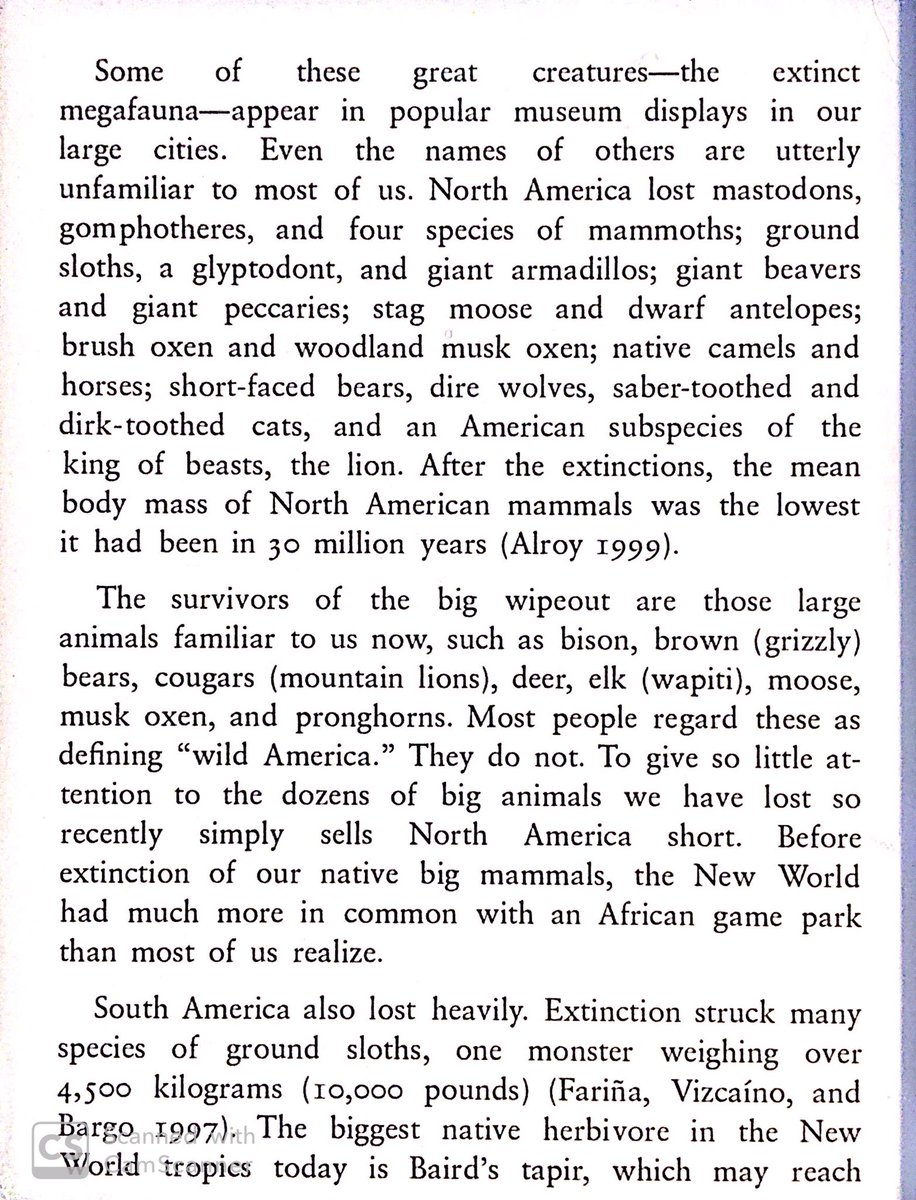
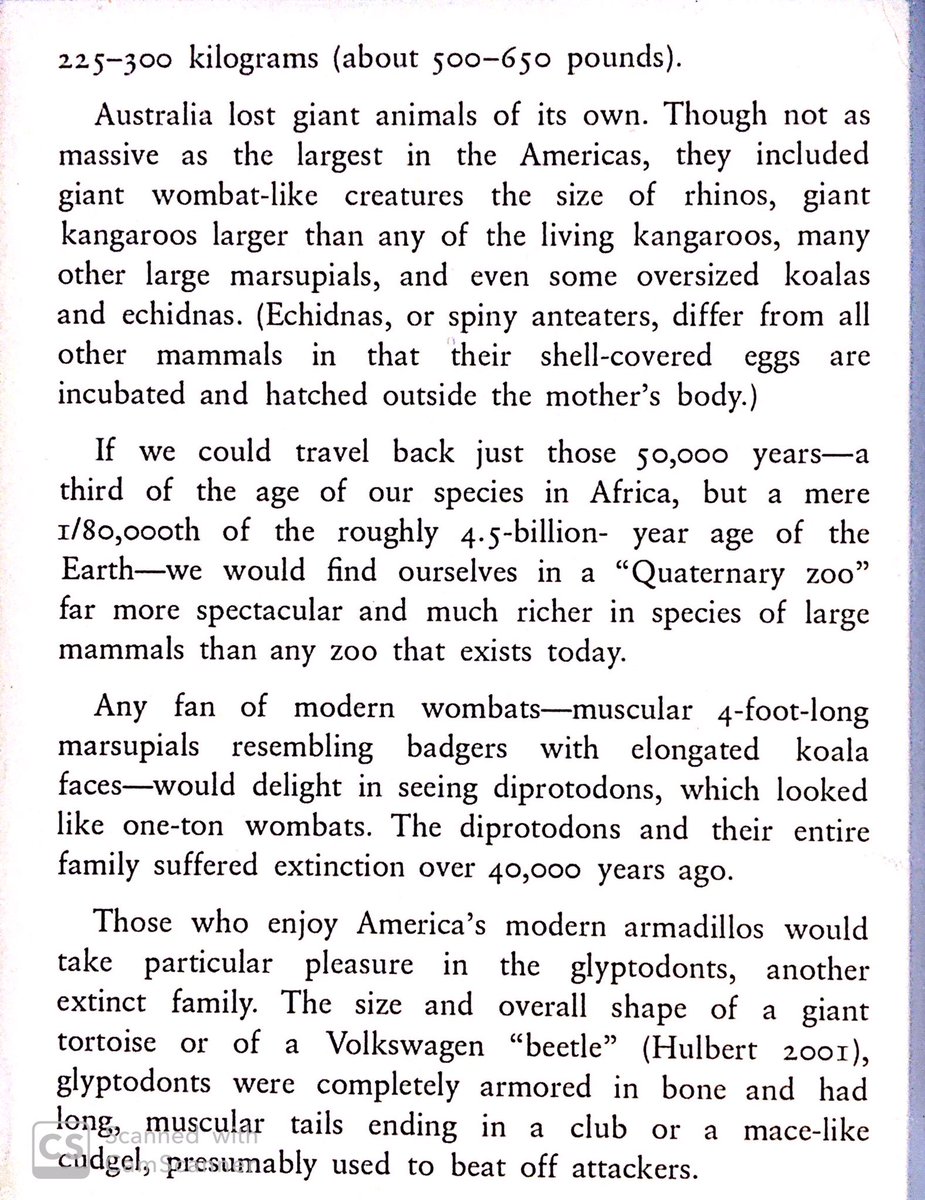
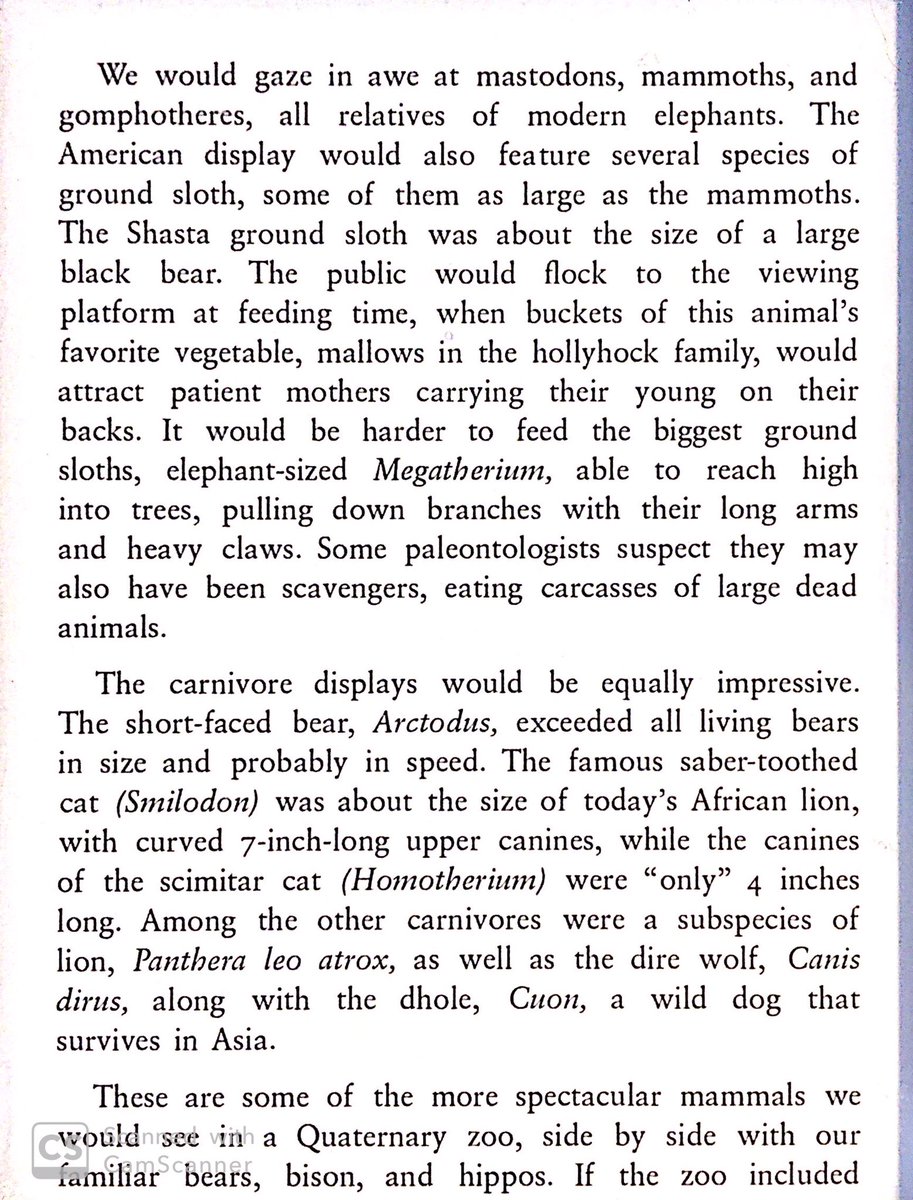
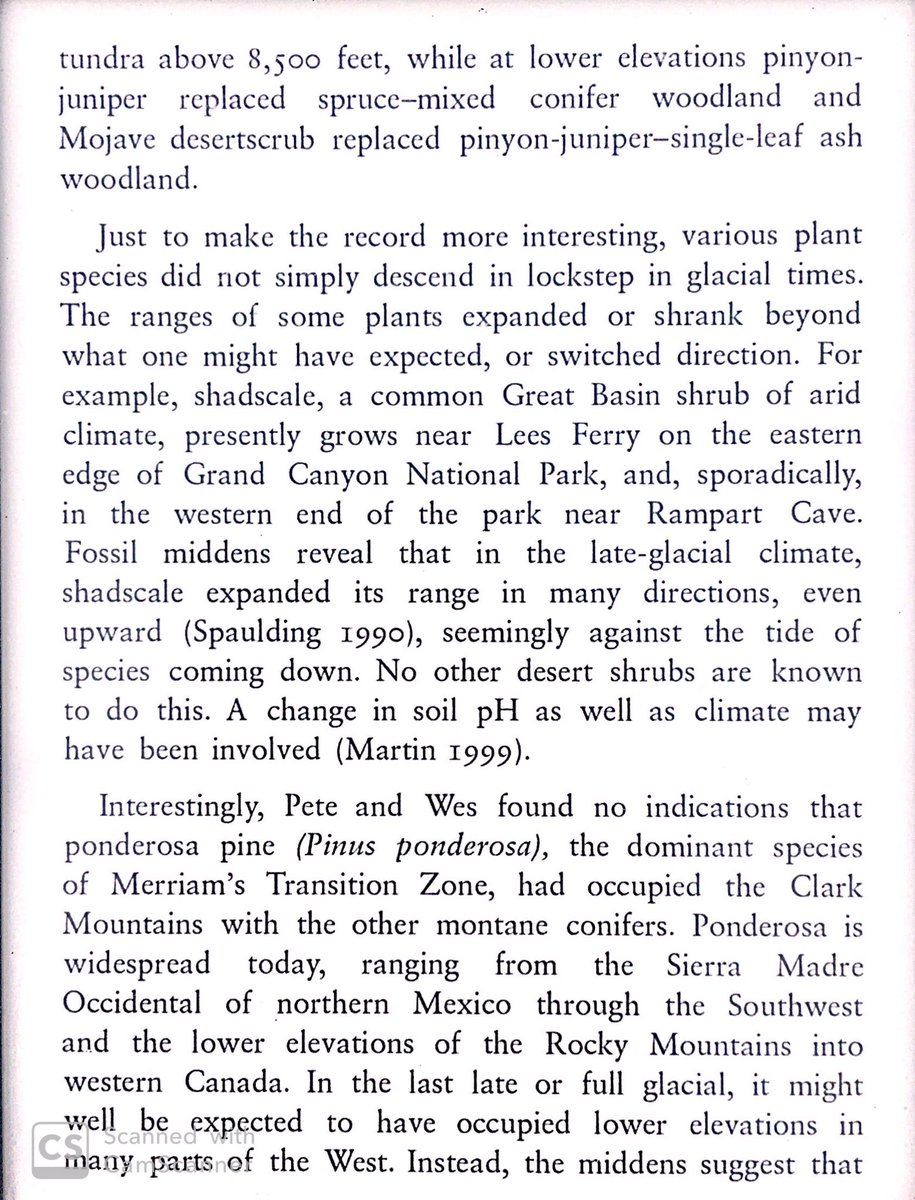
Thread with excerpts from “Twilight of the Mammoths: Ice Age Extinctions and the Rewilding of America” by Paul Martin
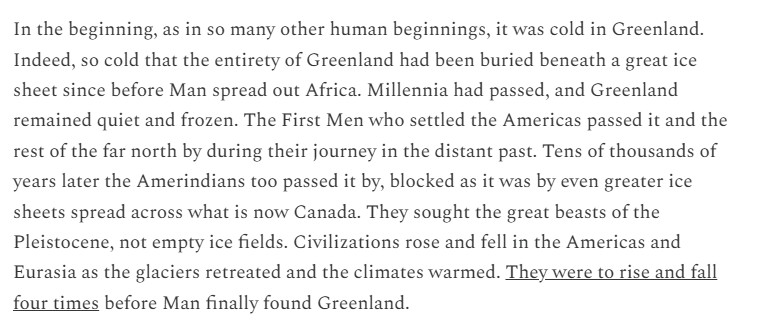
In the last 50k years, half of the 200 genera of mammals over 100 lbs have gone extinct. Amongst them are giant armadillos, dwarf antelopes, giant beavers, American lions, giant ground sloths, dire wolves, sabre-tooth tigers, giant kangaroos & more.
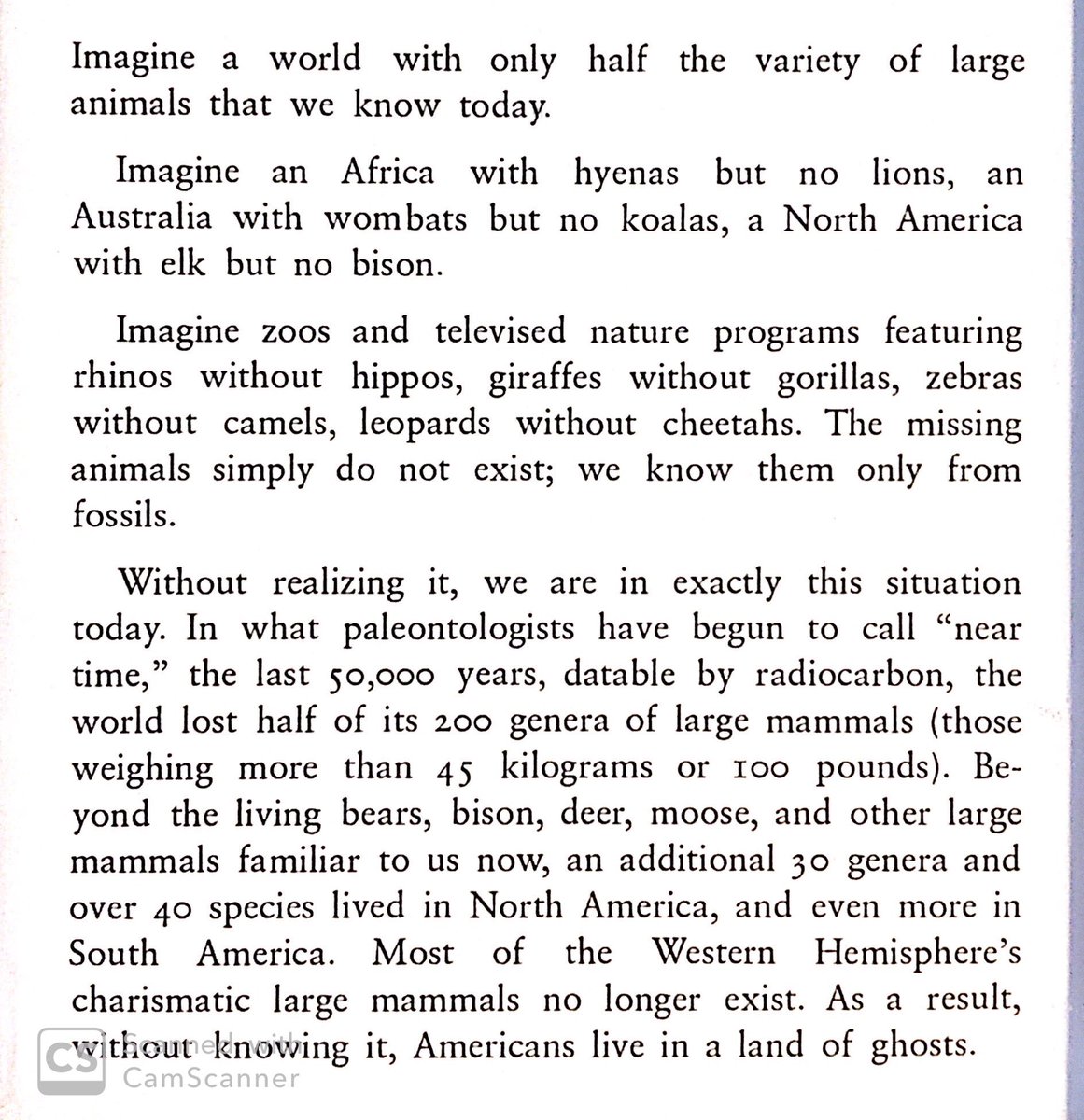
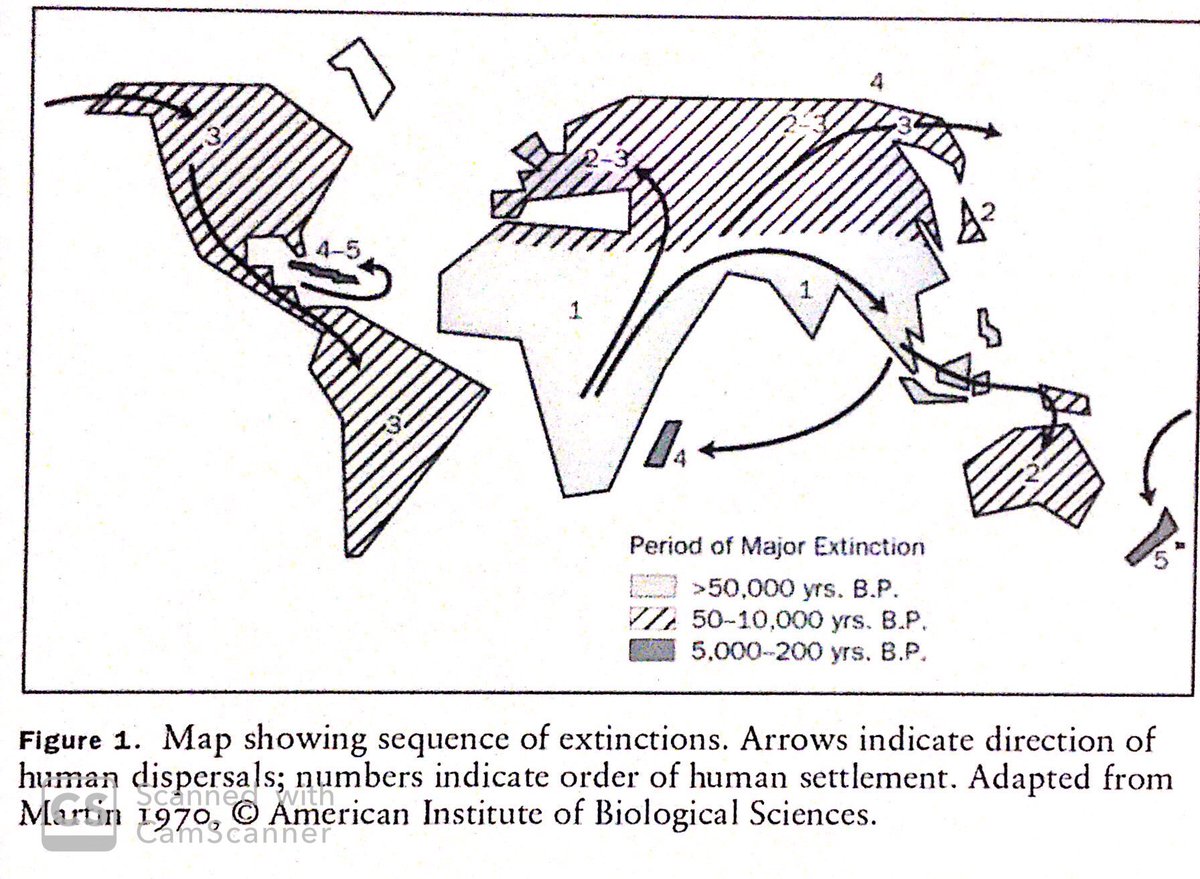
Spread of humanity can be seen in the fossil record. The large mammals go extinct & cease to leave theirs.
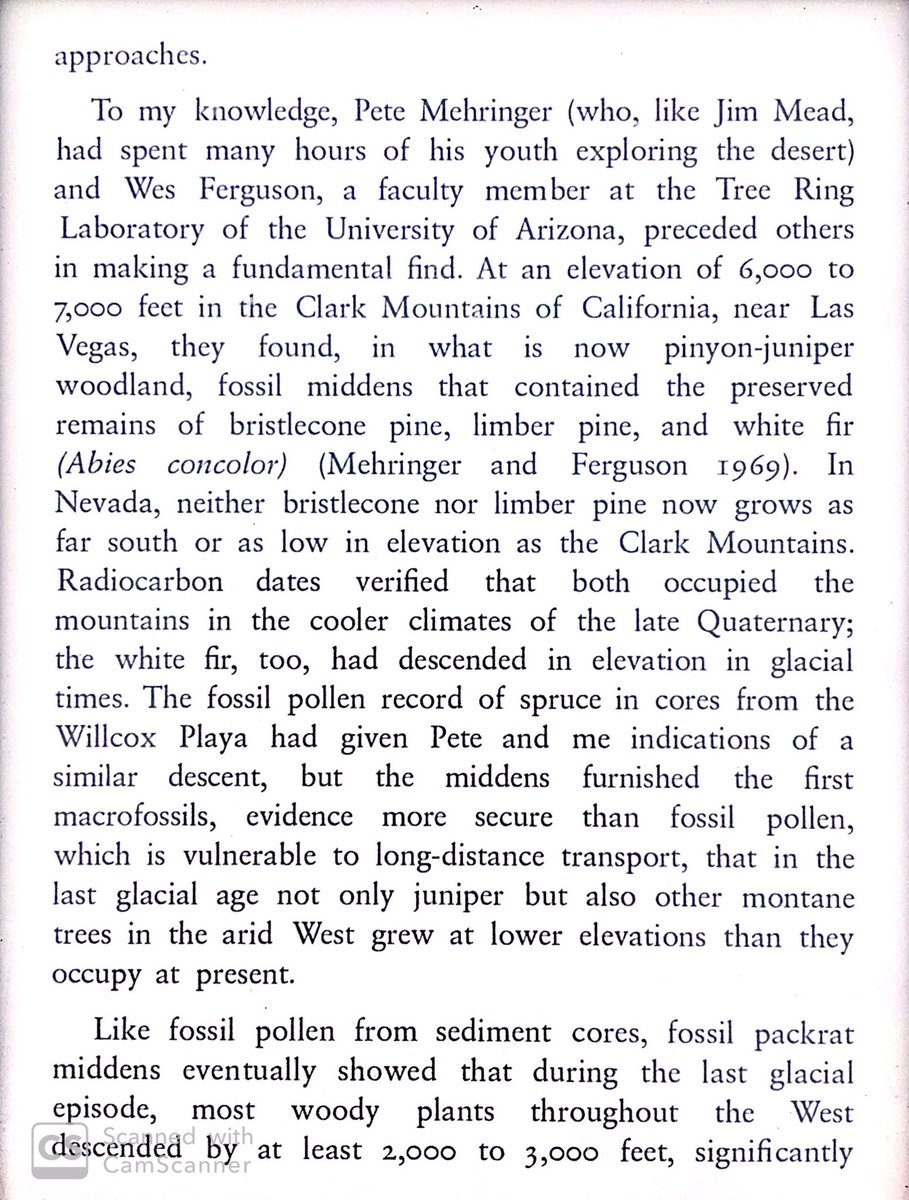
Old animal waste used by archaeologists to figure out the shifts in plant life during & after the last Ice Age
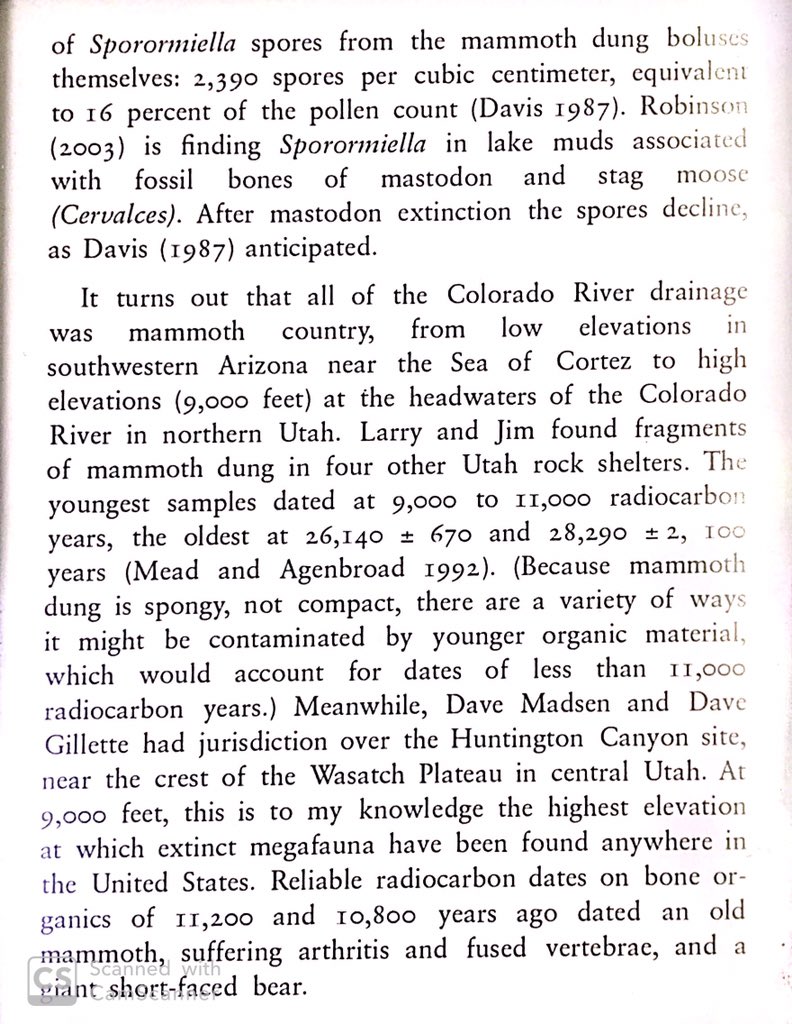
Wooly mammoths lived in the entire Colorado River drainage area, from the Sea of Cortez to northern Utah.
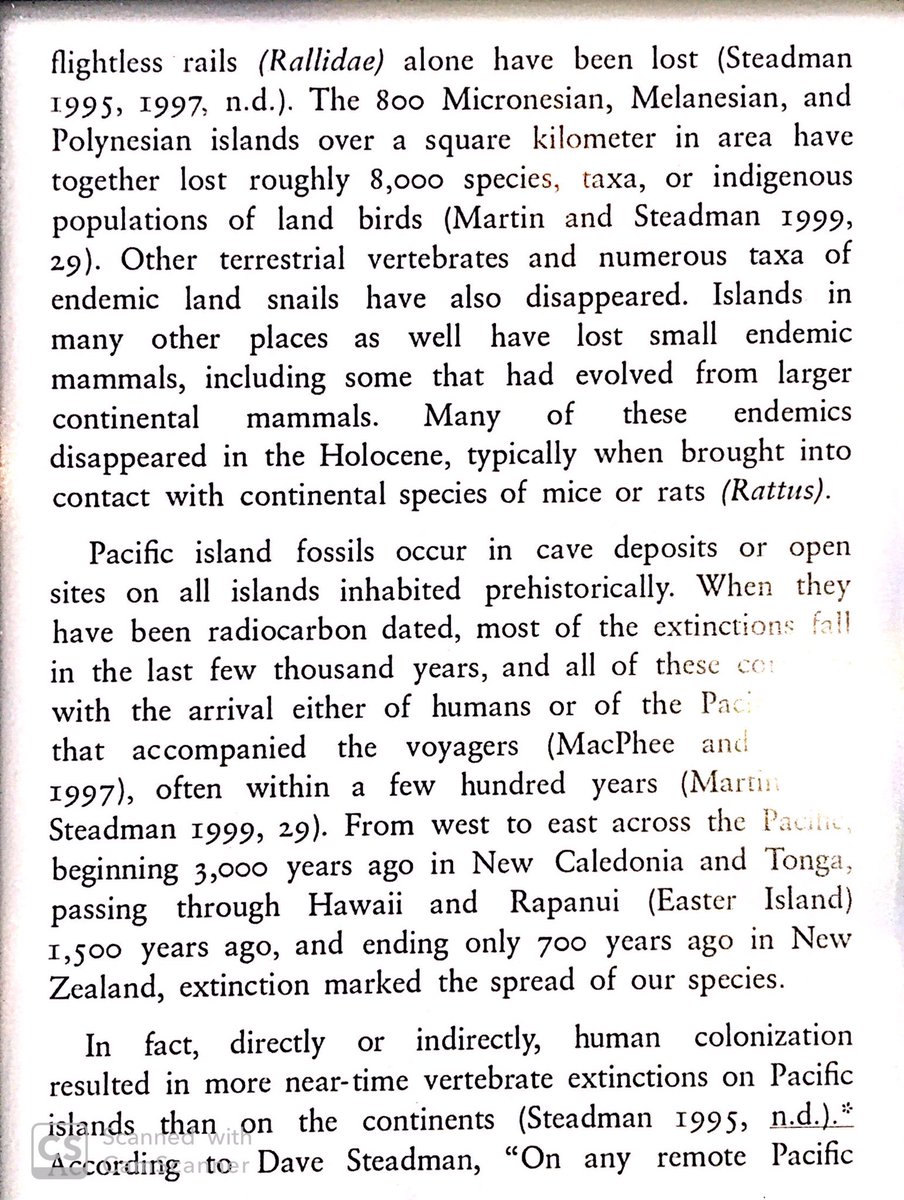
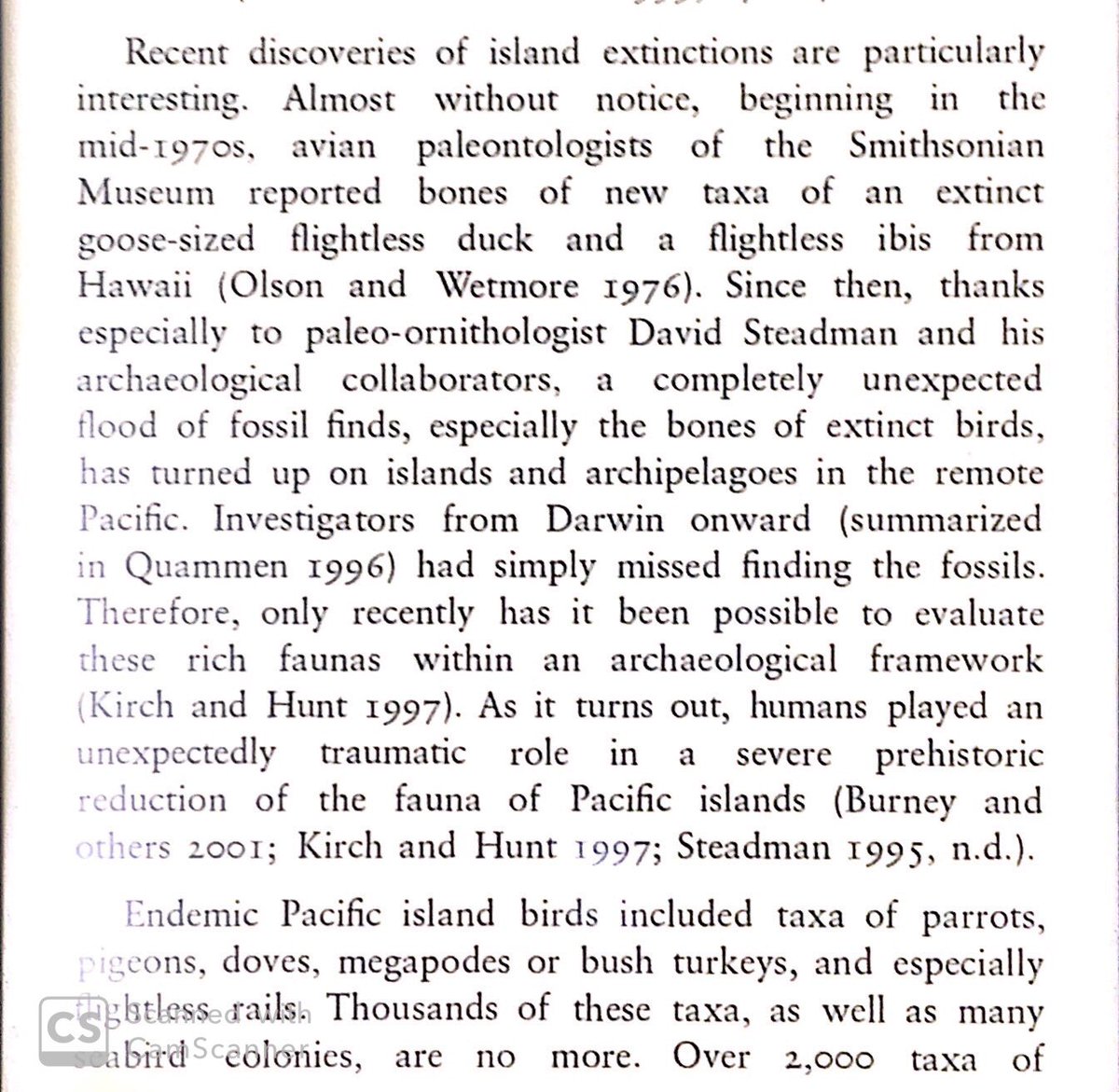
Human colonization of the Pacific led to extinction of 8000 bird species. Partly due to hunting, partly due to rats.
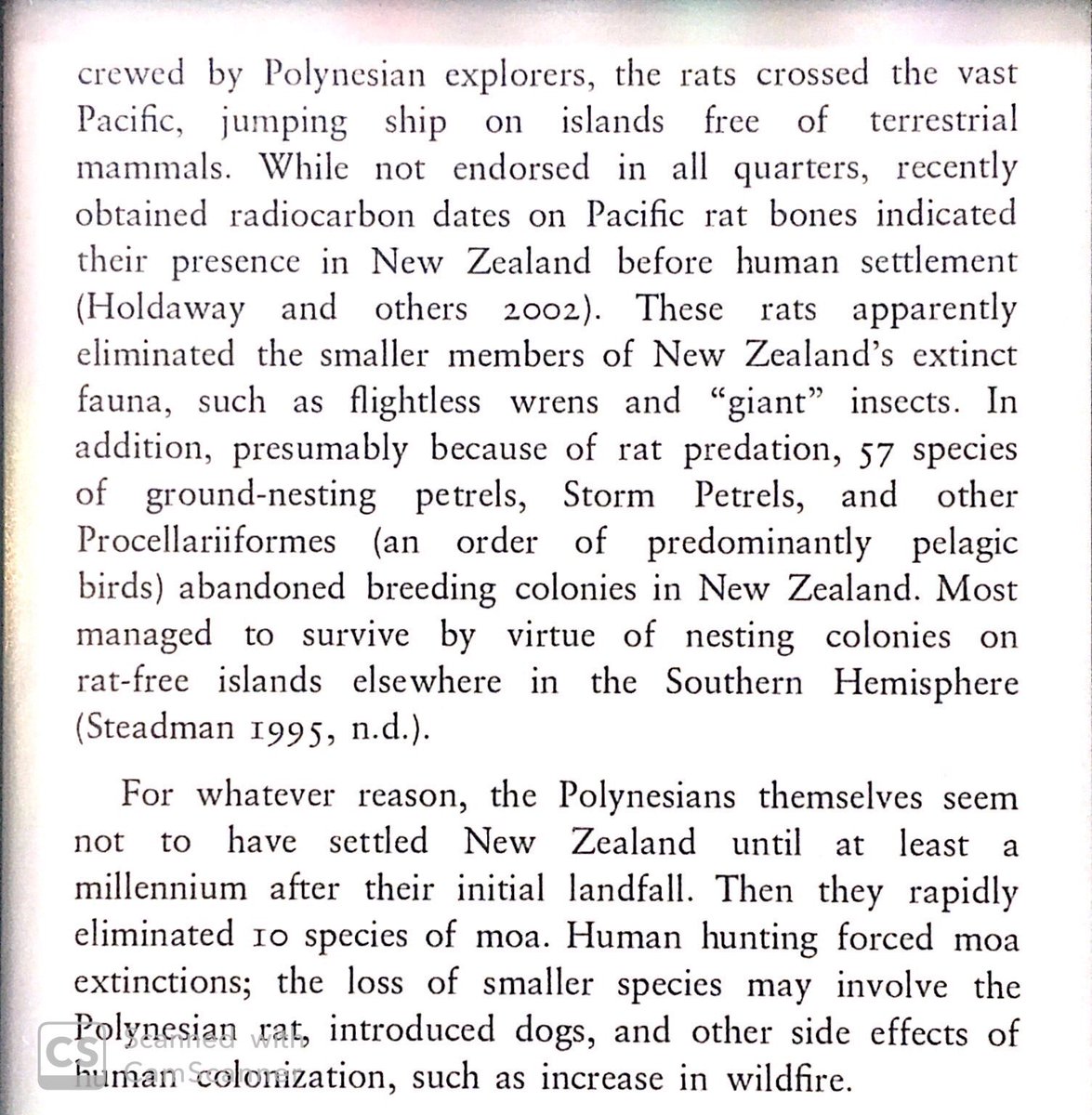
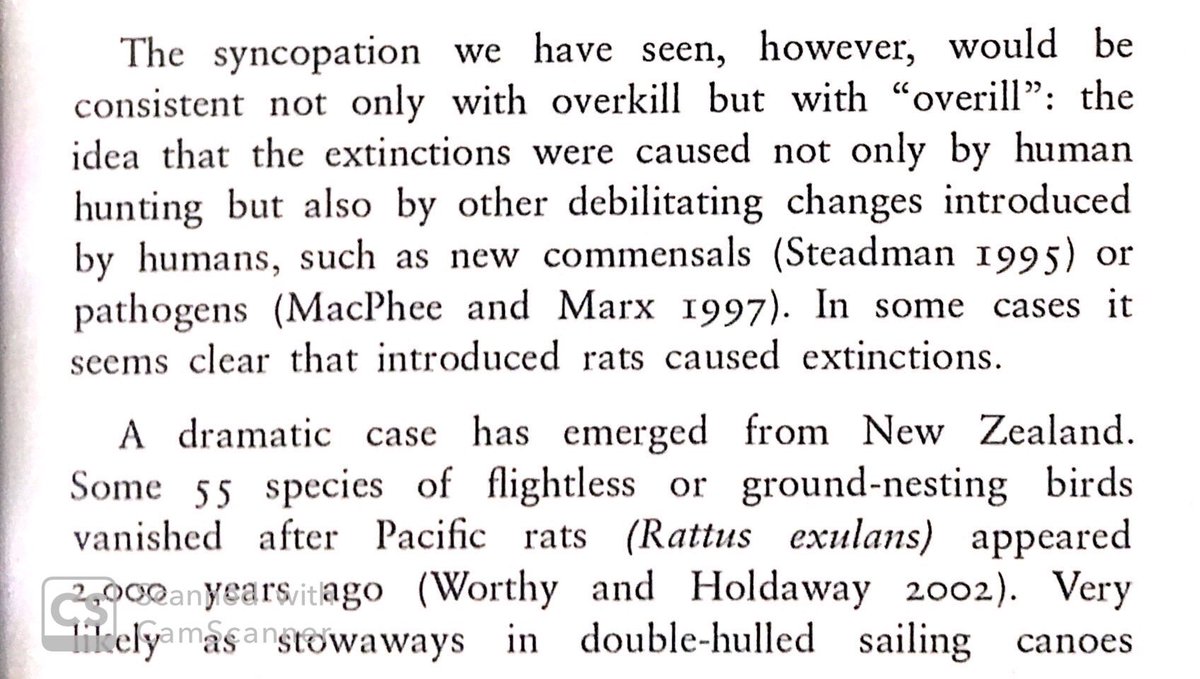
Rats were brought to New Zealand by Polynesians over a thousand years prior to permanent Polynesian settlements. Mystery why Polynesians took so long to settle NZ.
• • •
Missing some Tweet in this thread? You can try to
force a refresh

apparently it was more dangerous to be a polemicist in 1870s Kansas than in the South
persecution of innocent poasters by hack judges & sinister feds is sadly an old American tradition
a hundred years before the founding of the Cannonball Run, Americans had the New Orleans to Saint Louis steamboat race. The race took a similar amount of time.
Thread with excerpts from "The Other Quiet Revolution: National Identities in English Canada, 1945-71" by Jose Igartua
Author argues national identity among English-speaking Canadians died entirely in mid-20th century, and was replaced by a broader civic identity. Nonetheless there is still an English-Canadian nation that can be seen sociologically through shared culture.
90% of Canadians read at least one newspaper in 1969, compared to only 68% watching television news. Spread of opinion polling ended up restricting range of public discussion.
Thread with excerpts from "Lies of the Tutsi in Eastern Congo/Zaire. A Case Study: South Kivu (Pre-Colonial to 2018)" by John Kapapi
At the time of the 1884 Berlin Conference, what is now the eastern Congo was ruled by eight kingdoms. Rwanda had yet to be united. Per the author, Rwandan (Tutsi & Hutu) migration west of Lake Kivu was minimal at the time.
Belgians created two chiefdoms in North Kivu. One was given to Tutsi from Hunde in 1922, & other was bought from the Hunde in 1939. Conflict with Hunde led to Tutsi preferring to flee to South Kivu during the dynastic struggles following overthrow of King Rwabugiri in 1895.
In line with archaeology, western & central Iberia were populated by hunter-gatherers distinctive from those on Mediterranean coast by their higher Magdalenian ancestry. Those hunter-gatherers had a resurgence over the EEFs as elsewhere during neolithic.
Steppe ancestry in IEs was diluted by the time that they reached SW Iberia at end of third millennium, in line with other studies. However, there are signs of an Eastern Mediterranean migration to Iberia in Bronze Age or earlier:
There was substantial migration to urban areas in Portugal during the Roman period from Eastern Mediterranean and North Africa. If these samples are representative, about half of the urban population was foreign-derived. Date of the site isn't provided, but was after 100 BC.