Let’s talk about the fact that both the attack rate and the death rate among the young is indeed very low with COVID19, unlike most prior pandemics. And let’s speculate about some of the biological reasons. 1/
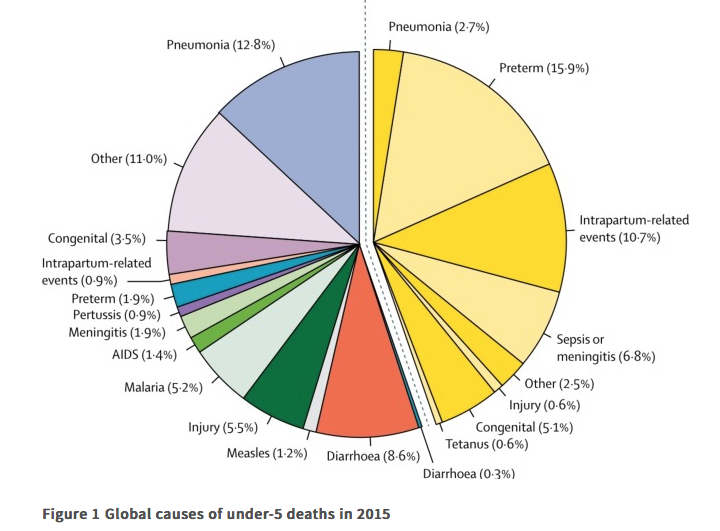
Kids suffer so much from infectious disease around the world. It’s their leading killer (thelancet.com/journals/lance… ).
And so I find it haunting and sweet that they might escape the predations of COVID19. 2/
And so I find it haunting and sweet that they might escape the predations of COVID19. 2/
Let’s define some terms. The “attack rate” is the probability that a person will come to be infected during an epidemic. Even for COVID19, it is unlikely to be >40% in the end (i.e., within the next three years); maybe just 20% of us will get it, eventually. 3/
The “infection fatality rate” (IFR) is the probability a person will die if infected. The “(symptomatic) case fatality rate” (sCFR or CFR) is the probability of death, given that one comes to medical attention (or has symptoms). 4/
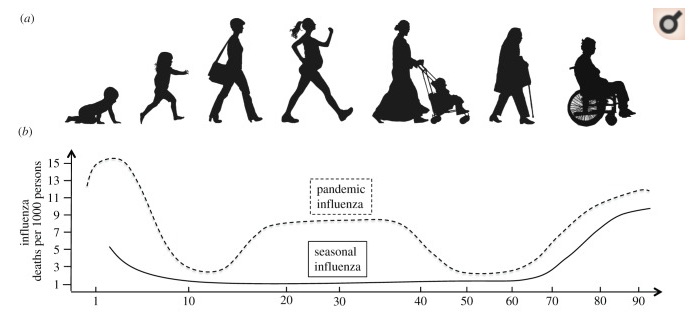
In most respiratory disease pandemics, both the very young and the very old are likely to die, resulting in a U-shaped function with age. The 1918 pandemic famously had a W-shaped function (where working-age adults also died). COVID19 is different: curve is flat at young ages. 5/
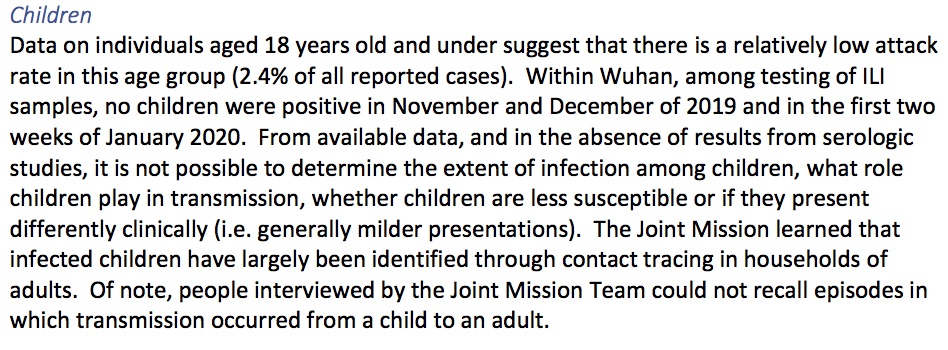
From early on, it was clear COVID19 spared children. In Wuhan, no children tested positive between November 2019 and mid-January, per an early @WHO report who.int/docs/default-s… 6/
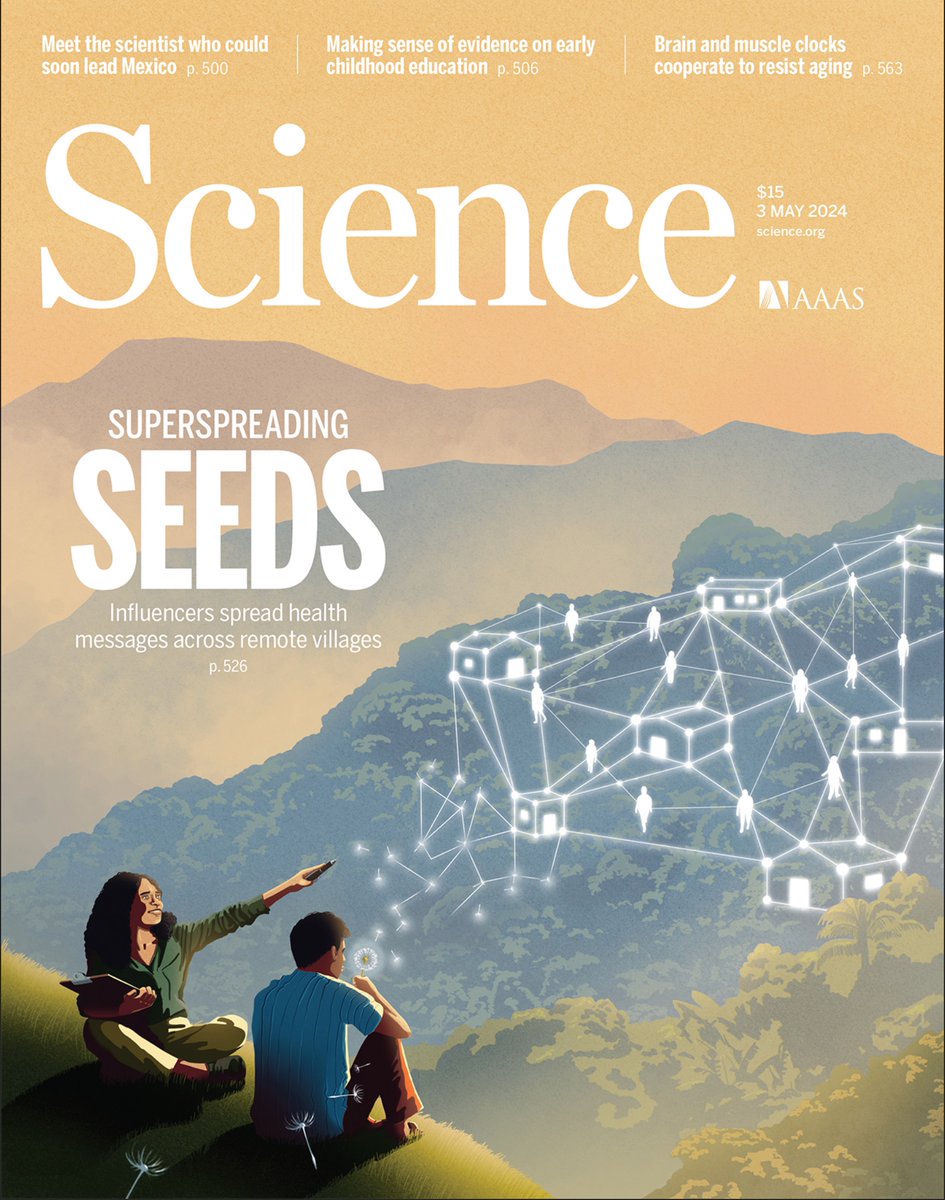
A study of 391 cases and 1,286 close contacts in Shenzhen, China, showed that kids under 9 had an attack rate of 7.4%, similar to adults (though adults 60-69 had a higher attack rate of 15.4%). medrxiv.org/content/10.110… 7/
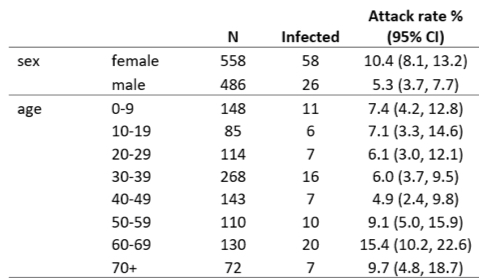
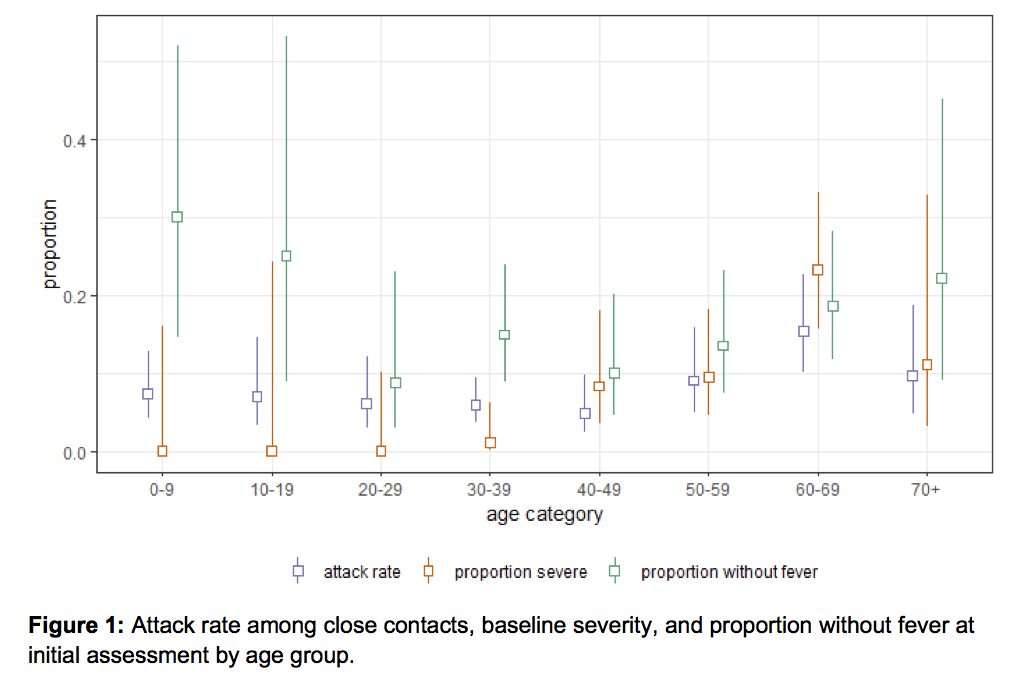
Overall, children were at a similar risk of infection as the adult population, though less likely to have severe symptoms, if infected. medrxiv.org/content/10.110… 8/
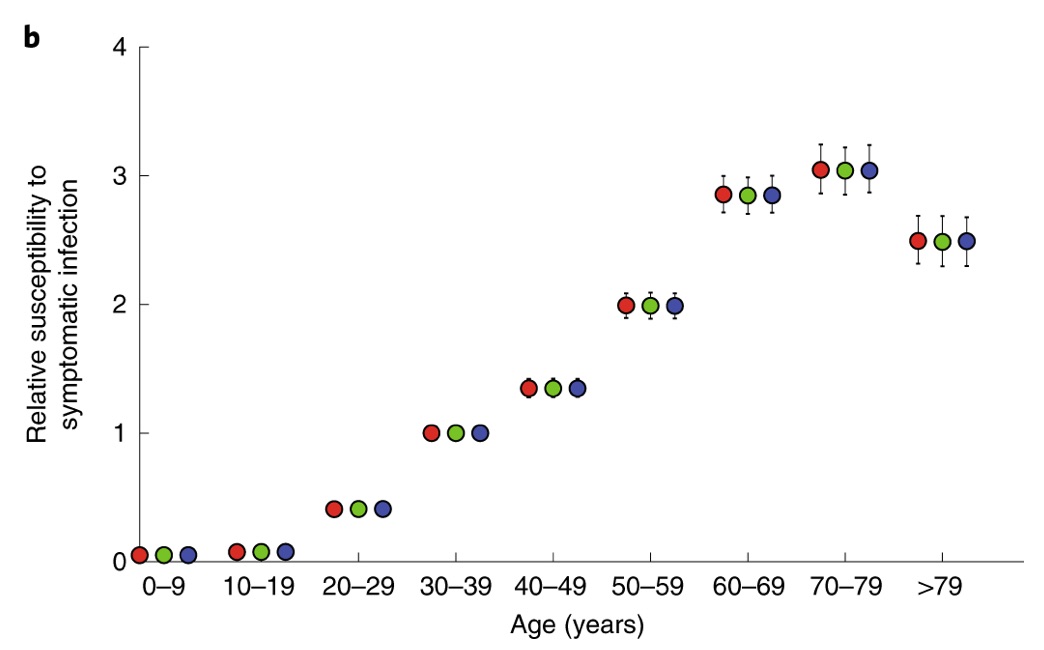
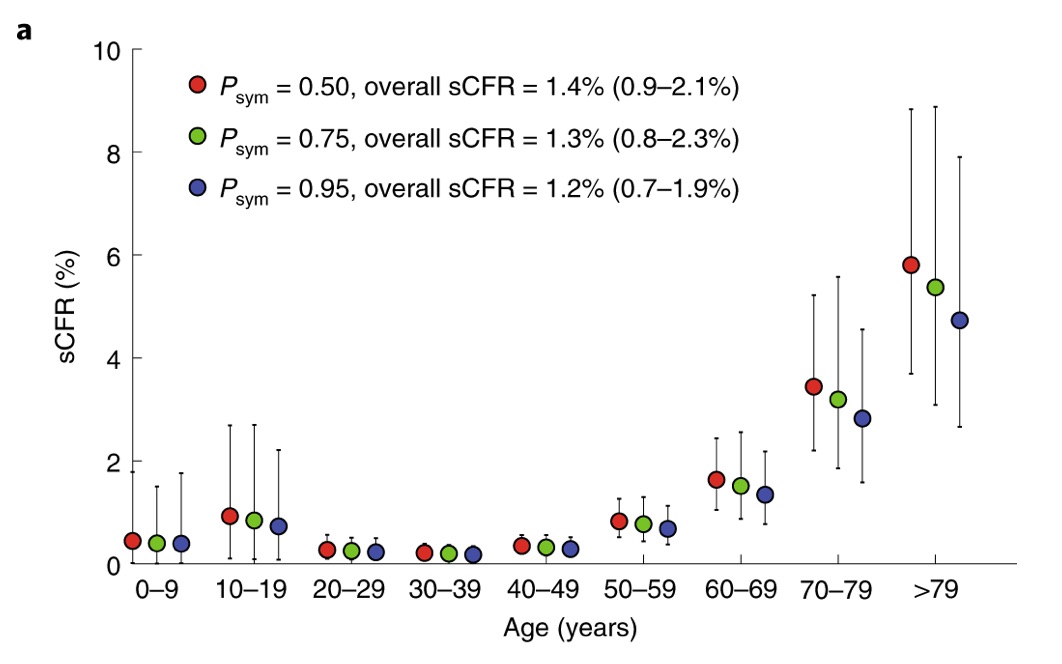
Another sophisticated study using multiple sources of data concluded that, compared to those aged 30–59 years, those aged <30 years and >59 years are 0.16 and 2.0 times more susceptible to symptomatic infection. nature.com/articles/s4159… via @NatureMedicine 9/
In other good news, transmission from pregnant women to their children in utero (known as ‘vertical transmission’) seems rare for COVID-19, too. jamanetwork.com/journals/jama/… This is similar for SARS (from 2003). who.int/csr/sars/en/WH… 10/
Not only is the ‘attack rate’ low in children (which we will need to confirm, eventually, with 'serological' tests in large random samples, as per:
https://twitter.com/NAChristakis/status/1240689935557865472?s=20), but the fatality rate, among those kids who do get infected, is VERY low. Yay! 11/
In Wuhan, China, a very small proportion of those aged under 19 years developed severe (2.5%) or critical disease (0.2%), an early study showed. who.int/docs/default-s… 12/
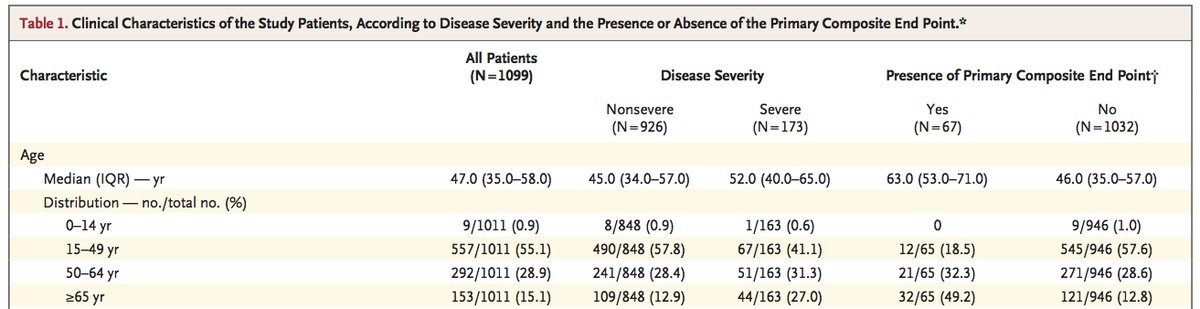
In a study of 1,099 patients in China, via @NEJM, just 0.9 percent of confirmed cases were <14, and none died. nejm.org/doi/full/10.10… 13/
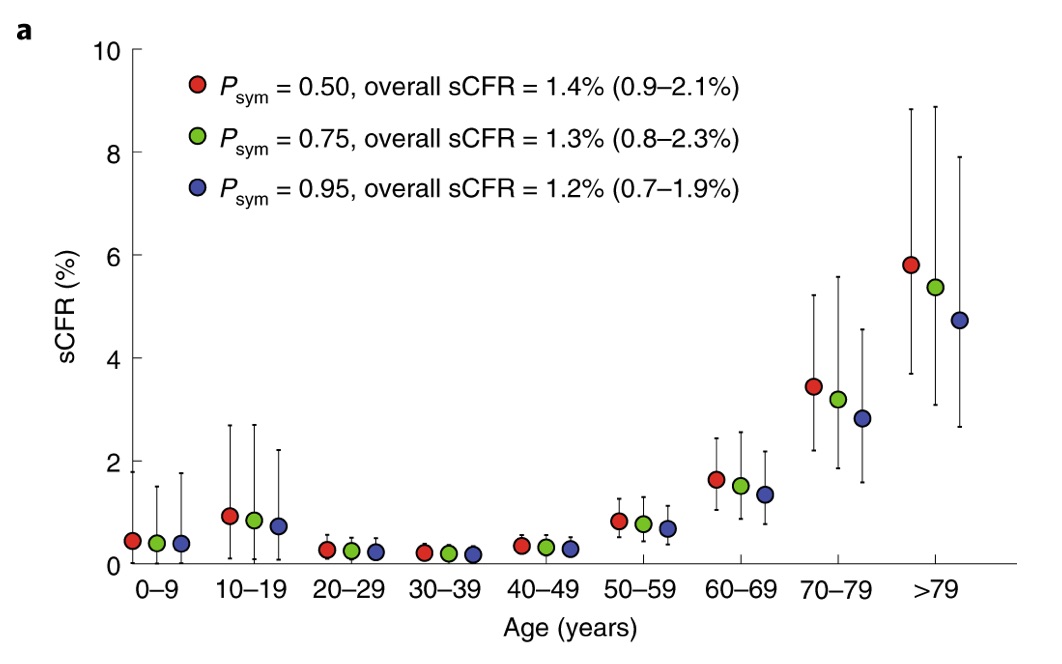
Another sophisticated study (cited above, too), using multiple sources of data nature.com/articles/s4159…, found that, if probability of developing symptoms after infection, Psym, is 0.5, the sCFR values are 0.3% (aged <30 years), 0.5% (30–59 yrs) and 2.6% (>59 yrs). 14/
In the Diamond Princess cruise ship, there were 3,711 people and 634 cases of COVID19 (an attack rate of 17%). Half were asymptomatic. There were just 39 people <19 years old; only 5 got infected and only 2 had symptoms; and none died. medrxiv.org/content/10.110… 15/
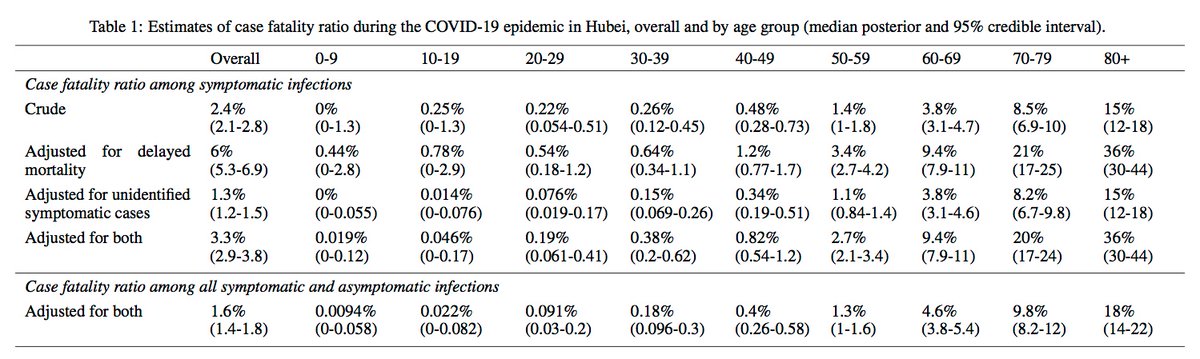
So, a sophisticated summary of COVID19 fatality in both symptomatic & asymptomatic patients (via medrxiv.org/content/10.110… ) is:
Age 0-9: 0.0094%
Age 10-19: 0.022%
Age 20-29: 0.091%
Age 30-39: 0.18%
Age 40-49: 0.4%
Age 50-59: 1.3%
Age 60-69: 4.6%
Age 70-79: 9.8%
Age 80+: 18%
16/
Age 0-9: 0.0094%
Age 10-19: 0.022%
Age 20-29: 0.091%
Age 30-39: 0.18%
Age 40-49: 0.4%
Age 50-59: 1.3%
Age 60-69: 4.6%
Age 70-79: 9.8%
Age 80+: 18%
16/
But the best study to date (via @AmerAcadPeds) – of 2,143 pediatric patients in China – found that, while 90% had mild or moderate illness, children <1 are indeed more likely to have critical illness, if infected. pediatrics.aappublications.org/content/pediat… 17/
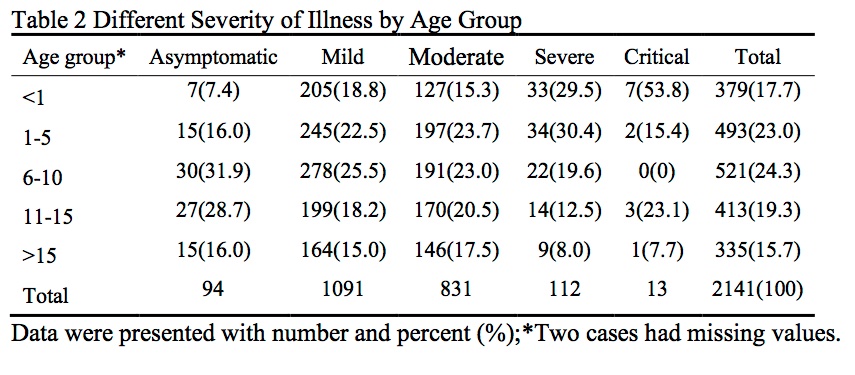
Yet, just one child out of the 2,143 in this large Chinese pediatric cohort (who was age 14), actually died. So death among kids with COVID19 is indeed *very* rare. nytimes.com/2020/03/17/hea… 18/
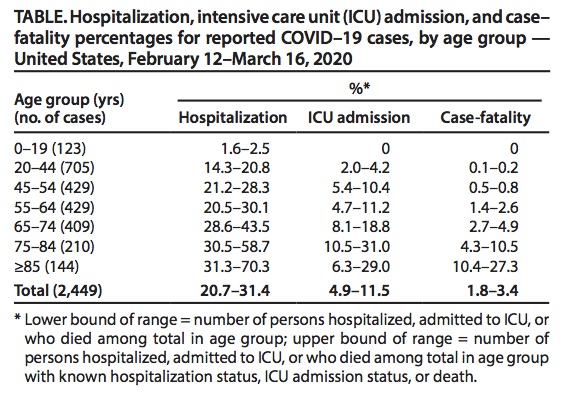
In the USA, as of March 18, a similar age-pattern for COVID19 was observed by the @CDCgov. Among 2,449 cases, with 123 below age 19, there were no deaths in that young age group. cdc.gov/mmwr/volumes/6… 19/
Something similar, in terms of relatively benign course in kids, was observed in the 2003 SARS pandemic (a similar, albeit much more deadly, pathogen – CFR of ~10%), as well. In Hong Kong, no one <24 years died but >50% of patients >65 died. who.int/csr/sars/en/WH… (Table 3) 20/
Of course, with 100,000’s of people infected in USA, there will be some cases of young people dying. And they will get news coverage. 21/
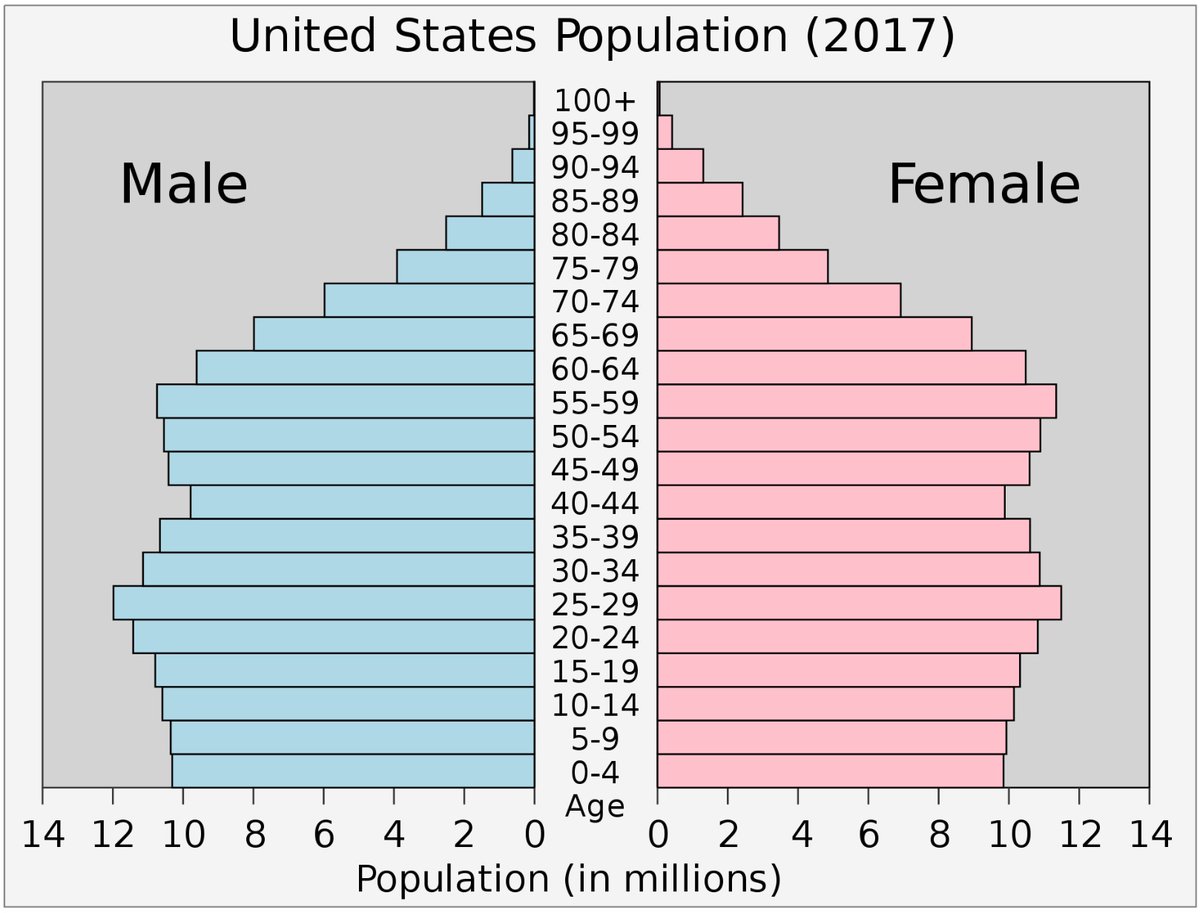
The total US population of people <24 is about 104,000,000. With an attack rate of 7.4% and a CFR of ~0.04%, this means that about 3,000 young Americans will die of COVID19. 22/
But, even if death from COVID19 is rare for kids, they will be badly affected by our *responses* to the COVID19 pandemic -- which involve unemployment, dislocation, and fear -- as this fine essay in @TheAtlantic argues: theatlantic.com/health/archive…
Kids suffer in disasters. 23/
Kids suffer in disasters. 23/
To be clear, kids can indeed *transmit* the disease, which one reason (of several) that school closures are an effective tool for tamping down on the COVID19 epidemic. The little vectors.
https://twitter.com/NAChristakis/status/1235204443362205699?s=2024/
There are a number of possible biological explanations for kids’ relative lack of sensitivity to COVID-19: the-scientist.com/news-opinion/p… Immunologists and pediatricians have many ideas, but we just don’t know for sure yet. [thread continues...] 25/
One idea is that children have more “adaptive” immunity (optimized for pathogens they have *not* previously seen) and that adults have more “memory” driven immunity (geared to pathogens they have indeed seen before). 26/
Another idea, via @MackayIM, is that past immunity to *other* coronaviruses might make COVID19 worse for adults by an immunological *over-reaction* to a novel coronavirus. A lot of COVID19 morbidity may be due, actually, to our bodies overreacting to the virus. 27/
Or could it be that “ACE2 receptors” (a protein on our cells that the virus binds to) are more immature in the lungs of the young, and so they provide less of a target for SARS-CoV-2 to enter our cells (I think this unlikely). 28/
Another idea relates to the aging lung environment. In order for individuals not to overreact to irritants, aged lungs counter the usual immune reaction with some tamping down of inflammation. the-scientist.com/news-opinion/p… 29/
Children may have more efficient CD4+ helper T cells which stimulate B cells to make antibodies against pathogens. Possibly, the type of T cell that dominates early in life is better at repelling SARS-CoV-2. the-scientist.com/news-opinion/p… 30/
So there are lots of ideas about why kids might be spared. We need more SCIENCE.
But this much is already clear: kids are somewhat less likely to be infected with SARS-CoV-2 and substantially less likely to get seriously ill if infected. 31/
But this much is already clear: kids are somewhat less likely to be infected with SARS-CoV-2 and substantially less likely to get seriously ill if infected. 31/
Regarding the variation in our immune system with age, see: ncbi.nlm.nih.gov/pmc/articles/P… 32/
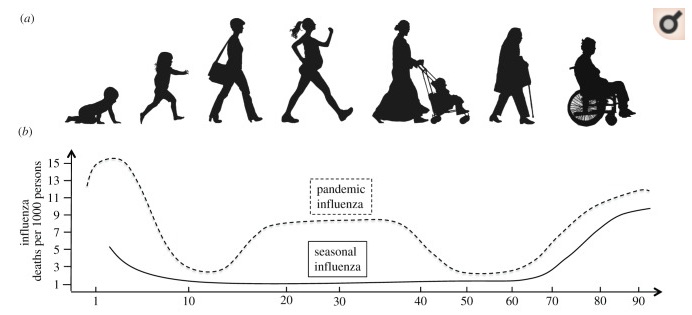
I need to note that, despite my delight that the young are spared in this pandemic, this does not mean that it’s no big deal that the elderly die! I’ve been very upset by the narrative that ‘it’s just old folks.’ We are speaking of our parents, grandparents, and neighbors! 33/
In the end, what will probably happen is that SARS-CoV-2 will become “endemic” (it will always circulate in our species and we’ll get used to it). Once kids are immunized by being exposed, they will not get as sick from it once they grow up to be the adults of tomorrow. 34/
These recent data, based on exactly the kind of random, population-based testing that we should be doing & that I mentioned, from Iceland & the Netherlands, suggests the attack rate at younger ages may *not* be much lower. But story is still uncertain.
https://twitter.com/alexandreafonso/status/1243557013759700997?s=2135/
https://twitter.com/alexandreafonso/status/1243557013759700997
Fine update thread on kids and COVID19, with recent references and statistics via @apsmunro
https://twitter.com/apsmunro/status/1252318574204596231?s=2136/
https://twitter.com/apsmunro/status/1252318574204596231
New paper @ScienceMagazine using Chinese data confirms lower attack rate of COVID19 for children compared to adults which in turn is still lower than the elderly. science.sciencemag.org/content/early/… 37/
• • •
Missing some Tweet in this thread? You can try to
force a refresh