Garth Nicholas Profile picture
Apr 2, 2020 10 tweets 2 min read Read on X
I am a medical oncologist, and a frequent part of my job is giving people bad news. Due to the pandemic I have been doing almost all of my clinic visits by phone or video the past three weeks, and I have some reflections on giving bad news remotely 1/9
Firstly, many of the principles are the same: assure you won’t be interrupted. Be ready to spend the time. Know the facts. SPIKES is a good template to start with. 2/9
I have always taught trainees that it is a mistake to try to find words to mitigate bad news: the news is bad, and there are no words that are going to make it not bad. So tell the truth, in the simplest words you can. 3/9
This can result in verbal messages that are blunt, and it’s necessary to combine them with respectful delivery, appropriate time for response, and compassionate acknowledgement of the reaction of the person and their family. 4/9
This latter part is what can get lost in the remote conversation: the ability to lean over and hold someone’s hand, to acknowledge the tears of the third family member, who is just outside the frame of the videoconference. 5/9
Tough as it can be by videoconference, I have found it harder still over the phone. It’s almost impossible to gauge the response of the person on the other end. There is silence after giving the news: are they crying, stunned, or waiting for you to say something else? 6/9
But it’s not all bad. Literature suggests many would rather get bad news at their home than in the clinic. As well, virtual visits free doctors from the tyranny of clinic schedules. We can call patients on successive days; we cannot book them on successive days in clinic. 7/9
So if I have any tips after a few weeks, they are these:

1. There are some advantages to doing this remotely: you’re not doing a bad thing.
2. Remote bad news visits should be videoconference, rather than phone.
3. Offer very short term follow up, even in a day or two

8/9
Most important, whether virtual or in person a bad news visit shouldn’t be a discontinuity. From the first consult people need to understand the gravity of their situation. When bad news comes it has to be within the range of what you have previously counselled them to expect.9/9
Stay healthy everyone! Stay home if you can. 10/9

• • •

Missing some Tweet in this thread? You can try to force a refresh

 

Keep Current with Garth Nicholas

Garth Nicholas Profile picture

Stay in touch and get notified when new unrolls are available from this author!

Read all threads

This Thread may be Removed Anytime!

PDF

Twitter may remove this content at anytime! Save it as PDF for later use!

Try unrolling a thread yourself!

how to unroll video
  1. Follow @ThreadReaderApp to mention us!

  2. From a Twitter thread mention us with a keyword "unroll"
@threadreaderapp unroll

Practice here first or read more on our help page!

More from @Garth_Nicholas1

Nov 3, 2022
Over time I’ve tweeted a lot about evidence-based medicine. But oncologists are often in situations with little or no evidence to guide them.

In these situations we go to “first principles”. But what are the first principles? Here’s a thread outlining those I think are key.
Principle #1 – First Do No Harm

This is a classic that has stood the test of time. There are all kinds of asterisks and caveats. But if your proposed course of action has known harms and unknown benefits, then maybe it’s time to stop and think if you’re on the right path.
Principle #2– Palliative vs. Curative

It’s essential to to be clear in your head whether you are proposing treatments with palliative or curative intent. All management decisions (toxicity, dose reductions) flow from this, and being unclear leads to muddled decisions.
Read 9 tweets
Nov 30, 2021
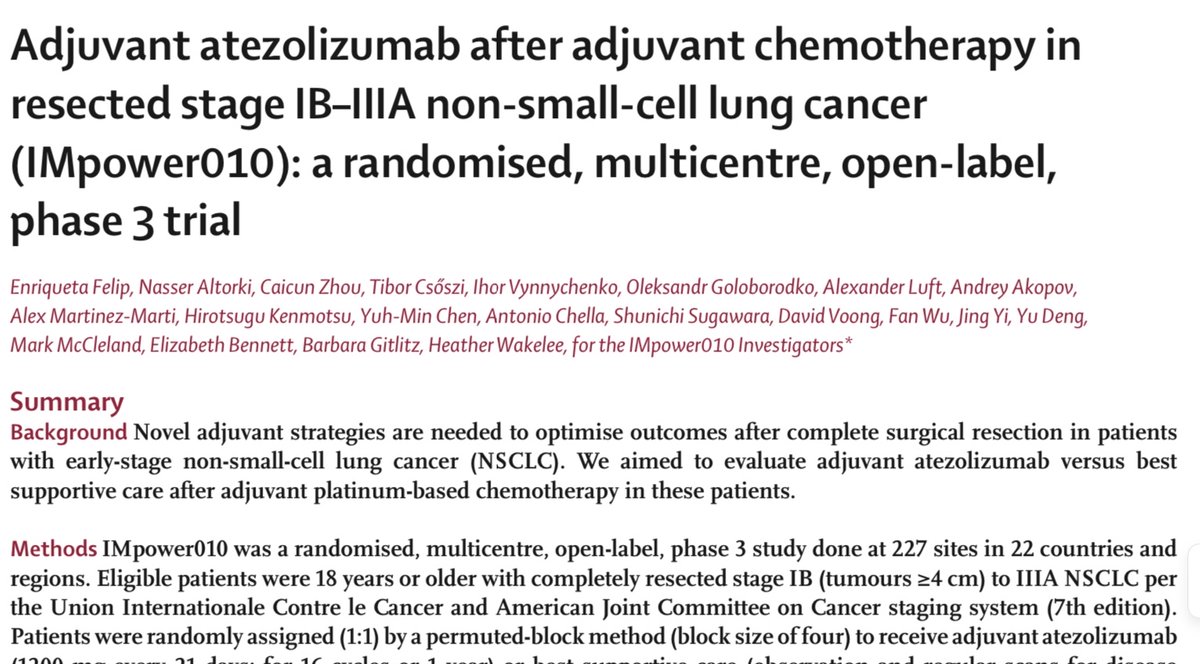
30 November: IMpower, adieu

This year for Lung Cancer Awareness Month #LCAM I’m going to summarize 30 important lung cancer trials over 30 days. These posts are directed at non-medical professionals, with descriptions of the results and of what makes a good trial. #lcsm 1/12 Image
I thought we’d close out the month with a trial that’s so new that its impact is not yet agreed upon, and its findings have not ossified into standard practice. It combines two strands that have run through the month: benefit of adjuvant therapy, and the advance of immunotherapy.
We have seen immunotherapy improve outcomes in metastatic NSCLC (Nov 13, 18) and locally advanced NSCLC (22 Nov) . This study moves immunotherapy earlier, into the adjuvant setting (see November 2, 14, 17, 25 for other adjuvant studies). 3/12
Read 12 tweets
Nov 29, 2021
29 Nov: Chemo/gefitinib, randomized phase II

For Lung Cancer Awareness Month #LCAM I’m going to review 30 important lung cancer trials over 30 days. These posts are directed at non-medical professionals, with descriptions of the results and of what makes a good trial.#lcsm 1/11
All of the randomized studies we’ve looked at to date have been phase III studies, meaning that they are randomized studies with sufficient statistical power to demonstrate a clinically meaningful difference. Today we’ll look at a randomized phase II study. 2/11
Traditionally, phase II studies were preliminary studies done to see if a treatment approach was promising enough to warrant a proper phase III trial. They were single arm, and considered “positive” if they met some pre-specified level of treatment activity. 3/11
Read 11 tweets
Nov 28, 2021
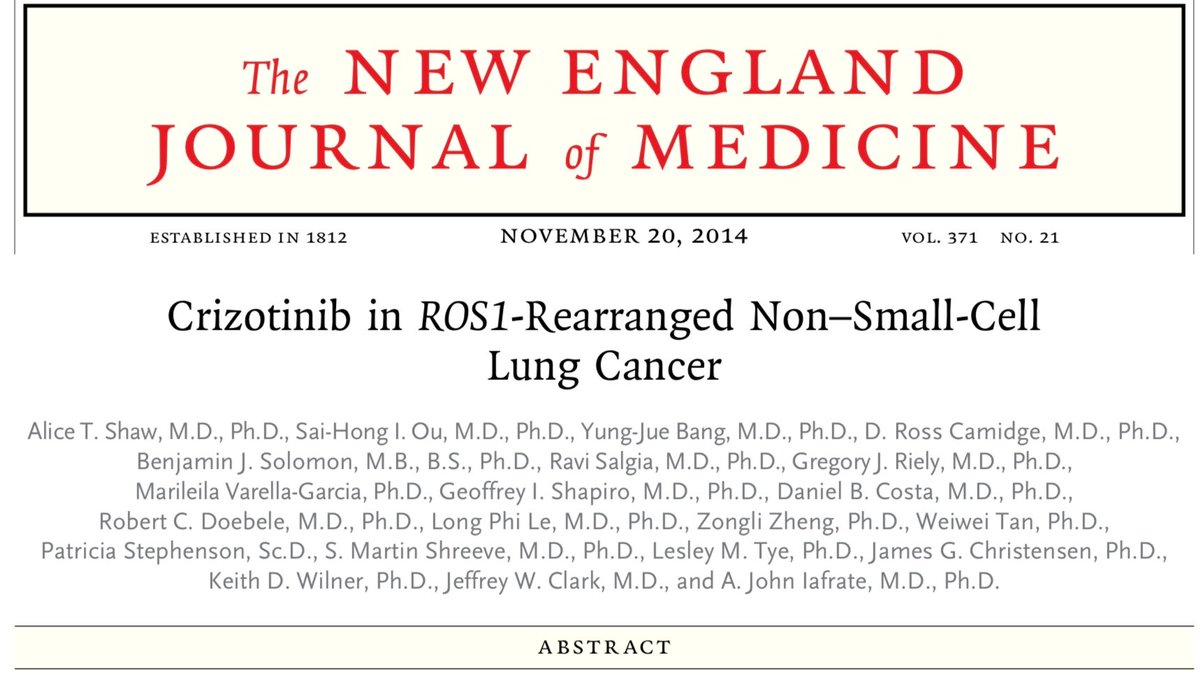
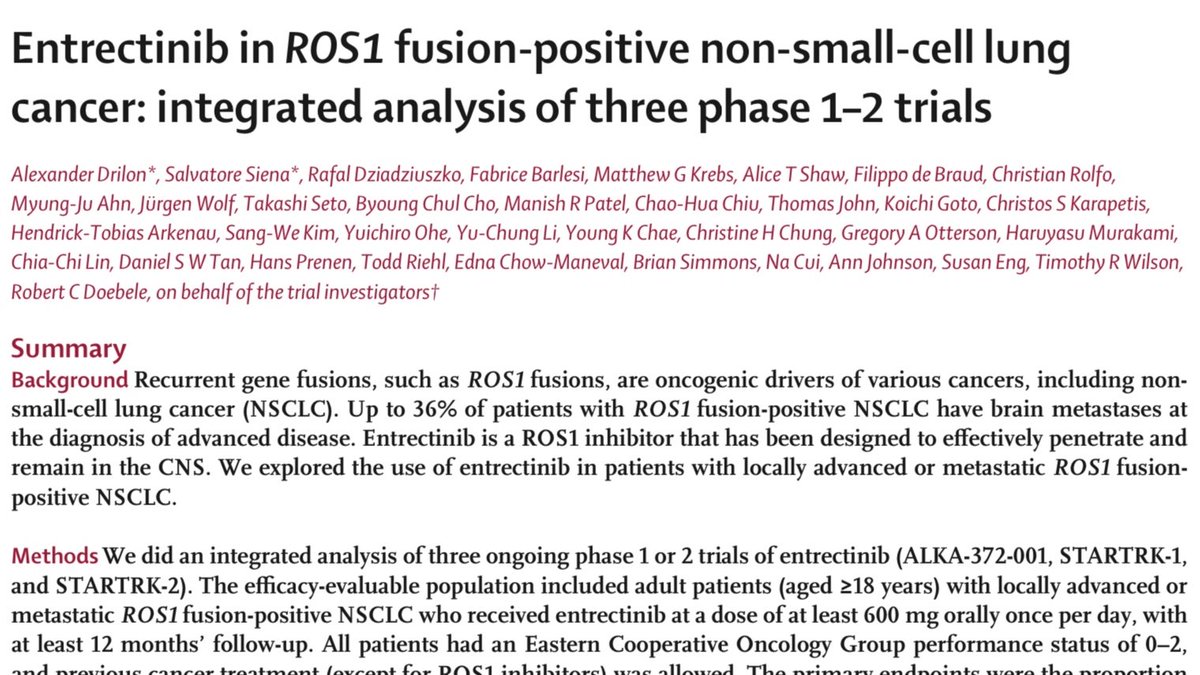
28 November: ROS1, single arm trials

For Lung Cancer Awareness Month #LCAM I’m going to summarize 30 important lung cancer trials over 30 days. These posts are directed at non-medical professionals, with descriptions of the results and of what makes a good trial. #lcsm 1/15
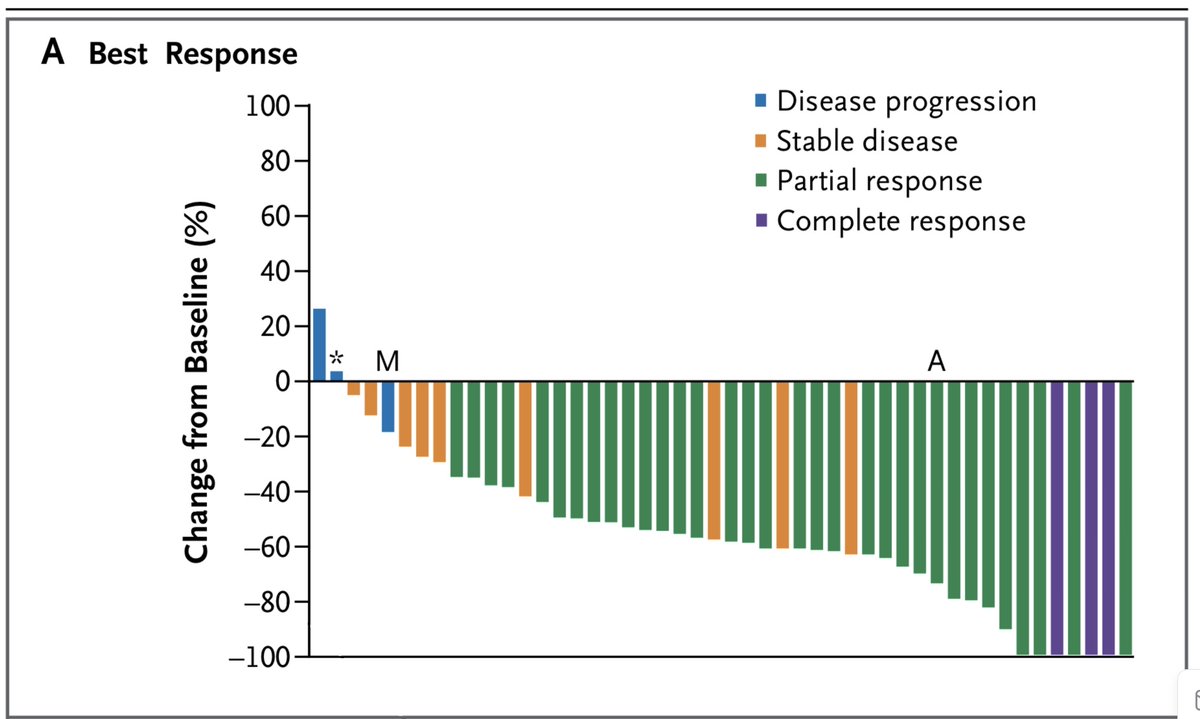
This month I have focused exclusively on randomized studies, because I believe strongly that they are our best tools for evaluating the benefits and harms of cancer therapies. Today will be my sole foray into non-randomized studies. I hope to illustrate some of their limitations.
In a single-arm study, every patient receives the study treatment. A common method of describing drug activity is the waterfall plot, below. Each bar on the plot is an individual patient. The height and direction of the bar show how the size of the tumours changed with treatment.
Read 15 tweets
Nov 27, 2021
27 November:Temel, QoL outcomes

This year for Lung Cancer Awareness Month #LCAM I’m going to summarize 30 important lung cancer trials over 30 days. These posts are directed at non-medical professionals, with descriptions of the results and of what makes a good trial.#lcsm 1/19 Image
Today’s trial is one of the most thought-provoking of the month, and it has been discussed widely since its publication in 2010. It is a trial looking at the timing of referral to palliative care for people with advanced, incurable lung cancer. 2/19
Many people hold the view that palliative care is care at the end of life. While this is a component of it, palliative care physicians are experts in controlling symptoms, which is valuable in a highly-symptomatic disease like metastatic lung cancer. 3/19
Read 19 tweets
Nov 26, 2021
26 November: Biases and negative studies

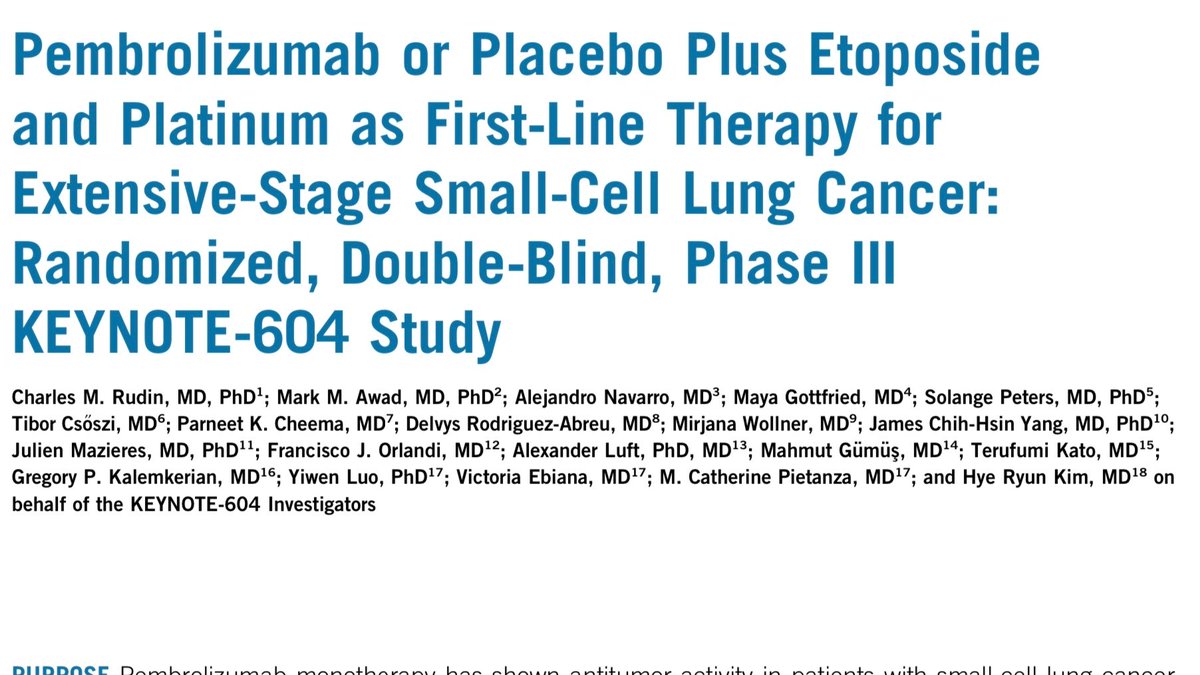
For Lung Cancer Awareness Month #LCAM I’m going to summarize 30 important lung cancer trials over 30 days. These posts are directed at non-medical professionals, with descriptions of the results and of what makes a good trial. #lcsm 1/12 Image
Today we are returning to small cell lung cancer, a disease that we previously considered on 10 November.
We discussed how limited-stage disease can be treated with curative intent chemoradiotherapy, while extensive stage disease is treated palliatively with chemotherapy. 2/12
Like many other cancers, treatment of small cell lung cancer has been altered by immunotherapy. There are clinical trials of durvalumab (22 Nov) and atezolizumab showing that adding them to chemo improves survival modestly. This evidence is reflected in most treatment guidelines.
Read 12 tweets

Did Thread Reader help you today?

Support us! We are indie developers!


This site is made by just two indie developers on a laptop doing marketing, support and development! Read more about the story.

Become a Premium Member ($3/month or $30/year) and get exclusive features!

Become Premium

Don't want to be a Premium member but still want to support us?

Make a small donation by buying us coffee ($5) or help with server cost ($10)

Donate via Paypal

Or Donate anonymously using crypto!

Ethereum

0xfe58350B80634f60Fa6Dc149a72b4DFbc17D341E copy

Bitcoin

3ATGMxNzCUFzxpMCHL5sWSt4DVtS8UqXpi copy

Thank you for your support!

Follow Us!

:(