
friendly reminder in times of uncertainty and misinformation: anecdotes are not data. (good) data is carefully measured and collected information based on a range of subject-dependent factors, including, but not limited to, controlled variables, meta-analysis, and randomization
outliers attempting to counter global consensus around this pandemic with amateur reporting or unverified sourcing are not collecting data. breaking news stories that only relay initial findings of an event are not collecting data. we have to be careful in our media consumption
it can be difficult to know what to believe in a time when institutional trust is diminished and the gatekeepers of information have been dismantled, but it's more crucial now than ever before to follow a range of credentialed sources for both breaking news and data collection
all we currently have are limited and evolving metrics that experts are deciphering and acting upon immediately to the best of their ability. this terrain leaves many openings for opportunists and charismatic manipulators to lead people astray by exploiting what they want to hear
breaking news and storytelling will always be spun with interpretive bias from different media perspectives, but data is a science that can't be replaced by one-off anecdotes. try to remember this to avoid fear-based sensationalism or conspiracy theories taking over your mind
you can maintain independent, critical thinking toward institutions without dipping into fringe conspiracies that get jumpstarted by individual anecdotes being virally spread as data. it's not easy, but it's necessary to keep any semblance of responsible online information flow
we're a frozen meat brand posting ads inevitably made to misdirect people and generate sales, so this is peak irony, but hey we live in a society so please make informed decisions to the best of your ability and don't let anecdotes dictate your worldview ok
steak-umm bless
steak-umm bless
if you thought this thread was useful, we posted another one recently touching on small, simple ways that the average person can take on the daily cultural challenges of this pandemic without demonizing or otherizing our neighbors
https://twitter.com/steak_umm/status/1245877088701353984?s=21
https://twitter.com/steak_umm/status/1245877088701353984
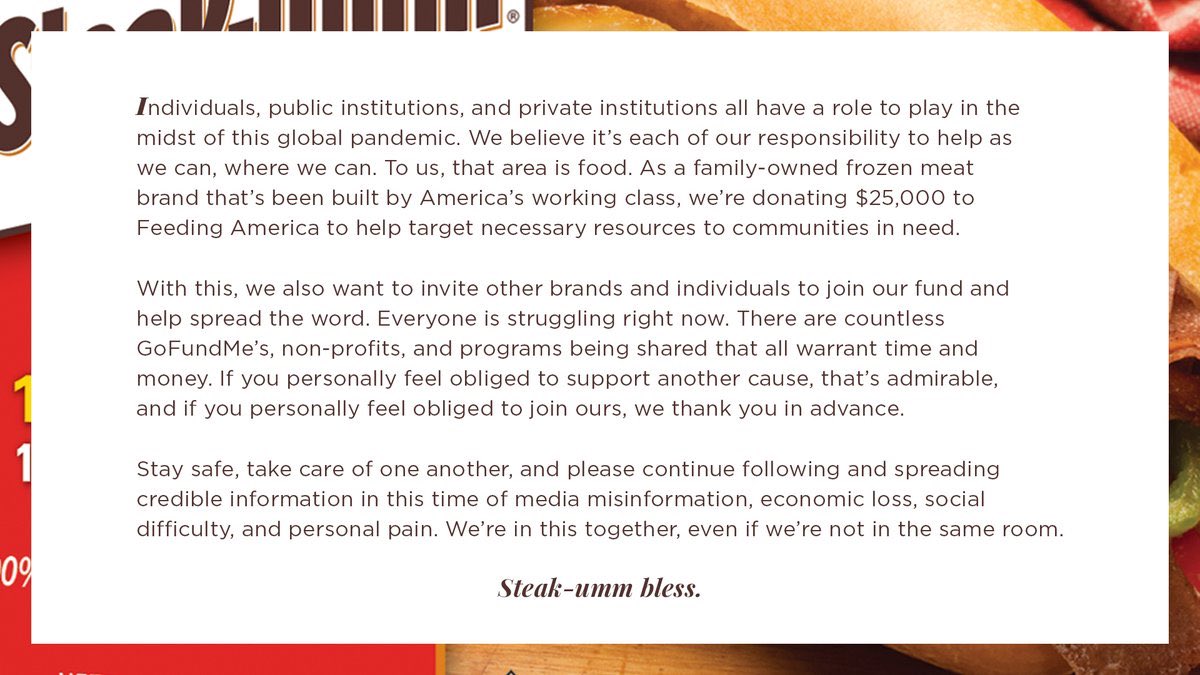
if you’re able, please consider donating to @feedingamerica during this time. in today’s climate of media inundation it can be hard feeling like anything makes a difference. but when each of us come together, we form collective change
steak-umm bless
feedingamerica.org/steakumm-covid
steak-umm bless
feedingamerica.org/steakumm-covid
• • •
Missing some Tweet in this thread? You can try to
force a refresh




