How our current shortages (medical supplies, toilet paper, etc) are easily avoidable
and how they relate to the financial concept of Liquidity 💦
Bonus: implications for your business and society ⬇
and how they relate to the financial concept of Liquidity 💦
Bonus: implications for your business and society ⬇
Empty shelves. Nurses without protective gear. Erratic market behavior and price collapses. 


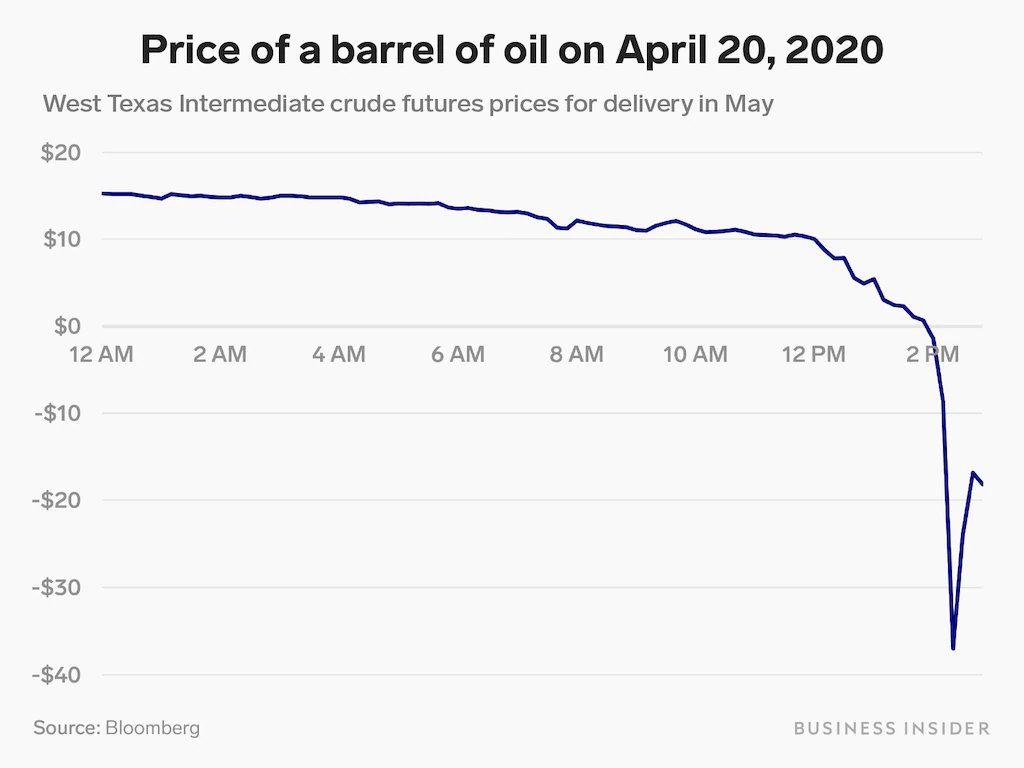
Crude Oil Futures at deeply negative prices.
Euthanized pigs. Milk dumped.
Euthanized pigs. Milk dumped.

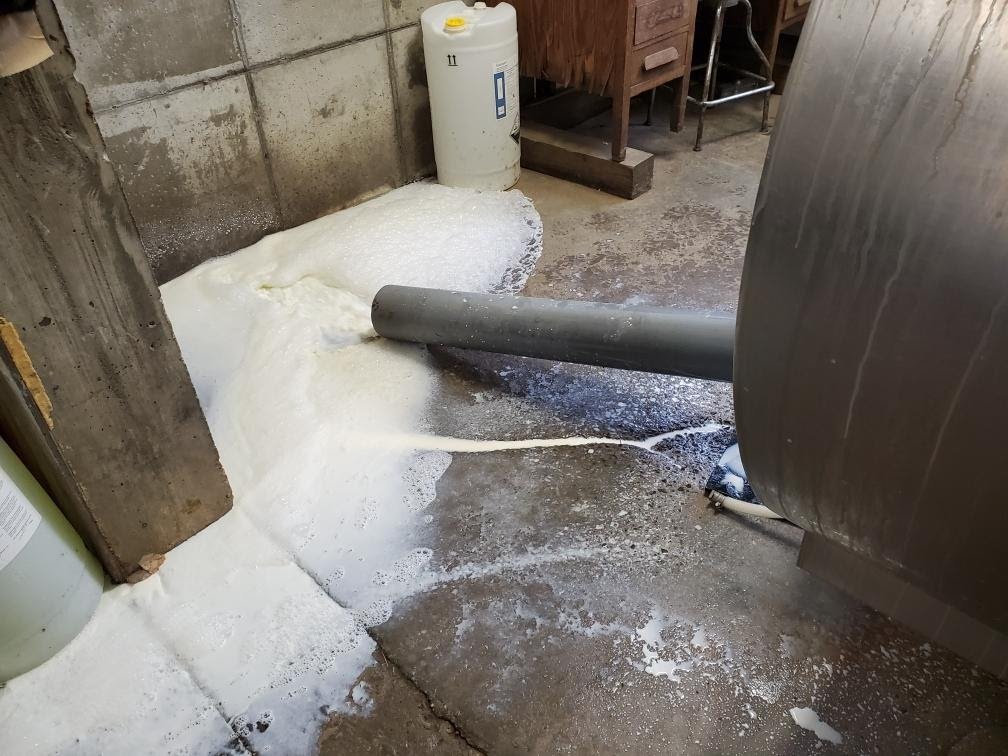
What do all these have in common? Liquidity failure!
Let's start with the wikipedia definition
Let's start with the wikipedia definition
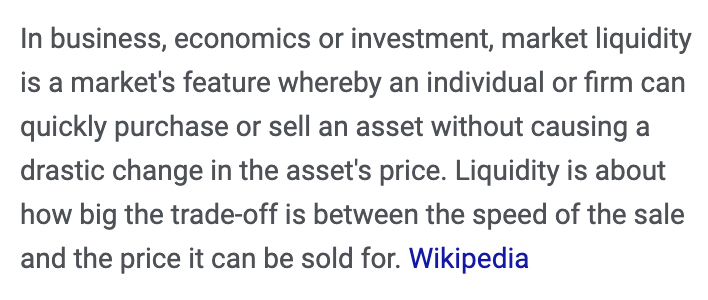
When you can buy (or sell) something easily and quickly, a market is liquid. It's operating smoothly (like water!).
But what does it mean concretely? In what sense is toilet paper liquid (or not), or an Uber ride?
But what does it mean concretely? In what sense is toilet paper liquid (or not), or an Uber ride?
When you encounter a market, the first question you have is "What's available?" When you first came to your grocery store, you didn't know what they had.
The primary element of liquidity is availability. What is even available?
Availability is binary. It's either there, or not.
The primary element of liquidity is availability. What is even available?
Availability is binary. It's either there, or not.
The next question: what is the price? Practically, this means "Is the price reasonable?"
This is a critical distinction. In real life, even in financial markets, the "reasonability question" can make prices behave in a binary fashion.
Not "how much", but "is it reasonable"?
This is a critical distinction. In real life, even in financial markets, the "reasonability question" can make prices behave in a binary fashion.
Not "how much", but "is it reasonable"?
"Availability" tends to default to No, and becomes a Yes once you are convinced a thing is reliably available.
Uber went from a toy to a utility when you could rely on it to always be available. A switch flipped in your mind. Taking an Uber became an option to always consider.
Uber went from a toy to a utility when you could rely on it to always be available. A switch flipped in your mind. Taking an Uber became an option to always consider.
Once we view a thing as "available" from a given market, it tends to be sticky. We give them the benefit of the doubt.
Once in a while, it won't be there. It will be frustrating, but usually we will give the market another chance.
Once in a while, it won't be there. It will be frustrating, but usually we will give the market another chance.
The opposite applies to "reasonability".
Once we get used to something, we get extra upset when our expectations are not met.
The impact is worse than an initial encounter, when expectations are not built up.
Once we get used to something, we get extra upset when our expectations are not met.
The impact is worse than an initial encounter, when expectations are not built up.
You, a market participant, are not a robot. You do not engage in one-off rational interactions with a market.
You form a relationship with the brand. The market providers know this well, and fight to protect their brand.
On branding:
You form a relationship with the brand. The market providers know this well, and fight to protect their brand.
On branding:
This aspect of human psychology has implications for our day-to-day reality. Instead of goods becoming expensive, markets have a tendency to make them disappear entirely.
Instead of TP prices doubling, we get empty shelves.
Instead of PPE prices 10xing, we get sick nurses.
Instead of TP prices doubling, we get empty shelves.
Instead of PPE prices 10xing, we get sick nurses.
When something is "sold out", it means the market provider chooses to not make it available to you.
It doesn't mean that it can't be bought. Often you can buy it at higher prices, from somewhere else.
Check out eBay for your favorite sold out thing...
It doesn't mean that it can't be bought. Often you can buy it at higher prices, from somewhere else.
Check out eBay for your favorite sold out thing...
This applies even in financial markets! Stock exchanges have circuit breakers: limits on how far prices can move within a certain period of time.
This is partially to protect their brand. Market misbehavior is prevented from producing "unreasonable" prices.
This is partially to protect their brand. Market misbehavior is prevented from producing "unreasonable" prices.
Of course, "reasonability" is subjective. One man may balk, and another may still be desperate.
The consequence of these sorts of moves is no more liquidity → the breakdown of trade.
The consequence of these sorts of moves is no more liquidity → the breakdown of trade.
The opposite of the "reasonability" effect is one of perceived value, or cheapness.
When a brand faces excess supply -- say of milk, or luxury fashion -- they may choose to destroy it rather than sell it for a cheaper price.
This is a sad waste, of course.
When a brand faces excess supply -- say of milk, or luxury fashion -- they may choose to destroy it rather than sell it for a cheaper price.
This is a sad waste, of course.
So that's one major factor that controls liquidity: how companies protect the perception of their brands.
Side effects: buyers leave empty handed, and some sellers must destroy extra goods.
Several other factors drive market liquidity...
Side effects: buyers leave empty handed, and some sellers must destroy extra goods.
Several other factors drive market liquidity...
I'll cover 3:
Diversity -- how much does the market rely on a single supplier (or consumer)?
Centralization -- do buyers/sellers meet in one place, or are they fragmented?
Rules & Incentives -- does the market try to subsidize availability of liquidity?
Diversity -- how much does the market rely on a single supplier (or consumer)?
Centralization -- do buyers/sellers meet in one place, or are they fragmented?
Rules & Incentives -- does the market try to subsidize availability of liquidity?
The impact of low diversity is obvious. Reliance on a single supplier creates fragility -- if they have issues, the entire market can fail.
Everyone knows this. However, in the short-run, it's easy to ignore it in favor of better prices & smoother operations.
Everyone knows this. However, in the short-run, it's easy to ignore it in favor of better prices & smoother operations.
In an ideal world, companies will all think long-term. How can they preserve their brand in the long-run? By giving up a little bit now in exchange for better stability when SHTF.
When a market allows supplier diversity to collapse, the thinking is short-term.
When a market allows supplier diversity to collapse, the thinking is short-term.
Centralization drives liquidity. Or consider the inverse: fragmentation, and lack of logistics, causes liquidity to collapse.
Having lots of supply in market A is useless if all the demand is in market B.
Coincidentally, this is a large role HFTs play in financial markets
Having lots of supply in market A is useless if all the demand is in market B.
Coincidentally, this is a large role HFTs play in financial markets
Of course, centralization is no panacea. If your market for a good is completely centralized, that becomes a weak point. It works well until a catastrophe targets the market itself.
Financial exchanges have Disaster Recovery data centers in different locations, for this reason.
Financial exchanges have Disaster Recovery data centers in different locations, for this reason.
Rules & Incentives: many markets will directly subsidize liquidity, or punish participants who hurt liquidity.
Financial exchanges famously give special privileges to market makers who take on liquidity provision requirements.
Airports take away slots when they're not used.
Financial exchanges famously give special privileges to market makers who take on liquidity provision requirements.
Airports take away slots when they're not used.
Rules on price-setting is a major determinant of liquidity. Because electronic exchanges are a continuous two way auction, buyers and sellers adjust price in real-time. This tends to maximize liquidity.
You won't often hear about a share of stock being "sold out"
You won't often hear about a share of stock being "sold out"
Recap:
Liquidity is a measure of how easy it is to trade in a market -- how fast can you buy or sell, and is the price what you expect it to be?
Many factors drive liquidity: Perceptions of fairness (market brand management), diversity, centralization, and market rules
Liquidity is a measure of how easy it is to trade in a market -- how fast can you buy or sell, and is the price what you expect it to be?
Many factors drive liquidity: Perceptions of fairness (market brand management), diversity, centralization, and market rules
Ask me more questions about liquidity!
What did I get wrong?
What did I get wrong?