🧵 We warned of a massive surge in “Einstein” green card petitions driven by a cottage industry selling fake scientific credentials. Now a CBS investigation confirms it—exposing ghostwritten papers, paid awards, and credential inflation used to game the system. @USCISJoe
The EB-1A visa, commonly called the “Einstein” Green Card, is for those deemed "extraordinary" in science, arts, or business. It allows self-petitioning, skips labor certification, relies on paper evidence, and offers a faster path than other routes, making it attractive and vulnerable to abuse.
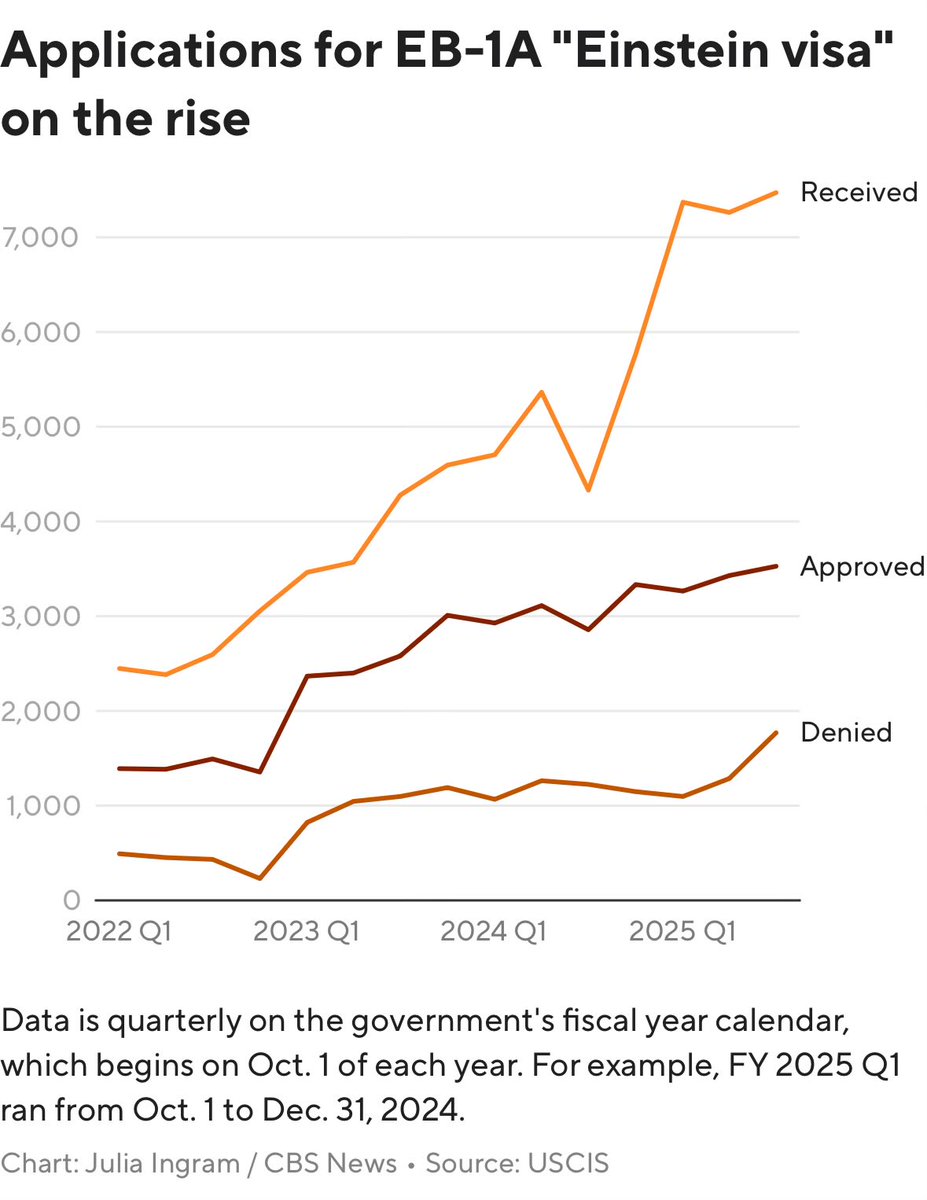
USCIS quarterly data shows EB-1A petitions have tripled over the past four years. Nearly 7,500 applications were filed from April to June 2025, up from about 2,500 in the last quarter of 2021.
Alarming to see @SecretaryLCD get basic H-1B facts wrong. She claims employers must first advertise jobs to Americans first—which is FALSE. There’s no labor market test required, just self-attestation. How can you reform a program to protect Americans if you don’t understand it?
@TheElizMitchell: “Should employers be required to pay H-1B workers the same as American workers?”
@SecretaryLCD: “Some IT bodyshops didn’t pay their H-1Bs; we need to recover those wages because it depresses American wages.”
Notably, she never mentions Trump’s H-1B proclamation directing @USDOL to use rule-making to raise prevailing wage requirements, which currently allows employers to hire H-1Bs at a discount.
When asked whether the OPT program—which allows foreign grads to stay and compete for U.S. jobs against American grads—should be ended, @SecretaryLCD said it’s Congress’s responsibility because they created it. Except, OPT wasn’t created by Congress; it was established through administrative regulations, meaning the administration could end it. Again, how can you claim to be protecting American workers when you can’t get basic facts right and are fishing for excuses?
Big Tech: “We can’t find qualified Americans to fill these positions.”
Also Big Tech: “We need to place these PERM job ads where no Americans will see them.”
Facebook “couldn’t find qualified Americans” — so they hid jobs from their careers site, refused to consider U.S. workers, and made applicants mail resumes by postal mail, DOJ says.
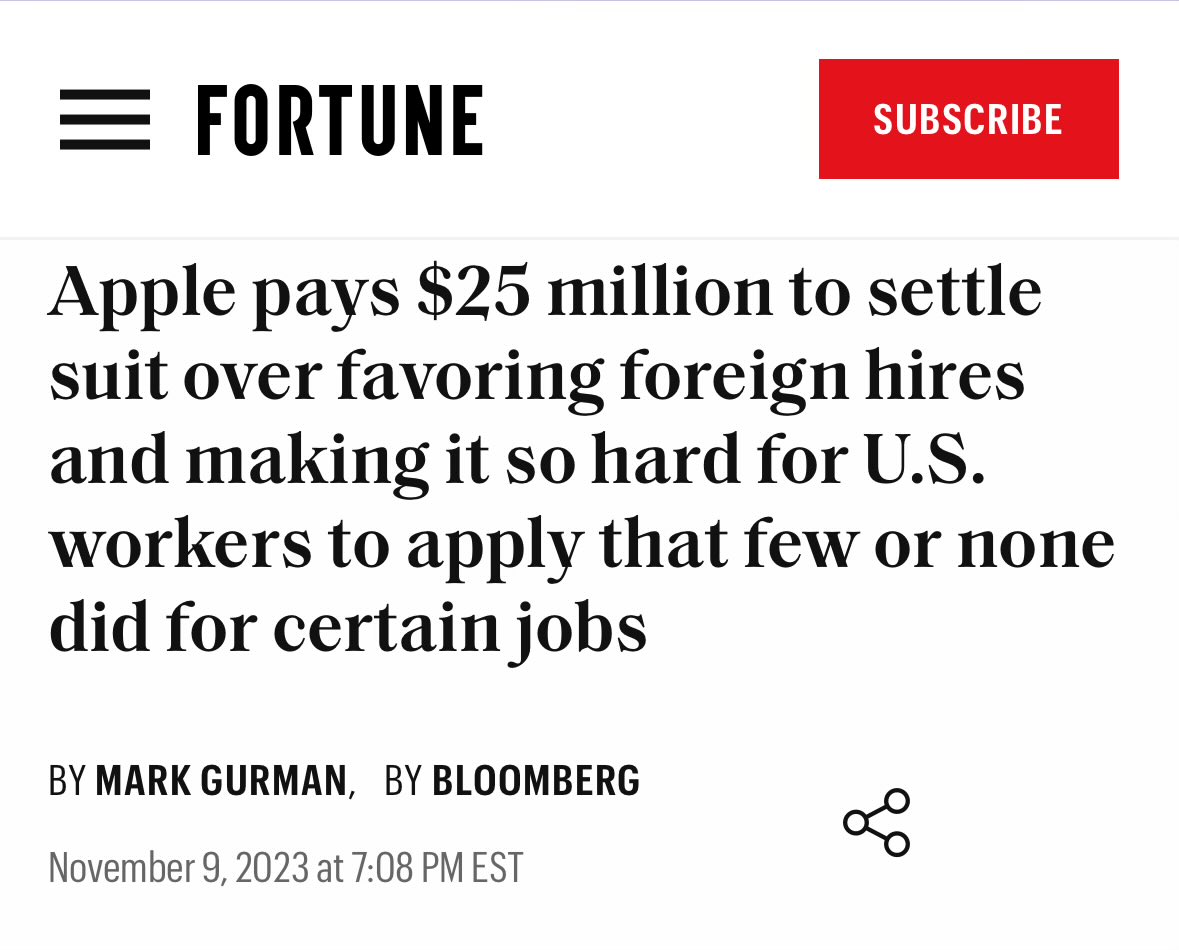
Apple “couldn’t find qualified Americans” — so they hid jobs from their careers site, refused to consider U.S. workers, and made applicants mail resumes by postal mail. Paid a fine and settled with the DOJ.
Trump admin is defending an Obama-era policy that grants work authorization to the spouses of H-1B workers from India in the Green Card queue — even though Congress never approved it — and is urging SCOTUS to toss out a case brought by former U.S. tech workers.
In 2015, Obama’s DHS unilaterally gave certain H-4 visa holders — spouses of H-1B guest workers — the right to work in the U.S., even though Congress never approved it.
This has opened the door for hundreds of thousands of additional foreign workers to compete directly with Americans for jobs, despite the original H-4 visa having no work privileges.
While H-1B workers are bound to their employers and must file a labor condition application to ensure they are paid a prevailing wage and that their presence won’t harm American workers (though it’s obviously a rigged process), H-4 EAD holders face none of those requirements — they can work ANY job at ANY wage level.
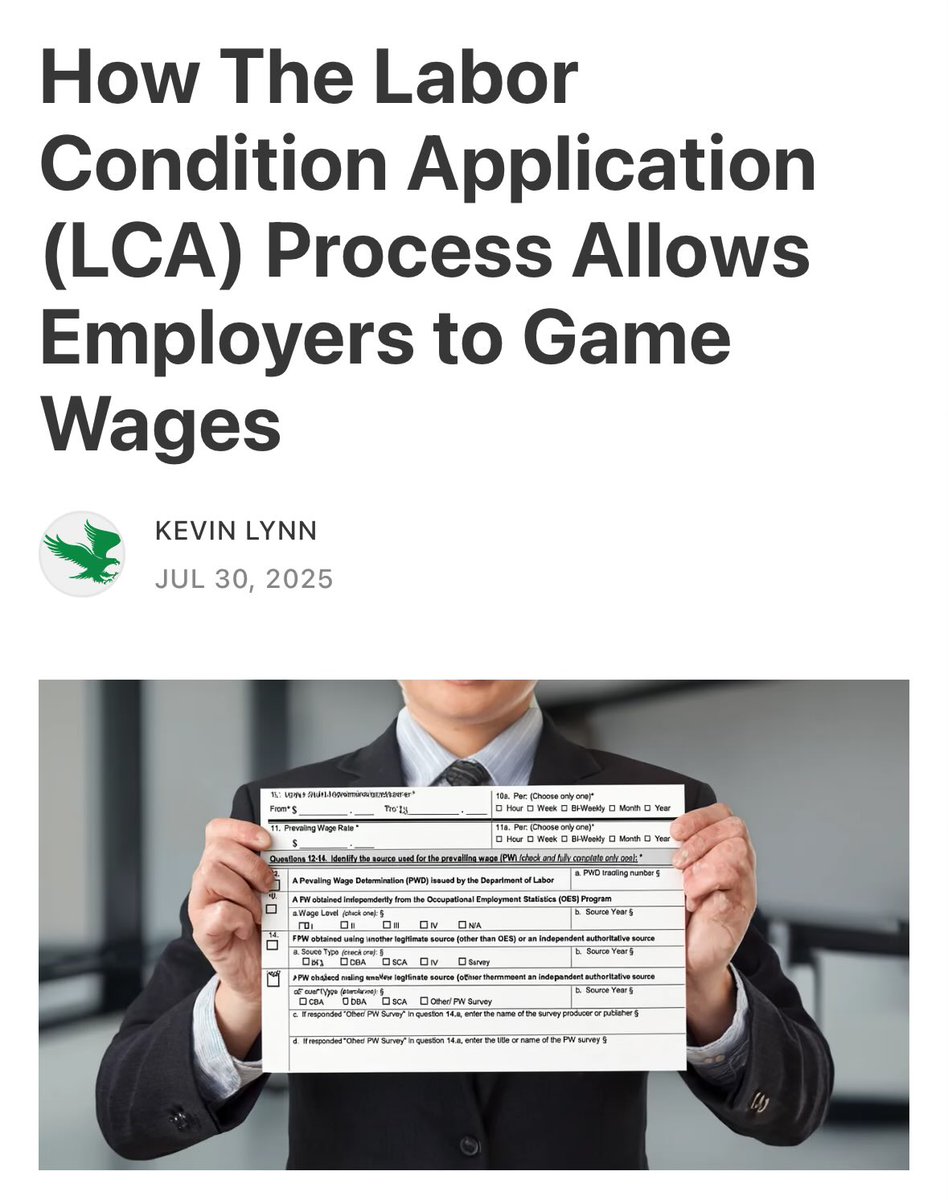
If you want to understand how the law lets employers legally pay H‑1B workers less than market wages and how that harms American workers, our latest Substack explains it.
🧵 THREAD:
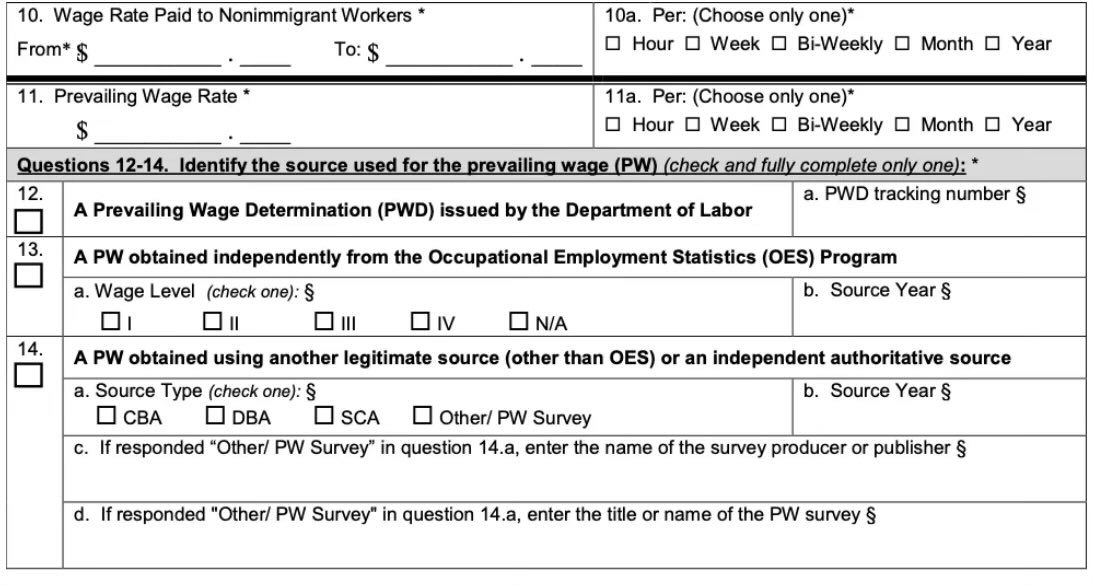
At the heart of this is the Labor Condition Application (LCA), a brief form employers submit to @USDOL before hiring H‑1B workers.
It’s meant to protect local wage standards and keep Americans from being undercut. In practice, it’s a rubber‑stamp process with no real scrutiny.
The system relies on employers to truthfully select wage levels based on an H‑1B worker’s skills and experience. But because the DOL can’t verify that information, employers exploit this asymmetry, labeling skilled roles as entry‑level to pay lower wages: