
Your Cholesterol Lab results explained
(a primer on LDL and blood lipids)
- LDL vs LDL-cholesterol
- why cholesterol isn't the main problem
- LDL isn't 'bad' per se
- HDL isn't 'good cholesterol'
(short thread)
full video:
(a primer on LDL and blood lipids)
- LDL vs LDL-cholesterol
- why cholesterol isn't the main problem
- LDL isn't 'bad' per se
- HDL isn't 'good cholesterol'
(short thread)
full video:
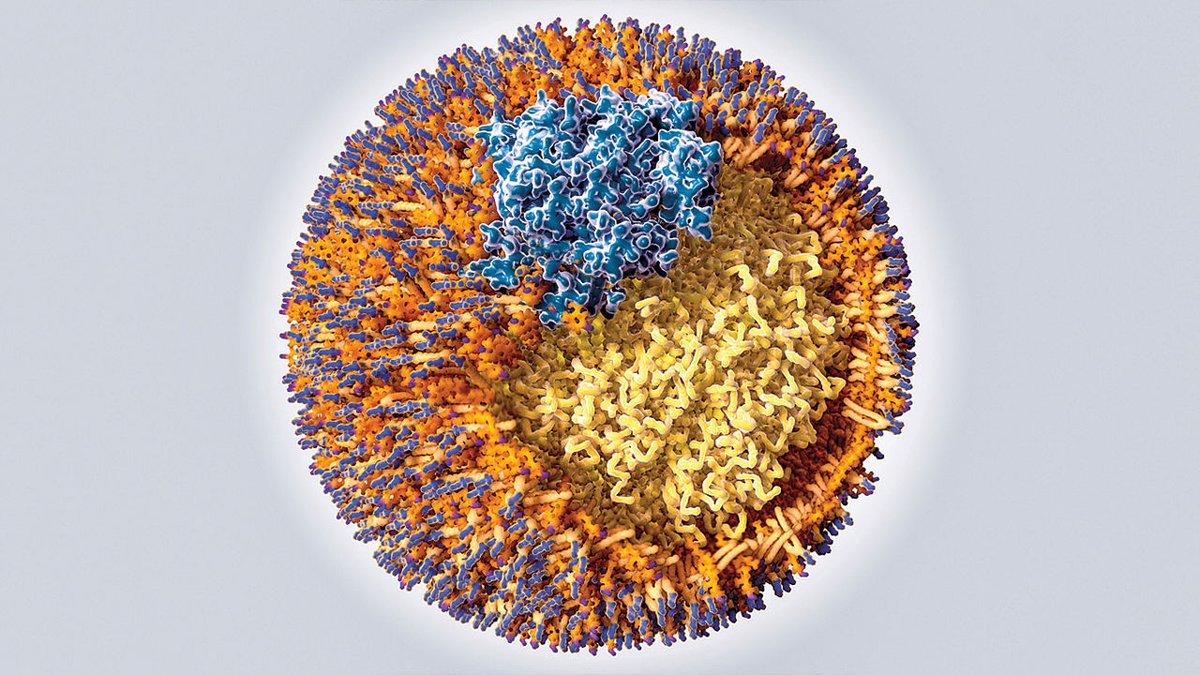
Lipoproteins are our body's solution to transport fats in the blood stream 🩸
🔬Lipoprotein = fat (lipo) + protein
low density lipoprotein = LDL
high density lipoprotein = HDL
lipoproteins are the vehicles that carry fats (like cholesterol and triglycerides)
🔬Lipoprotein = fat (lipo) + protein
low density lipoprotein = LDL
high density lipoprotein = HDL
lipoproteins are the vehicles that carry fats (like cholesterol and triglycerides)

your cholesterol labs, 4 main items:
LDL-cholesterol = cholest carried in LDL lipoproteins
HDL-cholesterol = cholest carried in HDL lipoproteins
all cholest in blood (in LDLs + HDLs + other lipoproteins) = Total cholesterol
Triglycerides (another fat carried in lipoproteins)
LDL-cholesterol = cholest carried in LDL lipoproteins
HDL-cholesterol = cholest carried in HDL lipoproteins
all cholest in blood (in LDLs + HDLs + other lipoproteins) = Total cholesterol
Triglycerides (another fat carried in lipoproteins)
is LDL 'bad'?
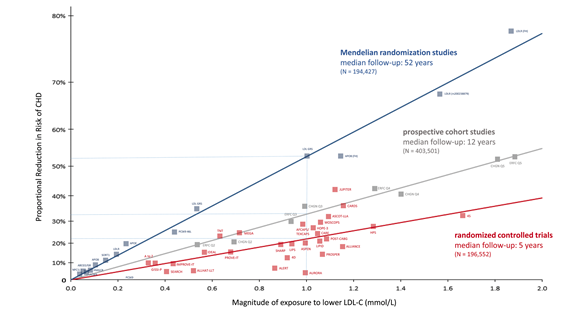
1) animals with high LDL-cholest form artery plaque (interesting to know but we're not mice...)
2) population studies: risk of heart disease correlates with LDL-cholest (interesting. but confounders possible)
ahajournals.org/doi/10.1161/01…
academic.oup.com/eurheartj/arti…
1) animals with high LDL-cholest form artery plaque (interesting to know but we're not mice...)
2) population studies: risk of heart disease correlates with LDL-cholest (interesting. but confounders possible)
ahajournals.org/doi/10.1161/01…
academic.oup.com/eurheartj/arti…
3) dozens of randomized trials show near-linear relationship btw LDL-cholest lowering and risk of heart disease
4) people with genetically low LDL-cholest have low risk
1 + 2 + 3 + 4 = VERY strong case
4) people with genetically low LDL-cholest have low risk
1 + 2 + 3 + 4 = VERY strong case
Eur Soc Cardiol: "there is no longer an ‘LDL-Cholesterol hypothesis’, but established facts that increased LDL-Cholest is causally related to atherosclerotic CVD & that lowering LDL particles and other ApoB lipoprots as much as possible reduces CV events"
academic.oup.com/eurheartj/arti…
academic.oup.com/eurheartj/arti…
Am Heart Assoc: "a causal role of cholesterol-containing lipoproteins, particularly LDL, in the genesis of CHD”
acc.org/~/media/Non-Cl…
acc.org/~/media/Non-Cl…
so LDL-cholest causes heart disease?
kinda
main factor are the lipoproteins themselves. especially LDL
“it is the number of lipoproteins rather than the amount of cholesterol or triglycerides per se that is the important driver of heart disease”
journals.plos.org/plosmedicine/a…
kinda
main factor are the lipoproteins themselves. especially LDL
“it is the number of lipoproteins rather than the amount of cholesterol or triglycerides per se that is the important driver of heart disease”
journals.plos.org/plosmedicine/a…
Heart disease is caused by lipoproteins getting stuck in the artery wall and potentially causing a blockage
So what causes the traffic jam is an excess of vehicles, not passengers
lab tests that count cars, not passengers: apoB, LDL-P
So what causes the traffic jam is an excess of vehicles, not passengers
lab tests that count cars, not passengers: apoB, LDL-P
in most people LDL-C and LDL particle number vary concertedly
in a subset (~20-25%) there can be discordance
ncbi.nlm.nih.gov/pmc/articles/P…
in a subset (~20-25%) there can be discordance
ncbi.nlm.nih.gov/pmc/articles/P…
nonHDL cholesterol is another predictor metric commonly used
nonHDL= Total cholest - HDL-cholest
good predictor. often better than LDL-C. but causality ultimately tracks best with ApoB
nonHDL= Total cholest - HDL-cholest
good predictor. often better than LDL-C. but causality ultimately tracks best with ApoB
ok what about HDL? is it 'good cholesterol'?
population studies suggested positive association (HDL-cholest level inversely correlated with heart disease)
causal tests (higher HDL-cholest via drugs or genetics) did not lower risk
HDL-cholest may be just a marker
population studies suggested positive association (HDL-cholest level inversely correlated with heart disease)
causal tests (higher HDL-cholest via drugs or genetics) did not lower risk
HDL-cholest may be just a marker
analysis of 39 trials: “observational studies might suggest a simplistic hypothesis for HDL-cholesterol: that increasing its levels reduces CV events. But substantial trials do not support this concept”
ncbi.nlm.nih.gov/pmc/articles/P…
ncbi.nlm.nih.gov/pmc/articles/P…
thus current evidence indicates that:
- raising HDL-cholesterol may confer no benefit
- high HDL-cholest does not make up for high LDL-cholest
HDL lipoproteins themselves (number or function) may still confer a benefit aside from HDL-cholest metric
- raising HDL-cholesterol may confer no benefit
- high HDL-cholest does not make up for high LDL-cholest
HDL lipoproteins themselves (number or function) may still confer a benefit aside from HDL-cholest metric
important physiological roles of HDL particles include extracting cholesterol from plaque
ahajournals.org/doi/10.1161/CI…
but probably HDL-cholest metric not particularly informative
ahajournals.org/doi/10.1161/CI…
but probably HDL-cholest metric not particularly informative
in fact some studies suggest that a very high HDL-c level is associated with higher CV risk
ncbi.nlm.nih.gov/pmc/articles/P…
ncbi.nlm.nih.gov/pmc/articles/P…
bottomline: lipoproteins play complex roles
HDL isn't simply 'good'
LDL isn't 'bad' per se either. we all have LDL and LDL-cholest
only becomes an issue when it's *abnormally* high. just like other physiological parameters (potassium, sodium, urea etc)
HDL isn't simply 'good'
LDL isn't 'bad' per se either. we all have LDL and LDL-cholest
only becomes an issue when it's *abnormally* high. just like other physiological parameters (potassium, sodium, urea etc)
• • •
Missing some Tweet in this thread? You can try to
force a refresh




