Today I am going to take you down a little wormhole:
Cuneiform tablets made out of materials other than clay.
In special circumstances, tablets could be made from minerals like lapis lazuli or magnesite, or metals like gold, silver, or bronze.
Cuneiform tablets made out of materials other than clay.
In special circumstances, tablets could be made from minerals like lapis lazuli or magnesite, or metals like gold, silver, or bronze.
The most famous reference is in Tablet 1 of the Epic of Gilgamesh, which invites the reader to:
"Look for the copper tablet-box,
Undo its bronze lock,
Open the door to its secret,
Lift out the lapis lazuli tablet and read it:
The story of that man Gilgamesh."
"Look for the copper tablet-box,
Undo its bronze lock,
Open the door to its secret,
Lift out the lapis lazuli tablet and read it:
The story of that man Gilgamesh."
The epic invites the reader to imagine themselves lifting a tablet out of a box and reading the epic for themselves.
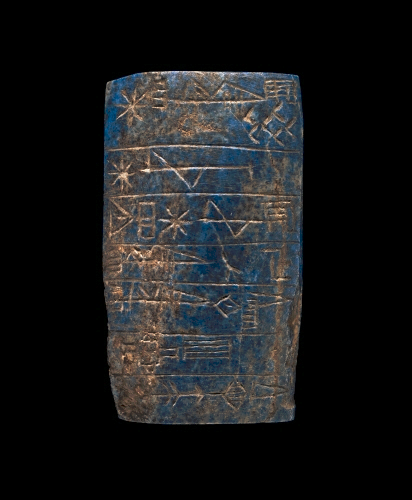
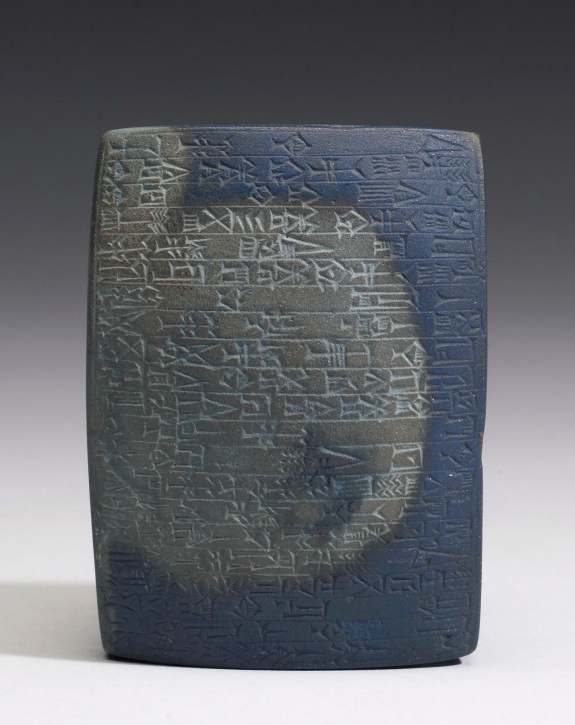
Tablets made from lapis lazuli have been found in Mesopotamia.
The tablet on the left is from Sippar, c. 2450 BC (British Museum: bmimages.com/preview.asp?im…).
The tablet on the right is from Larsa, c. 1834-1823 BC (Walters Museum: art.thewalters.org/detail/17796/f…)
The tablet on the left is from Sippar, c. 2450 BC (British Museum: bmimages.com/preview.asp?im…).
The tablet on the right is from Larsa, c. 1834-1823 BC (Walters Museum: art.thewalters.org/detail/17796/f…)

Of course, the entire Epic of Gilgamesh is far too long to fit on one of these tablets. The standard epic takes up 11 large cuneiform tablets.
These are foundation deposits. A king would write a short inscription and then bury it under a temple or palace.
These are foundation deposits. A king would write a short inscription and then bury it under a temple or palace.
The idea is that the building would eventually fall into disrepair and be rebuilt, and when that happened future kings would find the tablet and learn about the great deeds of previous king.
Sort of like an ancient time capsule.
Sort of like an ancient time capsule.
When the Babylonian king Nabonidus rebuilt the temple of Shamash in Sippar sometime between 555-552, he claimed to have found foundation tablets made of lapis lazuli, gold, and carnelian in the original foundation:
oracc.museum.upenn.edu/ribo/babylon7/…
oracc.museum.upenn.edu/ribo/babylon7/…

We don't have any foundation tablets from Naram-Sin (the grandson of Sargon of Akkad) so it's hard to tell if Nabonidus actually found something or was just making it up.
In any case the meaning of the Gilgamesh passage becomes clear: a lapis lazuli tablet is meant to preserve the memory of a great king from long ago for future generations.
(On a related note: When work crews disassembled North Carolina's Confederate memorial last week, they found a time capsule underneath from 1894 buried underneath)
wral.com/time-capsule-f…
wral.com/time-capsule-f…
It hasn't been opened yet, but according to a newspaper article from 1895 the capsule included some period newspapers and Confederate artifacts including money, a button from Robert E. Lee's coat, and copies of speeches by Confederate leaders during and after the war.
The choice of objects is itself fascinating, as is its placement. It implies that the persons setting up the monument understood the monument would not stand forever, and shows how they wanted to be remembered by whoever excavated its remains.
Back to cuneiform:
The use of lapis lazuli tablets continued into later periods, even for uses other than foundation tablets. Here's a prayer inscribed on a tablet from the Library of Ashurbanipal (mid 600s BC): britishmuseum.org/collection/obj…
The use of lapis lazuli tablets continued into later periods, even for uses other than foundation tablets. Here's a prayer inscribed on a tablet from the Library of Ashurbanipal (mid 600s BC): britishmuseum.org/collection/obj…

In 717 the Assyrian king Sargon II began to build a new capital city called Dur-Šarrukin (modern Khorsabad).
This was a massive project. It took ten years to build.
This was a massive project. It took ten years to build.
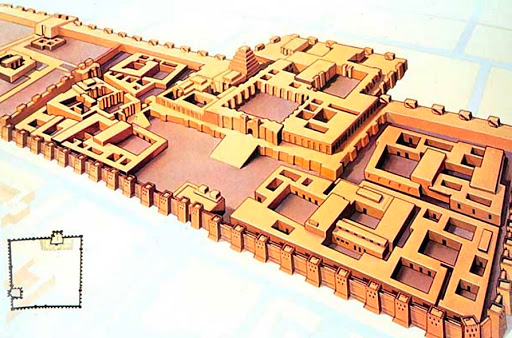
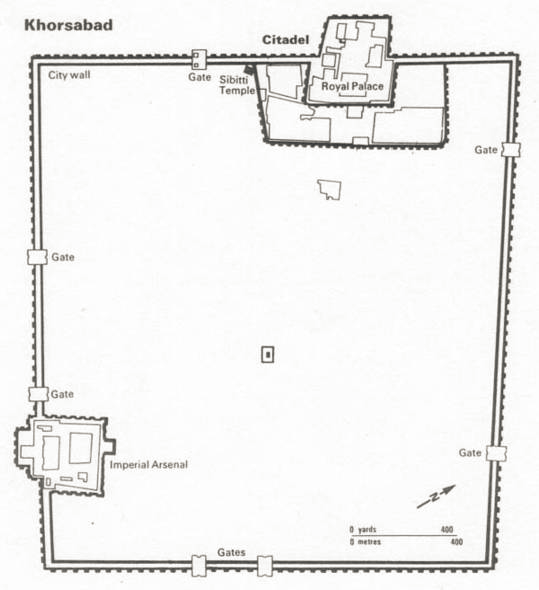
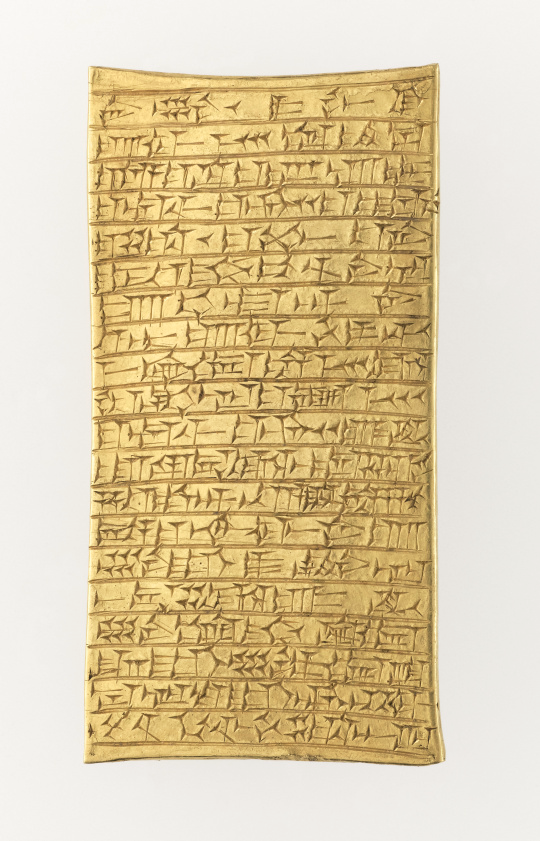
When French excavators explored the site in the 1850s, they found four foundation tablets. One was made of magnesite (not pictured), another of gold, and another of silver, and a larger tablet of bronze.

The inscriptions describe the building of palaces and temples for the new city and the materials used.
It's what Sargon II wanted to be remembered for.
It's what Sargon II wanted to be remembered for.
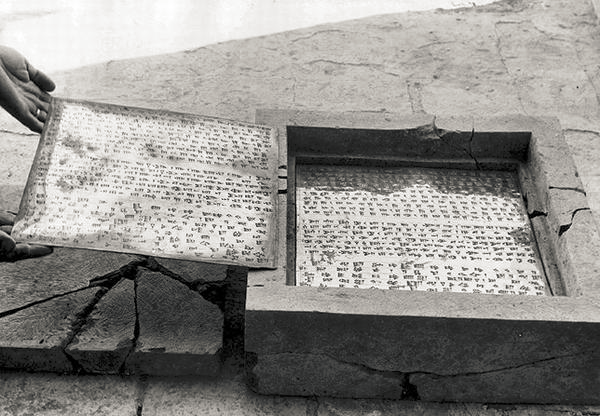
In the 5th century BC, the Persian king Darius I also deposited gold cuneiform plates in a stone box in the city of Persepolis:
But wait, there's more!
After all there are some other famous stone tablets, albeit not written in cuneiform:
(as an aside, I don't think movies and artist understand how much stone tablets weigh)
After all there are some other famous stone tablets, albeit not written in cuneiform:
(as an aside, I don't think movies and artist understand how much stone tablets weigh)
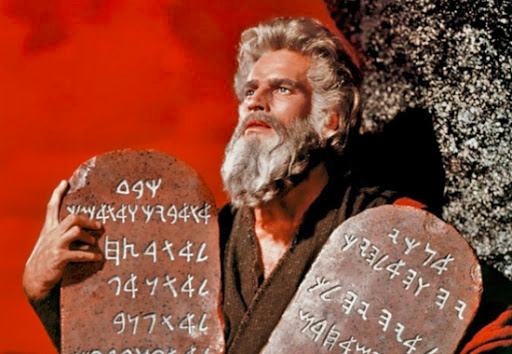
According to a rabbinic tradition, the tablets were made of the stone mentioned at the food of God's throne in Exodus 24:10 (the tablets appear in v. 12)
This stone is called "sapir" in Hebrew, and was once translated "sapphire" but is now generally agreed to be lapis lazuli.
This stone is called "sapir" in Hebrew, and was once translated "sapphire" but is now generally agreed to be lapis lazuli.
But wait there's more. Inscribed gold plates said to originate with people from the ancient Near East in more than one religion:
Joseph Smith claimed that the angel Moroni showed him inscribed gold plates on September 23, 1823 at Hill Cumorah in New York.
Joseph Smith claimed that the angel Moroni showed him inscribed gold plates on September 23, 1823 at Hill Cumorah in New York.

Smith said the plates were written in a language he called "reformed Egyptian" which he translated with the aid of a seer stone.
The result? The Book of Mormon.
(It mentions several other lost plates containing the history of the descendants of Israelites in the Americas)
The result? The Book of Mormon.
(It mentions several other lost plates containing the history of the descendants of Israelites in the Americas)

Like the Epic of Gilgamesh, the Book of Mormon is far too long to fit on one tablet like the ones shown above.
According to the few eyewitnesses to whom Smith showed the plates, there were pages of them, bound together with a series of metal D-clips, like a modern 3-ring binder.
According to the few eyewitnesses to whom Smith showed the plates, there were pages of them, bound together with a series of metal D-clips, like a modern 3-ring binder.
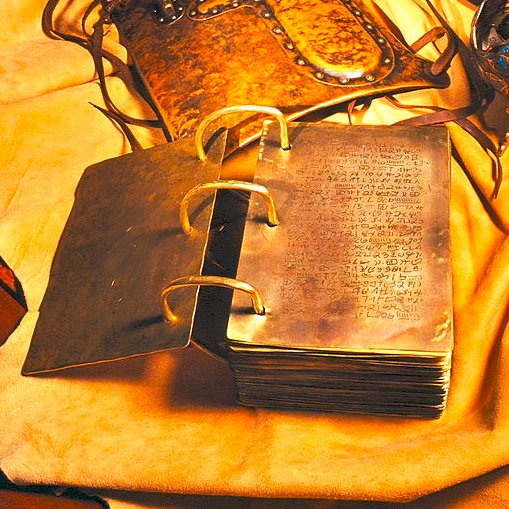
According to LDS teaching, the plates were written by the prophet Mormon as an abridgement of an earlier text, the Plates of Nephi, and then buried by his son Moroni at Cumorah as his people (the Nephites) were about to be wiped out by the rival Lamanites.
This is not at all similar to the Near Eastern examples.
Until 2011, when a man named David Elkington claimed to have discovered 70 lead tablets bound in a similar way in Jordan.
He claimed they showed the early history of Christianity in the 1st c. AD.
Until 2011, when a man named David Elkington claimed to have discovered 70 lead tablets bound in a similar way in Jordan.
He claimed they showed the early history of Christianity in the 1st c. AD.
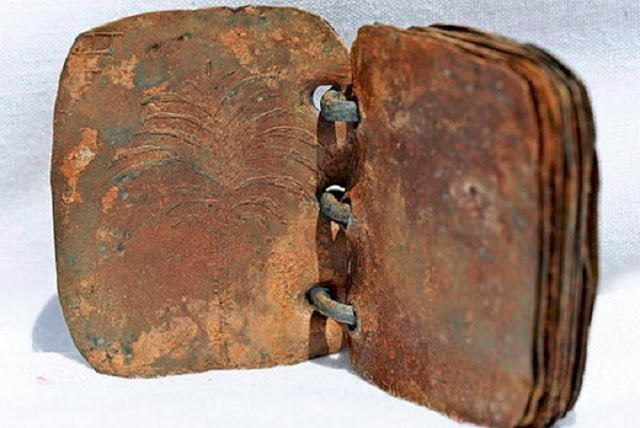
Elkington is not LDS, as far as I know, but his finds are definitely faker than fake, and contain incomprehensible Hebrew.
You still see them crop up on occasion as the media picks up the story every couple of years.
jordantimes.com/news/local/jor…
You still see them crop up on occasion as the media picks up the story every couple of years.
jordantimes.com/news/local/jor…
In conclusion: Writing on stone or inert metal is supposed to last forever.
Stone and metal tablets say a lot about our desire to be remembered long after we are dead. They also speak more broadly to attempts to create a record, a text, or a law that can never be destroyed.
Stone and metal tablets say a lot about our desire to be remembered long after we are dead. They also speak more broadly to attempts to create a record, a text, or a law that can never be destroyed.