Pulp Librarian Profile picture
Jul 10, 2020 14 tweets 5 min read Read on X
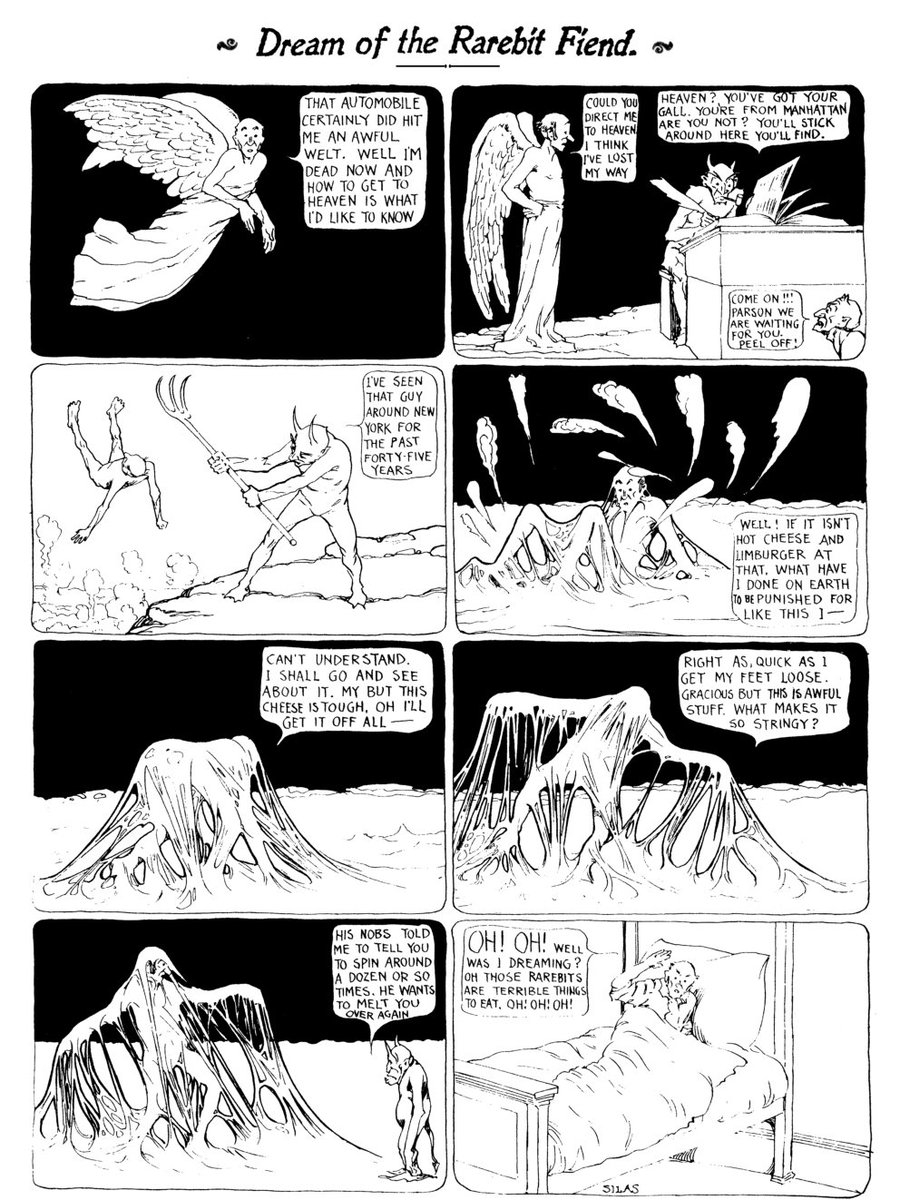
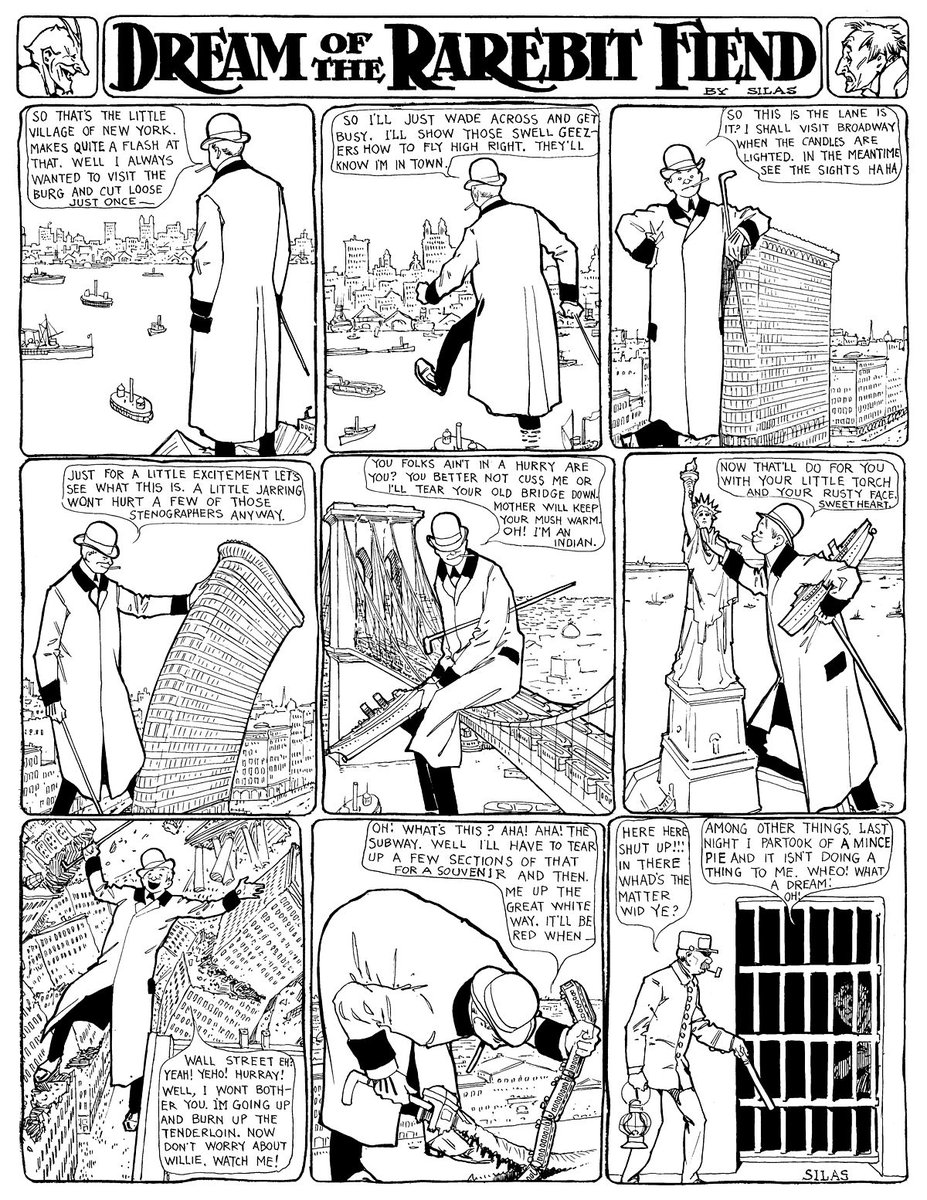
Today in pulp I'm looking at a rather splendid Modernist and Surrealist comic strip from 1904: Dream of the Rarebit Fiend! #FridayFeeling Image
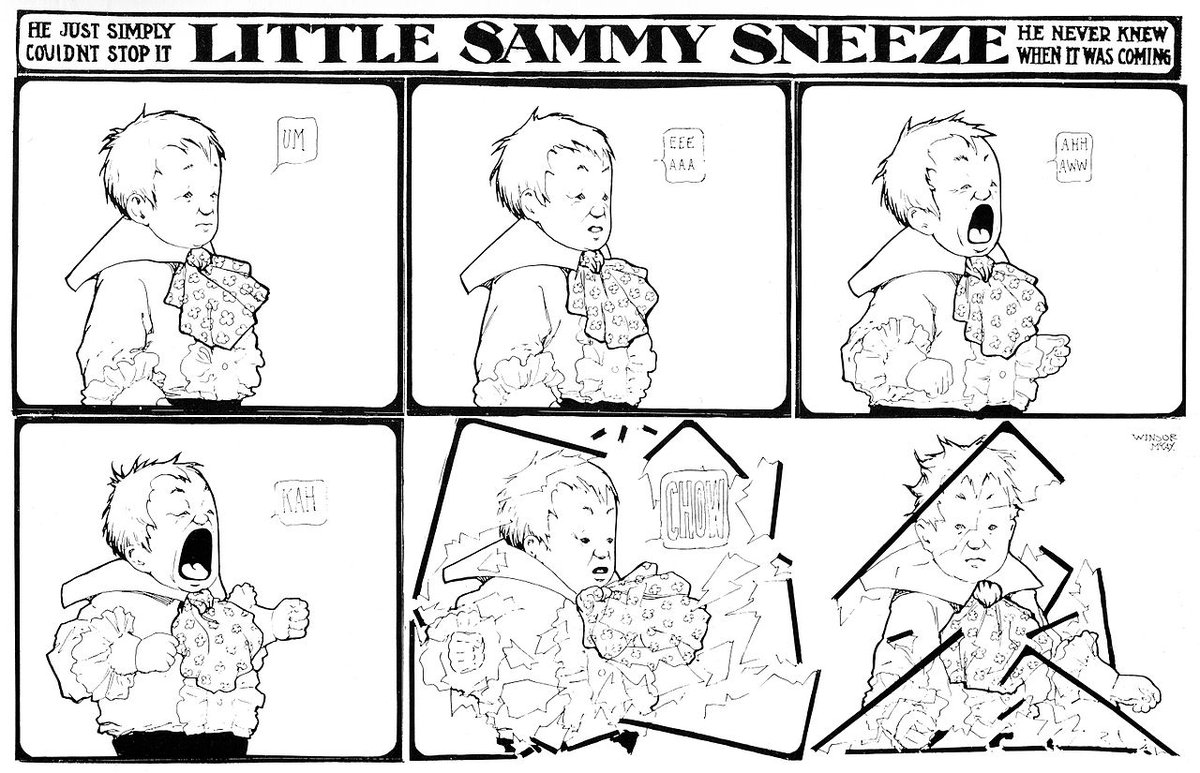
Dream of the Rarebit Fiend was written and illustrated by cartoonist Winsor McCay, who was already busy in 1904 illustrating Little Sammy Sneeze for the New York Herald. Image
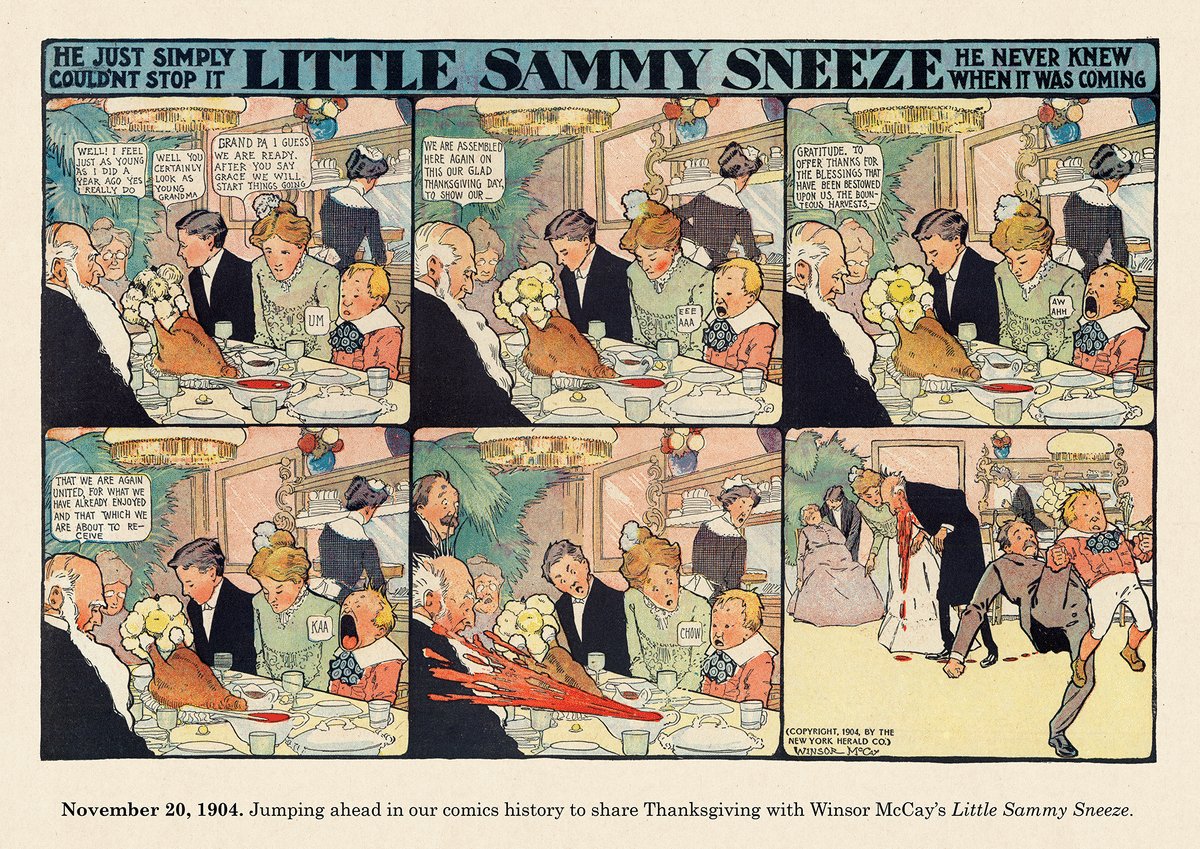
Little Sammy Sneeze was already showing McCay's talent for bringing the ideas of Modernism into cartoons. Sammy often ended up breaking the fourth wall or crashing through the panel borders. Image
In 1904 McCay proposed a new strip for the Herald, one that featured the strange world of dreams and the unconscious. They agreed, but with one proviso... Image
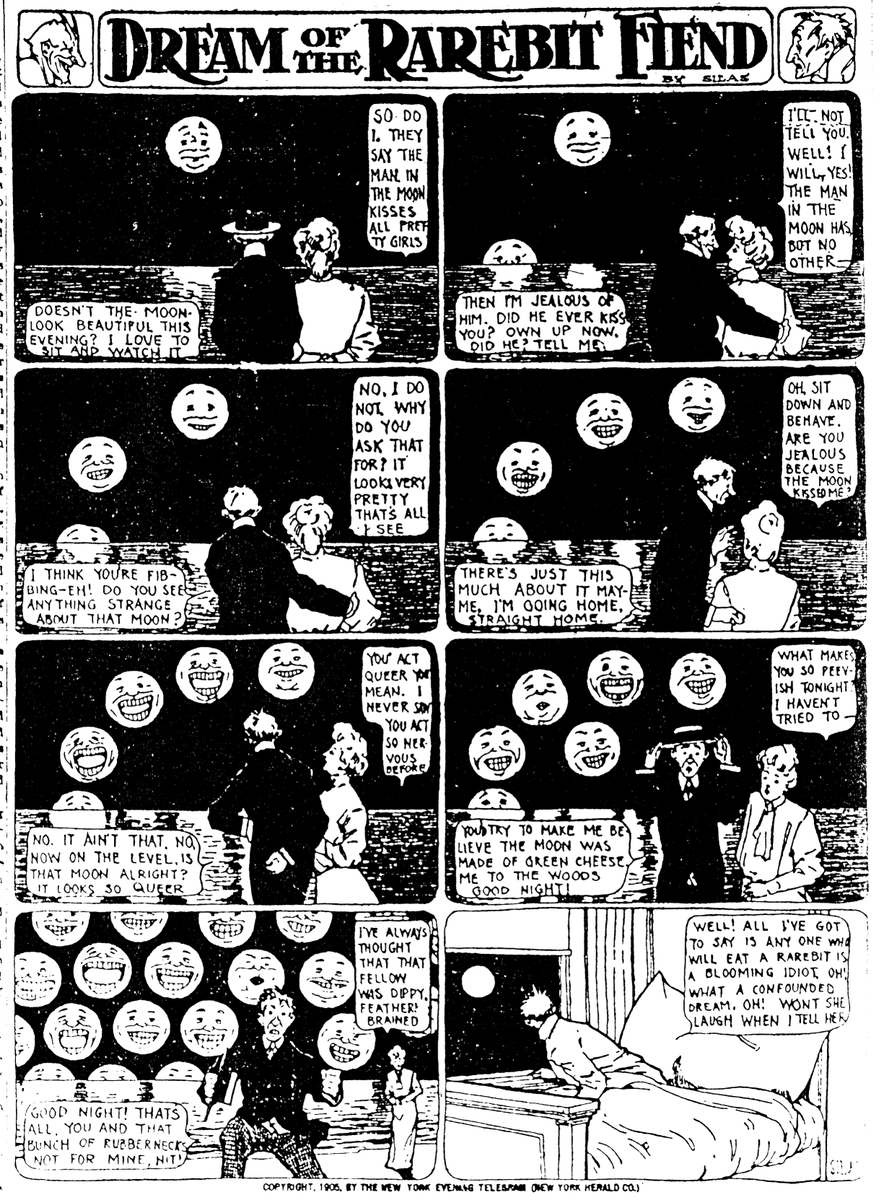
Rather than featuring a 'tobacco fiend,' as McCay had initially suggested, the protagonist would instead partake of the cheese-heavy toasted snack Welsh Rarebit. Image

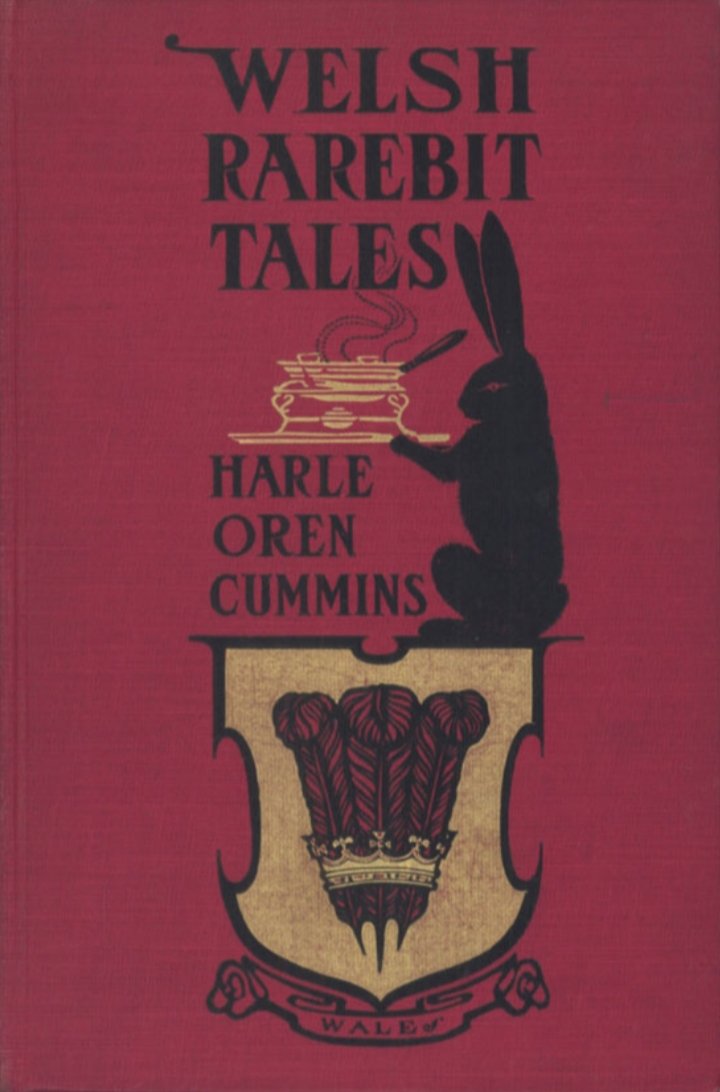
The change may have been influenced by Welsh Rarebit Tales by Harle Oren Cummins, a 1902 anthology of weird stories. Ogden Nash and Lewis Carroll have also been suggested as influences for McCay's work. Image
Dream of the Rarebit Fiend first appeared in the New York Evening Telegram in September 1904, and new strips were published two or three times a week. McCay's formula for these was always the same... Image
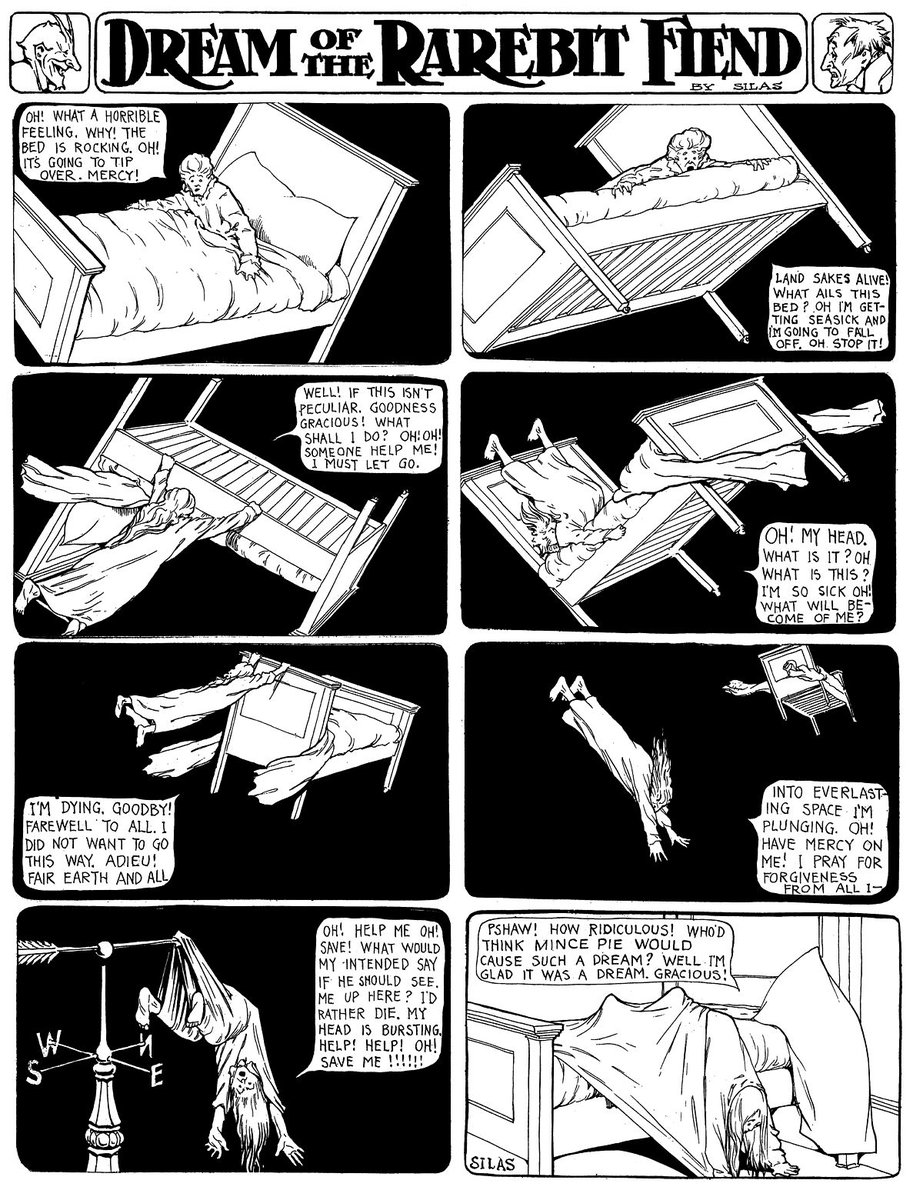
The panels would expand on a strange dream someone was having, with the oddities or themes of the dream growing and growing until the last panel, when the dreamer would wake and rue the eating of Welsh Rarebit before bed. Image
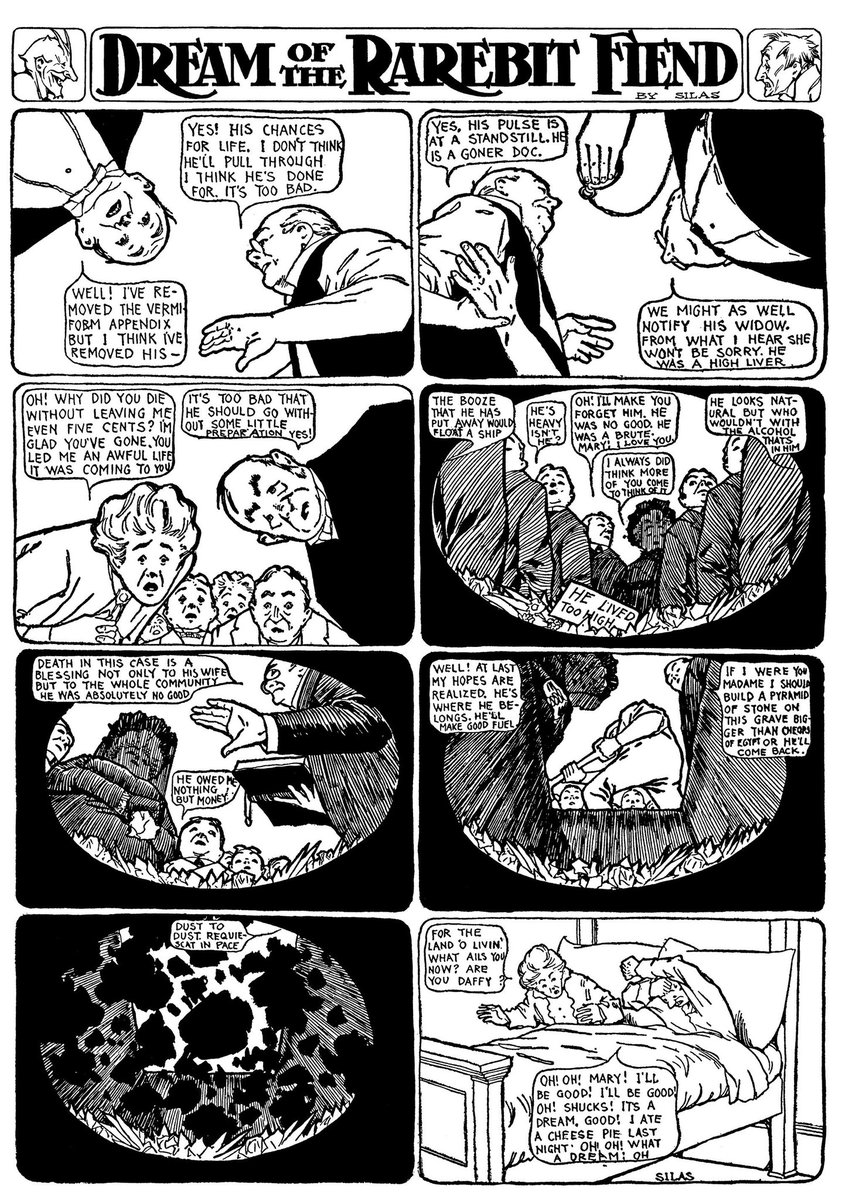
The strip was hugely successful and ran until 1911, before being revived in 1923 as Rarebit Reveries. Part of the reason was due to McCay's instinctive understanding of dream logic and symbolism. Image
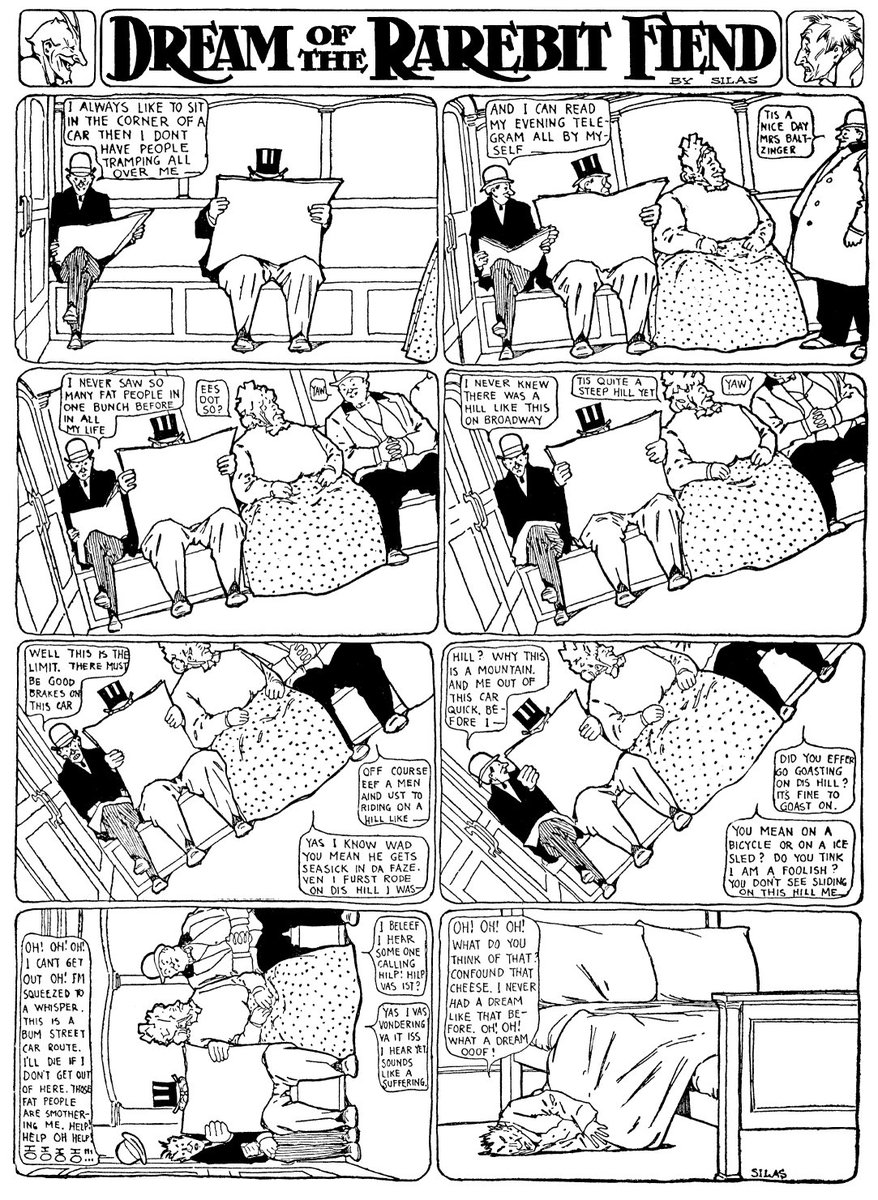
Dream of the Rarebit Fiend really does read like a dream, showing us the unconscious manifesting its anxieties through strange symbolism and juxtapositions. It is also a great example of a one page graphic novel. Image
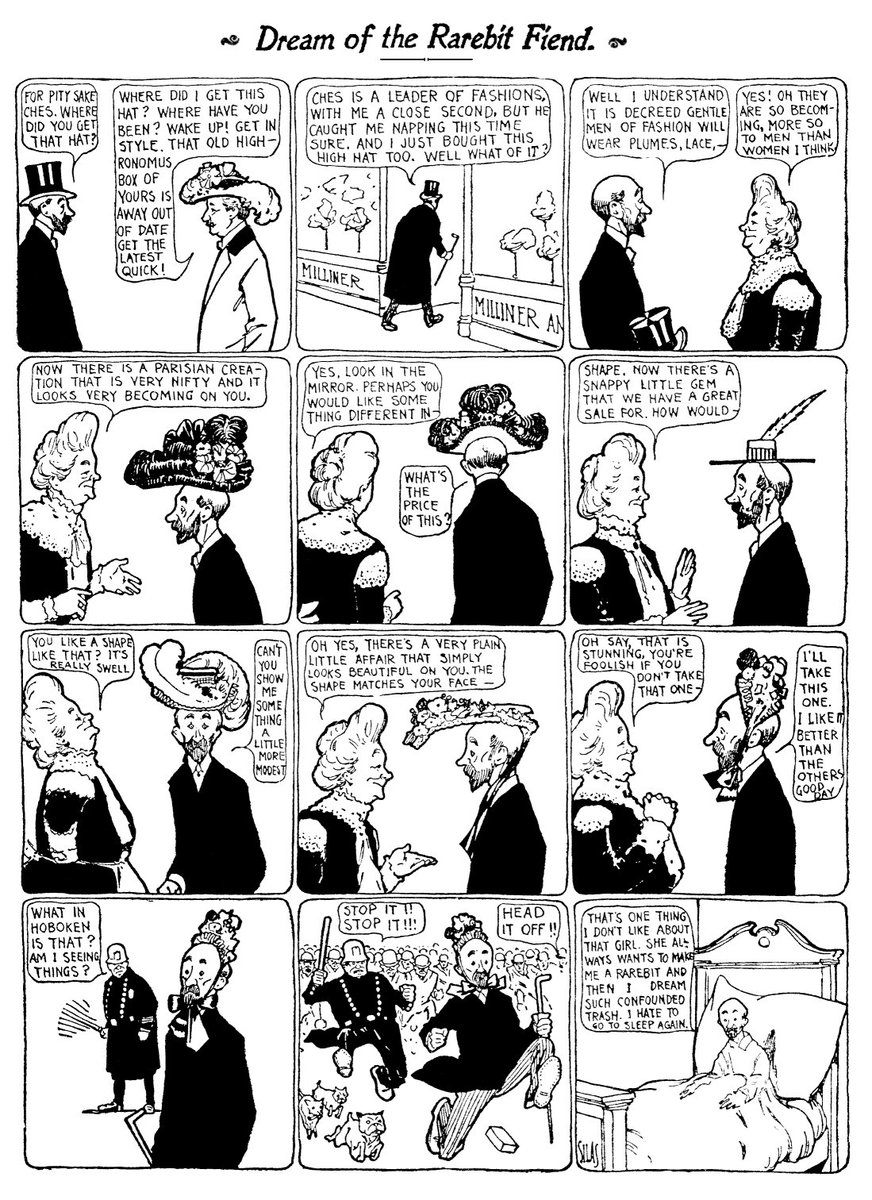
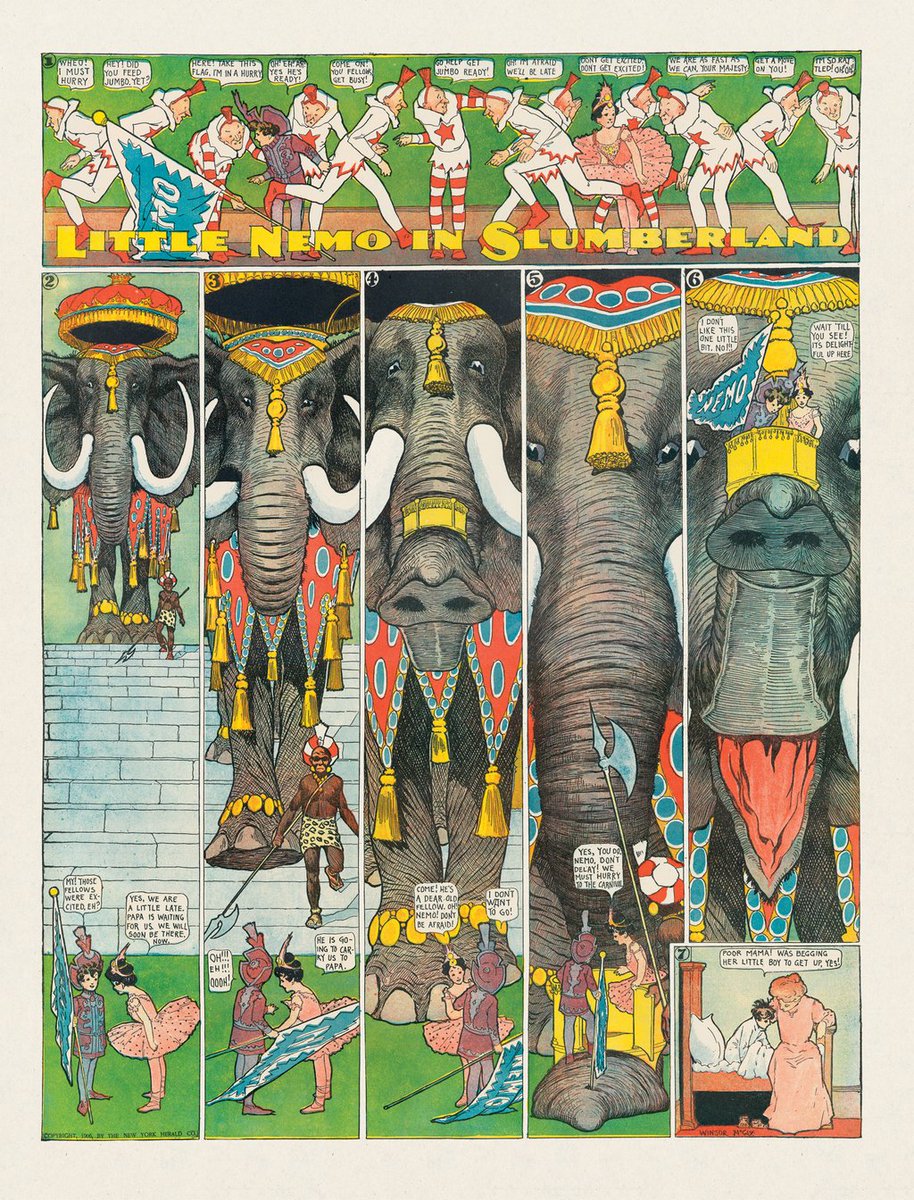
Winsor McCay is most famous for his other strip, Little Nemo in Slumberland, which wonderfully showcases his love of Modernism and his innovative use of repetition. However Rarebit Fiend is still my favourite, mostly because it's strips are endlessly fascinating. Image
A short film, Dream of a Rarebit Fiend, was made in 1906 by Edwin S. Porter based on one of McCay's strips. McCay later animated a number of his stories himself.
Many collections of Rarebit Fiend strips have been published over the years and they are well worth seeking out. The stories are fun, strange and elegantly told. Image
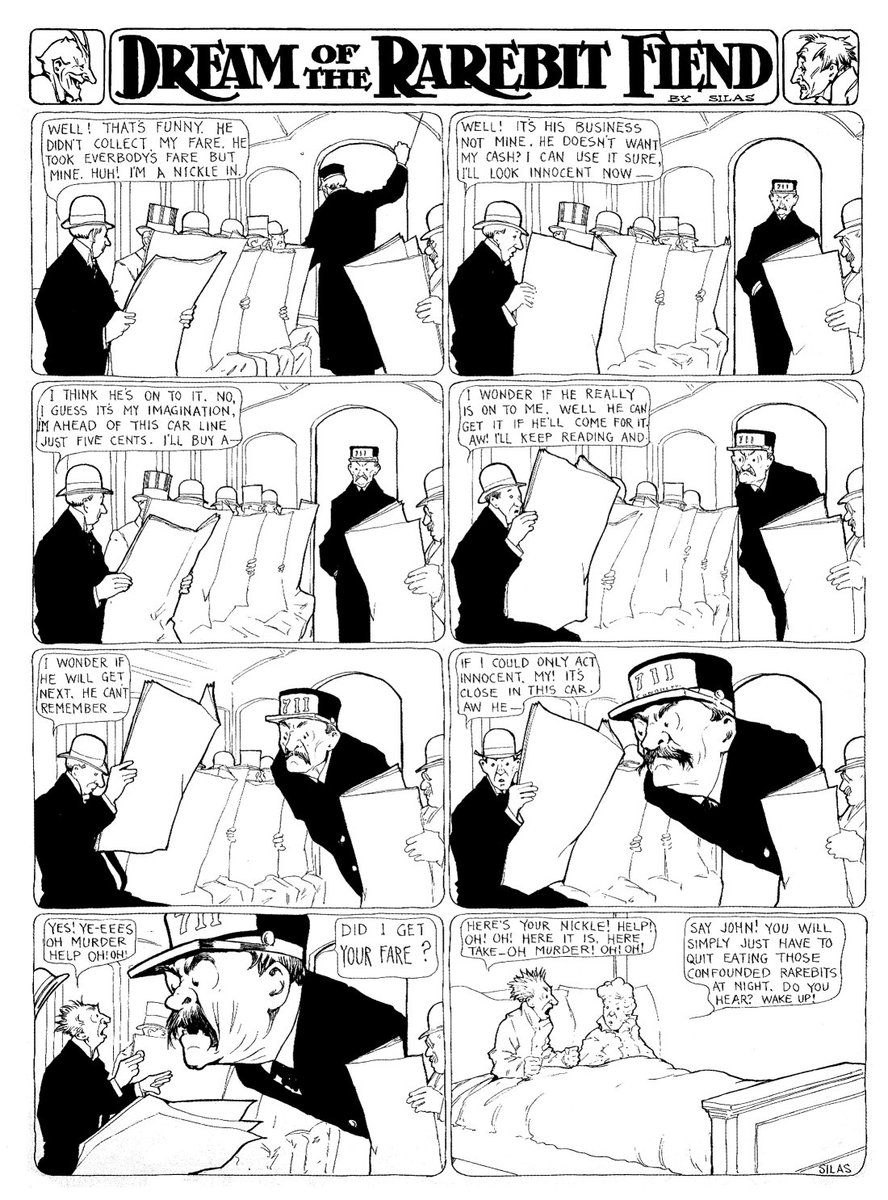
And that's it for my look at Dream of the Rarebit Fiend. Don't let it put you off toasted cheese!

More stories another time... Image

• • •

Missing some Tweet in this thread? You can try to force a refresh

 

Keep Current with Pulp Librarian

Pulp Librarian Profile picture

Stay in touch and get notified when new unrolls are available from this author!

Read all threads

This Thread may be Removed Anytime!

PDF

Twitter may remove this content at anytime! Save it as PDF for later use!

Try unrolling a thread yourself!

how to unroll video
  1. Follow @ThreadReaderApp to mention us!

  2. From a Twitter thread mention us with a keyword "unroll"
@threadreaderapp unroll

Practice here first or read more on our help page!

More from @PulpLibrarian

Dec 27, 2025
Today in pulp: how do you write a novel in two weeks?

Pulp writing that has to work within specific constraints, which in turn shape the nature of the story. And speed is the biggest constraint of all: you have to write quickly!

But there are ways to make it work for you... Image
Today a prolific author may write a book every year, but in the 1950s and '60s pulp writer sometimes had as little as two weeks to complete a 50,000 word story and have it ready for print.

That’s 25 novels a year: but at least they got Christmas off! Image
Writing that quickly is hard, but surprisingly liberating. Pulp writers had to go with their first ideas and had to make them work. There wasn’t time to ‘kill your darlings’ - instead you had to toughen them up and send them into battle! Image
Read 23 tweets
Sep 26, 2025
Today in pulp I'm taking a look back at the Regency Romance series from Signet Books! Image
Signet's Regency Romance series started in the late 1970s and ran until 2006. Like its rivals Harlequin and Mills & Boone, Signet Regency Romance published a number of titles each month, often to the same formula... Image
Most (but not all) Signet Regency Romance covers were by Allan Kass, and I can heartily recommend Rhonda Whiting's wonderful blog about this artist, featuring hundreds of scans of his work allankass.blogspot.co.ukImage
Read 11 tweets
Sep 14, 2025
Do you enjoy:
- rally driving?
- quizzes?
- touching stuff?

Then I have the magazine for you... Image
Electronic bagpipes. Everyday Electronics, May 1974. Image
Laugh simulator. Everyday Electronics, January 1972. Image
Read 9 tweets
Jul 26, 2025
What are the pulp archetypes? Pulp novels are usually written quickly and rely on a formula, but do they use different archetypal characters to other fiction?

Let's take a look at a few... Image
The Outlaw is a classic pulp archetype: from Dick Turpin onwards lawbreakers have been a staple of the genre. Crime never pays, but it's exciting and trangressive!

Some pulp outlaws however are principled... Image
As Bob Dylan sang "to live outside the law you must be honest." Michel Gourdon's 1915 hero Dr Christopher Syn is a good example. A clergyman turned pirate and smuggler, he starts as a revenger but becomes the moral magistrate of the smuggling gangs of Romney Marsh. Image
Read 28 tweets
Jun 30, 2025
Given the current heatwave, I feel obliged to ask my favourite question: is it time to bring back the leisure suit?

Let's find out... Image
Now we all know what a man's lounge suit is, but if we're honest it can be a bit... stuffy. Formal. Businesslike. Not what you'd wear 'in da club' as the young folks say. Image
So for many years tailors have been experimenting with less formal, but still upmarket gents attire. The sort of garb you could wear for both a high level business meeting AND for listening to the Moody Blues in an espresso bar. Something versatile. Image
Read 16 tweets
Jun 29, 2025
Time once again for my occasional series "Women with great hair fleeing gothic houses!"

Let's see what's in the library... Image
The Voice of the House, by Margaret Erskine (an Inspector Finch Gothic Mystery). Ace Gothic, 1973.

She'll fall over if she leans like that. Image
The Three Sisters of No End House, by Mona Farnsworth. Ace Gothic, 1972.

I said she'll fall over if she leans like that! Image
Read 10 tweets

Did Thread Reader help you today?

Support us! We are indie developers!


This site is made by just two indie developers on a laptop doing marketing, support and development! Read more about the story.

Become a Premium Member ($3/month or $30/year) and get exclusive features!

Become Premium

Don't want to be a Premium member but still want to support us?

Make a small donation by buying us coffee ($5) or help with server cost ($10)

Donate via Paypal

Or Donate anonymously using crypto!

Ethereum

0xfe58350B80634f60Fa6Dc149a72b4DFbc17D341E copy

Bitcoin

3ATGMxNzCUFzxpMCHL5sWSt4DVtS8UqXpi copy

Thank you for your support!

Follow Us!

:(