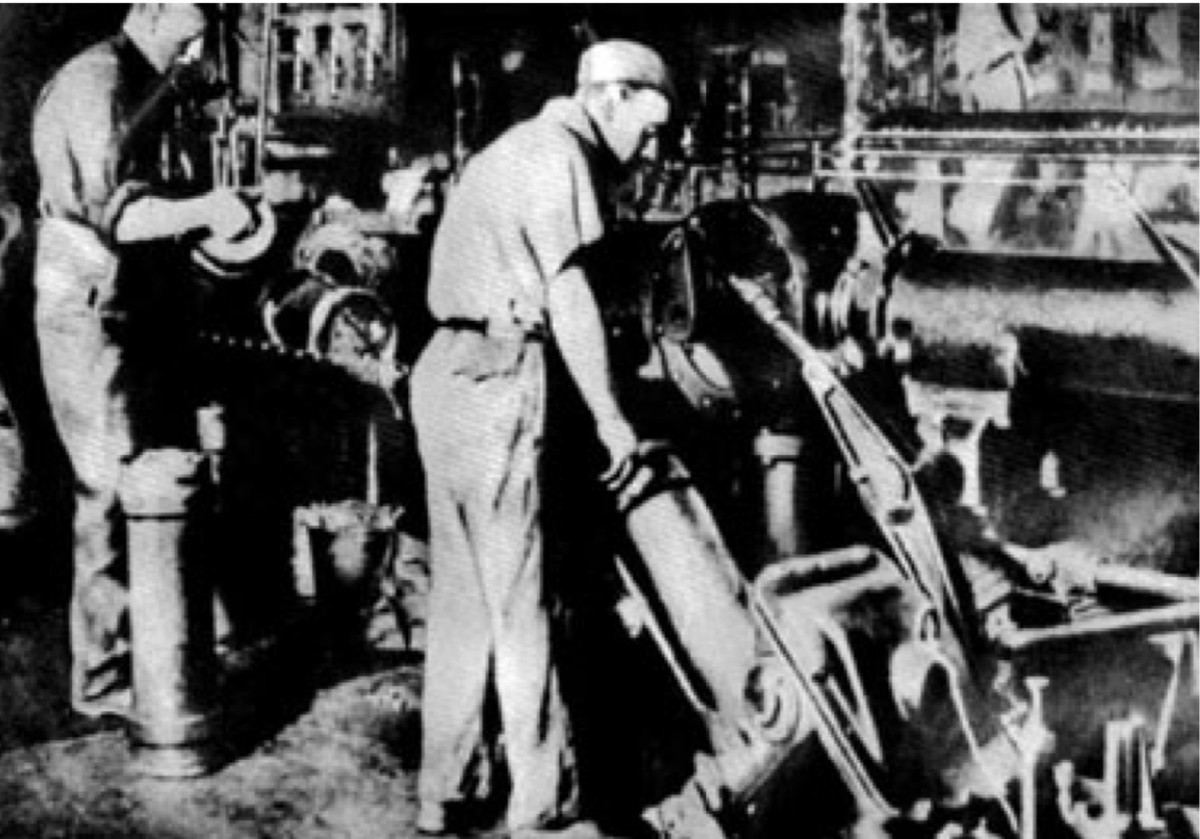
1. New York City once had a system of pneumatic tubes beneath is streets, whisking up to 6 million pieces of mail at 30mph around the city each day. The postal workers who staffed the system were known as rocketeers. about.usps.com/who-we-are/pos…
2. From the beginning, the pneumatic tube service was controversial. It was fast, allowing multiple messages to be exchanged between correspondents in a single day—and thus, a boon for business. It was also the most expensive way to move letters from one point to another.
3. It’s an old debate: Is the Post Office a service, facilitating public good at public expense? Or should it be run more like a business, looking for efficiencies and forcing customers to pay the cost of what they receive?
Trucks were slower—but much cheaper.
4. At the end of 1953, the last of the pneumatic mail was shut down. In 1971, the Post Office Department became the Postal Service, with a mandate to pay for itself. Today, “a series of tubes” is a metaphor for our IT infrastructure, no longer a literal description.
5. But the short-lived pneumatic mail is a good example of the possibilities of cutting-edge public services. It lasted decades longer than, say, the fax machine. And a century later, we still want to have all the benefits of public services, just not at public expense.
• • •
Missing some Tweet in this thread? You can try to
force a refresh

1. The extraordinarily rapid spread of gambling through society is hurtling us back toward the early modern world, where people wagered—through the medium of "insurance" contracts—on all manner of ghastly things.
2. The trouble with such gambling—then, as now—was the horrifying incentives it created. Like the time a man collapsed on the threshold of a club, wagers were made, and those who'd placed money on his death tried to bar medical care:
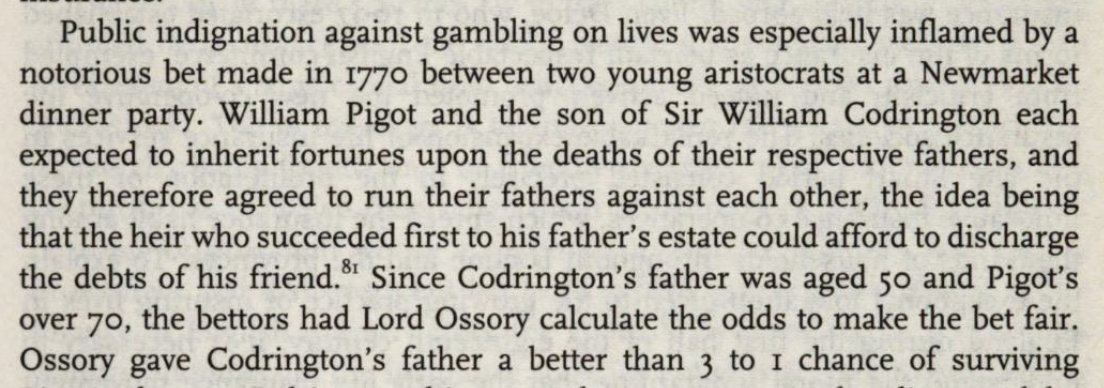
3. Or take the notorious example in which two aristocrats bet on the deaths of their own fathers, on the theory that whichever first came into his rich inheritance could support the other
1. This specific 1920s house in Oklahoma City—marketed as "a fine large home in an exclusive residential district"—sold in 1947 for $27,500. That's five times the median home price in the state at the time. It has 4 bd, 3.5 ba, 3,514 sqf.
2. The Great Depression, wartime shortages and shifts in the population created a severe housing crisis. By 1946, one-fifth of American households had doubled up with a second family in a housing arrangement meant only for one.
3. People got creative. In York, Pennsylvania, a man bought five scrapped trolleys and connected them, the bowed fronts of the streetcars serving as bay windows. In Plattsburg, Missouri, a couple purchased an abandoned gas station and moved in.
In 1954, a quarter of American dwellings had no flush toilets, showers, or bathtubs. Half lacked central heating. 27% of families had no car; 33% had no television.
In 1954, 34.4% of men whose wives were not in the labor force earned less than $3,500.
There's no way around this, really. There are many, many problems in the contemporary United States, but in strictly material terms, we are enormously more prosperous than we were then.
It's *also* true that housing in places that offer economic prosperity has grown prohibitively expensive, trapping people where they are, denying them agency, and leaving them feeling squeezed.
1. This is true! The researchers were developing and validating a neurobiological model of PTSD, which could be used both to screen for risk and to develop pharmacological treatments for the condition. You can read it for yourself: pmc.ncbi.nlm.nih.gov/articles/PMC64…x.com/TRHLofficial/s…
2. Research at NIH is not a significant driver of government spending, but medical care is. Military patients diagnosed with PTSD cost an average of $25,684 each year to treat, and the disorder imposes an estimated economic burden of $232 billion.
3. There are few FDA-approved drugs for the treatment of PTSD. If we could develop more, it'd boost economic growth while driving down government spending on health care. But we need a validated animal-model to facilitate that.
Trump volunteered to pay for the funeral of a murdered U.S. soldier. When the bill came, Trump became angry. “It doesn’t cost 60,000 bucks to bury a fucking Mexican!” He turned to his chief of staff, Mark Meadows, and issued an order: “Don’t pay it!”
When Trump told his chief of staff he admired "German generals," Kelly asked him: “‘Do you mean Bismarck’s generals? Do you mean the kaiser’s generals? Surely you can’t mean Hitler’s generals? And he said, ‘Yeah, yeah, Hitler’s generals.’ theatlantic.com/politics/archi…
1. Large numbers of students are arriving at highly selective universities unprepared to read a book cover-to-cover—because no teacher has ever asked them to before, reports @rosehorowitch theatlantic.com/magazine/archi…
2. Professors report their students are less able to absorb details while keeping track of the plot, have narrower vocabularies, shut down in the face of challenging ideas, and struggle to persist through challenging texts: theatlantic.com/magazine/archi…
3. The great Melville scholar Andrew Delbanco has switched his American literature survey to a seminar on short texts, and dropped Moby Dick from his syllabus in favor of Billy Budd and Bartleby. “One has to adjust to the times,” he said. theatlantic.com/magazine/archi…