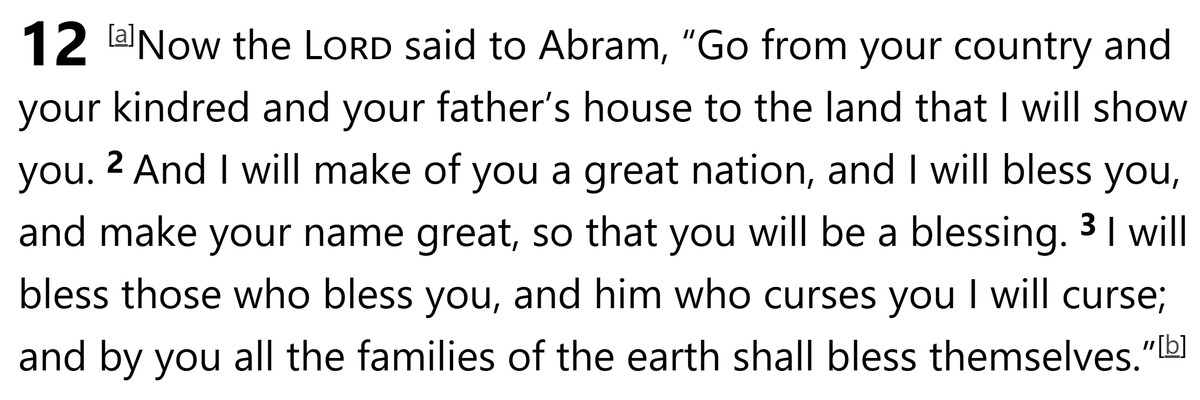
Did the early Church recognize a papacy? See for yourself. A collection of quotes from early Christians and Church Fathers recognizing the primacy of Peter among the apostles (thread):
Clement of Alexandria (200 A.D.): “[Peter is] the chosen, the preeminent, the first among the disciples, for whom alone with himself the Savior paid the tribute."
Tertullian (211): "[R]emember that the Lord left the keys of it to Peter here, and through him to the Church, which keys everyone will carry with him if he has been questioned and made a confession [of faith]."
Letter of Clement to James (221): "“Be it known to you, my lord, that Simon [Peter], who, for the sake of the true faith, and the most sure foundation of his doctrine, was set apart to be the foundation of the Church, and for this end was by Jesus himself...
"...with his truthful mouth, named Peter, the first fruits of our Lord, the first of the apostles; to whom first the Father revealed the Son; whom the Christ, with good reason, blessed.”
Origen (248): "[I]f we were to attend carefully to the Gospels, we should also find, in relation to those things which seem to be common to Peter . . . a great difference and a preeminence in the things [Jesus] said to Peter, compared with the second class [of apostles]."
Cyprian of Carthage (251): "[A] primacy is given to Peter, whereby it is made clear that there is but one Church and one chair."
Cyril of Jerusalem (350): "[Peter is] the first and foremost of the apostles" and "both the chief of the apostles and the keeper of the keys of the kingdom of heaven"
Ephraim the Syrian, as Jesus to Peter (351): "You are the head of the fountain from which my teaching flows; you are the chief of my disciples...I have chosen you to be, as it were, the firstborn in my institution so that, as the heir, you may be executor of my treasures."
Jerome (393): "[O]ne among the twelve is chosen to be their head in order to remove any occasion for division.” Jerome also, in 396, calls Peter "chief of the apostles."
Augustine (411): “Among these [apostles] Peter alone almost everywhere deserved to represent the whole Church. Because of that representation of the Church, which only he bore, he deserved to hear ‘I will give to you the keys of the kingdom of heaven.'"
Council of Ephesus (431): "[T]he head of the whole faith, the head of the apostles, is blessed Peter the apostle."
"[Peter is] prince and head of the apostles, pillar of the faith, and foundation of the Catholic Church."
"[Peter is] prince and head of the apostles, pillar of the faith, and foundation of the Catholic Church."
Pope Leo I: "Our Lord Jesus Christ . . . has placed the principal charge on the blessed Peter, chief of all the apostles, and from him as from the head wishes his gifts to flow to all the body...
"... so that anyone who dares to secede from Peter’s solid rock may understand that he has no part or lot in the divine mystery...among the most blessed apostles, though they were alike in honor, there was a certain distinction of power. ..
"...All were equal in being chosen, but it was given to one to be preeminent over the others."
We have all of these, and more, in one place right here: catholic.com/tract/peters-p…
These examples and others show that the earliest Christians did, indeed, recognize Peter's primacy among the apostles.
Moreover, this appears to have been an undisputed fact, since there are no examples of Christians in the early centuries denying Peter's primacy—or, for that matter, the succession of other bishops of Rome to the Petrine office.
• • •
Missing some Tweet in this thread? You can try to
force a refresh