It's taken a while to finally get this in peer-reviewed form, but here's my latest article comparing the carbon footprints of long-distance rail travel and commercial aviation in Canada! dx.doi.org/10.1111/cag.12…
Rail has a reputation as being a sustainable mode of transportation... and *usually* that's true (internationally, rail is the most energy-efficient mode). But long-distance passenger rail in Canada is, well, relatively terrible for the environment....
Flying by commercial aircraft across the country actually produces a smaller carbon footprint than taking the train. The article explains why that's the case, why it matters, and what the government can do about it!
Briefly though... it MATTERS because a) many Canadians *think* rail has a lower carbon footprint and increasingly some eco-conscious travellers have OPTED to take the train over flying on that false assumption - despite it taking multiple days and costing much more!
and b) it matters because some fairly simple changes can help make passenger rail much more sustainable. There's no need to be chugging down so much diesel per passenger!
Two final comments: 1) This was a bit of a side project started after two rail travellers shared unsolicited information with me which they had received from VIA Rail about their travel footprints. I thank those two "Good Samaritans" for reaching out to this unknown academic.
2) Important👉 The long-distance trains and 'Corridor' trains in Canada are not the same: Taking the train WITHIN the Quebec City-Windsor corridor (through Toronto, Ottawa, Montreal) IS more efficient than flying. It's the trips to West and East Coasts that need improvement!
• • •
Missing some Tweet in this thread? You can try to
force a refresh

There are LOTS of different climate modelling efforts; and they have sought to model different things. Some have been quite on the mark, some haven't. Most recently there's been a concerning finding that models have UNDERESTIMATED Earth's Energy Balance...
THREAD🧵
Good models!
- @hausfath has relentlessly shown how many early climate models of future temperature change going back to the 1960s and 70s have been surprisingly good at predicting increases in average global surface temperatures...
- The paper I linked to in the OP shows how climate models of expected SEA LEVEL RISE were very accurate.
- Recent assessments have found that the CMIP6 ensemble mean under SSP2-4.5 has been broadly consistent with observed GLOBAL SURFACE TEMPERATURE TRENDS in the past decade.
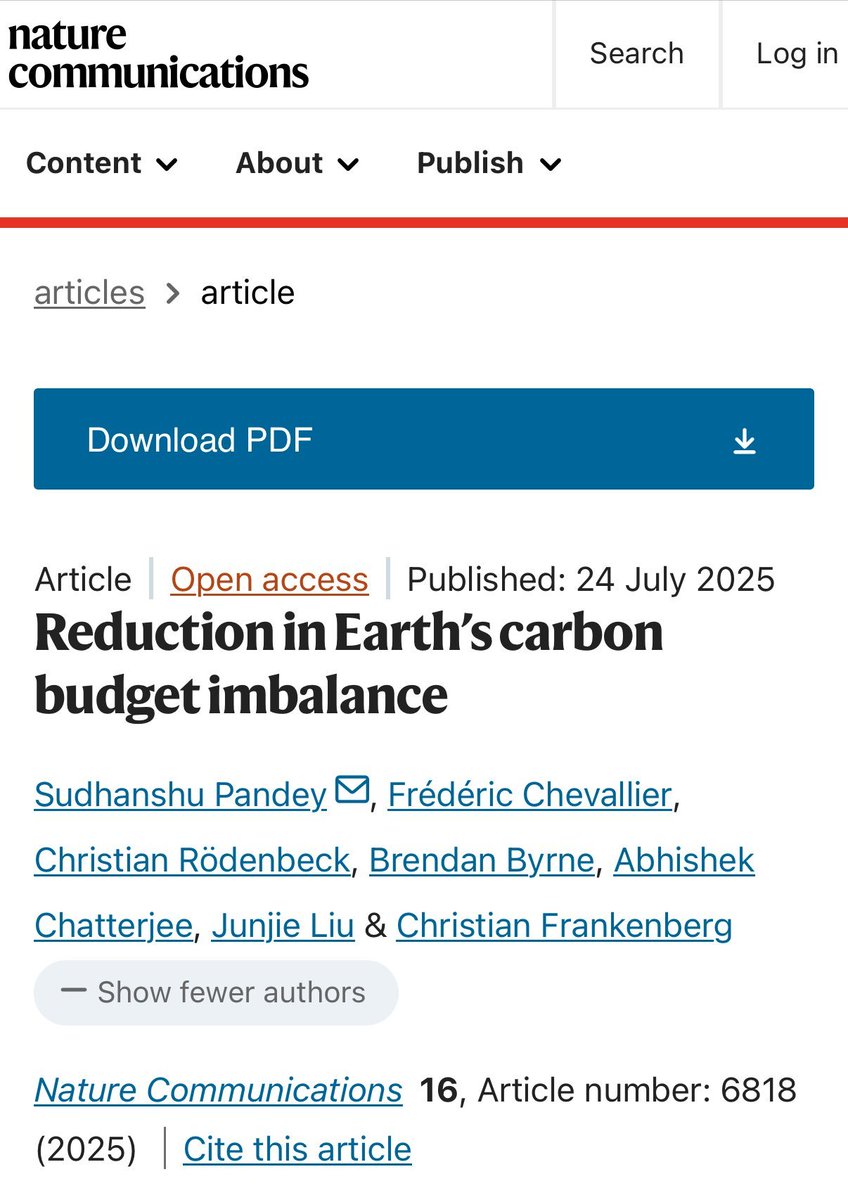
- A study from July found that land and ocean process models (of Earth's Carbon Cycle) are more accurate than previously believed, and that the scientific understanding of Earth’s carbon cycle is improving!
BUT some Climate Modelling efforts have been less on the mark:
- A study from March showed that climate models underestimated the amount of meltwater coming off Antarctica (and increasing precipitation there); in turn, this helps explain why the Southern Ocean has generally not experienced warming as much as the rest of the world [similarly, models of expected warming in the Southern Ocean have thus been OVERESTIMATED].
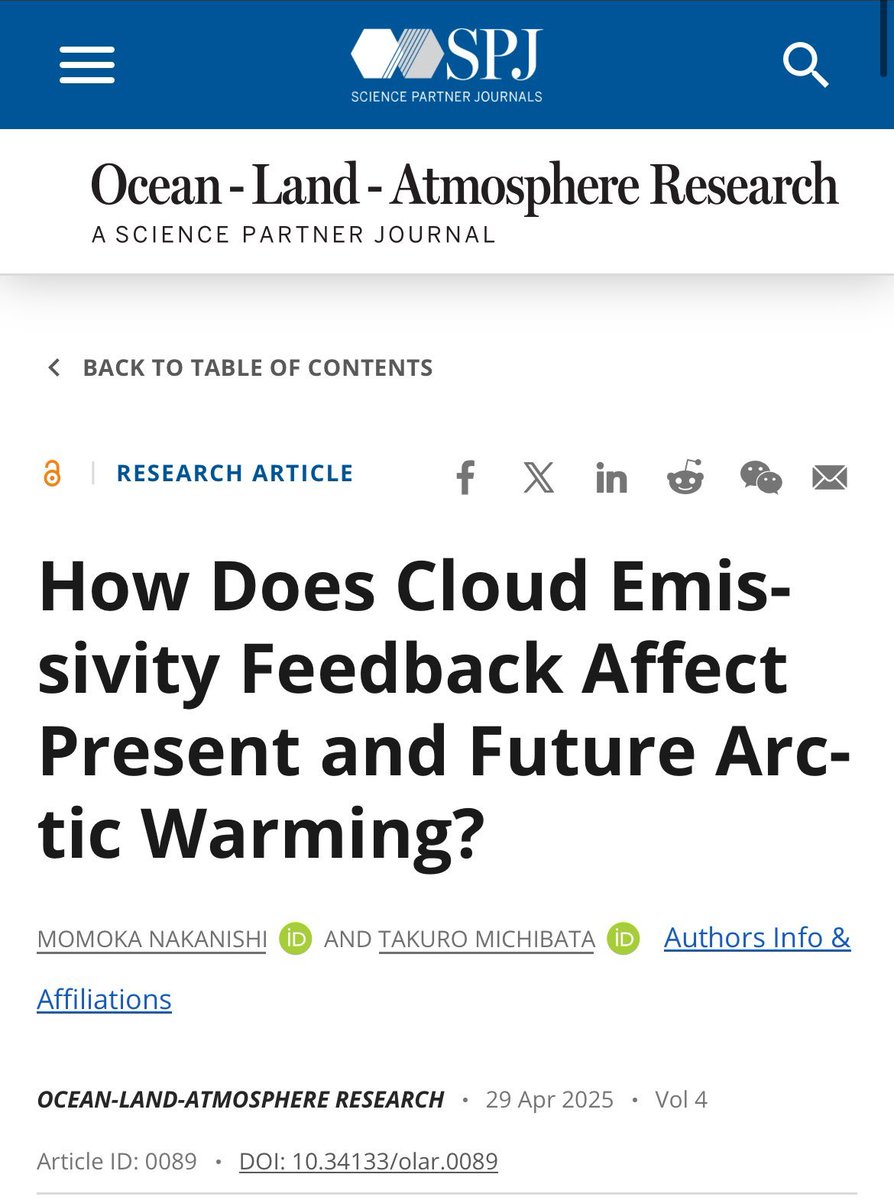
- A study from May of this year found that climate models have UNDERESTIMATED current ARCTIC WARMING because they get the ice-to-liquid ratio in wintertime Arctic clouds wrong (leading to an underestimation of their heat-trapping effect).
- A very recent paper looking at models of Average and Maximum Temperatures found that among many regions and months, models tend to underestimate the historical average (i.e., 22-year average) and even more greatly underestimate the 22-year maximum change in Temperature.
- Similarly, a paper from last November found that some regional “hot spots” are experiencing extreme temperatures that are increasing faster than models predict...
2/ Energy Secretary hand-picked a 'diverse team' of five authors known for their rigor and honesty🙄
[NOTE: The most recent (5th) U.S. National Climate Assessment released in November 2023 was authored by 500 authors, with an additional 260 technical contributors, representing all 50 states, Puerto Rico, the U.S. Virgin Islands, Guam, and Palau. These five authors are well known for being climate skeptics]
3/ CO2 is a wonder chemical that boosts all our crops and is helping to make the ocean "less alkaline"🙄
[NOTE: Not all types of plants benefit from higher levels of CO2; for years the established common term in the literature has been 'ocean acidification' and it is associated with corral bleaching and other detrimental effects in the ocean; global warming caused by CO2 also is limiting agricultural productivity growth]
It's actually the subject of a fascinating and potentially morbid debate about the relationship between humans and Earth's biogeochemical cycles.
Thread🧵
2) One of the leading theories is that this dramatic decline in global CO2 concentrations was actually caused by the 'Great Dying' in the Americas - the mass mortality event caused by European viruses which wiped out 56 million Indigenous people of the "Americas"...
"The resulting near-cessation of farming across a continent and re-growth of Latin American forests and other vegetation removed enough carbon dioxide from the atmosphere to produce a pronounced dip in CO2 seen in Antarctic ice core records."
3) This theory was proposed by Mark Maslin and Simon Lewis about a decade ago in a Nature article titled "Defining the Anthropocene". They argued that this massive CO2 drop, caused by the Great Dying (and subsequent expansion of forests from abandoned human settlements), was a marker of the onset of The Anthropocene.
"In geological terms the 1610 drop in atmospheric carbon dioxide is also associated with the coolest period of the Little Ice Age – a period between about 1300 and 1870 when North America and Europe experienced colder winters – when many changes occurred in geological deposits worldwide. The boundary therefore also marks Earth’s last globally synchronous cool moment before the onset of the long-term global warmth of the Anthropocene."
Woah! Such an important study published in Nature today! Quick thread with some of their key figures!
🧵
2) The study makes an empirical estimate of the impact of global producer climate adaptations on yields of six staple crops spanning 12,658 regions, capturing two-thirds of global crop calories! It essentially tries to figure out not just how climate change will affect yields, but farmer adaptations as well!
3) “We project that adaptation and income growth alleviate 23% of global losses in 2050 and 34% at the end of the century (6% and 12%, respectively; moderate-emissions scenario), but substantial residual losses remain for all staples except rice.”
🧵Twelve conceptual 'problems' that make dealing with climate change super difficult:
1) The Small Numbers Problem: Heading for 2.7 degrees of warming? An increase of up to 0.04% of CO2 in the atmosphere? These numbers SOUND small to most people. In reality, these are absolutely *MASSIVE* changes for Earth over such a relatively short period.
2) The Domestic-International Responsibility Problem: At the national level, policymakers say their country contributes only a small share, so their actions won’t make a difference. Yet at the international level, action can only be genuinely enforced through nation-states.
🧵Thread with a few zingers from this January’s report on climate risk by the Actuaries…
[h/t @James7jackson and @AndrewsonEarth]
“Commonly used ‘net zero’ budgets only give a 50/50 chance of limiting warming to well below 2°C. Put another way, the chance of them failing to limit warming is as high as the chance of them limiting warming.”
“Damages already outweigh the mitigation costs required to limit global warming to 2°C, i.e., it will be overwhelmingly positive economically to limit global warming”