Facebook's public and private groups for trafficking illicit antiquities continue to grow
We're going to take you through antiquities trafficking posts from this month to examine how group members communicate, field offers, and even mock those attempting to offer fakes.
THREAD
We're going to take you through antiquities trafficking posts from this month to examine how group members communicate, field offers, and even mock those attempting to offer fakes.
THREAD
Facebook's black market antiquities groups allow anyone to become an amateur trafficker, democratizing the illicit trade
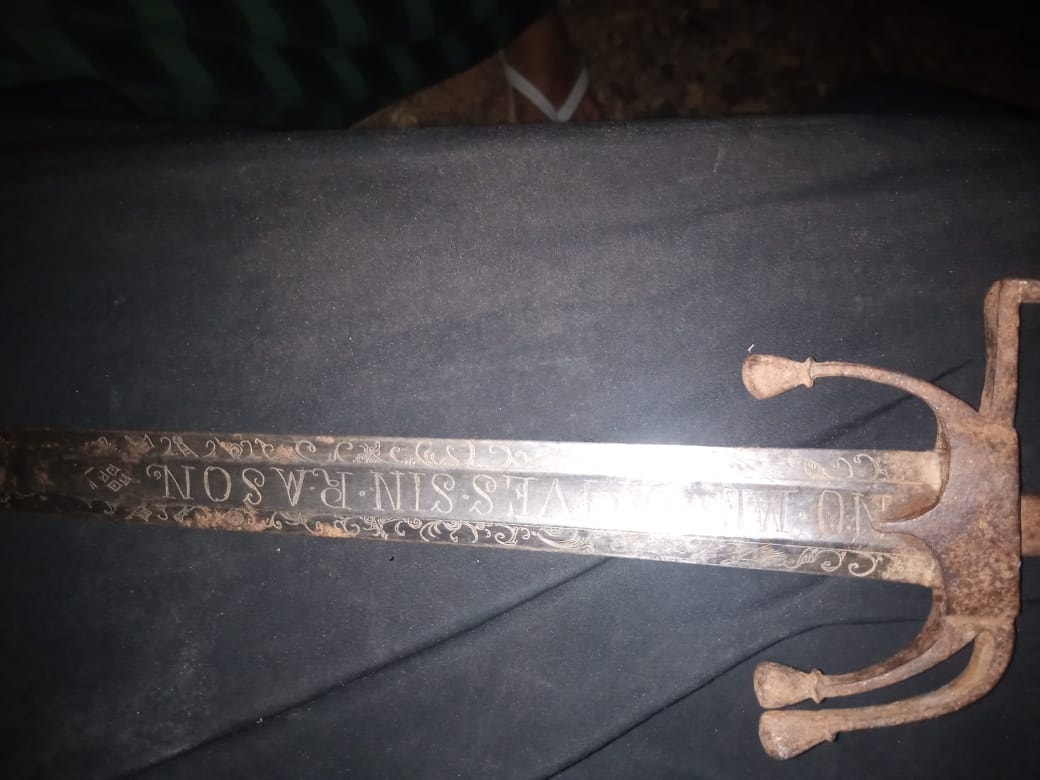
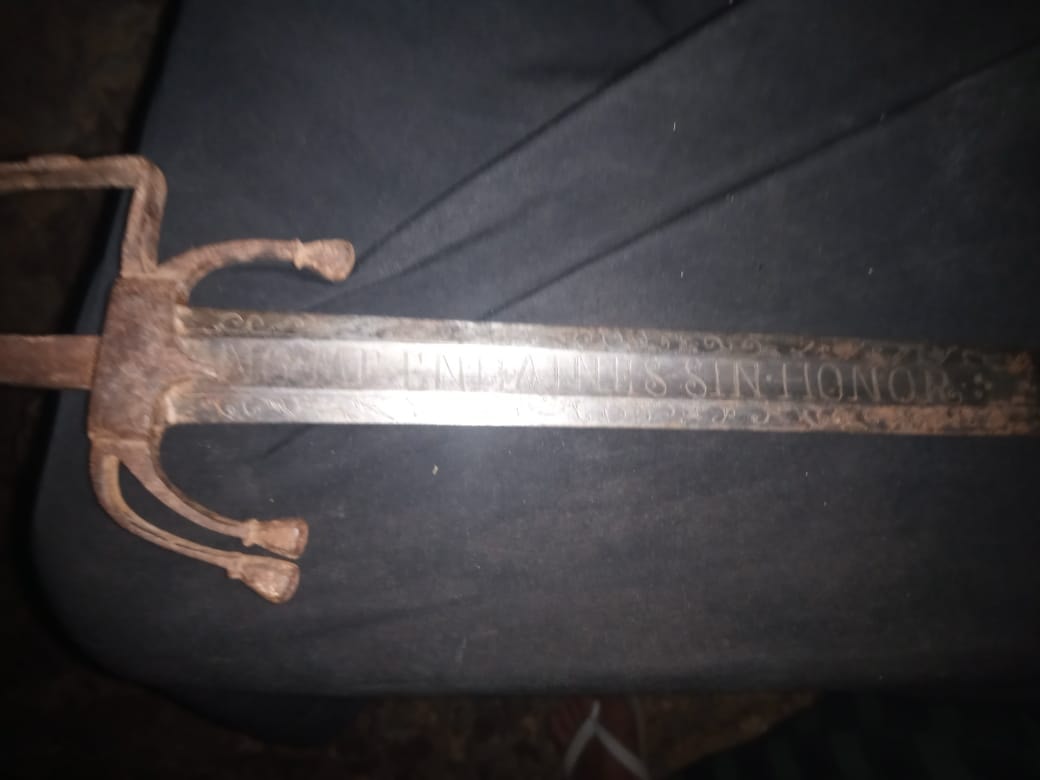
As such, many users don't know the value of what they find, and take to Facebook for info and buyers. Such is the case of this sword from a user in Morocco
As such, many users don't know the value of what they find, and take to Facebook for info and buyers. Such is the case of this sword from a user in Morocco
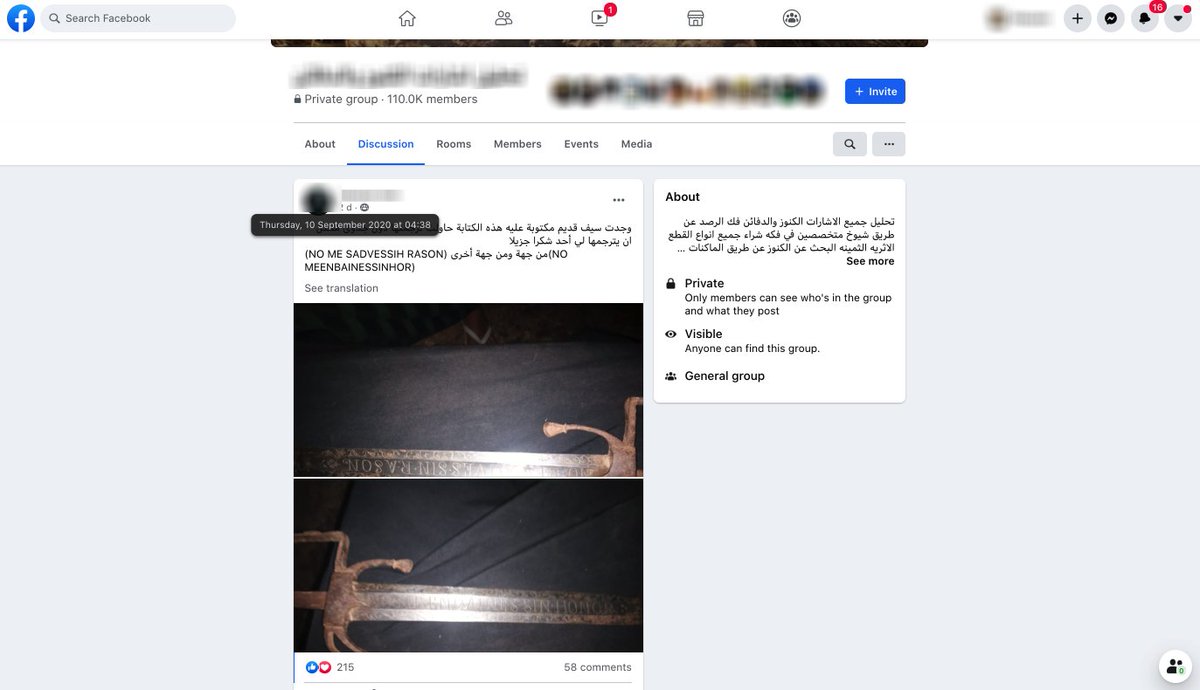
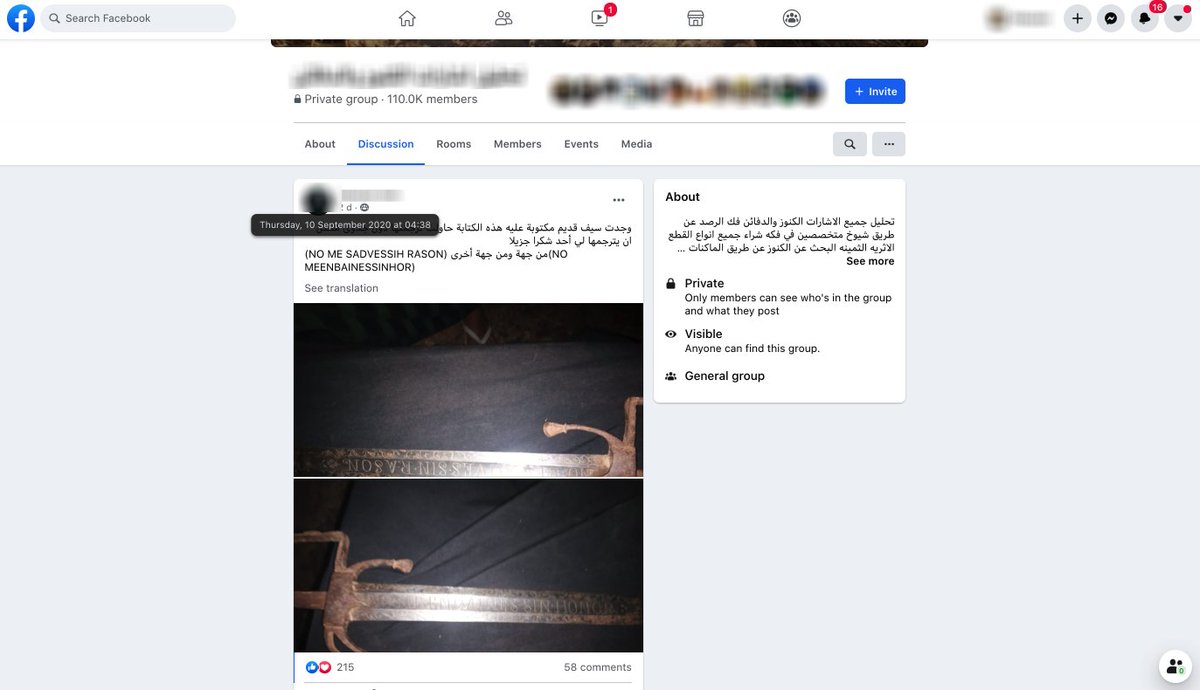
The user is based in Ouarzazate, Morocco, and he tells the over 110,000 members in his trafficking Facebook group that he "found this sword old that has writing" but he's unable to translate it.
He needs to know what is says and how old it is to determine its value.
He needs to know what is says and how old it is to determine its value.
Fellow group members begin sharing their thoughts
User 1 asks where the sword was found, a cave or underground?
He and the author begin a back and forth about whether the sword is from Spanish or Portuguese colonization of Morocco — this could determine age and therefore value
User 1 asks where the sword was found, a cave or underground?
He and the author begin a back and forth about whether the sword is from Spanish or Portuguese colonization of Morocco — this could determine age and therefore value
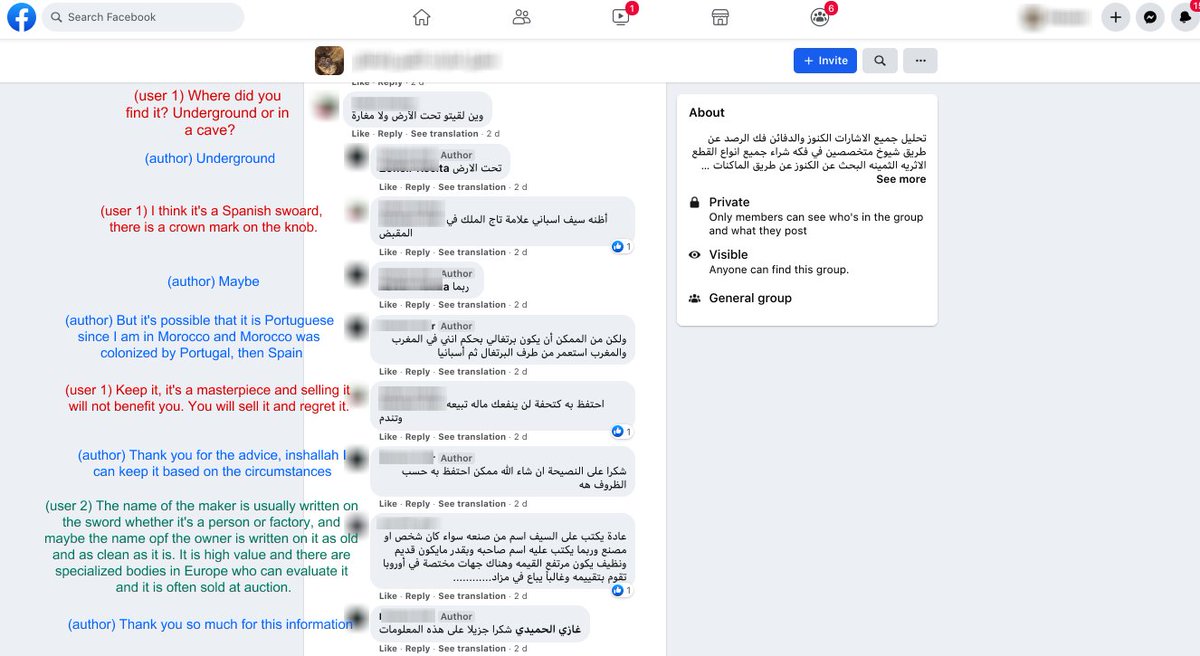
User 1 ends the convo by telling the author to keep the sword, it's a masterpiece and he would regret selling it
But others have thoughts too
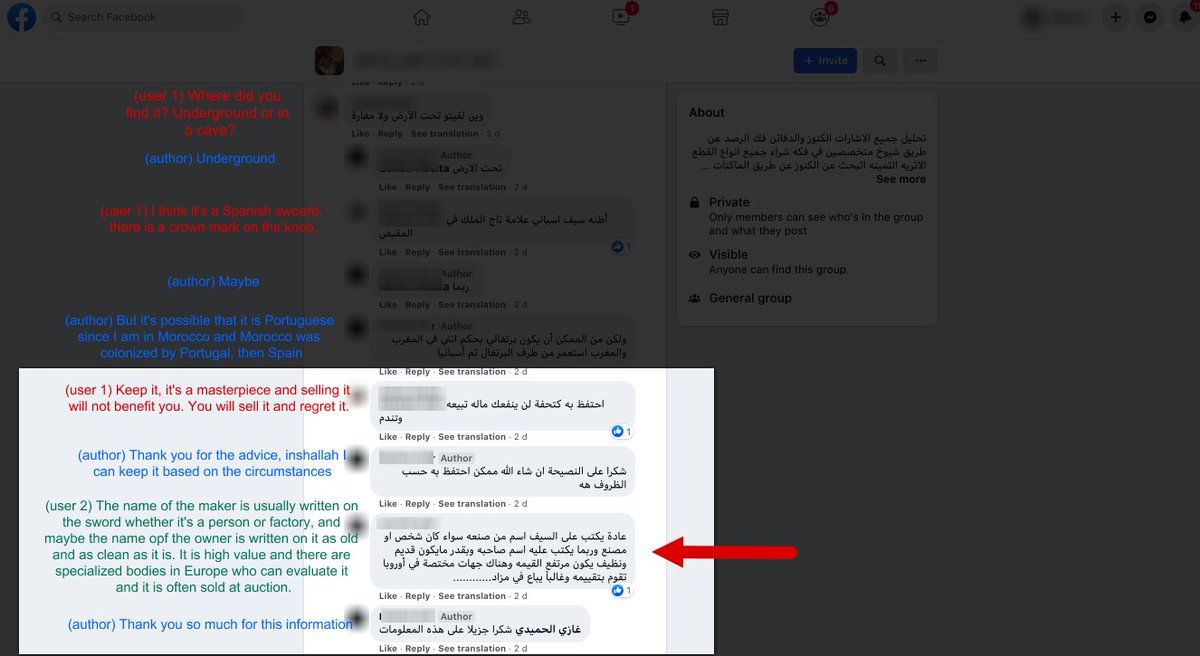
User 2 tells the author it's valuable, and experts in Europe can tell him just how valuable—swords like this are often sold at auctions
But others have thoughts too
User 2 tells the author it's valuable, and experts in Europe can tell him just how valuable—swords like this are often sold at auctions
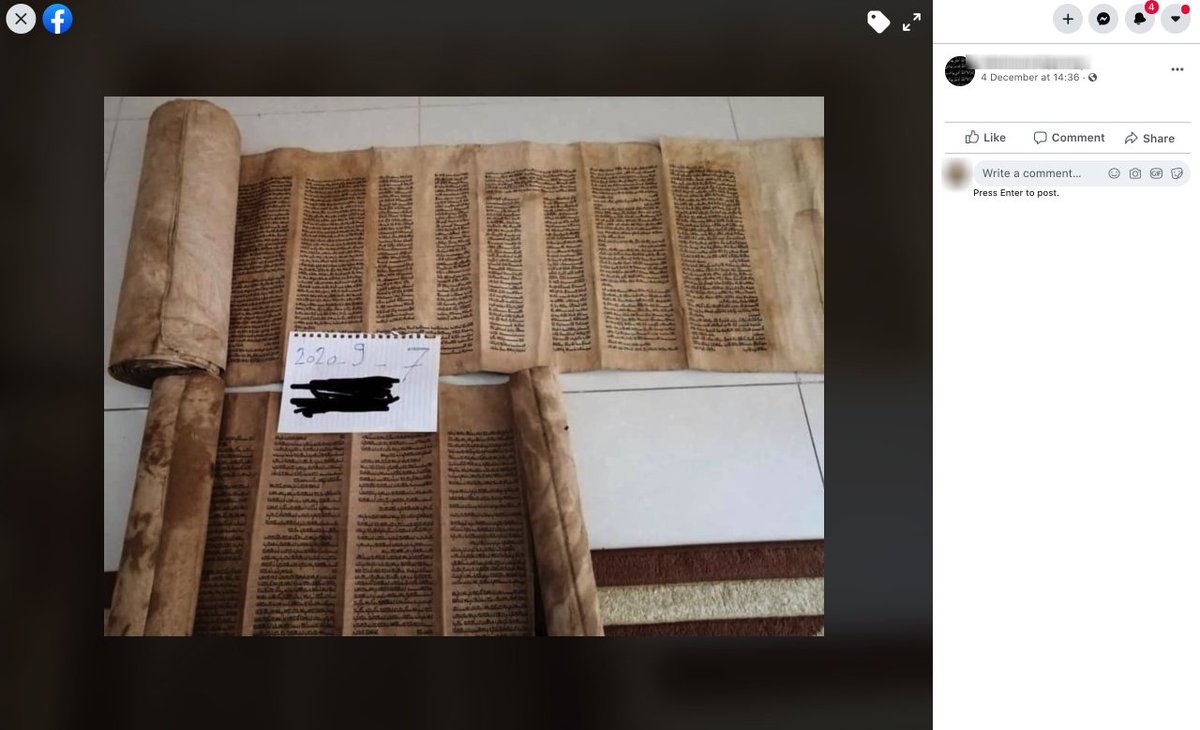
Not all artifacts offered for sale are real. Democratized trafficking can bring amateurs with fakes too.
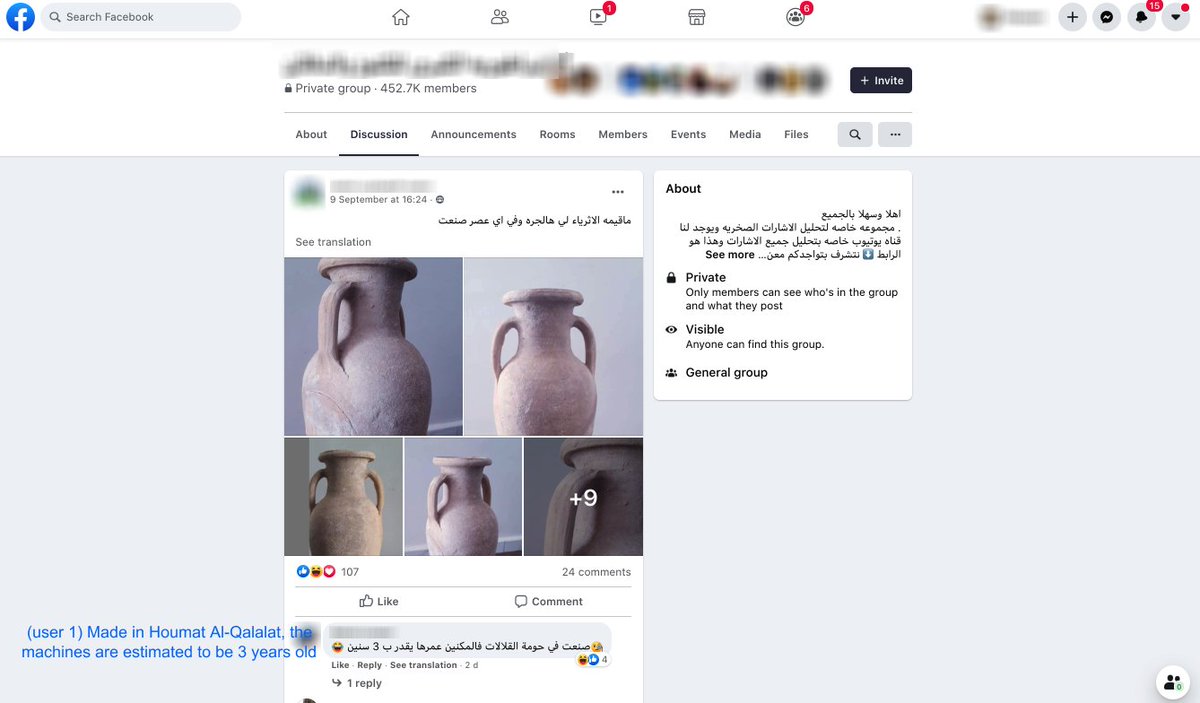
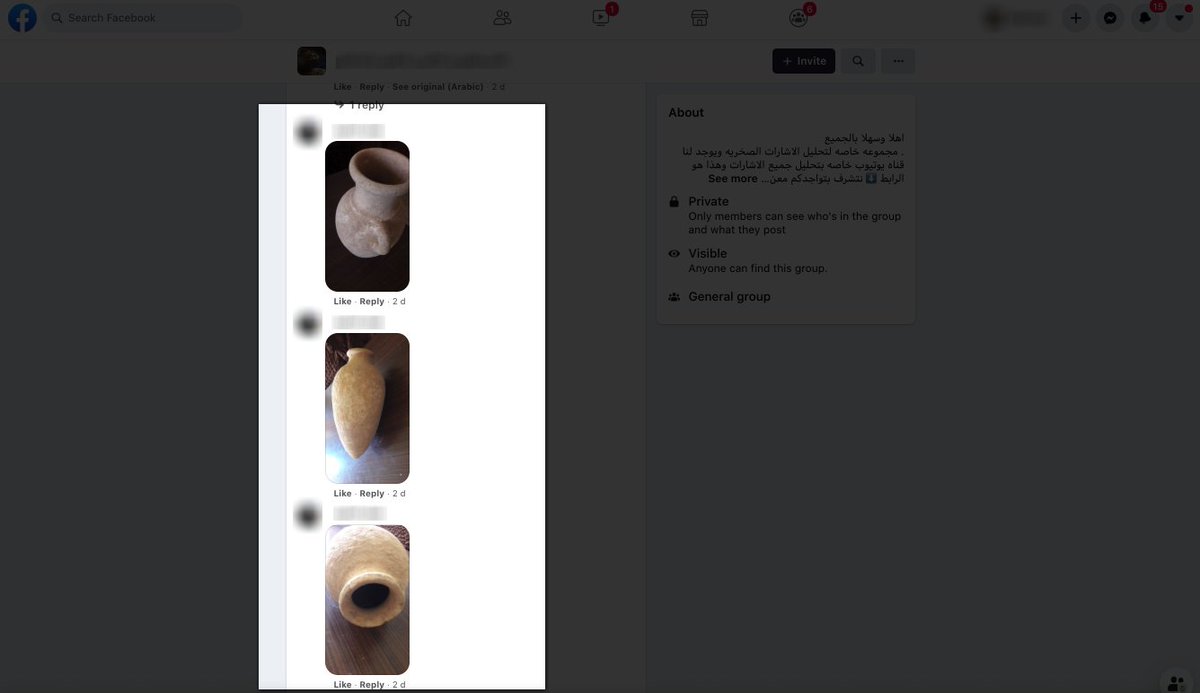
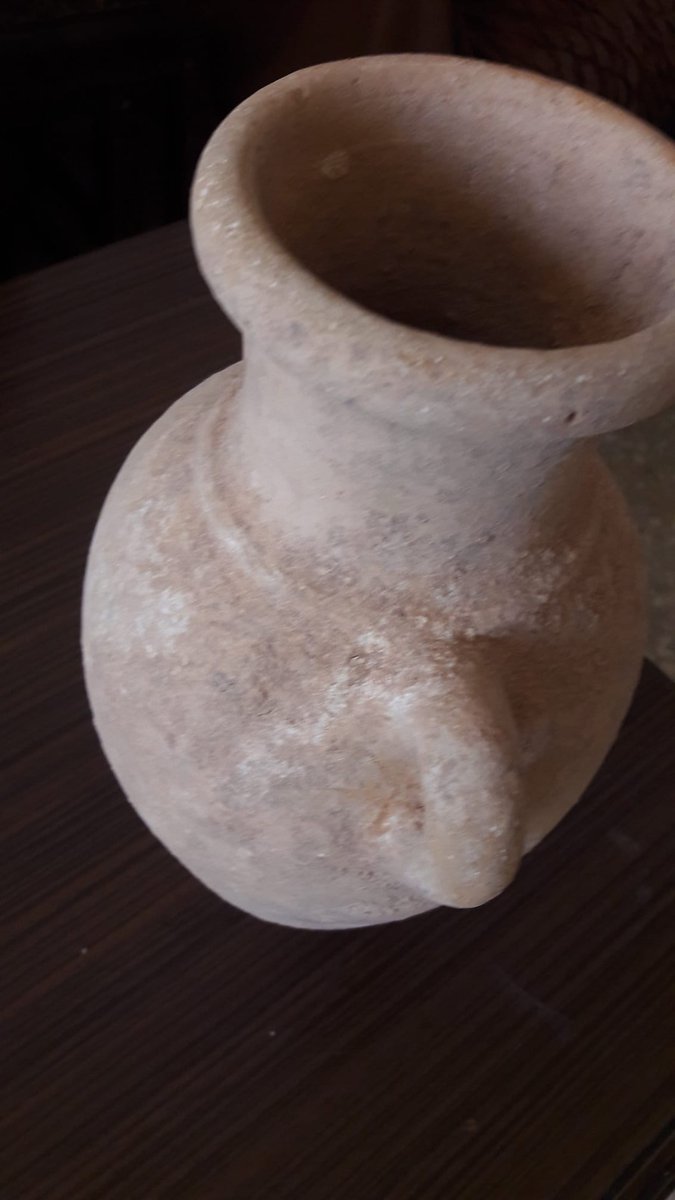
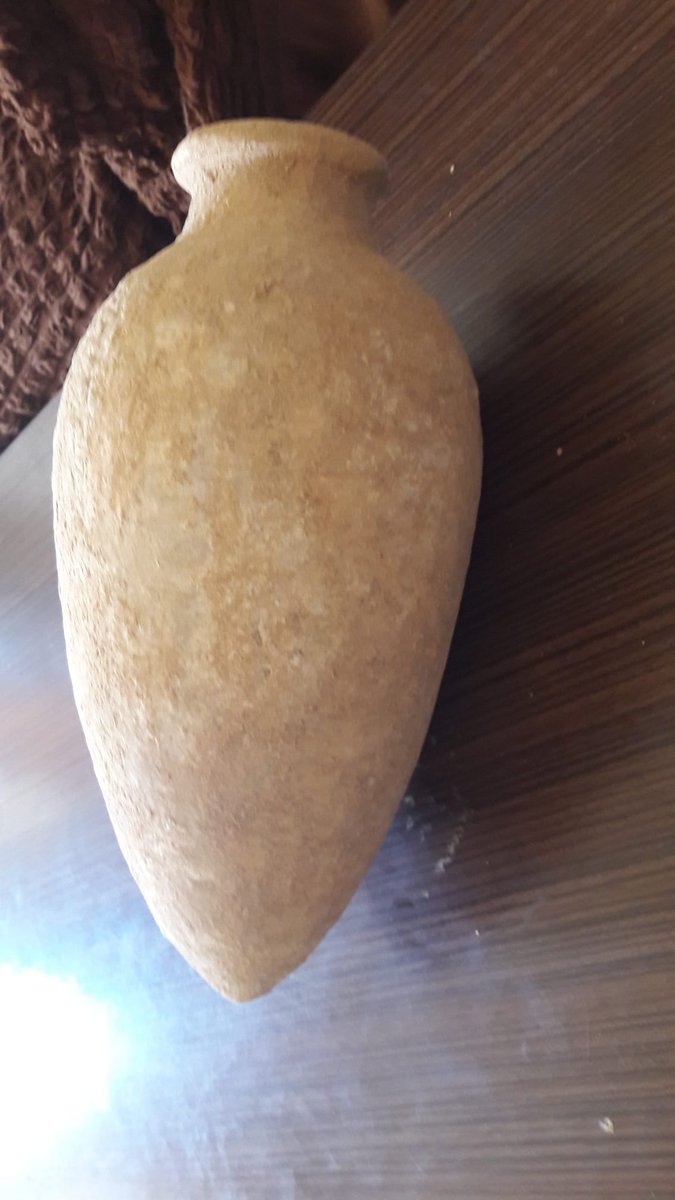
Here in the largest Facebook antiquities trafficking group, a user wants to know the value and age of a jar in his possession
Here in the largest Facebook antiquities trafficking group, a user wants to know the value and age of a jar in his possession
He is quickly mocked by other users...
In the first comment on his post, user one posts that the jar is "an estimated 3 years old" and bookends his comment with crying laughing emojis.
The comment was "liked" and "laughed at" but other group members who agree.
In the first comment on his post, user one posts that the jar is "an estimated 3 years old" and bookends his comment with crying laughing emojis.
The comment was "liked" and "laughed at" but other group members who agree.
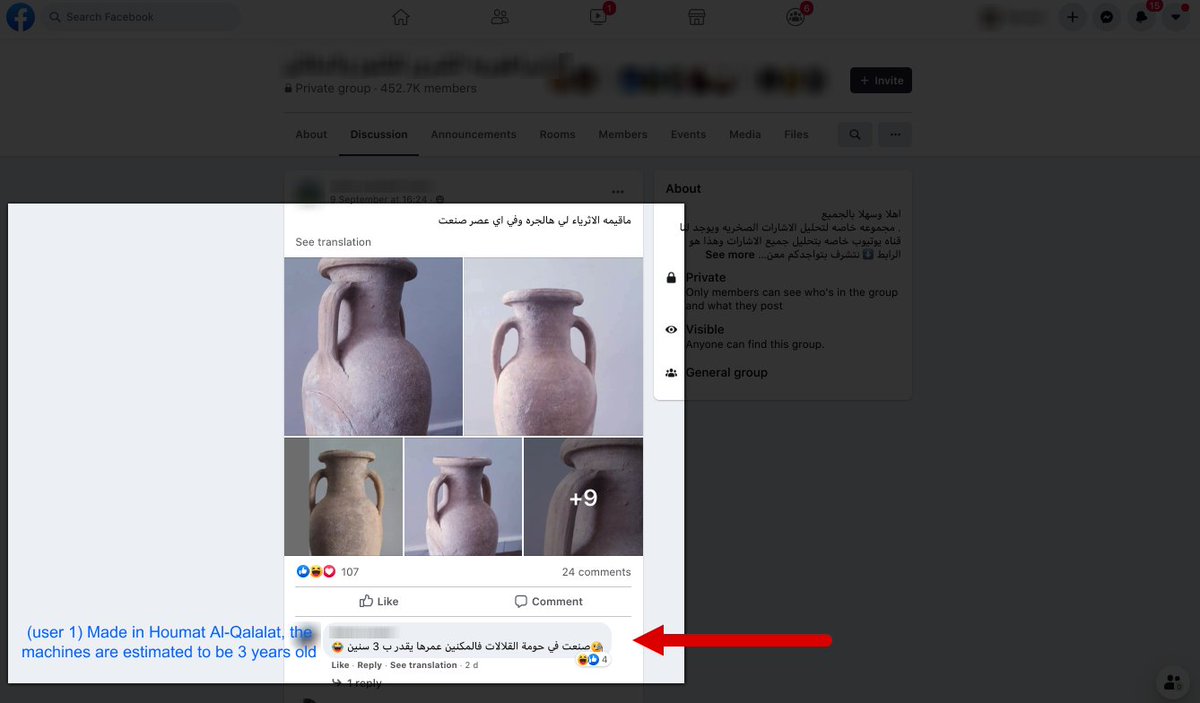
After a deluge of comments about the modern nature of the piece user 5 steps in to tell other group members not to mock the post author. He is asking to learn, not be mocked.
Still, user 7 follows with "made by 9/9/2020", which is the date the author posted the jar.
Still, user 7 follows with "made by 9/9/2020", which is the date the author posted the jar.
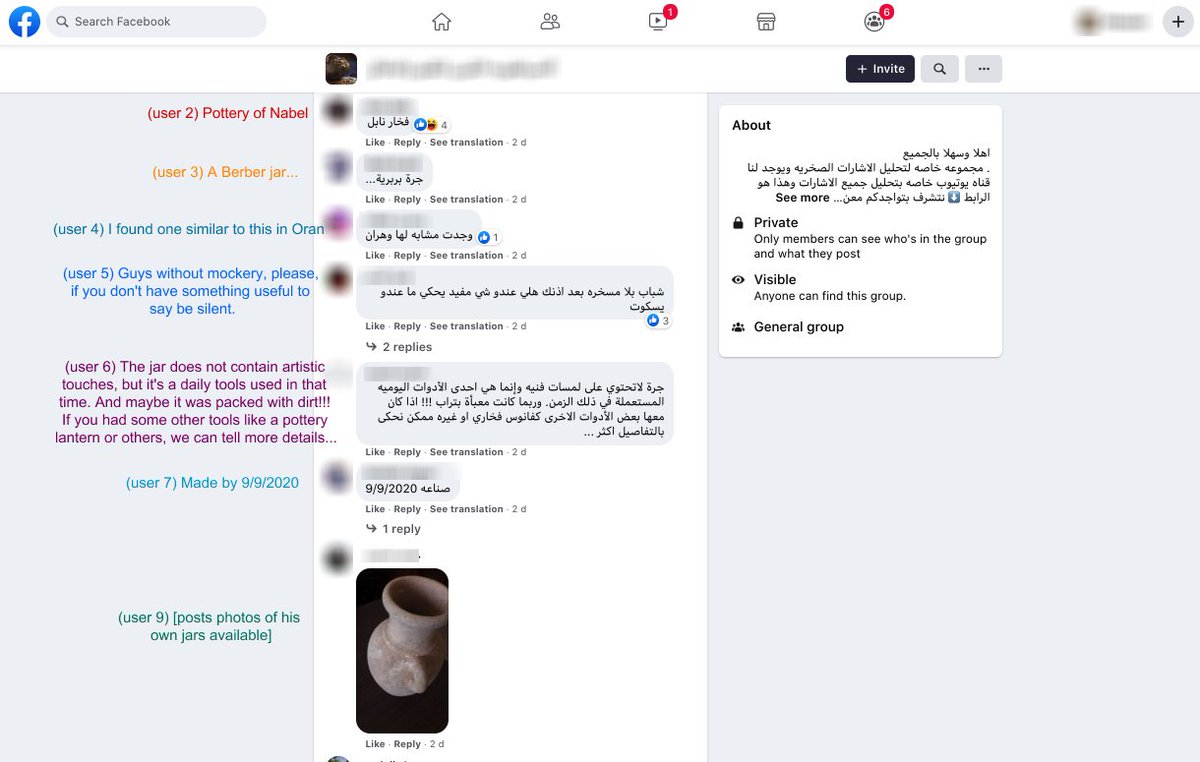
This kind of trafficking group mockery, which is reinforced by "likes" & "laughs" on mocking comments, serves as a means of informal social checks that more serious traffickers often put on their digital black market system.
It discourages others with fakes from offering them.
It discourages others with fakes from offering them.
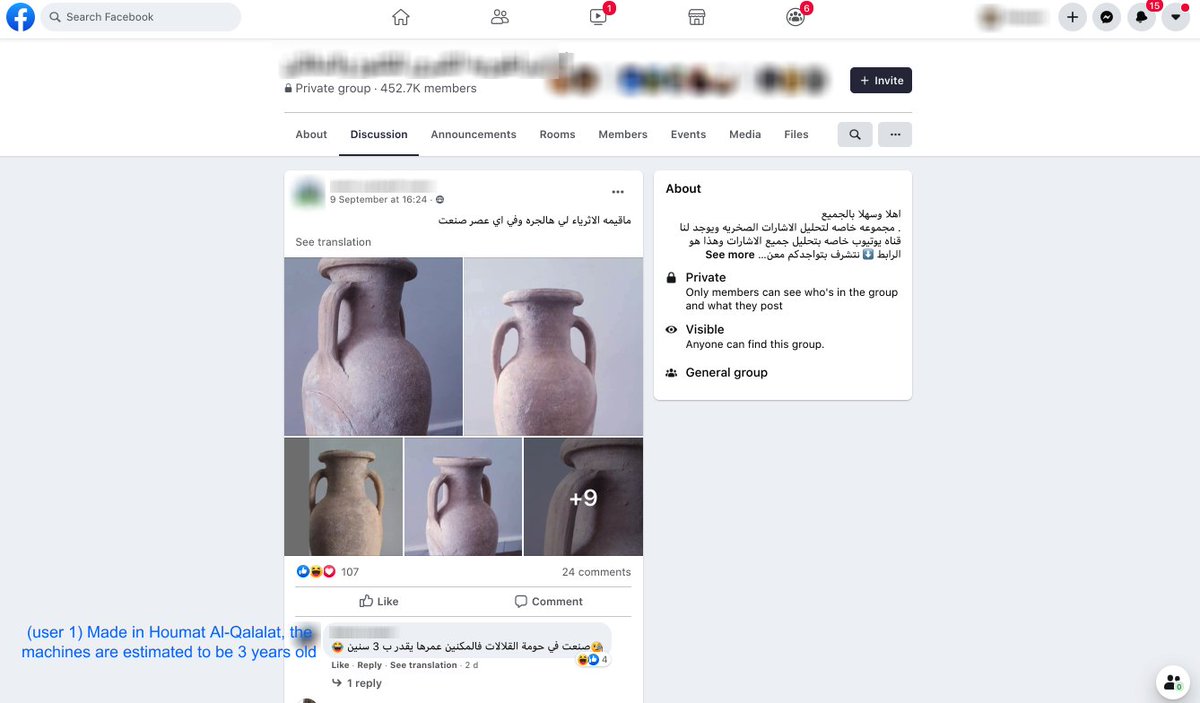
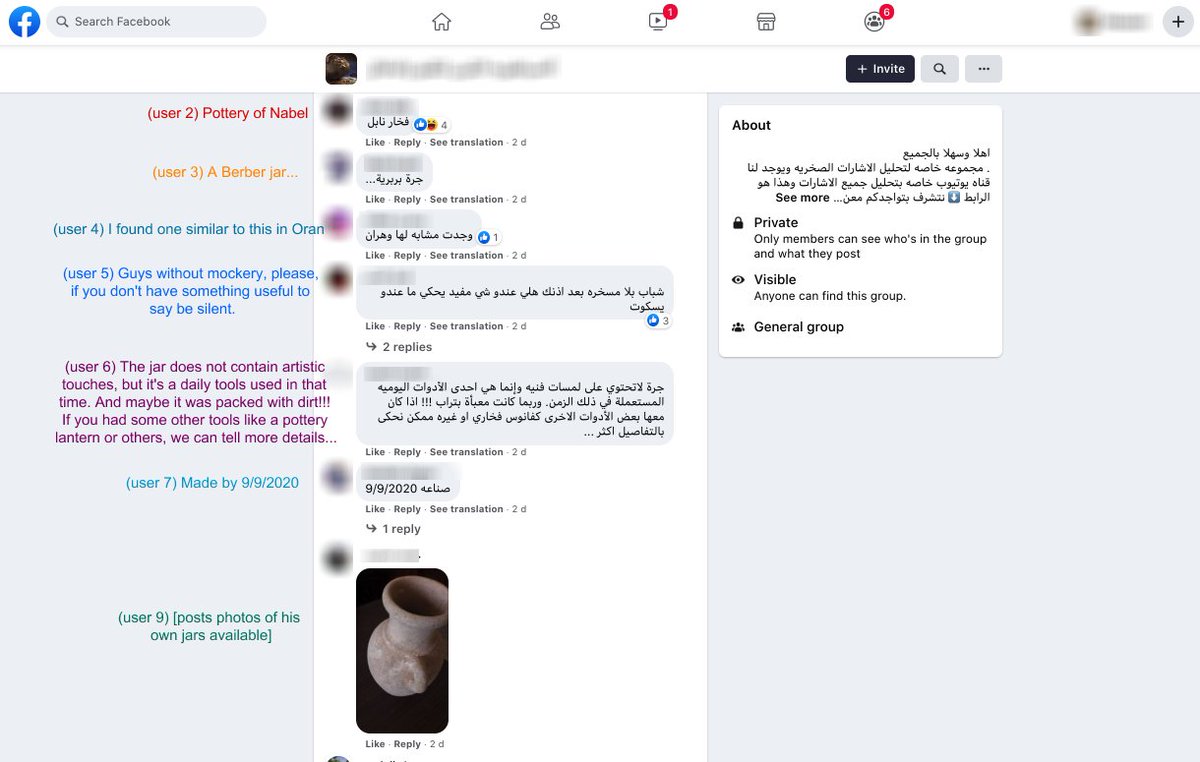
Group members who call out fakes are also signaling that they can tell the difference and are more important in the trafficking chain.
That's when members like user 9 step in to post similar items, either to get confirmation on authenticity or offer their real wares for sale.
That's when members like user 9 step in to post similar items, either to get confirmation on authenticity or offer their real wares for sale.
Paging @artcrimeprof — the users in this thread mocking fakes in trafficking groups might be the only looters and traffickers you can oddly appreciate
Users in Facebook trafficking groups don't always post offers, we also see them posts requests
We've previously discussed the issue of gold, and how both fake and real coins made of gold are coveted for their broader market value
Here, the post author specifically requests gold
We've previously discussed the issue of gold, and how both fake and real coins made of gold are coveted for their broader market value
Here, the post author specifically requests gold
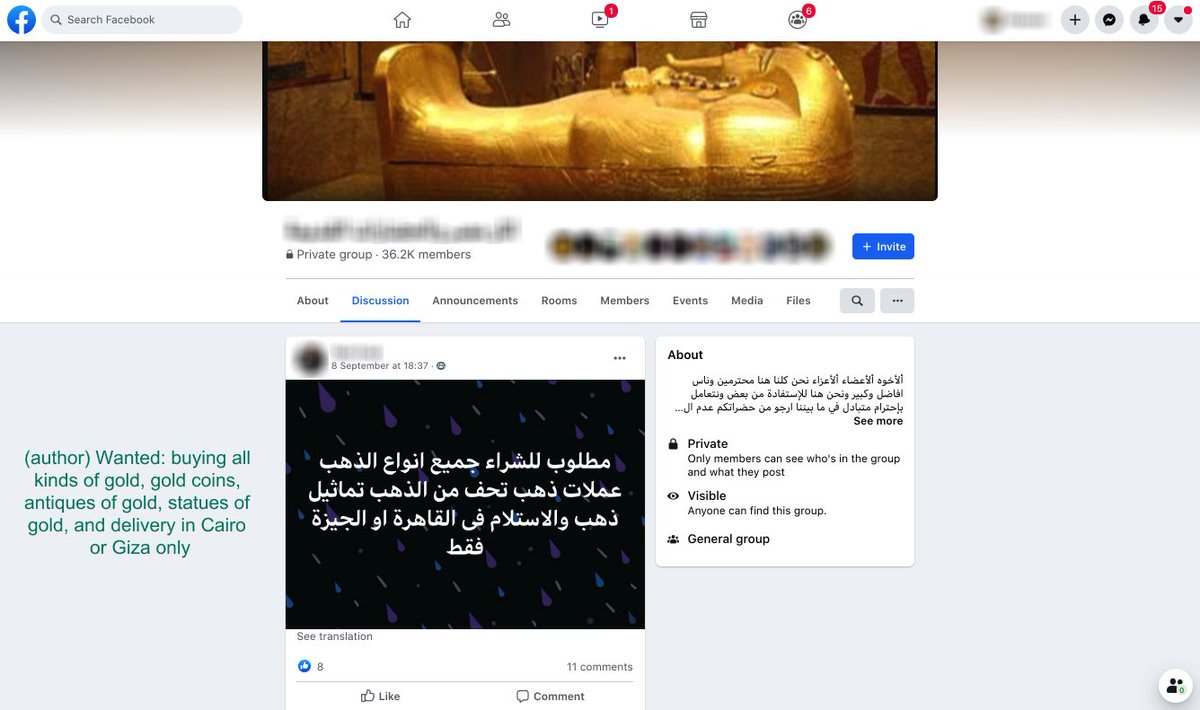
The post author here states that he only wants material available in Giza and Cairo.
There are two main ways users will signal that they have material to satisfy the post author's request: 1) they ask to communicate via private message, or 2) They post photos of their material
There are two main ways users will signal that they have material to satisfy the post author's request: 1) they ask to communicate via private message, or 2) They post photos of their material
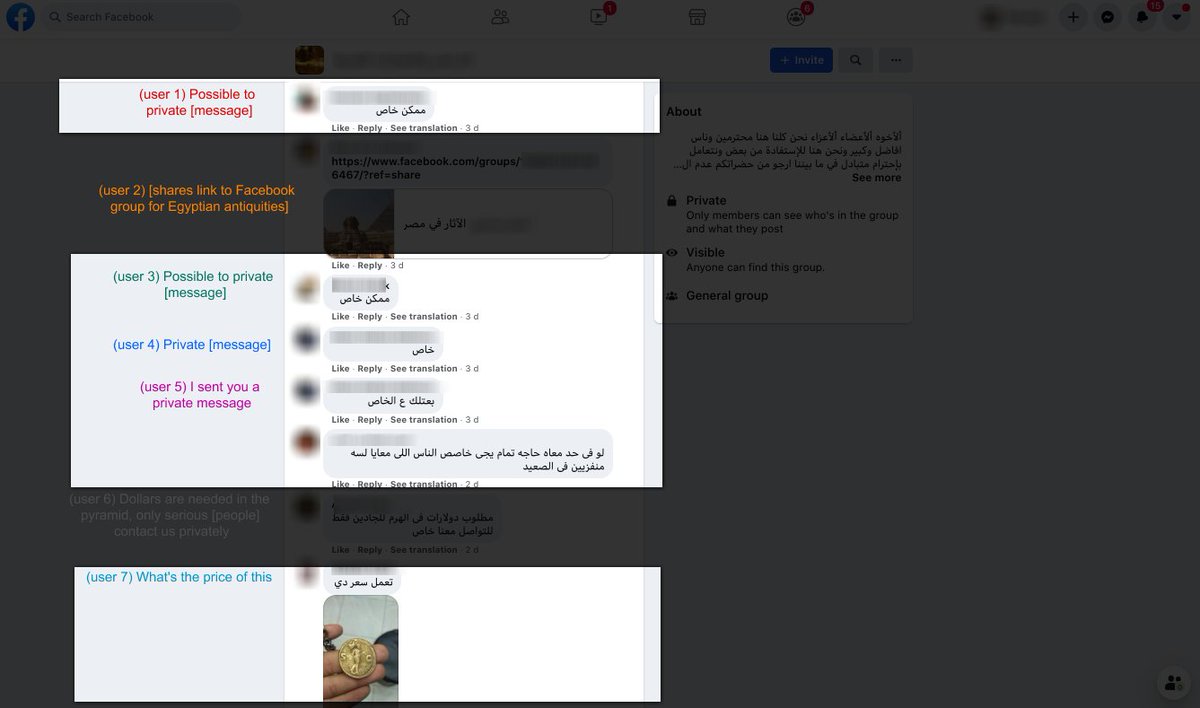
Other comments include warnings to members.
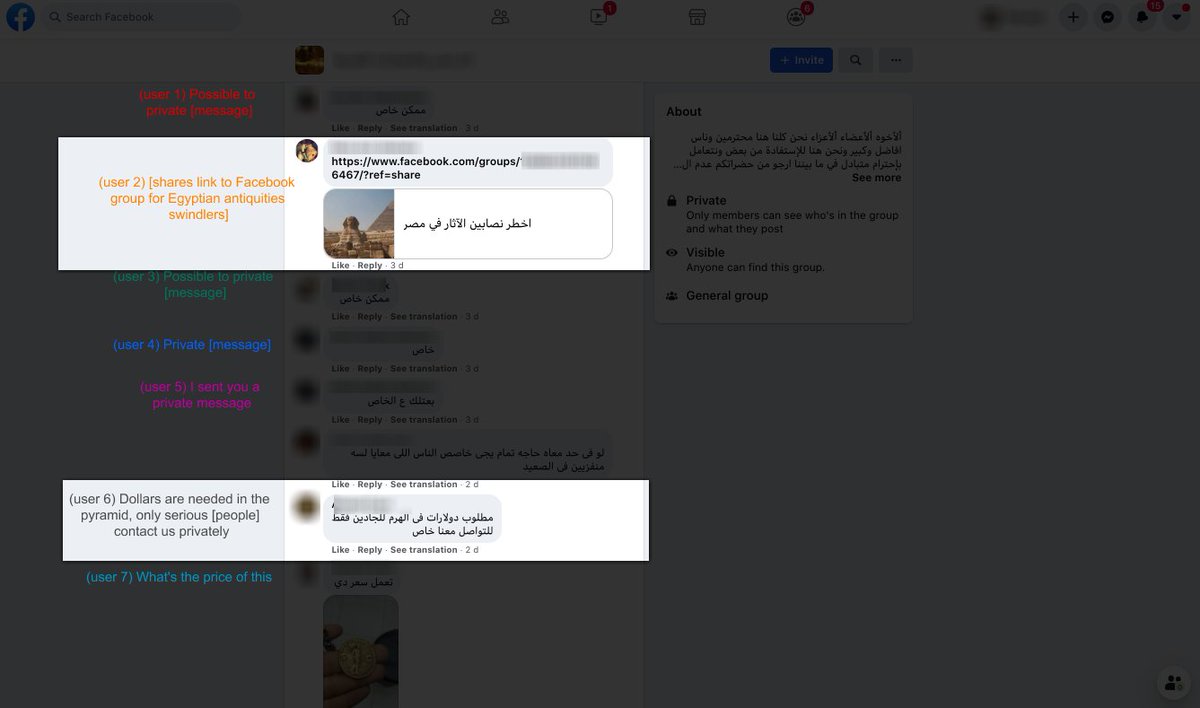
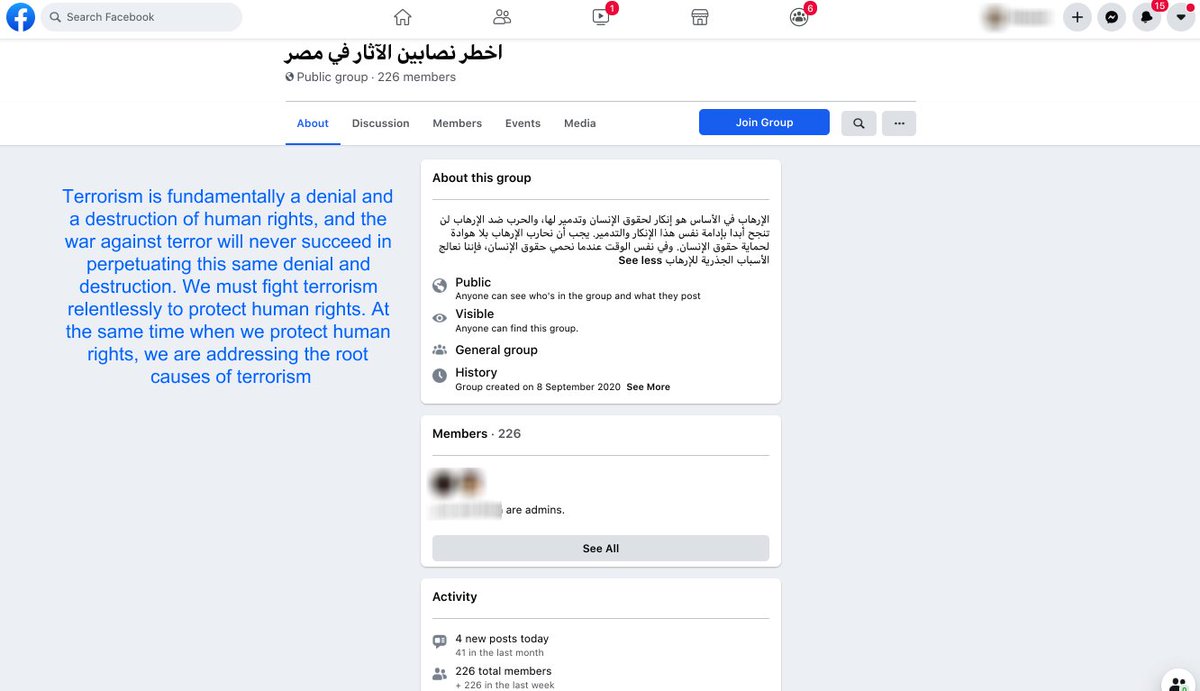
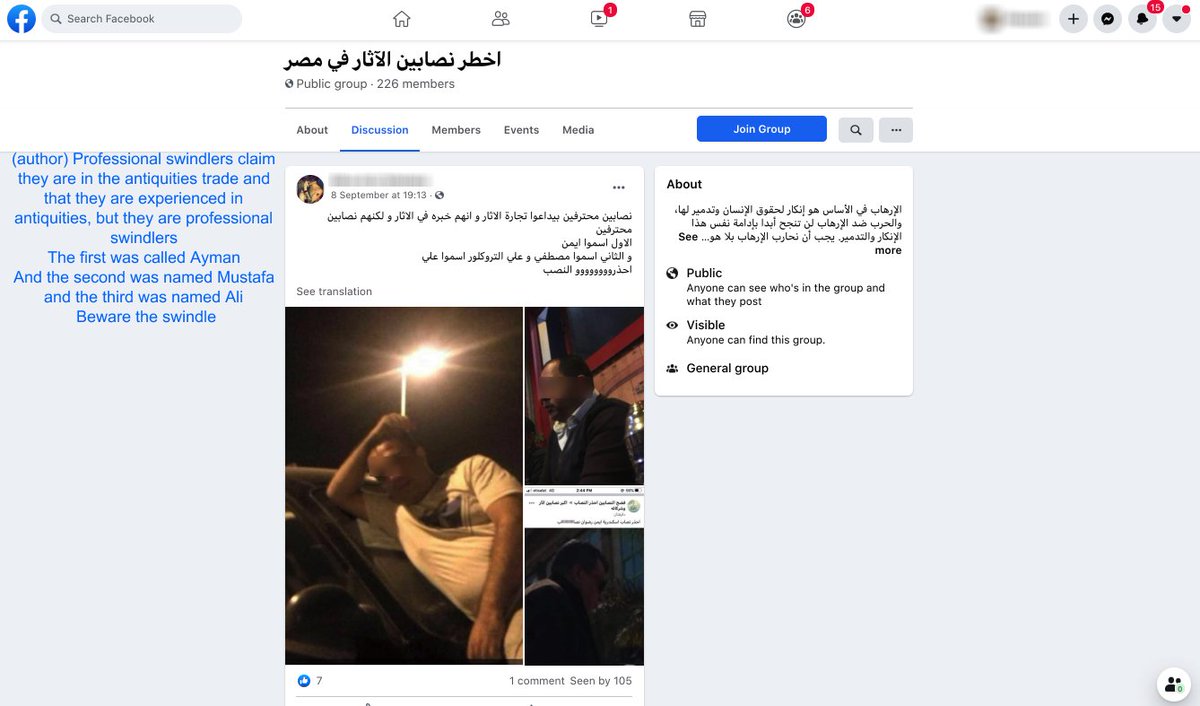
User 2 shares a Facebook group for "The most dangerous antiquities swindlers in Egypt"—he also happens to be the group admin.
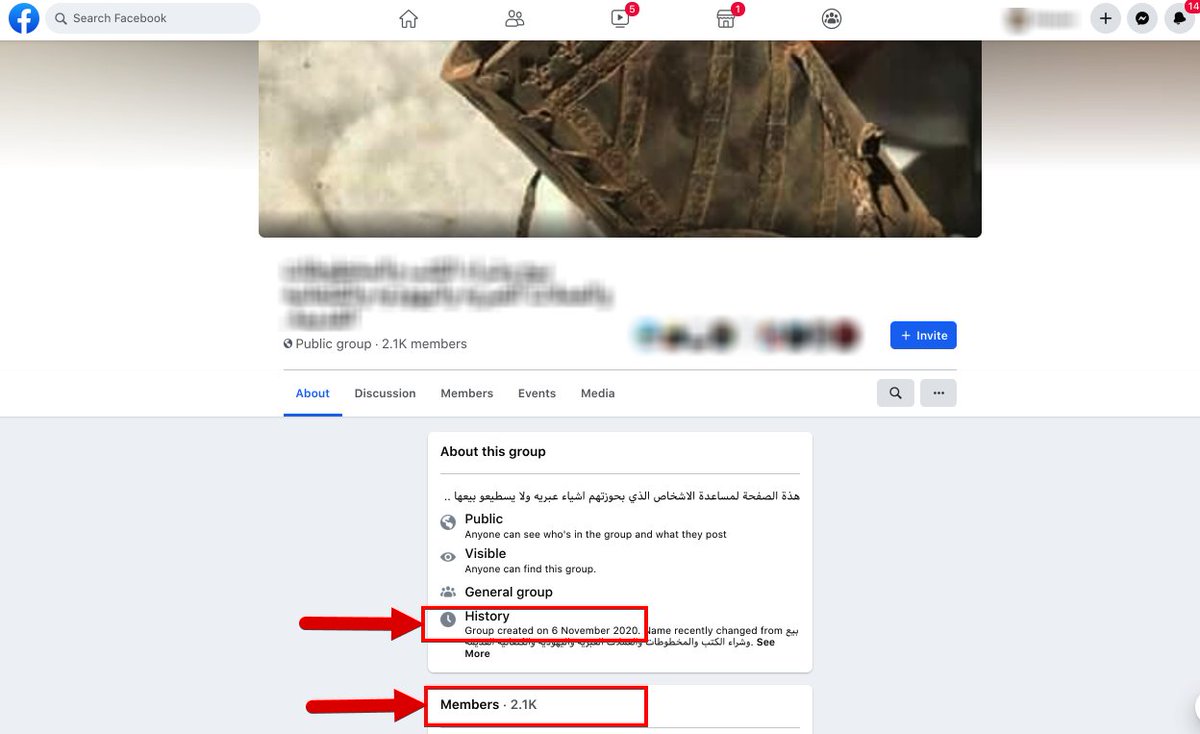
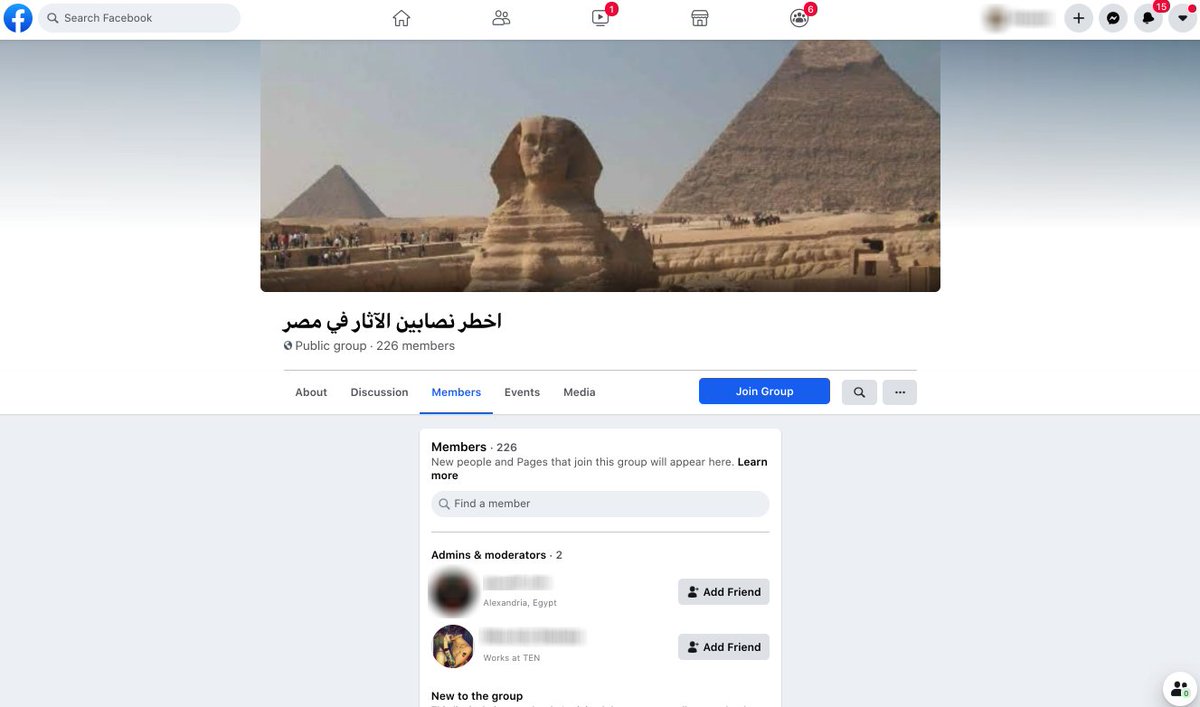
The group, which exposes trafficking frauds, was created on Sep 8 and already had 226 members as of Sep 12
User 2 shares a Facebook group for "The most dangerous antiquities swindlers in Egypt"—he also happens to be the group admin.
The group, which exposes trafficking frauds, was created on Sep 8 and already had 226 members as of Sep 12
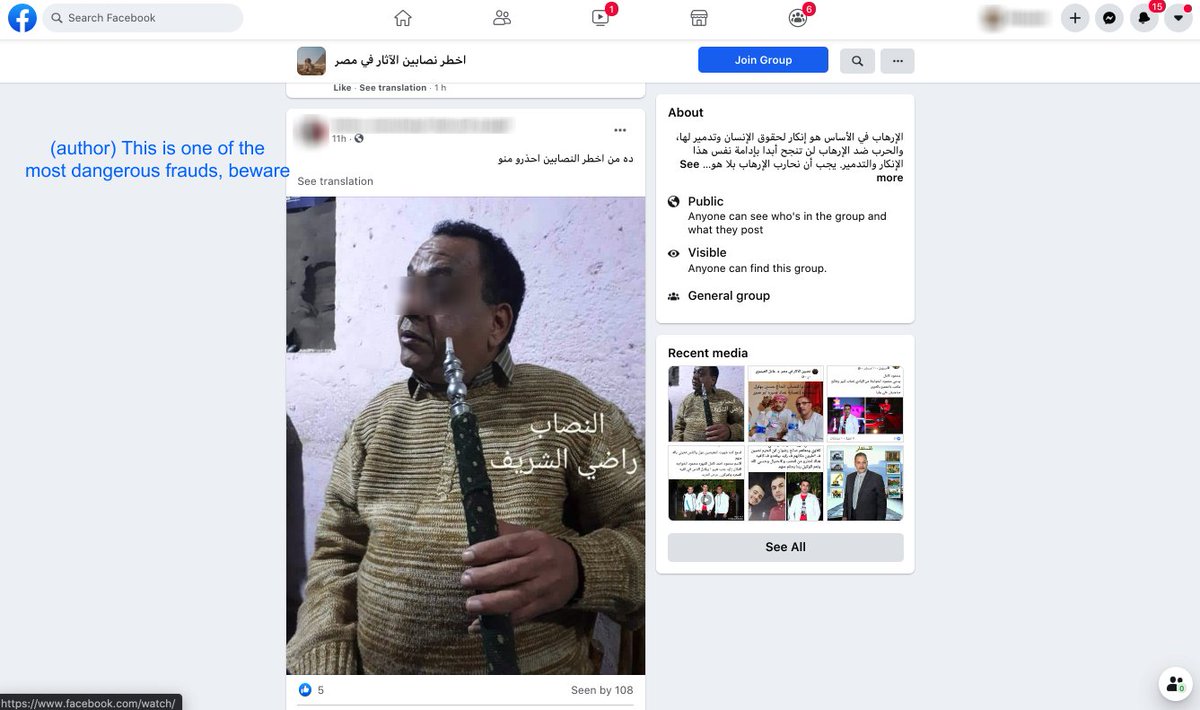
We have increasingly seen groups like this meant to protect fellow traffickers who are more 'honorable' (for lack of a better word) & expose frauds & scammers who prey on more vulnerable individuals.
While the group description decries terrorism, all of the posts expose scammers
While the group description decries terrorism, all of the posts expose scammers
And finally, when it comes to Facebook antiquities trafficking there are also the more straight-forward transactions and communications
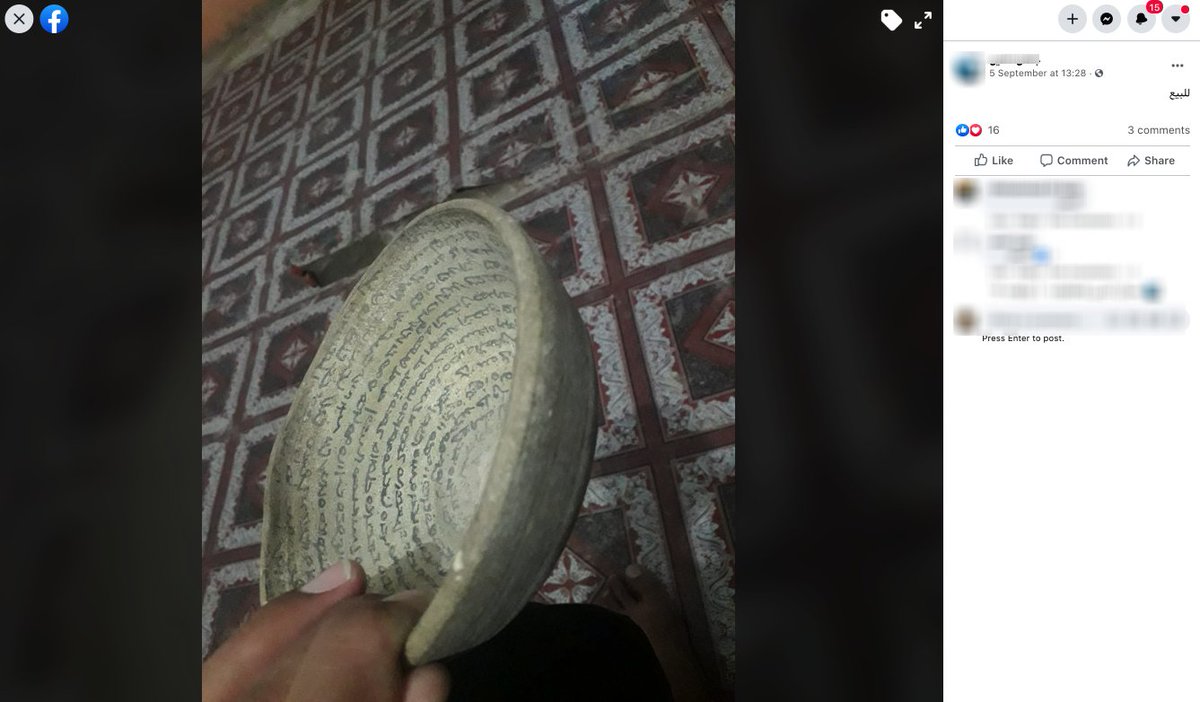
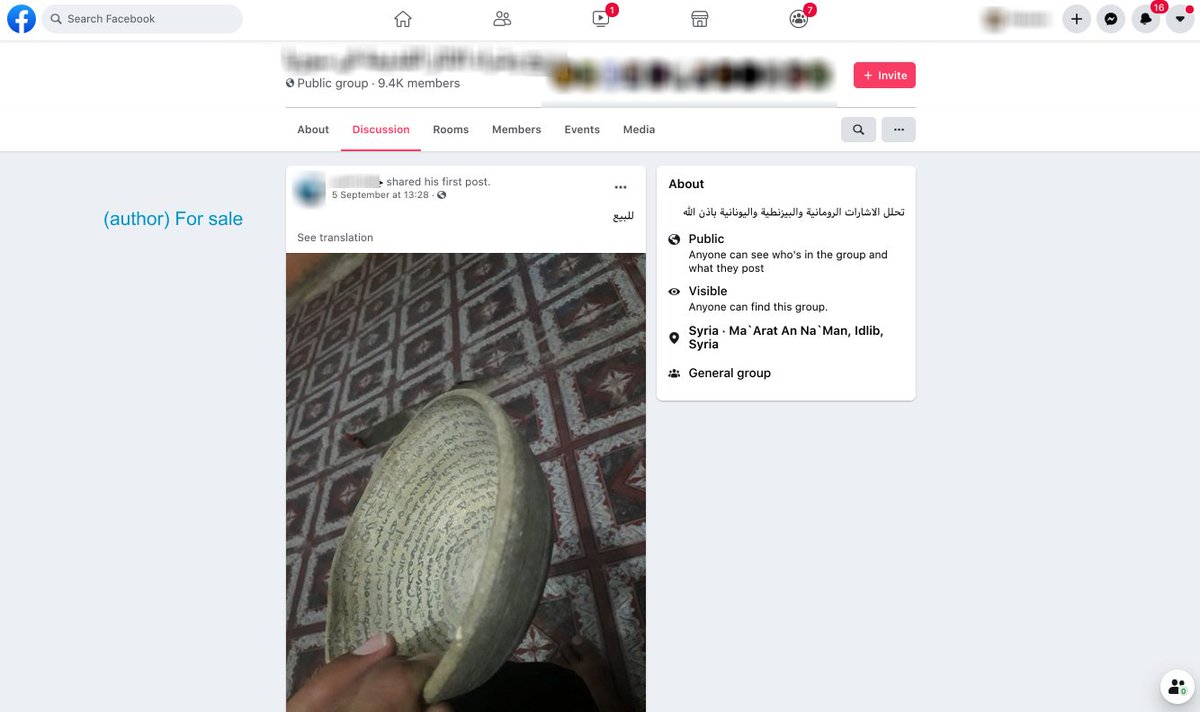
Here, a user in Baghdad, Iraq offers pottery with a simple post: An image of the item and the note "For Sale"
Here, a user in Baghdad, Iraq offers pottery with a simple post: An image of the item and the note "For Sale"
On September 9, just days after the post from a user in Baghdad, authorities confiscated a hoard of artifacts being trafficked in the Dhi Qar Governorate of Iraq
The items seized included one just like this - but the one offered on Facebook isn’t broken
The items seized included one just like this - but the one offered on Facebook isn’t broken
https://twitter.com/layth_abdu/status/1303804293682728960
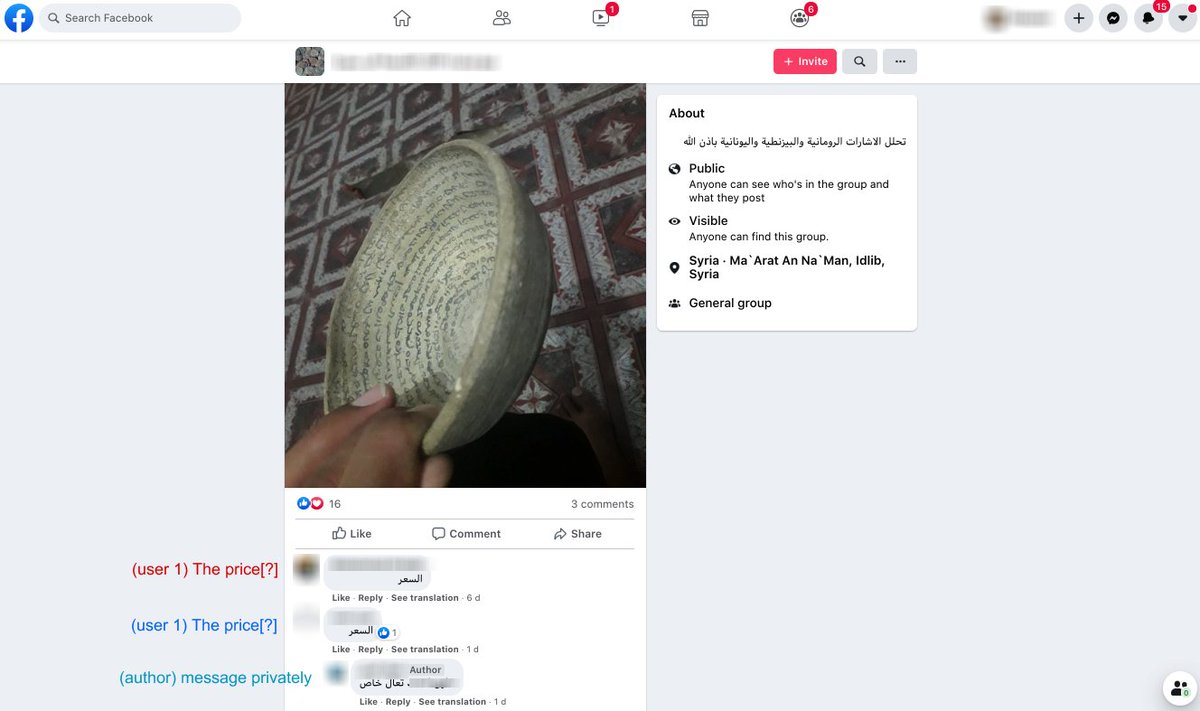
Group members seized on the opportunity to purchase shortly after the author posted his artifacts in the Facebook antiquities trafficking group
2 users asked the price, the group author responded as many do: "message privately
Now, the final transaction disappears out of sight
2 users asked the price, the group author responded as many do: "message privately
Now, the final transaction disappears out of sight
• • •
Missing some Tweet in this thread? You can try to
force a refresh