I've barely seen any reporting on it but there was an extremely important hearing at the ECJ today on the application of the working time directive to the Army. Believe it or not this could have substantial implications...even on.... QE and the ECB's asset purchases! How so ?
I hope you're intrigued!
Because France is one of the countries arguing that the WTD does not apply. And one argument made is that the free organisation of the army is a core constitutional principle; I.e. one that would even trump the EU treaty (whatever the ECJ's view)
So that could lead to further constitutional fights between member states and the ECJ, but not on any constitutional issue, only on core constitutional principles.
Which of course remain a largely undefined term and subject to case by case basis
So going back to the ECB's purchase programs, if this case escalates to a fight between French's supreme courts and the ECJ it could change the balance of power on constitutional law...something the BvG will surely watch closely !
The bottom line is this : if you think EU treaty > Constitution, remember that it's actually much more complicated than that
• • •
Missing some Tweet in this thread? You can try to
force a refresh

1/13 Fed Governor Bowman just dropped her US bank reform blueprint – on top of the “easy” headline you’ve all seen (less capital), there’s some pretty important stuff in there. A thread.
2) Something most analysts missed is that Bowman clearly wants assets BACK inside the regulated banking system. She said it multiple times. The shadow banking era had a good run, but the sheriff is back in town.
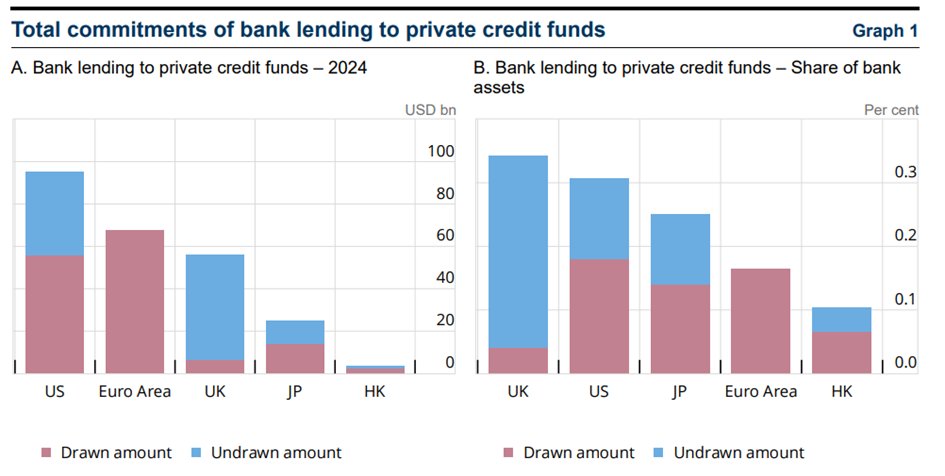
3/13 Non-bank lenders, private credit funds, money market vehicles — she's not naming names but the subtext is clear: if you're doing bank-like things outside a bank, the new rules are designed to make that less attractive. The moat is being rebuilt.
This is an opportunity for a bit of bond market education😊
You’ll often read that Italy is wider than France now, or actually the opposite, with people posting various screenshots from different sources to make their point.
An old theme is coming back to haunt them: Basel 4!
Quick thread.
After almost 10y of discussion the package was finally enacted with full implementation in 2033.
Everyone felt, after many EBA reports & banks' disclosures, that impact would be mild.
But for first time banks are publishing capital ratios w/ the new rules and for DB it's ugly
How does it work? Banks are still allowed to use internal models, but the RWA (in 2030/2033) must be at least 72.5% of the standard (non internal models) RWA. ("output floors") and for DB that's a 33% increase!
CET1r would go from 13.8% to 10.35%! Ouch!
Why is the latest EC proposal on securitization a big deal for banks and how does it change the SRT market?
A slightly geeky thread - with some backround on the SRT market if you're not aware of this important market.
First what’s a SRT?
Following secular finance practice of reinventing the wheel but changing its name, the new trendy capital optimization transactions are “significant risk transfers”, but they’re just good old securitizations (invented in the 1860s 😊.)
(cash or synthetic)
The reason they’re now called SRT is a regulatory one.
The 2013 CRR (Art 244/245) allowed banks to get capital relief under some conditions, essentially that “significant risk” was transferred to someone else.