
1/ Influencer Best Practices 101 [PART 3] (THREAD)
Influencer Contracts - I'm No Lawyer, Send Help! - (Contract Template Provided with Comment Below)
*[PART 4 - ALD] Celebrity Influencer Deals & Pricing
Influencer Contracts - I'm No Lawyer, Send Help! - (Contract Template Provided with Comment Below)
*[PART 4 - ALD] Celebrity Influencer Deals & Pricing
2/ Congratulations, you finally got through the negotiation process with the agent/influencer but now you have to draft up a contract. Even if you just agree on “product for post,” you will want to draft a contract that provides you protection.
3/ Overall, right up front - #1 FTC guidelines are important for both brand and influencer to understand. This needs to be in the contract somewhere, usually as an addendum. If you need help with FTC compliance - InfluencersIQ is a great resource. @RobertFreundLaw is the man.
4/ Take a look at one of the first contracts I used back in the day at QALO. Phew! What I do like about it is: it keeps the main things the main things. AKA - hey influencer, this is all you need to look at. It was refreshing for them 
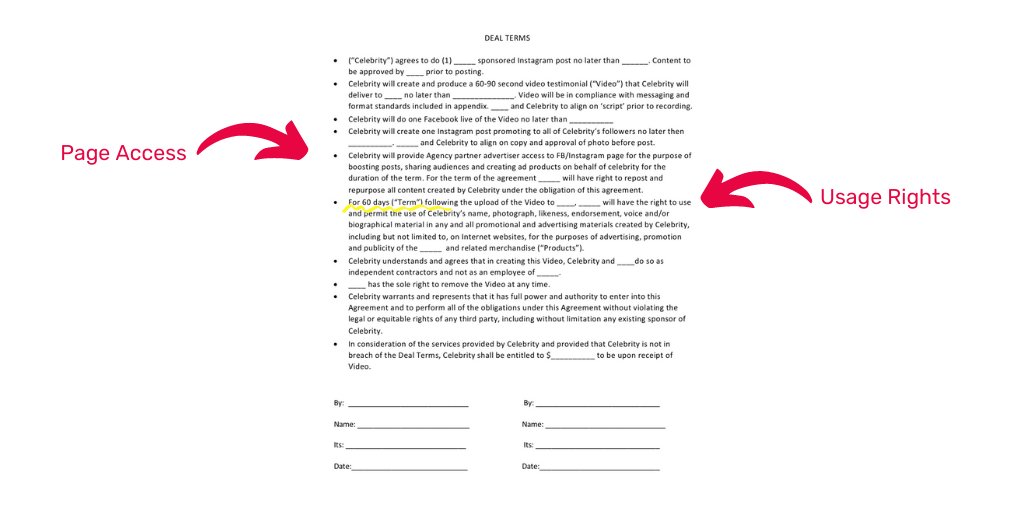
5/ What's missing? Approval Rights. And I learned the hard way. There was one small line in there about aligning on messaging and script prior to shooting content. But there is 0 protection for after they produce. You absolutely need to require the ability to approve the content.
6/ Here is an easy way to implement this into the contract. You can have the influencers submit the content via DropBox, Google Drive, etc by the deadline date. If you are just a brand then that highlighted bullet point would just be Company or Sponsor, not both.

7/ Next - Usage Rights. Whether it's 30, 60, or 90 days or full ownership - if it requires an extra fee, it’s worth spending the money so that you can repurpose the influencer content across your other marketing channels.

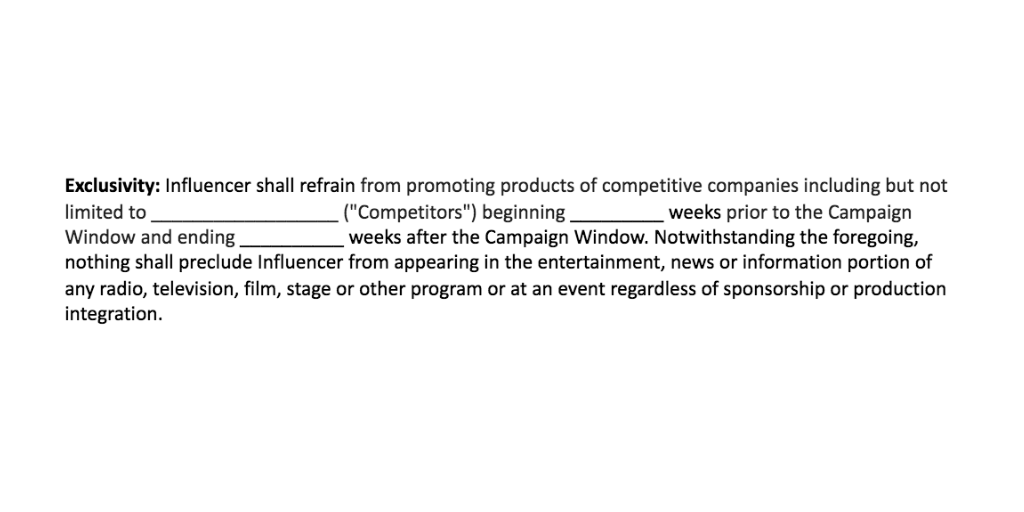
8/ One other major point that could be important for your brand - Exclusivity. Name your 1-2 biggest competitors in that first blank and then generally, a 1-week buffer pre/post-campaign is standard across the industry. The Campaign Window should be a minimum of 3-4 weeks
9/ Comment below with specific questions and if you want the Contract Template that can be used for any deal!
Coming Soon - [PART 4] Celebrity Influencer Deliverables, Pricing, Contract, etc - ALD.
Coming Soon - [PART 4] Celebrity Influencer Deliverables, Pricing, Contract, etc - ALD.
• • •
Missing some Tweet in this thread? You can try to
force a refresh






