Biblical support for the papacy: you're (probably) doing it wrong. (Thread)
The first verse most Catholics cite to support the papacy is Mt. 16:18: "And I tell you, you are Peter, and on this rock I will build my church, and the powers of death shall not prevail against it"(1/)
The first verse most Catholics cite to support the papacy is Mt. 16:18: "And I tell you, you are Peter, and on this rock I will build my church, and the powers of death shall not prevail against it"(1/)
Objectively, this is a strong verse. "Petros" means "rock," after all; and in the next verse, Jesus gives him the keys to the kingdom of heaven (v.19), a rich biblical symbol of authority (Isa. 22:22, Rev. 1:18). (2/)
However, it's a mistake to start right off with Mt. 16. Why? Because many non-Catholics think that the papacy is like a dictatorship: the pope says "Everyone has to do everything my way" and the Church has to listen. This is the source of most objections to the papacy. (3/)
Of course, this is a caricature; at no point in the Church's history has the papacy operated that way. But Mt. 16:18 could leave that impression if it's the first verse out of the bag.
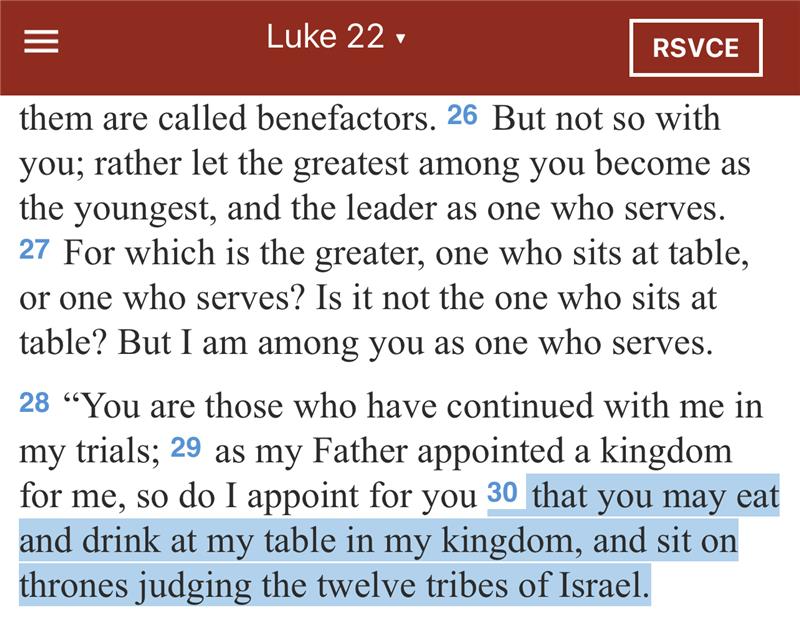
There's a better place to begin explaining the papacy: Luke 22:24-32. (4/)
There's a better place to begin explaining the papacy: Luke 22:24-32. (4/)
At the Last Supper, the 12 are arguing about which of them is greatest. Jesus tells them not to lord their authority over others as the Gentiles do—but notice he doesn't deny they have authority. Rather, he affirms it. (5/)
He even tells them they'll be sitting on thrones in heaven, judging. He's promising to share his own judicial authority with them. So there is true apostolic authority, but it doesn't look or operate like a dictatorship or a 1st-century Gentile warlord. (6/)
Instead, Jesus tells them that to be a leader is to serve. He says to let the "leader [become] as one who serves."
Remember, this is the Last Supper, where Jesus washes the feet of the 12 and says "I am among you as one who serves." (7/)
Remember, this is the Last Supper, where Jesus washes the feet of the 12 and says "I am among you as one who serves." (7/)
Jesus gives himself as an example of what true servant leadership looks like. That example is directed to all the 12—they have real authority, but their authority is to serve.
But then he turns to one of them, Simon Peter. (8/)
But then he turns to one of them, Simon Peter. (8/)
Jesus says: "Simon, Simon, Satan demanded to have you [plural], that he might sift you like wheat, but I have prayed for you—" and here he switches to the singular— "that your faith may not fail; and when you have turned again, strengthen your brethren." (9/)
This is remarkable. In response to Satan trying to divide and conquer the Apostles and upset their authority, Jesus doesn't say "I'm praying for all of you" or "Don't worry about it." He prays for one man, Peter, and then entrusts the other apostles to his care. (10/)
In other words, immediately after teaching the 12 about what their leadership looks like—servant leadership—Jesus then tells Simon Peter he is to be a servant leader even of the 12. This is the biblical source of the beautiful papal title "Servant of the Servants of God." (11/)
All the clergy are called to serve the people of God, just as parents are called to serve their children. But the pope is called to serve even those serving the people of God.
The papacy is not the top of a pyramid, with one man stomping on everyone beneath him. (12/)
The papacy is not the top of a pyramid, with one man stomping on everyone beneath him. (12/)
Rather, the authority of the Church is almost an inverted pyramid. St. Peter really is the rock: he's a rock of support, a rock built upon, a rock that's uplifting everyone above him—and, as any parent can tell you, getting trampled in the process. (13/)
That's the vision of the papacy that the Church believes in, because it's the vision of the papacy that scripture presents. The pope is not a dictator or a Gentile warlord, as Jesus warns against in Luke 22. He is a servant of the servants of God. (14/)
This is why we should begin a case for the papacy with Luke 22 instead of Mt. 16. It removes the source of most objections, affirms the authority of the hierarchy, and provides a more attractive and accurate vision of who the pope really is. (Fin)
(Postscript: There's way more where this came from in @JoeHeschmeyer's new book, "Pope Peter." Check it out. It rocks.) shop.catholic.com/pope-peter-def…
• • •
Missing some Tweet in this thread? You can try to
force a refresh