1. Dr. Anthony Fauci, director of the National Institute of Allergy and Infectious Diseases and member of the White House’s coronavirus task force, became noticeably upset with Sen. Rand Paul (R-KY) during Wednesday’s Senate hearing. mavenroundtable.io/theintellectua…
2. After Paul criticized Fauci for praising New York’s handling of the pandemic, saying the state had the highest death rate in the world, Fauci responded: "You misconstrued that, Senator. And you've done that repetitively in the past." mavenroundtable.io/theintellectua…
3. Fauci said New York was “hit very badly” and “made some mistakes” but said what the state is doing now to “get their test positivity to 1% or less is because they are looking at the guidelines that we have put together from the task force.” mavenroundtable.io/theintellectua…
4. Fauci pointed to using “masks, social distancing, outdoors more than indoors, avoiding crowds and washing hands” as reasons for New York’s success. mavenroundtable.io/theintellectua…
5. Paul countered, “Or they’ve developed enough community immunity that they’re no longer having the pandemic because they have enough immunity in New York City to actually stop it.” mavenroundtable.io/theintellectua…
6. Fauci said, “I challenge that, Senator,” before being interrupted and asking to continue.
“Please sir, I would like to be able to do this, because this happens with Senator Rand all the time.” mavenroundtable.io/theintellectua…
7. Fauci continued: “You are not listening to what the director of the CDC said, that in New York it’s about 22%. If you believe that 22% is herd immunity, I believe you’re alone in that.” mavenroundtable.io/theintellectua…
• • •
Missing some Tweet in this thread? You can try to
force a refresh

Why even the most speculative financial instruments are anchored to something real—and Bitcoin isn’t.
🧵1/4: Bitcoin’s recurring crashes revive a question that refuses to die: not how low it might fall, but what it is actually worth. Stripped of price charts and ideology, Bitcoin emerges as an asset with no cash flows, no obligation, no compulsory use, and no anchor outside belief.
Many of the critiques it once leveled at fiat currency—dependence on confidence, lack of backing, vulnerability to shifts in trust—apply more precisely to Bitcoin itself, exposing a structural fragility rather than a cyclical decline.
2/4: Bitcoin’s latest decline has revived a familiar claim: that it could ultimately go to zero. The statement is often dismissed as alarmist or ideological, but it persists because it is not really a price prediction. It is a structural argument. When Bitcoin falls, the question that surfaces is not how far it might drop, but what, exactly, it is supposed to be worth in the first place.
That question matters because Bitcoin was not introduced merely as a speculative instrument. It was promoted as digital gold, as a store of value, as an asset that would preserve purchasing power and behave independently of traditional financial systems. Those claims implied stability, durability, and some form of anchoring outside of sentiment. Yet in practice, Bitcoin has never traded that way. Each downturn therefore reopens the same unresolved issue: what is Bitcoin actually a claim on?
Recent price action has made this harder to ignore. Since its October 2025 peak above $120,000, Bitcoin has fallen back into the mid-$60,000 range, losing roughly half its value.
This decline has not coincided with any widely cited step-change in Bitcoin’s utility, adoption, or underlying functionality. Instead, it has largely tracked broader shifts in financial conditions: tighter liquidity, risk-off sentiment, ETF outflows, and the unwinding of leverage. The price is moving less because Bitcoin itself has changed than because the environment that sustained speculative demand has.
This dynamic is especially visible in mining economics. Estimates of the cost to produce a new Bitcoin vary widely by operator, depending on energy prices, hardware efficiency, financing, and scale. Public estimates range from tens of thousands of dollars per coin to figures approaching or exceeding the high-$80,000 to mid-$90,000 range for some miners.
At current prices, a meaningful portion of the mining industry appears to be operating near or below break-even. When prices fall below production cost, higher-cost miners shut down equipment, hash power consolidates, and network difficulty adjusts. None of this establishes a durable price floor. Instead, it introduces another feedback loop in which price weakness creates operational stress, reinforcing volatility rather than stabilizing it.
To understand why this matters, it helps to step back and consider how value normally works in modern finance. Most financial instruments fall along a spectrum defined by their distance from real-world economic activity.
At one end are equities—ownership claims on businesses that produce goods and services. Their prices reflect expectations, sometimes wildly so, but those expectations are anchored to observable realities: revenues, costs, strategy, management decisions, and competitive position. When investors debate the value of a stock, they are debating the future performance of something that exists.
Debt sits nearby. Bonds and loans are contractual obligations whose value depends on a borrower’s ability and willingness to repay. Even when debt trades at distressed levels, the question remains concrete: will this borrower pay?
Moving further along the spectrum, finance becomes more abstract. Derivatives derive their value from something else—an interest rate, a commodity, a company, or a sovereign borrower—but they do not float freely. Every derivative references an underlying obligation, and its payoff is governed by contract. Even highly bespoke over-the-counter derivatives are disciplined by legal obligation, collateral, and margin—real capital posted against potential loss.
At the far edge of this spectrum sit instruments such as naked credit default swaps: highly abstract, leveraged, and detached from ownership, yet still anchored to a specific borrower and a legally defined default event. When that event occurs, the contract resolves. The value crystallizes against something external. However controversial these instruments may be, they remain claims on something that exists.
Bitcoin does not sit at the extreme end of this spectrum. It sits outside it, because it is not a claim on ownership, obligation, or any external economic reality. …eintellectualistofficial.substack.com/p/bitcoin-and-…
3/4: There is no Bitcoin company. There is no management team, no balance sheet, no income statement, and no underlying activity generating cash flows.
A Bitcoin is not equity, not debt, and not a derivative. It is not a claim on performance, not a contractual obligation, and not a reference to an external economic reality. It is a digital entry on a distributed ledger, maintained by a network of computers following fixed rules. Owning one entitles the holder to nothing beyond the ability to transfer it to someone else.
When people say Bitcoin has no intrinsic value, they are not making a metaphysical claim. They are pointing out that there is no external source from which its value is derived. Gold retains value because it has physical and industrial uses regardless of price.
Equities derive value from businesses.
Debt derives value from repayment. Fiat currency derives durability from taxation, legal-tender laws, and institutional enforcement. Bitcoin derives value only from the expectation that someone else will want it later. That expectation can sustain a price for long periods, but it is not a reference. There is nothing for valuation to converge toward.
Bitcoin’s defenders often argue that this misunderstands money itself—that money works because people believe in it. But monetary systems are not sustained by belief alone. They are sustained by obligation and settlement demand.
Fiat currencies persist because taxes must be paid in them, debts are settled in them, and courts enforce contracts denominated in them. Gold, while no longer monetary in this sense, retains a floor through scarcity and non-monetary use. Bitcoin lacks both. Belief may initiate a monetary premium, but without obligation or absorption, that premium has nothing to stabilize it.
This structure also explains Bitcoin’s volatility—and why that volatility disqualifies it as a store of value, particularly in the role it was meant to play as an alternative to fiat currency. Assets that function as stores of value are defined by stability and predictability.
Bitcoin is not.
Its price is driven not by productivity or usage, but by liquidity, leverage, and risk appetite. When capital is abundant, money flows in. When conditions tighten, those flows reverse. Volatility is therefore not incidental to Bitcoin’s structure; it is the consequence of having no internal stabilizers—and the reason it cannot reliably preserve value over time.
Once an asset has no claim on cash flows, no contractual obligation, no external reference, and no compulsory use, what remains is pure speculation. The only way to exit profitably is to sell to someone else at a higher price. That is not investment. It is position timing.
In the end, investments like this resemble a game of hot potato. The objective is not to hold the asset, but to pass it on before conditions change. As long as belief holds, the object can keep moving. But there is no natural owner, no terminal use, and no reason for anyone to be the last holder. When belief falters, the passing stops. Someone is left holding it—and discovers that once it can no longer be exchanged, it cannot be used for anything at all.
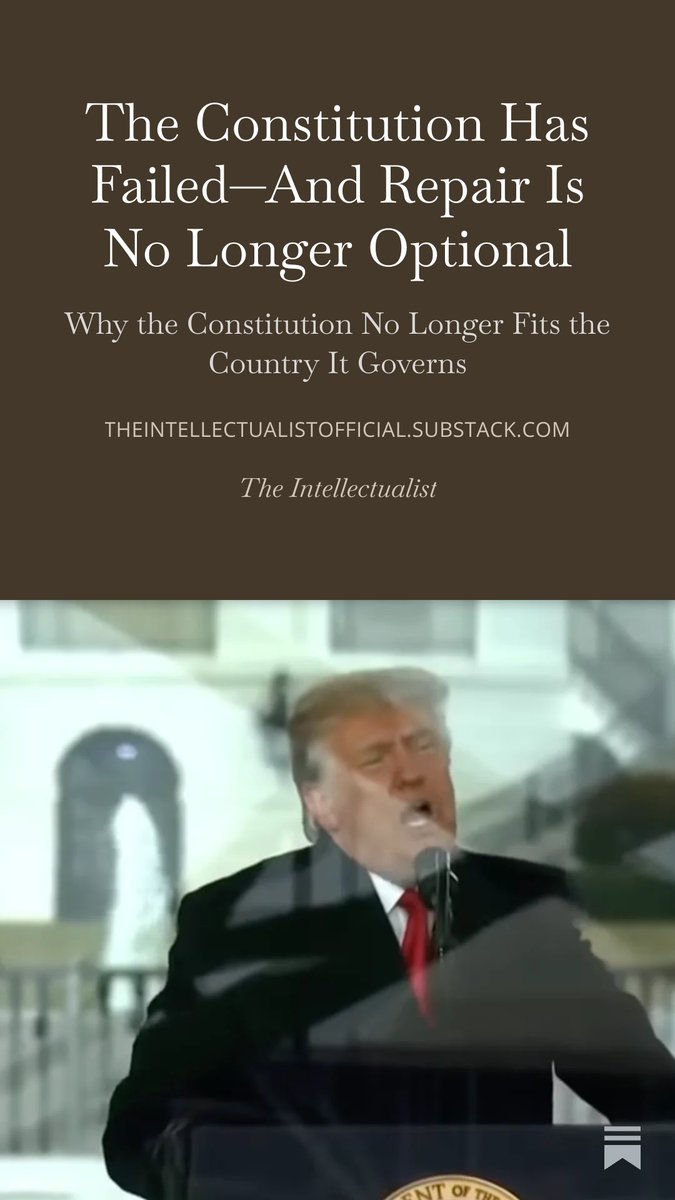
The Constitution Has Failed—And Repair Is No Longer Optional
Why the Constitution No Longer Fits the Country It Governs
🧵1/8: The American Constitution still exists on paper, but as a governing system it has collapsed under conditions it was never designed to manage. Its failure was gradual, not sudden—a slow weakening under pressures it was never meant to bear: hyper-partisan politics, permanent campaigns, and leaders willing to exploit every gap without formally breaking the law.
The consequences are now familiar: elections that are harder to trust, rights that expand or contract with shifts in power, and a democracy that feels increasingly brittle. When social conventions change, governing systems must change with them. Amendments XXVIII–XLIII (see below) rest on the belief that long-term civic health depends on rules aligned with how people actually behave, not how earlier eras hoped they would.
2/8: Every constitutional order eventually reaches a point at which its inherited architecture can no longer carry the load placed upon it.
The stress is cumulative rather than sudden, revealing itself first at the seams. The United States has now reached that point.
A charter designed for a small, agrarian republic with limited administrative capacity governs a continental, digitized superpower defined by permanent political competition, instantaneous communication, and professionalized strategic behavior.
What once depended on norms, restraint, and delay now operates under continuous pressure. Ambiguity becomes leverage. Silence becomes authority.
A New Beginning, A New Bill of Rights
The proposed Amendments XXVIII through XLIII are best understood not as a program, a platform, or a revolution, but as a post-mortem written while the patient is still alive.
They proceed from a single diagnosis: the Constitution did not fail because it was ignored, but because it was applied mechanically, without adjustment, under conditions it was never designed to govern.
The amendments seek to formalize developments already visible in practice, to close gaps that hardened into failure modes, and to convert improvised doctrine into durable structure.
This collapse is not legal disappearance but functional failure—a constitutional system still standing formally, yet no longer fit for the conditions it is required to govern.
3/8: The original Constitution is, by design, a document of negative liberty.
It constrains, but it does not maintain. Democratic participation was treated as a matter of political practice rather than constitutional obligation.
Over time, courts and legislatures attempted to compensate through statute and interpretation. Those compensations proved reversible. The modern period has made clear that a democracy dependent on voluntary forbearance is structurally fragile, especially under sustained pressure.
Constitutional systems do not fail because people become worse; they fail because incentives change faster than institutions can respond.
When social norms weaken and strategic behavior replaces restraint, rules designed for good faith begin to generate perverse outcomes. Durable systems reflect how people actually behave under pressure, not how they are expected to behave in theory or in idealized accounts.
Once participation itself became contestable, the problem ceased to be episodic abuse and became one of structural maintenance. The Democratic Rights Amendment reflects that shift. Voting is no longer treated as a privilege merely protected from interference, but as civic infrastructure—requiring equal weight, enforceable access, and protection against backsliding. …eintellectualistofficial.substack.com/p/the-constitu…
🧵1/6: For nearly all of human history, the world made sense at the scale of a face, a voice, a shared meal. Then our systems grew faster than our biology. This essay traces how abstraction, acceleration, and scale reshaped civilization—and how institutions built to serve humans slowly became forces humans now struggle to understand, govern, or escape. The future is still open. But the margin for error is thinning.
Civilizations rarely collapse all at once; they fail when the systems that once made sense no longer fit the humans living inside them.
2/6: It has become common to describe the present as a moment of crisis. The word appears everywhere—attached to democracy, climate, technology, and war—until it begins to lose its force. What distinguishes this moment is not simply the number of problems we face, but the way so many of them appear to be failing at once.
Institutions that once absorbed stress now amplify it. Technologies designed to increase efficiency generate instability. Systems built for growth strain under their own scale. What feels like chaos is often something more specific: institutions now operating at a scale humans were never built to navigate.
What is at stake is not whether the world will change—it always has—but whether the systems shaping daily life remain legible, governable, and aligned with human needs.
For most of our existence, that misalignment did not exist.
For the vast majority of the roughly 300,000 years that anatomically modern humans have existed, people lived in small, interdependent groups.
Social life was intimate and legible. Survival depended on cooperation, shared memory, and trust reinforced through daily interaction. Technology changed slowly. Knowledge accumulated locally. Life was often dangerous and materially constrained, but it was socially dense.
Meaning was not abstract or optional; it emerged naturally from belonging, contribution, and mutual reliance.
That long equilibrium shaped the human nervous system. We evolved to read faces, track social cues, respond to immediate threats, and calibrate behavior within small communities. We are not built for constant global awareness, anonymous competition, or systems that operate faster than human comprehension.
3/6: The first major rupture came not from ideology, but from structure.
Early economic exchange in many societies relied on forms of barter and direct reciprocity. Such systems work in small groups, but they become inefficient as scale increases. They require a coincidence of wants and consume time—time spent negotiating value rather than producing it. As scale grows, these frictions accumulate.
More importantly, they discourage deep specialization. When every exchange is costly, individuals cannot afford to focus narrowly on a single task. Without specialization, surplus remains limited. Without surplus, sustained scientific inquiry becomes difficult.
A scientifically driven culture requires slack: people who can observe, experiment, and theorize without immediately producing food or shelter. While anthropologists continue to debate the precise pathways through which early economies evolved, small-scale reciprocal systems consistently struggle to support that kind of intellectual labor at scale. The constraint was not moral. It was structural. open.substack.com/pub/theintelle…
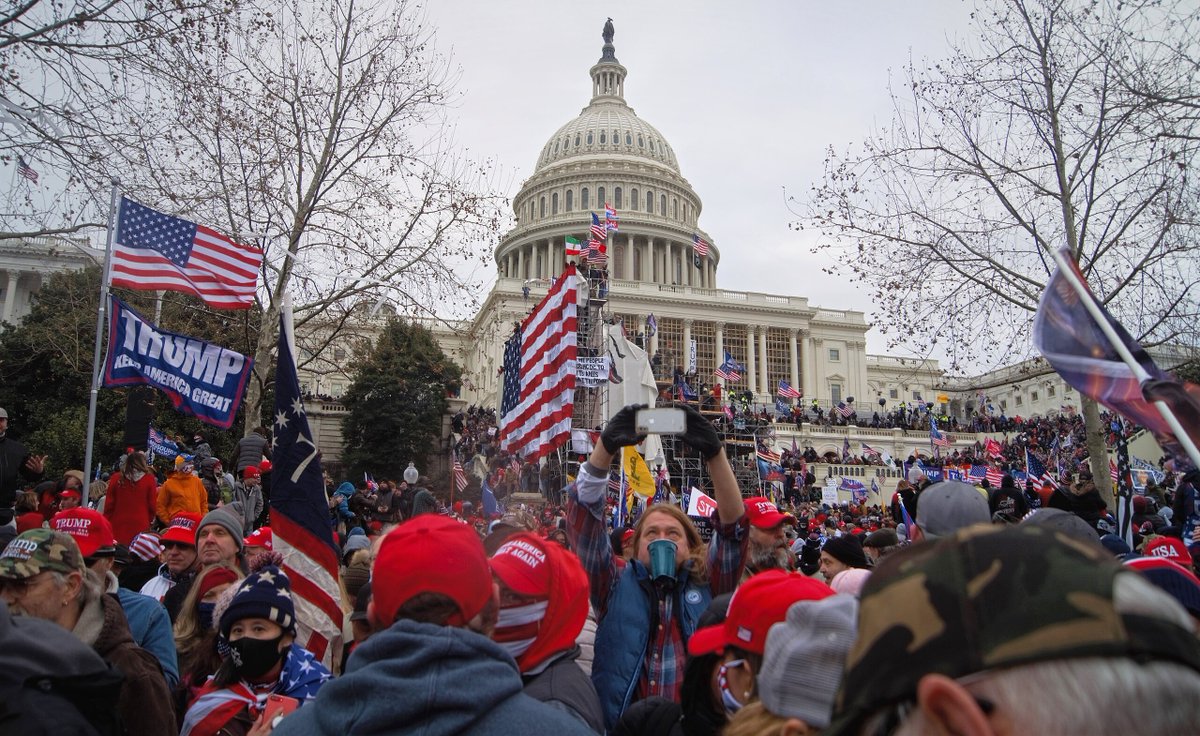
January 6 was not the end of a crisis—it was the moment America chose to postpone accountability. Five years later, the cost of that delay is no longer theoretical. It is political reality, and it is still unfolding.
🧵1/6: January 6, 2021 now belongs to a short list of American dates whose meaning no longer requires explanation. December 7, 1941. September 11, 2001. These were moments when the country learned—suddenly and irrevocably—that what it assumed to be permanent was not. January 6 belongs among them. …eintellectualistofficial.substack.com/p/the-january-…
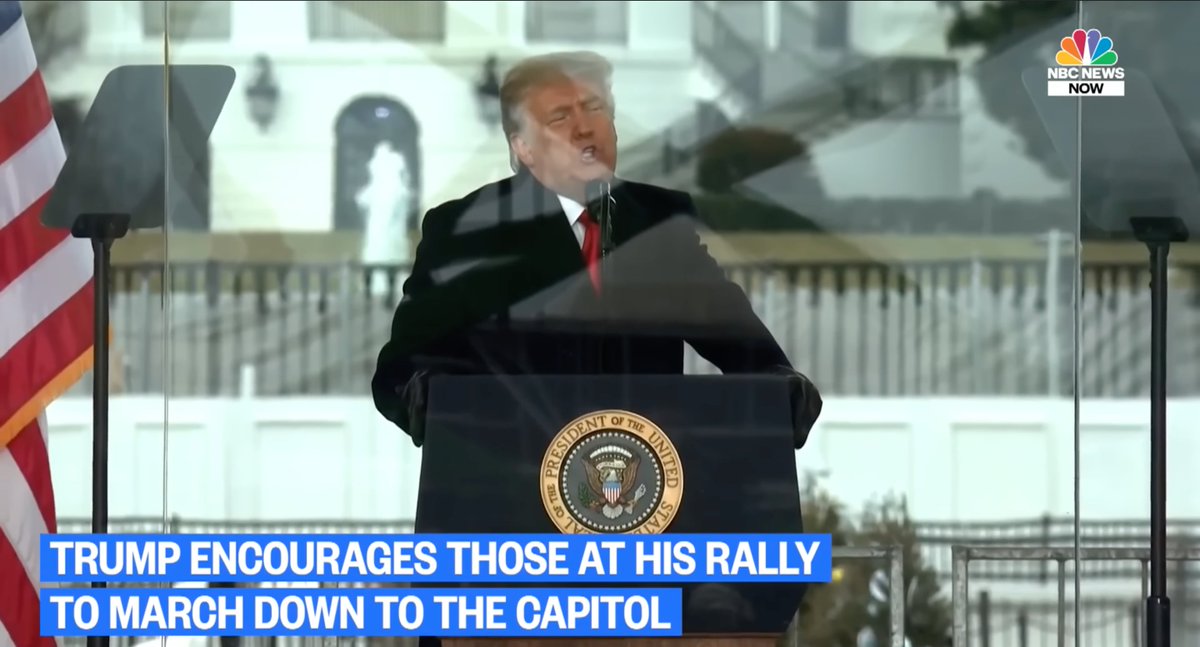
2/6: It was the day a sitting president, having lost an election and failed in court, turned against the constitutional order itself. Five years later, the most unsettling fact is not that it happened. It is that the man who caused it was never decisively stopped—and must now be understood by what he tried to destroy.
President Donald J. Trump lost the 2020 election. That fact has never been in serious dispute. He and his allies challenged the result repeatedly, across states and jurisdictions. Those challenges failed—often quickly, often unanimously, and often for lack of evidence. Judges appointed by Republicans and Democrats rejected the claims. State officials certified the results. The legal system functioned as designed.
3/6: What followed was not confusion. It was escalation.
As the courts closed their doors, the effort shifted away from law and toward pressure. Trump publicly and privately demanded that state officials “find” votes, refuse certifications, or intervene in processes the Constitution had deliberately insulated from partisan control. The claim of a stolen election ceased to function as a legal argument and became something else entirely: a mobilizing myth.
By the time January 6 arrived, the extraordinary had already been normalized. Supporters were told that democracy itself was being taken from them, that every legitimate avenue had been exhausted, and that only direct action remained. The crowd that gathered in Washington did not believe it was attacking the system. It believed it was rescuing it.
That belief did not emerge on its own. It was cultivated, reinforced, and rewarded.
January 6 was not a protest that spun out of control.
It was not a misunderstanding that escalated too far.
It was the logical endpoint of a campaign that had failed in the courts and turned, deliberately, toward extralegal force. When the mob breached the Capitol, it was acting on a premise it had been taught to accept: that elections need not be honored, that courts could be dismissed, and that force could substitute for consent.
The damage was not abstract. More than 140 law-enforcement officers were injured. Some suffered traumatic brain injuries, broken bones, and psychological harm that will last for decades. People died. The peaceful transfer of power—so routine it had once seemed unremarkable—was physically attacked in its own chamber.
A Republic In Name Only: How Republics End Without Officially Dying
“A republic has a longer life and a greater stability than a principality, because it can adapt itself better to the diversity of circumstances.”
— Niccolò Machiavelli (1469–1527), Discourses on Livy, Book III, Chapter 9
————————————————————
🧵1/7: When President Donald Trump shared images purporting to show Venezuela’s Nicolás Maduro in U.S. custody, the moment carried a warning larger than the image itself. It suggested a form of power that no longer waits for law, deliberation, or institutional consent to act.
History offers a name for this condition.
Republics do not always collapse when authority escapes their institutions. Sometimes they endure—courts speaking, legislatures meeting, elections proceeding—long after the rule of law has become ceremonial, and power has learned to operate beyond it. …eintellectualistofficial.substack.com/p/a-republic-i…
2/7: When President Donald Trump posted on Truth Social images purporting to show Venezuela’s president, Nicolás Maduro, in U.S. custody—eyes and ears covered, the scene framed as a completed capture—they functioned less as information than as proof. They did not explain a process, establish jurisdiction, or argue a case. They presented domination as already accomplished.
Whatever their factual or procedural status, their purpose was unmistakable: not to persuade, but to render authority legible by staging power as a visible fact.
What mattered was not accuracy but effectiveness. The image was not governance on display, but power performing itself. Its audience was domestic. Its message was simple and old: authority works, enemies can be subdued, and strength can be condensed into a single, graspable scene. Complexity disappeared. What remained was the assurance of capacity: we did this; we could do it again.
This instinct—to convert domination into visibility—is not a modern invention. It is a political technology that predates mass media and survives every change in communications infrastructure. Wherever republics hollow without collapsing, authority learns to announce itself not through deliberation or law, but through scenes that present outcomes as settled before any institution is asked to speak.
Rome understood this logic long before algorithms or feeds. It learned that domination no longer requires persuasion once it can be seen, and that a single image of subjugation can do the work of a thousand arguments. The ancient world had no screens, but it had crowds—and Rome knew how to feed them.
When Julius Caesar defeated the Gauls, he paraded their leader, Vercingetorix, through Rome in chains before executing him as the culminating note of a triumph. It is difficult, from a modern distance, to reconstruct what that meant to a Roman crowd. It was not a policy debate. It was not even an argument. It was proof. A conquered man made visible is a conquered future made believable. …eintellectualistofficial.substack.com/p/a-republic-i…
3/7: Caesar’s conquest did not weaken Rome economically—it flooded the state with wealth—but it broke the Republic by concentrating military loyalty, money, and legitimacy in one man. Even if the damage was not immediate, Gaul marked the point at which Rome learned that unchecked victory made republican governance structurally untenable. A republic can survive mediocre leaders and routine corruption. It cannot survive a permanent engine that manufactures men larger than the state itself.
This is the first mechanism by which republics end without ending: the slow displacement of institutional legitimacy by personal legitimacy, until the institutions remain—named, staffed, ritualized—while the decisions that matter migrate elsewhere. This transfer of authority away from offices and toward individuals is the central dynamic of republican erosion: legitimacy migration.
Modern readers sometimes imagine propaganda as a uniquely contemporary disease, a byproduct of mass literacy, broadcast networks, or algorithmic feeds. Rome had none of these, but it had public space, rumor networks, and a political culture that treated visibility as authority. Pompeii’s surviving walls make this plain—electoral notices, endorsements, insults, rivalries—politics on plaster, as recognizable as any modern comment thread.
The triumph converted violence into legitimacy. It taught the public what power looked like, who possessed it, and what obedience should feel like. It was governance by demonstration: not persuasion, but registration.
What Caesar learned in Gaul was not merely how to conquer territory, but how victory itself could relocate legitimacy away from institutions and into the hands of the man who delivered it. And once legitimacy migrates, it does not easily return.
By the time Julius Caesar was assassinated in 44 BC, the Roman Republic was already structurally hollow. Decades of civil war, elite paralysis, and widening inequality had eroded trust in senatorial governance. Caesar’s conquests had concentrated military loyalty, wealth, and legitimacy in a single individual, and his murder removed the man without restoring the institutions his rise had eclipsed. The Senate could eliminate Caesar. It could not retrieve the authority that had already slipped from its grasp.
That failure mattered more than the murder itself.
The conspirators believed that removing Caesar would restore the Republic—that the system, once relieved of a tyrant, would reassert itself through custom, law, and precedent. What they failed to grasp was that Caesar had not overthrown the Republic so much as exposed its incapacity. Killing him did not reverse that exposure. It made it undeniable.
Caesar remained widely popular even as he dismantled republican norms. To Romans exhausted by corruption, debt, and instability, he appeared less as a destroyer of institutions than as their corrective.
He delivered land to veterans, relief to debtors, visible results to the urban poor, and victory to a society that equated conquest with greatness. Constitutional erosion mattered less than outcomes that could be seen and felt. What the Senate experienced as the collapse of republican governance, many Romans experienced as the restoration of order and pride.
Institutions fail first.
Legitimacy erodes second.
Power consolidates only afterward.
The error of the conspirators was to treat Caesar as the cause rather than the consequence of institutional failure. Once legitimacy had migrated to a single figure, removing that figure could not return it to the Senate. It could only reveal how little authority the institutions retained.
The aftermath confirmed the mistake. Rome did not rally around the Senate. It fragmented. Violence resumed. Alliances hardened. The vacuum left by Caesar’s death did not invite restoration; it invited competition. Power, once personalized, does not depersonalize itself voluntarily.
In the years following the assassination, Rome entered a brief and illusory interregnum. Mark Antony—Caesar’s closest political ally—and Octavian—his adopted heir—initially feared a decisive response from the assassins. When none came, they turned instead on those they believed threatened them. The result was not a return to republican deliberation but the Second Triumvirate: a legally sanctioned regime of violence that deployed proscriptions—state-approved political killings paired with mass confiscation of property.
Terror was not an aberration. It was a tool, normalized through law.
The Republic still existed on paper. Magistracies were filled. Laws were passed. Rituals continued. But authority no longer flowed from deliberation. It flowed from force, and from the promise of protection against that force. The institutions had become a shell—still standing, still named, still ritualized, but no longer sovereign.
The question after Caesar was no longer whether the Republic could be restored. It was who would learn to rule a system whose authority had already migrated beyond its forms.
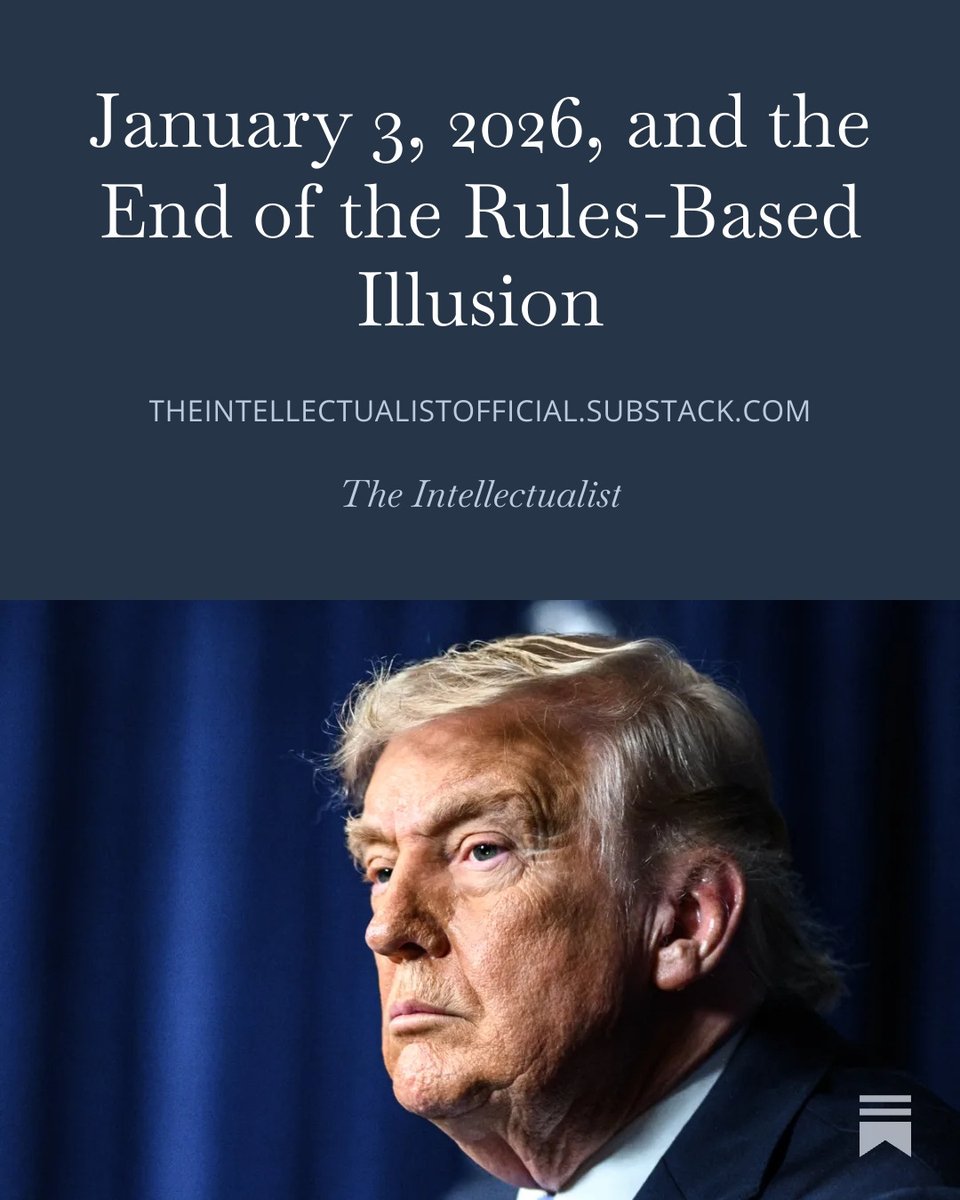
January 3, 2026, and the End of the Rules-Based Illusion
🧵1/4: President Donald Trump’s decision to take Venezuela’s leader into U.S. custody lands amid what Poland’s prime minister has described as a pre-war era.
As Ukraine grinds on and Taiwan braces for coercive pressures, the return of spheres of influence and nineteenth-century balance-of-power diplomacy revives the logic that once carried Europe—and then the world—into catastrophe. open.substack.com/pub/theintelle…
2/4: This morning, January 3, 2026, the world became more dangerous—and less governed by the rule of law.
President Donald Trump ordered the United States to take Nicolás Maduro, Venezuela’s sitting leader, into U.S. custody. According to international reporting, Maduro and his wife are expected to face criminal charges in federal court.
For many observers, the reaction was immediate approval.
Maduro presided over the destruction of one of Latin America’s most resource-rich countries, ruled with open contempt for democratic norms, and ruined the lives of millions of Venezuelans. The moral indictment against him is overwhelming. Supporters argue that extraordinary regimes require extraordinary measures, and that accountability long denied can justify exceptional action.
What is not morally simple is what this act now means.
Maduro remains the sovereign leader of a recognized state. Sovereignty is not a moral endorsement; it is a structural constraint—the rule that has historically limited how power is exercised across borders.
When sovereignty holds, diplomacy is possible, deterrence is legible, and escalation can be contained. When it erodes, power begins to justify itself.
When such systems fail, it is not great powers that absorb the immediate costs, but smaller states and civilian populations whose legal protections are the first to erode.
When the world’s most powerful state takes the leader of another state into custody unilaterally—without multilateral process, without clear congressional authorization, and with no public indication of prior consultation with allies—the lesson absorbed elsewhere is not about justice. It is about permission: about what is now possible.
The timing matters. Trump’s decision lands amid what Poland’s prime minister has publicly described as a pre-war era. Ukraine continues as a grinding conflict in which external powers test weapons, doctrines, and resolve, while Taiwan faces mounting military pressure from a China increasingly willing to demonstrate force. Across Europe and Asia, allied leaders have publicly acknowledged the need to adjust to a more unpredictable American role.
In this context, the return of spheres of influence and nineteenth-century balance-of-power diplomacy revives the logic that once carried Europe—and then the world—into catastrophe. It is the revival of Concert of Europe logic: a system in which great powers bargain over spheres, small states are treated as variables, and stability is enforced through coercion rather than law.
3/4: The post–World War II legal order has been weakening for decades, its authority punctured most visibly by the U.S. invasion of Iraq in 2003, which bypassed collective authorization and normalized exceptionalism by the system’s chief architect. Since then, violations have accumulated. Each was justified. Each was absorbed. What once shocked became familiar. The system did not collapse in a single moment; it thinned.
To be clear, the detention of Maduro does not, by itself, abolish international law. No single act could. What it does is confirm—clearly and publicly—a trend already underway: the steady collapse of confidence that law meaningfully restrains the powerful.
In international politics, perception often matters more than legality.
Governments do not parse indictments; they observe precedent. They ask what actions are now usable, and what protections can no longer be relied upon.
This confirmation arrives alongside a broader narrowing of American strategy. Since returning to office in 2025, Trump has pursued a vision of U.S. power that is smaller in scope but harsher in application—a United States focused primarily on the Western Hemisphere, less invested in global stewardship, and more willing to coerce allies as readily as adversaries.
Public pressure directed at Canada, Denmark over Greenland, Mexico, and Colombia has reinforced the impression that alliance status no longer guarantees insulation from coercion. This is not isolationism. It is retrenchment paired with unilateralism.
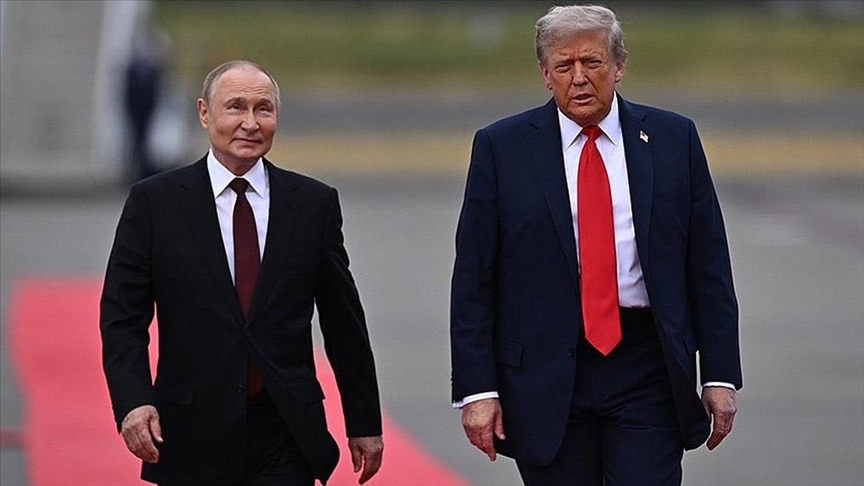
Underlying this posture is an old idea revived with new urgency: that global stability can be managed through great-power bargains. In Trump’s apparent view, the United States can accommodate Russia in Europe in order to concentrate on China—peeling Moscow away from Beijing through a return to nineteenth-century diplomacy.
The problem is that this theory no longer corresponds to reality.
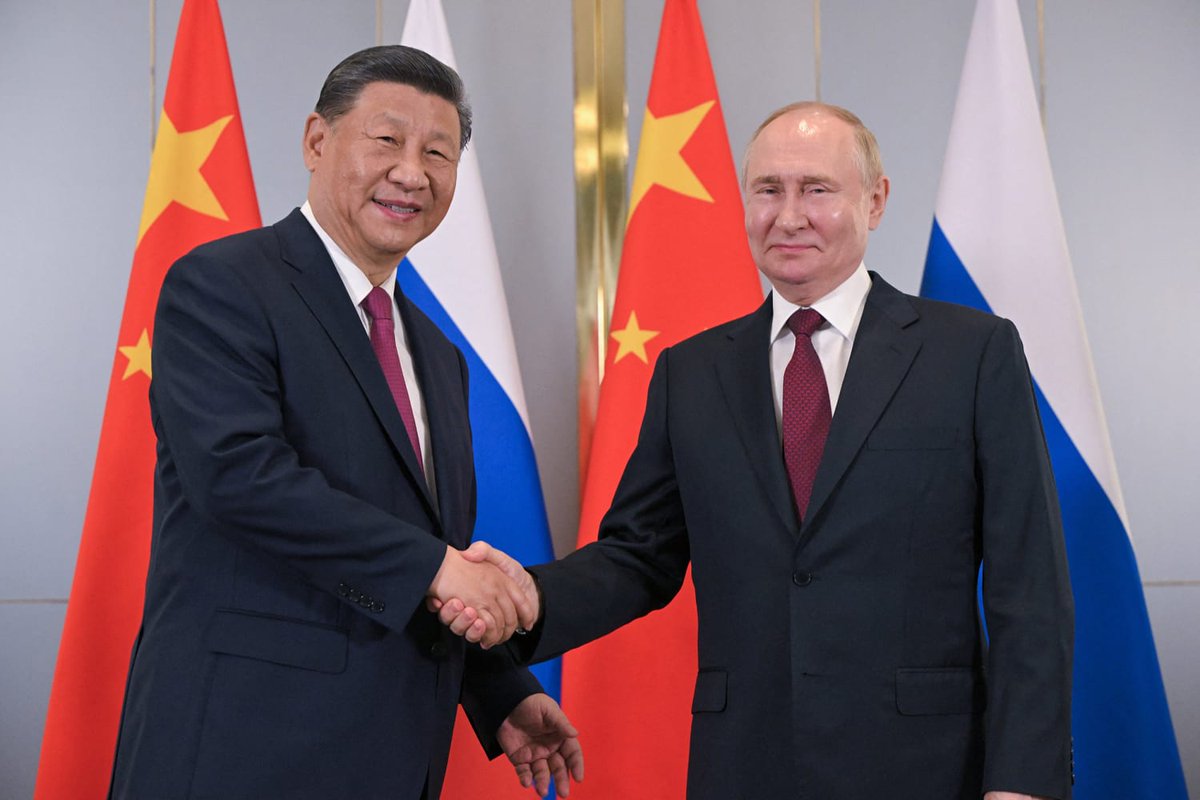
Russia does not possess leverage over China; China possesses leverage over Russia. Sanctions, energy dependency, financial isolation, and diplomatic reliance have rendered Moscow increasingly dependent on Beijing’s underwriting. Russia retains military capacity, but it lacks strategic autonomy. It is not an independent counterweight; it is a subordinate actor. A bargain premised on Russian independence is therefore incoherent.
When the United States abandons restraint while pursuing a strategy built on that false premise, it signals not strength but confusion. Confusion is dangerous because it invites miscalculation. When sovereignty appears conditional, law optional, and process secondary to outcome, restraint becomes irrational. The question shifts from whether rules should be followed to why anyone should bother pretending.
This logic is most dangerous in East Asia.
From Beijing’s perspective—however historically contested—Taiwan is not a sovereign state but a rebellious province. That claim is rejected internationally, but belief, not correctness, drives state behavior.
Consider a hypothetical scenario: Chinese authorities frame Taiwan’s elected leadership as criminals under domestic law, citing sovereignty claims and legal continuity.
Such an argument would not need to persuade the world to be dangerous; it would only need to be usable. This is not a prediction. It is an illustration of how precedent operates once sovereignty is treated as discretionary.
Ukraine already offers a warning of how such systems fail—through the choices of its people and the limits imposed upon them.
Like the Spanish Civil War in the 1930s, it has become a site where external powers learn what will be tolerated before a wider conflict erupts. The Spanish conflict did not cause World War II; it revealed that the guardrails had already weakened. Ukraine plays a similar role today.
It does not make wider war inevitable. It shows that the system meant to prevent one is no longer functioning as designed.
The return to nineteenth-century diplomacy is not stabilizing. That system produced World War I. Its unresolved failures produced World War II. The post-1945 order was built precisely to escape that logic—to replace balance-of-power bargaining with law, institutions, and restraint by the strong.
Leadership credibility matters profoundly in such an environment. Trump’s legal troubles, historical unpopularity, and repeated impeachments are not merely domestic concerns; they shape perceptions abroad.
Deterrence depends not only on force, but on confidence that commitments and rules will be upheld. When that confidence erodes, ambiguity fills the gap.
Pre-war eras are not defined by explosions. They are defined by rationalizations—by the slow normalization of actions once thought unthinkable.
January 3, 2026, may ultimately be remembered not as the day war began, but as the day the world stopped believing the rules would stop it.
“‘Silent enim leges inter arma’—‘for the laws fall silent amid arms’—was written by Cicero in 52 BCE during the collapse of the Roman Republic, a thinker closely studied by the American Founders as they confronted the problem of preserving the rule of law under crisis.