I have a new paper in @SurvivalEditors on the US intervention in Syria, and why it made the human rights situation worse. This thread explains how American involvement exacerbated and prolonged human suffering. 1/n tandfonline.com/doi/full/10.10…
There's a story interventionists tell. They say the US got involved in Iraq and Libya, and the situation turned out bad. But the US "did nothing" in Syria, therefore inaction can have costs too. 2/n
This is a rewriting of history to cover up a terrible record. The US sanctioned the Syrian regime, tried to destroy its economy, and put $1.5 billion into arming and training rebels. In no way is this "doing nothing," even if it's less than what regime change advocates wanted 3/n
The idea behind this was that Assad is a bad guy, and so anything that hurts Assad must be good for the Syrian people. In reality, research on mass killing indicates that countries engage in atrocities when they are desperate and feeling threatened. 4/n
Dictatorship is common, but mass killing is rare. What distinguishes the dictatorships that commit widescale atrocities from the majority that don't? The main factor is the degree of threat a state faces, which is why civil war is the greatest predictor of mass killing. 5/n
Moreover, sanctions make a country poorer, which means it has to rely on the most crude methods to put down threats to its power. Hillary had a theory that sanctions would eventually cripple the regime so much it would be unable to commit atrocities, but this is folly. 6/n
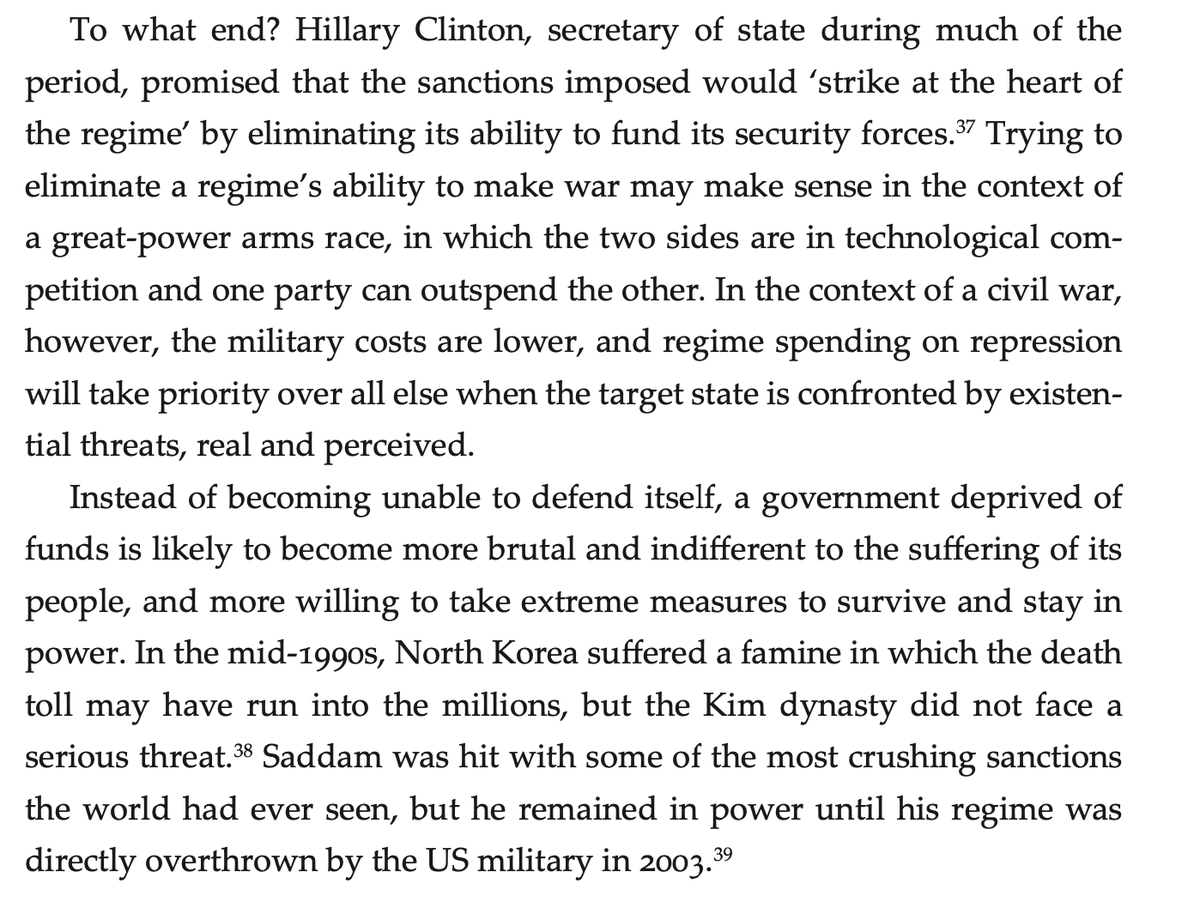
Looking at the history of the Assad regime, and neighboring Iraq under Saddam, shows this to be the case. These governments have been most vicious when they have been most threatened. 7/n
In 2011, Obama declared "Assad must go," at a time when there were only about 2,000 deaths. Since then, more Syrians died in the years of the heaviest American involvement than during any other time. As Russia became more involved and the US role dwindled, deaths went down. 8/n
If your concern is human rights, the US should have done exactly the opposite of what it did. This means engaging in dialogue, avoiding sanctions, and communicating to the regime that it was not seeking a new govt. 9/n
Today, the pro-interventionist crowd is still seeking regime change. Their unwillingness to recognize they do not have the ability to impose new governments in places where a state already exists prolongs suffering. See my debate with Charles Lister the other day. 10/n
Their dreams of regime change are more absurd than they were in 2011. Now, the Assad regime has the military support of Iran and Russia, and is not nearly as threatened as it was in 2012 or 2013. It did not liquidate itself then, and it won't do so now. 11/n
This paper is important both for setting the record straight, and because Syria is used by interventionists such as Marco Rubio and Hillary Clinton as an example of what happens when the US doesn't become involved. They are wrong, and we should learn from their mistakes. 12/n
• • •
Missing some Tweet in this thread? You can try to
force a refresh

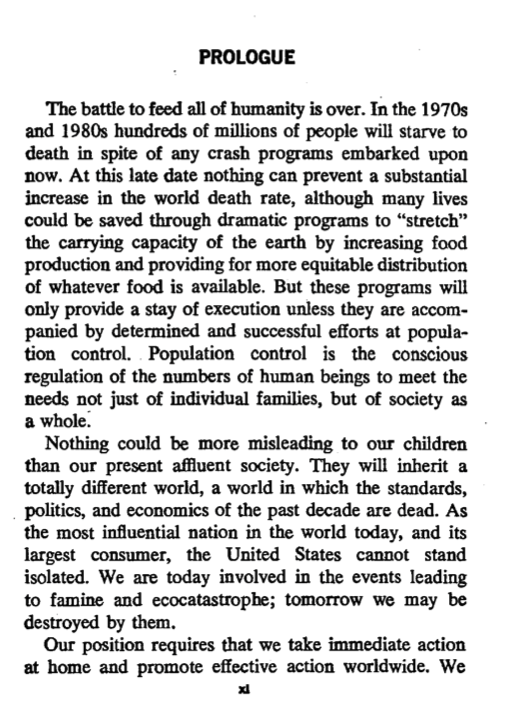
Paul Ehrlich has passed away, and I wanted to see whether he was as bad as his quotes and short clips suggest. Surely, there might be some nuance or careful thought in his worldview. Nobody is that purely evil.
So I picked up The Population Bomb and started reading.
It turns out, he's even worse than you think!
I’m putting together a thread below.
Quotes taken out of context don't get at the degree to which he is consistently evil and misanthropic. He had an entire system that he pursued in which human life was constantly denigrated and devalued, with an eye toward elimination. You’re left wondering what you’re even reducing human population for, since every form of life seems to be not worth living.
Some people are racist and just hate poor and brown people. Some hate the rich. Paul Ehrlich doesn't discriminate. He wants you not to exist if he can get away with it. But if he can't stop you from living, he wants you to have a much worse quality of life.
Ehrlich has a plan for both advanced and poor countries. He has blueprints for entire regions of the globe.
Humans do not have agency in Ehrlich’s world. They’re simple consumers of resources, with no ability to create, better their circumstances, or exert individual agency to make the world a better place, except to the extent that they ensure fellow humans no longer exist.
You might find all of this depressing. But I’ve found reading Ehrlich invigorating. It is a reminder of how much evil there is in the world. Recall that Ehrlich was not some guy in his room putting out diatribes. He was a professor at Stanford, a highly decorated scientist, and one of the most prominent public intellectuals of his generation. While reading Ehrlich today, know that he has intellectual descendants in the form of degrowthers and other environmental extremists, along with anti-capitalists who don’t understand the basis of prosperity and prioritize redistributing wealth over all else.
First of all, the cover. Children are starving as you're reading this. Even worse, more are being born! The existence of more humans is supposed to hit you harder than starvation. I like the title of the earlier book. "The End of Affluence." Another brilliant prediction.
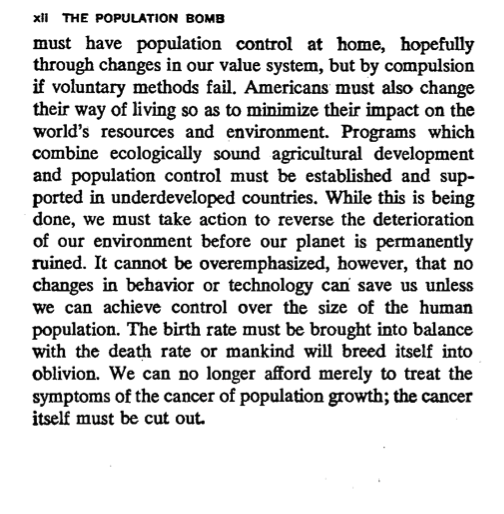
Here's the entire prologue where his famous predictions are made about mass starvation. It's only two pages, you can read the whole thing. He uses the prologue to make predictions that would soon be discredited and call for coercion, and denounces treating "the symptoms of the cancer of population growth." Ehrlich doesn't want to hear about how you might have a plan to improve people's lives. You're just treating symptoms! He starts with a demand that fewer humans is the only option worth considering.
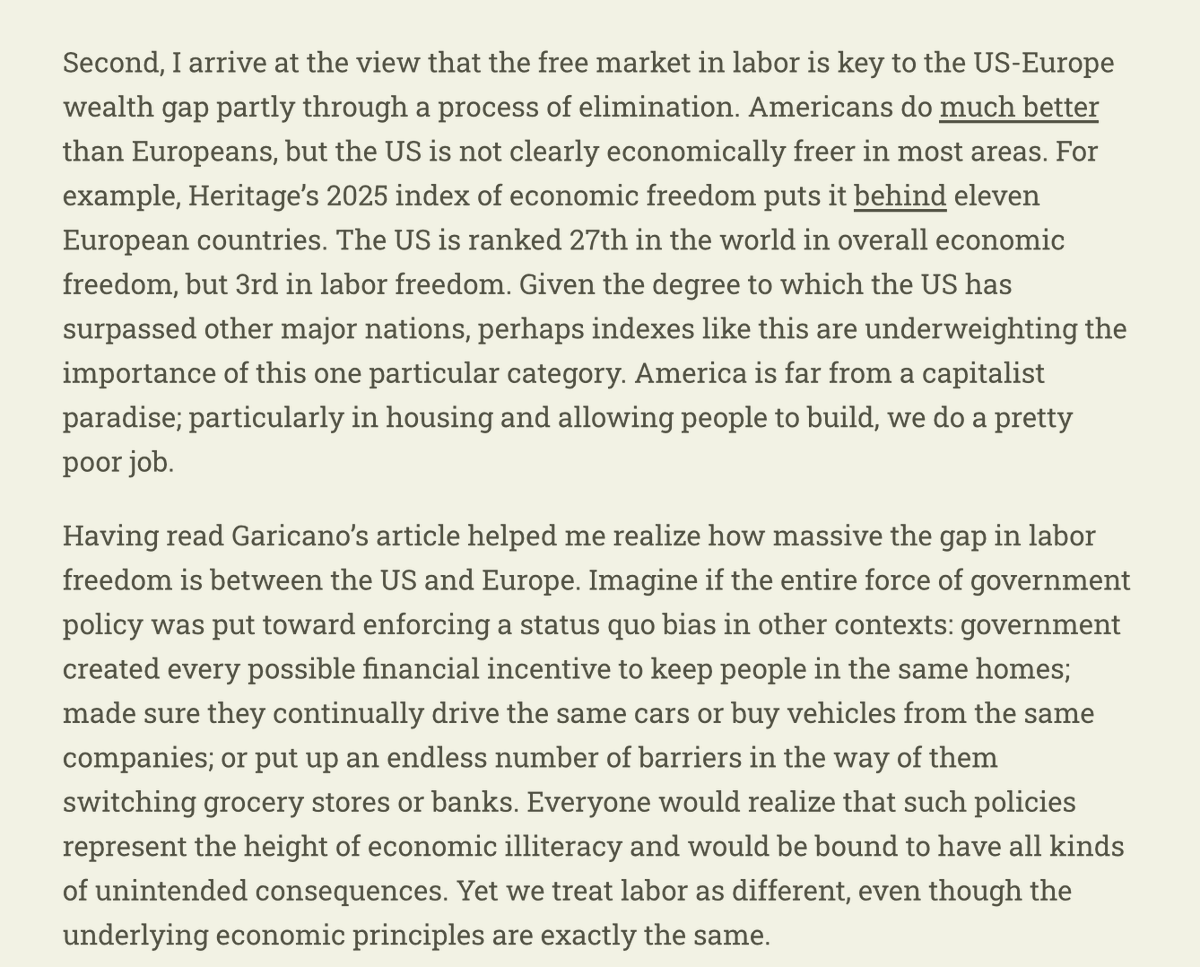
US isn't a free market paradise compared to Europe. But labor law stands out. California has high taxes and other left-wing policies. But Silicon Valley would be impossible in Europe. You can trace the exact ways in which its business model based on innovation is illegal.
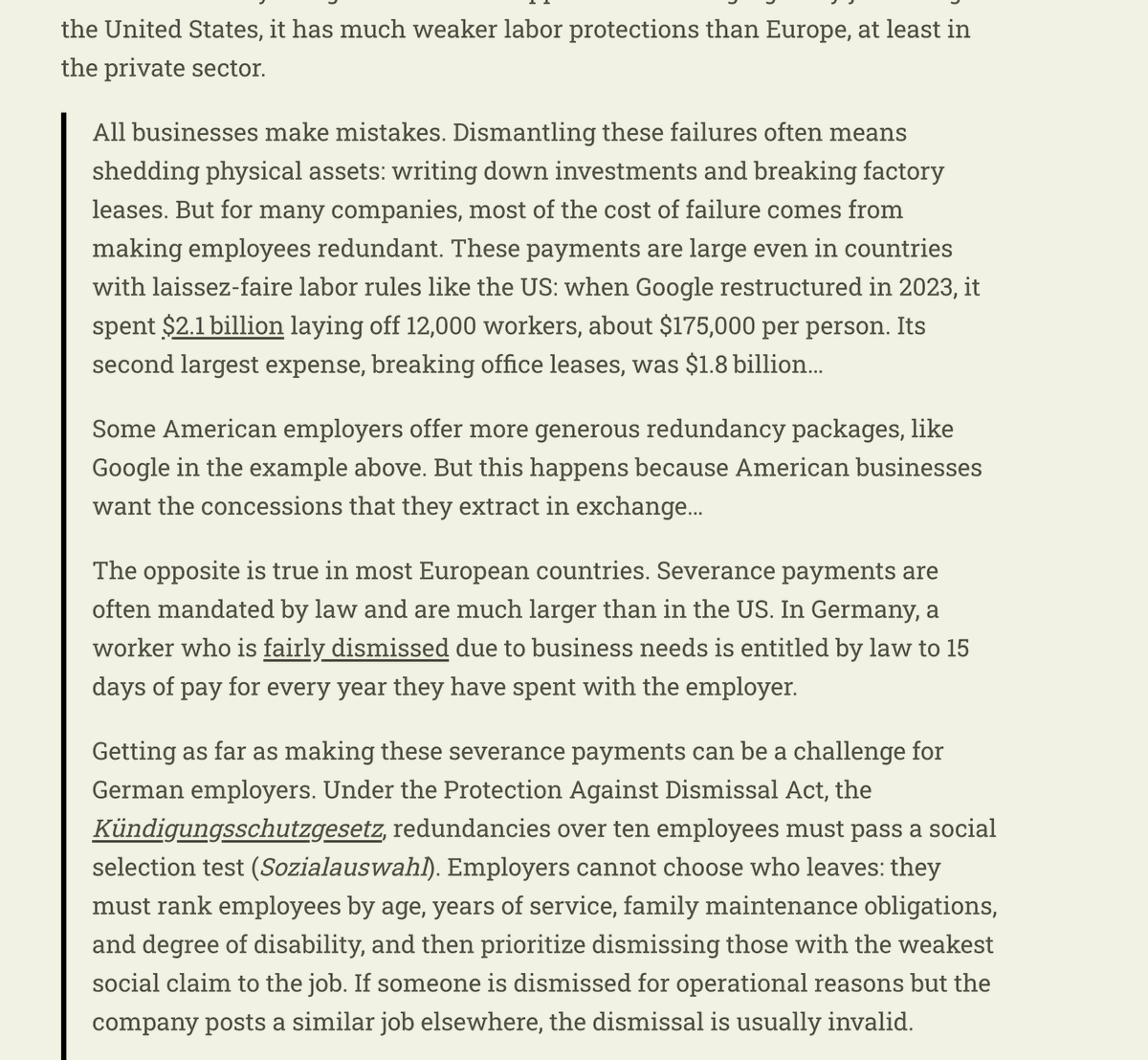
American companies often have to make large severance payments to fired workers. In much of Europe, these are mandated by law and much larger. And large German companies can't even choose who to lay off. They must factor in tenure and things like family obligations.
This guy was sued by his own firm for falsely inflating his role as “Head of Macro,” misusing confidential information to promote his own fund, breaching debt obligations, and defaming the firm to investors.
Yes, it's unsurprising that Trump brought him into the party.
He eventually admitted sharing confidential information and paid the costs of the lawsuit.
He called himself "Head of Macro," a position that didn't exist. The company says he was hired as a Research Analyst and then fired for poor performance. Fishback has now reinvented himself as a MAGA influencer.
There's a human preference for light skin. It shows up almost everywhere and predates colonialism. Indians and blacks are the darkest groups Americans are exposed to or interact with in any significant degree.
But blacks, in addition to the historical guilt, have traits many Americans like. They're good at sports, good with women, and charming enough to be actors and entertainers.
US-India relationship is being harmed because Pakistan is more willing to kiss up to Trump, and Modi has too much pride to nominate him for the Nobel Peace Prize when he didn’t do anything.
Mr. Trump contends that he used trade as leverage to get the two sides to stop fighting. After these enticements and warnings, he said, “all of a sudden they said, ‘I think we will stop’” the fighting.