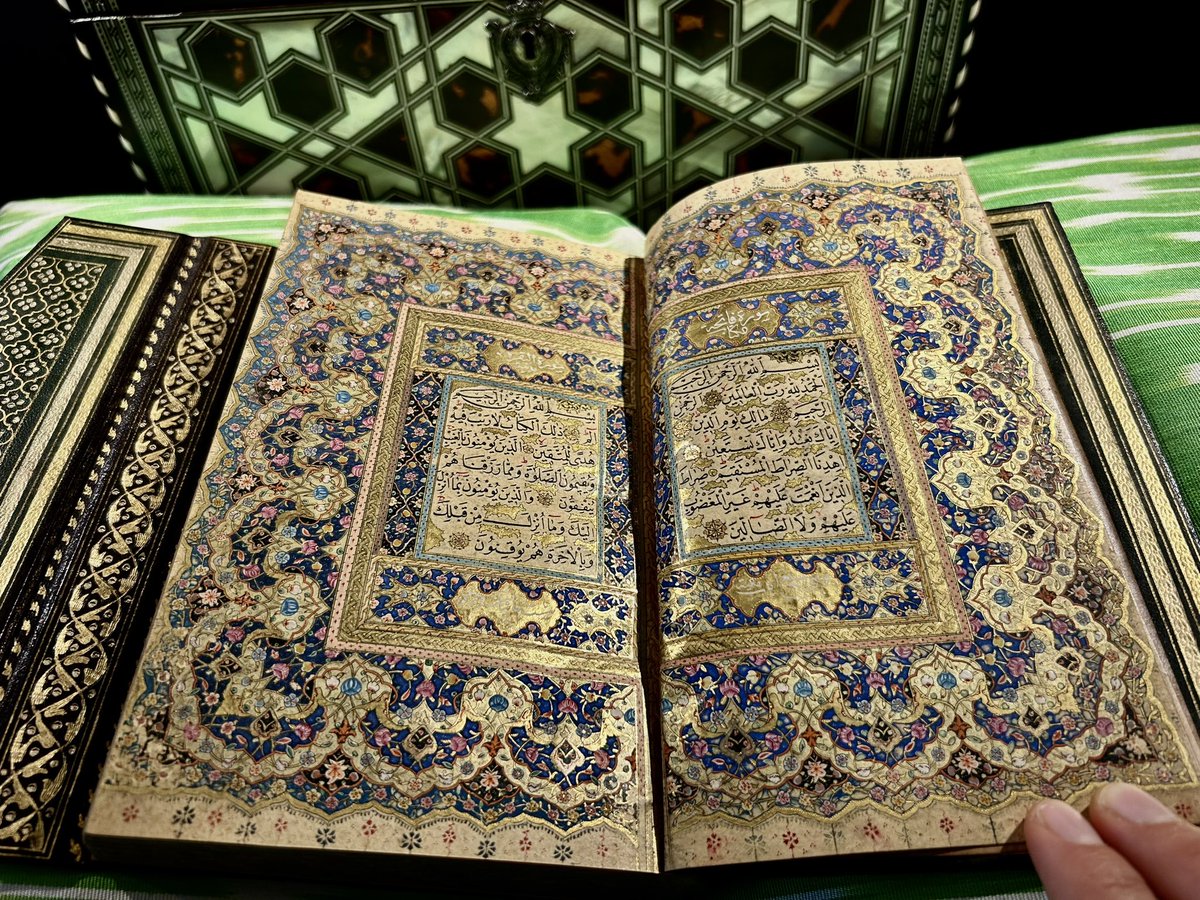
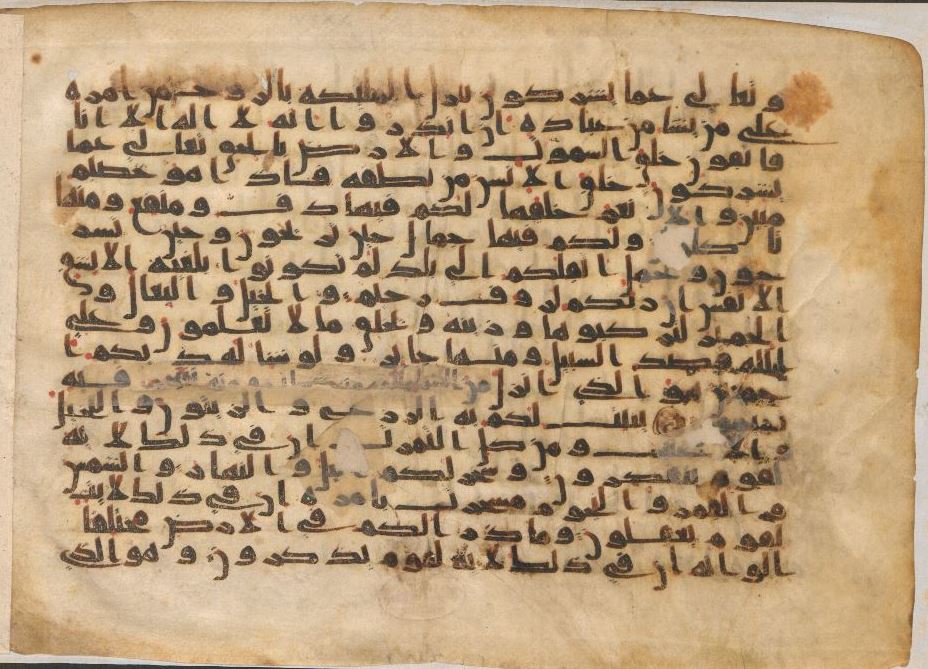
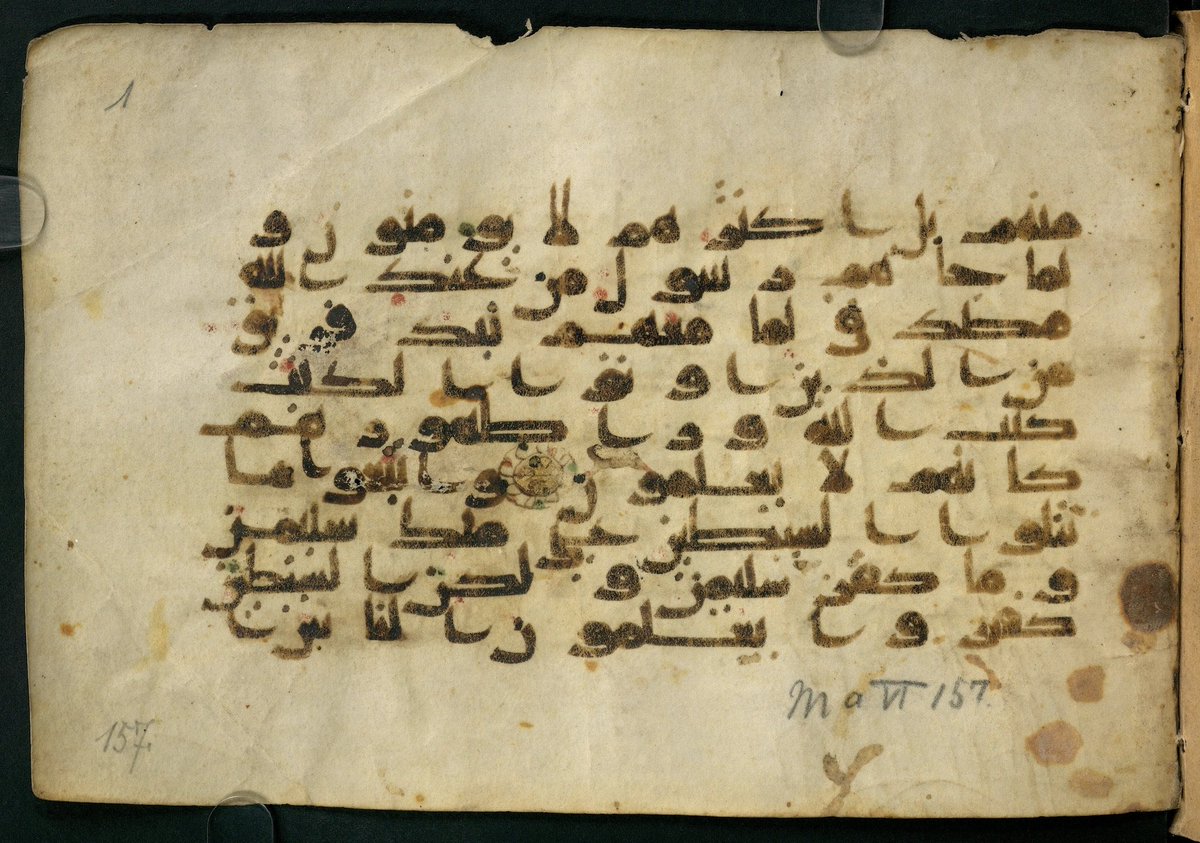
1/5. The Codex Topkapı Sarayı Medine nr.1 could be the Qur’ān attributed to Caliph ‘Uthmān, once kept in the Mosque of Medina, next to the Tomb of the Prophet. This and other Qur’āns and objects were removed by the Ottoman troups during the 1st World War and sent to Istanbul.
2/5. This issue had a great impact. In 1918, the King of Hijaz asked for its restitution. The Qur’ān of ‘Uthmān even appeared in the Treaty of Versailles: France and Great Britain suspected Germany to have it and asked for its restitution. But Germany denied this claim.
3/5. In 1920, the Foreign Office concluded “The Turks must have it…[they are maybe] unable to recover it", and the case was closed. In 1920-30’s, the German scholar, G. Bergsträsser, visited the collection of Topkapi and photographed 2 mss with shelfmark Kodex Medina 1a and 1b.
4/5. Kodex Medina 1a is a vertical ms, written probably in the early 8th CE. There are 308 leaves in Bergsträsser’s archives (=78% of the Qur’ān). But maybe the ms has more folios. T. Altikulaç' new volume seems to confirm that, with this picture of the beginning of the muṣḥaf!
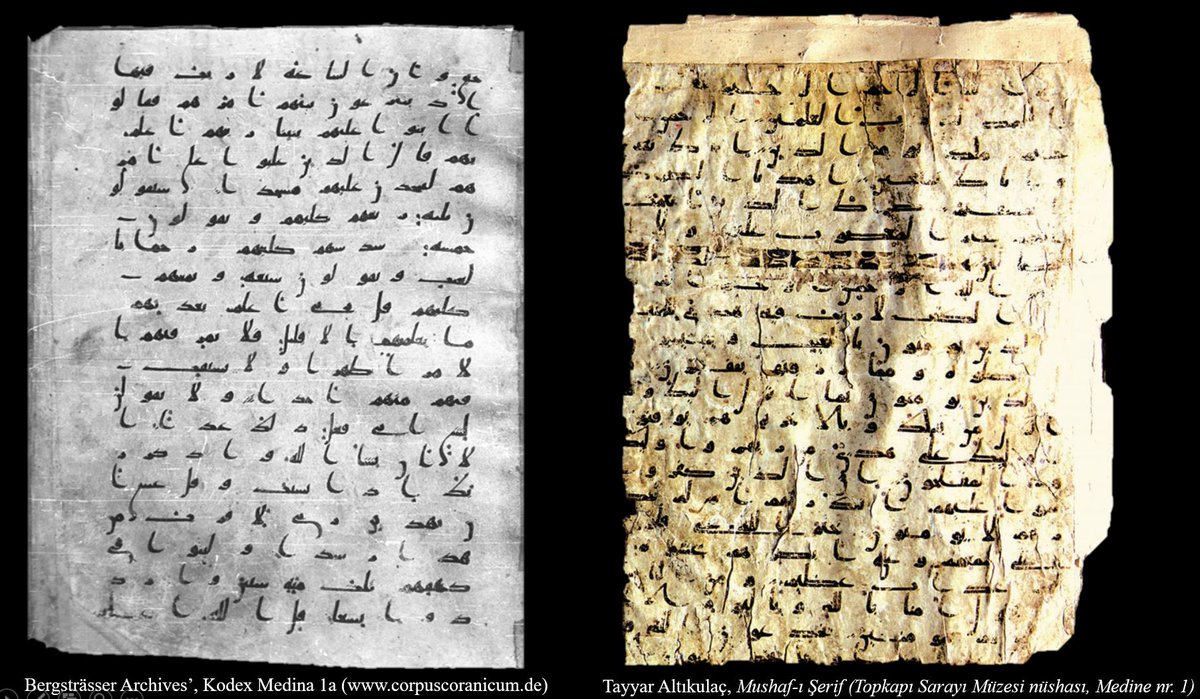
Meanwhile, you can read Michael Marx’s article about Kodex Md 1a, “Le Coran d’‘Uthmān dans le traité de Versailles”. It’s available for free: persee.fr/doc/crai_0065-…
• • •
Missing some Tweet in this thread? You can try to
force a refresh

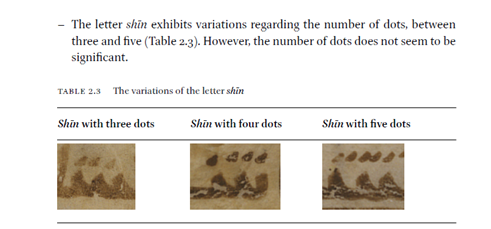
I’m excited to announce the release of my new article, which delves into early Qurʾānic manuscripts featuring a fully developed diacritical system. The article explores a key manuscript, its production context, and its distinctive diacritical features. A big thread 🧵(1/10)
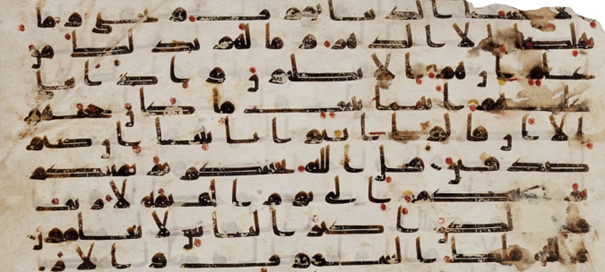
2/10. 📜 Marcel 21b is a Qurʾānic fragment from the Fustat collection, today kept at the National Library of Russia. Composed of 4 horizontal leaves, it features archaic Ḥijāzī script, no vocalization and no surah titles..
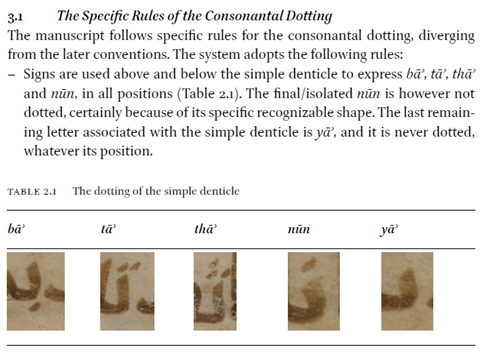
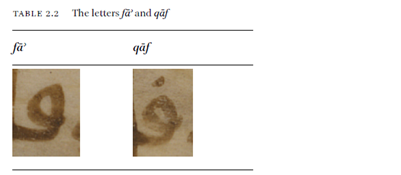
3/10. Marcel 21b's consonantal dotting system slightly diverges from later norms:
•Denticle bāʾ, tāʾ, thāʾ, & nūn are dotted, except final/isolated nūn due to its recognizable shape. Only yāʾ is never dotted.
•Fāʾ is undotted, while qāf is dotted (except final/isolated qāf).
Another volume from the magnificent Qur'an manuscript seized by Holy Roman Emperor Charles V during the sack of Tunis in 1535, offered on sale at Sotheby’s!
A thread about its history 🧵1/6
2/6. In 1535, the Holy Roman Emperor Charles V (1500-58) conquered the Kingdom of Tunis from the Ottomans. His troops looted the city – the Great Mosque az-Zaytuna and the palace of Hafsid King Mulay Hasan. They seized several copies of the Qurʼan and took them back to Europe.
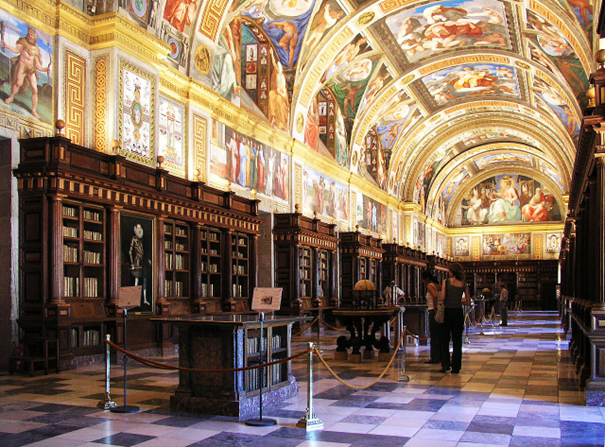
3/6. The Qur’an manuscripts taken by Charles V went to his son, King Philip II (d. 1598), who sent them to the Royal Library of the Escorial… One of these is a magnificent mushaf from the Hafsid dynasty, divided into 8 volumes, the one to which the Sotheby's manuscript belonged
Such a thrill to meet today Qur'anic masterpieces by Kazasker, al-Uskudari and Sheikh Hamdullah! Three of the greatest calligraphers of the Ottoman Empire, now side by side in Alexis Renard's gallery 😍
They will be at the de Baecque auction in Lyon on 10 June. Take a look [1/4]
2/4 This magnificent mushaf was copied in AH 1283/CE 1866-67 by Kazasker Mustafa 'Izzet Efendi. Check the description and other pictures here: debaecque.fr/lot/147335/255…
3/4. This other important Mushaf was written in AH 1203/CE 1788-89, by Seyyid Salih Salahi Hafiz Üsküdari, also known as Hafiz Çemşir.
Details here: debaecque.fr/lot/147335/255…
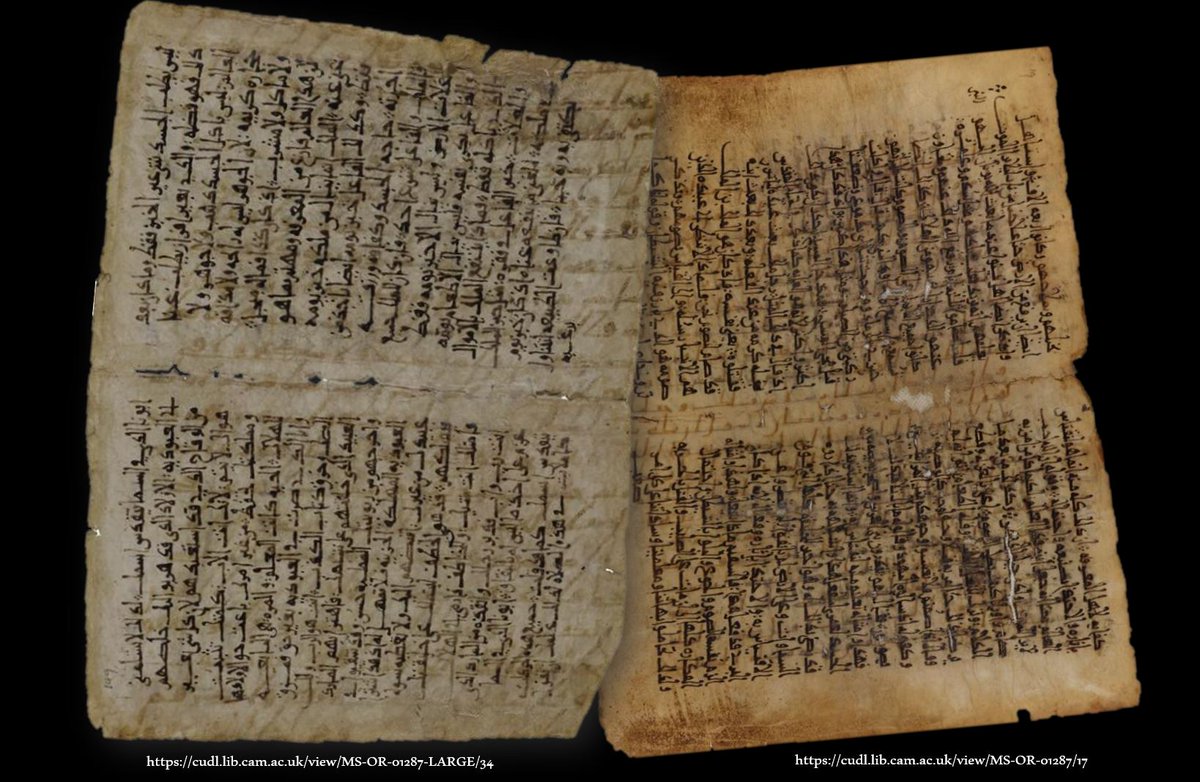
1/6. In 1895, Mrs Lewis purchased a manuscript in Suez. It was a palimpsest : a Christian Arabic text from the 9th-10th CE, written on recycled parchment leaves with traces of several different texts. Among them, old Qur’ān leaves…
2/6. She and Mingana published a short study in 1914 with a very attractive title: "Leaves from Three Ancient Qurans, possibly pre-‘Othmanic". But World War I started, and the manuscript – which was then exhibited in Leipzig - disappeared until 1936…
3/6. It was then returned to Cambridge University and is still there now (MS Or.1287). Coincidentally, in 1936 Mingana purchased in Leiden half a leaf of the same volume for the Birmingham collection. And 2 other fragments (with Greek erased text) were in Beuron’s Abbaye, Germany
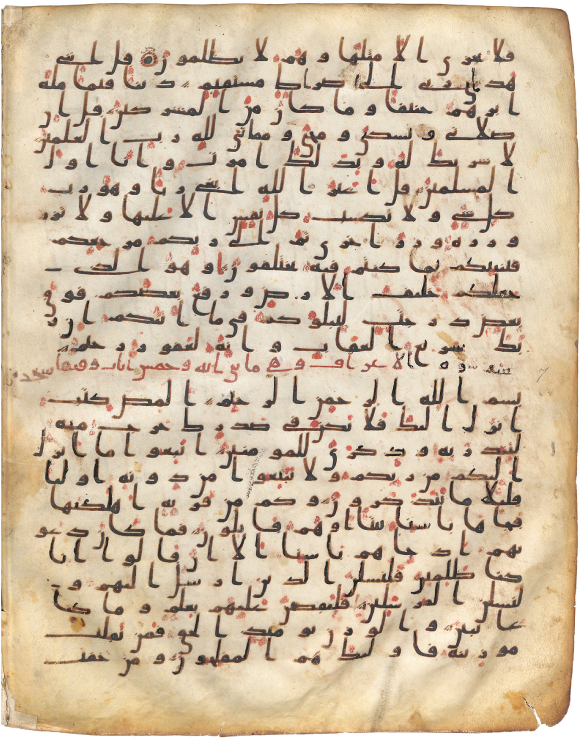
Important early Qur'an leaf offered on sale at Sotheby's! This leaf – written in D.IV and not in B.Ib as assumed in the lot’s description – belonged in fact to an early Qur’an copy which displays the oldest endowment to the ‘Amr Mosque in Fustat, preserved to this day. A🧵! 1/5
2/5. Contrary to Sotheby’s description, the folio is written in a Kufic style called D.IV, maybe the oldest version of the 'classical' Kufic. A radiocarbon analysis supports a dating between 675 and 878 (95,4%), with 675–778 as the most probable range.
3/5. The copy is written on parchment, but oriented vertically – an unusual feature for classical kufic manuscripts. It displays rare diacritics and red and yellow dots for the vocalization and orthoepic signs – a system attributed to a Medinan/Maghrebi tradition.
1/10. Among the famous Qur’anic manuscripts well known today is the volume preserved in Tübingen University Library, MA VI 165, also considered as the earliest of this collection. Here is a short introduction.
2/10. This manuscript was brought from Damascus to Germany by J. G. Wetzstein, consul of Prussia in Damascus between 1848 and 1862. Although Wetzstein doesn’t mention it, the copy may have come from the Great Mosque of the Umayyads, but this hasn’t been demonstrated yet.
3/10. Wetzstein purchased MA VI 165 and thousands of others Qur’anic fragments for scholarly purposes, specifically paleography and textual criticism. He collected a large number of leaves from various manuscripts, written in the Kufic styles used during the first 4 centuries.