Pointy-headed thread: Do you remember this tweet of mine from earlier this year? About how extraordinary flows of gold out of the UK are completely changing the picture of UK trade? Well, brief update: it's still happening. Big time.
In the past few quarters, the UK trade account has swung into positive territory for the first time since the 1990s. And not just positive territory: the biggest trade surplus EVER. £16.9bn in Q2 alone...
It's worth emphasising that even if you look at the trade balance as a % of GDP it's still one of the highest levels we've ever seen. Only one other quarter - Q1 1981 - had a higher surplus. And I don't think it's ever swung quite as dramatically as this...
And the story this time around - as last time around - comes largely back to gold. In the past year the amount of gold being "exported" from the UK has hit around £24bn. We "imported" about £15 billion of the stuff. This is totally unprecedented - and not a little odd
In fact if you were to count gold as a normal export it would be our third biggest export, just above pharmaceuticals (which we're a world leader in btw). But here's why I put it in inverted commas: it's not really an export. Indeed in most cases it doesn't even leave the country
London is the world's capital for the trade in physical gold. And when gold changes hands from a British owned institution or investor to a non-British one then that's counted as an export. Even though it usually doesn't even leave the vault!
How can we be sure this isn't gold leaving the country? Well for one thing these days the @bankofengland publishes data on how much gold it has in its vaults. And over this period it's actually risen a fair bit - the equivalent of £17bn or so bankofengland.co.uk/statistics/gold
I only mention all of this because this morning I found myself leafing through the ONS balance of payments data (as you do) and I struggled to make sense of it. Look: including gold the deficit is £2.8bn. Exclude gold and it's £12.1bn. That's a mind-boggling difference!
And unless I've missed something, save for that par 👆, @ONS still uses that distorted current account fig everywhere else. In its tables, its charts etc. That distorted figure is the one that'll go into IMF/OECD databases and be used to compare UK to other countries, I assume
I couldn't even find an official @ONS series for the underlying non-distorted current account, so I made one myself. It's the red line here. Black line is the "official figure". Yellow bars are the net balance of gold movements in and out of the UK which I've simply subtracted.
Why am I going on about this? Because the current account is one of the most important economic statistics. And thanks to the way we account for gold movements it's becoming a real mess. It is poss to adjust for this and the @ONS is trying hard but it's fighting an uphill battle
There are international statistical rules stipulating that we include these flows. So while @ONS includes plenty of small (and big) print, the official measures - the ones that most people pay attention to and are used for international comparisons - are increasingly meaningless.
• • •
Missing some Tweet in this thread? You can try to
force a refresh

🧵The "Energy Independence Bill" just mentioned in the King's Speech is something of a bombshell.
Why?
Because it compels the govt to rally Parliament behind fresh legislation to ban new North Sea oil/gas licences (this has NOT been written into law yet).
This is a v big deal!
Yes, I realise given speculation abt @Keir_Starmer's fate there's an enormous question abt whether ANY of this stuff happens.
But still - the point remains: right now, the law says new govt CAN issue new N Sea licences.
The King's Speech actively commits them to ending this...
That might have seemed uncontroversial back when it was written into the Labour manifesto in 2024.
But now, in the face of a global energy price shock that means every country around the world is trying to secure supplies of oil/gas (as well as renewables), it's controversial!
🧵
What does a trade war look like?
Much of what you've heard about tariffs is prob soundbites from politicians & economists.
But what does a trade war actually FEEL like at ground level?
We've spent the past year working on a film on just that.
Here's some highlights
👇
Best place to start is with this👇
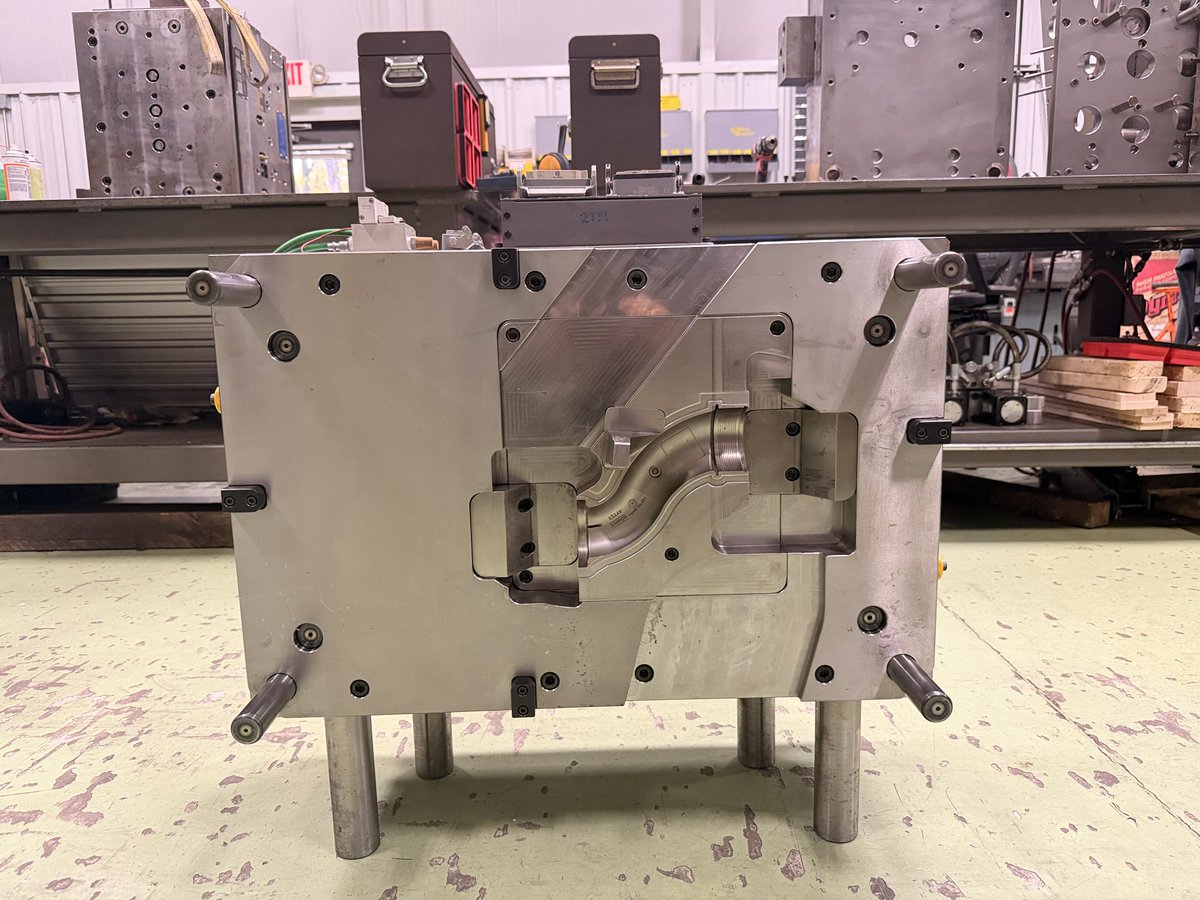
It may look like a lump of metal but don't be fooled.
This is a die: a sort of mould used to shape plastics. Looks simple but it's super-engineered - designed to withstand enormous pressure.
Without dies like this there's no manufacturing...
Dies and moulds are the unsung champions in modern mass production.
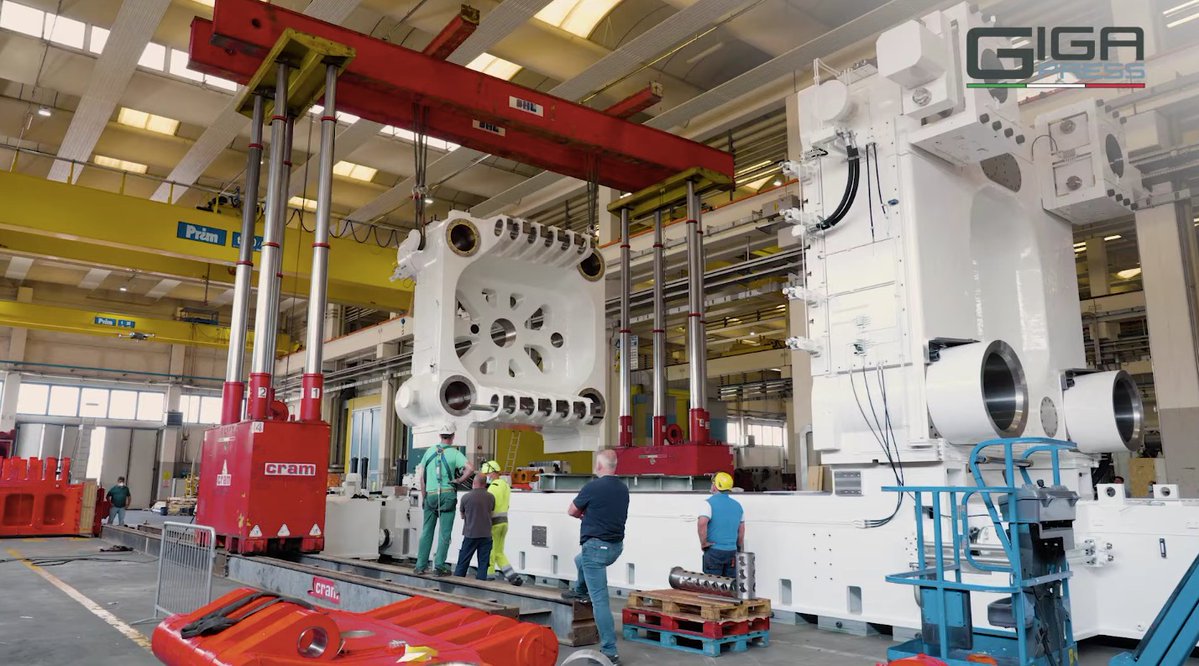
One of the single most impressive things about Tesla's manufacturing processes is what @elonmusk calls the Gigapress: a massive machine that shapes metal. And at the heart of the gigapress are enormous dies.
The PM keeps repeating the figure £16bn in relation to the OBR's latest forecasts - giving the impression that this would have left a big hole in the public finances. What he fails to acknowledge is that that this is LITERALLY ONLY ONE PART OF THE STORY.
Here's why...
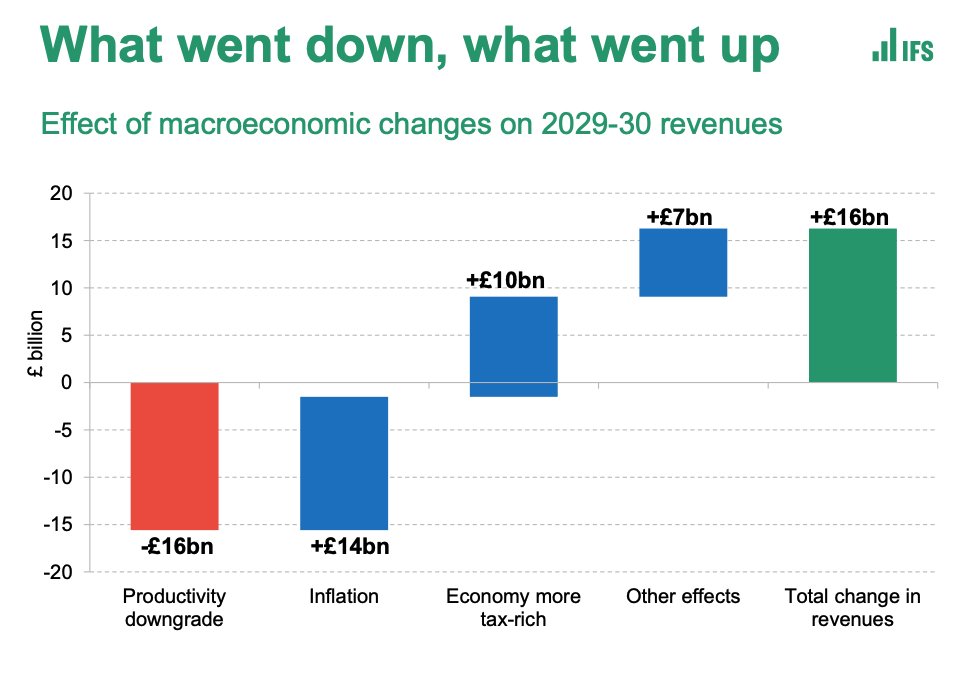
Yes: the OBR downgraded the fiscal numbers by £16bn (actually £15.6bn) due to weaker productivity (red bar below).
But it also simultaneously UPGRADED them by a whopping £32bn (blue bars).
This chart from @TheIFS shows it pretty clearly👇
Banging on about the £16bn productivity - as the PM did repeatedly in his press conference today - without also mentioning the £14bn inflation UPGRADE and the £17bn of other UPGRADES seems... pretty misleading to me.
It's simply NOT the full picture...
NEW
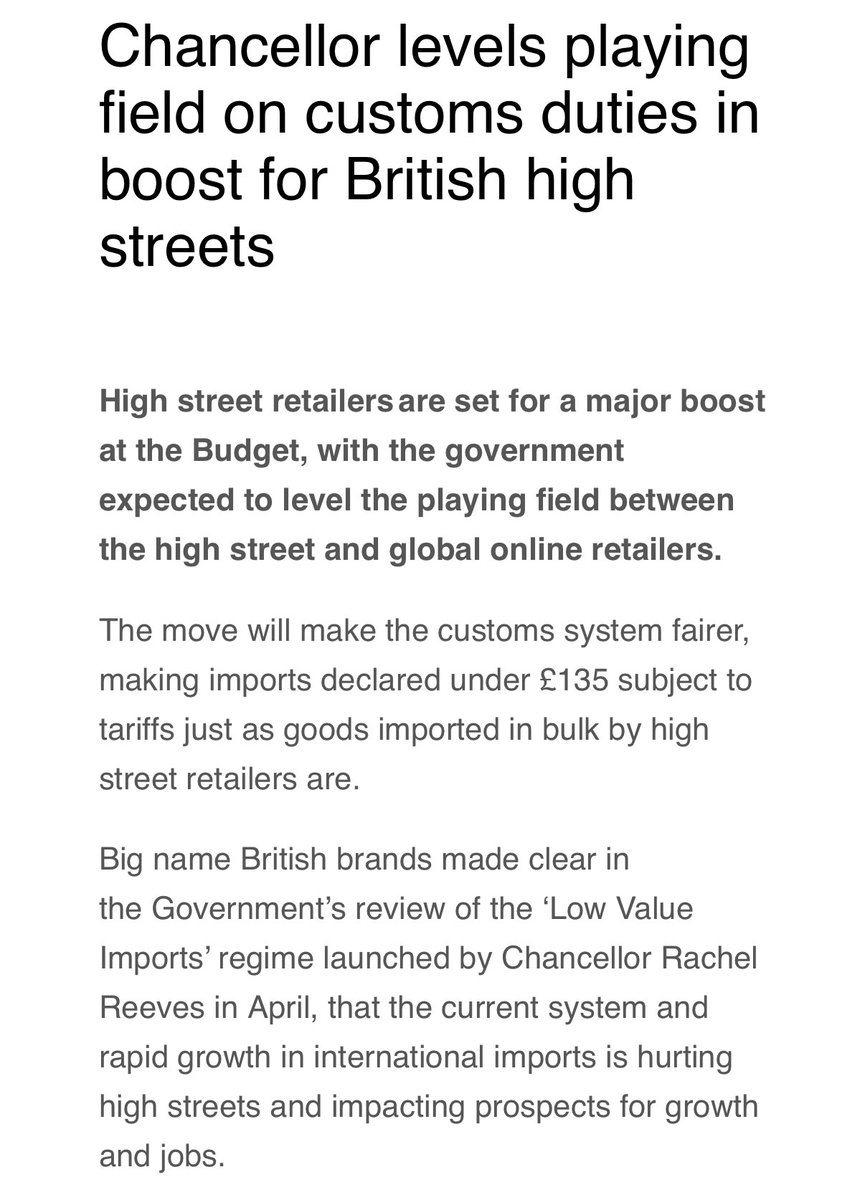
UK abolishes its "de minimis" rules which exclude cheap imports below £135 from paying tariffs.
A massive deal for the fast fashion/cheap Chinese imports sector: this is the so-called loophole used to great effect by SHEIN and Temu.
Should also bring in some tariff revenue
For more background on this, here's our investigation from earlier this year on de minimis and what it means in practice - including a glimpse inside the planes carrying these imports into the UK 👇
The flip side to this policy is:
a) stuff (yes, a lot of it is tat but even so) will get more expensive
b) it primarily hits lower income households
c) as you'll see from my thread, de minimis was a lifesaver for small regional airports. Its demise is v bad news for them...
NEW
"Data center alley" in North Virginia.
Home to the biggest cluster of server centres in the world.
Here, more than anywhere else, is the global epicentre of AI.
It's where the recent AWS outage happened.
And we've secured rare access INSIDE one of the data centres...
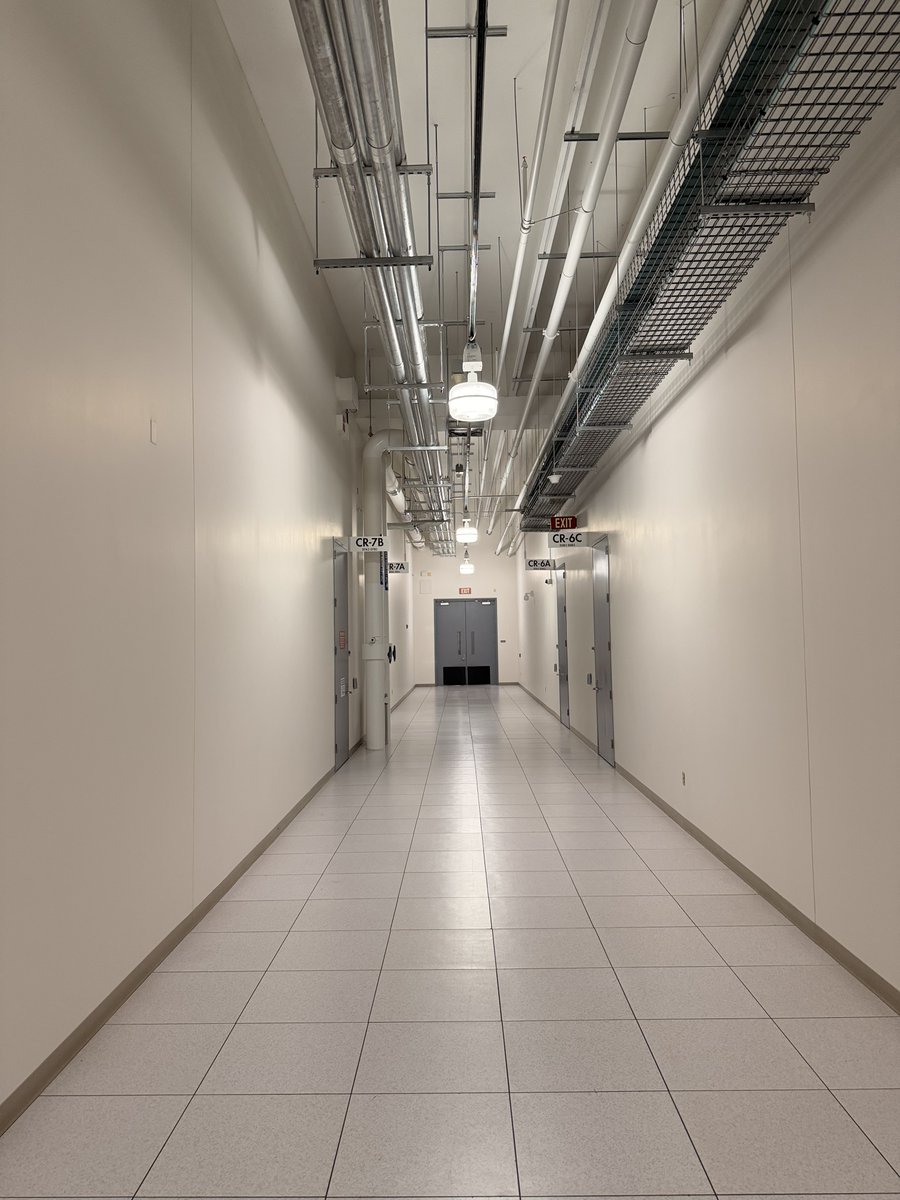
The inside of one of the centres, run by Digital Realty, one of the biggest datacenter companies in the world.
Extremely high security. Long, long corridors, flanked by rooms in which those servers are operating.
This is the very heart of the biggest economic story right now
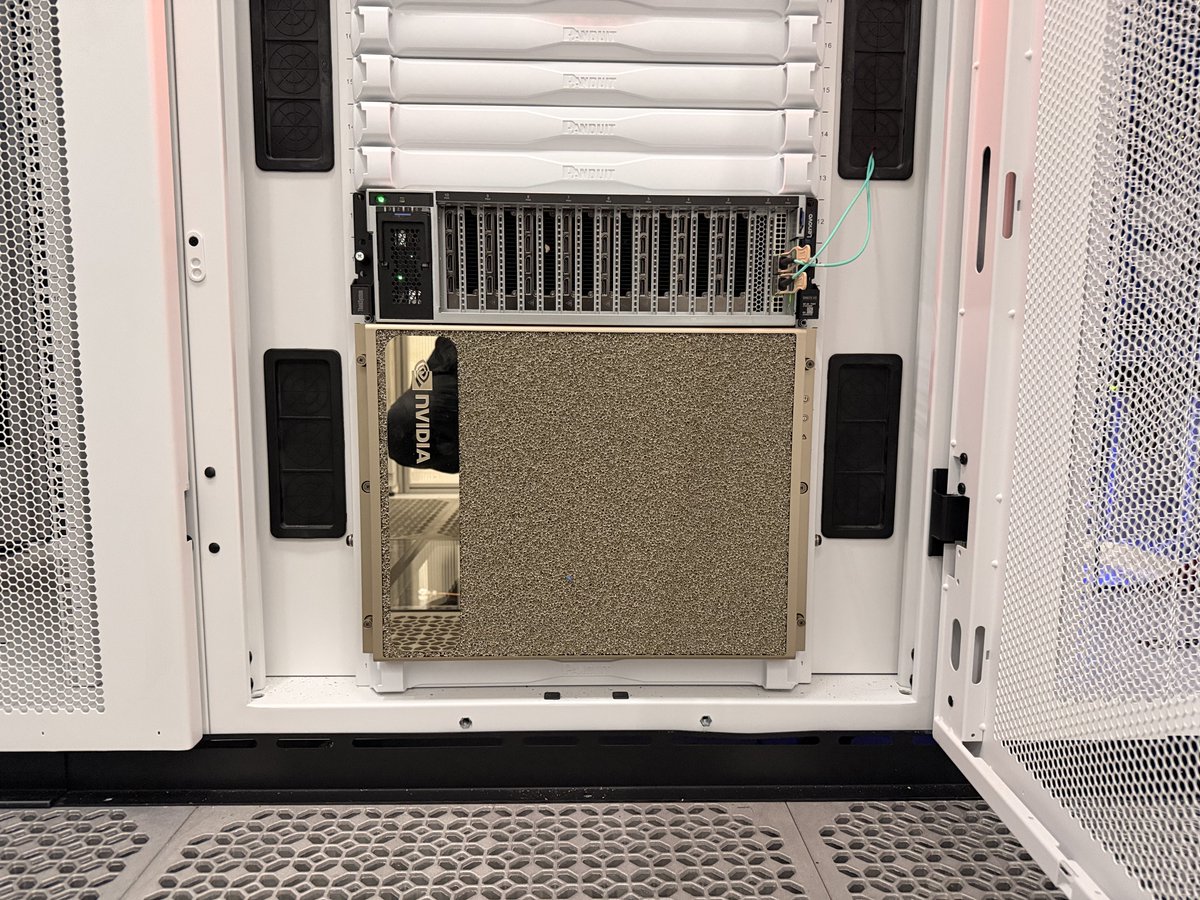
And inside one of those rooms, here is one of the supercomputers powering the AI boom. This Nvidia DGX H100 is the physical infrastructure making AI a reality.
🚨EXCLUSIVE
The firm at the heart of Britain's critical minerals strategy has ditched plans for a rare earths refinery in the UK, and will build it in the US instead.
It's a serious blow to the Chancellor and her plans for "securonomics" ahead of next month's Budget👇
Not long ago Pensana was being hailed as key to Britain's industrial future.
It had plans to ship rare earth ores to the UK and refine them in a plant just outside Hull, creating 126 jobs and bringing in hundreds of millions of pounds of investment...
Its Saltend site was where the then Biz sec Kwasi Kwarteng launched the govt's official critical minerals strategy a few years ago, saying: "This incredible facility will be the only of its kind in Europe and will help secure the resilience of Britain's supplies into the future"