This is why the Japanese approach of avoiding the three Cs (enClosed spaces, Crowded spaces, Close contact) has been so effective.
Even if someone is highly infectious, you hugely constrain the amount of spreading they can do if you limit the number of people they’re mixing with
We still don’t know exactly what causes super-spreading. Is it mainly that someone is especially infectious, or mainly that a moderately infectious person spends time in an enclosed & crowded space while infectious?
Whatever the answer is, avoiding the 3Cs can only help.
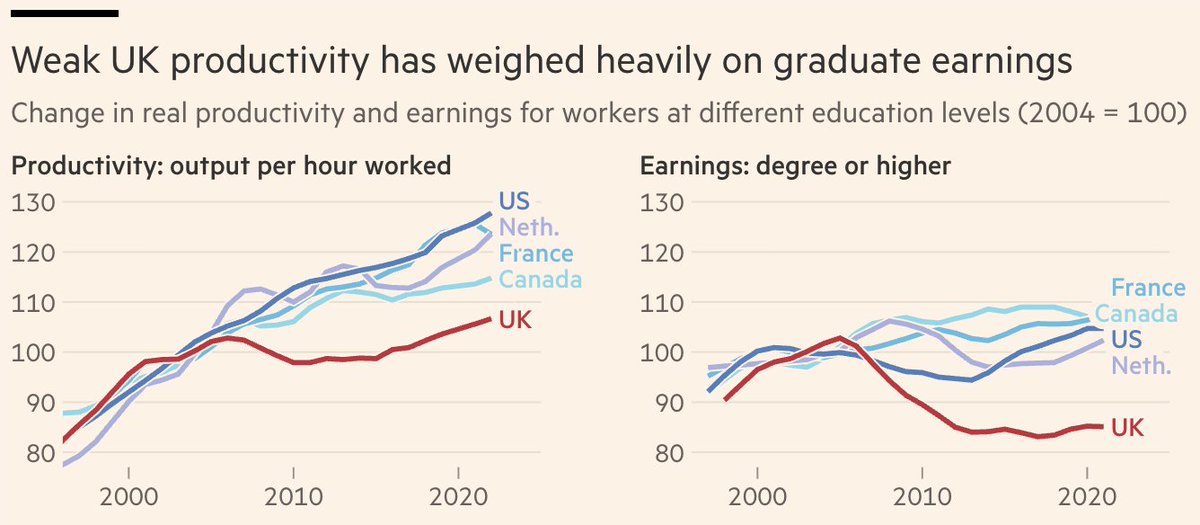
The real sign British education has failed is the number of people responding to this chart with "that’s what happens when too many people go to university"
HE has expanded in all of these countries, and in every one apart from UK that didn’t erode the graduate earnings premium.
Not really relevant. Why did US and Netherlands going from 25% college grads to 40% college grads see their earnings premiums rise, while the same in the UK led the premium to fall?
The answers are quite straightforward:
1) The UK economy’s growth and dynamism have never recovered from the financial crisis. This productivity crash has had a scarring effect on earnings at the top of the market — the jobs most graduates work in.
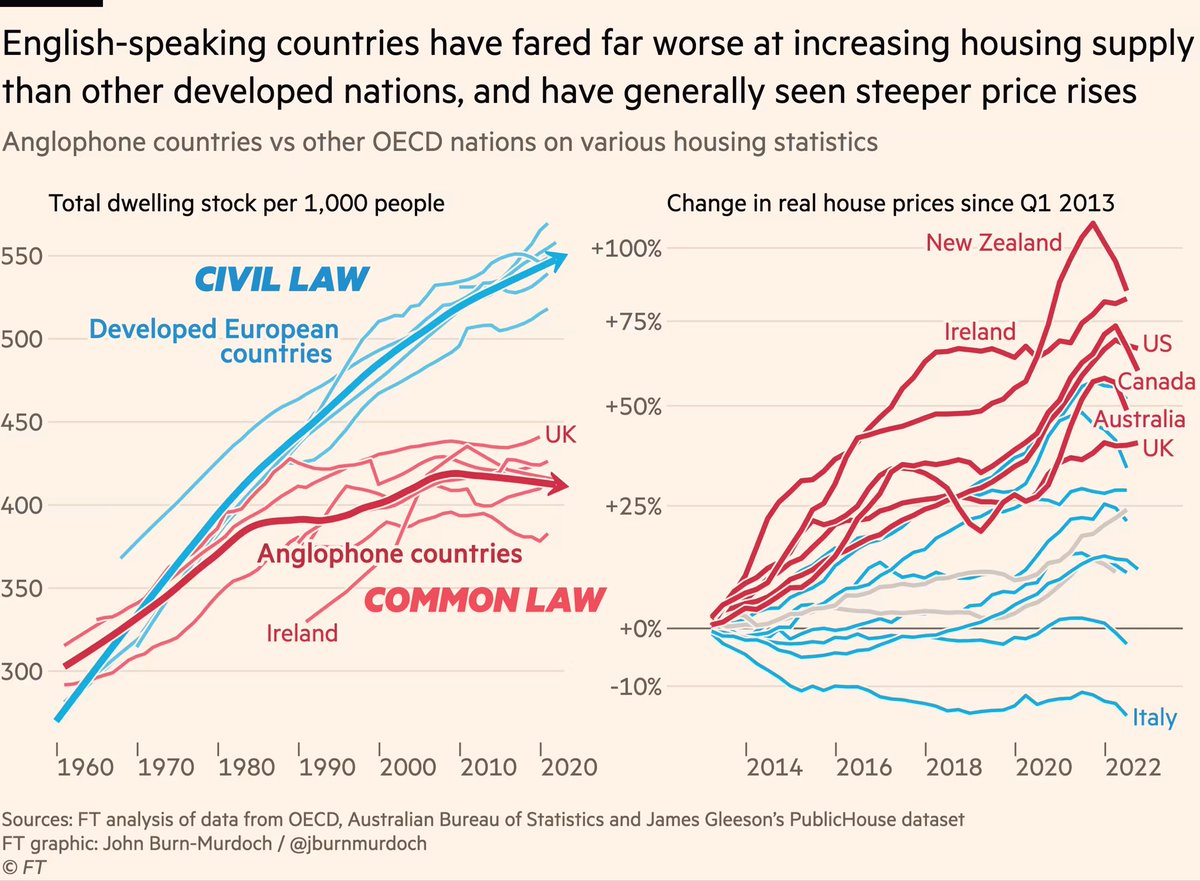
Underrated factor in why English-speaking countries have especially bad housing crises is their common law systems (adversarial and litigious) vs judge-led civil law systems elsewhere.
Makes Anglo planning/permitting systems especially vulnerable to NIMBYs and other objections.
For all the talk of a general fall in births, the drop is overwhelmingly driven by people on the left having fewer kids.
By ceding the topic of family and children to the right, progressives risk ushering in a more conservative world.
There’s something of a paradox at play here.
On the one hand, pro-natalism often implies constraining individual liberty and setting back women’s progress. As such, the left’s aversion to worrying about birth rates is perfectly natural.
But: the consequence of this emerging ideological slant in birth rates is that each successive generation gets nudged rightwards, increasing the likelihood that conservative politicians (who want to constrain individual liberty and set back women’s progress) get elected.
NEW: Is the internet changing our personalities for the worse?
Conscientiousness and extroversion are down, neuroticism up, with young adults leading the charge.
This is a really consequential shift, and there’s a lot going on here, so let’s get into the weeds 🧵
First up, personality analysis can feel vague, and you might well ask why it even matters?
On the first of those, the finding of distinct personality traits is robust. This field of research has been around for decades and holds up pretty well, even across cultures.
On the second, studies consistently find personality shapes life outcomes.
In fact, personality traits — esp conscientiousness and neuroticism — are stronger predictors of career success, divorce and mortality than someone’s socio-economic background or cognitive abilities.
There’s been a lot of discussion lately about rising graduate unemployment.
I dug a little closer and a striking story emerged:
Unemployment is climbing among young graduate *men*, but college-educated young women are generally doing okay.
In fact, young men with a college degree now have the same unemployment rate as young men who didn’t go to college, completely erasing the graduate employment premium.
Whereas a healthy premium remains for young women.
What’s going on?
At first glance, this looks like a case of the growing masses of male computer science graduates being uniquely exposed to the rapid adoption of generative AI in the tech sector, and finding jobs harder to come by than earlier cohorts.