Teaching national security affairs is part of a 10-month professional MA program for US officers of all military services, federal employees, and officers from about 70 countries. /2
On average, we teach 3-4 seminars a year during 26 weeks with about 45 students. The other 26 weeks is devoted to professional contributions, college service, and curriculum refinement. To see what faculty work on, check out usnwc.edu/Faculty-and-De…
/4
And to be literal, some of your colleagues would be senior leaders from the Department of State and intelligence community.
/5
Contact our dept chair, @DerekSReveron or see the announcement for more info.
/6x
• • •
Missing some Tweet in this thread? You can try to
force a refresh

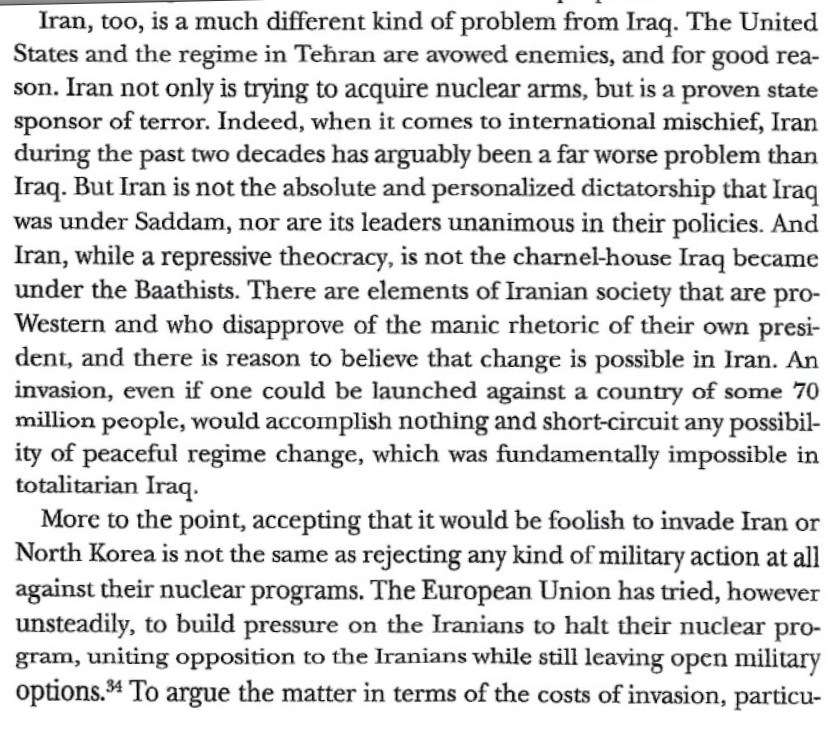
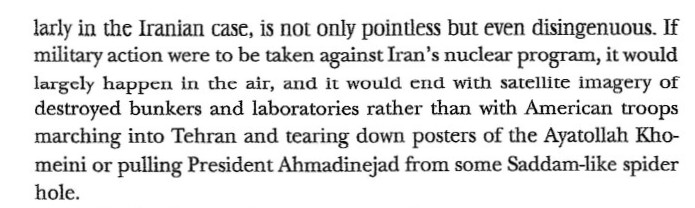
When I was a professor at the totally woke Naval War College, I had fellowship 20 yrs ago with the Carnegie Council on Ethics and International Affairs, which produced this very woke study about going to war in places like, say, Iran. Some of my very woke predictions:
/1
"The United States and the regime in Tehran are avowed enemies, and for good reason. Iran not only is trying to acquire nuclear arms, but is a proven state sponsor of terror."
The same people who had an aneurysm about Lloyd Austin going AWOL for two days are going to defend Hegseth, the most reckless and unqualified SECDEF in history, to the bitter end. /1
You know better than this, @cdrsalamander, and I know that from talking to you. Your comments are in bad faith. But for others who are curious, I'll explain.
NWC's curriculum revision 50 years ago was to prevent another civil-military failure on the level of Vietnam. /1
VADM Turner was explicit about this, and it's been a guiding principle ever since to make sure that NWC graduates are intelligent strategic contributors in the room, instead of pure operators who have no idea how to advise or confer with civilians. /2
Sal is focused on about 30 minutes of a 90 minute seminar out of some 20 meetings. But as I told my students: You need to recognize what drives the arguments of the civilians in the room. If you don't, you'll be the guy sent out for coffee while the grownups talk. /3
The Israelis are calling this a "preemptive" strike. Whether you agree or disagree with this attack, these are not - from what we know tonight - "preemptive" strikes. The Israelis are using that word for a reason. Read on. /1
In tradition and international law, a "preemptive" attack is a spoiling attack, meant to strike an enemy who is *imminently* going to strike you. This is what Israel did in 1967, getting the jump on Arab armies that were about to attack. That's usually permissable. /2
What's going on right now are *preventive* strikes, which are usually NOT permissable in law or tradition. This is striking an enemy far in advance, because you believe time and situation is favorable to you. That, for example, is Japan striking the US in 1941. /3