Branko Milanovic Profile picture
Oct 13, 2020 21 tweets 4 min read Read on X
(Long thread--but worth reading)

I received lots of pushback (including some pretty nasty comments) on my tweets re. the most recent “Nobel Prize” in economics.
I believe that most comments reflect two entirely different views of economics: what it is and what its objectives are.

Rather than engaging in the methodological debate let me help you understand my views by giving examples of what are the big economic issues today--
--which a big prize should acknowledge.

Not so much to give these people money (they are rich anyway) but as a signaling device so that young economists should study topics that matter to people’s wellbeing in the entire world, and not minor issues.
Minor issues already matter to the rich and those who study them will be well rewarded anyway.

I would avoid mentioning topics that I most care about, and when I mention some people by name they would not be the ones with whom I agree 100%.
Ok, let’s start with a huge topic that stares us in face. We have 40 years of the most extraordinary increase in income for the largest number of people ever. Do we know what propelled China’s growth? Perhaps not fully, but there are people who have been writing about it.
They might disagree among themselves, but let’s hear from them. Did, for example, any Chinese *ever* write anything to explain this extraordinary development?
For when we ignore this biggest issue of all, we are --as indeed we seem to be-- in the world of Nobel in literature. At the time when Tolstoy, Joyce and Proust were publishing, the Nobel prize went to… Sully Prudhomme. Yes, Sully Prudhomme (check it out).
Lets go further. Who are the economists who highlighted how privatization might lead to crony capitalism & oligarchy in Russia? Should not they be singled out—as they spoke against the current, and against the popular wisdom at the time and were proven right.
I will mention here Stiglitz (who already got his Nobel, so that's not another nomination) but who was the only person whom I have heard explicitly warning against what happened afterwards. And I know there were others too.
Or people who made us understand how a whole socio-economic system works? The understanding of socialist economics was never the same after Janos Kornai’s works. Isn’t this a big topic: how a system under which 1/3 of mankind lived and worked functions? Not worth highlighting?
The origins of the Industrial Revolution. You might say, who cares? But that’s wrong: if we do not understand how England took off, can we understand how growth that lifts millions of people out of poverty occurs?
There is a fierce debate raging among economic historians on the issue. It is important to bring up the participants. Let us hear them.
Was the growth of capitalism made possible thanks to slavery?Don’t we want to know if capitalism could have emerged w/o servile labor or not? There are many people writing on that. Does welfare of some depend on subjugation of others? What do economists say? Is there a trade-off?
Move to the present. Is CHN destroying Western middle classes? Or it's technology? The topic was opened up by Ricardo 2 centuries ago & still does not have a definitive answer. Do we want to hear what is the current (empirical) thinking? There are insights from US, France, Mexico
How about the monopoly nature of today’s capitalism? Does it reduce everyone’s welfare and make the monopolists control the political process? Does it undermine both competition and democracy? There are many people writing on that too. Shouldn’t they be highlighted?
Or do intellectual property rights condemn to poverty and deaths (today especially) millions in less developed countries? How did IPRs evolve over the past two centuries? What do we gain by enforcing property rights and what do we lose? Isn’t that a big topic?
I could produce at least five similar big topics whose better knowledge may help reduce poverty for many people in both the global South and the global North. And make us understand our present and the past better.
The point I want to make is this: Economics is a social science. Its aim is to make us understand the world and make people’s lives (materially) richer. The work that should be singled out is the work that does that—in a big way.
Quesnay wanted to make France richer. Smith wanted to spread the benefits of the Commercial Revolution to the rest of the world. Ricardo was concerned by the destruction of the engine of growth. Marx wanted to end the class system.
These are the founders of economics. They asked fundamental questions. We should follow them.

• • •

Missing some Tweet in this thread? You can try to force a refresh

 

Keep Current with Branko Milanovic

Branko Milanovic Profile picture

Stay in touch and get notified when new unrolls are available from this author!

Read all threads

This Thread may be Removed Anytime!

PDF

Twitter may remove this content at anytime! Save it as PDF for later use!

Try unrolling a thread yourself!

how to unroll video
  1. Follow @ThreadReaderApp to mention us!

  2. From a Twitter thread mention us with a keyword "unroll"
@threadreaderapp unroll

Practice here first or read more on our help page!

More from @BrankoMilan

Feb 25
Four years ago when the Russia-Ukraine war began I wrote three pieces.
One was on short-term economic prospects of Russia.
Russia’s economic prospects: the short-run
branko2f7.substack.com/p/russias-econ…
Like most economists I was wrong. Russia did weather four years of war and loss/freezing of about $500b in reserves much better than people thought. I believed that within a year Russia would be faced by significant shortages, inflation and price controls. Nothing like that has happened so far. Why: it is a topic for research.
Then I wrote a piece on the novelty of technologically regressive import substitution. The idea there is that Russia being cut off from Western technology (on which its companies overwhelmingly relied) will have to move into replacing Western technology by the less advanced domestic technology ("regressive import substitution"). I think I was right on that.
globalpolicyjournal.com/blog/18/05/202…
Read 6 tweets
Feb 19
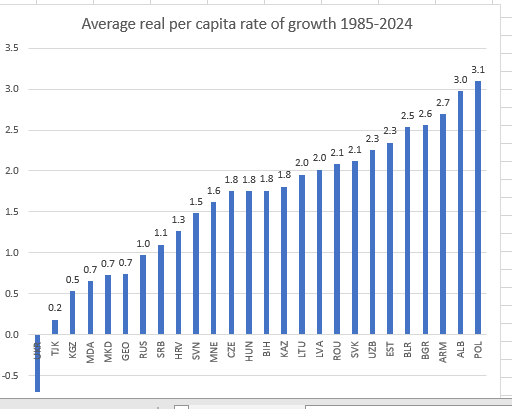
In a dinner conversation w/ a friend, we said, let see in a simplest possible way which countries did well in the transition from socialism to capitalism. I then made this simple calculation: find out the average growth rate of real GDP per capita between 1985 (a "normal" socialist year) and 2024 (the latest available year for all). Here is the graph, with countries ranked in increasing order.Image
Not surprisingly, the best is Poland which in some 40 years tripled its GDP per capita (average growth 3.1%). Not surprisingly too, Ukraine is the only country with a decline in real income.
The success cases are also Albania (3%), Armenia (2.7%), Estonia, Bulgaria, Belarus (2.5-2.6%)
Slovakia did better than the Czech Republic.
All Yugoslav republics are below 2% per annum, but the best is, interestingly, Bosnia, followed by Montenegro.
Russia's 40-year growth record is a disappointing 1 percent per annum per capita. It is worse than under Brezhnev's "stagnation".
Read 4 tweets
Feb 12
Last night I could not sleep so I created a taxonomy of people who work on inequality/redistribution. For each of these groups I have names of economists but it could be too controversial. So I decided to stay with the taxonomy only.
Group A are "socialists", or people who want to change power & distribution within the key locus, locus of production. Some want to give decision-making power to workers only; others want to constraint the power of shareholders, to make workers more important in managing companies thereby changing distribution "internally". They are the most radical b/c they change the nature of capitalism in production.
Group B focuses on pre-redistribution. They leave capitalist relations of production formally the same, but they want to increase the minimum wage, empower trade unions, improve health insurance provided by companies, limit duration of work. They are meliorists like Fabians.
Read 7 tweets
Jan 18
It is Weekend No. 7 and (as I have been doing for the past six weeks), I will now review Chapter 7 of "Visions of Inequality". It has become the most controversial part of the book b/c of its strong critique of lack of concern of neoclassical economics with income distribution.
It asks the Q: why were neoclassicists uninterested in income distribution? It provides three reasons: endogenous evolution of economics away from class structure to individual "agents" (that are all fundamentally identical); political reasons (the Cold War) and funding of the research by the rich.
It is important to realize (and very few people have) that the chapter opens up with a review of inequality studies in systems of state ownership of the means of production and makes an analogy between the denial of class structure in these societies and under capitalism; and thus why both were uninterested in studying income distribution.
No concern with class => no concern with inequality.
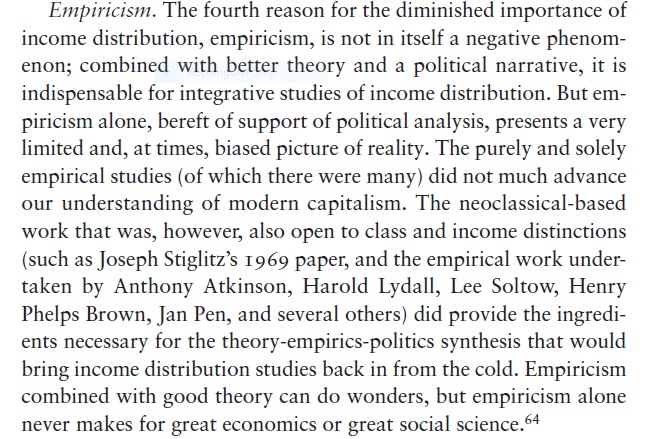
The most that neoclassical economics ever did in inequality studies was mere empiricism. Nothing else. No integrative study of inequality, no theories of how inequality is determined nor how it would evolve. It was in true sense what Marx called "vulgar political economy". One such example is Alan Blinder's "Theories of income distribution".Image
Read 5 tweets
Dec 19, 2025
The list (in no particular order) of the books that I liked the most and read in 2025, with their reviews:
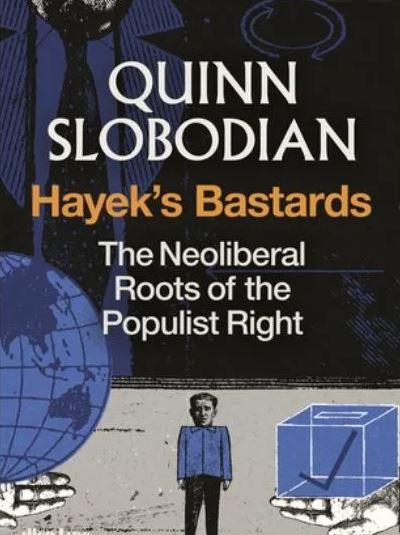
Quinn Slobodian, Hayek's Bastards
Gold, volk and IQs
branko2f7.substack.com/p/gold-volk-an…Image
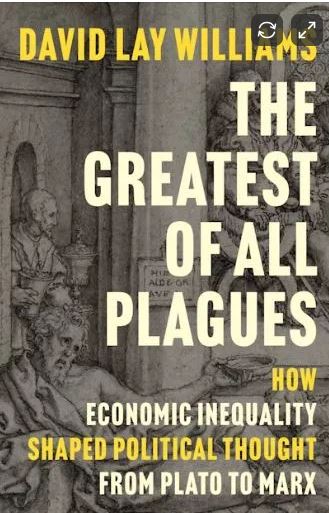
David Lay Williams, “The Greatest of All Plagues”
Poison for the soul
branko2f7.substack.com/p/poison-for-t…Image
Arnaud Orain, "Le Monde Confisqué"
Capitalism of finitude: pessimism and bellicosity
branko2f7.substack.com/p/capitalism-o…Image
Read 4 tweets
Nov 22, 2025
In Chapter II of "The Great Global Transformation" I discuss opinions of key authors on whether trade (and thus globalization) lead to peace or war. I begin with Montesquieu who is famous for his doux commerce. Then continue with Smith whose views are much more complex and definitely worth reading. Then Schumpeter who in his early work believed that capitalism and trade generate peace in order to change later
when he saw monopoly capitalism with its predatory behavior and struggle for markets as a more efficient, "normal", capitalism. And I end with Hobson, Rosa Luxembourg and Lenin who regarded competition for foreign markets & raw materias as leading to wars.
So we have an entire gamut of theories, from those who see trade as promoting peace among nations to the opposite.
It is in that context that World War I becomes important. It happened in the midst of the greatest trade and capital interdependence ever (up to that date) which, according to the pro-peace view of trade, was the least war-enabling condition possible.
Hence, a very fundamental problem for pro-peace view of trade.
Read 4 tweets

Did Thread Reader help you today?

Support us! We are indie developers!


This site is made by just two indie developers on a laptop doing marketing, support and development! Read more about the story.

Become a Premium Member ($3/month or $30/year) and get exclusive features!

Become Premium

Don't want to be a Premium member but still want to support us?

Make a small donation by buying us coffee ($5) or help with server cost ($10)

Donate via Paypal

Or Donate anonymously using crypto!

Ethereum

0xfe58350B80634f60Fa6Dc149a72b4DFbc17D341E copy

Bitcoin

3ATGMxNzCUFzxpMCHL5sWSt4DVtS8UqXpi copy

Thank you for your support!

Follow Us!

:(