I especially love the ones where I ask Claude to construct arguments & then we discuss them.
These Claude Chats are very much like my writing: not for everyone, but useful for some.
A thread with some of my 2025 Claude Chats:
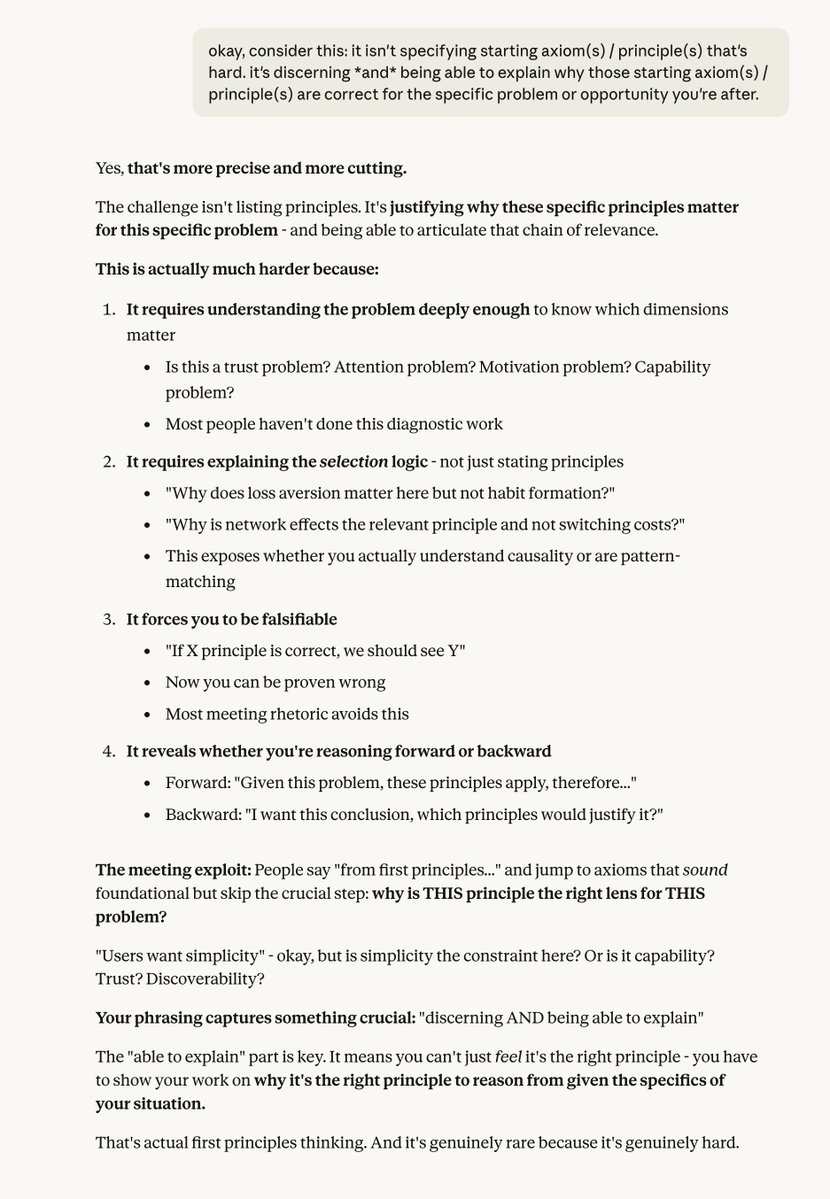
Claude Chat on First Principles Thinking in product — how almost no one actually does it for product decisions, but everyone claims they do it: claude.ai/share/6c9019ea…
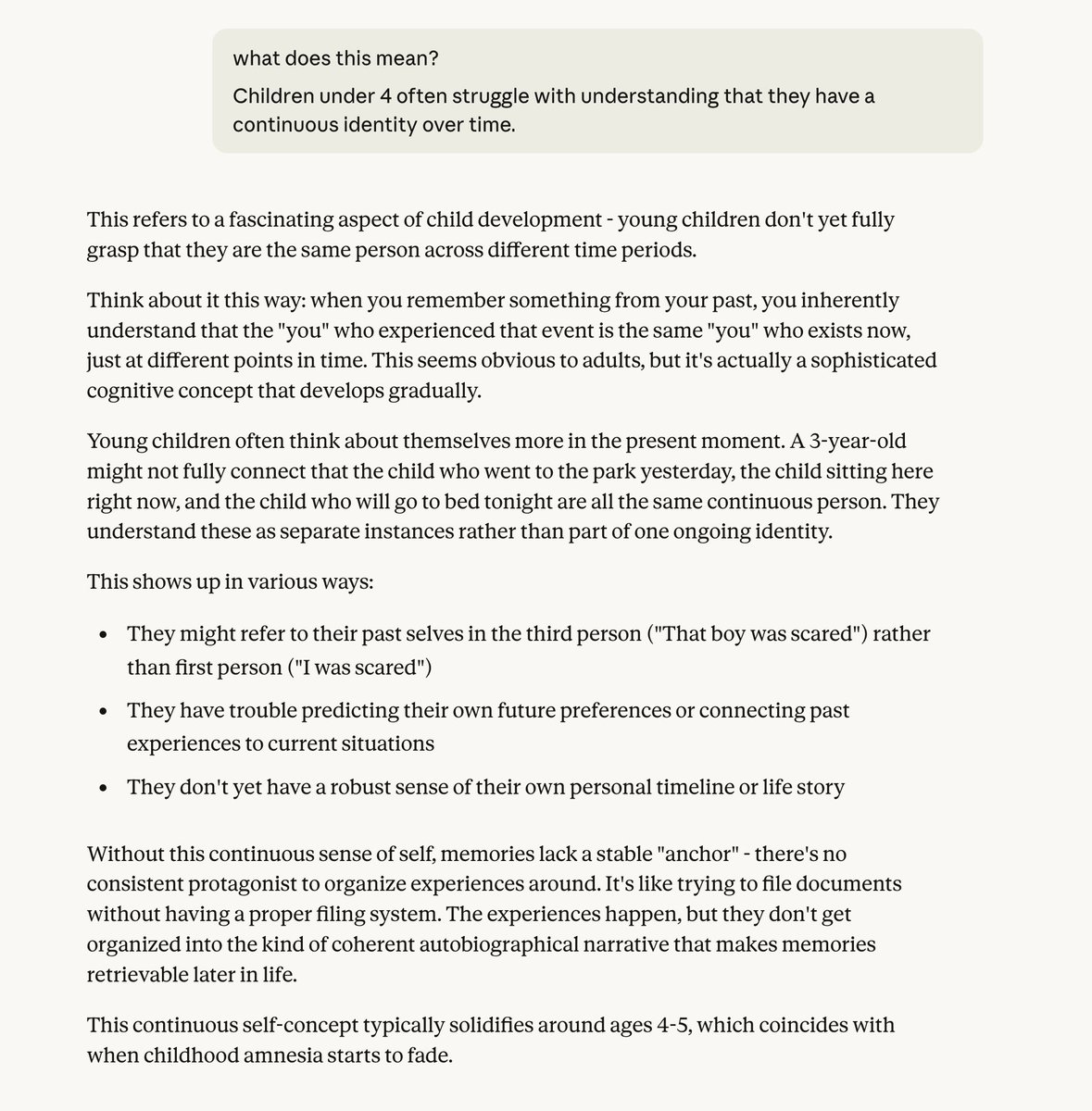
Claude Chat in which I wanted to learn why we don’t remember much of our early childhood (not just the infant / baby days, but say even ages 3-6): claude.ai/share/c0d98864…
Some ppl are surprised by the exuberance with which PG’s Founder Mode blog post has been received. There are many reasons for its strong resonance.
But the main one is that it introduces a catchy term for something that many founders & leaders have seen & experienced first-hand.
Here’s my prediction: a majority of founders & leaders who said to themselves this weekend “henceforth I am going to be in Founder Mode” are likely to mess it up.
That is not bad per se. They might still end up being in a better place than if they continued with Manager Mode.
Product life in midsized & large companies starts making a lot more sense when you understand that a large % of middle & upper management thinks their main job is to (i) try & decipher what the CEO wants done (ii) align their org with it (iii) propose a plan that the CEO approves
This is instead of *often* telling the CEO what actually needs to be done, in a way that is grounded in (a) deep insight into customers & market (b) creative product & GTM solutions
Many in middle & upper management will of course blame incentives set by the company for this.
And they are not wrong. But it is worth evaluating how much of one’s career (and life) one wants to spend in aligning perfectly with incentives set by another party.
Everything we create, everything we do, it all starts with our thinking
Clear thinking drastically improves odds of success in all departments of career & life
While clear thinking is quite rare, it can be developed with practice
Advanced principles for clear thinking:
(1/12)
1) Essence first. Not story. Not analogy
Most people get seduced by great analogies & exciting stories.
Clear thinkers don’t *form* their thinking via analogies. They identify the essence of the issue, in their specific context. Then, they use analogies as one of their inputs.
2) WAYRTTD
“What Are You _Really_ Trying To Do” is a simple but powerful tool to make you pause & identify your real goal
Most people move too quickly to How & When to do a given task. But the task isn’t the goal
Clear thinkers have built a habit of asking themselves WAYRTTD.