๐๐๐ค๐๐๐๐ ๐ข๐ฌ ๐ซ๐ฎ๐ง๐ง๐ข๐ง๐ ๐ ๐ฉ๐ซ๐จ๐ญ๐๐๐ญ๐ข๐จ๐ง ๐ซ๐๐๐ค๐๐ญ: withholding Covid-19 vaccinations from Wake County, NC doctors unless they agree to sign contracts to send business to WakeMed.
Of course, Hospital corporations are not, by their nature, either beneficent or corrupt. Fundamentally, it's not WakeMed that is corrupt, it's the people who run it: wakemed.org/about-us/leadeโฆ
1/4. Rising CO2 levels improve plants' water use efficiency and drought resilience, through reduced stomatal conductance. Simply put, plants need to process less air to get the carbon they need for growth, and thus they lose less water to transpiration. x.com/ncdave4life/stโฆ
That's one of the reasons that catastrophic famines no longer happen. For all of of human history, until recently, famine was one of the great scourges of mankind: the "Third Horseman of the Apocalypse." But widespread famines are fading from living memory, and rising atmospheric CO2 concentration is one of the reasons for that.
That's a very, very Big Deal. For comparison:
โ COVID-19 killed about 0.1% of the world's population
โ The catastrophic 1918 flu pandemic killed about 2%
โ WWII killed 2.7% of the world's population
โ But the nearly-worldwide drought and famine of 1876-78 killed about 3.7% of the world's population.
@Panta_Rhei06 @simonmaechling --
2/4. Improved water use efficiency and drought resilience are especially beneficial in arid regions, like the Sahel, which is one of the reasons that region of Africa is "greening" even faster than most other places.
3/4. I asked ChatGPT about that benefit of CO2 emissions and rising CO2 levels:
"With reference to the agronomy literature, quantify how elevated CO2 helps plants use water more efficiently, and increases crops' drought resilience, by reducing stomatal conductance and water loss through transpiration."
ChatGPT replied with a very good answer:
In agronomy, the effects of elevated CO2 on plant water use efficiency and drought resilience are extensively studied. One of the key mechanisms through which elevated CO2 levels improve water use efficiency is by reducing stomatal conductance and, consequently, water loss through transpiration.
Stomata are small pores on the surface of plant leaves that regulate gas exchange, including the uptake of CO2 for photosynthesis and the release of water vapor through transpiration. When CO2 levels are elevated, plants can maintain the same or higher rate of photosynthesis while reducing stomatal conductance. This reduction in stomatal conductance leads to a decrease in water loss through transpiration without significantly affecting CO2 uptake, resulting in improved water use efficiency.
Several studies have quantified the effect of elevated CO2 on stomatal conductance and transpiration. For example, a meta-analysis published in 2013 (Kimball et al., 2013) found that under elevated CO2 levels, stomatal conductance decreased by an average of 22%, while transpiration decreased by only 17%. This indicates that plants under elevated CO2 levels were able to reduce water loss more efficiently than they reduced CO2 uptake, leading to an overall improvement in water use efficiency.
Improvements in water use efficiency due to elevated CO2 levels can increase plants' drought resilience by allowing them to maintain adequate hydration during periods of water scarcity. This can be particularly beneficial in arid and semi-arid regions where water availability is limited.
Overall, the literature suggests that elevated CO2 levels can improve water use efficiency in plants by reducing stomatal conductance and water loss through transpiration, which can enhance their resilience to drought conditions.
1/6ใ Marcus, please tell me that you're not fooled by a fake "study" of a three-day-old event, from a climate industry propaganda outlet. Do you know how long real studies take?
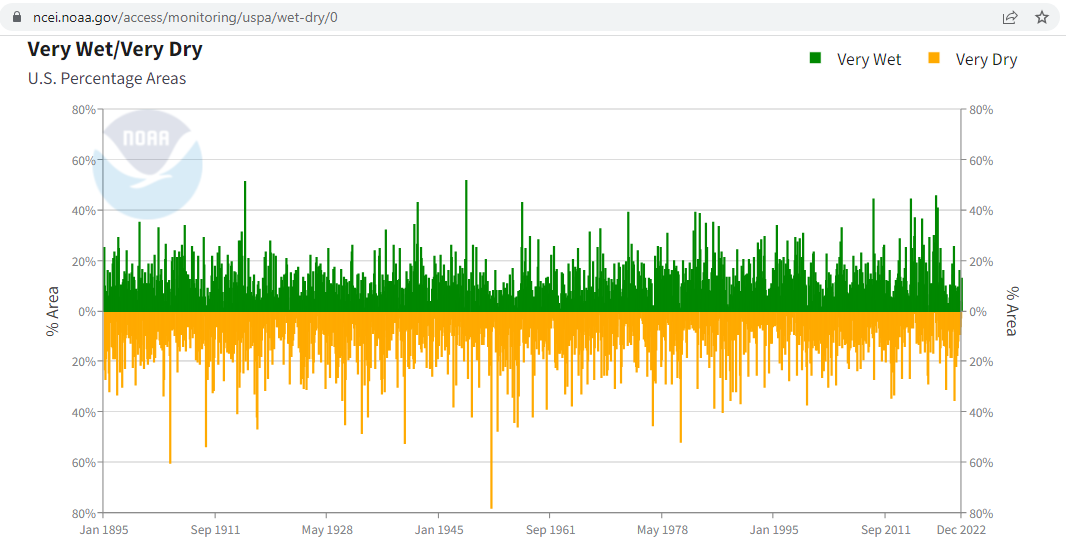
1/8. Gov. Newsom's press release falsely blames "a hotter, drier world." In fact, the world is warming only very slightly & slowly, and it hasn't gotten at all drier. Here're the facts: sealevel.info/learnmore.htmlโฆ
As you can see from the graph, the fraction of the globe in drought has decreased slightly, not increased.
Oh, and BTW, NCA4 (circa 2018) estimated that global average temperatures have risen only 1.14 ยฑ0.13ยฐC since the 1800s, and the warming is disproportionately at chilly high latitudes.
2/8. Also, higher CO2 levels greatly reduce drought impacts, by making plants more drought-resistant and water-efficient, through reduced stomatal conductance. That's very beneficial in arid regions, like the Sahel & much of California. Here's an article. web.archive.org/web/2017061915โฆ
That's is one of the reasons that region of Africa is "greening" even faster than most other places.
@NewScientist reported the "remarkable environmental turnaround," including a โquite spectacular regeneration of vegetation,โ and "a 70 per cent increase in yields of local cereals such as sorghum and millet in one province in recent years."
In fact, Gleick eventually admitted the identity theft, and disseminating the forgery & the stolen documents (though only after he was caught & publicly identified).
3/8ใGleick never admitted being the forger, but there can be no doubt of that, either.
It was the incongruous appearance of his name in the document, with the strangely flattering description of him as a "high-profile climate scientist," in a document which said NOTHING positive about ANY other climate activists, which first drew Steve Mosher's attention to Gleick. But it was the idiosyncrasies of Gleick's own writing style, found in the forged document, which Mosher mostly discussed, when explaining why he believed Gleick wrote it.
Note that that was all BEFORE Gleick confessed to being the person who had impersonated the Heartland Board Member to steal the other documents. THAT iced it: there's no question that Gleick was the forger.
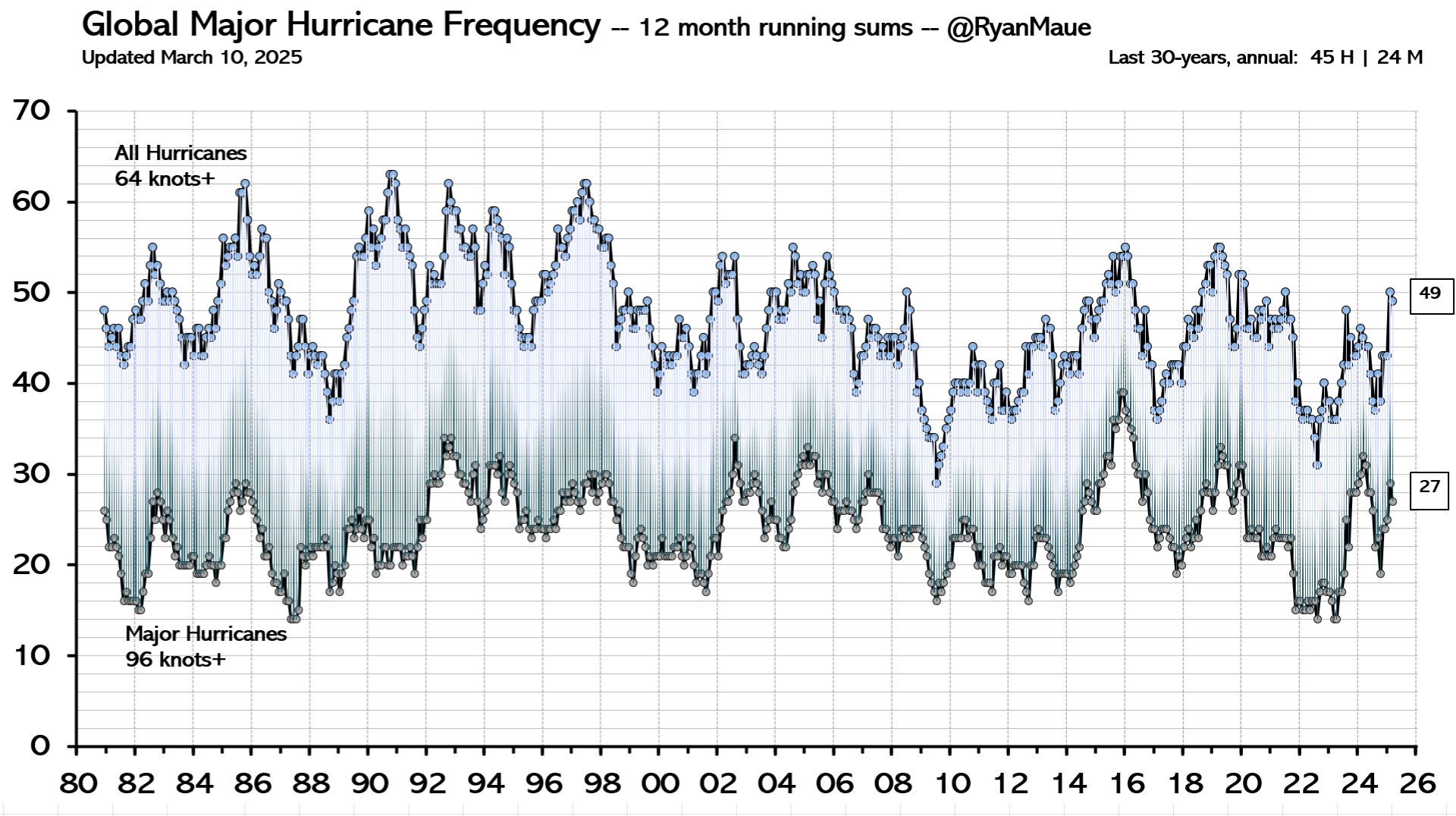
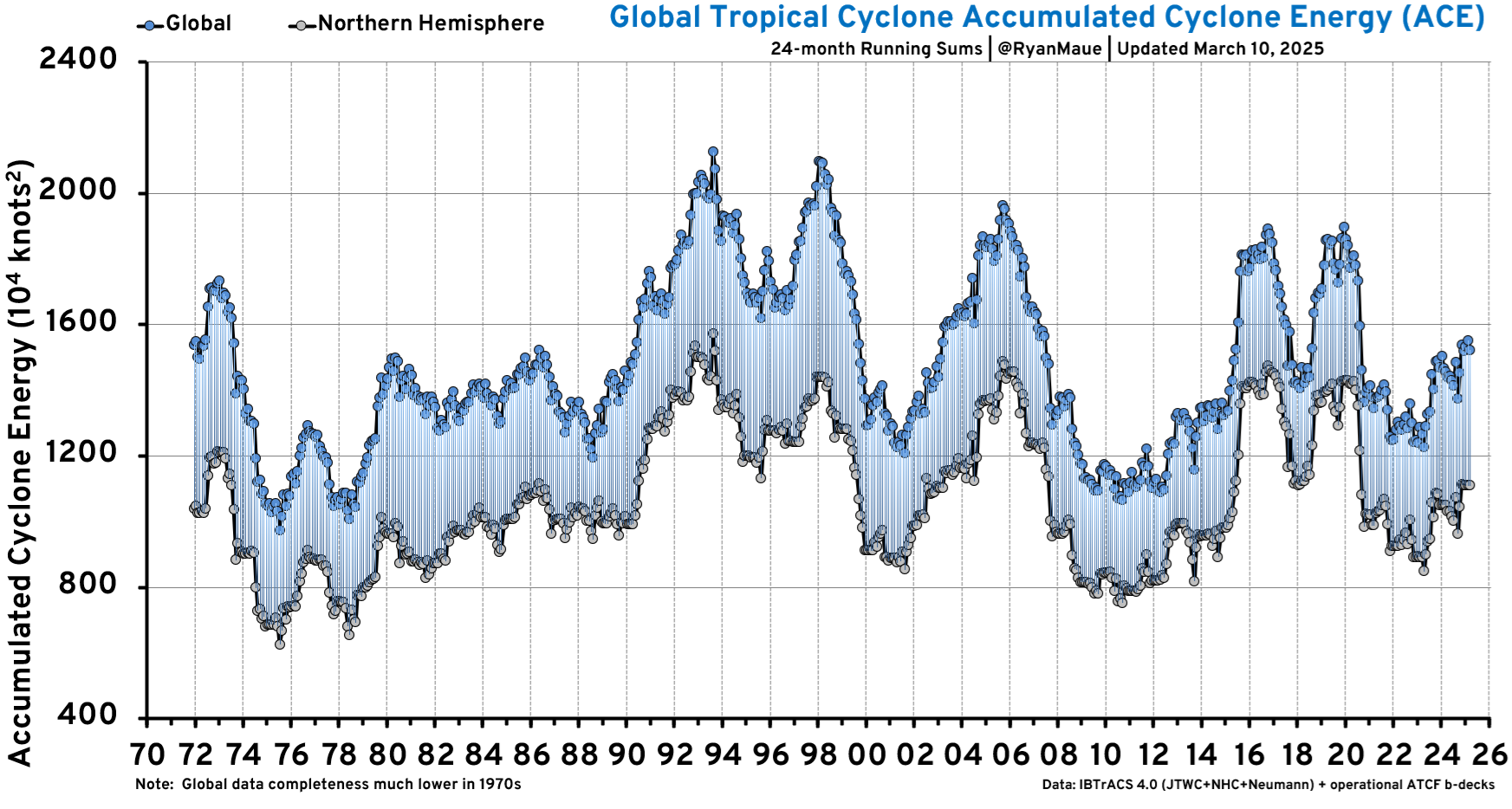
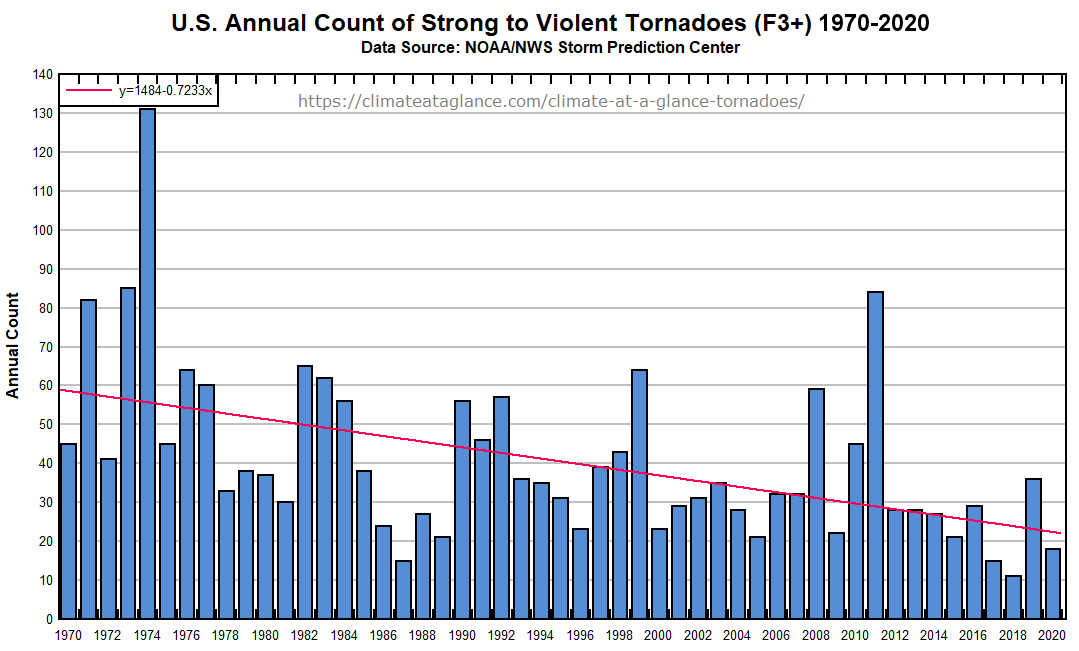
1/8. The IPCC authors expect โa worsening trend. No such trend is actually detectable, so far.
In fact, here's a paper about the downward โtrend in hurricane destructiveness, tho I suspect the decrease might be a fluctuation rather than a durable trend. nature.com/articles/ncommโฆ
2/8. The IPCC authors are sly. They know hurricanes & other tropical cyclones aren't worse, but they dodge & weave to avoid admitting it. Here's a tricky quote from AR6:
"It is likely that the global proportion of Category 3โ5 tropical cyclone instances has increased over the past four decades."