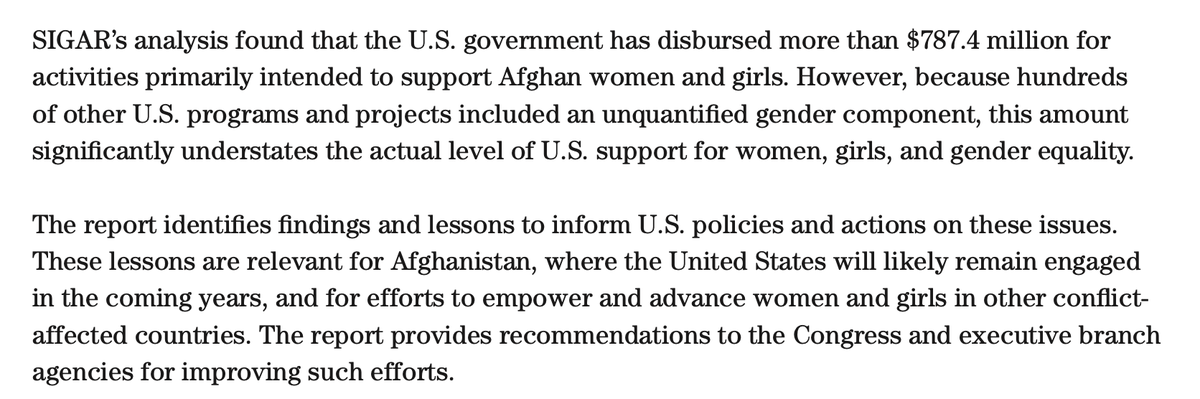
New report from the US gov on gender equality in Afghanistan. What are we still doing in Afghanistan, you ask? US has spent $787 million on gender programs, not including gender included in other programs. Hope to challenge stereotypes and patriarchy 1/n usip.org/sites/default/… 

Report begins with a map, gives you lay of the land, so you know all the provinces you have to control in order to overthrow the patriarchy. 2/n

"There is no Dari or Pashto word for the terms 'gender' and 'gender equality.'...Afghans often simply use the English word without any translation."
Obviously, the US will need to help change the language, maybe introduce new pronouns to accomplish its mission. 3/n
Obviously, the US will need to help change the language, maybe introduce new pronouns to accomplish its mission. 3/n

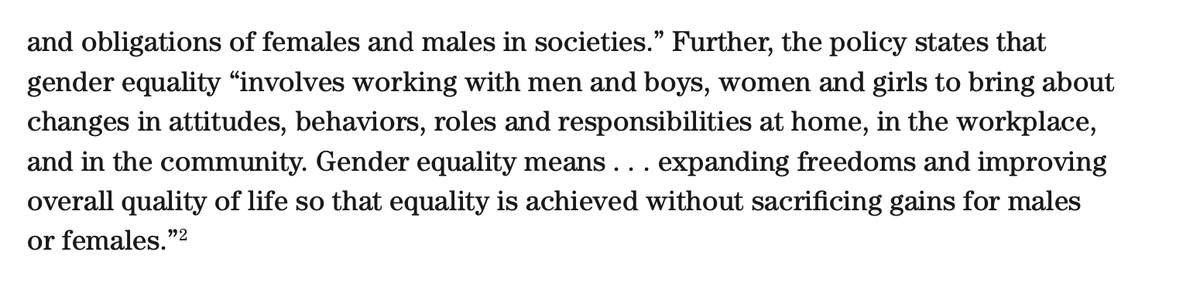
US working to "bring about changes in attitudes, behaviors, roles and responsibilities at home, in the workplace, and in the community." Are Pashto men doing enough housework? How could American forces leave without knowing for sure? 4/n

US places itself in a long historical tradition of fighting for feminism in Afghanistan. The Soviets tried it, which led to rebellions and violent resistance. US hopes to take Afghanistan back to the good old days of Soviet occupation. 5/n


US in Afghanistan has adopted a policy of "gender mainstreaming, in which the design and implementation of development programs are required to be sensitive to gender norms and disparities." Imagine this in previous wars, FDR thinking about the disparate impact of D-Day. 6/n

US created quotas for women in parliament. Now, they find "pervasive sexual harassment against female candidates, where male election staff and other stakeholders ask female candidates for sexual favors in return for support." 7/n

"Women parliamentarians have limited connection with their constituencies, and some have never even been to the provinces they represent." US worried that women parliamentarians vote on ethnic or tribal basis, American soldiers must build female solidarity to win war. 8/n

US interviews Afghan parliamentarians on gender relations. Hears complaints that women are not given as much time to speak in meetings. Ministers stand up to greet men, but not women. Again, this is a report by the American government on a war it's been fighting for 20 years. 9/n

Number of women voters has been going down across the course of the war, both in total and as a percentage of the vote. 10/n

US forces rural Afghans to have gender balanced councils to get money for infrastructure projects. Still, "men regularly interfere in women’s meaningful participation by blocking information, controlling project funds, and ignoring their input." 11/n

Some US programs involve enlisting Afghan men in the the cause. They gave "trainings to 1,105 Afghan men in which they could discuss their own gender roles and examine male attitudes that are harmful to women." One initiative is called the "National Masculinity Alliance." 12/n


To integrate women into the Afghan army, the US sent "gender advisers," built :women’s training centers and schools, housing, child care centers, gyms, dining facilities, and bathrooms." 13/n


US mission to integrate women into the Afghan military hindered by lack of sexual harassment policy in the ministry of defense or ministry of interior.
US set goal of 10% women in army, only reached 1%. 14/n
US set goal of 10% women in army, only reached 1%. 14/n


US report mentions that the Taliban has never sent a woman to the peace negotiations. When a woman from the Afghan gov delegation recommended the Taliban send a woman to one of the negotiations, "they laughed immediately." 15/n


A leader of a feminist organization gushes about how when she met the Taliban she was teasing them and they "behaved so nicely." 16/n

The issue of women has become the fundamental disagreement to ending the war. So much so that “Whenever you talk about women’s rights, you get tagged as a person who is against the peace process." Report warns this is a troubling narrative that must not take hold. 17/n

Flashback to the Afghan papers. USAID official talks about how US made gender central to their policy and it caused the people to revolt. 18/n
https://twitter.com/RichardHanania/status/1204538220299423744
• • •
Missing some Tweet in this thread? You can try to
force a refresh