On this day in 1948, Koreans on Jeju Island organized an armed rebellion for a unified, independent country, free of US colonization. In response, the US military government & ROK massacred 30,000-60,000 people until 1954.
TW: Police brutality, torture, rape mention
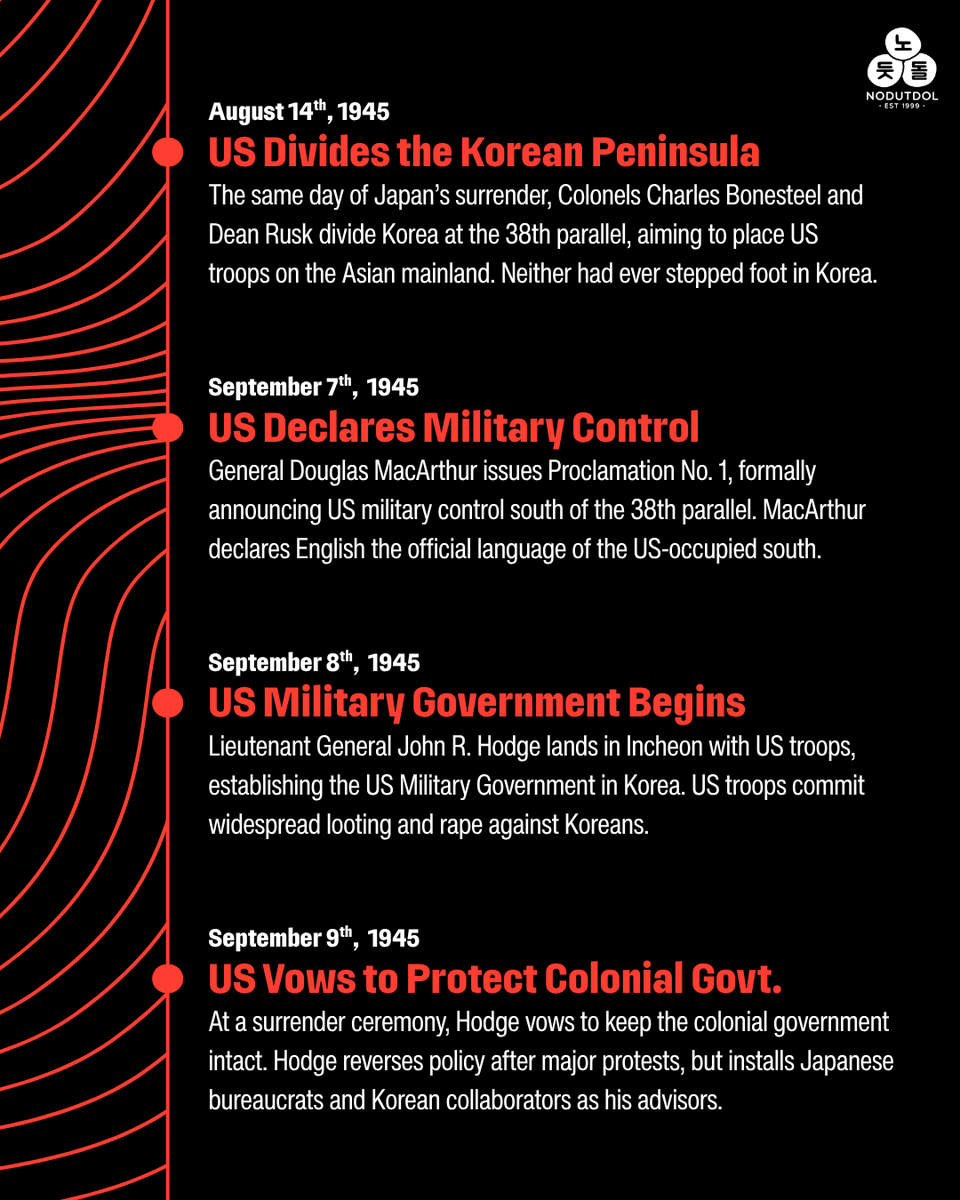
After WW2, the US military ruled southern Korea directly. Self-governing People's Committees were mostly disbanded, except in Jeju. In 1917 police killed 6 independence protestors, triggering a general strike on the island. In response, the US sent in police and fascist partisans
The Jeju Uprising was organized on April 3, 1948 after the US announced unpopular elections to create an "independent" southern government. 12 out of 24 police stations were attacked simultaneously.
The US & ROK responded with total war, killing 10-20% of Jeju's people by 1954.
The Jeju Massacre defies the official US narrative. The US didn't bring democracy to Korea, only division and death.
Jeju was just one of many atrocities committed by the US and its anticommunist allies in Korea and the Cold War Pacific. Yet this history is rarely acknowledged.
US military occupation in Korea and Jeju continues to this day. From 2011-2016, Jeju islanders fought to stop a new ROK naval base from being built. A new airport that will double as an air base is now also being constructed. scmp.com/news/asia/east…
As conversations about anti-Asian racism enters the mainstream, we must expand the scope of the discussion beyond US borders, & show the links between domestic white supremacy and imperialism. Contemporary anti-Asian racism is the legacy of a century of genocidal US wars in Asia.
• • •
Missing some Tweet in this thread? You can try to
force a refresh

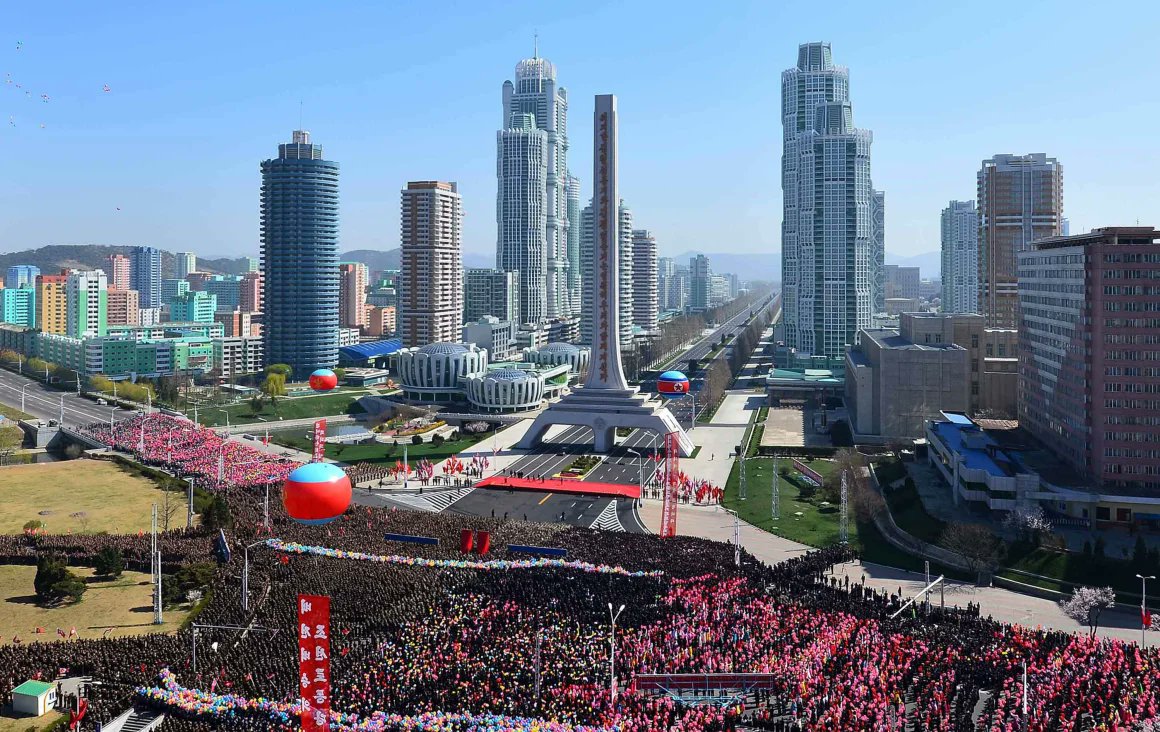
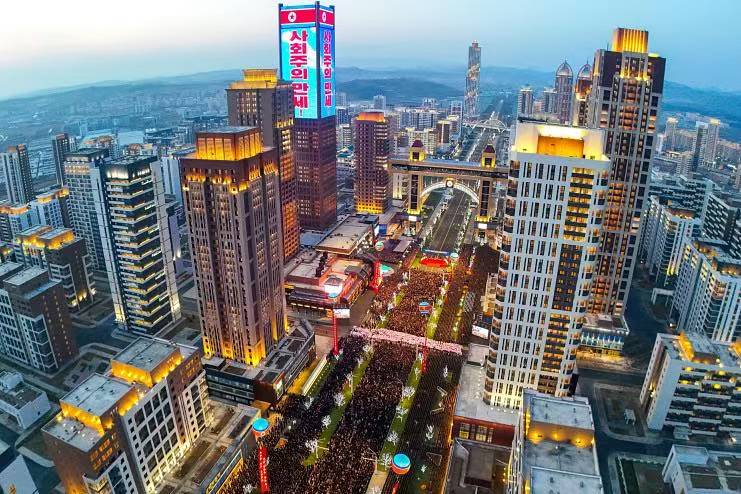
North Korea is garnering international attention for its recent construction boom. Here's a closer look at some of the recently unveiled projects that show the country’s priorities. 1/9
The Hwaseong District in Pyongyang was farmland prior to the beginning of construction in 2022. The project set out to build 50,000 new apartment units over five years, and has now exceeded this goal. Like all housing under North Korean law, every new apartment unit is free. 2/9
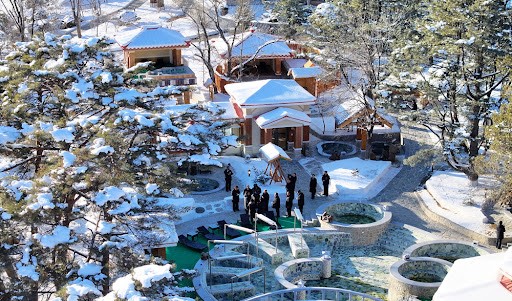
The Onpo Resort is a facility offering spas, treatment, and the largest hot springs complex in North Korea to date. The resort reflects North Korea’s Constitution, which guarantees “the right to relaxation” including holidays, paid leave, and health resorts at State expense. 3/9
June 25 marks the "official" start of the Korean War 75 years ago.
In reality, the war began as soon as US troops arrived in Korea in 1945 with the intent to crush our people's anti-imperialist, democratic revolution
Years before 1950, a de facto civil war broke out in US-occupied southern Korea, as progressive forces resisted the imperialist attempt to split apart our homeland and prevent the emergence of socialism and national sovereignty.
Well before 1950, a number of skirmishes along the 38th parallel, the majority initiated by South Korean aggression, had turned the peninsula into a tinderbox.
After June 25, 1950, the first phase of the war was marked by brutal US and South Kroean massacres—in the south.
We do not mourn Jimmy Carter. Today we mourn the 2,000 martyrs of Gwangju, who were slaughtered by the South Korean military regime with the support and knowledge of the Carter Administration.
On May 17, 1980, Col. Chun Doo Hwan of South Korea declared martial law in the face of a rising movement for democracy led by students and workers.
In the city of Gwangju, students rose up in protest. Soldiers at the scene killed a deaf man, Kim Gyeong Cheol—sparking a rebellion
The Gwangju Uprising seized control of the city for 9 days. The people of the city formed committees to govern themselves, organizing food distribution, medical aid, self-defense, and more. Many hoped the US would intervene on their behalf.
On New Year’s Eve, global media reported that Kim Jong Un no longer supports Korean reunification. But this is not true.
A thread 🧵
Kim Jong Un recently announced major changes in north Korea’s stance towards reunification. This marks a huge breakdown in inter-Korean relations after years of US, south Korean, and Japanese aggression.
However, north Korea has NOT abandoned reunification.
In a speech made on Dec 31 at the 9th Plenum of the Central Committee of the Workers Party of Korea, Kim Jong Un rejected south Korea’s formula for “reunification by absorption”— the idea south Korea should absorb the north, overthrow its govt, and abolish its socialist system.
As anti-imperialist Koreans, we stand unequivocally with Palestine, its people and its armed resistance against the Zionist occupation. This is neither a two-sided conflict nor a war: it is an occupation and a genocide.
🧵
As Koreans whose homeland is divided, we know imperialism is our common enemy. Following our liberation from Japanese colonialism and the beginning of independent socialist construction in Korea, the US split our country in two and indiscriminately bombed and killed our people.
There is a reason the Nakba and the division of Korea coincided in 1948, backed by the same imperialist interests. Both Korea and Palestine are geographically strategic sites for the US empire’s grip across the world.
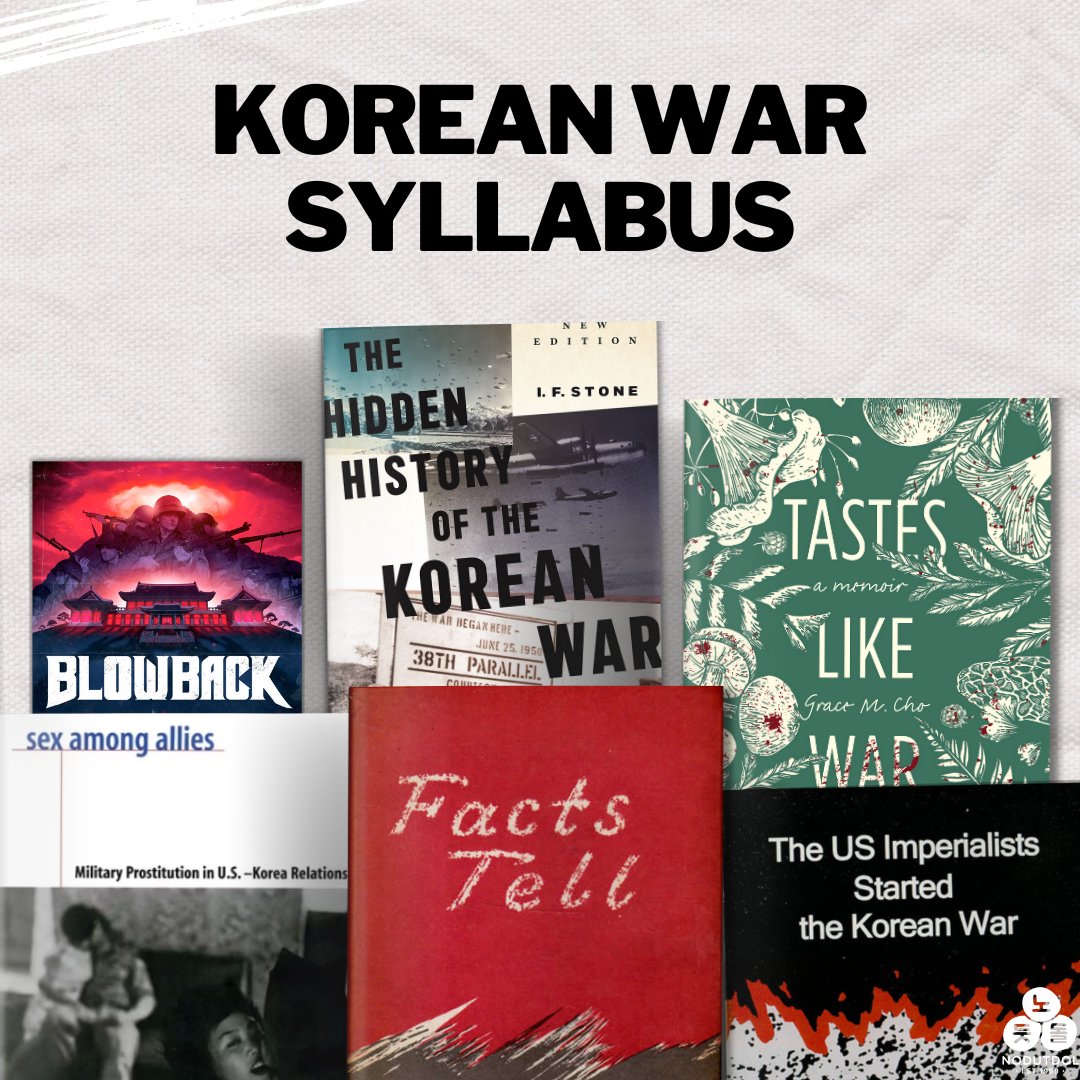
Today marks the 73rd anniversary of the “start” of the Korean War. We've curated a list of educational resources that the US & south Korean governments desperately tried to erase from our history. In the face of blatant US propaganda, it is up to us to learn the real history 🧵
The Hidden History of the Korean War by I.F. Stone
In this new book, I.F. Stone challenges the dominant historical narrative about the Korean War and exposes the US' deliberate attempts to prolong the war.
Blowback, Season 3
Brendan James and Noah Kulwin expose US involvement in the Korean War using primary sources, vivid storytelling, and sharp historical analysis. The season also features interviews with Suzy Kim, Tim Shorrock, and Bruce Cummings.