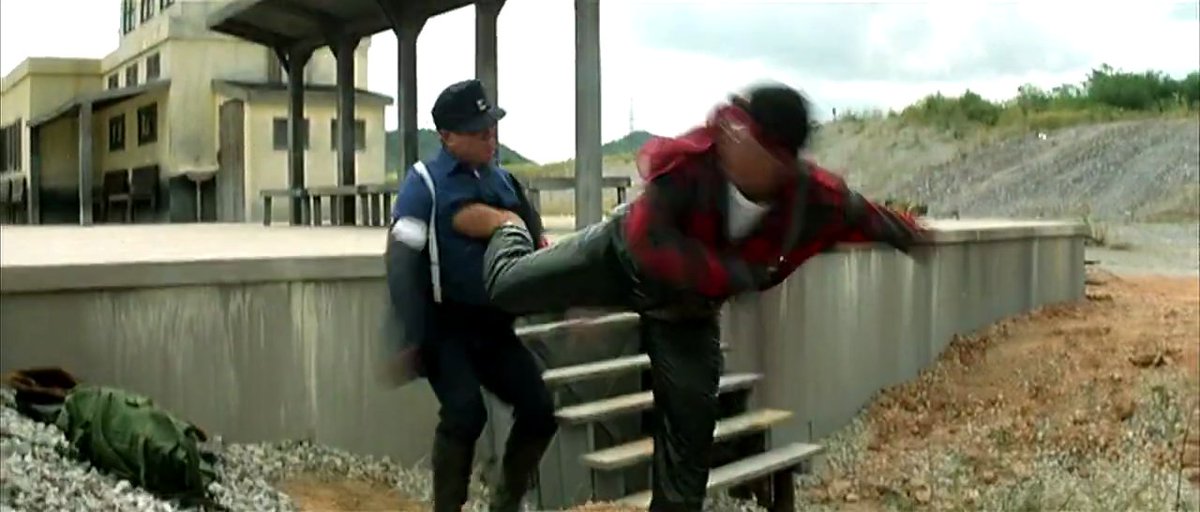
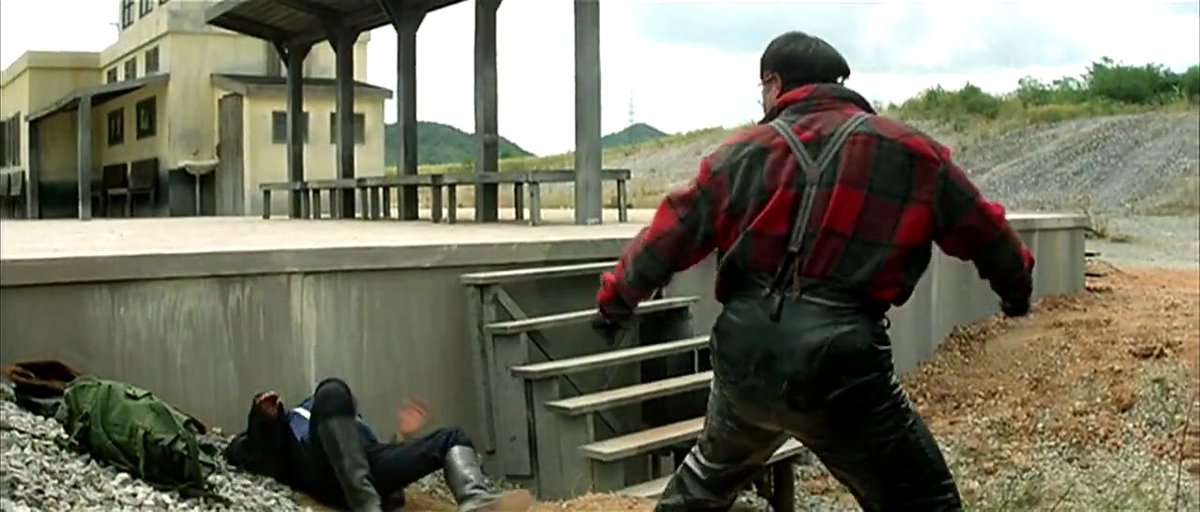
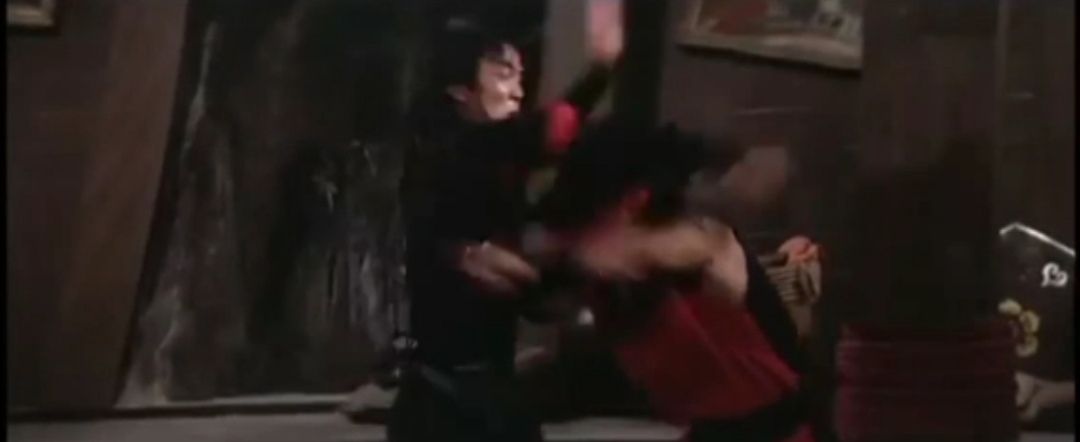
What makes Hong Kong action movies so compelling? Why do we feel supercharged after watching them? To me, it's a combination of musical editing, impact-focused images, and the constant renewal of camera set-ups. Let's take a short example from YES, MADAM! (Corey Yuen, 1985):
The visual phrase dedicated to Cynthia Rothrock's fight ends with her impressive back kick to Dick Wei's face. With Corey Yuen, when a visual phrase ends, contrast is used to kick-start the following one. We left Cynthia on a horizontal slo-mo shot, meaning we jump to Michelle... 


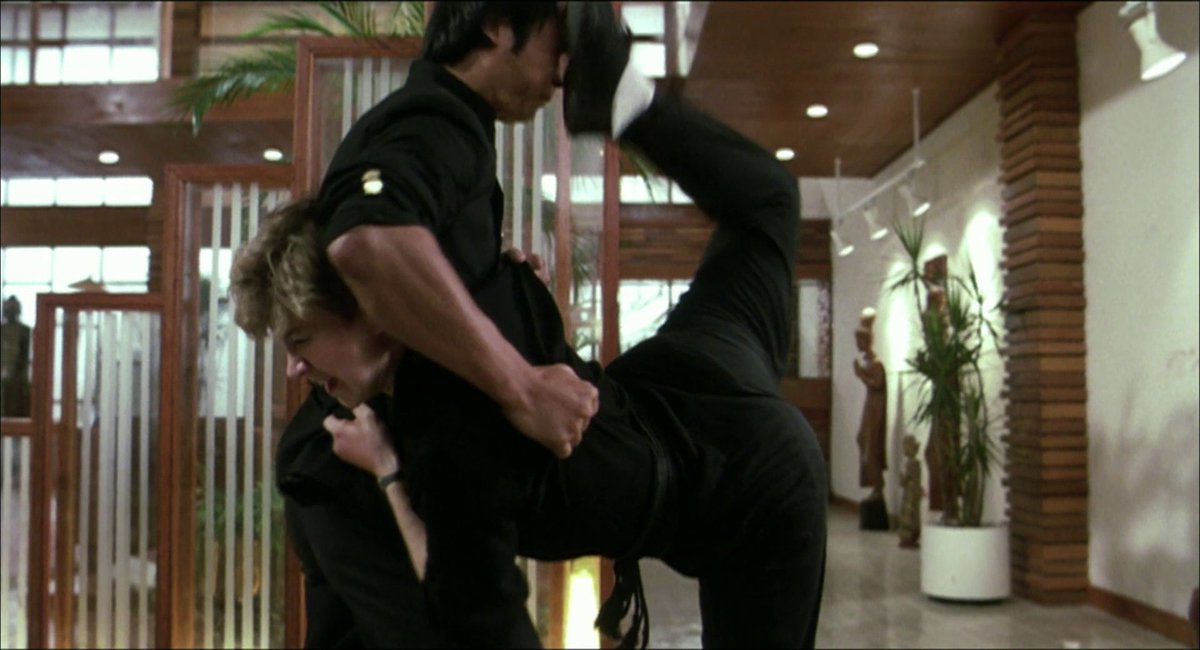

Yeoh's fight with a standard-speed, low-angle shot. The images contrast, but the movement is continuous: the last Cynthia frame and the first Michelle frame are similarly composed in terms of blocking, and the momentum is never lost. This creates a sense of continuity through...
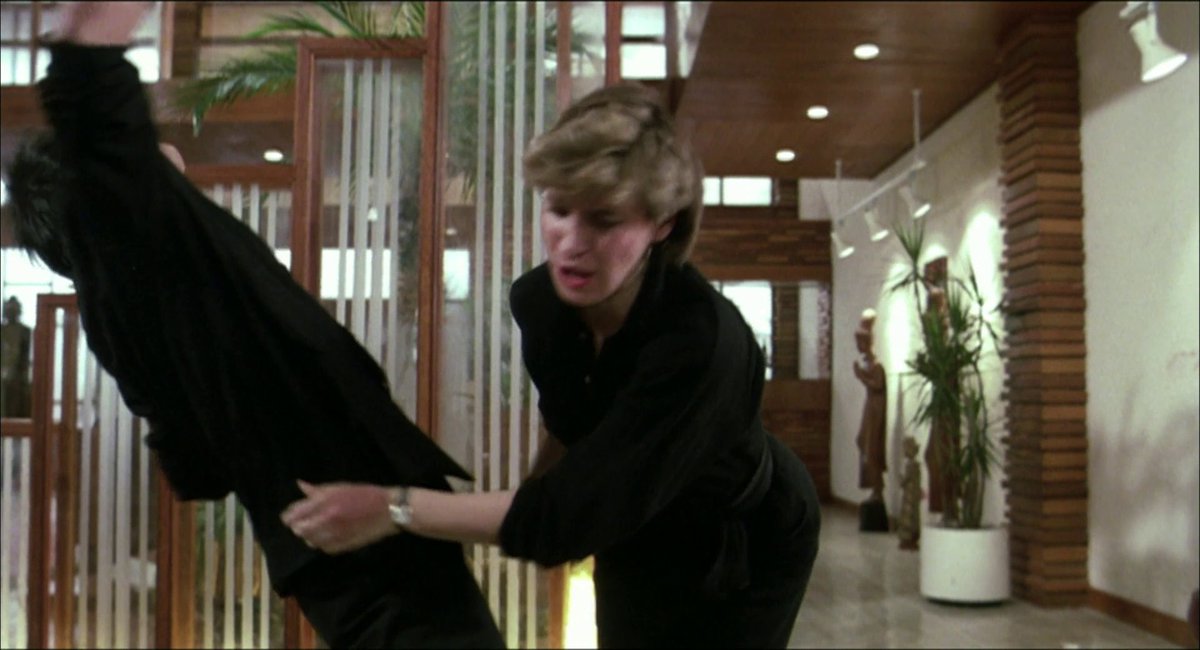
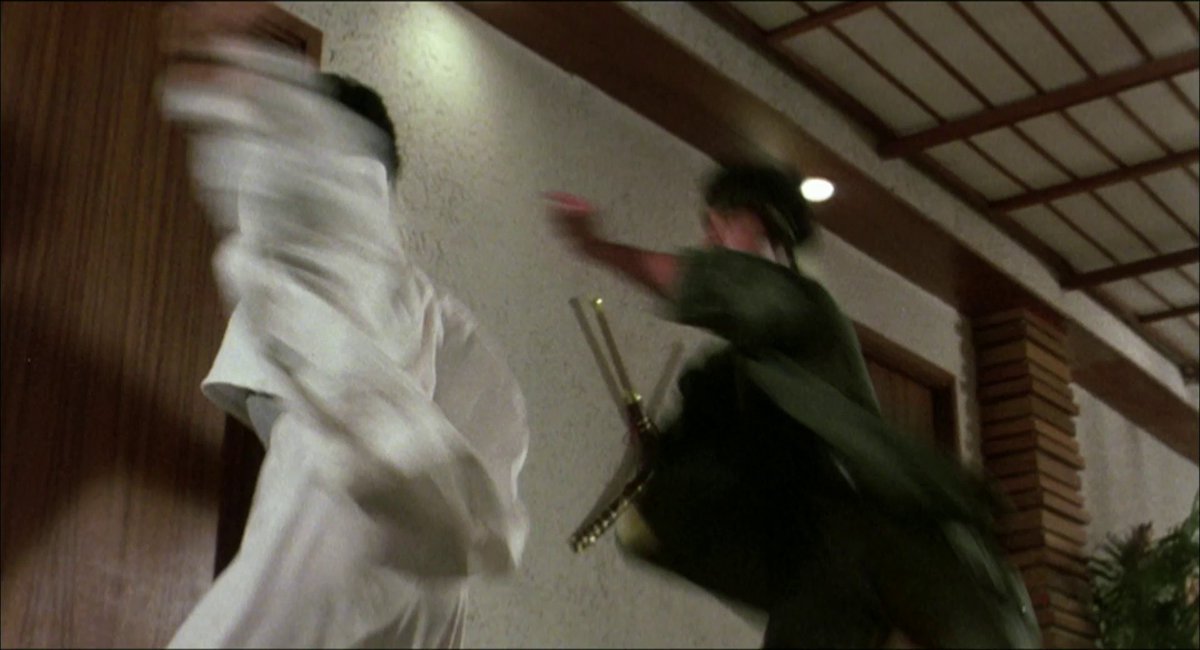
...the kinetic aspect of the images. Things are moving and we're jumping around, but everything remains crystal clear because each shot maintains complete legibility, and the editing uses contrasted parallel cuts to transition between places. Then, most importantly, each shot...
...leads into the next, and a different set-up is used for every shot. This is absolutely essential, and Corey Yuen used to do this often. Not one set-up is used twice (or if they are, very rarely, then far apart). There is no master shot split up by inserts and close-ups: each..

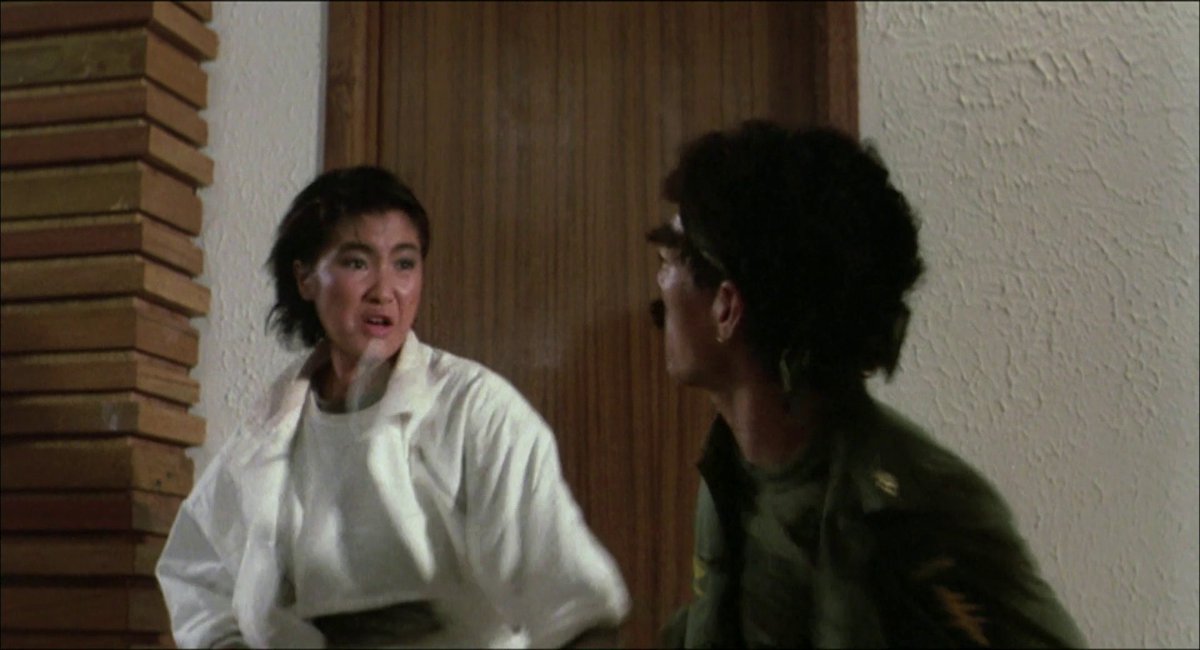

...unit of action is given its own shot. The result is an impression of overwhelm. The brain registers every change in set-ups and associates it with one action (or one action unit = one meaningful sequence of hits and parries), which feels more eventful than a long series of...

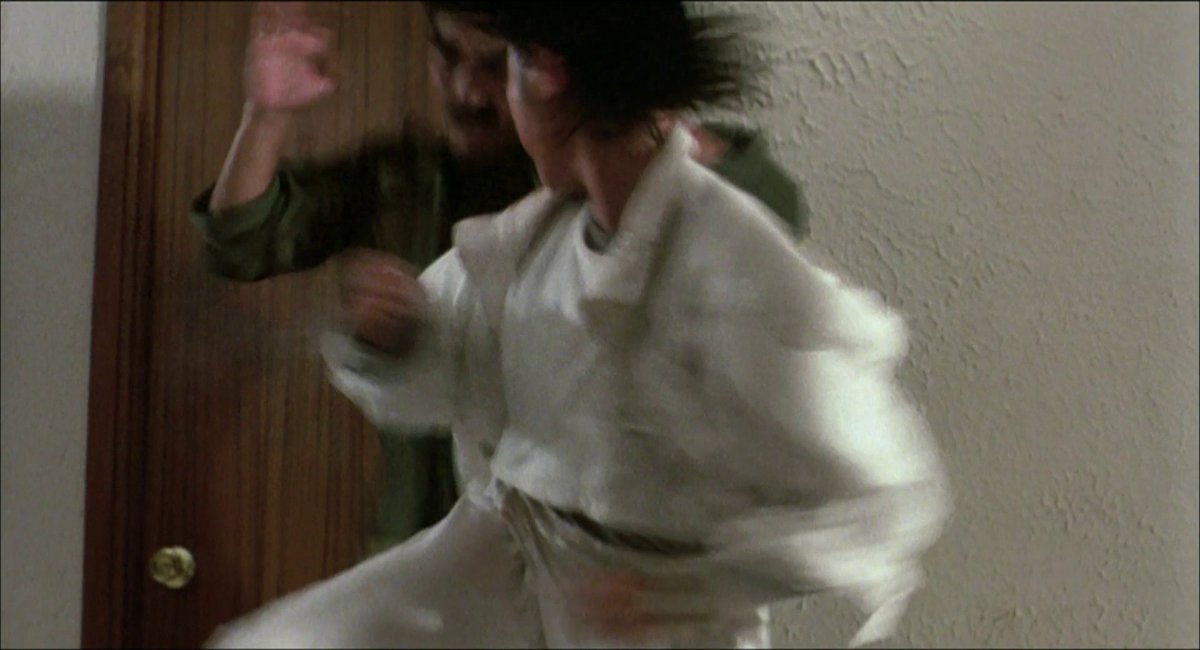
..actions captured in one longer shot. Look at this GIF. It's one complete visual phrase (+ last note of previous phrase if count Cynthia's kick), resulting in 9 shots in 8.6 seconds (10 in 10.7 sec if we count Cynthia's). Rapid editing doesn't always mean bad action, quite the..
..opposite. What matters is not the duration of a shot, but how it is used, and Yuen and many Hong Kong directors used them as notes on sheet music: they combined visual logic (zero to very little gaps in continuity) with melodic images. What shot makes sense after this one? To..
...go back to our Michelle Yeoh scene, Yuen conveys a ridiculous amount of information in less than 9 seconds, without overcutting. There aren't too many cuts, but exactly the right number: Michelle and her opponent (Chung Fat) swap positions within the frame in a single shot,...
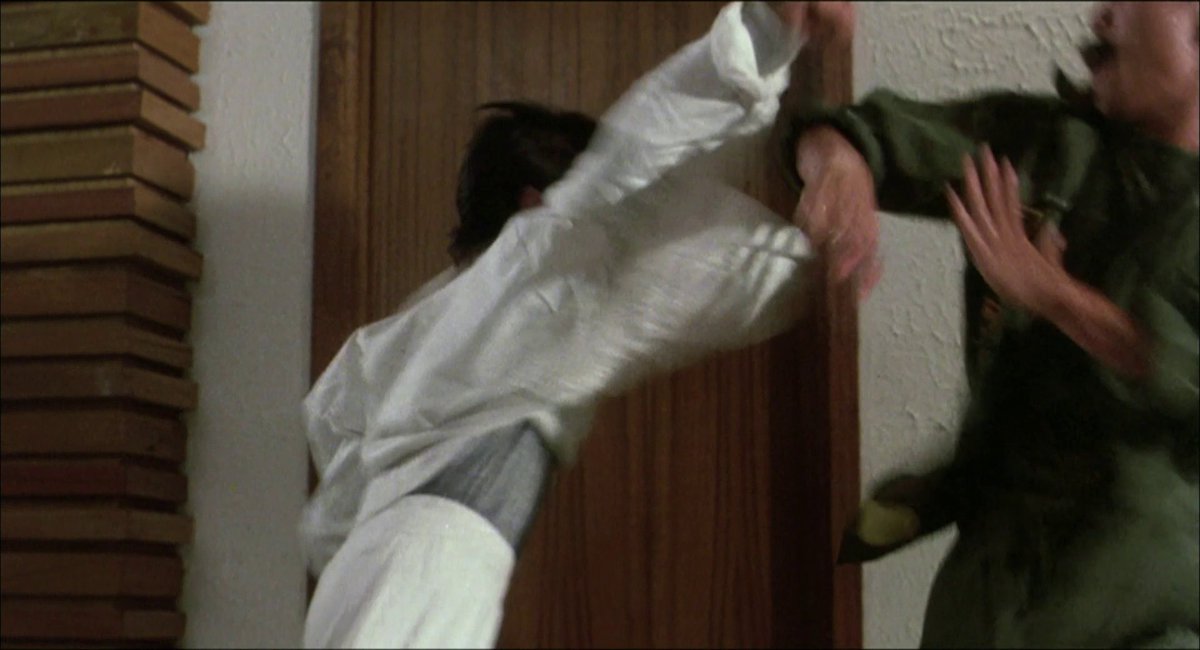


which leads to the main event: a series of 5 shots (in 2.1 seconds!) that heighten the scene's energy by breaking down each movement through highly expressive camera angles. The same action filmed in a single master shot would look bad because it would've no added momentum. Here
momentum is added with each new shot! What would usually be considered inserts in a more conventional fight scene (like the knife plunging down toward Michelle) becomes a shot of equal importance as the others on the overall rhythm of the scene, once again amplifying the...
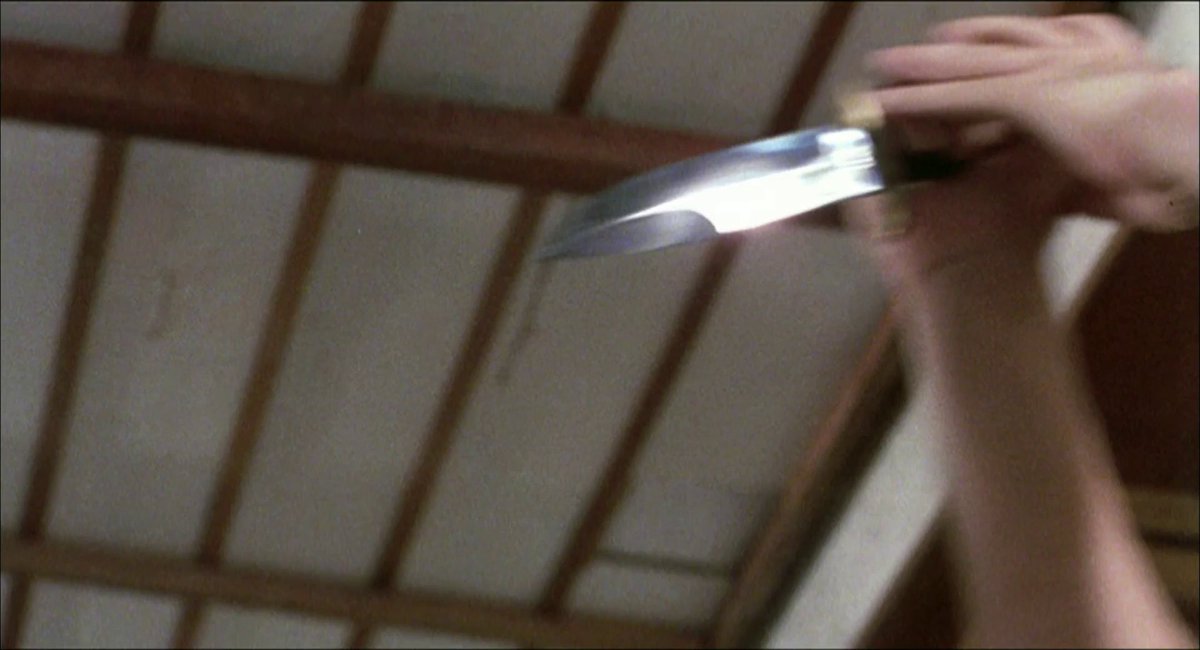
...effect on the audience. I love this little detail here of the knife circling back toward the camera after it has cut Michelle's shoulder. For a fraction(!) of a second, the action lingers on a detail that shouldn't be essential to the reading of the scene: Yuen could have cut
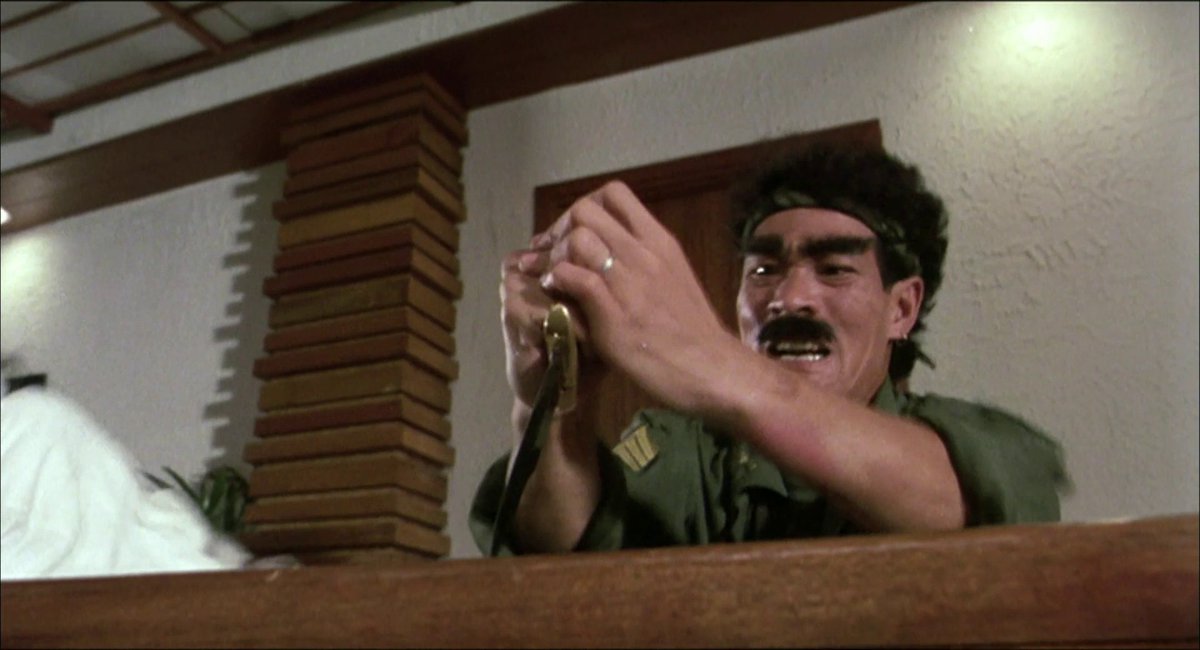
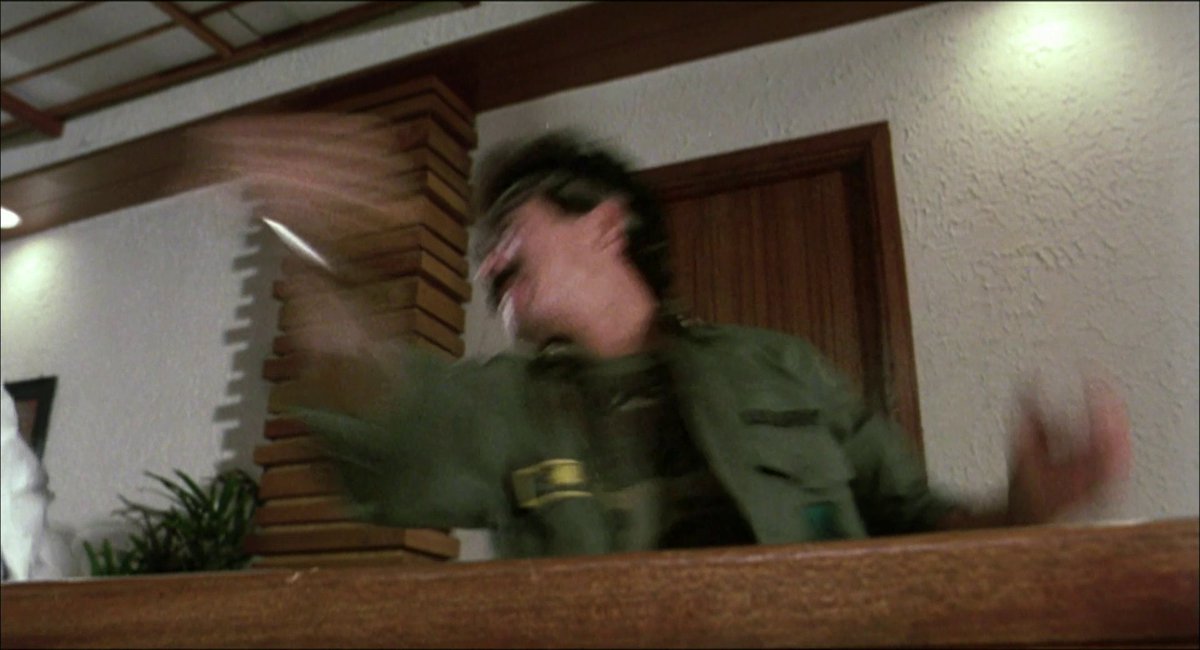

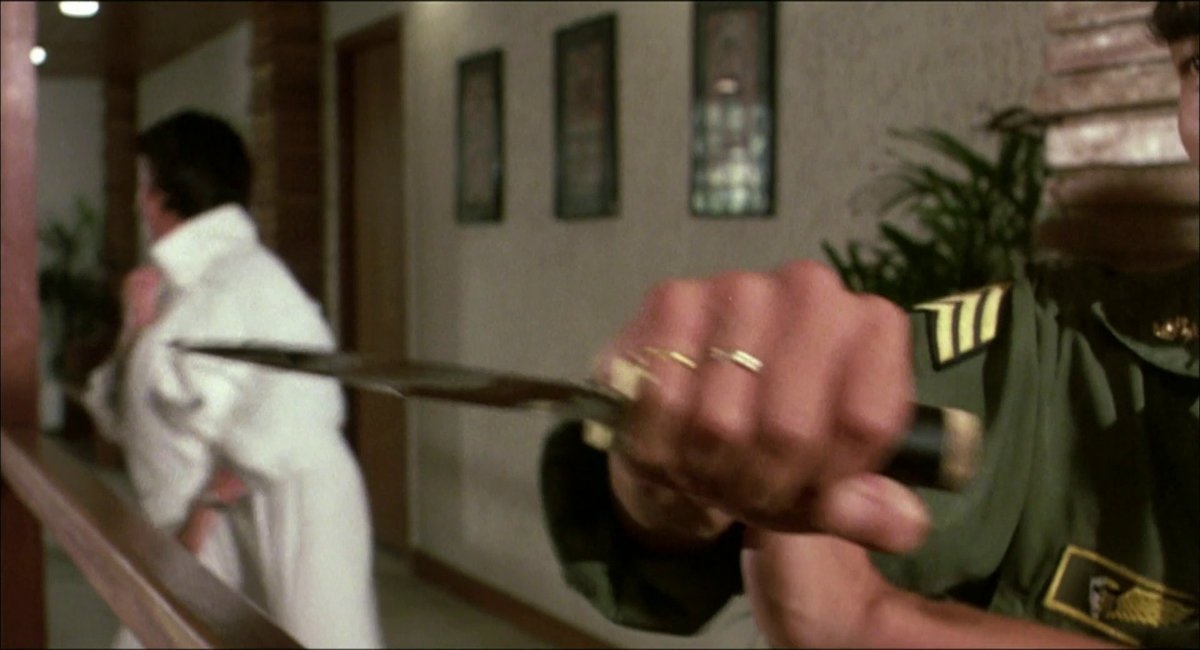
...slightly before, leading from Chung Fat's arm movement to Michelle's reaction, but he decided to include that extra beat, and it makes a huge difference to how the scene plays. Adds dynamism without slowing things down, and makes the audience register the cut before actually..

...showing it. The concluding shot is pause/burst/pause 101: The heroine looks at her wound, then at her enemy: shit's about to go down (even more!). A lot is said of Hong Kong cinema's unique way of cutting around the hits rather than on them (as Hollywood used to do a lot), and
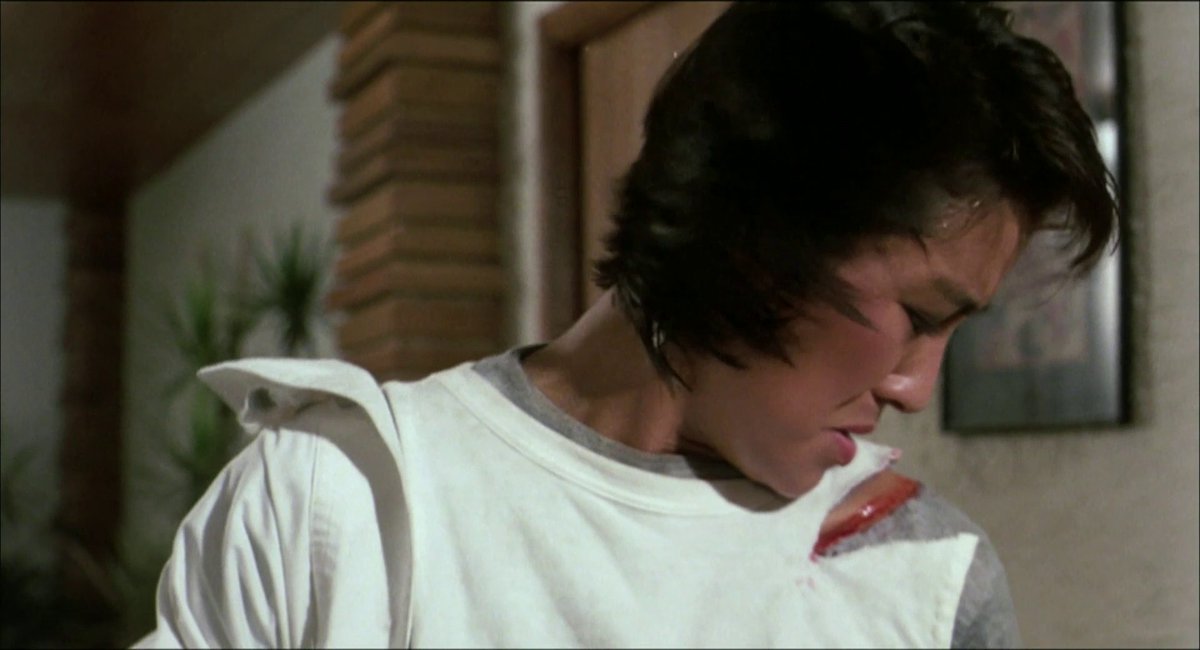

...it is absolutely true, but there is a lot more to HK action than just that. The whole cinematic language that came with it was different than the one used in western films, which often gave a diffuse feeling of exciting things happening rather than actually show these things.
In our scene here, momentum is maintained and even ramped up because motion is king: when we cut from one place to another, all the fighters on screen are still/already in motion, while the editing ensures logical continuity and visual stimulation. Anyway...
...watch YES, MADAM!
(And hire me to write in-depth shot by shot analyses! No one will read it, but it'll look cool on your website! 😇)
(And hire me to write in-depth shot by shot analyses! No one will read it, but it'll look cool on your website! 😇)

• • •
Missing some Tweet in this thread? You can try to
force a refresh