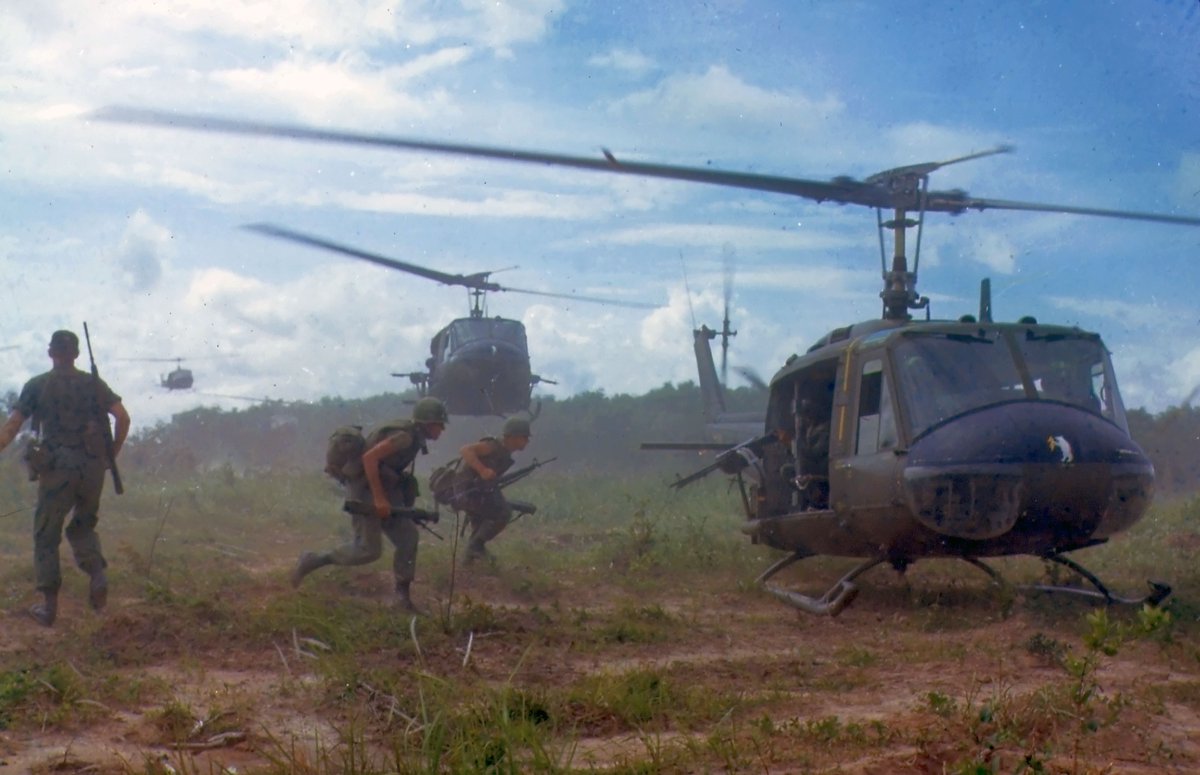
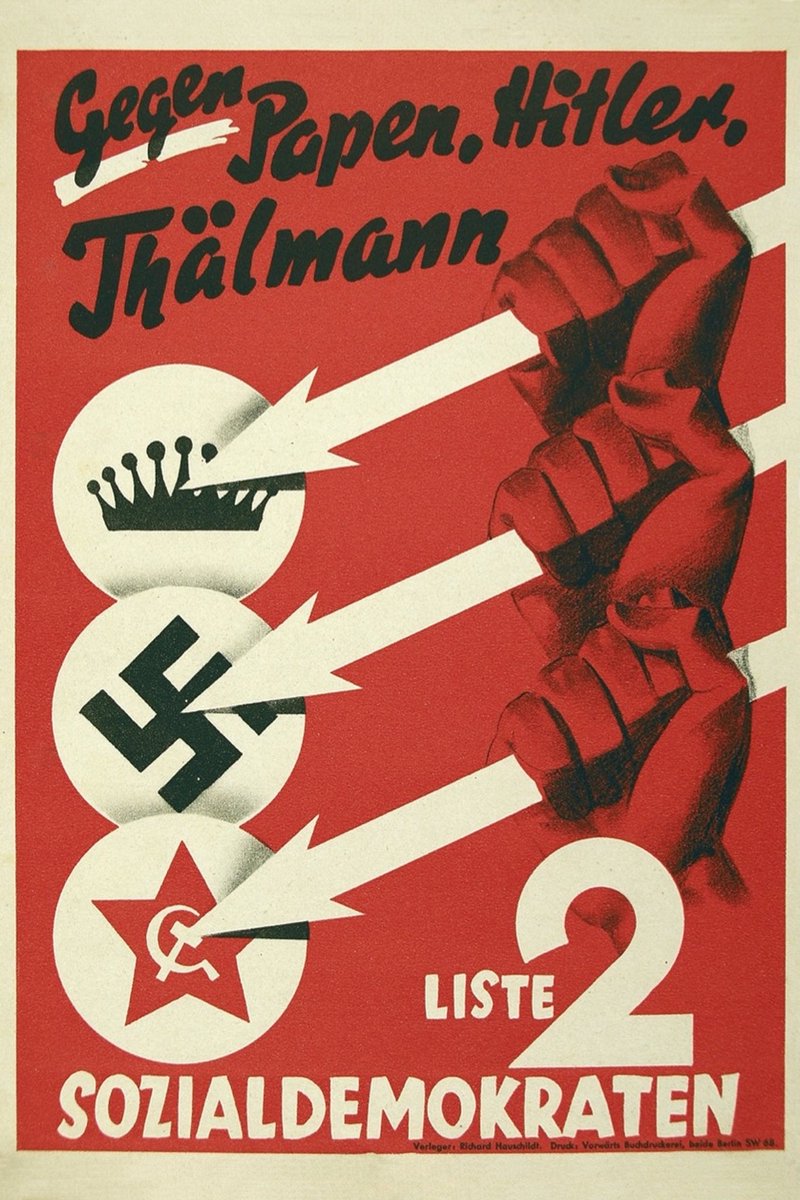
THREAD: On the role of bad social science in the Vietnam War—and how not understanding local conditions, and thinking through endogeneity (yes, endogeneity) can lead to policy conclusions with tragic, deadly consequences. 
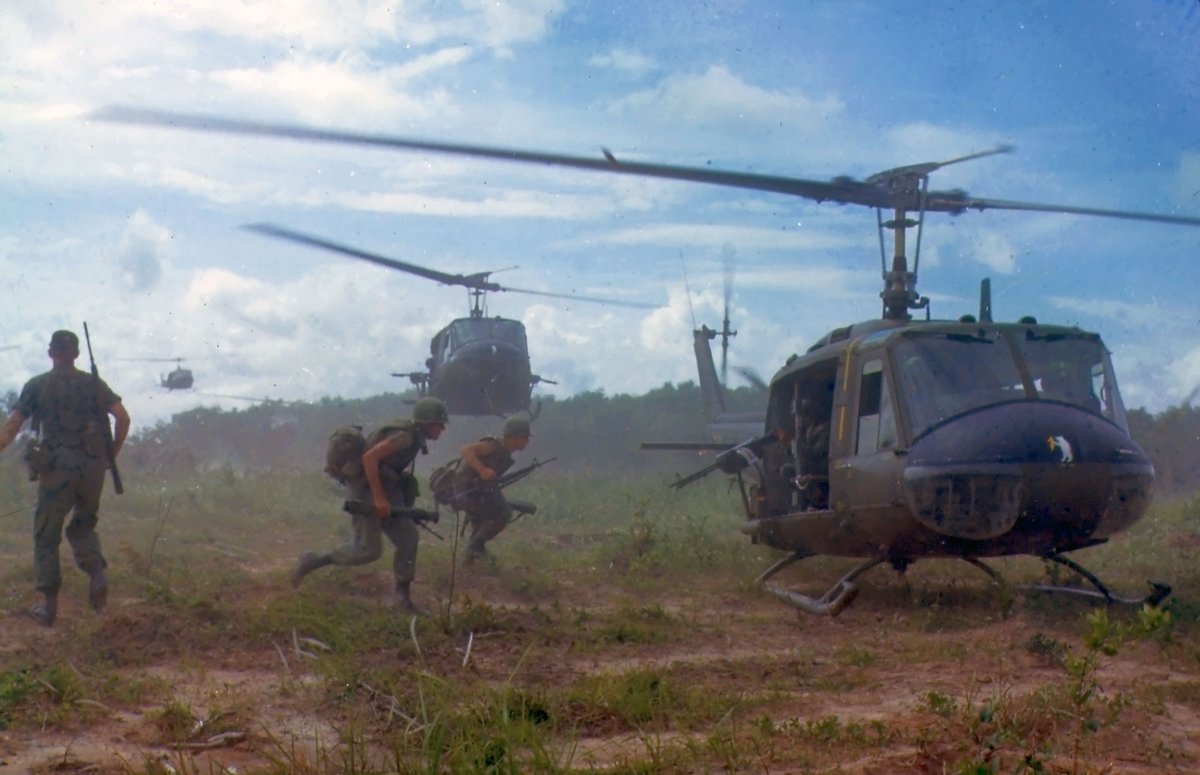
In 1967, 🇺🇸 was mired in the Vietnam War. The corrupt South Vietnamese regime was doing little for its people: in 1966, 42% of farmers were landless peasants.
To help the war effort, 🇺🇸 policymakers considered land reform—redistributing land from landlords to peasants. 2/
To help the war effort, 🇺🇸 policymakers considered land reform—redistributing land from landlords to peasants. 2/
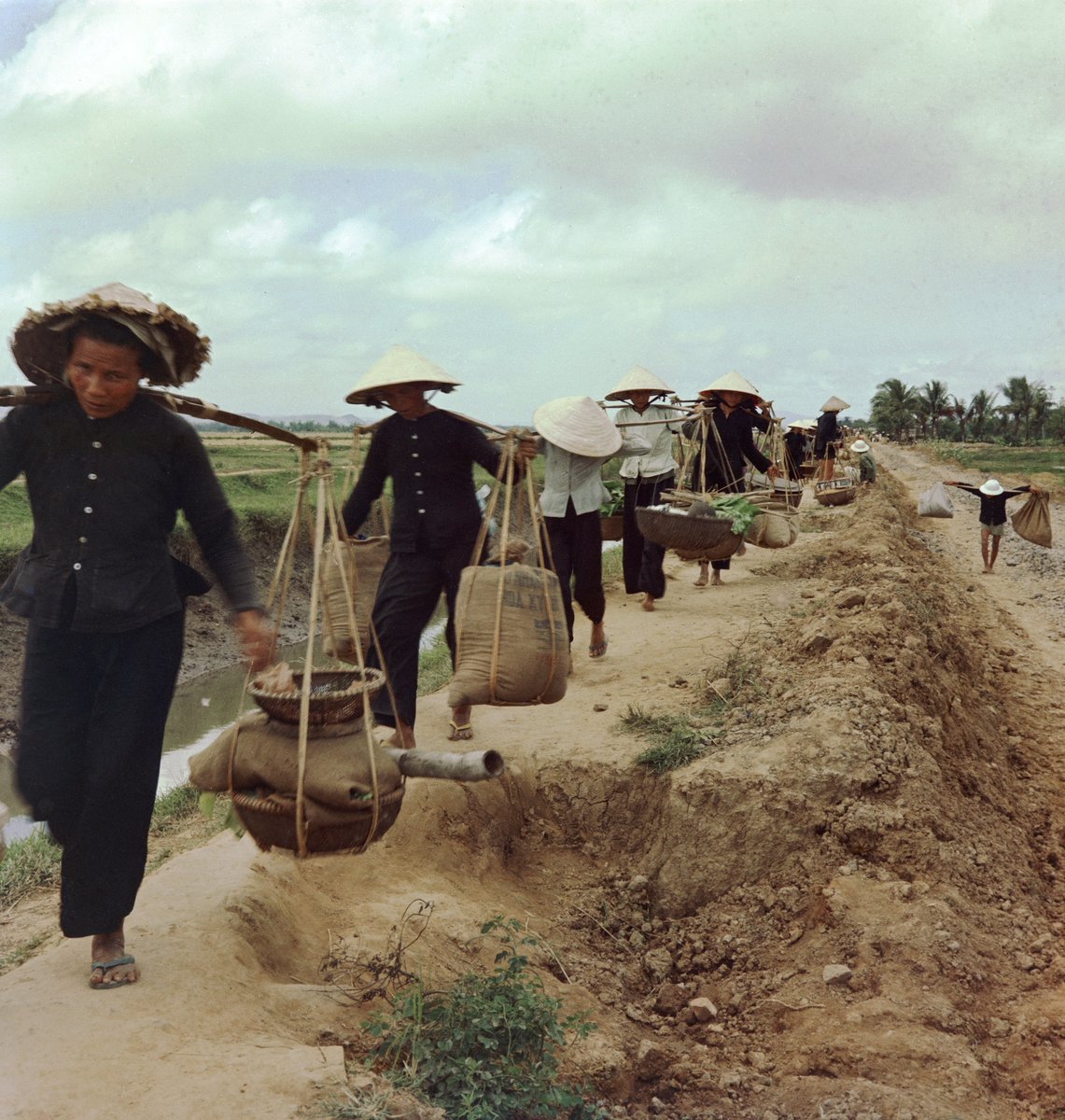
S Vietnam had tried land reform in 1956, but it had been hijacked by local landlords, and very little was redistributed.
Meanwhile, the Viet Cong enacted land reform in the areas under their control—and attracted 1000s of recruits in the process. 3/
Meanwhile, the Viet Cong enacted land reform in the areas under their control—and attracted 1000s of recruits in the process. 3/
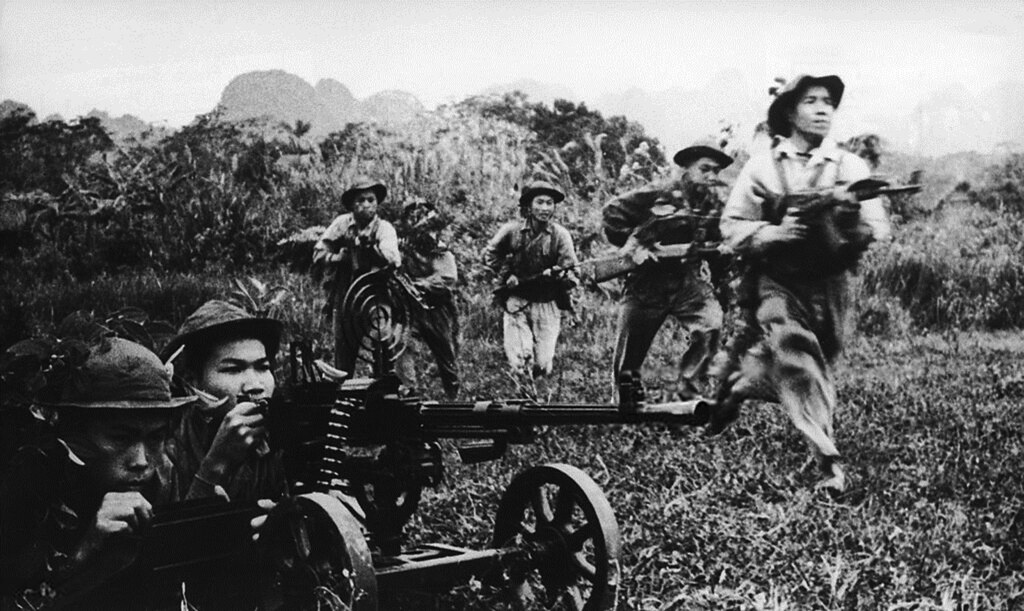
While the politicians + generals debated, a star young economist at the RAND Corporation, Edward Mitchell, turned to analyze the land reform question.
Mitchell had never been to Vietnam.
rand.org/pubs/research_…
4/
Mitchell had never been to Vietnam.
rand.org/pubs/research_…
4/
In his report, Mitchell ran a province-level regression of S Vietnamese govt control on local land inequality as of 1960, and 5 other "independent" variables.
He found a positive relation.
Mitchell's conclusion? That redistribution would encourage more insurgency. 5/
He found a positive relation.
Mitchell's conclusion? That redistribution would encourage more insurgency. 5/
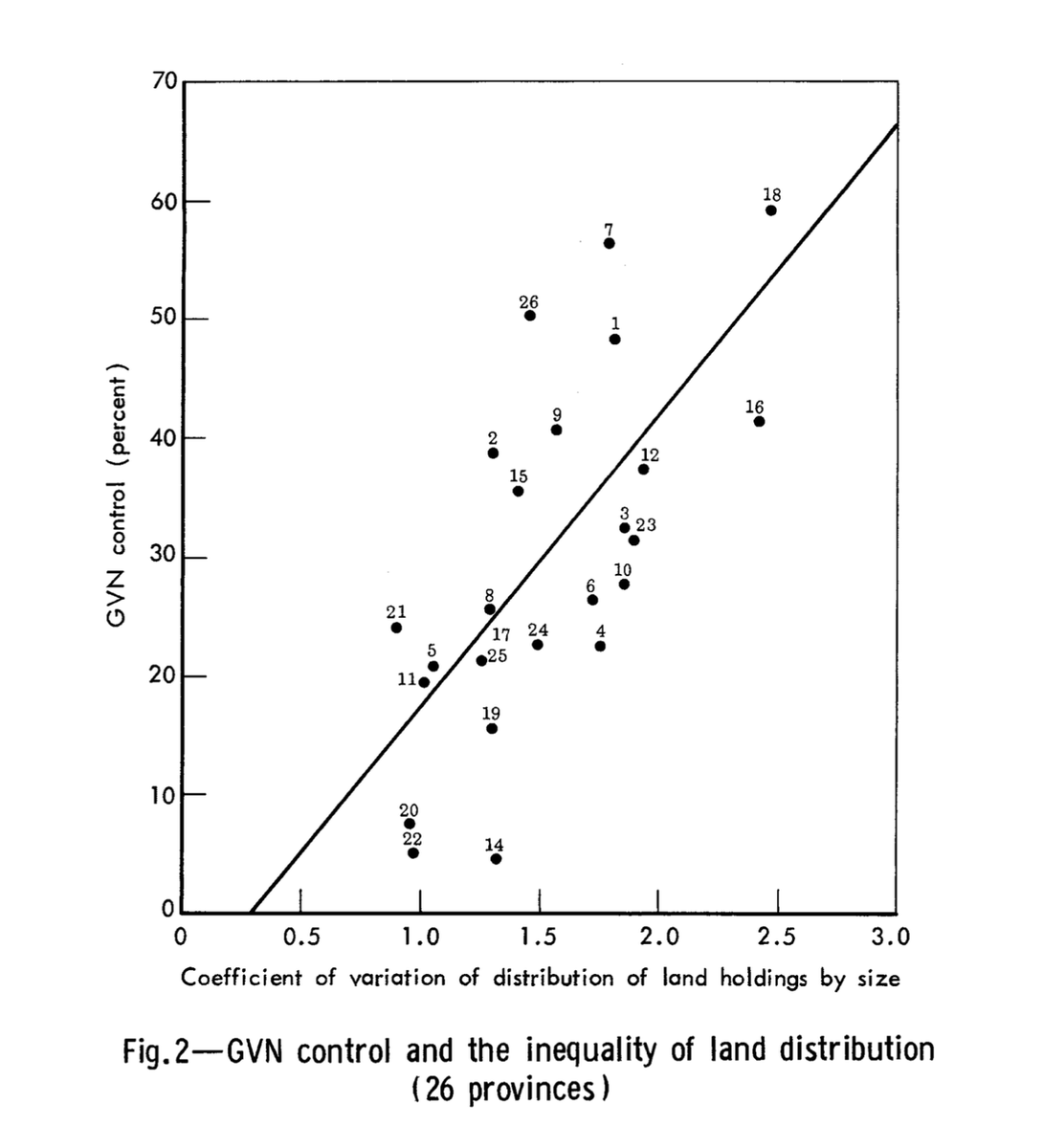
"The ideal province from the [pov of govt] control," Mitchell wrote, "is one in which... few peasants operate their own land... and no land redistribution has taken place."
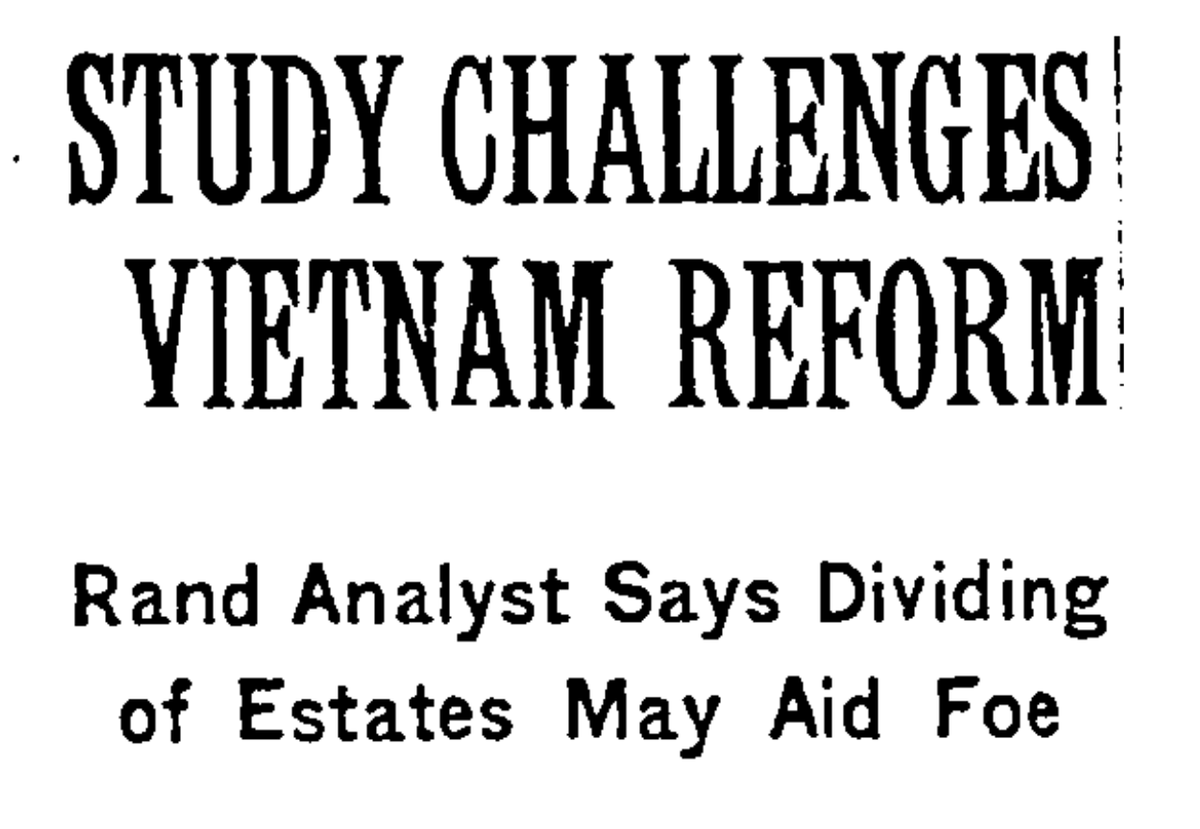
His report was covered by the NYT, and eventually published in "World Politics". 6/
His report was covered by the NYT, and eventually published in "World Politics". 6/
Other RAND economists were skeptical of the study. Tony Russo, who had just returned from VN & seen rural conditions, wrote a scathing critique of the methodology.
Russo was later fired. (His friend Daniel Ellsberg tried to reverse the decision, but failed.)
Russo was later fired. (His friend Daniel Ellsberg tried to reverse the decision, but failed.)
Robert L. Sansom, a Rhodes Scholar, wrote another incisive rebuttal.
From his field research, Sansom knew how much the land reform implemented by the Viet Cong, and before them the Viet Minh, had done to reduce inequality in the areas under their control. 9/
From his field research, Sansom knew how much the land reform implemented by the Viet Cong, and before them the Viet Minh, had done to reduce inequality in the areas under their control. 9/
In Samson's view, Mitchell's story was exactly reversed!
Areas with higher land equality precisely because they had been controlled by the insurgents, while areas with high inequality were more likely to be controlled by the govt because the govt didn't do land reform!
10/
Areas with higher land equality precisely because they had been controlled by the insurgents, while areas with high inequality were more likely to be controlled by the govt because the govt didn't do land reform!
10/
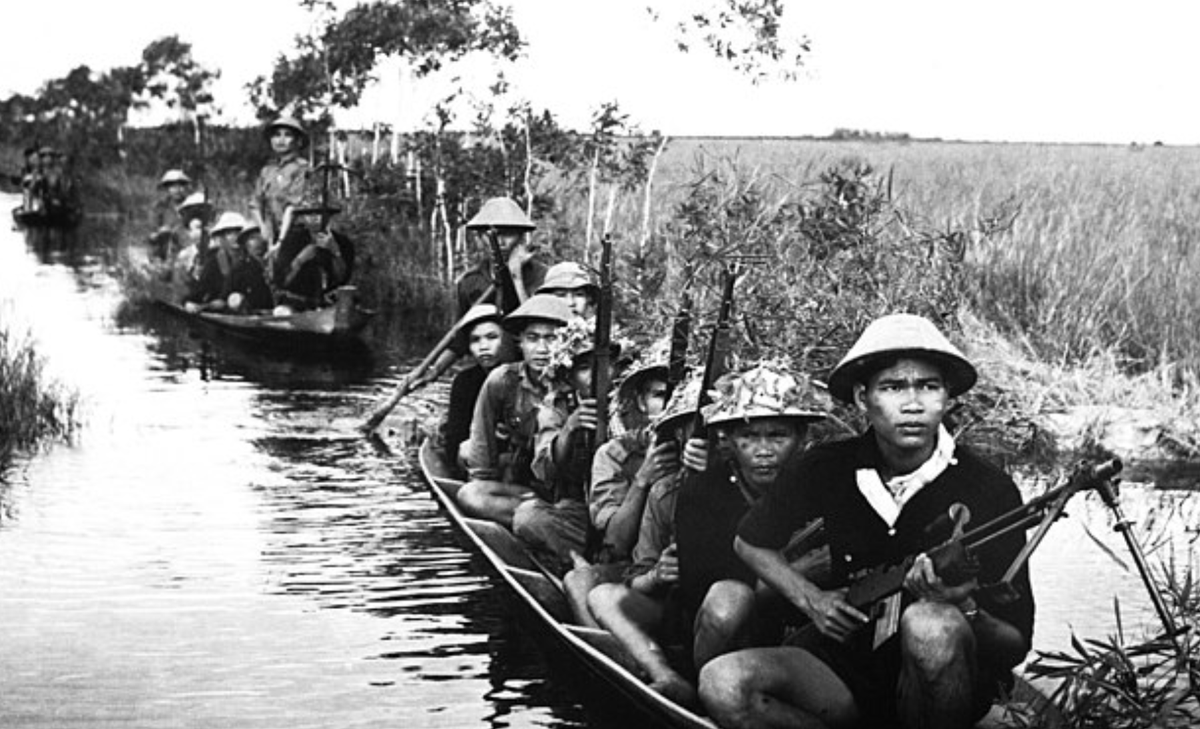
Modern economists can recognize this as a classic example of endogeneity--in this case, reverse causality.
Sansom likened it to "observing that all who had the flu had been visited by doctors, [& concluding] that the doctors caused the flu." 11/
Sansom likened it to "observing that all who had the flu had been visited by doctors, [& concluding] that the doctors caused the flu." 11/
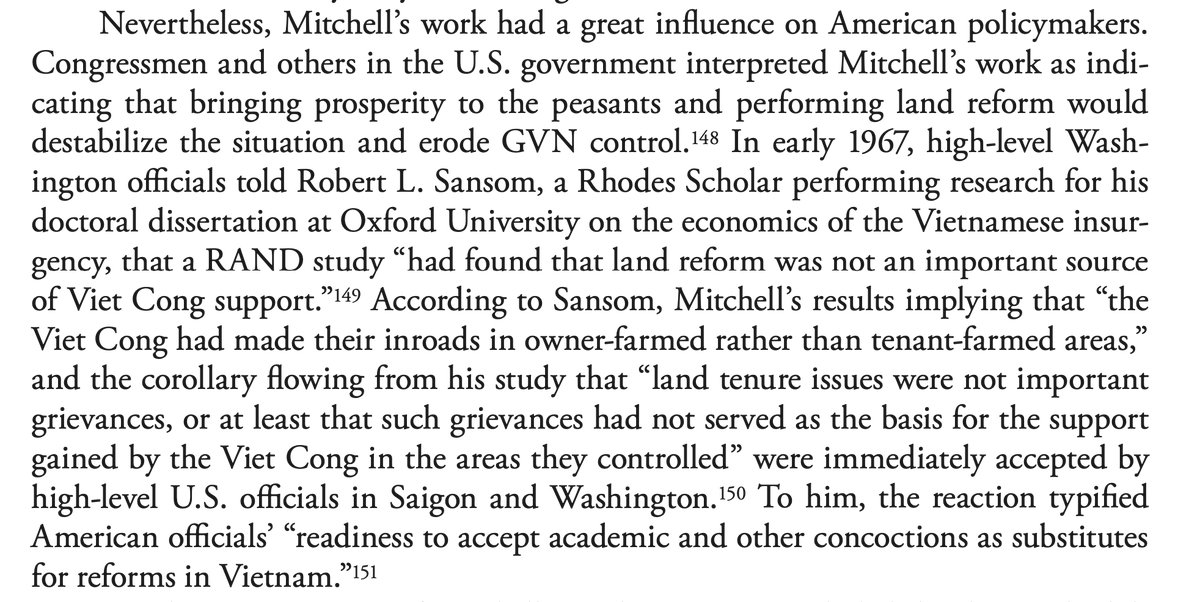
Unfortunately, as is often the case, bad research won the policy debate. RAND’s official history notes how Washington was eager to accept Mitchell’s results, despite the rebuttals, as a substitute for the hard work of actual reform. 12/
Land reform wasn't tried again until 1970, with some success--until the North's invasion in 1975 brought the experiment to a halt.
But in the intervening yrs from 1966-70, hundreds of thousands of Vietnamese had been killed. One wonders what might have been. 13/
But in the intervening yrs from 1966-70, hundreds of thousands of Vietnamese had been killed. One wonders what might have been. 13/
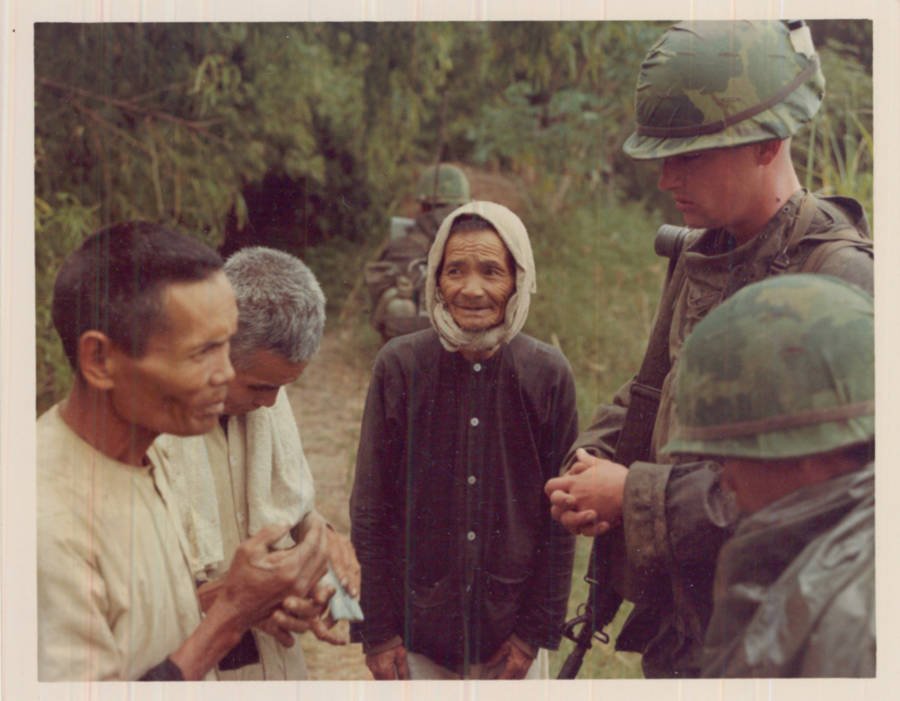
Of course, clear-eyed, ground-level observers of Vietnam had been crying out for meaningful land reform for years.
(Even clearer-eyed ones were asking why the US was there at all.)
14/
(Even clearer-eyed ones were asking why the US was there at all.)
14/
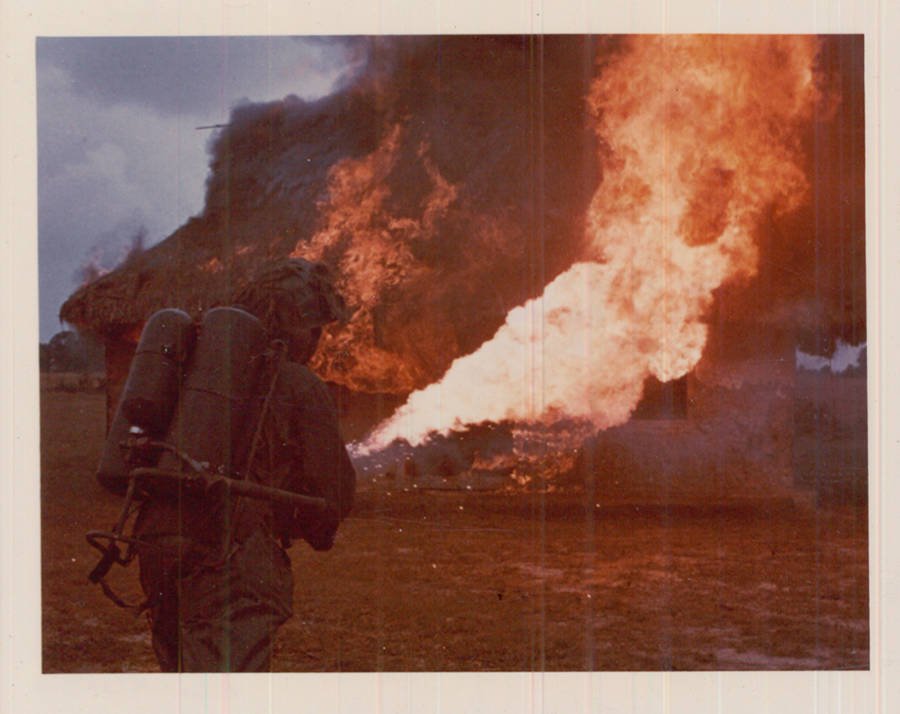
The key point is not that Mitchell’s statistics were shoddy, but that he was too ignorant of reality to know. There will always be a market for bad ideas, and politicians looking for post-hoc scientism as cover.
As academics, we must do better at not providing it for them.
FIN.
As academics, we must do better at not providing it for them.
FIN.
• • •
Missing some Tweet in this thread? You can try to
force a refresh