Machine Learning Monthly for May 2021 is live (video & audio)!
The latest and greatest (but not always the latest) from the machine learning world in the past month + plenty of dancing.
This month we've got...
The latest and greatest (but not always the latest) from the machine learning world in the past month + plenty of dancing.
This month we've got...
Huuuuuuge updates to @TensorFlow:
• TensorFlow Lite models now work with TensorFlow.js (train once, deploy twice)
• Google's on-device machine learning page tailors ML guides for your smaller device needs
• TF Lite model maker library helps you train on-device models faster
• TensorFlow Lite models now work with TensorFlow.js (train once, deploy twice)
• Google's on-device machine learning page tailors ML guides for your smaller device needs
• TF Lite model maker library helps you train on-device models faster
• TensorFlow Hub gets a facelift, plus, now you can try pretrained models before you buy them (jk the models are free)
• TensorFlow Cloud library helps you scale up your smaller experiments to cloud-scale in a few lines of code (e.g. Google Colab -> 8 GPUs)
• TensorFlow Cloud library helps you scale up your smaller experiments to cloud-scale in a few lines of code (e.g. Google Colab -> 8 GPUs)

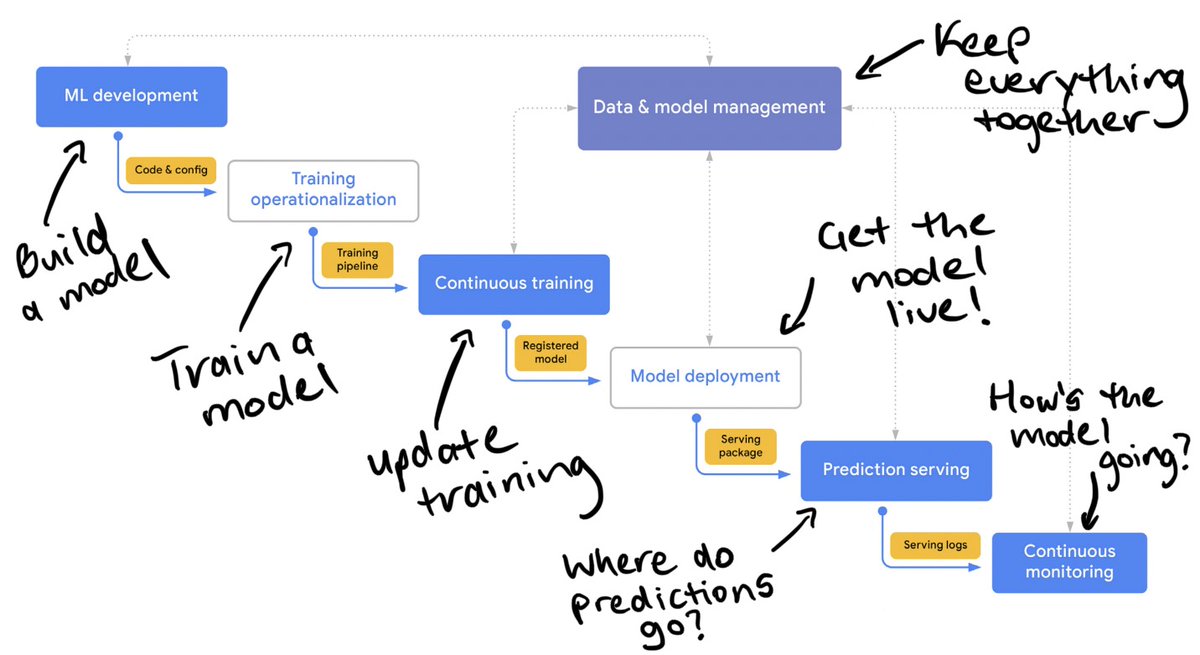
• Google Cloud's AI Platform gets renamed to Vertex AI and now Google Cloud's one-stop-shop for your ML needs (think data storage, feature storage, model training, model deployment etc)
• To go along with Vertex AI is a new MLOps White Paper piecing together everything ML
• To go along with Vertex AI is a new MLOps White Paper piecing together everything ML
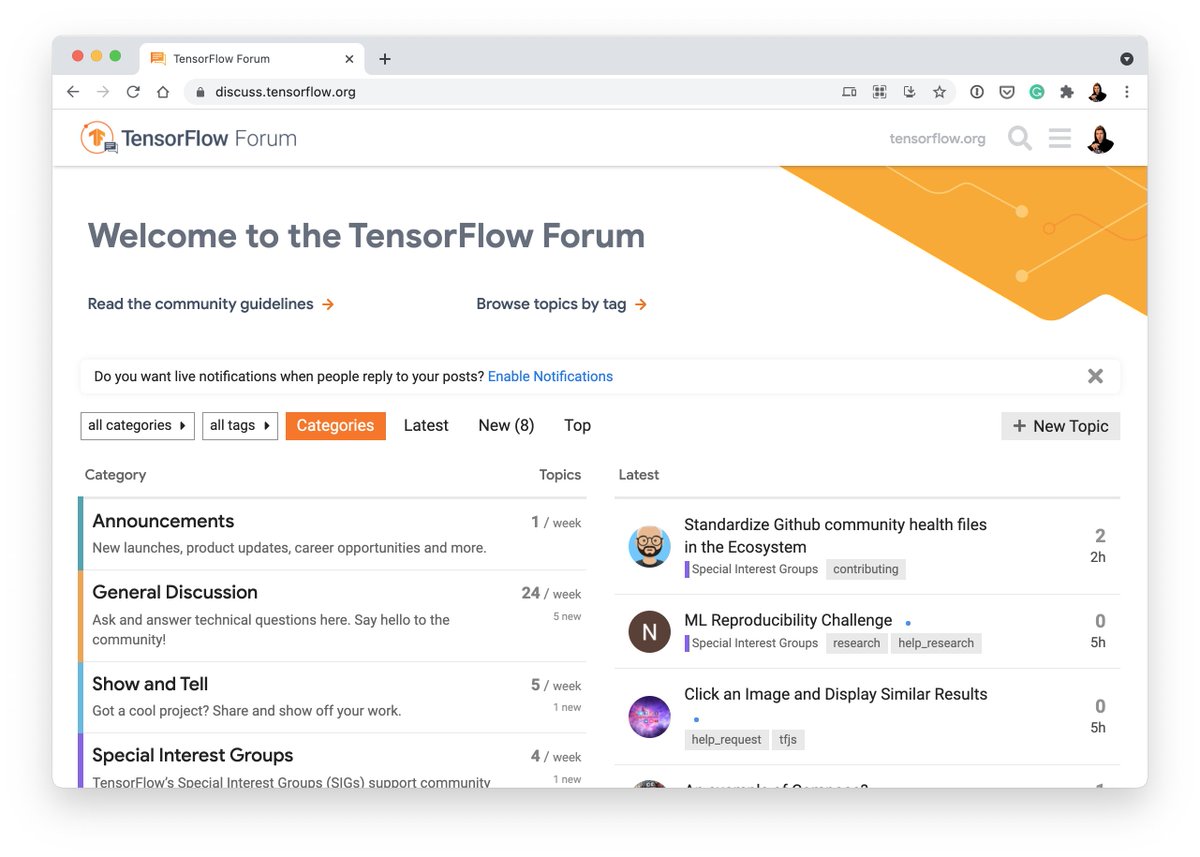
• The new TensorFlow forum! Now there's a town square to meet and talk with TensorFlow developers from around the world
• The People and AI Guidebook 2.0 helps you design ML-powered applications by thinking about things like: "explain the benefit, not the technology"
• The People and AI Guidebook 2.0 helps you design ML-powered applications by thinking about things like: "explain the benefit, not the technology"
And from the rest of the internet:
• Next-generation pose detection with MoveNet and TensorFlow.js (17 body keypoints @ up to 51 FPS in the browser of an iPhone 12!!!)
• Datasets & code are on arXiv ala @paperswithcode (find the data and code associated with ML papers)
• Next-generation pose detection with MoveNet and TensorFlow.js (17 body keypoints @ up to 51 FPS in the browser of an iPhone 12!!!)
• Datasets & code are on arXiv ala @paperswithcode (find the data and code associated with ML papers)

• @facebookai's wav2vec-U (unsupervised) speech recognition model performs equivalent to state of the art 2 years ago without *any* labelled data (previous model used ~1000 hours)
• What is active learning? by @roboflow - doing practical ML? You'll want active learning
• What is active learning? by @roboflow - doing practical ML? You'll want active learning
• Reproducible Deep Learning by @s_scardapane - Ever tried to build a reproducible deep learning model? It's harder than you think. Not to worry, Simone's course goes through steps to help you do so.
See more: sscardapane.it/teaching/repro…
See more: sscardapane.it/teaching/repro…

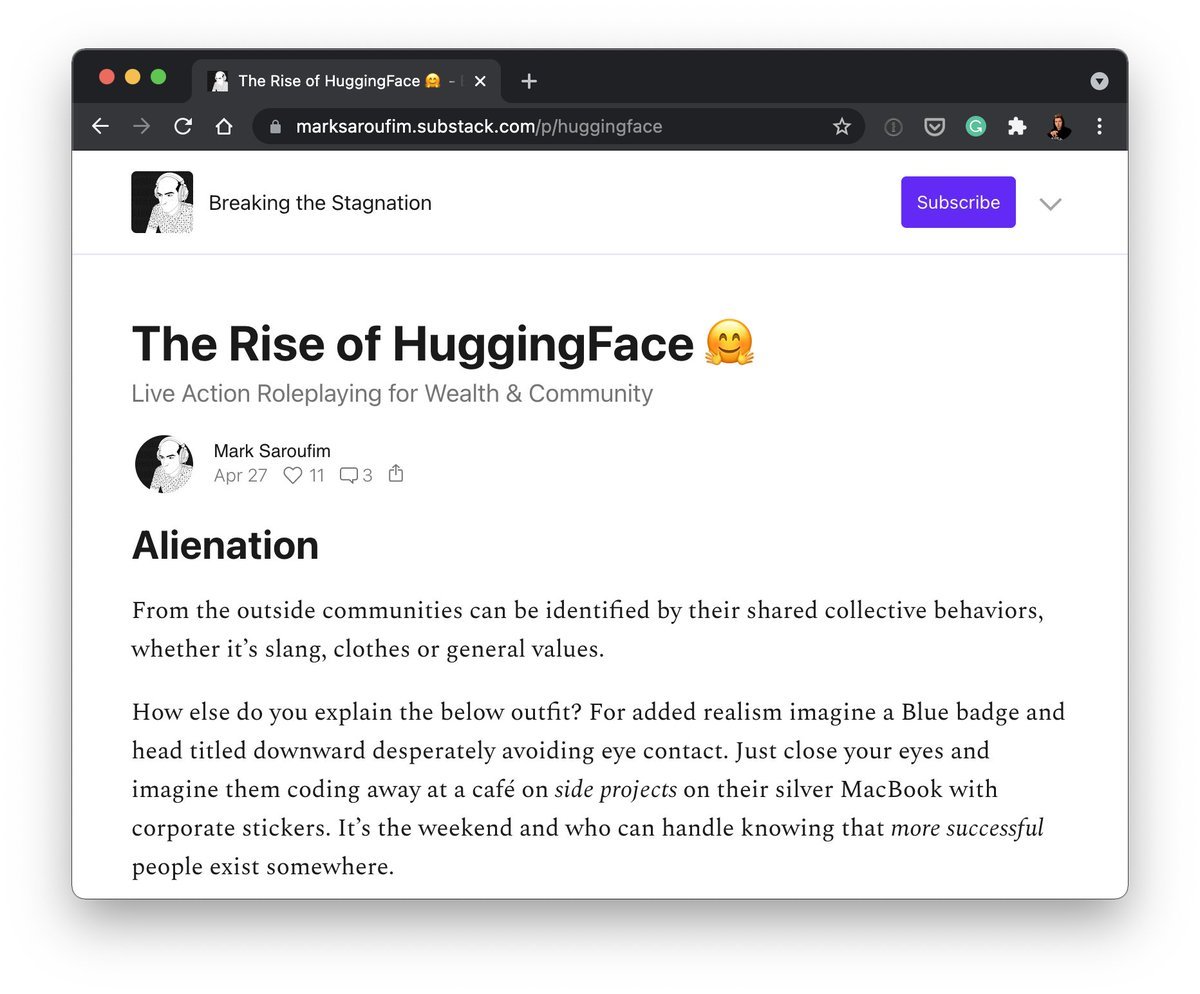
• The Rise of @huggingface by @marksaroufim - an outstanding take on how ML companies like HuggingFace and @weights_biases have built incredible value by creating community around their product offerings.
Far out...
As usual a massive month on tour for the world of ML!
See the full write up: zerotomastery.io/blog/machine-l…
See the video version:
As usual a massive month on tour for the world of ML!
See the full write up: zerotomastery.io/blog/machine-l…
See the video version:
• • •
Missing some Tweet in this thread? You can try to
force a refresh