🏴YN FYW / LIVE 🏴
We are live at the first webinar from the Welsh and Scottish Election Studies
Sut y pleidleisiodd yr Alban a Chymru / How Scotland and Wales voted #SESWES21
Live tweets of key graphs to follow in the replies here - Scottish data up first then Wales!
We are live at the first webinar from the Welsh and Scottish Election Studies
Sut y pleidleisiodd yr Alban a Chymru / How Scotland and Wales voted #SESWES21
Live tweets of key graphs to follow in the replies here - Scottish data up first then Wales!


Hearing from @ailsa_henderson & @Jaclarner
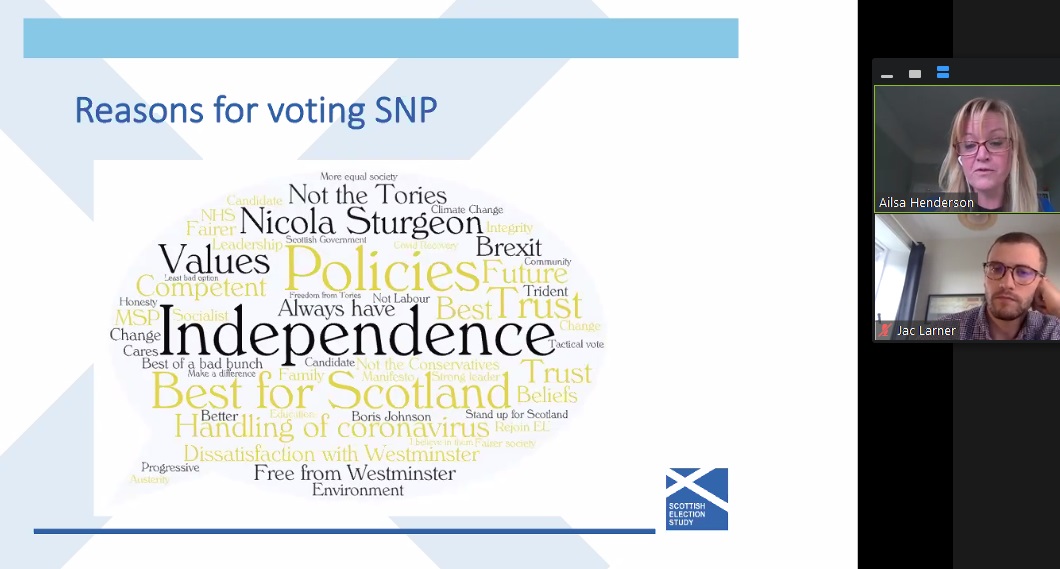
Here are reasons people from the study outlined for voting SNP. 'Who the SNP are not' is part of the story, as are their policies (often referred to as a whole rather than as specific pledges) and of course independence.
Here are reasons people from the study outlined for voting SNP. 'Who the SNP are not' is part of the story, as are their policies (often referred to as a whole rather than as specific pledges) and of course independence.
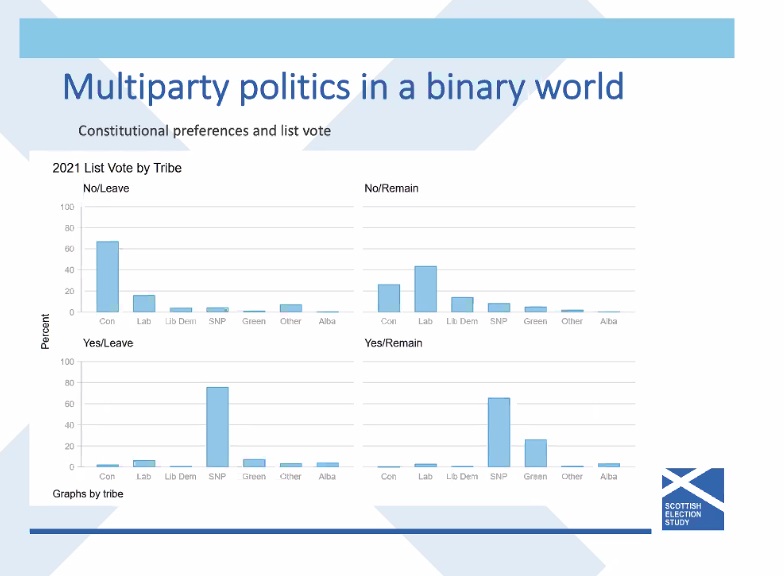
SNP held on to Yes voters regardless of their Brexit preference.
No voters much more divided between the unionist parties on the basis of their 2016 EU vote.
No voters much more divided between the unionist parties on the basis of their 2016 EU vote.
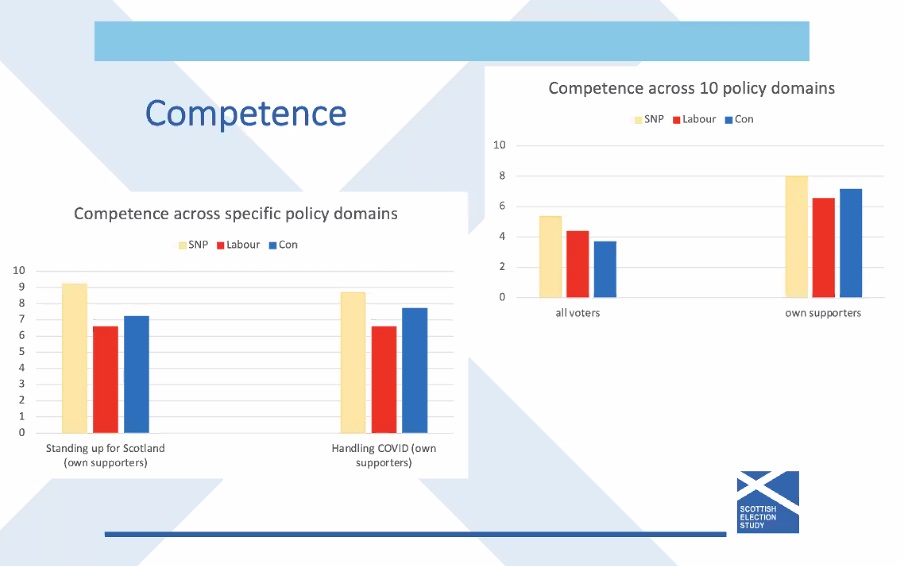
Ratings on competence show caution from the opposition parties' own supporters, with SNP seen as most competent across the board @ailsa_henderson
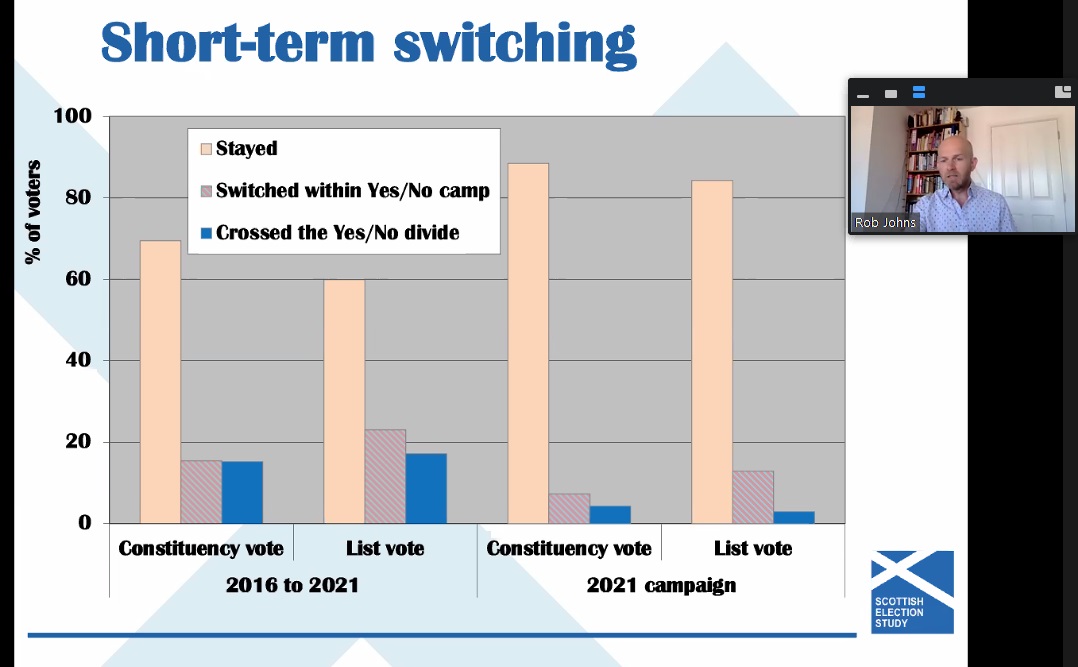
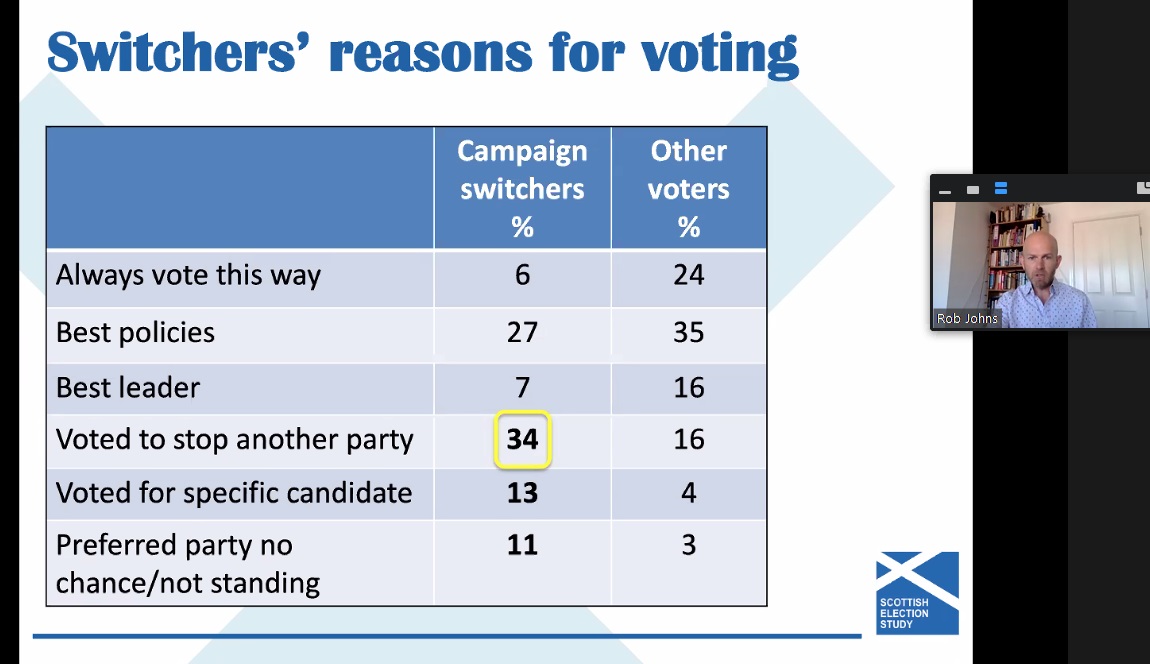
Now @robjohns75 is up, looking at short-term and long-term switching in Scotland. Switching during the campaign mostly based on trying to stop the SNP.
Voters entrenched overall on the big constitutional issue.
Voters entrenched overall on the big constitutional issue.
Analysis by @frasmcm of the independence vote at the start of the SES and how the constitutional "tribes" have been rearranged since 2014.
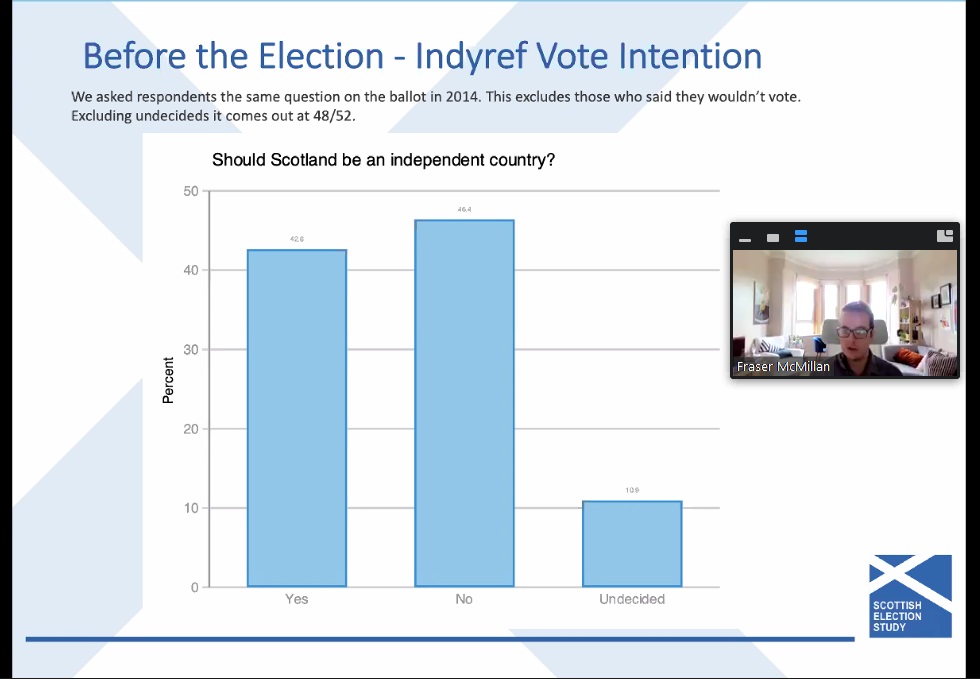
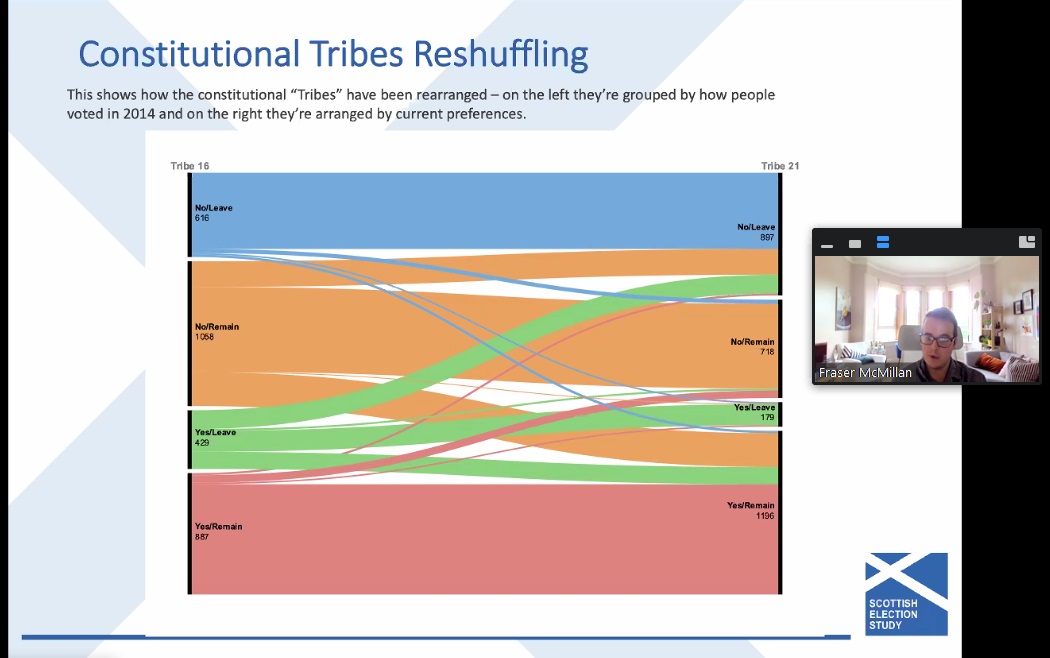
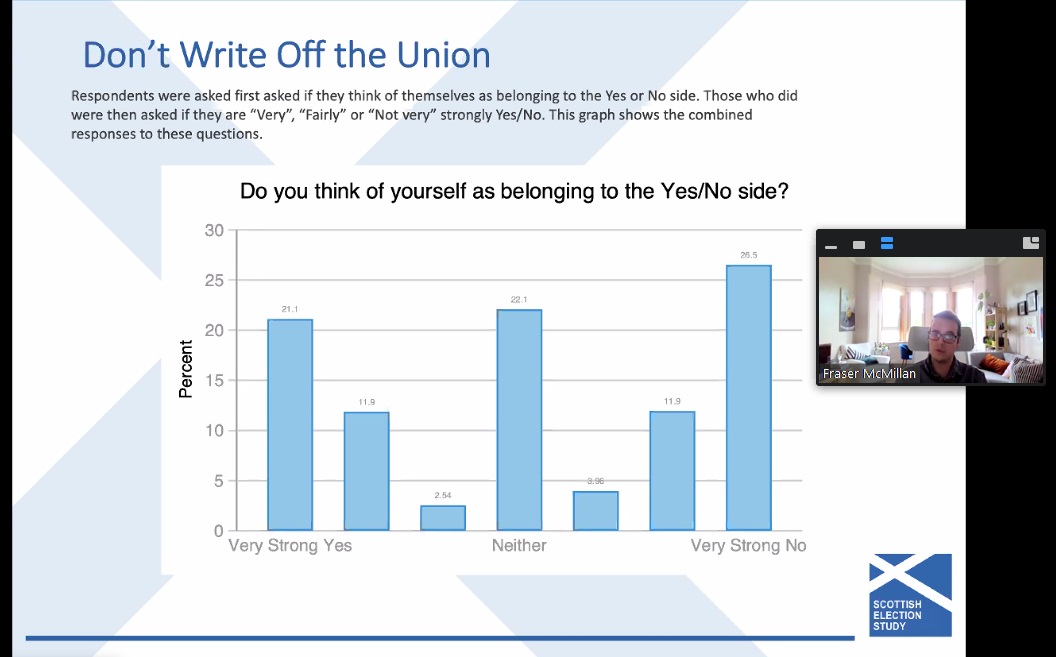
Despite views from Study participants that the election result probably did deliver a mandate for a new Indy ref, the No side still has significant strength according to @frasmcm - and a large block exists which does not identify with either side.
Here we go then...Wales data up at #SESWES21
Analysis by @RWynJones @Jaclarner & @p_surridge
Welsh seats seen as part of the 'Red Wall' but Tory gains mostly on the lists. Good Conservative result but didn't match expectations.
Analysis by @RWynJones @Jaclarner & @p_surridge
Welsh seats seen as part of the 'Red Wall' but Tory gains mostly on the lists. Good Conservative result but didn't match expectations.
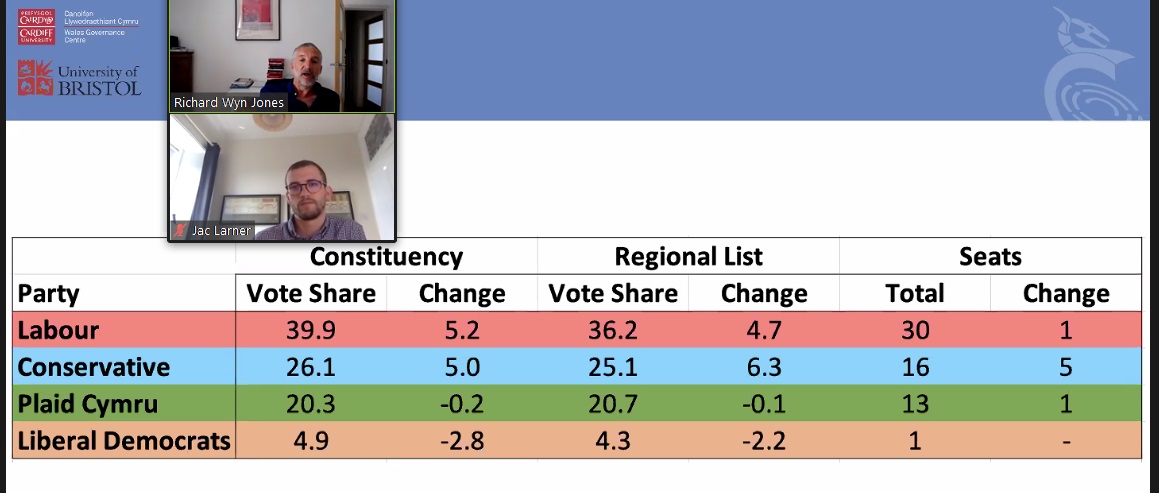
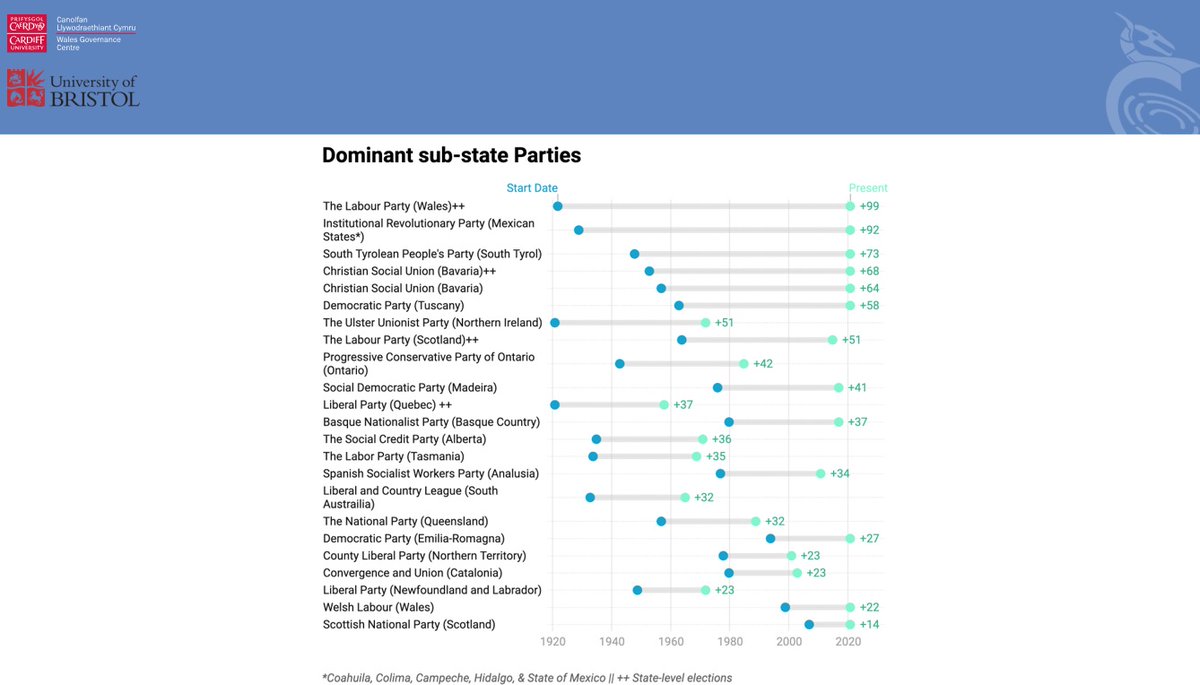
Welsh Labour electoral dominance continues to be unmatched...as far as is known...in any other sub-state nation in the world.
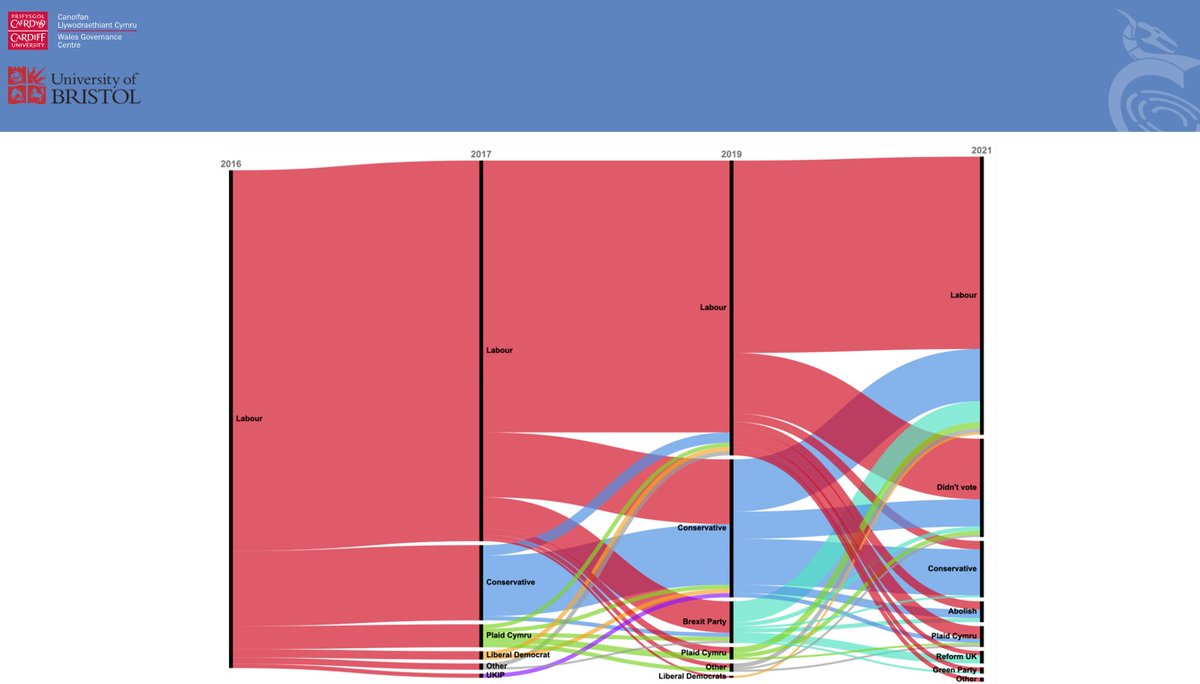
A unique feature (in UK terms) is the Welsh Labour ability to win substantial numbers of Leave voters back from the Conservatives.
"If Keir Starmer had managed the same in England he'd be garlanded in red roses" @RWynJones
"If Keir Starmer had managed the same in England he'd be garlanded in red roses" @RWynJones
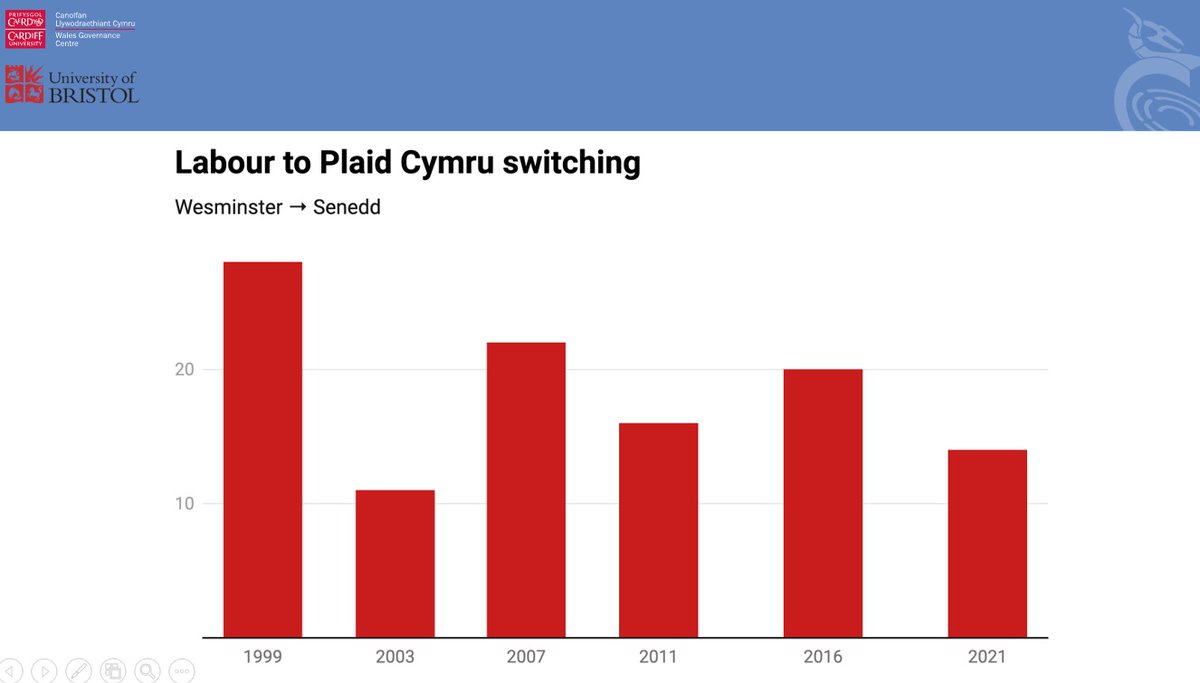
Another key feature of Welsh Labour's win is that they staunched the flow of Labour UKGE voters who usually go to Plaid Cymru for the Senedd.
Partly due to Covid incumbency and Drakeford leadership, and also due to the party's perceived Welshness.
Partly due to Covid incumbency and Drakeford leadership, and also due to the party's perceived Welshness.
We can now see from where parties got their votes, in terms of national identity.
Labour's shallower gradient in the slide below is a sign of strength - "catch all party" with a Welsh emphasis.
Labour's shallower gradient in the slide below is a sign of strength - "catch all party" with a Welsh emphasis.
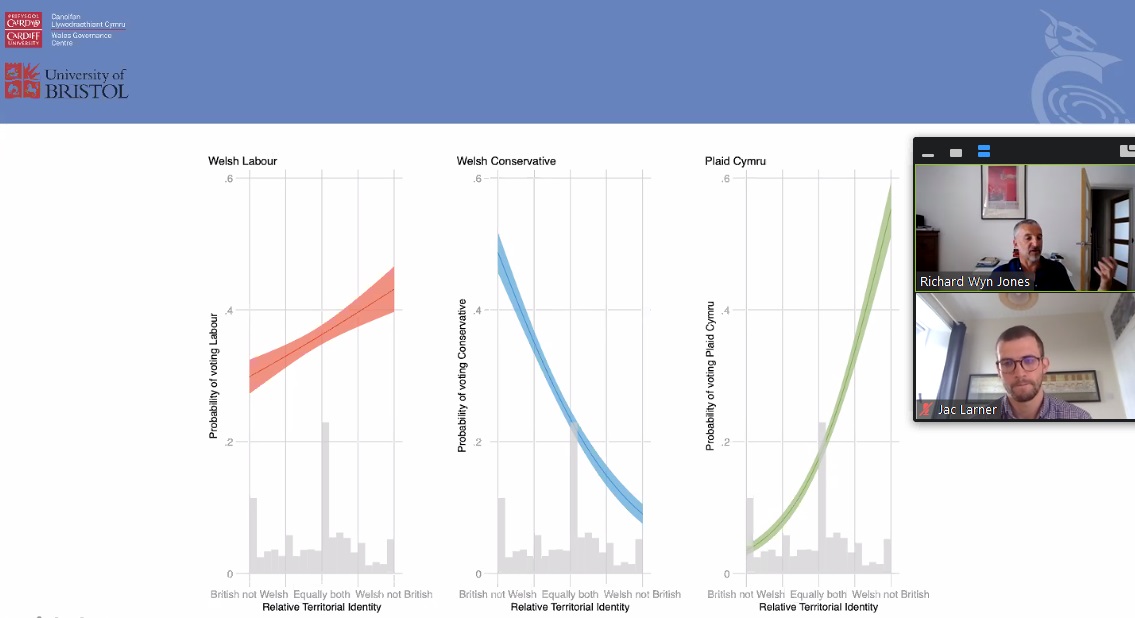
Onto the Welsh Conservatives. @Jaclarner pointing out that despite a good result, Conservatives still struggle to carry their UKGE voters over to the Senedd.
You can also see alot of the Labour Leavers, borrowed in 2019, going "back home" (15% of the 2019 Tory vote).
You can also see alot of the Labour Leavers, borrowed in 2019, going "back home" (15% of the 2019 Tory vote).
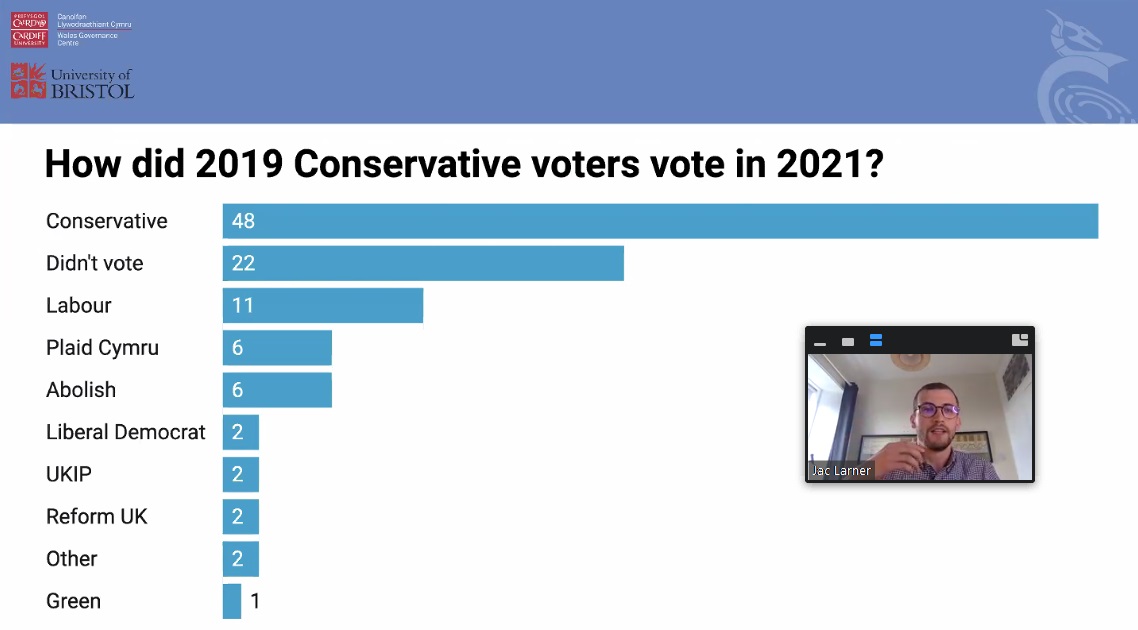
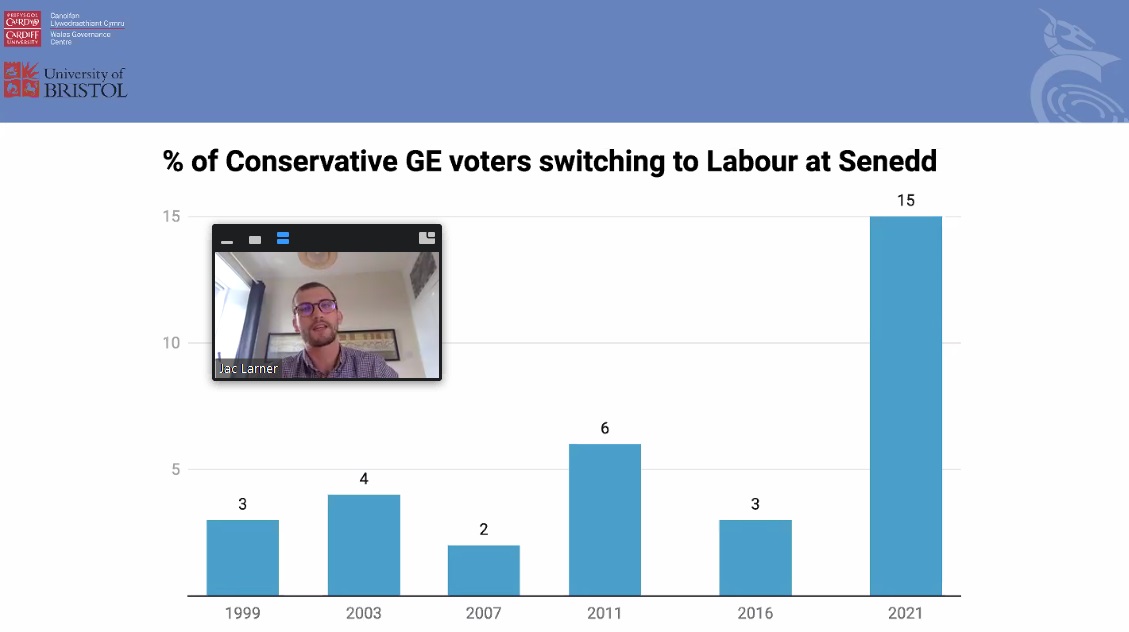
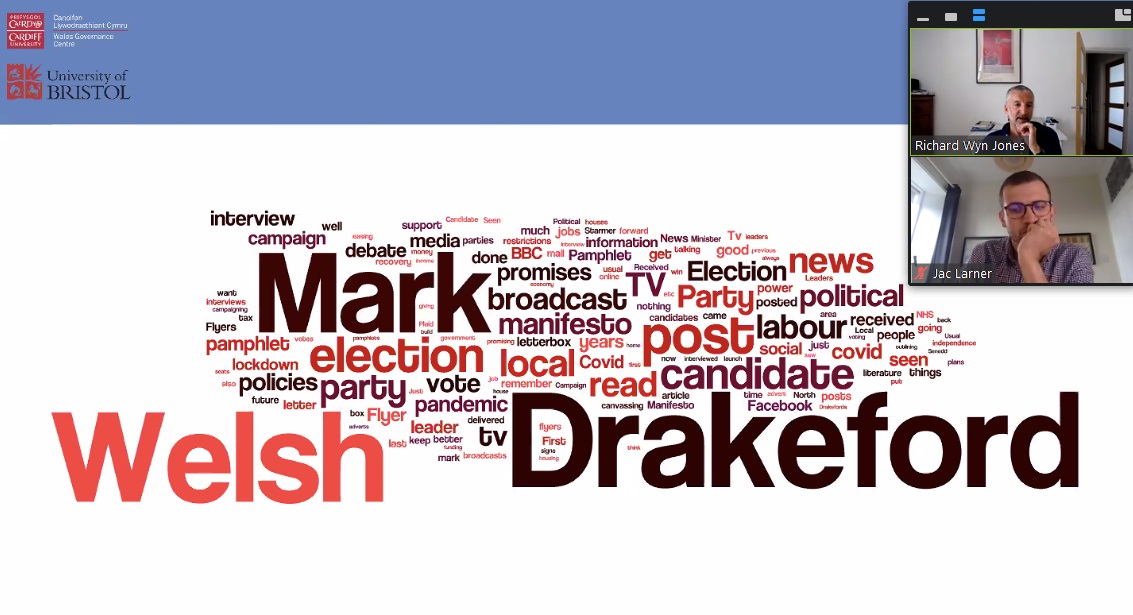
Looking at Plaid Cymru now. Wordcloud suggests that independence did cut through as a feature of their campaign.
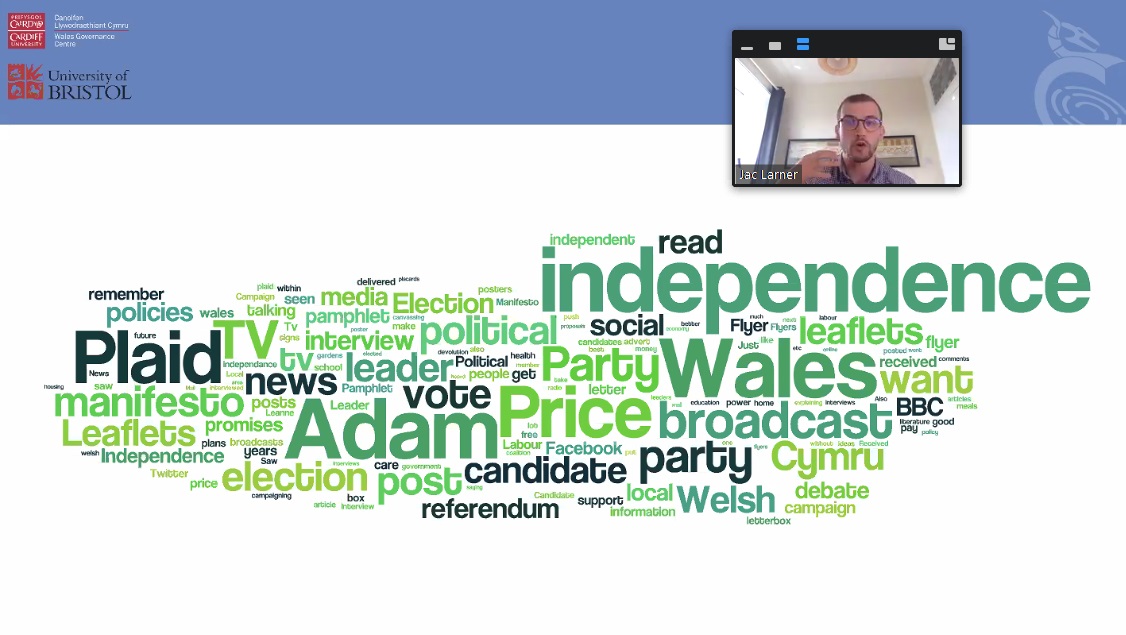
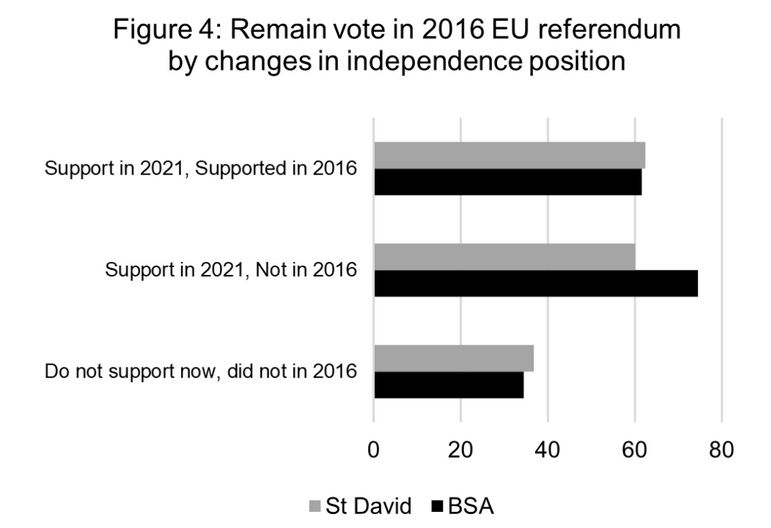
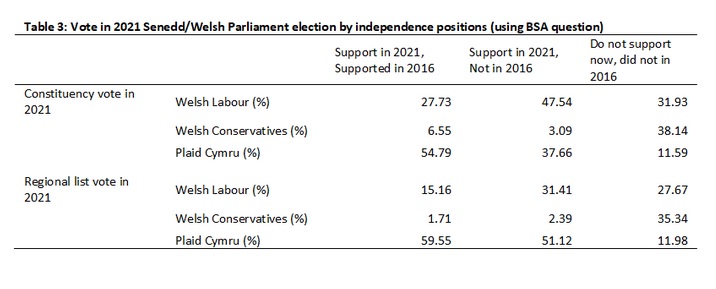
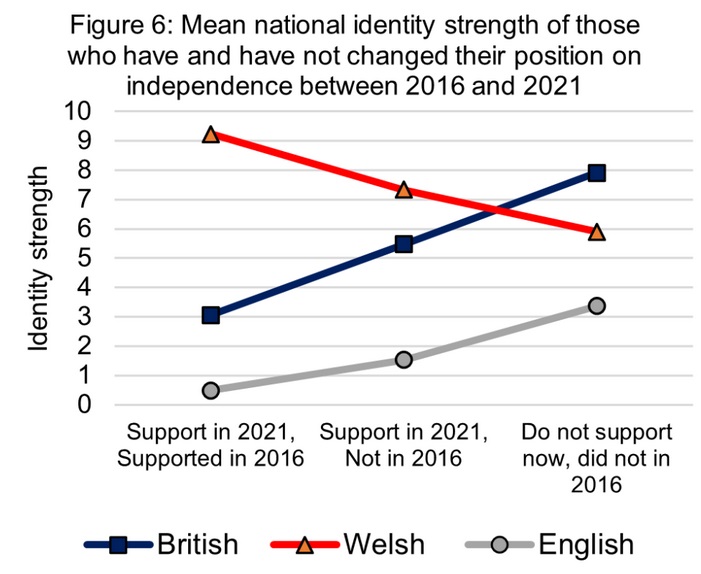
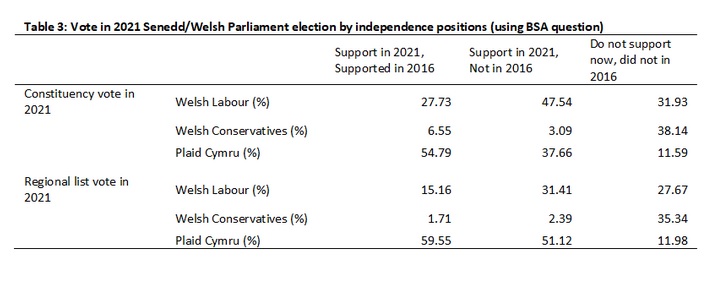
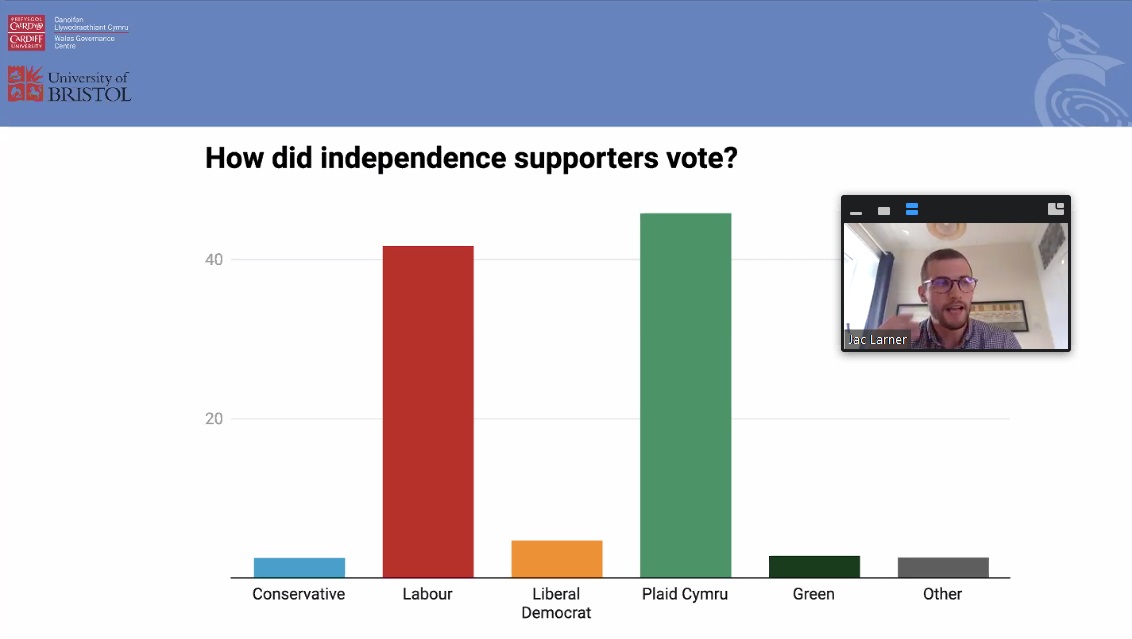
However, Labour now almost as strong as Plaid Cymru amongst independence supporters.
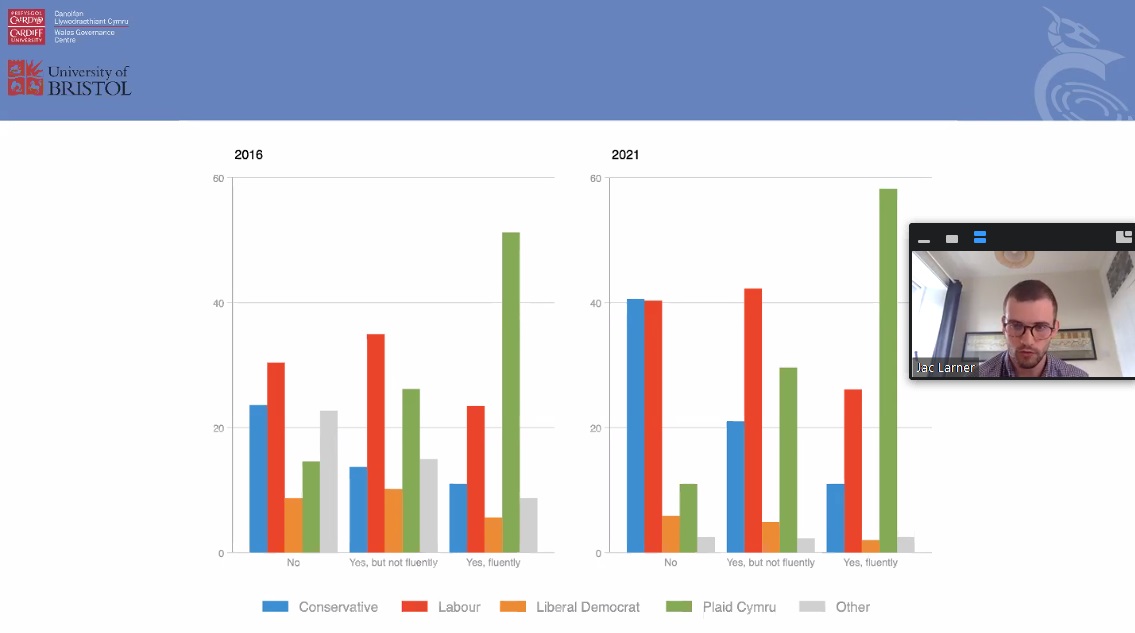
Evolution of party vote share between 2016 and 2021 by Welsh language ability.
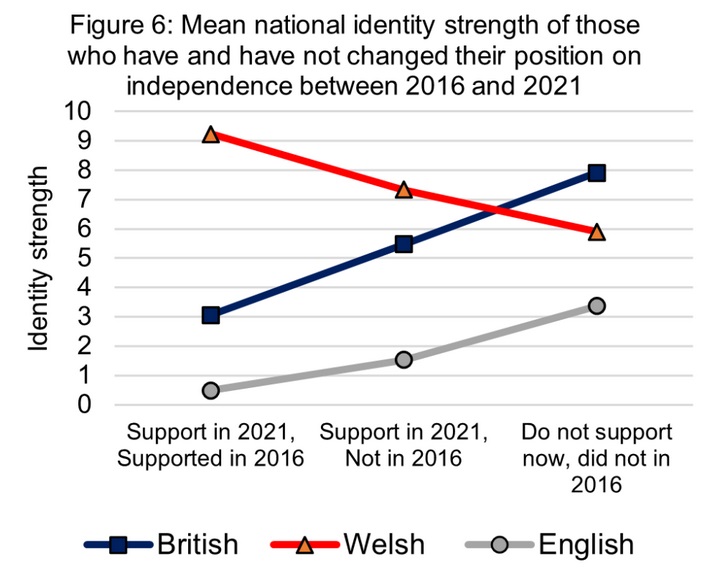
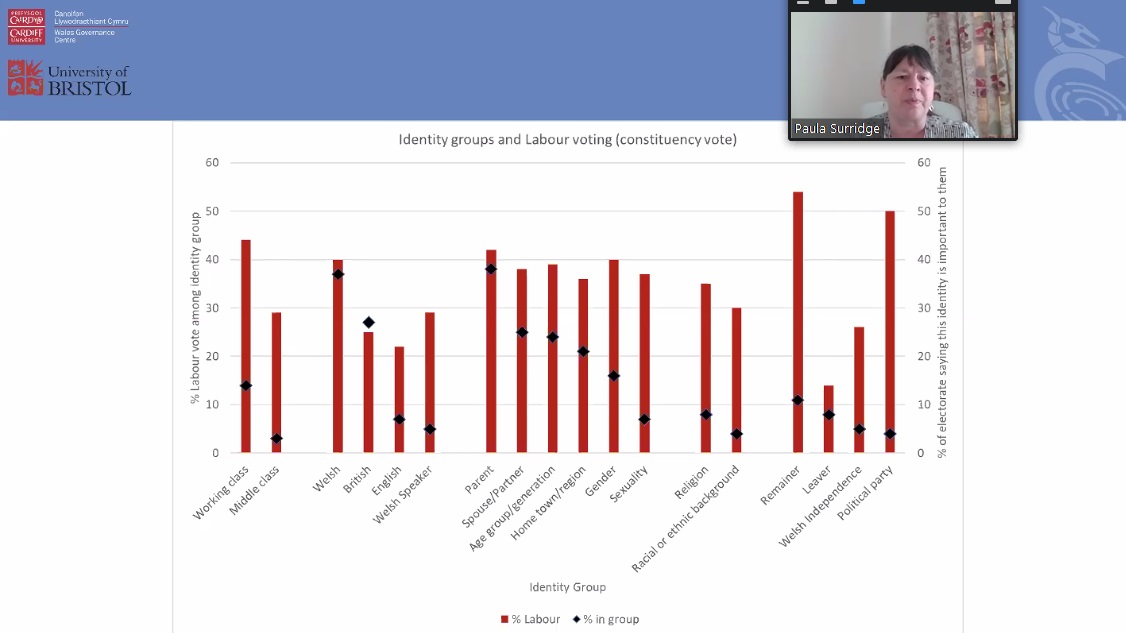
We are now turning to @p_surridge's analysis of Welsh Labour vote by identities. The relative size of identity groups is vital here.
That's the end of #SESWES21 live tweeting.
For those who missed it, the video will go up next week. But as ever, the best way to see these things is to be there on the day!
There is more to come from both of these election studies so please keep following.
Diolch! 🏴🏴
For those who missed it, the video will go up next week. But as ever, the best way to see these things is to be there on the day!
There is more to come from both of these election studies so please keep following.
Diolch! 🏴🏴
• • •
Missing some Tweet in this thread? You can try to
force a refresh