
Another day, another factually inaccurate critique of UC's use of diversity statements. A thread.
newdiscourses.com/2021/03/univer… via @NewDiscourses
newdiscourses.com/2021/03/univer… via @NewDiscourses
The conflation begins early: while all faculty applicants at UC submit DEI statements, the general use of DEI statements is much different than the way they've been used in the Advancing Faculty Diversity Initiative searches, which are specially-funded, targeted & small-scale. 
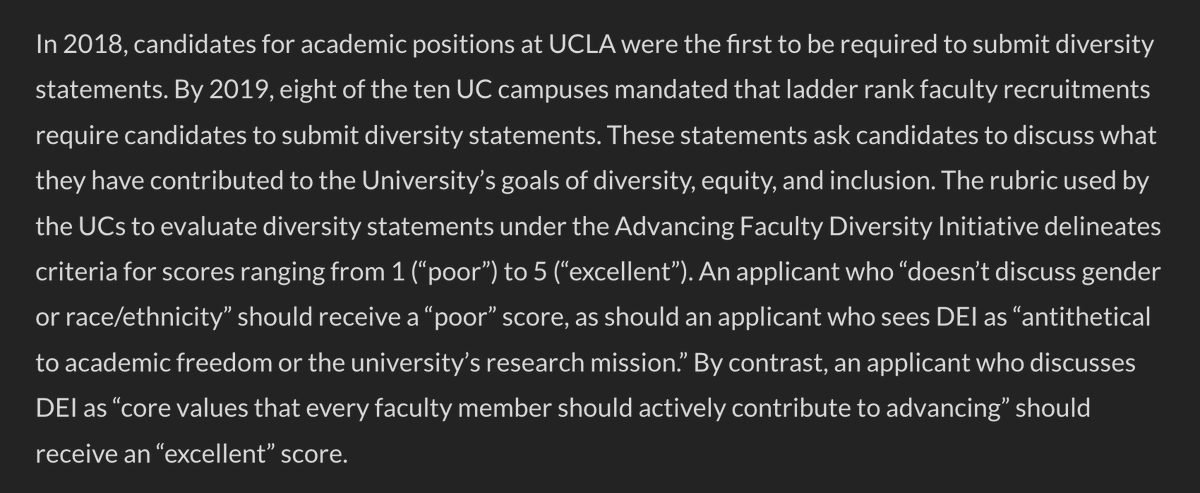
Even within the targeted AFD searches, the rubric these authors provide was not mandated or universally employed. I was on an AFD search committee @UCDavisLaw that did NOT use the rubric these authors are quoting from. At @ucdavis, I think only 3 hires were made using this rubric
It's true that in the limited searches THAT WERE FOCUSED ON DEI WORK, UCB cut a lot of people who didn't write good DEI statements. Similarly, when my school is hiring in IP, we cut a lot of people who do torts; we don't hire immigration restrictionists to run our asylum clinic.

Here's where these factual mistakes matter. Academic freedom means that teaching & research can only be judged by disciplinary experts in one's field. If rubrics are being imposed from above (as these authors mistakenly say), that's an academic freedom problem. If not, it's not.
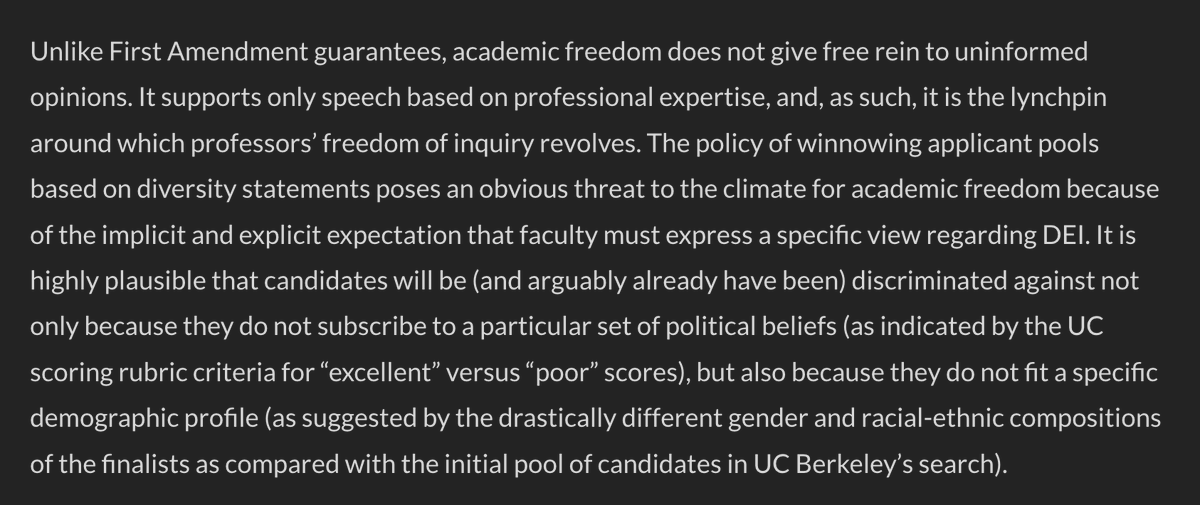
Quick side point: @ucfreespeechctr does much more than the authors note. For example, it has also now sponsored four classes of Fellows, with a $25k budget for each, funding a broad array of research--including mine on DEI statements. This is all readily available on the website.

I have a different take here. UC should demand that all disciplines attend to diversity, equity, and inclusion, but allow that this will operate differently in different disciplines. This is fully consistent with academic freedom's focus on disciplinary expertise.
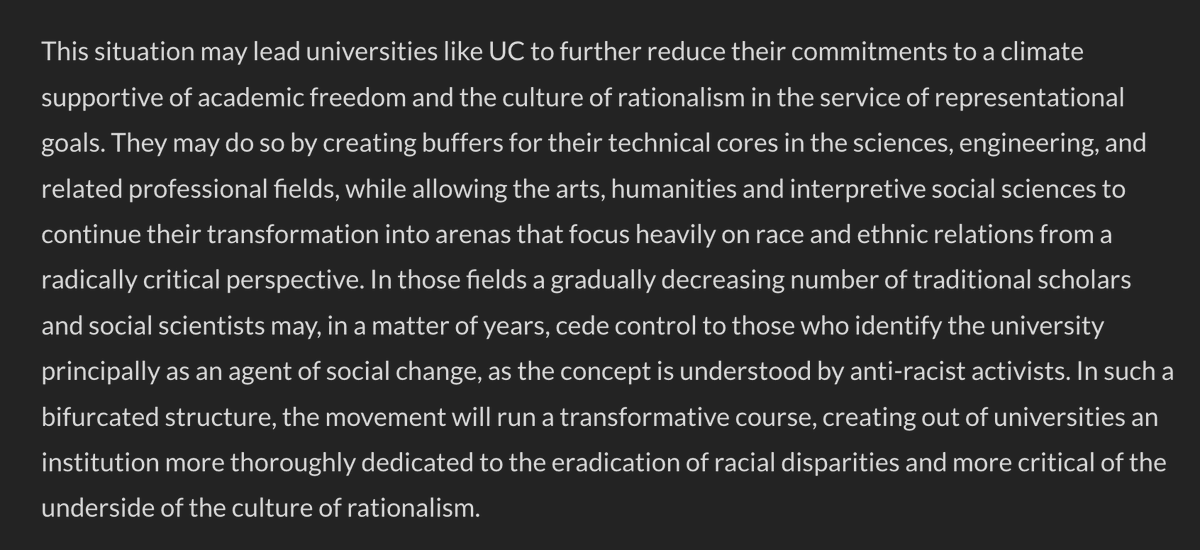
Finally, it is notable that a long essay about purported threats to academic freedom at the University of California makes no mention of any of the structures in place to protect academic freedom throughout the system, or any of the work done there on these very issues.
• • •
Missing some Tweet in this thread? You can try to
force a refresh







