I've gone down a rabbit hole of reading about the life of Yellowstone wolf 21, who seems to have been the wolf equivalent of the Buddha crossed with Batman. In his entire life he never lost a fight & never killed a defeated enemy. What a legend.
He shared his kills and was a gentle and nurturing dad and uncle. 21 was the male role model we all need:
21 was even merciful toward the sexy bad boy of the wolf world. He knew what he was doing.
Even in the midst of a harsh struggle for survival, 21 looked out for the underdog.
And when it was time for 21 to die, he went out on his own terms, like the noble soul he was. We should all be so lucky:
So basically, the Lion King doesn't have shit on Yellowstone Wolf 21, a parent and a leader with a servant's heart. This is a great book about his life if you want to learn more:
I probably should mention that 21's mate, 42, had a life at least as dramatic as his. Nicknamed "the Cinderella wolf" for how she was brutalized & dominated by a cruel older sister before coming into her own, 42 was 21's equal and more:
I pulled these excerpts from different articles floating around the Internet. Here's the main one if you want to read more: theweek.com/articles/57761…
• • •
Missing some Tweet in this thread? You can try to
force a refresh

"If your movie is called Wolf Man, you don't want to spend pages and pages where the characters are saying 'What do you think did this, a coyote?'"
Today's writing observation.
This is a glib way of saying that the audience knows what movie they're watching, and will usually get impatient with the characters being too far behind the viewer in figuring it out.
I worked on the unlamented early 2000s Twilight Zone remake, where we had 30 minute episodes--teaser+ two acts. In every episode, the teaser had to be "SOMETHING WEIRD HAPPENS" and then the whole first act was the character DENYING that something weird is happening. It sucked.
My most "old man yells at cloud" opinion is that it was mentally healthier when even upper-middle class kids had after school and summer jobs & learned a work ethic & how to manage money instead of filling their time with extracurriculars to look good on a college application.
Fast Times at Ridgemont High is almost incomprehensible to 2025 teenagers partly because it presented having an after-school job as a universal high school experience. A running gag is Judge Reinhold's character having a series of ever-shittier jobs.
People my age complain about Gen Z's lack of work ethic but it's not their fault that competitive colleges value seeing "started a bullshit nonprofit" over "bought my own car from money I made as an usher at the AMC" when the latter is much more applicable to the adult workplace.
So, Twin Peaks is in production & Lynch is up in Washington and hears that a particularly annoying ABC executive is coming for a set visit. The executive shows up in the morning and Lynch proclaims "You've got a great face! I'm gonna make you an extra. Get him to hair & makeup!"
The executive is flattered and delighted as he's hustled off, put through hair and makeup, and hustled off to the diner location where he's to be an extra. What he didn't know was...the diner was the last scene to be filmed that day.
So instead of hovering over Lynch's shoulder, the ABC exec spends all day sitting alone in a diner booth, waiting patiently for his moment in the spotlight. Lynch managed to get free of him while making him somehow feel flattered by the whole experience. R.I.P., legend.
This should be interesting, because Eggers is one of the only major filmmakers who presents historical characters on their own terms instead of portraying them as modern American liberals wearing funny costumes. And medieval Christianity is strange and downright alien to us.
The Northman was great filmmaking but didn't do Gladiator-level business partly because Eggers was so unflinching about being true to the protagonist's Norse pagan worldview, which is alien and even horrifying to us as modern viewers (well, I hope it is...)
I'm just saying that a Gladiator where Maximus scolds his wife for going too easy on the household slaves and instructs her to abandon their next baby if it's a girl probably doesn't do as much business...
European visitors to the 19th Century American West would marvel at how many humble homesteading families would keep a cheap collected Shakespeare volume next to the Bible in pride of place. His plays would be performed in mining camps, saloons & even on whaling ships.
Popular newspapers of the day were filled with Shakespeare allusions, even some deep cuts, because it was assumed that the mass reading audience would be conversant in the plays enough to pick up the references.
Black Americans loved Shakespeare, too. A black theater company in New York City staged Richard III back in 1821 (!!!) and black audiences, performers & critics would find many connections between Shakespearean characters & situations and the black experience in America.
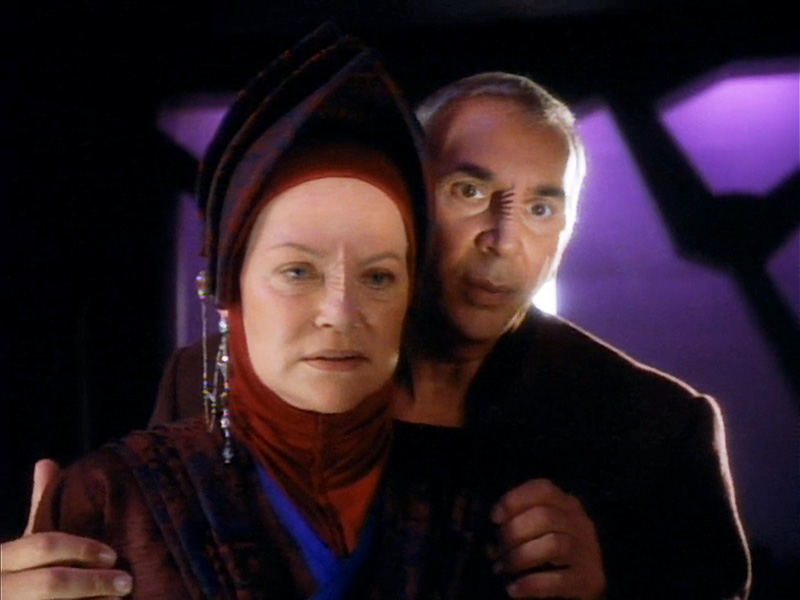
It's insane that when Deep Space Nine was on the air the Bajoran politics episodes got derided as boring when you watch them now and it's incredible actors like Louise Fletcher & Frank Langella in what feels like a preview of 21st century genre shows like BSG and Game of Thrones.
Ironically, the Dominion war episodes that got everyone excited at the time ("finally, kick ass action in Star Trek") have aged a lot worse, between the VFX limitations & the fact that we've had so much space war content since then. But all the political scheming? Still great!
One of the best things Ash and I ever wrote together was a pilot about UN peacekeepers trying to help put together a fictional Balkans country coming out of a civil war. And at some point I realized, "Oh, we're writing Deep Space Nine on Earth!"