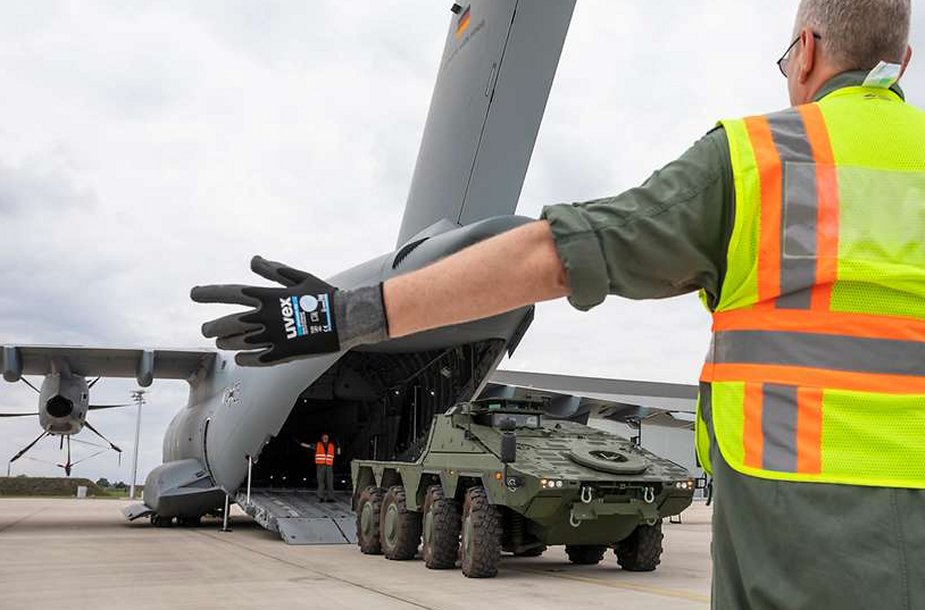
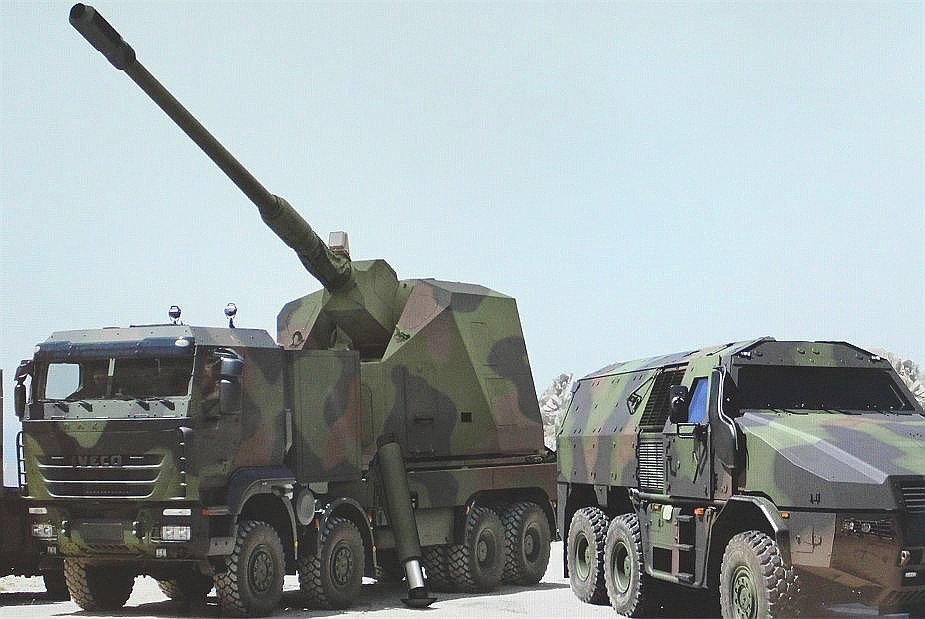
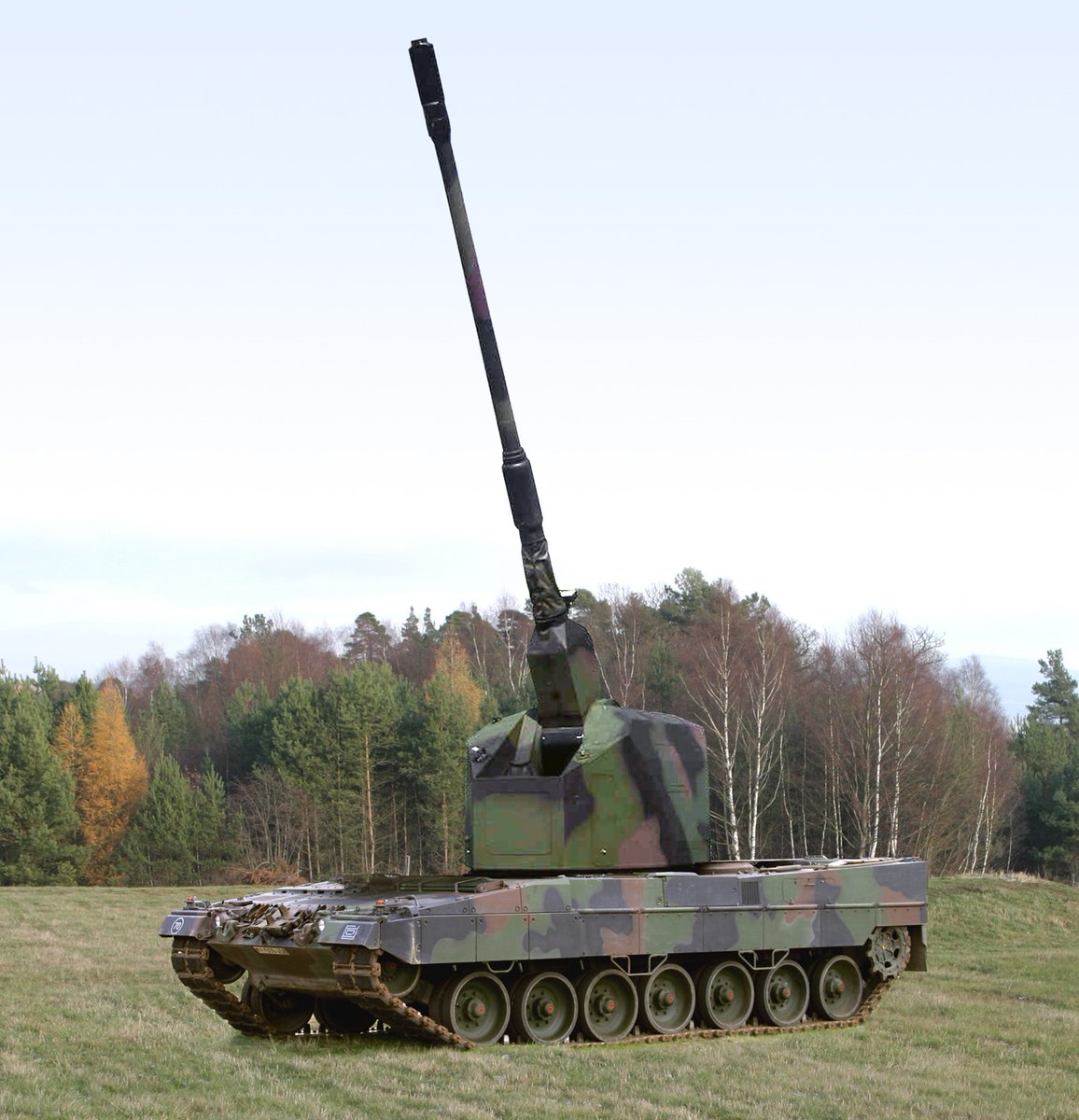
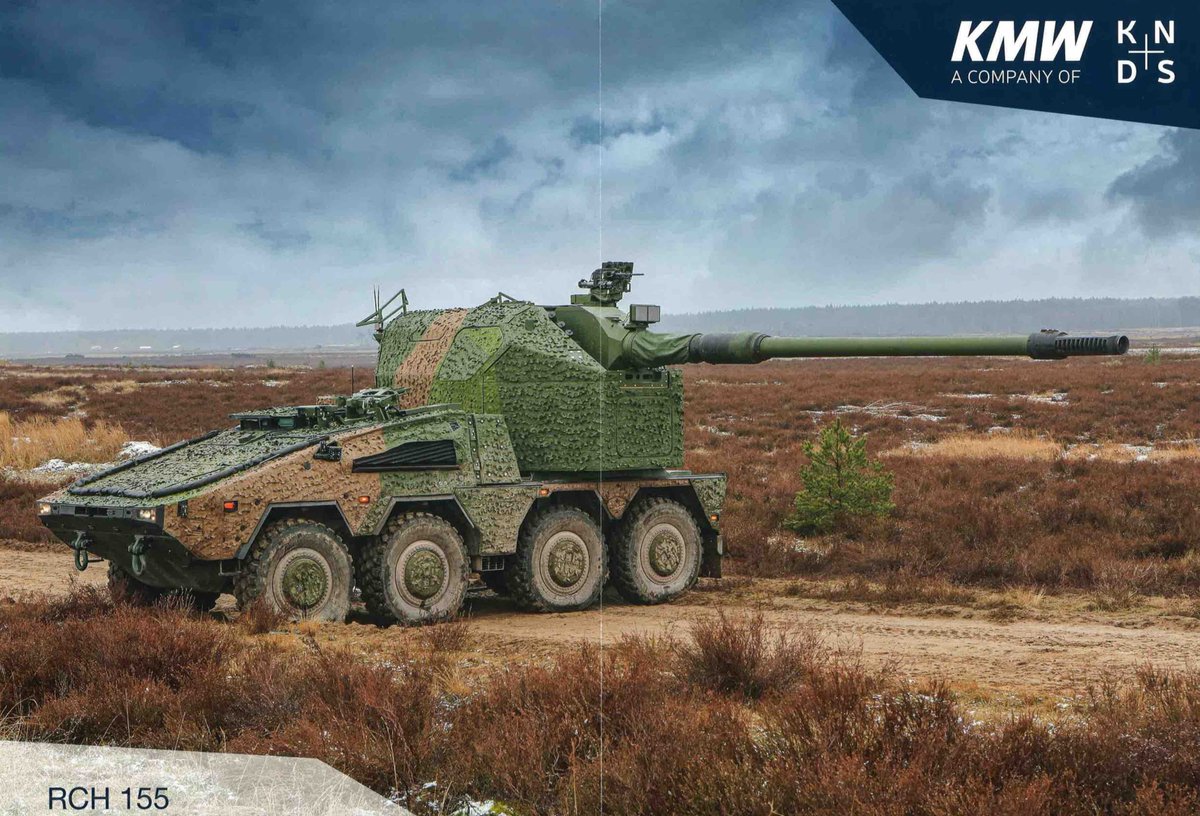
20 Things! That you might not know about the RCH155 Howitzer system. And Boxer in general too. e.g. RCH155 combines a Boxer Drive Module, Rheinmetall 155mm/52 gun and an autoloader from the PzH 2000. All mature systems to de-risk a refined Gun on a Truck (GOAT) concept.
19. The headline feature is the RCH155 Howitzer can enter action, complete a fire mission of 6 rounds, and exit action in under 90 seconds. For context, without prejudice, that's faster than a GOAT such as CAESAR takes to set up and fire one round.
18. The shooty part (technical term) is a 155mm/52 calibre NATO standard Howitzer which has a longer barrel (the '52' number) giving it further reach than the Army's existing 155mm/39 calibre tracked AS90 Self Propelled Gun (SPG).
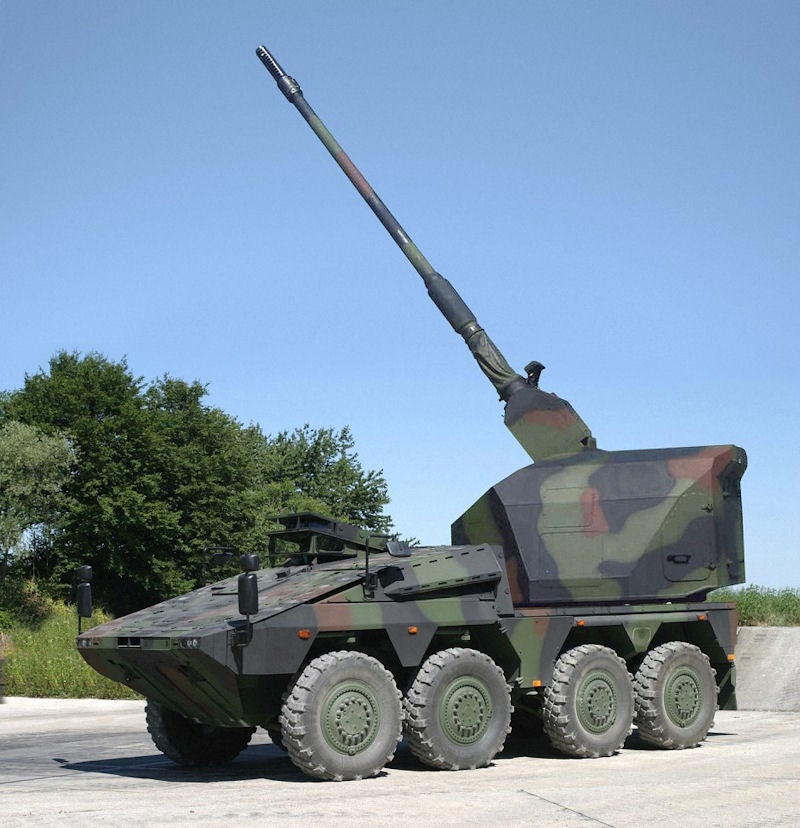
17. It's 'special move' is being designed to fire without stabilisers (legs). The Drive Module has been measured as experiencing less impulse from firing the gun than it does from driving at 30mph over cross country terrain. Stabilisers (extendible legs) are also available.
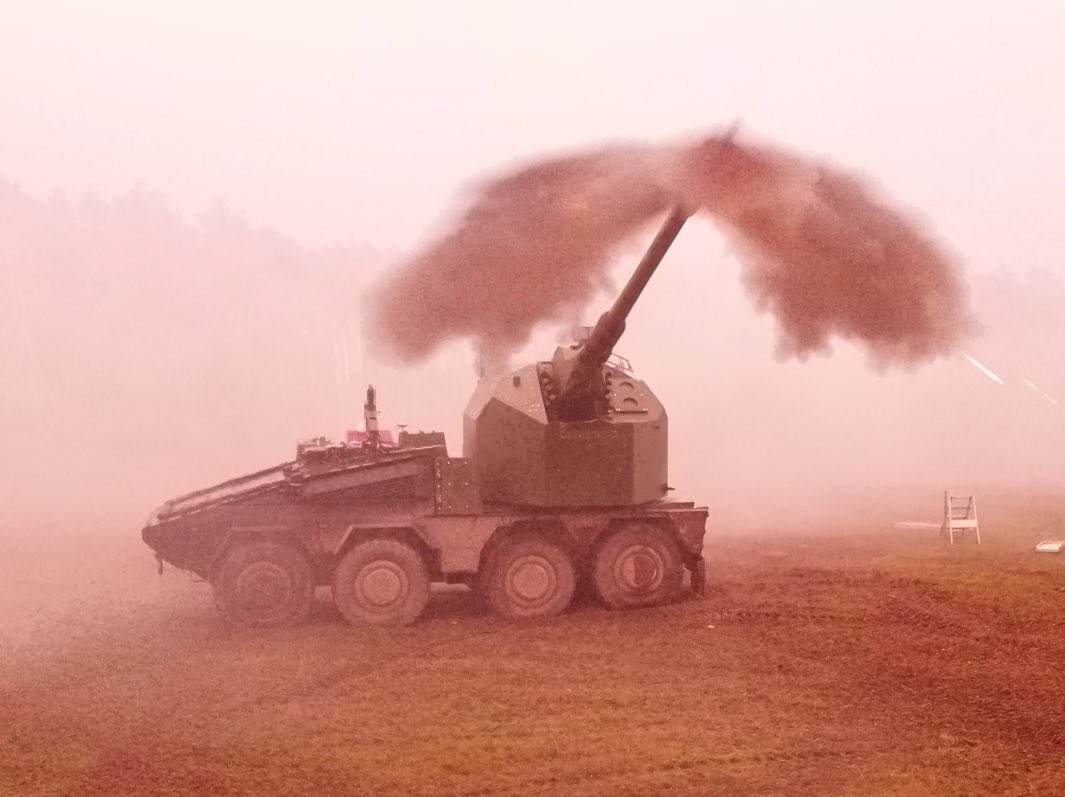
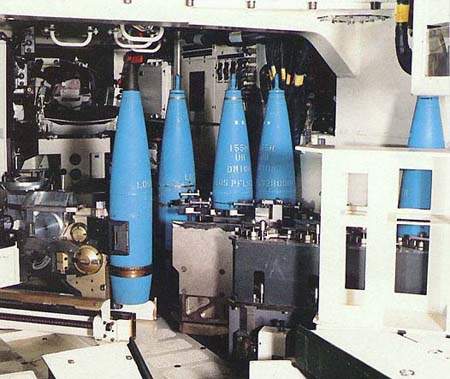
16. The turret holds 30 ready rounds and 144 charges to propel them. More charges used per shot, further distance. The rounds can be of any NATO compatible type. Anti-tank top attack, guided, smoke, extended range, illumination, conventional...
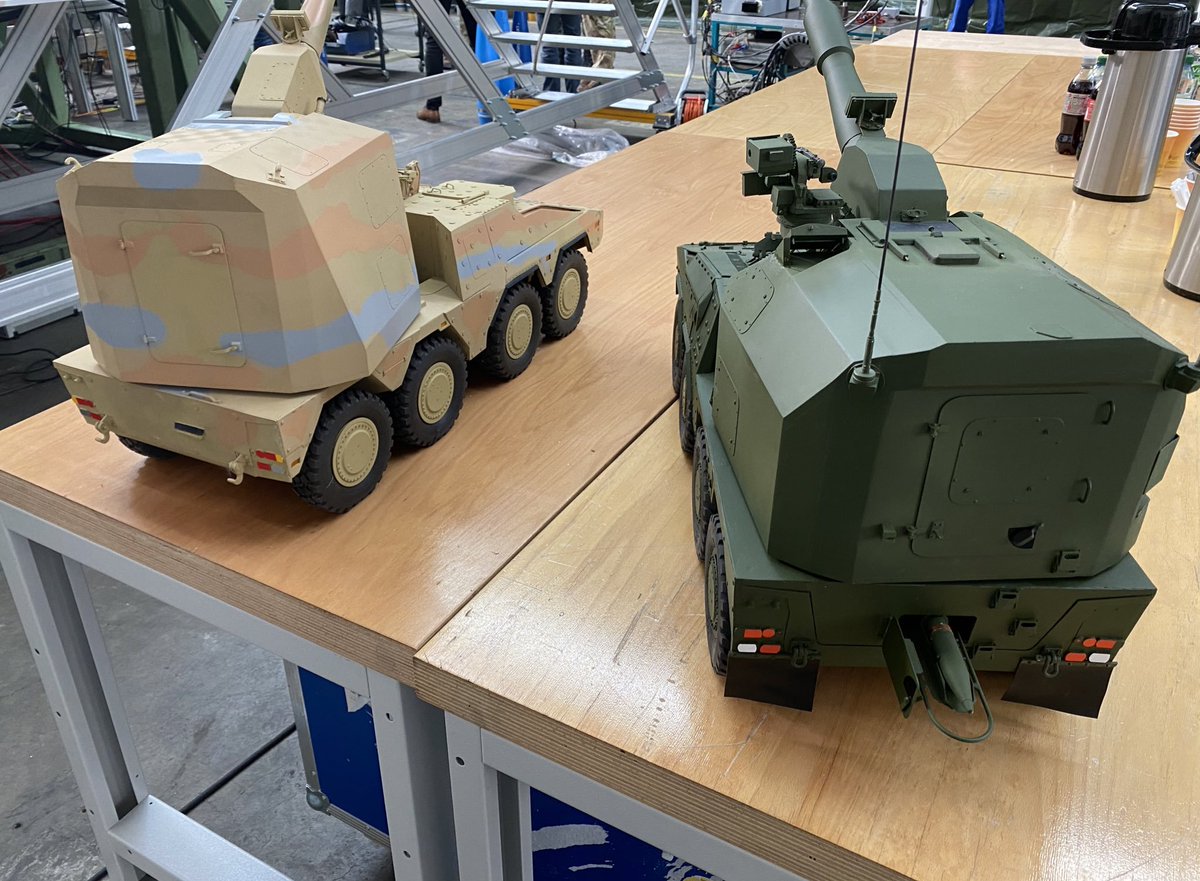
15. The autoloader can load any nature round with any number of charges in any order from its magazine. You can even mix and match within the fire mission if it takes the Commanders fancy. I mean, with authority, of course.
14. Should all the automation fail, the turret can be entered and operated in a 'reversionary mode'.
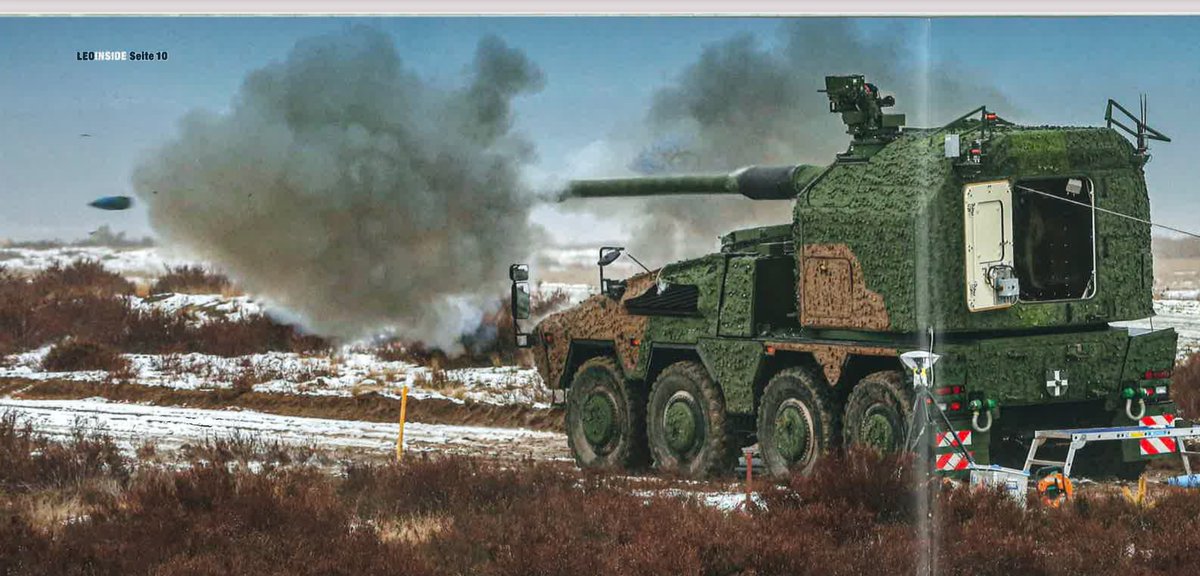
13. The Boxer Drive Module is intended to be ubiquitous across a fleet to rotate and spreas usage evenly. The Army are looking at the 'A3' Drive Module, uprated to 600kW engine, CBRN function, and a 38.5t GVW (max weight the platform is rated to carry).
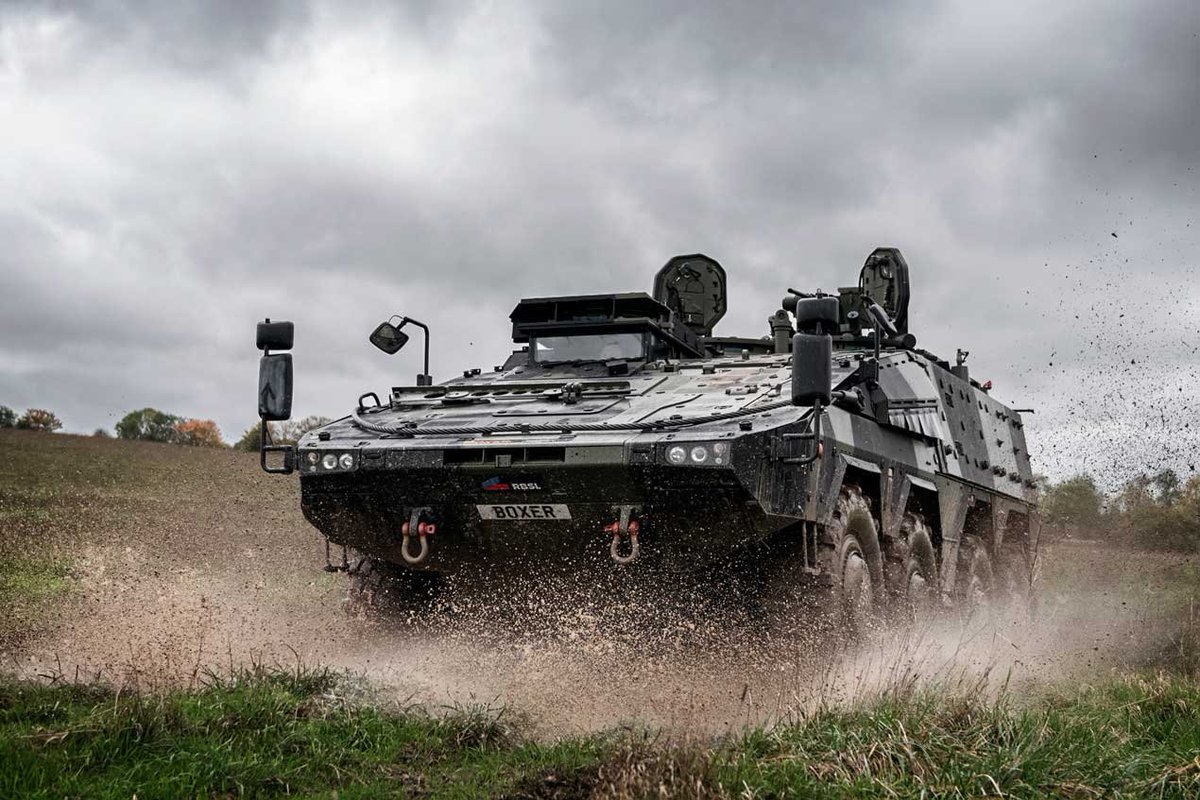
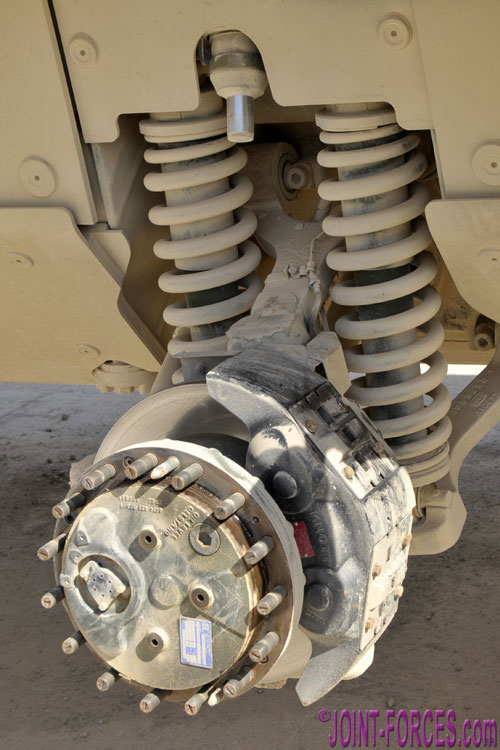
12. Want to set tongues wagging in that military forum you just joined? The Army is considering a suspension swap on the A3 to lift GVW to 39.5t. British Drive Modules remain compatible with the 6 bolt Module securing system, but use 8 bolts for extra 'fastenage'. Technical term.
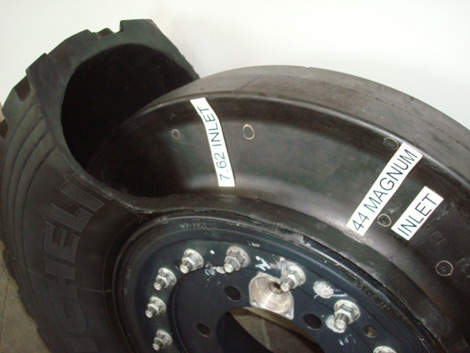
11. The wheels on the RCH155, as with all Army Drive Modules, fit an armoured run flat blade and hub cover. The blade also 'grips' the tyre bead for extra traction when tyre pressure is low, deliberately or otherwise. Your car may have a multi-piece system. Military is 1-piece.
10. RCH155's Mission Module plugs into the Drive Module. It extends the Drive Module's cabin by 1m providing space for the Commander, vision ports, a hatch to the rear and personal/dismount equipment storage space.
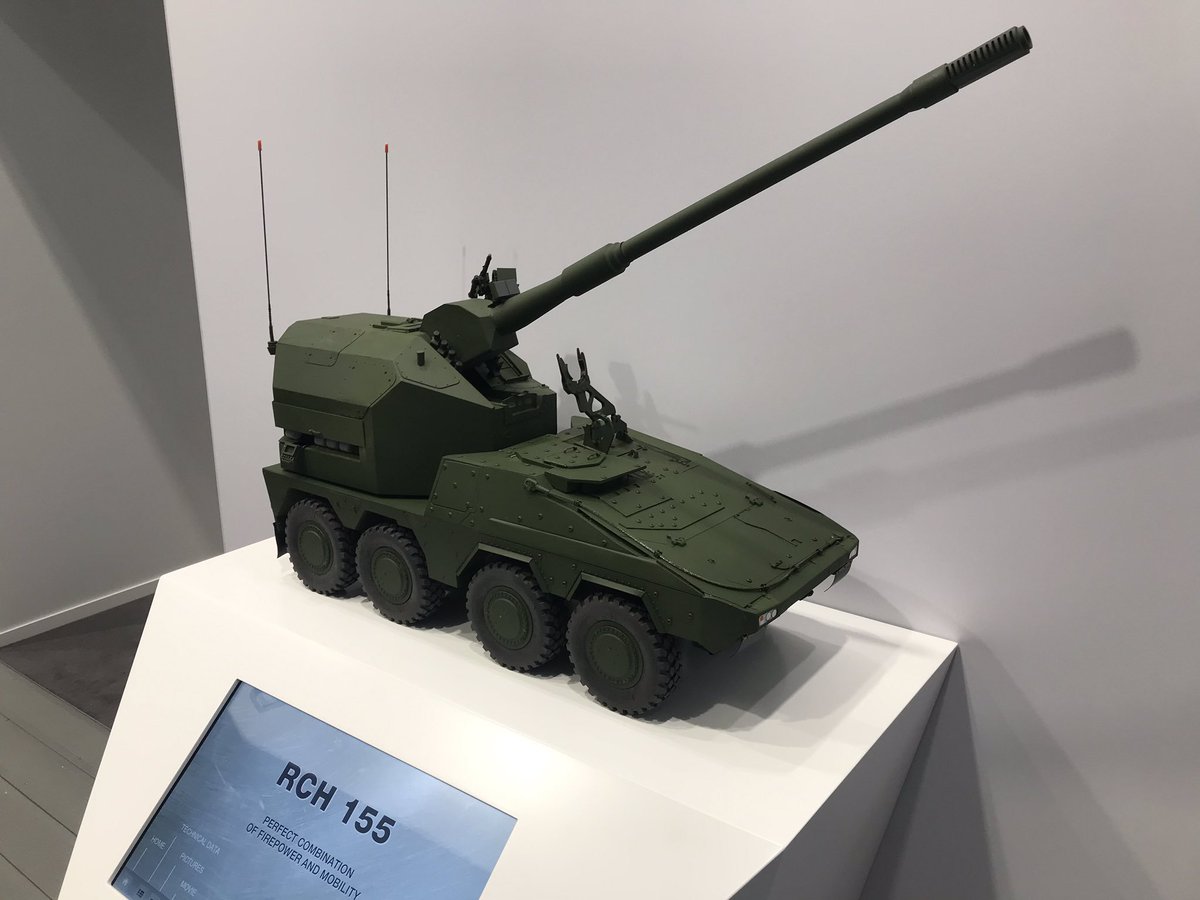
9. Although the exact level is 'hush-hush' the turret itself is also armoured against kinetic and blast damage to protect the gubbins (another technical term).
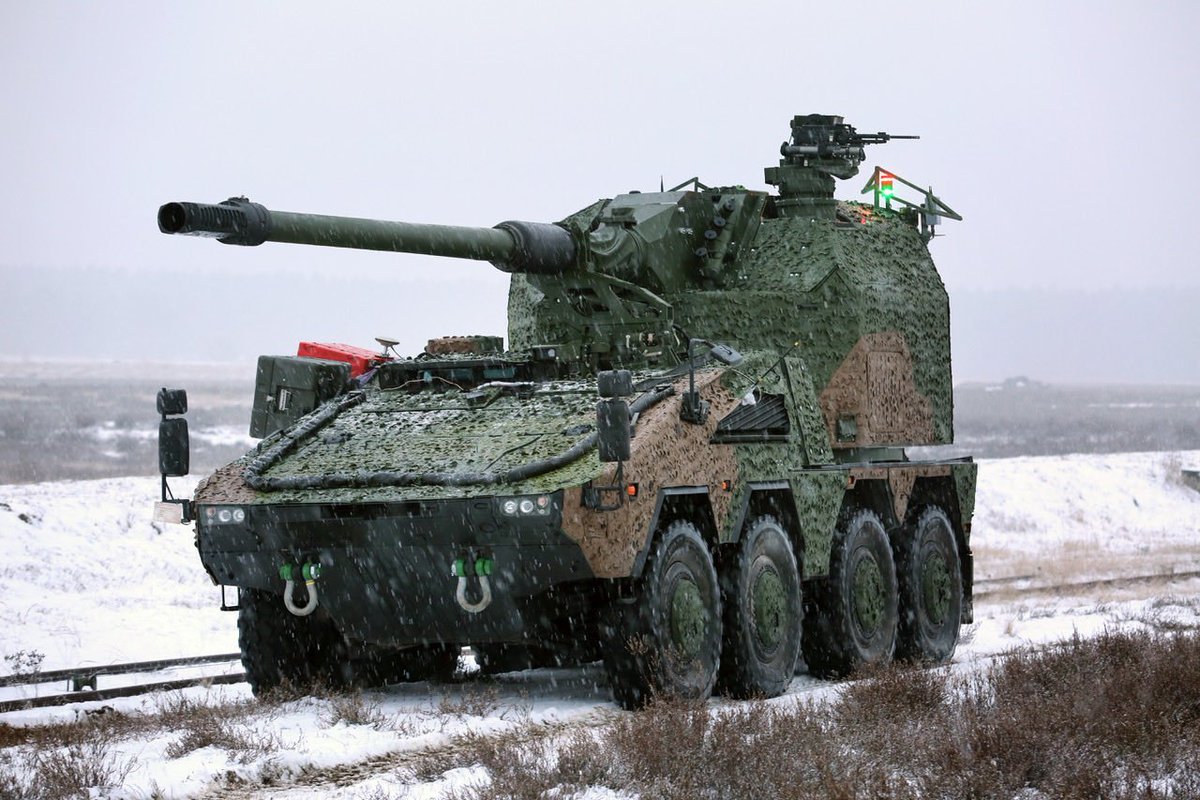
8. RCH155 fits a Remote Weapon Station (RWS) on the top of the turret for close-in protection. This can be retracted to protect it during travel and transport.
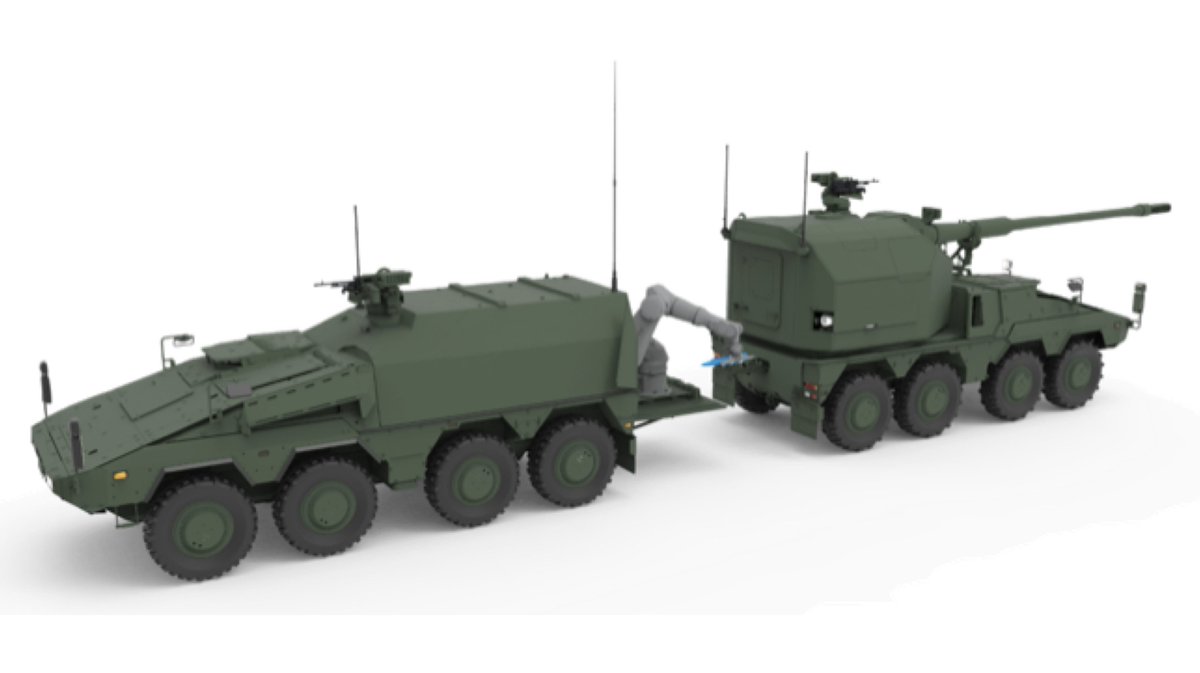
7. When the turret needs reloading, a Remote Control Resupply Vehicle (RCRV) has been designed. This is a high-top Mission Module designed to be conventionally operated but sporting a robotic arm to *augment* the process. I'd also use this robot in innovative, yet amusing, ways.
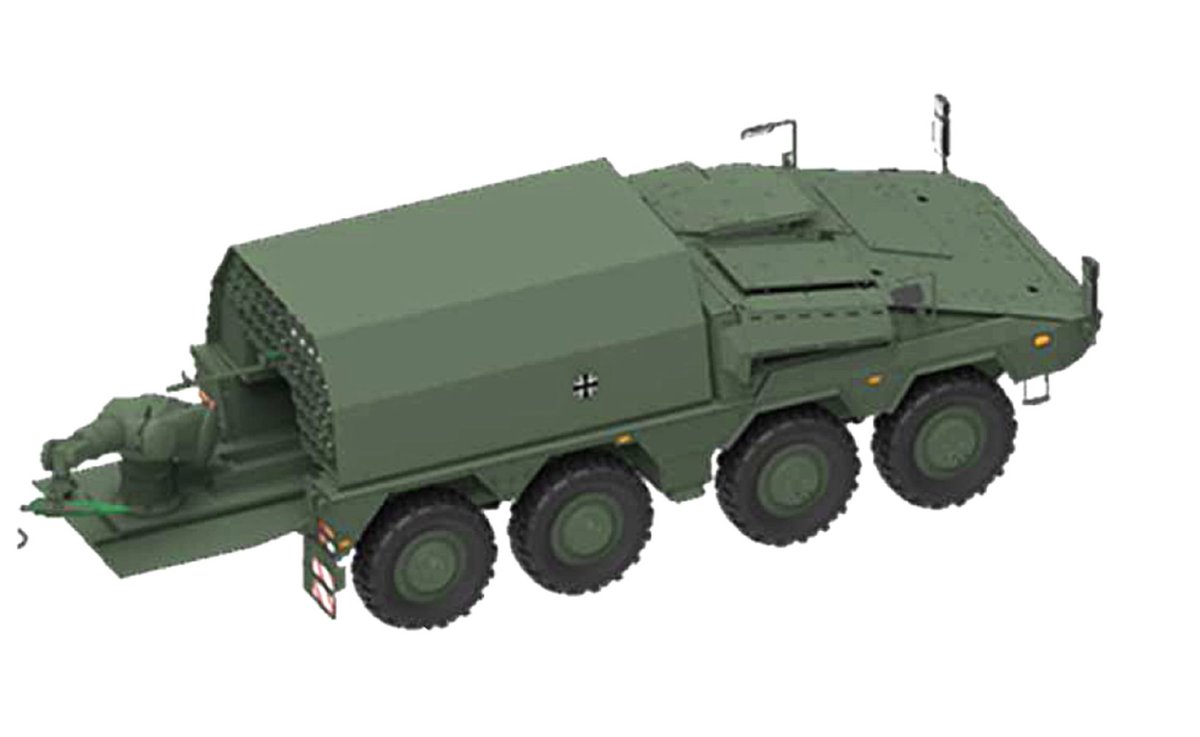
6. Between the Drive Module and extended Mission Module cabin there are two crew: Driver and Commander. But the turret can be optionally operated remotely as a static emplacement, or requiring as little as just the Driver to move the vehicle into and out of action.
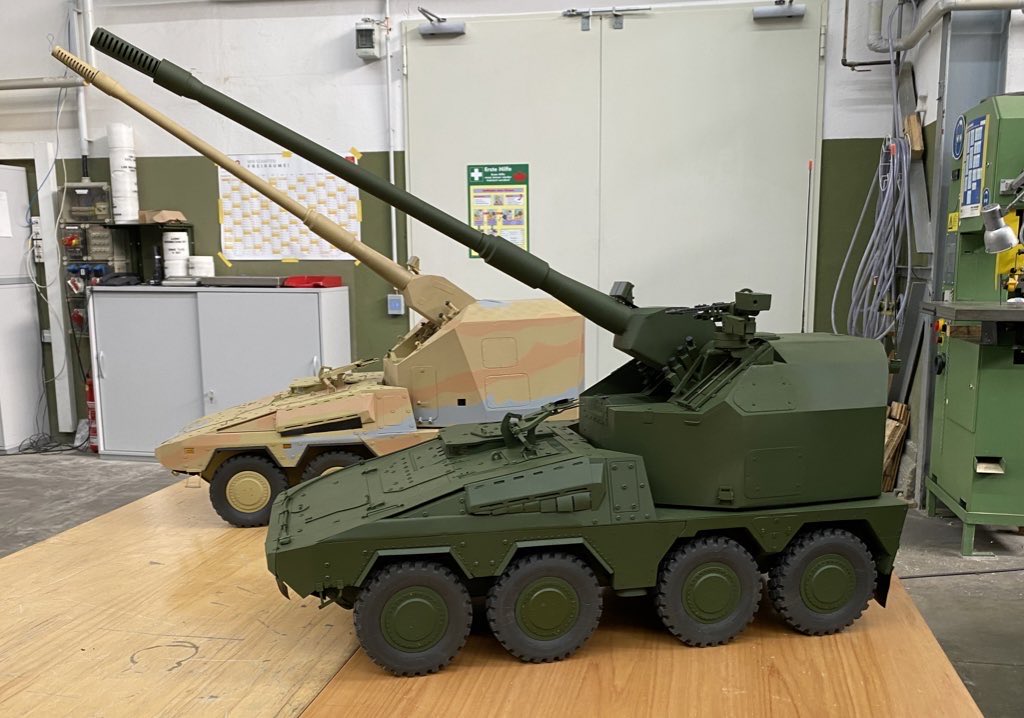
5. The turret can also be mounted on 'non-standard drivelines' (Read: Other than Boxer Drive Modules) with the use of a gun cradle and stabilisers.
4. RCH155 doesn't do away with all of the personnel. The headcount can be divided between roles allowing for 24 hour shift operation, watch, operating more Guns per headcount, active re-arming. I'm surprised at the level of operational flexibility here.
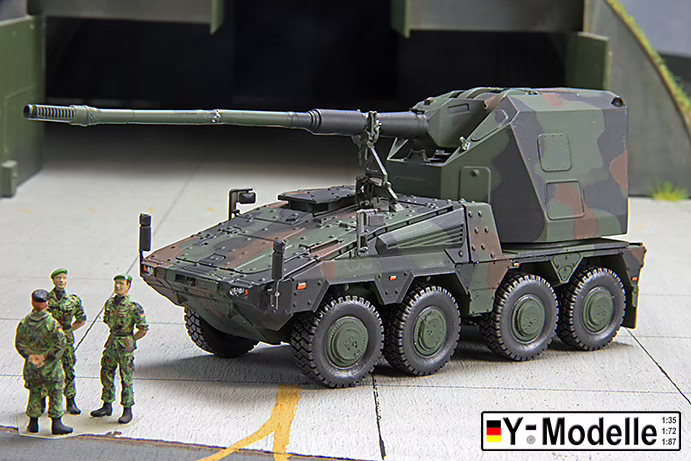
3. Drives are the most common cause for fighting vehicles to be unavailable. Engine won't start? Swap your RCH155 for the one currently carrying the C2 Util Mission Module that the QM's been using while they figure out what's wrong with the micro turbo encabulator on yours.
2. The gun can be fired in a Direct Fire mode, allowing the system to shoot straight at things that the Commander objects to being in their line of sight.
1. And finally for us nerds who look at these systems as part of a battery with logistics. The RCRV contains 90 natures and associated charges for reloading RCH155 systems. Resupply of an RCH155 takes 8 minutes and a RCRV can take as little as 24 minutes to replenish itself.
/FIN
If you found this thread interesting please Like and Retweet the original Tweet. Please consider a Follow to see more threads like these in the future.
• • •
Missing some Tweet in this thread? You can try to
force a refresh

The KNDS team very kindly provided an in-depth tour inside the RCT30 equipped Mission Module pictured below. Within was held an invaluable, and frank, discussion about both the equipment and the roadmap moving forward.
The Mission Module is currently configured for the Bundeswehr requirement. As such there is much similarity with their latest Puma S1 including turret equipment itself and the "office" where the commander and gunner sit. The uncrewed turret approach provides more room inside the cell for dismounts and equipment.
To move from Puma S1 standard to RCT30, with features such as dual land and C-SAT target engagement, the turret's modularity was intentionally matured and here's where the conversation deepened.
1/
Sensors
The optical and optronic sensors, together with the MUSS tower, can easily be replaced with alternatives.
At the moment, Challenger 3 and Ajax both share Thales Catherine and Orion sights. These are GVA enabled for the British AFV's and the RCT30 turret can accommodate.
3/
Cannons
KNDS themselves are in deep discussion as to which cannon would best suit the British Army in a Cavalry or an IFV configuration, whether Mechanised or Armoured.
Three cannons dominate the conversation:
The Rheinmetall MK30-2/ABM is the most seen on Puma and RCT30 (PuBo). It has a growing user base with German Puma's and Boxers being joined by Australian and now Netherland Boxers. It is considered proven the most accurate of the three. Compatible ammunition is made solely by Rheinmetall for now, but UK selection would also see cannon, barrel and ammunition production licenses.
It is not widely known but the Mk44 Bushmaster II has been confirmed as already integrated with the RCT30. Bushmasters advantage is it can fire a range of 30x173mm including the MK30-2/ABM natures.
Finally CT40 is also a possibility though would take longer, the RCT40 not being as mature as the RCT30. Ammunition (below) is produced in the UK and France.
At DVD this week we learned more about the official Build Configurations for the Boxer's Mission Modules that will plug into the Boxer Drive Module (currently A3 standard) via the Boxer Strategic Pipeline.
The penny-wise pound-foolish Apache/JAGM saga continues.
The UK is now buying 3,000 JAGM missiles for $957.4M.
That equates to $319,000 per missile for a system already integrated onto our AH-64E's, that the UK has already trained on, which the UK has already paid for and received examples of for handling, from an Ally who is supposedly covering all extra costs of development, leaving little to no NRE expectations for the UK to bear.
Even if we go with the highest Brimstone 3 cost of £175,000 per missile which is meant to include Brimstone 3 R&D amortisation, even if we go with double the integration cost the UK was meant to "save" at £150M, the UK would have saved £110M by sticking with our own developed and proven system.
This does not even go into details such as re-investment in industry via procurement, tax recovery to Treasury or potential for exports (Poland's own AH-64E purchase is a vast missed opportunity). The UK already knows how to use and handle Brimstone eliminating most of the NRE with the system, and we have heard from defence ministers on the record in Parliament of the superior and battleproven hit rate of the Brimstone in active Operations compared to Hellfire based systems such as JAGM repeatedly over the years.
If we do take the lower of the purchase price per missile that is known for Brimstone and the £70M quoted as being "saved" by not integrating Brimstone on Apache, then for integration and purchase of 3,000 Brimstone on British AH-64E's we would expect to see a lower end cost, using DE&S own figures, of around £385M, saving almost £400M on this purchase compared to JAGM.
Even the £110M saving at the higher prices is desirable right now and would lead to further savings in future.
It is quite clear that the promised JAGM price reduction has not occurred.
BS was called at the time of the claims and these calls have clearly, demonstrably, been borne out.
This huge expense on an unproven foreign supplied missile with variations in reliability of supply, when a higher performing and perception-busting lower cost British missile exists and is in production, does not meet the claims at the time that JAGM would save the taxpayer money and should be both questioned and investigated.
Meanwhile the Army is at great pains to show us WOLFRAM and the Mounted Close Combat Overwatch (MCCO) money being spent on Brimstone 3 integration onto their ground vehicles. With so much effort in Brimstone on Ajax, Boxer and Coyote, it is reasonable to expect the AAC to follow.
With the first of the planned 16 Protectors arriving, the RAF already has faith in the Brimstone missile and has not signalled that they do not intend to use it.
As an aside, Protector aircraft cost "just" £15M a piece based on the last contract, again with NRE mostly paid for now. By saving money integrating Brimstone on AH-64E instead of JAGM, the RAF could have the funds to double the number of Protector aircraft and integrate more equipment onto them while still having cash to spare.
⚙️ An approach to improving both Fleet Husbandry and Industrial Capability Husbandry for Army.
⏺️ Low Rate Production
⏺️ RESET Programme
1/
⚙️ It is no secret that the Army's fleets have not received adequate TLC. Vehicles left outside in the British climate, insufficient spares ordered, vehicles cannibalised routinely.
2/
⚙️ Similarly, it is no great secret that the very industrial base that the Army relies on has withered due to lack of engagement and orders. Infrastructure, sites, facilities, plant and skills have been allowed to erode.
⚙️ How the US Army's RESET program interacts with the M2A3 Upgrade and M2A4 Acquisition Programmes.
Oversimplified for illustration:
RESET rebuilds an M2 to pre-combat condition.
M2A3 upgrade takes rebuilt subsystems/parts and assembles/integrates them with new subsystems.
1/
Red River Army Depot handles most of the RESET program for Bradley.
RESET restores to pre-combat condition, the work does not extend to zero-mile.
A Bradley is stripped into parts bins. Parts are refurbished and only replaced if defective or overly worn.
2/
These parts are then passed to BAES in Pennsylvania where they go through Final Assembly, Integration and Testing before being returned to inventory in a pre-combat condition.