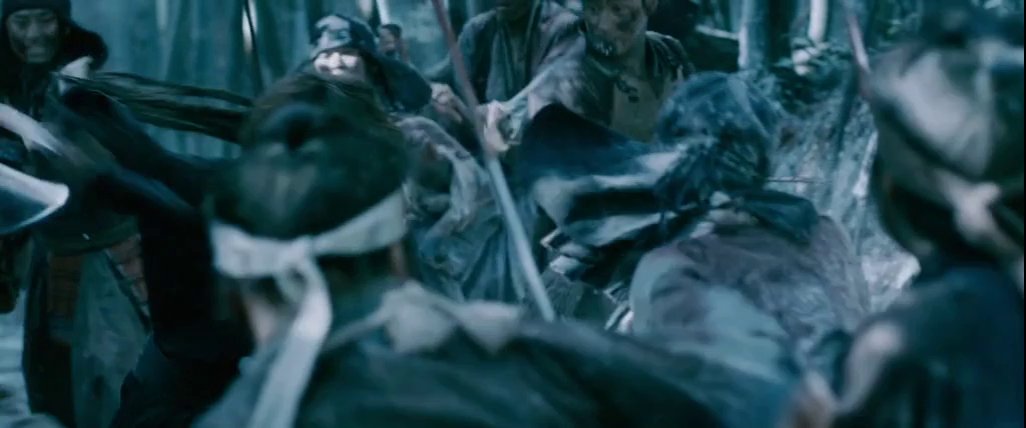
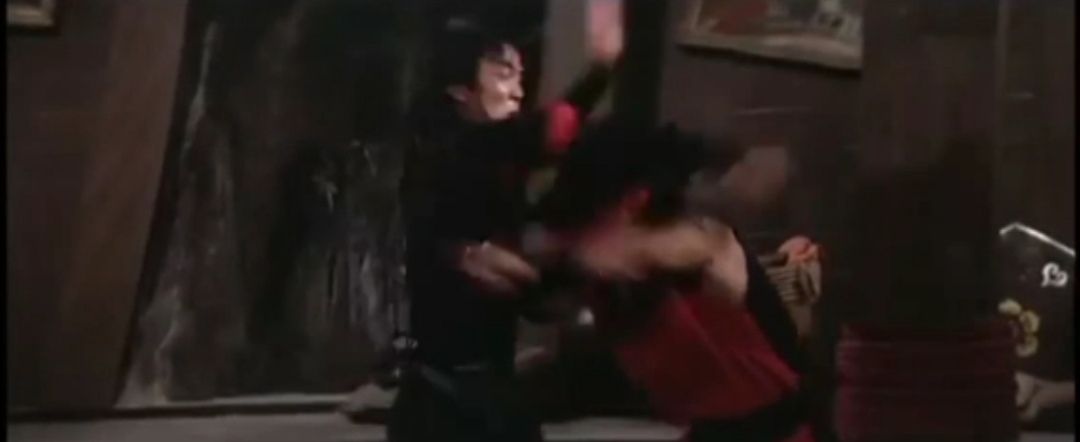
The very first fight of RUROUNI KENSHIN (2012) is important because it serves two purposes: to introduce us to the Hitokiri Battōsai, and to serve as a reference to create contrast with later scenes. Therefore it must: showcase the hero's power, and instantly be seared to memory.
The fight opens with a close-up of the protagonist. It keeps things mysterious and intriguing, and tells the audience: this is who you must keep your eyes on. Pay attention to him. He then exits the frame from the right hand side. His movement marks the start of the battle.
Motion becomes the main driving force behind the scene from its first shot, and the second one confirms that: the sliding movement is continued through editing. A match-on-action, but in addition, the movement of the actor transforms into the movement of the camera itself...
...which means the characters' movements are a force of cinematic creation. The second shot does an adjustment up to reveal Kenshin already engaged in battle. It's a beautiful shot in that it reinforces the hero's aura as an astounding fighter, and makes it clear who commands...
...the eye of the camera. It's no surprise, then, to observe that the next shot is all about blocking: Kenshin segues in and out of sight continuously according to his position relative to that of his opponents. This is an amazing example of turning a logistical obstacle into...
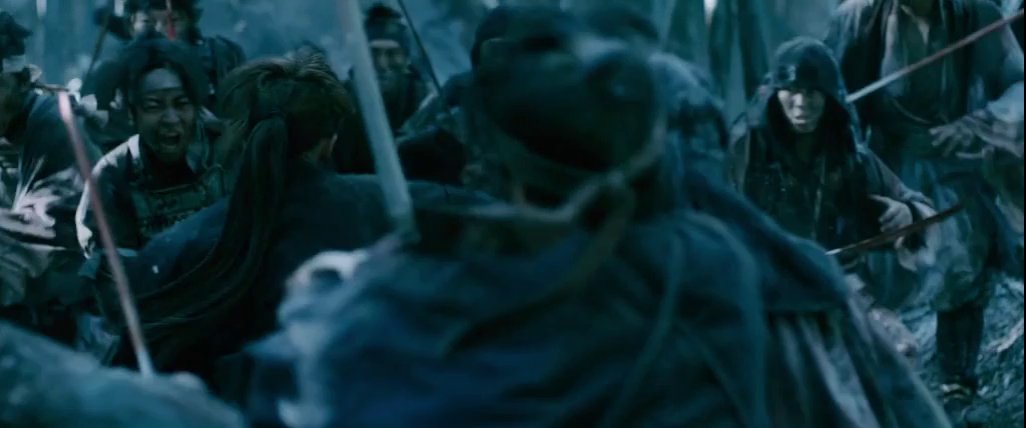
...a strength: Kenji Tanigaki and his team only had two days to film this scene, and the corridor-like topography makes it hard to insert the camera in the middle of the melee. So before doing inserts, they get the wide shots they need but use them to define their character....
After the two days of shooting had passed, director Keishi Ōtomo saw that Tanigaki was unsatisfied with his footage, so his told him he could have two hours on the third day to shoot whatever he wanted. Tanigaki took one camera, his stunt team (no actors) and shot inserts.
They're the reason why the scene works: the back-and-forth between wide shots and inserts is nothing new, but it works particularly well here to help the audience make sense of the carnage, give geographical points of reference, and so on. Chaos for the enemy, clarity for us.
The fight also establishes one of Kenshin's signature moves: the running on non-horizontal surfaces, and posits that his superiority comes from his speed and the continuity of his movements: there is no break between one action and the next, they all flow together as one.
Tanigaki's approach is based on the idea that Kenshin fights with his whole body rather than just his sword. That's the key to the unique kinetics on display for a series descending from the chanbara: he and his weapon are one. If his blade can wound, so can any part of his body.
The fight ends not with one, but with a series of iconic shots of the protagonist to drive the point home. It's striking because it relies on contrasts: speed vs motionlessness, hot blood vs cold background. OK, the audience is ready. They will remember this scene.
• • •
Missing some Tweet in this thread? You can try to
force a refresh

Action films with a female protagonist that came out this year. Titles/info in thread.
Music by @XENNONofficial
The list is in the same order as in the video. This is not a ranking. There are others too, I will mention them further down the thread. Some 2022 films that only became available this year are included.
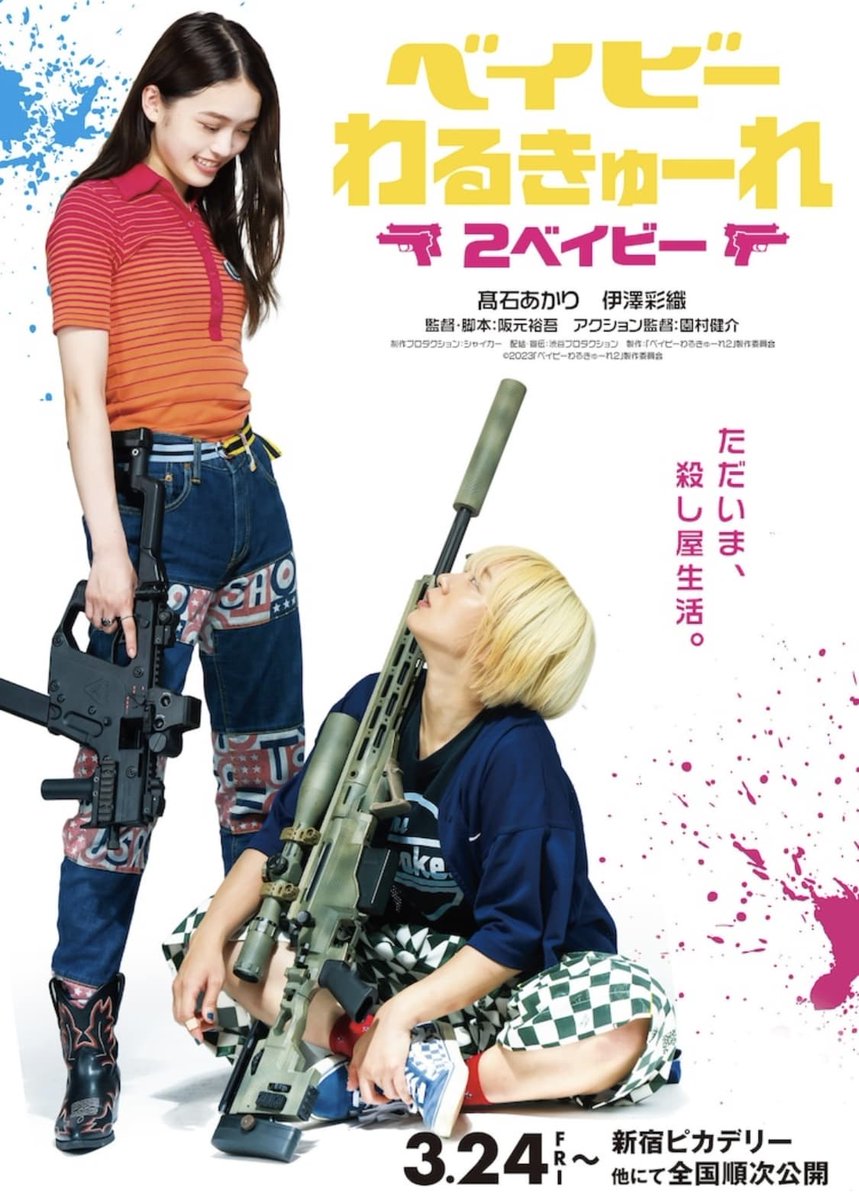
BABY ASSASSINS: 2 BABIES
Dir.: Yugo Sakamoto
Plot: Professional assassins Chisato and Mahiro are expelled from their guild. Two wannabe killers decide to go after them...
Worth it?
Yes! Light-hearted comedy with blistering action finale!
Was there ever a better time than 80s/90s Hong Kong cinema for women action stars?
Featured:
Elaine Lui vs Mondi Yau - GHOST PUNTING
Michelle Yeoh - YES MADAM
Almost the whole cast - TOP SQUAD
Yue Hong vs Yan Chi - 21 RED LIST
Yukari Oshima - OUTLAW BROTHERS
Rothrock vs Shepard - RIGHTING WRONGS
Godenzi vs Aurelio - SHE SHOOTS STRAIGHT
Moon Lee -NOCTURNAL DEMON
I know, 21 RED LIST is actually from Taiwan. I apologize, but it's just too cool not to mention at every opportunity.
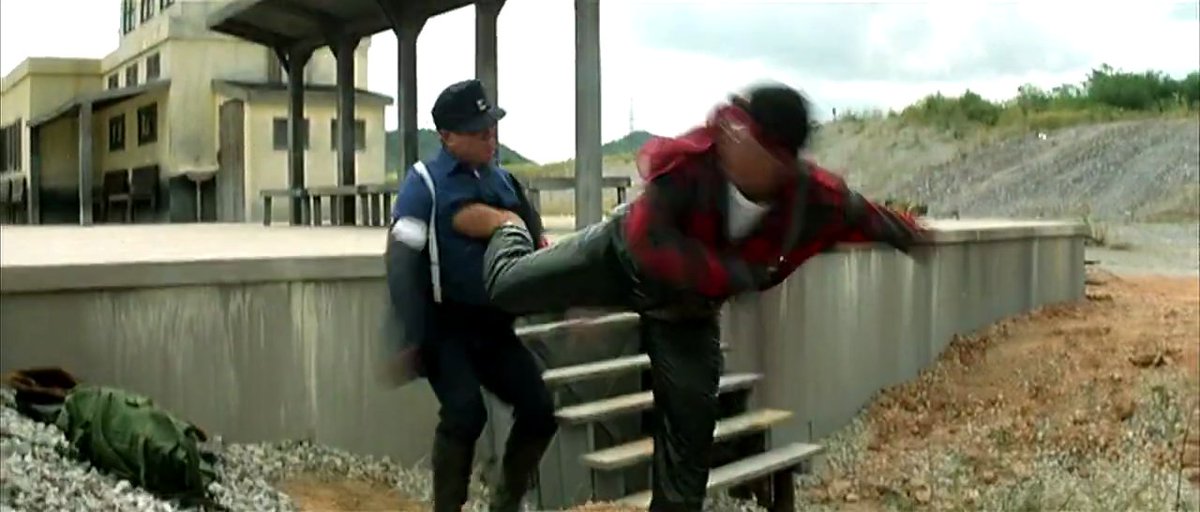
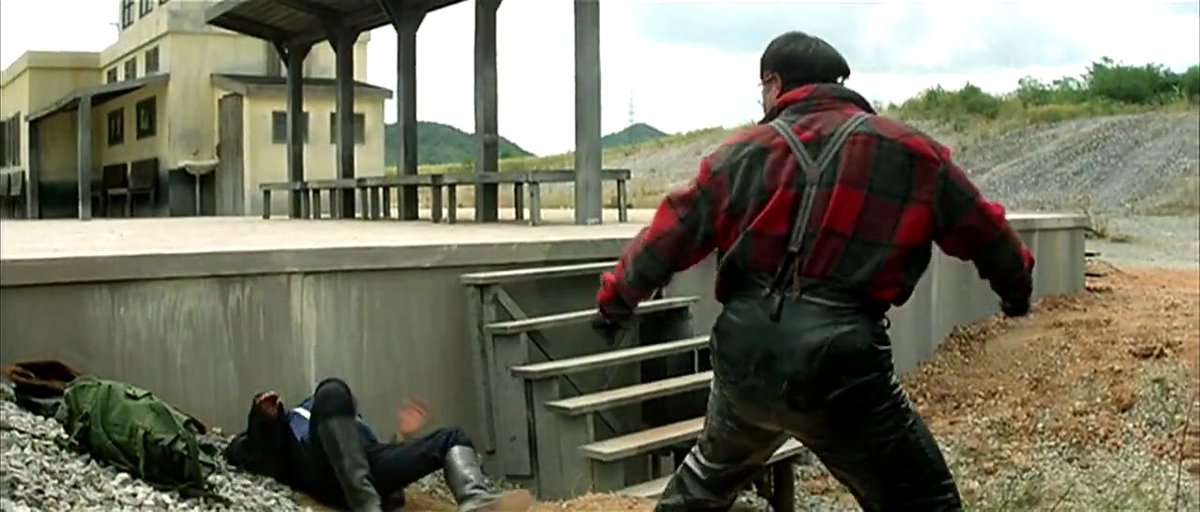
THE MILLIONAIRES' EXPRESS just came out on Blu-ray from @Eurekavideo, so why not break one of my favourite scenes down: Sammo Hung vs Yuen Biao, western kung fu pian-style!
Sammo wants to play with us and what we know populates both genres: face-offs. The shot/reverse-shot trope and its subversion therefore becomes the core component on which the director builds the scene. We start on a visually unusual low-angle vs low ground shot announcing...
...the filmmaker's wish to play with our expectations. The whole fight is about suprising the fighters and the viewer with sudden shifts in the power struggle. Yuen Biao loses the high ground advantage withing seconds through a pure HK action cinema move: Sammo's kick levels...
RIP Richard Donner, whose approach to filmmaking typified American mainstream action movies in the 80s and 90s. He was gifted in eliciting a sense of danger and excitement by leveraging cinematic language to circumvent limitations.
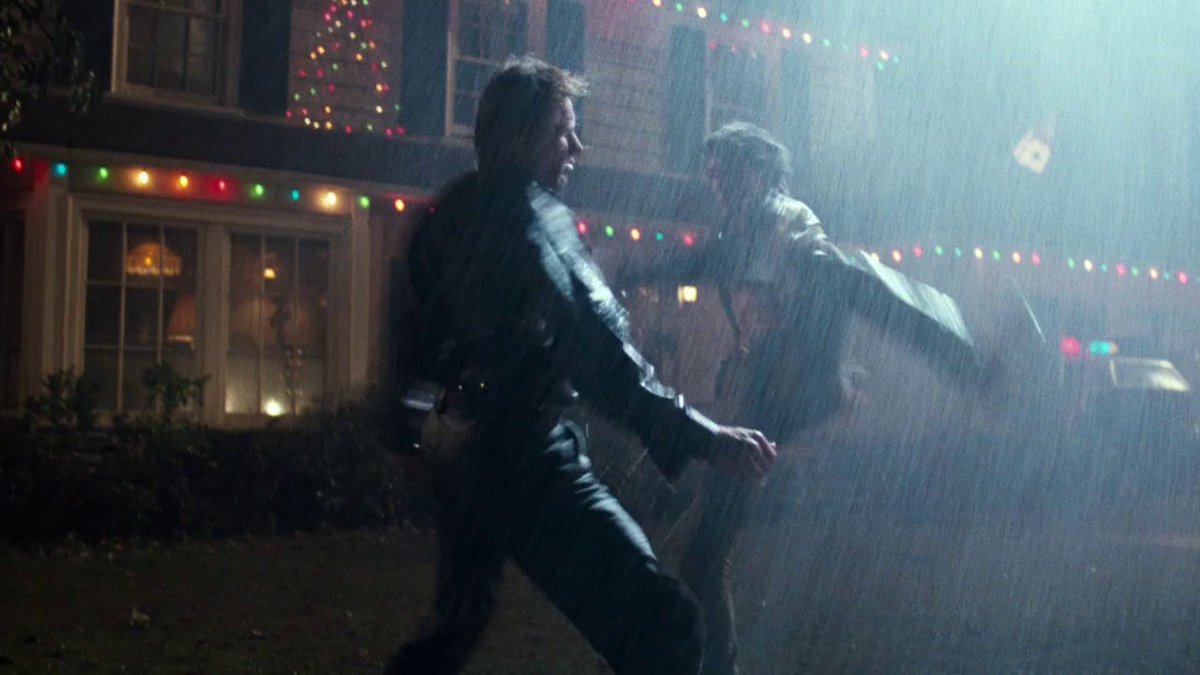
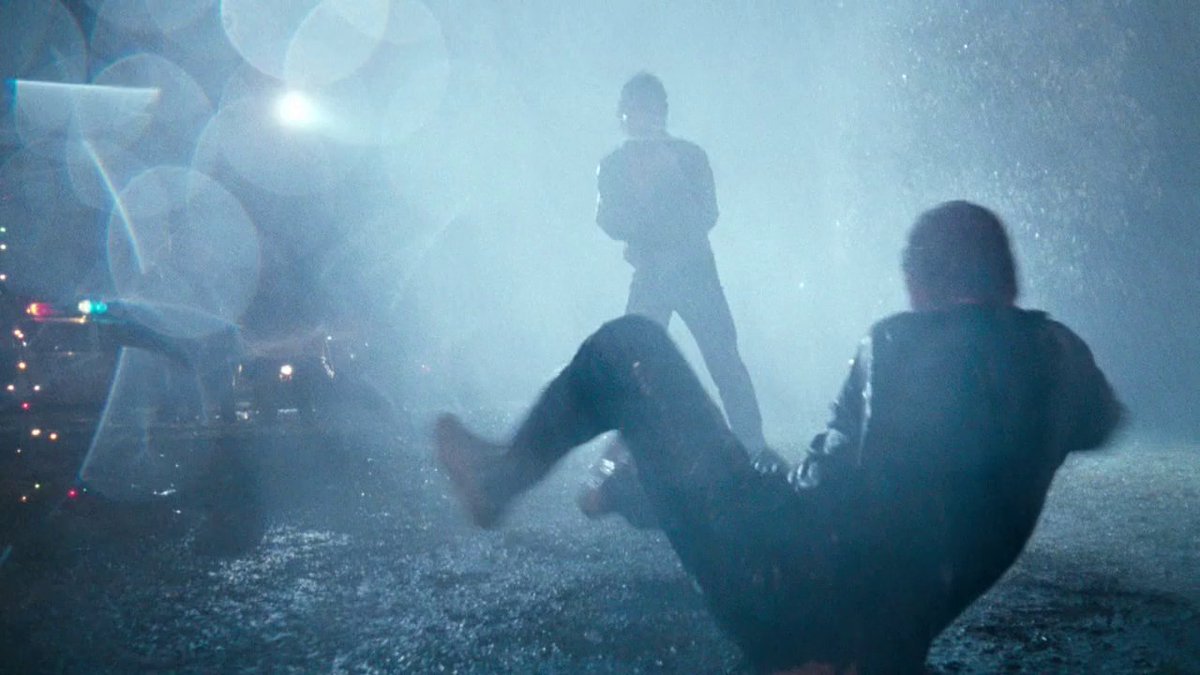
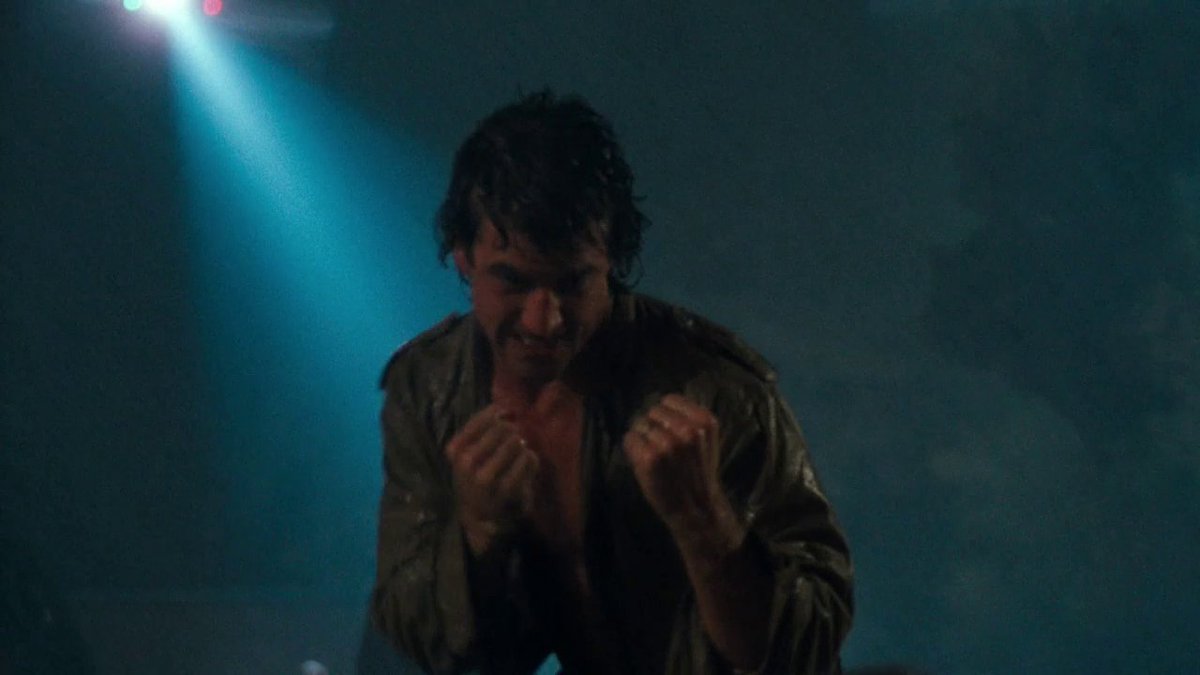
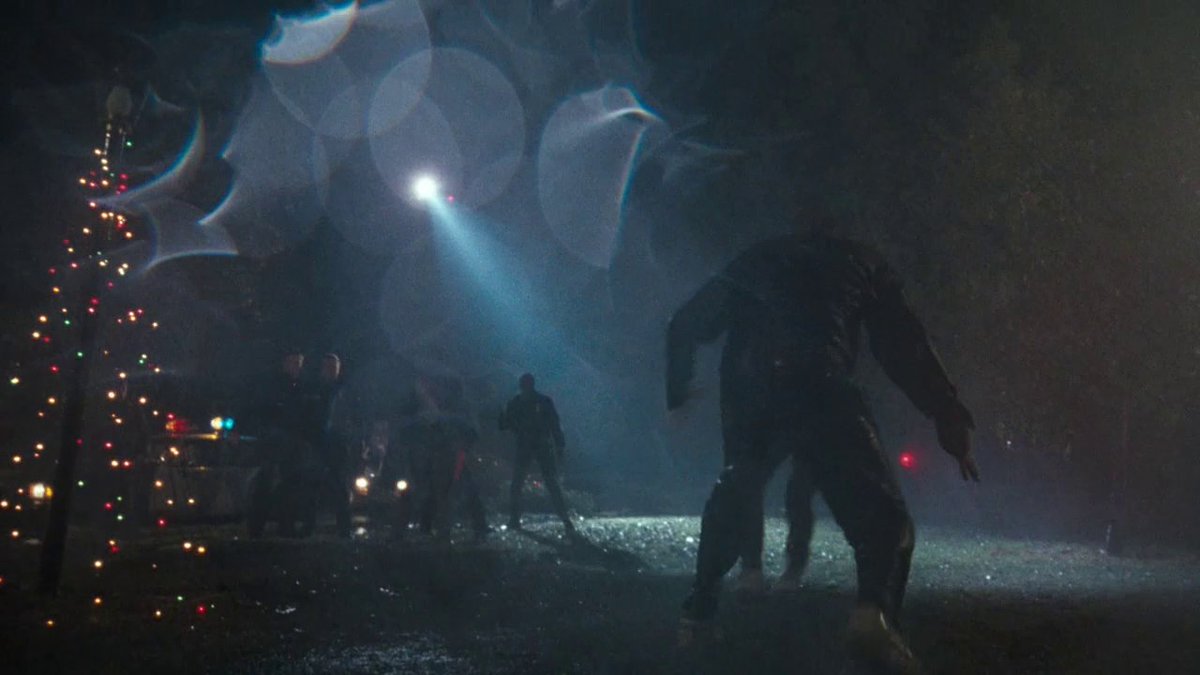
The climatic fight of LETHAL WEAPON is a good example of that: not always fluid or perfectly legible, but continuously stimulating. See the first few punches between Riggs and Joshua, they're rather confusing, blurry close-ups. But Donner quickly switches gears and alternates...
...between wide low-angle shots with elaborate lighting, blocking, and framing (the water pouring down and the light coming from the helicopter give the events an apocalyptic dimension) and...
14 inserts
7 close-ups
5 medium to close shots
3 cutaways
1 wide shot
Distilled action can work. No master shot, overlapping editing, stretched out timeline. And yet, still awesome because:
-Clear causality
-Sustained visual momentum
-John Woo
The only wide shot here is used because Woo needs to pass on new spatial information. One character has changed position relative to the others, which leads to an action that would be incomprehensible without a shot establishing that fact. Less than a second long is enough.
Visual momentum depends on a dialogue between images. That means creating visual sentences that give rhythm to the scene. This is one such sentence: 3 shots, 1 general direction. The *feeling* of kinetic unity combined with the clear *understanding* of their diegetical meaning.
You could take almost any 10-second segment from PROJECT A's action scenes and make it an example for how well it works. Here for instance, we have at least 5 lessons in dynamic directing/editing in a row that feel organic and enhance audience engagement/viewing pleasure. The...
...clip opens on a zoom out while the camera readjusts its position. It's actually something we see a lot of in HK action movies of the period, and not a trick that has travelled much abroad in spite of its benefits in terms of dynamism and syncing of movements with actors....
Then we have a fairly long shot capturing a series of beautiful moves by Yuen Biao. His way of fighting is very dance-like here, but the best trick comes after: the camera cuts to a close-up of the action without breaking its flow. The cut is near imperceptible because it...