AR20-21 Notes
Apcotex Industries
Leading producer of Synthetic Rubber & Synthetic Latex in India
Broadest Range of Emulsion Polymers in the market
Fasten Your Seatbelts & Enjoy the ride 🙂
Retweet for wider reach 🙏
Apcotex Industries
Leading producer of Synthetic Rubber & Synthetic Latex in India
Broadest Range of Emulsion Polymers in the market
Fasten Your Seatbelts & Enjoy the ride 🙂
Retweet for wider reach 🙏

1/
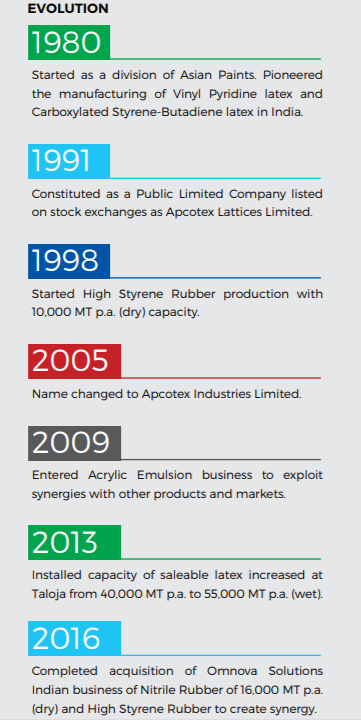
Evolution
1980: Started as a division of Asian Paints
1991: Becomes public ltd
1998: Started HSR prodn 10k MT p.a.
2005: Name changed to Apcotex
2009: Entered Acrylic Emulsion business
2013: Latex capacity increased from 40k to 55k MTp.a.
2016: Omnava Solutions Acquisition
Evolution
1980: Started as a division of Asian Paints
1991: Becomes public ltd
1998: Started HSR prodn 10k MT p.a.
2005: Name changed to Apcotex
2009: Entered Acrylic Emulsion business
2013: Latex capacity increased from 40k to 55k MTp.a.
2016: Omnava Solutions Acquisition
2/
Financial Highlights
Financial Highlights

3/
~Global Presence
~Marquee Clients
~Global Presence
~Marquee Clients


4/
Manufacturing Facilities
1.Taloja, Maharashtra
~Synthetic Latex: 55K MT p.a.
~HSR: 7K MT p.a.
2.Valia, Gujarat
~Nitrile Rubber & Allied 20K MT
Manufacturing Facilities
1.Taloja, Maharashtra
~Synthetic Latex: 55K MT p.a.
~HSR: 7K MT p.a.
2.Valia, Gujarat
~Nitrile Rubber & Allied 20K MT

5/
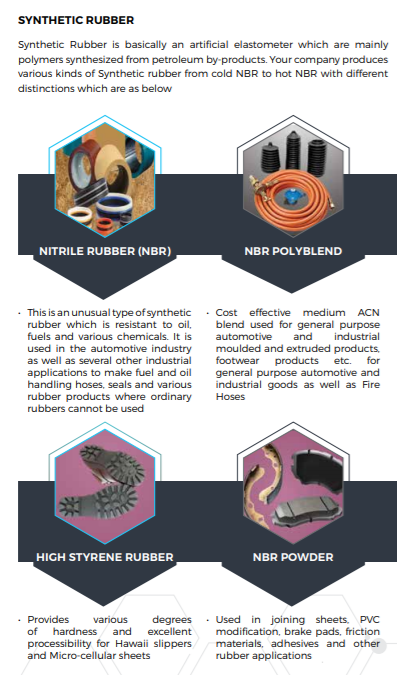
Product Mix
1.Synthetic Latex
~Paper
~Carpet
~Construction
~Tyre Cord
~Gloves
~Specialty
2.Synthetic Rubber
~NBR
~NBR Polyblend
~HSR
~NBR Powder
Product Mix
1.Synthetic Latex
~Paper
~Carpet
~Construction
~Tyre Cord
~Gloves
~Specialty
2.Synthetic Rubber
~NBR
~NBR Polyblend
~HSR
~NBR Powder

6/
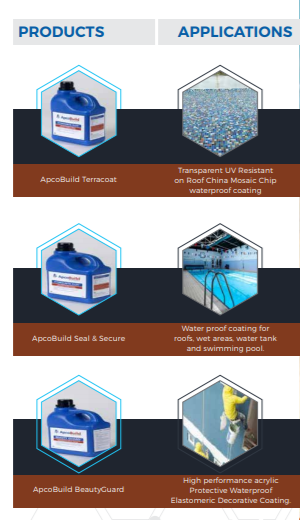
ApcoBuild
~ Construction Chemical industry 5600 Cr
~Expected to grow at a CAGR of 15%
~Green Building concept to gain more traction
~Currently in 3 states Gujarat, Maharashtra & Goa
~Focus on Waterproofing range of products
ApcoBuild
~ Construction Chemical industry 5600 Cr
~Expected to grow at a CAGR of 15%
~Green Building concept to gain more traction
~Currently in 3 states Gujarat, Maharashtra & Goa
~Focus on Waterproofing range of products



7/
Synthetic Latex Industry
~Globally a fragmented market
~Both regional & global players exist
~Customization to suit customer needs is important
~No major substitute for Synthetic latex polymers
~Nitrile latex for gloves witnessing very high demand
Synthetic Latex Industry
~Globally a fragmented market
~Both regional & global players exist
~Customization to suit customer needs is important
~No major substitute for Synthetic latex polymers
~Nitrile latex for gloves witnessing very high demand


8/
Synthetic Rubber Industry
~Asia pacific leads the global production
~Automobile sector leading the growth
~India strategically offers great opportunity for manufacturers
~India has the potential to be a leader in rubber products manufacturing
Synthetic Rubber Industry
~Asia pacific leads the global production
~Automobile sector leading the growth
~India strategically offers great opportunity for manufacturers
~India has the potential to be a leader in rubber products manufacturing


9/
FY21 Performance
~Strong growth in Rev & Profits & Strong BS
~Continued to face tough foreign competition in NBR
~Antidumping duty recently imposed by the govt
~Our interaction with the management on the NBR Anti-dumping Duty and Capex related to that
FY21 Performance
~Strong growth in Rev & Profits & Strong BS
~Continued to face tough foreign competition in NBR
~Antidumping duty recently imposed by the govt
~Our interaction with the management on the NBR Anti-dumping Duty and Capex related to that


10/
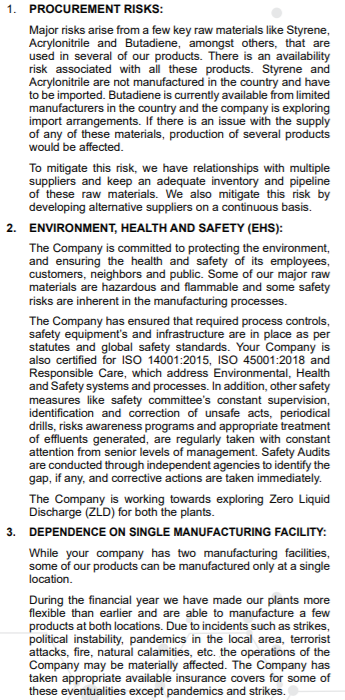
Risks
~Procurement Risk
~Environment Health & Safety Risk
~Dependence on Single Manufacturing facility
~HSR Obsolescence
~Monomer Transportation
~Investment Risk
~Business Concentration Risk
~Overseas Competition-Dumping of Products
Risks
~Procurement Risk
~Environment Health & Safety Risk
~Dependence on Single Manufacturing facility
~HSR Obsolescence
~Monomer Transportation
~Investment Risk
~Business Concentration Risk
~Overseas Competition-Dumping of Products

11/
Financials
~Balance Sheet
~Profit & Loss A/c
~Cash Flow Statement
Financials
~Balance Sheet
~Profit & Loss A/c
~Cash Flow Statement


12/
~Last 10 concalls notes: bit.ly/35r3ZOh
~5 Min Stock Idea: bit.ly/3wyEO8l
~Infographic: bit.ly/3xqgFB4
~FY20 AR Notes: bit.ly/3q1aRLN
Detailed Analysis shared with MissioN SMILE members.
Catch a glimpse: bit.ly/35siEZu
End 🙂🙏
~Last 10 concalls notes: bit.ly/35r3ZOh
~5 Min Stock Idea: bit.ly/3wyEO8l
~Infographic: bit.ly/3xqgFB4
~FY20 AR Notes: bit.ly/3q1aRLN
Detailed Analysis shared with MissioN SMILE members.
Catch a glimpse: bit.ly/35siEZu
End 🙂🙏
• • •
Missing some Tweet in this thread? You can try to
force a refresh