
1/In today's Substack post, I respond to Scott Alexander about Jewish achievement.
In addition to addressing his points, I also add a section asking: "Why might we care about Jewish achievement?"
I could think of 4 reasons...
noahpinion.substack.com/p/a-response-t…
In addition to addressing his points, I also add a section asking: "Why might we care about Jewish achievement?"
I could think of 4 reasons...
noahpinion.substack.com/p/a-response-t…
2/Scott says Jewish achievement is a way to prove that not all group disparities come from structural racism.
@sullydish has argued something similar.
@sullydish has argued something similar.

3/But I argue: Not only do we not need Jews in order to prove that group disparities can arise from reasons other than structural racism -- Jews aren't even close to the best example!
4/The groups that do the best in America, economically, academically, and professionally speaking, are those that are subject to strong selective immigration pressures.
In fact, Indians do the best!
In fact, Indians do the best!
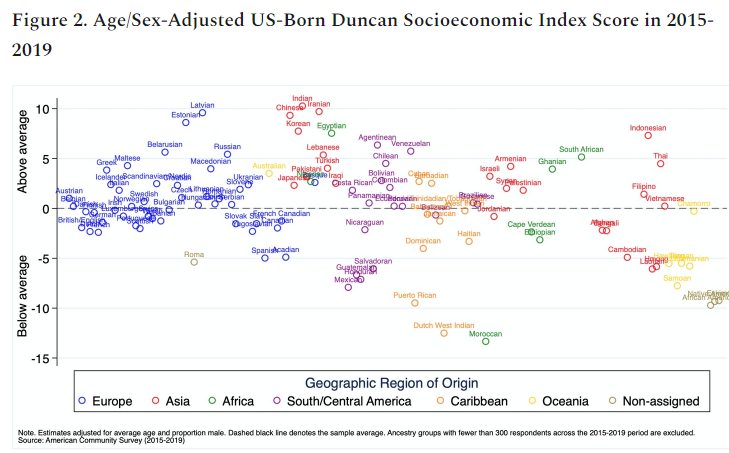
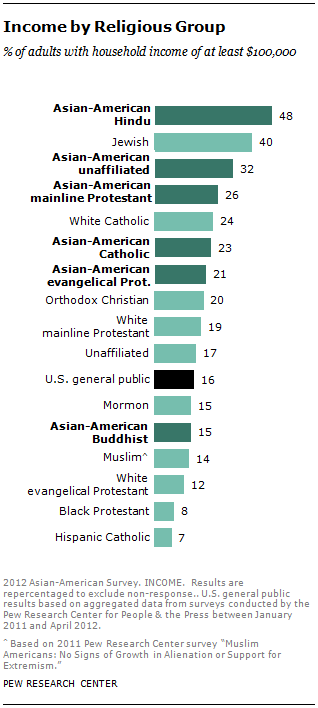

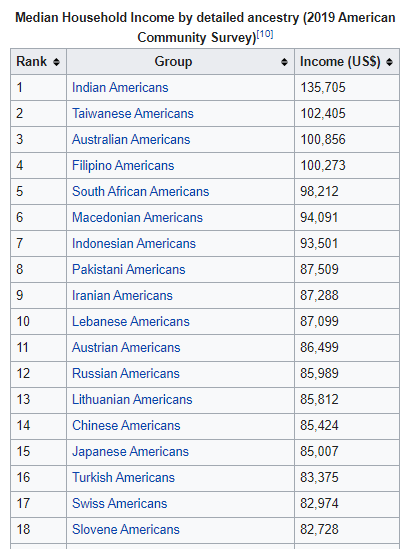
5/Now, is anyone out there arguing that Indians have mysterious cultural or genetic superpowers that make them rich and smart and blah blah blah?
No!
Everyone knows and agrees that it's a function of selective immigration.
wipsociology.org/2018/06/20/hyp…
No!
Everyone knows and agrees that it's a function of selective immigration.
wipsociology.org/2018/06/20/hyp…
6/In fact, selective immigration is very common throughout the entire U.S. immigration system. It's very predictable. It looks similar in Sweden and Canada too!
nber.org/papers/w23548
nber.org/papers/w23548
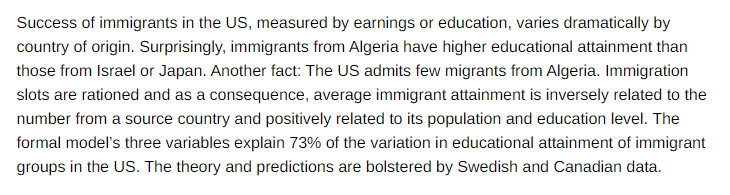
7/Selective immigration gives us a very clear, measurable, obvious reason to temper our use of structural racism as a one-size-fits-all explanation for all group disparities -- and to qualify our use of disparate impact as a legal doctrine.
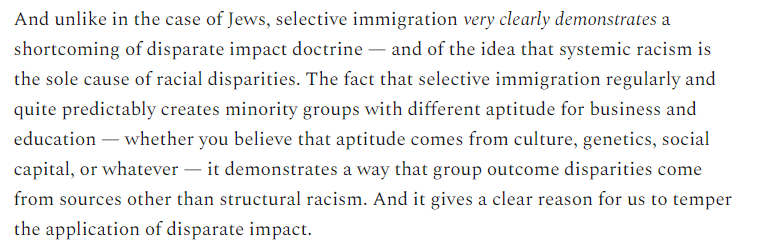
8/Since Jews mostly arrived in American before we had good data, Jewish achievement is sort of "mystery meat" -- we can spend all day arguing back and forth about it.
Selective immigration is a much clearer, simpler, less mysterious case than Jewish achievement. Use it instead!
Selective immigration is a much clearer, simpler, less mysterious case than Jewish achievement. Use it instead!
9/Strangely, in his post, Scott spends a lot of time arguing that Jewish achievement is NOT due to selective immigration.
Why?
If his purpose is really what he says, he should focus on selective immigration, not dismiss it!
astralcodexten.substack.com/p/contra-smith…
Why?
If his purpose is really what he says, he should focus on selective immigration, not dismiss it!
astralcodexten.substack.com/p/contra-smith…
10/Anyway, the second reason people care about Jewish achievement is that it gives some Jewish folks a reason to feel group pride.
Personally I think this is silly; YMMV. Either way, it's hardly something *society* should care about.
Personally I think this is silly; YMMV. Either way, it's hardly something *society* should care about.

11/Reason #3: Maybe we can learn cultural lessons from Jewish culture!
I guess this might be slightly interesting, but I'm pretty pessimistic about our ability to extract usable, generalizable cultural insights like this.
I guess this might be slightly interesting, but I'm pretty pessimistic about our ability to extract usable, generalizable cultural insights like this.

12/And Reason #4: Some people are very invested in proving that achievement is driven by genetic factors.
But I don't see any reason for society to care about this. If you want to go looking for magic Jewish smart genes, be my guest! (You almost certainly won't find anything.)
But I don't see any reason for society to care about this. If you want to go looking for magic Jewish smart genes, be my guest! (You almost certainly won't find anything.)

13/Thus, I don't really see much of a reason for society to care about Jewish achievement.
For some people it's an intellectual curiosity or a source of personal pride, but it's just not important at a societal level.
(end)
noahpinion.substack.com/p/a-response-t…
For some people it's an intellectual curiosity or a source of personal pride, but it's just not important at a societal level.
(end)
noahpinion.substack.com/p/a-response-t…
• • •
Missing some Tweet in this thread? You can try to
force a refresh






