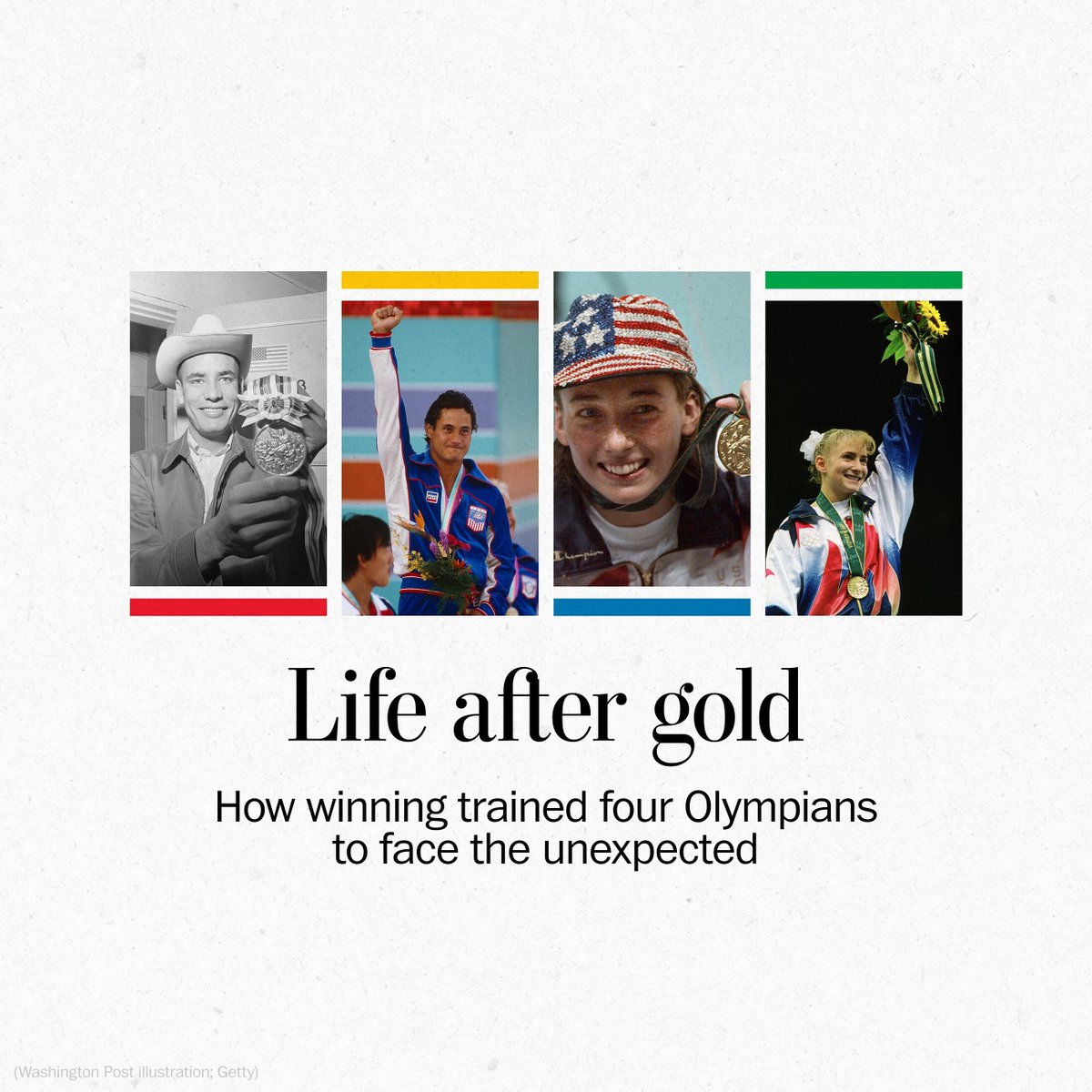
The journey to earn an Olympic gold medal is rarely achieved without challenges. But for some elite athletes, the lessons learned stretch far beyond the podium.
Billy Mills says the racism he experienced in college, along with the grief of losing his parents, sent him into a deep depression.
Running and the pursuit of his Olympic goals helped to get him through his loneliness. He won gold at the 1964 Tokyo Olympic Games.
Growing up with severe asthma and a number of allergies, Amy Van Dyken-Rouen had to shop around to find the sport that was right for her.
Swimming did not come easy. Her persistence not only got her across the pool but eventually made her an Olympic champion.
Shannon Miller faced some low moments during chemotherapy for ovarian cancer, but she thought back to her days as part of the “Magnificent Seven” — the first U.S. Olympic gymnastics team to win gold.
In 2021, she celebrated being cancer-free for 10 years.
Greg Louganis was petrified when he struck his head on the board and bled into the pool during the 1988 Olympics; not because of his injury, but because he had recently been diagnosed with HIV.
Today, he is a motivational speaker and an HIV/AIDS awareness advocate.
For many elite athletes and gold medalists, major struggles have become guiding lights for life’s other obstacles.
More on how winning trained these Olympians to face the unexpected: wapo.st/3zUcEpL
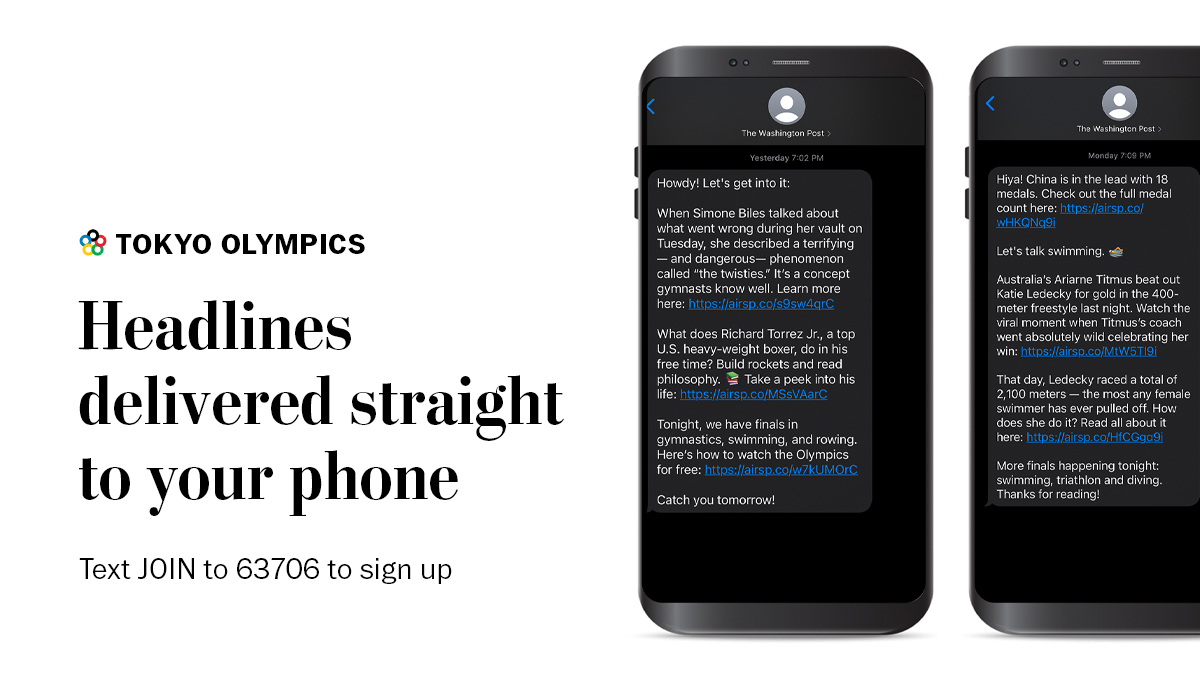
Looking for a way to follow the Olympics this summer? Sign up for The Post’s once-a-day text message digest. We’ll send you updates from The Post’s coverage of the Games. wapo.st/3rJkwYo
• • •
Missing some Tweet in this thread? You can try to
force a refresh

Goods from nations with which the U.S. does hundreds of billions of dollars of trade, such as India, Switzerland and South Africa, will see new taxes of up to 39 percent, with India’s rate set to jump to 50 percent in three weeks.
Tariffs are like a sales tax applied at the border to an importer.
They're an opportunity to raise public revenue and can theoretically incentivize domestic production and protect certain industries from being undercut by foreign competitors.
President Trump announced full bans on 12 countries and partial bans on seven others on Wednesday. They are set to go in effect on June 9.
Here’s what you need to know:
The countries with a full ban are Afghanistan, Myanmar, Chad, Republic of Congo, Equatorial Guinea, Eritrea, Haiti, Iran, Libya, Somalia, Sudan and Yemen.
While Burundi, Cuba, Laos, Sierra Leone, Togo, Turkmenistan and Venezuela are affected by a partial ban.
How were the countries with travel bans selected? Trump said it’s in the interest of national security, writing that the U.S. must ensure those admitted to the country “do not bear hostile attitudes toward its citizens, culture, government, institutions, or founding principles.”
As the coronavirus tore through the world in 2020, and the United States confronted a shortage of tests designed to detect the illness, then-President Donald Trump secretly sent coveted tests to Russian President Vladimir Putin for his personal use. washingtonpost.com/politics/2024/…
Putin accepted the supplies but took pains to prevent political fallout.
He cautioned Trump not to reveal that he had dispatched the scarce medical equipment to Moscow, according to “War,” a new book by Washington Post associate editor Bob Woodward. washingtonpost.com/politics/2024/…
Four years later, the personal relationship between the two men appears to have persisted, Woodward reports, as Trump campaigns to return to the White House and Putin orchestrates his bloody assault on Ukraine.
Mark Robinson, the firebrand Republican nominee for governor in North Carolina, has for years made comments downplaying and making light of sexual assault and domestic violence. wapo.st/3KQffZ6
A review of Robinson’s social media posts over the past decade shows that he frequently questioned the credibility of women who aired allegations of sexual assault against prominent men, including Harvey Weinstein, Bill Cosby and now-U.S. Supreme Court Justice Brett M. Kavanaugh. wapo.st/3KQffZ6
In one post, Robinson, North Carolina’s lieutenant governor, characterized Weinstein and others as “sacrificial lambs” being “slaughtered.” wapo.st/3KQffZ6
Exclusive: A Washington Post investigation has found that over the past two decades, hundreds of law enforcement officers in the United States have sexually abused children while officials at every level of the criminal justice system have failed to protect kids, punish abusers and prevent additional crimes. wapo.st/3XiNgZC
The Post conducted an exclusive analysis of the nation’s most comprehensive database of police crimes.
From 2005 through 2022, reporters identified at least 1,800 state and local law enforcement officers who were charged with crimes involving child sexual abuse. wapo.st/3XiNgZC
Police and court documents show that abusive officers frequently spent months befriending and grooming kids.
Many used the threat of arrest or physical harm to make their victims comply. wapo.st/3XiNgZC
Exclusive: For decades, Catholic priests raped or molested Native American children who were taken from their homes by the U.S. government and forced to live at remote boarding schools, a Post investigation found. wapo.st/3yB2VZT
At least 122 priests, sisters and brothers assigned to 22 boarding schools since the 1890s were later accused of sexually abusing Native American children under their care, The Post found. wapo.st/3yB2VZT
Most of the documented abuse occurred in the 1950s and 1960s and involved more than 1,000 children.
Experts say the The Post’s findings are a window into the widespread sexual abuse at Indian boarding schools. wapo.st/3yB2VZT