In the course of the year I've learned a lot about #astrophotography, and there is no greater manifestation of that development than M31, or the Andromeda Galaxy. I'm so proud of this image, it's what I set out to do when I started this whole journey.
Taken: July 27-31, 2021
/1
Last year, I picked up my first attempt of trying to capture andromeda. This is what it looked like. I had to find it in the sky, and without a tracker, shoot it quick enough so it didn't look streaky.
This is one shot, 1.3 seconds at ISO 3200 via Nikon.
8-sep-2020
/2
I then learned about stacking, and was able to work really hard (without a tracker), taking 800 of those pictures to stack, to produce what (at the time) was just incredible to me: a close up of a galaxy from the ground.
10-oct-2020
/3
I was able to get a star-tracker, which allowed me to use less ISO and more exposure time. This led to a substantially better picture, and I was well on my way to figuring out what I needed to do this whole #Astrophotography thing.
21-oct-2020
/4
As I worked on learning how to keep focus, track with a guiding camera/scope, and my post-processing skills, I was able to get more and more out of this galaxy.
23-oct-2020
/5
By November of 2020, I was pushing my Nikon setup + Tamron lens to the limit, but I was also getting excellent results!
6-nov-2020
/6
And now I'm at a point where I can not only get the galaxy, but even zoom into the core and show you the incredible dust trail...
30-Jul-2021
I definitely needed something to get me through the pandemic, and I'm so glad I found something that combined my love of space (galaxies, planets, and nebulae), science (physics of light, stellar compositions), and photography.
• • •
Missing some Tweet in this thread? You can try to
force a refresh

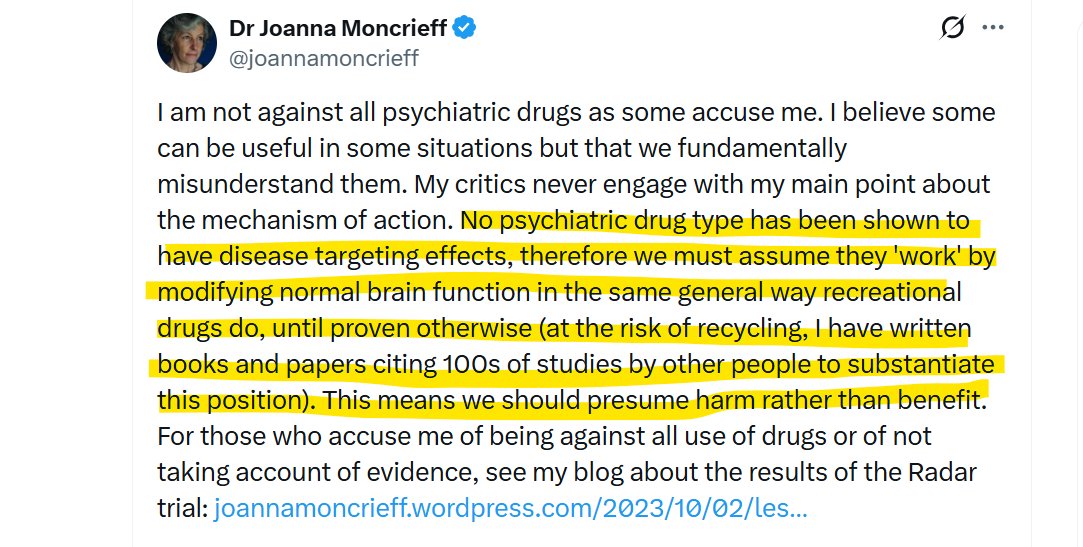
Point 1: "Disease-targeting" is an invented criterion
1a. You demand drugs show "disease-targeting effects" or be presumed harmful. This is never necessary. The actual claim: reliable symptom change across replicated RCTs.
/2
Point 1: "Disease-targeting" is an invented criterion
1b. Cardiology doesn't know the molecular lesion driving most post-MI mortality benefit from beta-blockers. We use them anyway because they work. "No known mechanism, therefore presume harm" would gut most of medicine.
/3
The core trick: he treats prescription prevalence as self-evidently bad. But high rates only signal a problem if the meds don't work, are given to people who don't need them, or cause net harm. He establishes none of this. He just gestures at numbers.
/2
The same rhetorical structure would indict insulin prescribing, or asthma inhalers. Prevalence is not pathology. The question is whether treatment matches need — and whether the alternative (untreated illness) is better or worse.
/3
It makes no sense the way we treat our people with disabilities in Canada. Canada has the full apparatus to implement adjusted payments, yet we typically support disabled people WELL under the poverty line.
/1
Canada has an official poverty line: the Market Basket Measure. It's regionally calibrated, methodologically sound, and updated by StatCan.
A single person on BC PWD receives ~$18.4k/year. The Vancouver MBM is ~$29k.
That's not a rounding error. It's a structural choice.
PWD recipients in Vancouver sit at roughly 47% of the poverty line and below the Deep Income Poverty threshold (75% of MBM), which is the level StatCan uses to flag the worst material deprivation in the country.
/3
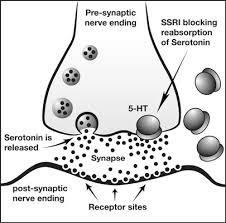
To be clear, my first answer is "well we know they are supposed to block serotonin reuptake, but it's not that simple and we don't really know."
But, if you want the best 2026 science...
/1
For a few particularly science-interested patients, I walk them through what we currently have for the 'best evidence' even though we're still not sure.
This is the "best story" I can tell about SSRI's right now.
(nb, this is NOT locked in, this is MY best synthesis)
/2
1) SSRIs BLOCK the Serotonin Transporter
The protein that pulls serotonin back into the neuron after its released is blocked. Serotonin lingers longer in the synapse, the gap where neurons signal each other.
This is very well established, & how SSRIs were designed.
The Ihben story is making the rounds. "Judge forced 18 vaccines, child got autism." It's being treated as a smoking gun. It is not a smoking gun. It is barely a story.
Sourcing: one father, one advocacy org (CHD), one GiveSendGo. Records sealed. No filings. No named physicians. Every outlet repeating it cites the same Defender article. This is a closed loop, not corroboration.
/2
"18 vaccines in one day" is not a thing. That number counts antigens as doses to make the headline scream. Real catch-up schedules don't work this way and you can verify that in five minutes on the CDC site.
/3
Ask any person who has been even suggested to have BPD; they will uniformly tell you that they have been told to try DBT (Dialectical Behavioural Therapy). Reflexively recommended. "Gold standard."
This is not science-supported.
/1
Quick history: Marsha Linehan developed DBT in the late 1980s, published the foundational manual in 1993. She drew on CBT, Zen Buddhism, and dialectical philosophy. Brilliant clinician, brilliant marketer. Her institute has trained tens of thousands of therapists worldwide.
/2
That marketing machine is the reason DBT is "the BPD treatment." It is not the reason DBT works better than alternatives, because it does not.
The faint superiority signals in older trials evaporate once you adjust for allegiance bias (DBT researchers studying DBT).
/3