NEW PAPER out in @naturesustainab w/ #OpenAccess for 30 days!!!
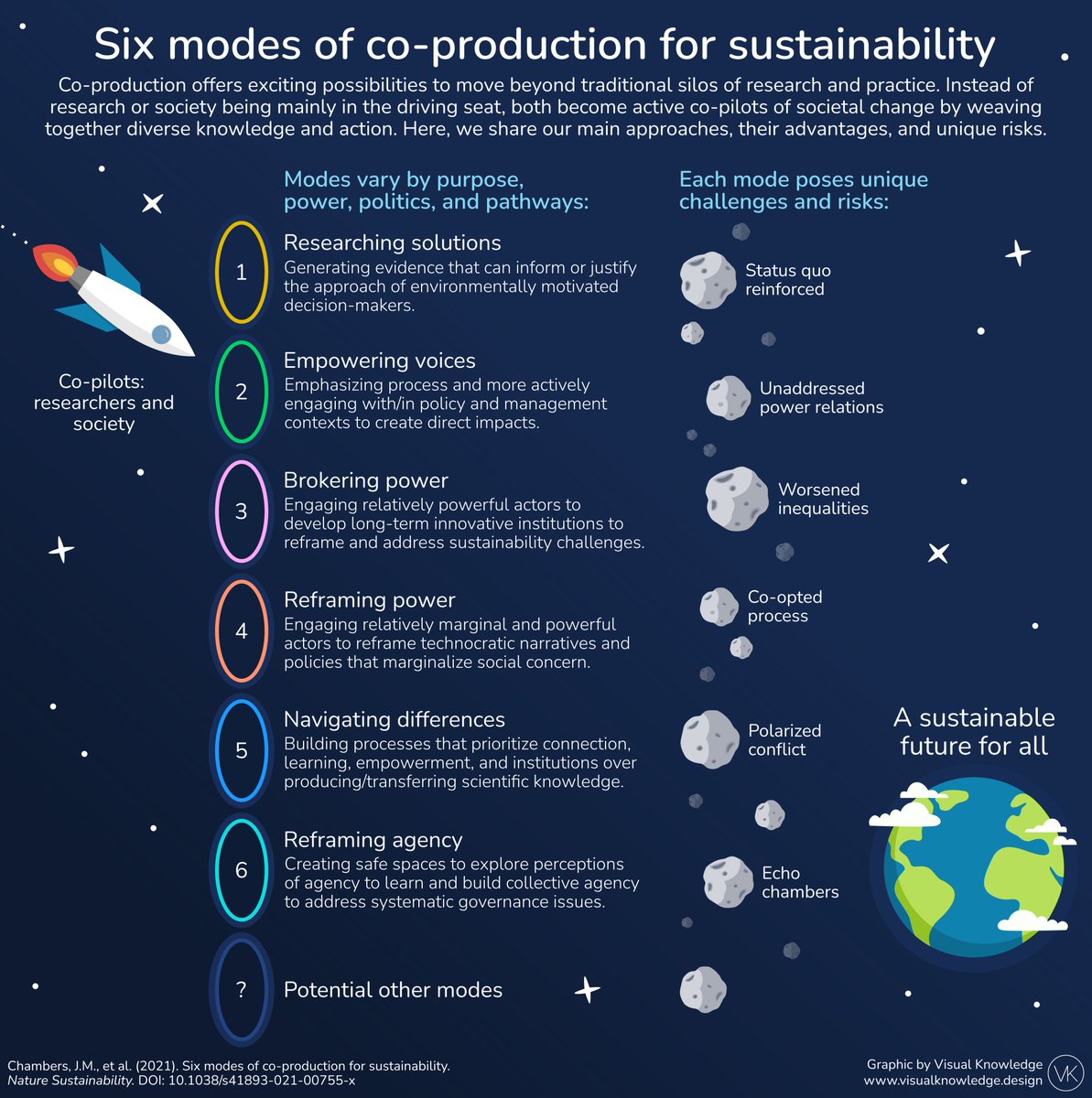
We identify six modes to co-produce knowledge, action & change for sustainability + their unique benefits & risks! 👉 nature.com/articles/s4189…
Deeply thankful to the inspiring team of 42 behind this work!!! THREAD👇
We identify six modes to co-produce knowledge, action & change for sustainability + their unique benefits & risks! 👉 nature.com/articles/s4189…
Deeply thankful to the inspiring team of 42 behind this work!!! THREAD👇

1/ We systematically mapped differences in how 32 initiatives from six continents co-produce diverse outcomes - knowledge, reframing, networks, practices, policies, institutions, etc. – to foster more sustainable social-ecological relations at local to global scales.
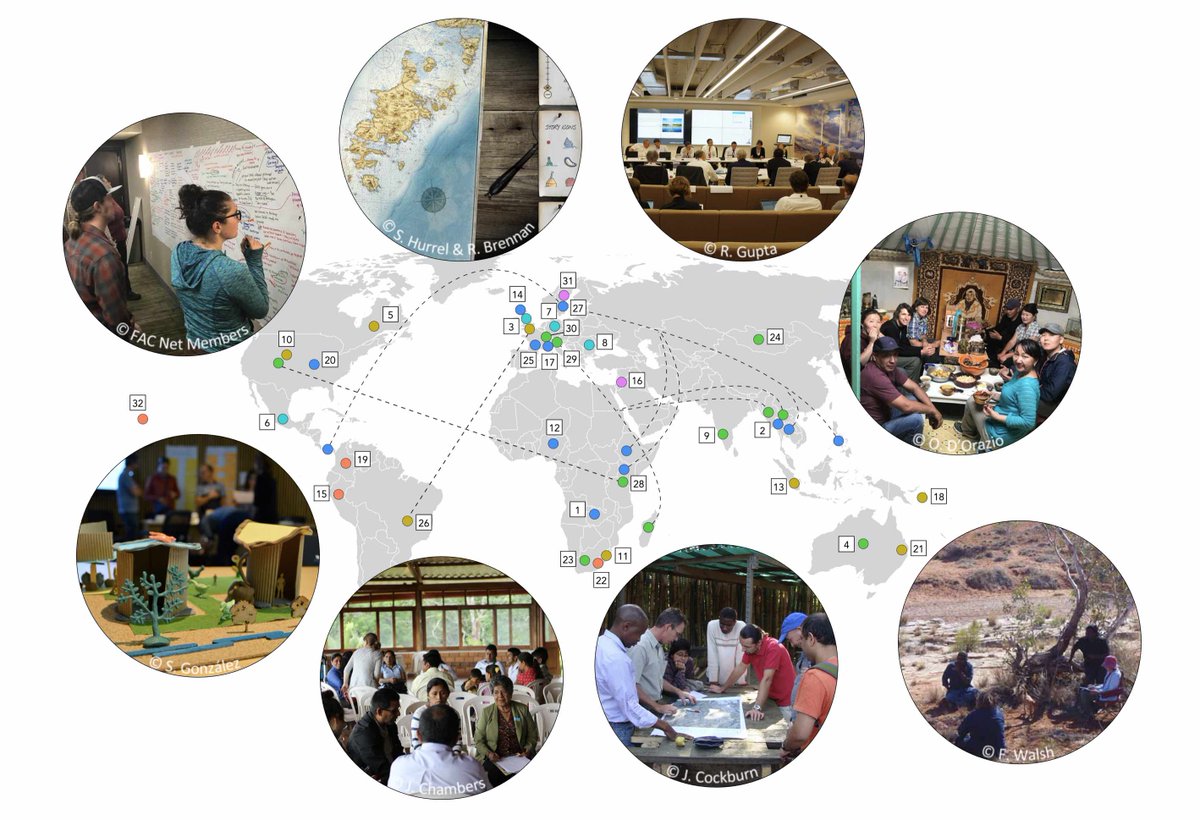
2/ This analysis was itself co-produced over 3 years by 42 scholar practitioners involved in leading and/or researching these initiatives. We came together to critically reflect on and learn from our commonalities & differences.
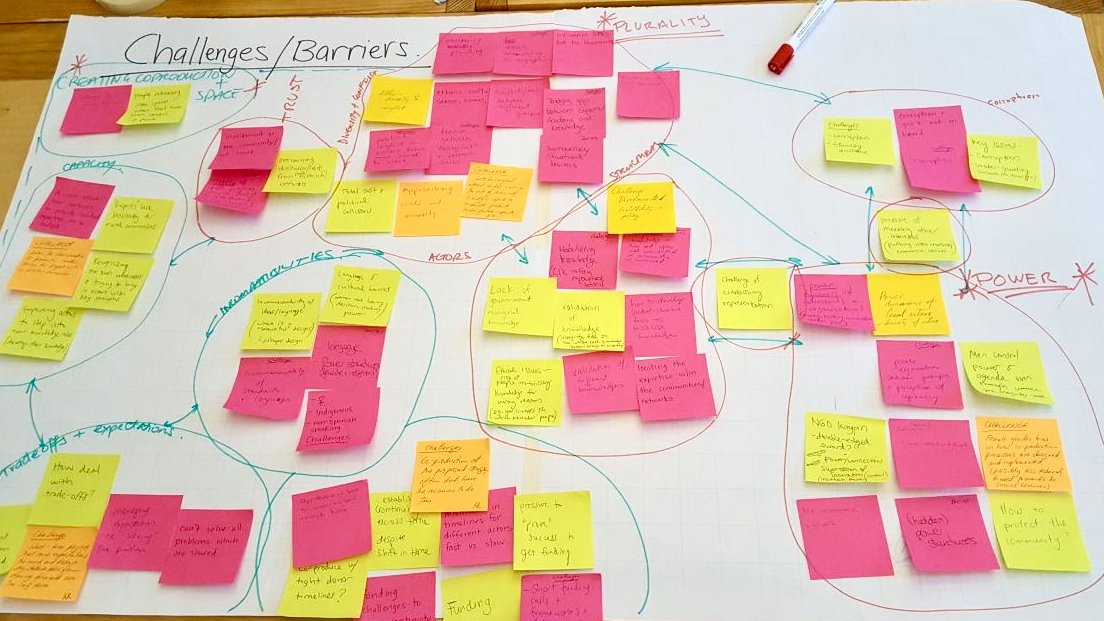
3/ Our 32 cases varied in their purpose for utilizing co-production, understanding of power, approach to politics, and pathways to impact; with significant tensions between different approaches.
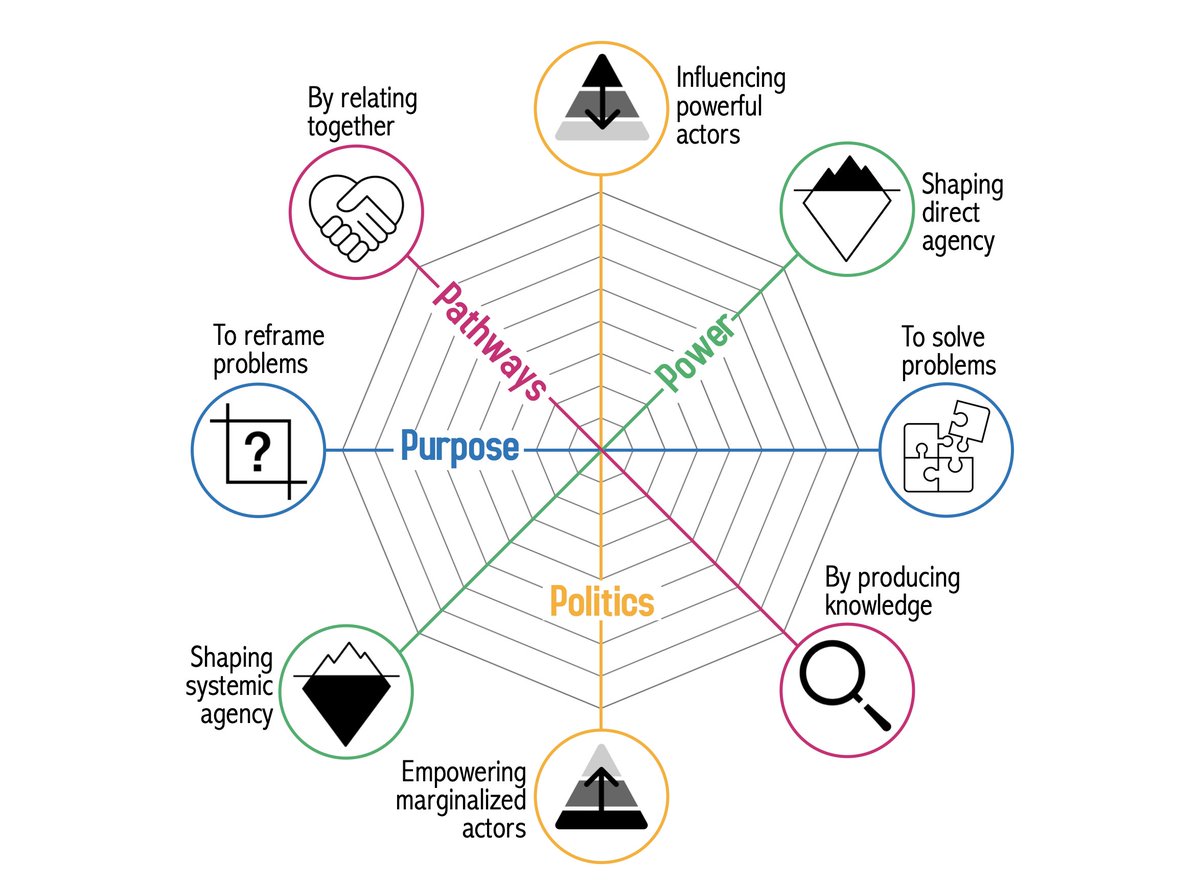
4/ Check out our paper to map out your own approach to weaving knowledge, action and change for sustainability, and explore which co-production modes you most or least often employ.
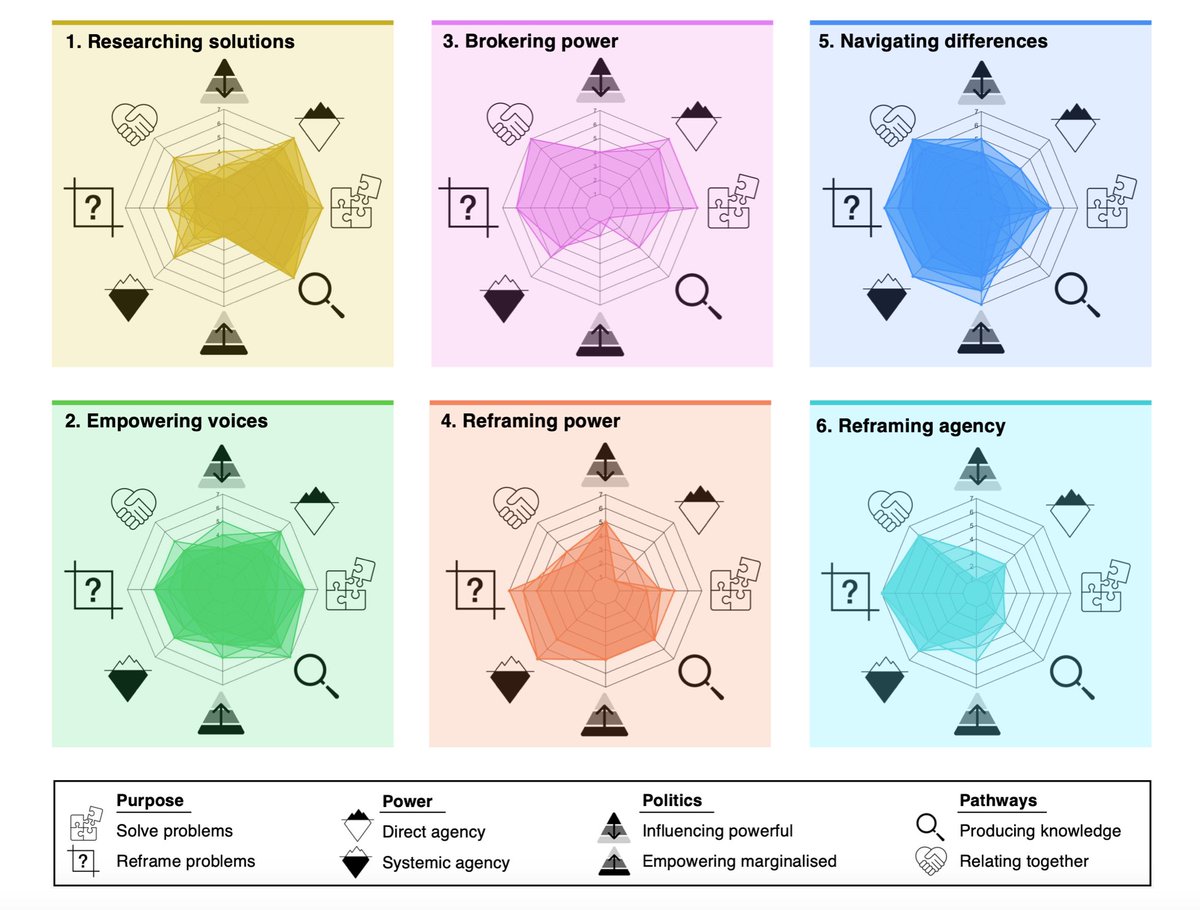
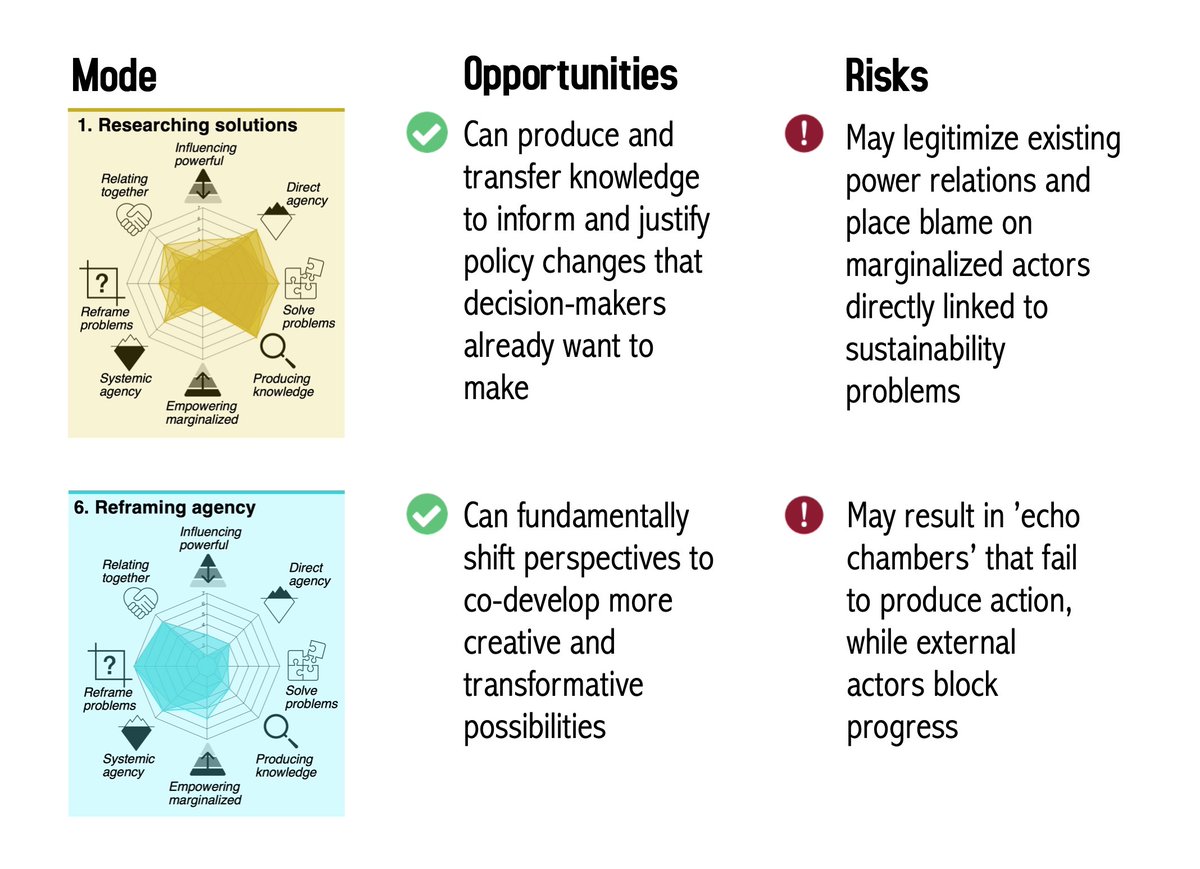
5/ We found that each mode holds unique potential to achieve particular outcomes, but also poses unique challenges and risks. For example: Mode 1 – Researching Solutions vs. Mode 6 – Reframing agency.
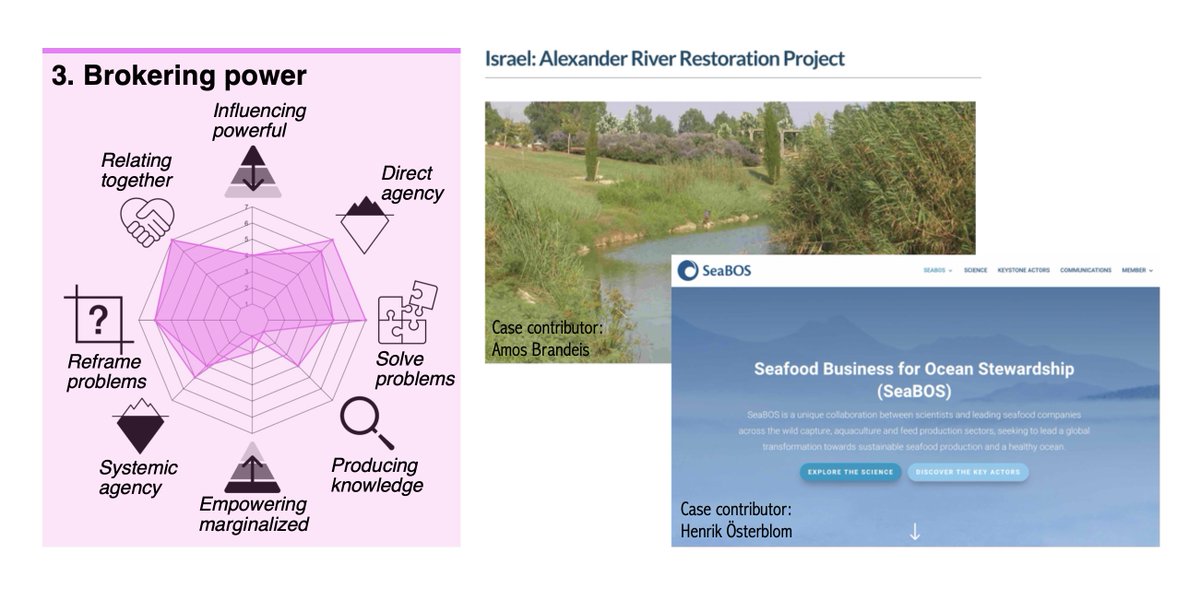
6/ Which mode was the most underexplored among our cases, yet with great potential? Brokering Power: engaging relatively powerful actors to reframe views of sustainability challenges and develop innovative institutions to generate solutions @HenrikOsterblom
7/ Our cases collectively highlight just how varied the possible outcomes of co-production are, from informed policies and shifted narratives, to reshaped relations and institutions, with correlations among certain outcomes, and linked descriptive dimensions.
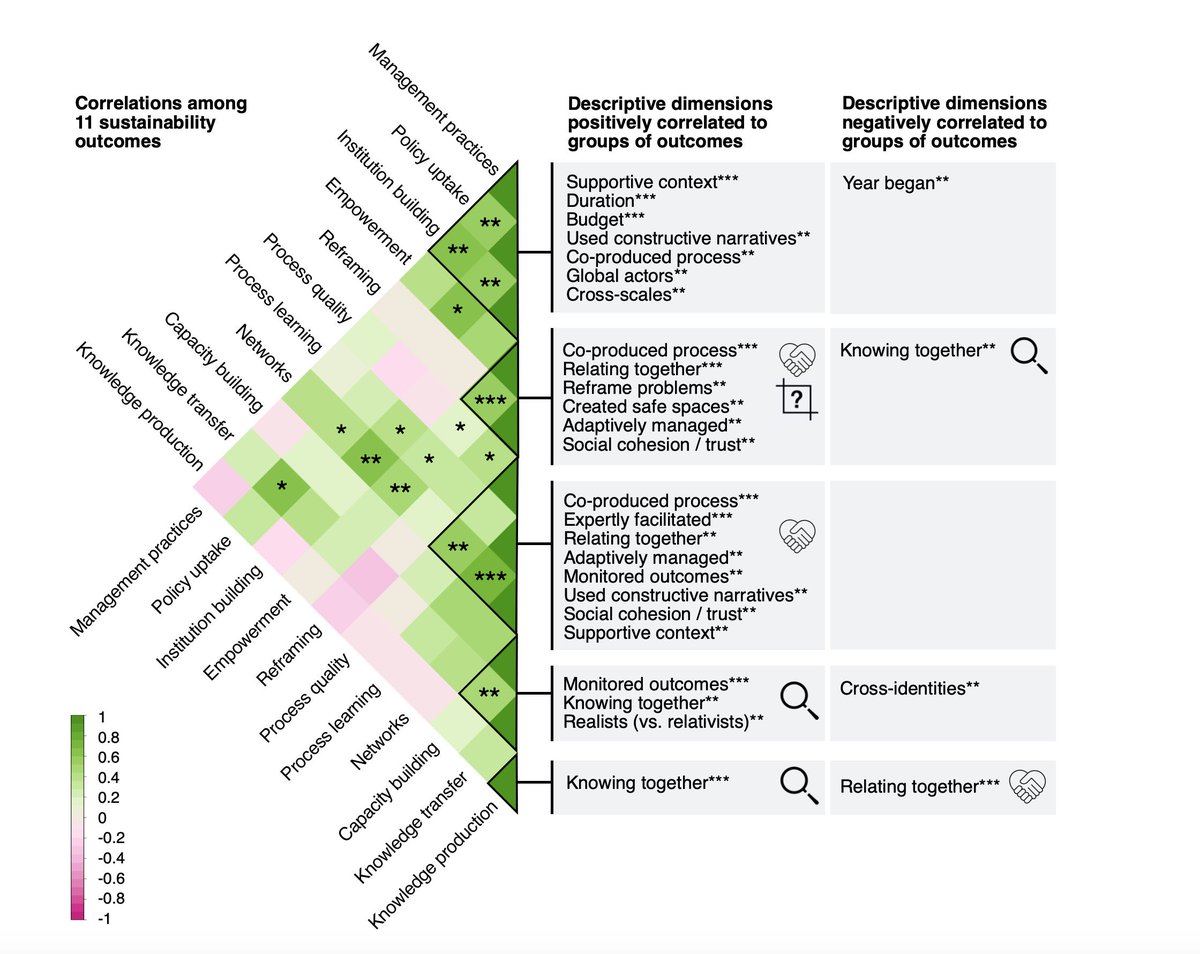
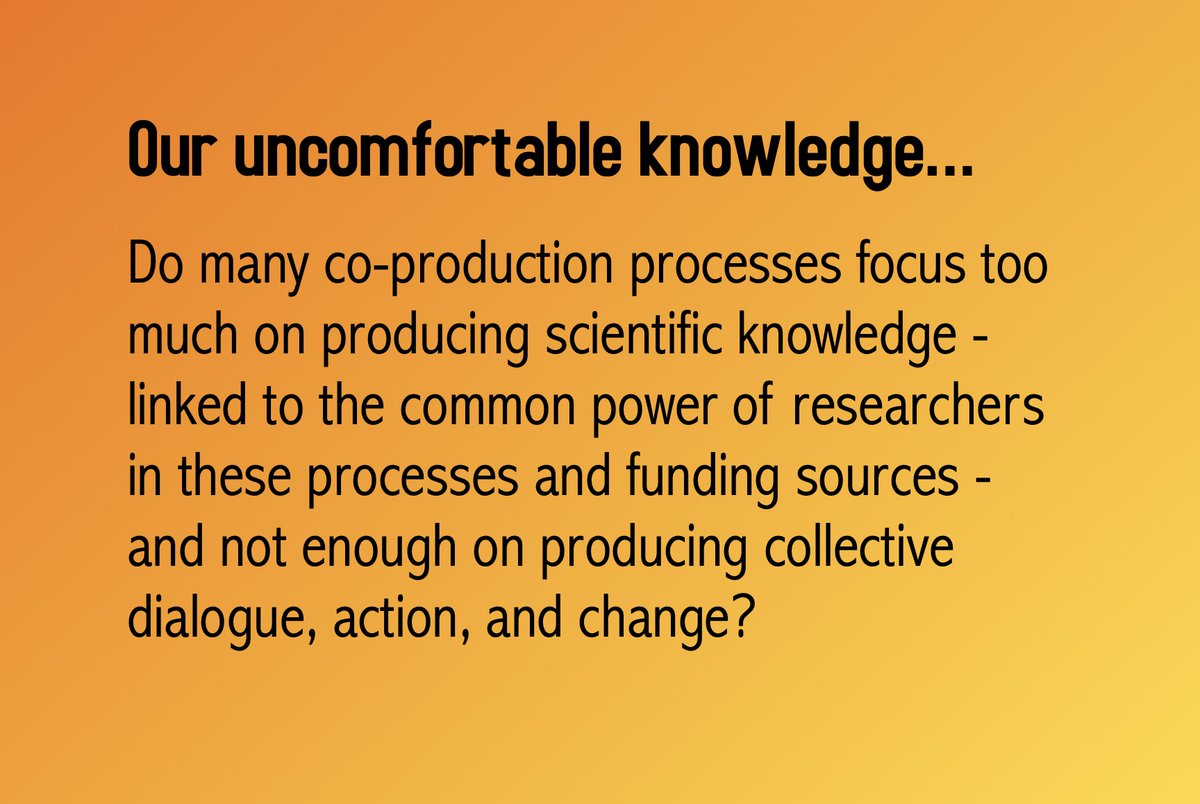
8/ A critical but uncomfortable finding: the strong emphasis of many co-production initiatives on filling predefined scientific knowledge gaps appeared to be at odds with achieving other sustainability outcomes, such as changed perspectives, practices & institutions.
9/ So what do we then find are the key ingredients to successful co-production processes?

10/ Casting the net wide and co-producing this paper was very hard work but incredibly worthwhile. It connected many people who had never heard of each other, and taught us about our diverse cases, approaches, disciplines, and ways we each try to foster change in this world.
11/ Can’t thank enough my amazing collaborators on this journey! @rini_rants @MarajaRiechers @NathanJBennett @ChrisCvitanovic @mariateng @ruth_brennan @jess_cockburn @RoHill18
@Mune_rita @JLNel2 @HenrikOsterblom @ElenaBennett @atbednarek @LakshmiCJ @PaulChatterton9 and…
@Mune_rita @JLNel2 @HenrikOsterblom @ElenaBennett @atbednarek @LakshmiCJ @PaulChatterton9 and…
12/ … @APazDuran @aggwarrior @andra_milcu @sallyfada @jaspermontana @julie_gwen @RebeccaGruby @JonHutton_LHI + many more not on Twitter
13/ And thanks to the many institutions involved: @LucHoffmannInst @cnt4collabcons @FNPWUR @WURenvironment @sthlmresilience @pewtrusts @LANCIS_IE_UNAM @ANUFennerSchool @SESLeuphana @CDEunibe @CSIRO @CUBoulder @ResearchCSU @unibern @UniLeidenNews @Cambridge_Uni – to name a few!
Our beautiful graphical abstract, designed by the brilliant Stacey McCormack @VisualKnow + @rini_rants & @ChrisCvitanovic
• • •
Missing some Tweet in this thread? You can try to
force a refresh