How did Alexander Graham Bell and Wilhelm Roentgen contribute to a historic surgical operation that took place 125 years ago next month? Here's a THREAD about a presidential assassination, the inventor of the telephone, and the evolution of medical imaging. 


The story begins on July 2 1881, when President James Garfield was shot at point-blank range while waiting for a train in Washington D.C. His attacker was immediately arrested, but the President was gravely wounded.

Over the next few weeks, President Garfield's life hung in the balance. His doctors wanted desperately to remove the assassin's bullet, but had no idea where it had ended up, and no means of finding out.

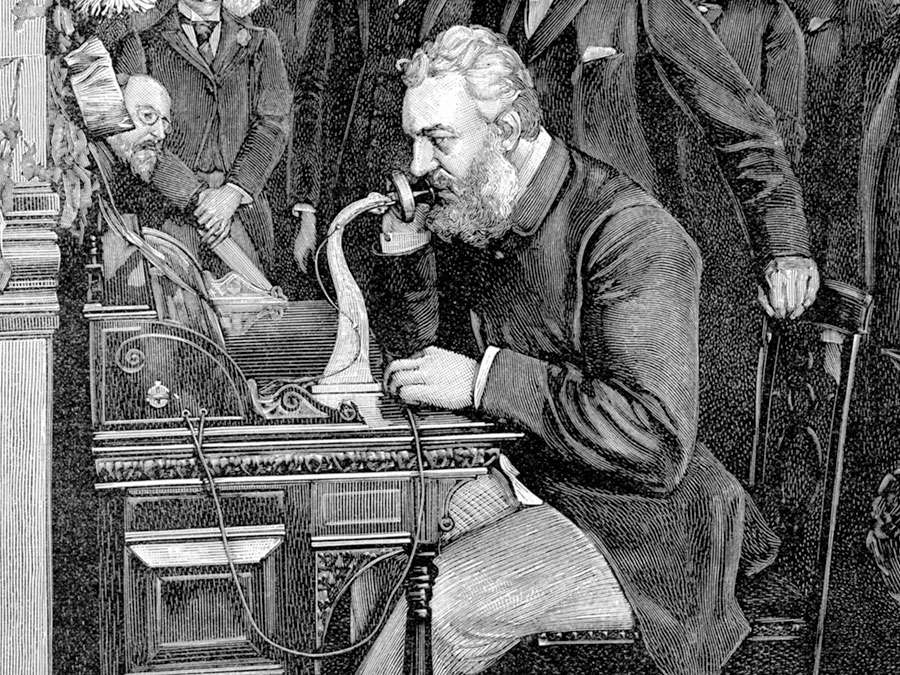
Their dilemma was widely discussed in the newspapers. It came to the attention of Alexander Graham Bell, who just five years earlier had uttered the famous words 'Mr Watson, come here, I want to see you' - the first ever telephone call.
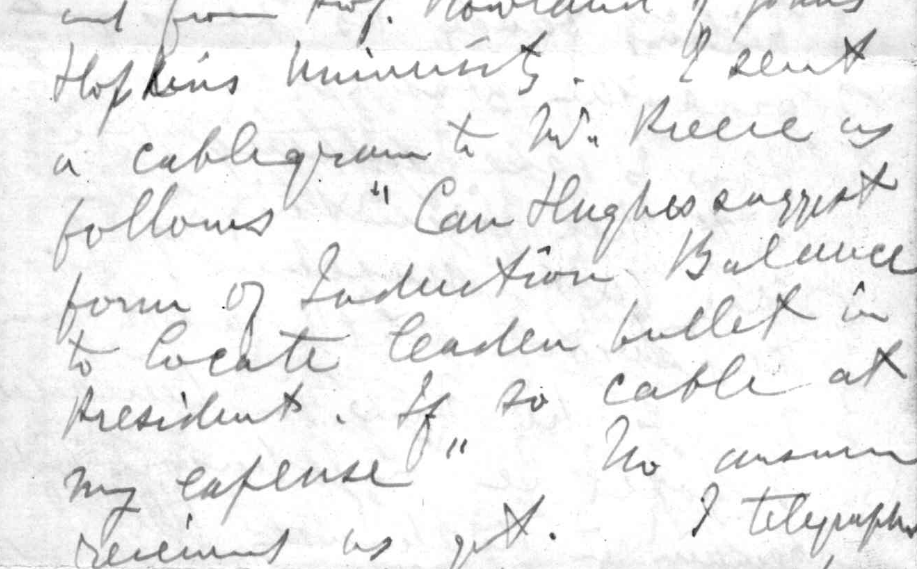
Bell believed that he knew a way to locate the bullet in President Garfield's body. In this letter to his wife he reproduces the telegram in which he first outlined the idea: 'an Induction Balance to locate leaden bullet in President'. An early form of metal detector, in fact.
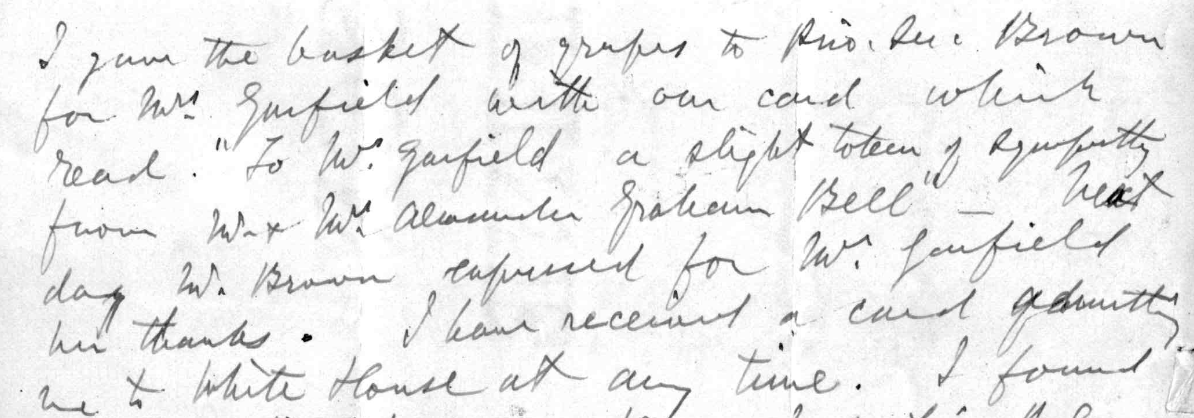
Bell visited the White House about a fortnight after the President had been shot, bearing a hastily-assembled electrical device (and a basket of grapes for the President's wife).
The device used two induction coils, one of them connected to a battery and the other to a telephone receiver. This newspaper illustration shows Bell at the President's bedside, listening intently while an assistant passes the detector over his abdomen.
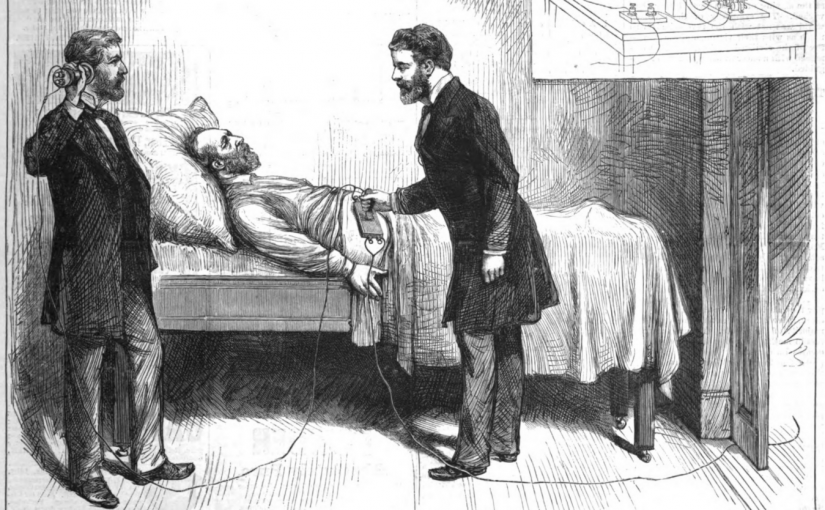
According to one contemporary report, Bell succeeded in locating the bullet, and even passed the receiver to the President's wife so that she could hear for herself. Alas, this account is entirely fictional.
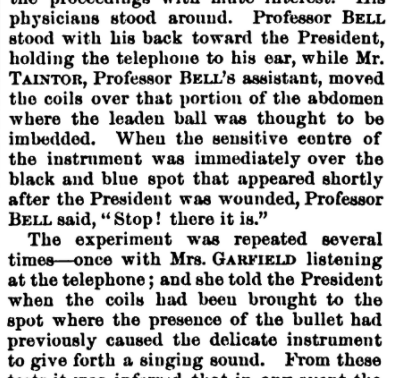
The prosaic truth is that Bell did not succeed in finding the bullet - either because the iron bedstead interfered with his equipment, or (more likely) the President's physician refused to let him pass his detector over the part of the body where the bullet had come to rest.
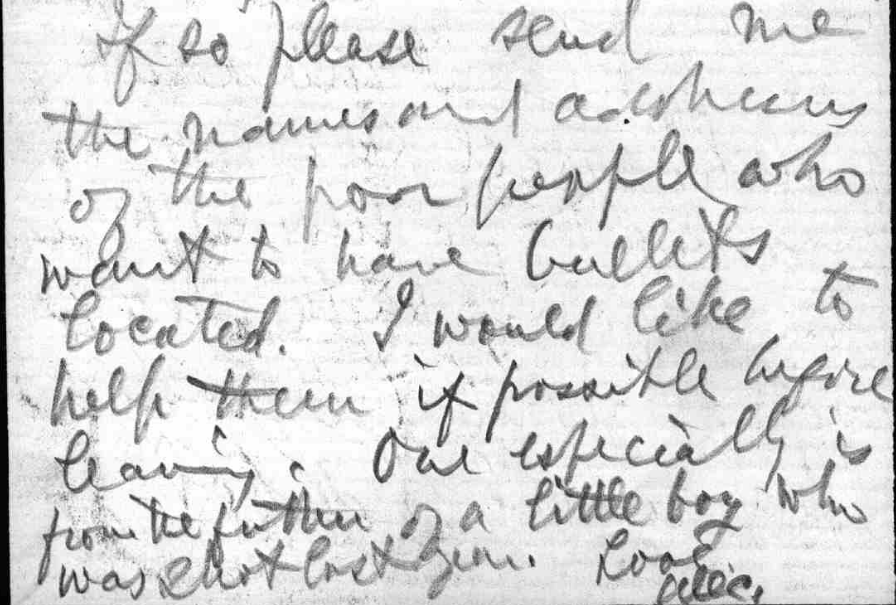
President Garfield died on September 19. But Alexander Graham Bell realised that his 'induction balance' was worth pursuing as a means of finding embedded bullets. In this letter he asks for the addresses of people 'who want to have bullets located', so that he can help them.
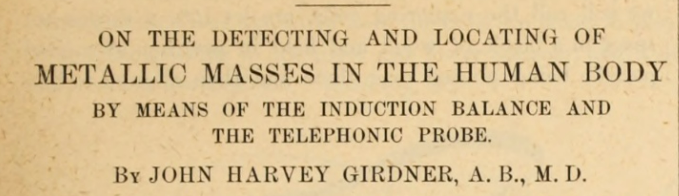
Bell worked on improving the device in collaboration with a New York surgeon, John Harvey Girdner, who had attended the President in his final illness. They called it the 'telephonic probe'.
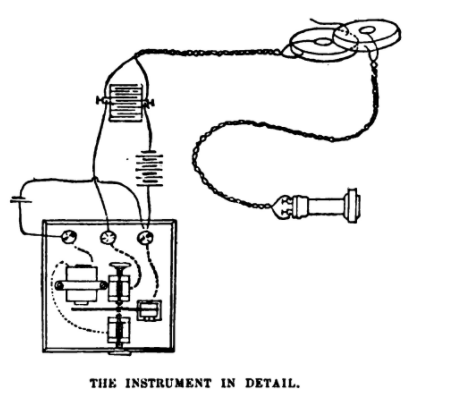
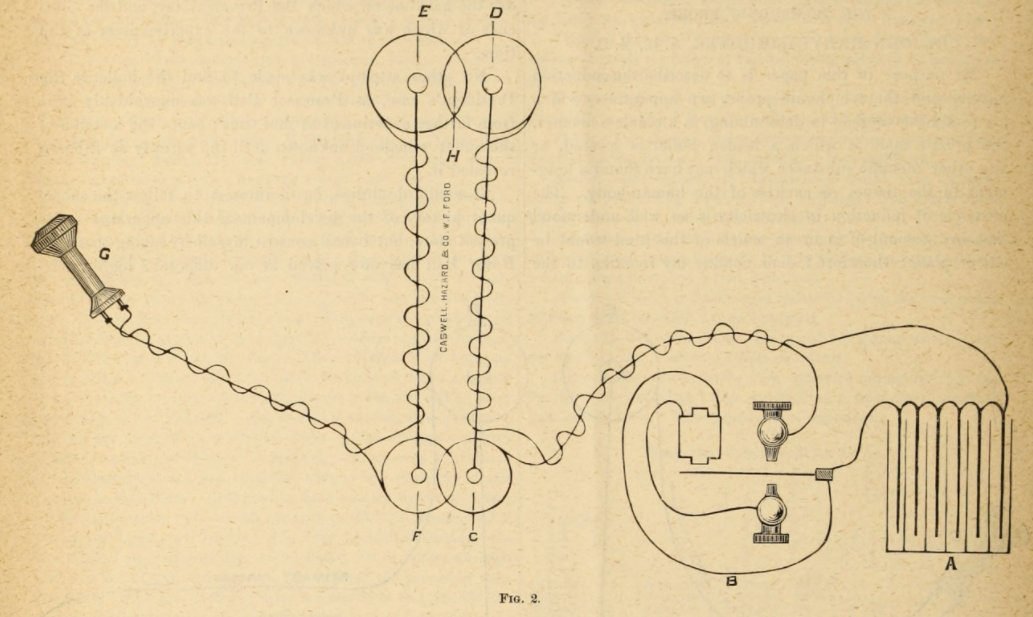
This is a a schematic diagram of their invention. The telephone receiver was not connected to a power source; but if a metal object came into the region marked 'H', a small current was induced into the circuit, heard as a clicking in the earpiece.
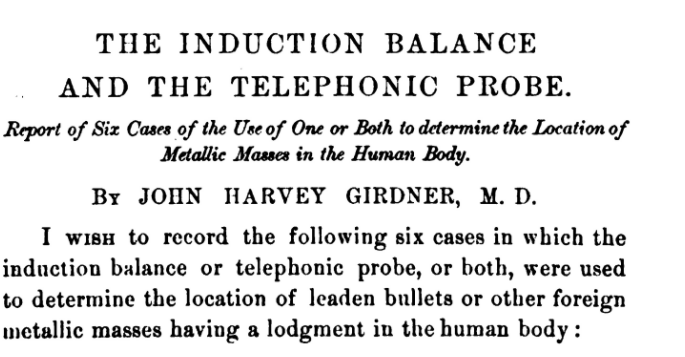
And it worked! In late 1887 Dr Girdner was able to report six cases in which he had succeeded in locating, and removing, bullets or shrapnel fragments that were invisible to the naked eye.
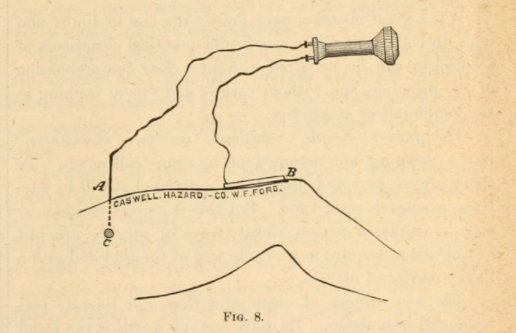
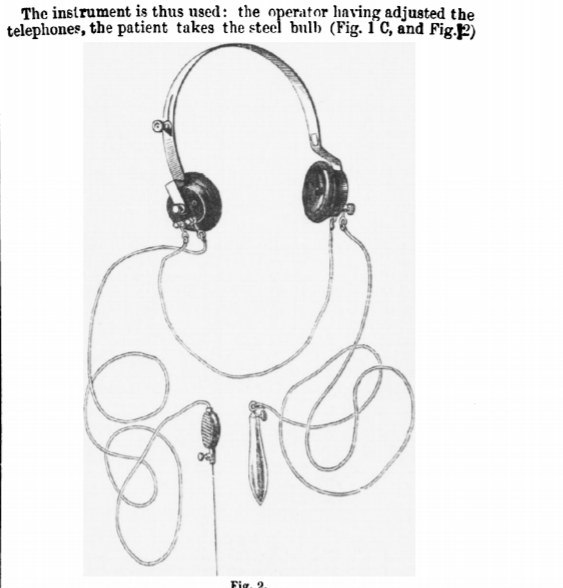
[I should explain the 'probe' bit. Dr Girdner refined the device by using the human body itself as a battery. One 'terminal' was a steel plate placed on the skin; the other was a long steel needle which was used as a probe. If it touched metal a click was heard in the earpiece]
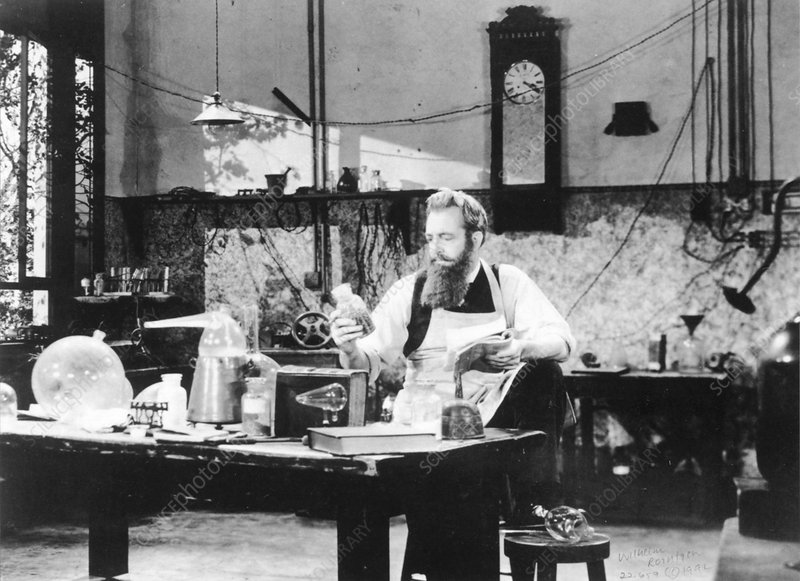
Eight years after Girdner unveiled his invention, the German scientist Wilhelm Röntgen made a sensational discovery: a previously unknown form of radiation.
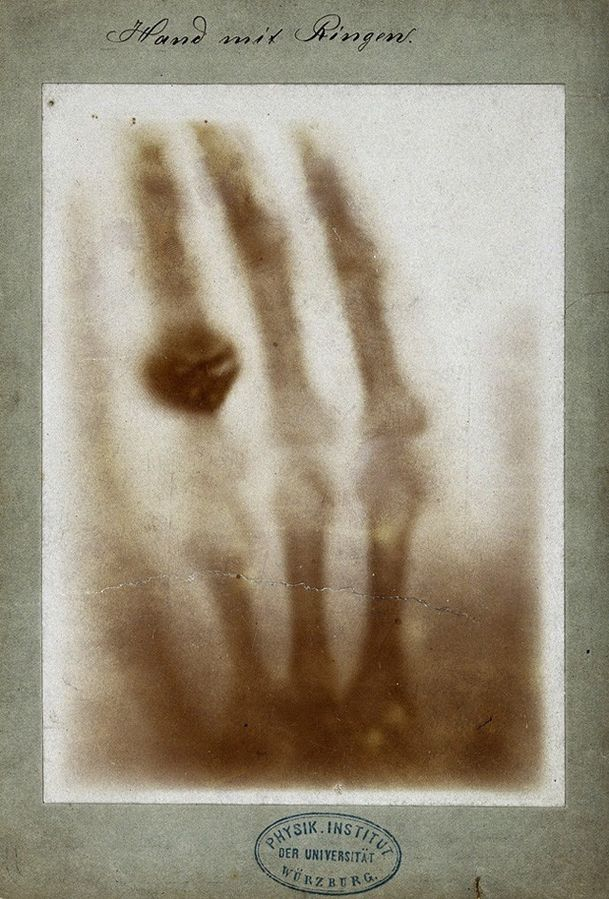
On December 22 1895, Röntgen captured this image of his wife's hand: the first and arguably most famous X-ray photograph of all.
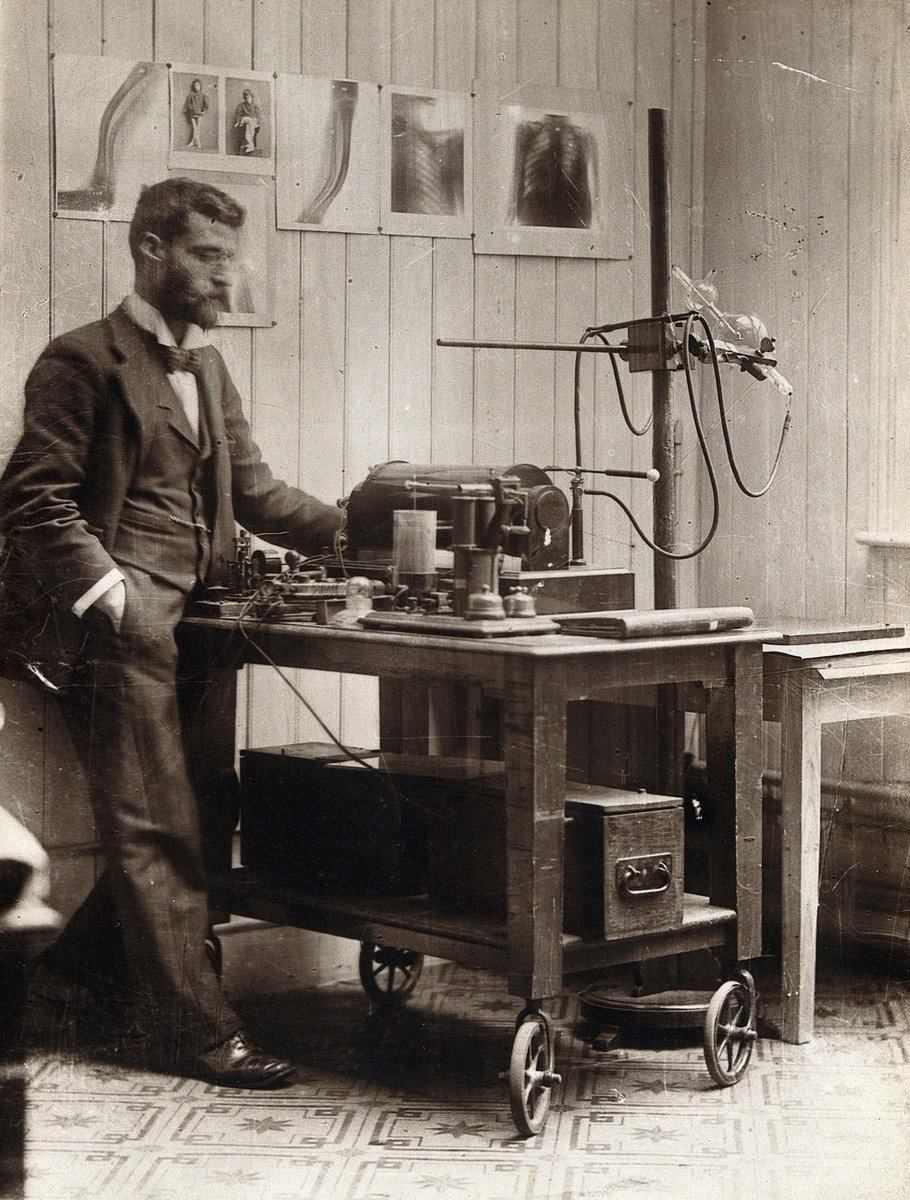
X-rays were adopted for clinical use with amazing speed. Within two months of their discovery they had been used diagnostically, and within three months, in February 1896, actually in the operating theatre, both by the British physician John Hall-Edwards.
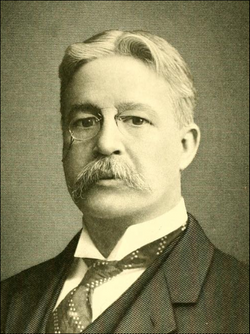
Now we fast forward to September 1896 - less than a year after the discovery of X-rays - and the work of this New York surgeon , George Ryerson Fowler. He had trained as a telegraphist in the 1860s, and installed the first telegraph network in Brooklyn!
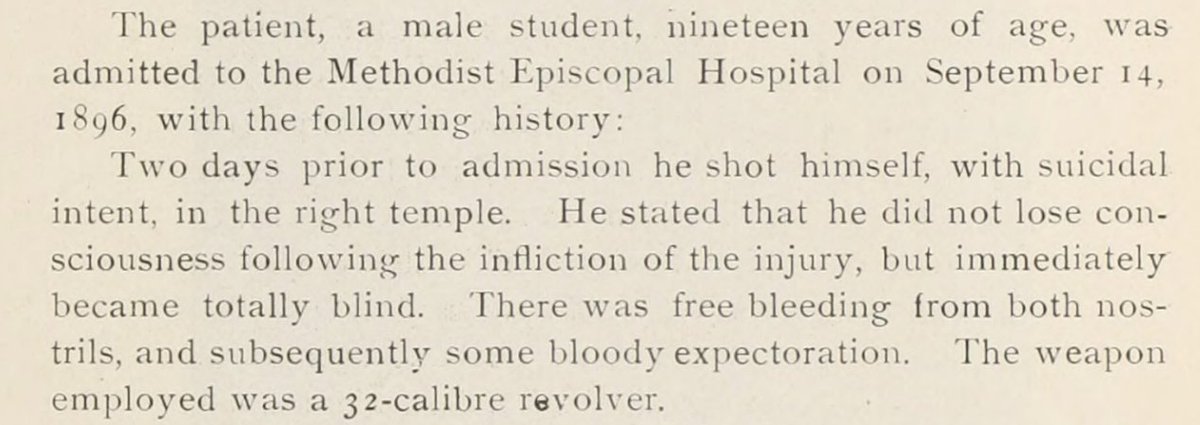
Through the doors of Dr Fowler's hospital in Brooklyn came this young man, who had - luckily - survived an attempt to shoot himself in the head with a revolver. The surgeon needed to remove the bullet - but how to locate it?
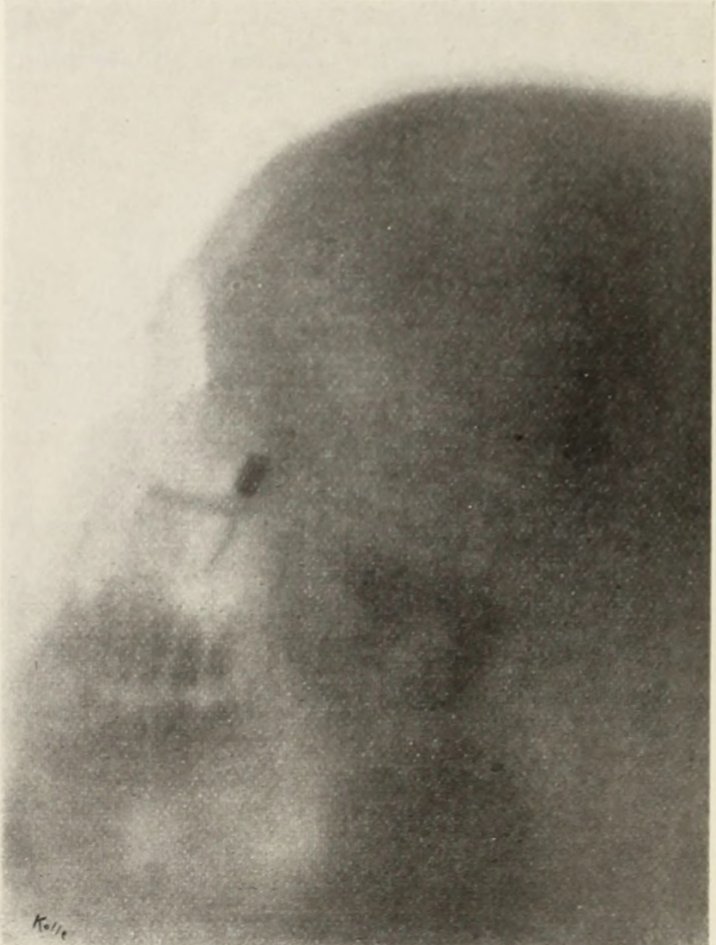
One of Dr Fowler's colleagues in Brooklyn was 23-year-old Frederick Koller, a pioneer of radiology in the US. He took this image of the patient's head - which required a marathon 42 minutes of X-ray exposure to obtain! It clearly shows the bullet in the vicinity of the orbit.
But since an X-ray gives only a 2D image, it does not allow precise localisation of an object. So when Dr Fowler operated on the young man he also used the telephone probe, delicately exploring with its tip as he searched for the bullet.
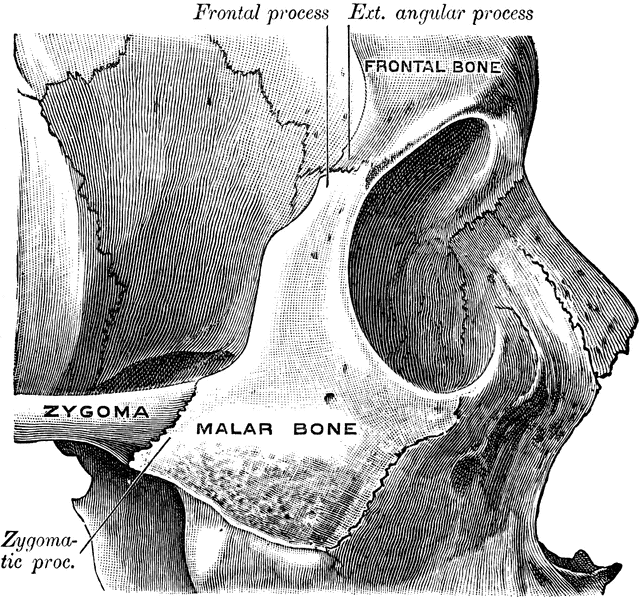
Dr Fowler had a long and frustrating search for the bullet in and around the patient's eye socket. At last he heard a noise in his telephone earpiece - the bullet had lodged inside the patient's eye! He was able to incise the eye and remove it.
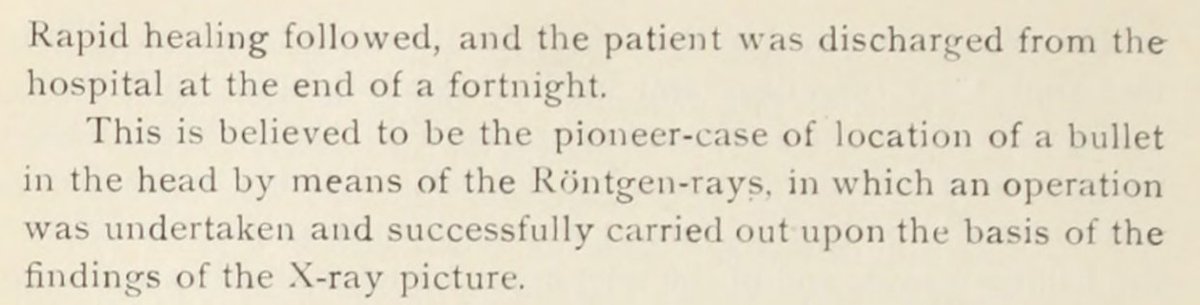
That operation in October 1896 - almost 125 years ago - was the first time that medical imaging had ever been employed to remove a foreign body from inside the skull. A historic landmark, made possible by Roentgen's X-rays, and by Alexander Graham Bell's telephone.
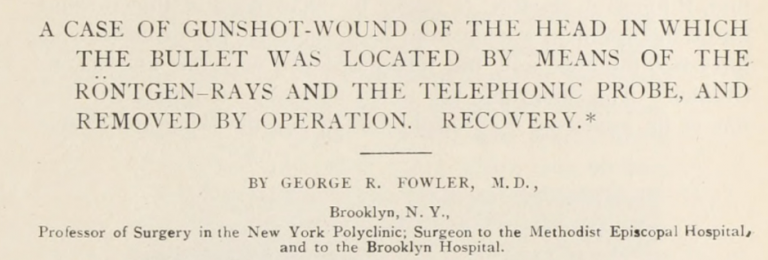
[Frustratingly little is related about the patient's follow-up, except that he was well enough to leave hospital after a fortnight]
You can read more about this incredible story on my blog - along with many other weird and wonderful tales from medical history. thomas-morris.uk/a-tale-of-two-…
• • •
Missing some Tweet in this thread? You can try to
force a refresh