THREAD: #astrophotography "stacking"
If you're following me you've seen pictures of amazing nebulas and galaxies from space.
How can I take this dark portion of the sky and get a nebula out of it? From the ground? From light-polluted Vancouver?!
Physics to the rescue! /1
If you're following me you've seen pictures of amazing nebulas and galaxies from space.
How can I take this dark portion of the sky and get a nebula out of it? From the ground? From light-polluted Vancouver?!
Physics to the rescue! /1

In #Astrophotography, cameras & randomness of light sources in space filtering through the atmosphere produce noise.
But! The photons of space are there! So we do something called "Stacking".
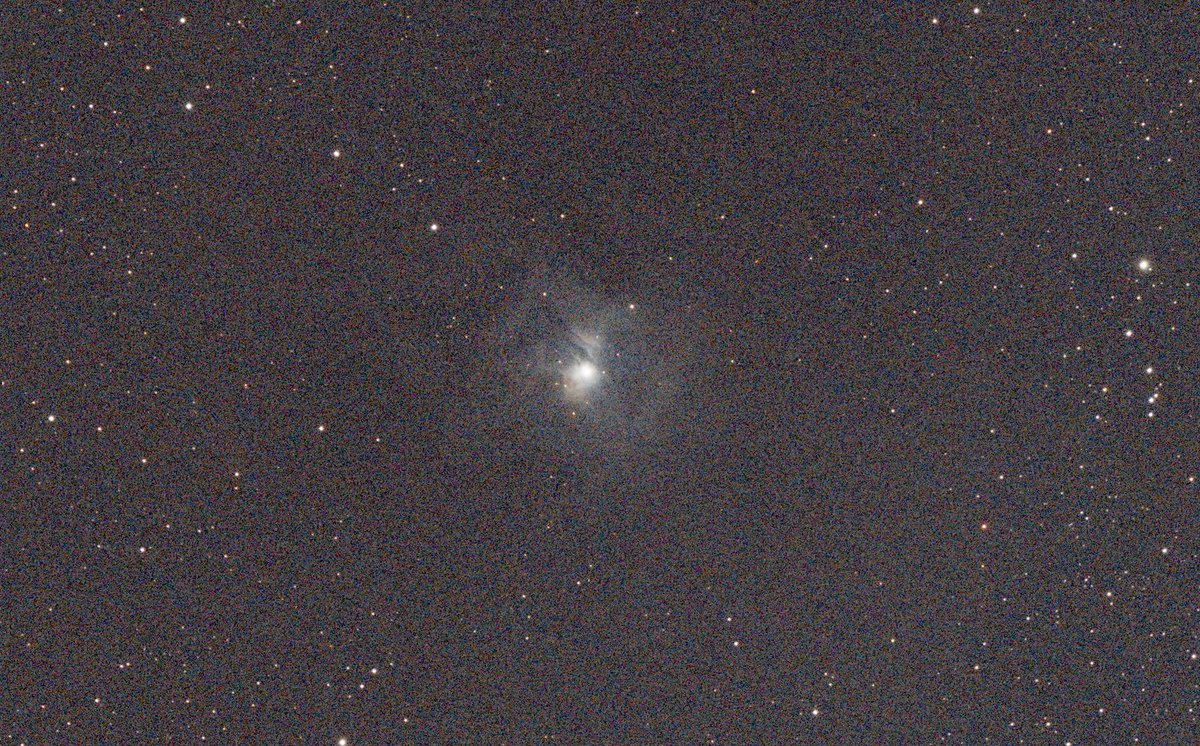
Here is one 90-second exposure of the Iris Nebula. EW! barely looks like anything. /2
But! The photons of space are there! So we do something called "Stacking".
Here is one 90-second exposure of the Iris Nebula. EW! barely looks like anything. /2

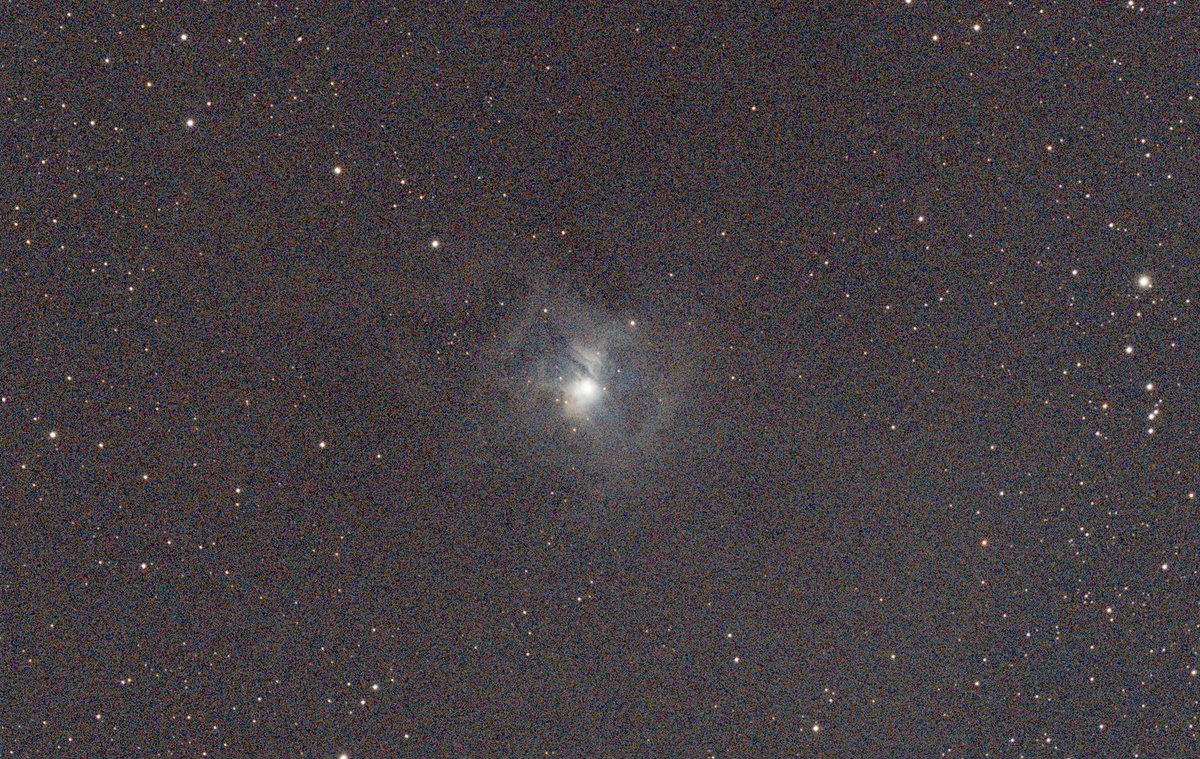
However, here is 5 x 90s images stacked together. as the noise is random, and the signal coming from space is constant, as we add more images, we start being able to separate the signal from the noise.
See how there is more nebula visible now? /3
See how there is more nebula visible now? /3
We're at 10 x 90s images.
The random noise keeps averaging out on top of itself (decreasing the noise), whereas the signal is constant!
Noise down, signal same = increasing the signal-to-noise ratio!
Now we start seeing details within and outside the nebula. /4
The random noise keeps averaging out on top of itself (decreasing the noise), whereas the signal is constant!
Noise down, signal same = increasing the signal-to-noise ratio!
Now we start seeing details within and outside the nebula. /4
13 x 90s images.
When we started, the noise was much higher, but with each 90 second image added, the noise decreases. At this point, it's precisely half what it was before.
You'll note the light parts are getting *very smooth*. The noise is weak compared to strong signal. /5
When we started, the noise was much higher, but with each 90 second image added, the noise decreases. At this point, it's precisely half what it was before.
You'll note the light parts are getting *very smooth*. The noise is weak compared to strong signal. /5


20 x 90s images (30 minutes)
The gains start becoming smaller, so the time invested needs to increase. Our signal to noise ratio inches higher and higher. (2.5x better now!)
Despite the minor minimal gains, we are starting to see more "space dust" outside the nebula! /6
The gains start becoming smaller, so the time invested needs to increase. Our signal to noise ratio inches higher and higher. (2.5x better now!)
Despite the minor minimal gains, we are starting to see more "space dust" outside the nebula! /6

40 x 90s images (60 minutes)
We've gone from 2.5x better to 3.3x better, and we're getting even more detail of the dust clouds surrounding the Iris Nebula. /7
We've gone from 2.5x better to 3.3x better, and we're getting even more detail of the dust clouds surrounding the Iris Nebula. /7

And here we are at 240 images!
Of course it is not processed yet so it still looks noisy, but now we have tons of definition within the nebula, as well as more than a few surrounding dust clouds. /8
Of course it is not processed yet so it still looks noisy, but now we have tons of definition within the nebula, as well as more than a few surrounding dust clouds. /8

Side by side, you can see what a difference stacking makes. By the time I'm at 6 hours, woah! huge difference. /9

So future/present astrophotographers! check out some videos/tutorials on stacking! It's a great way to get that exposure time up while keeping thermal noise low (for uncooled cameras), and it is essential for deep space photography. /10

• • •
Missing some Tweet in this thread? You can try to
force a refresh