
Here's a clip showing Uganda's most controversial politician of the mid-20th century: "Jolly Joe" Kiwanuka.
In this clip (Jan. 1958) he'd just been released on bail. He was imprisoned by the Buganda gov't, accused of plotting to assassinate Kabaka Muteesa.
Short thread. 1/
In this clip (Jan. 1958) he'd just been released on bail. He was imprisoned by the Buganda gov't, accused of plotting to assassinate Kabaka Muteesa.
Short thread. 1/
2/
Kiwanuka was a sometime antagonist of the Mengo establishment & founder of the Uganda National Congress.
As elected member for Busiiro, he made fiery speeches accusing leading ministers in the Buganda gov't of corruption. His 1958 imprisonment was their retaliation.
Kiwanuka was a sometime antagonist of the Mengo establishment & founder of the Uganda National Congress.
As elected member for Busiiro, he made fiery speeches accusing leading ministers in the Buganda gov't of corruption. His 1958 imprisonment was their retaliation.

3/
In Nov. 1958 Kiwanuka went to Accra to attend the All African People's Conference, where he heard Nkrumah's famous speech.
On return to Uganda, Kiwanuka told the police that he was about to 'lead the fight against Colonialism and Imperialism. Africa must be liberated now.'
In Nov. 1958 Kiwanuka went to Accra to attend the All African People's Conference, where he heard Nkrumah's famous speech.
On return to Uganda, Kiwanuka told the police that he was about to 'lead the fight against Colonialism and Imperialism. Africa must be liberated now.'
4/
At that time he established a Congress office in Cairo.
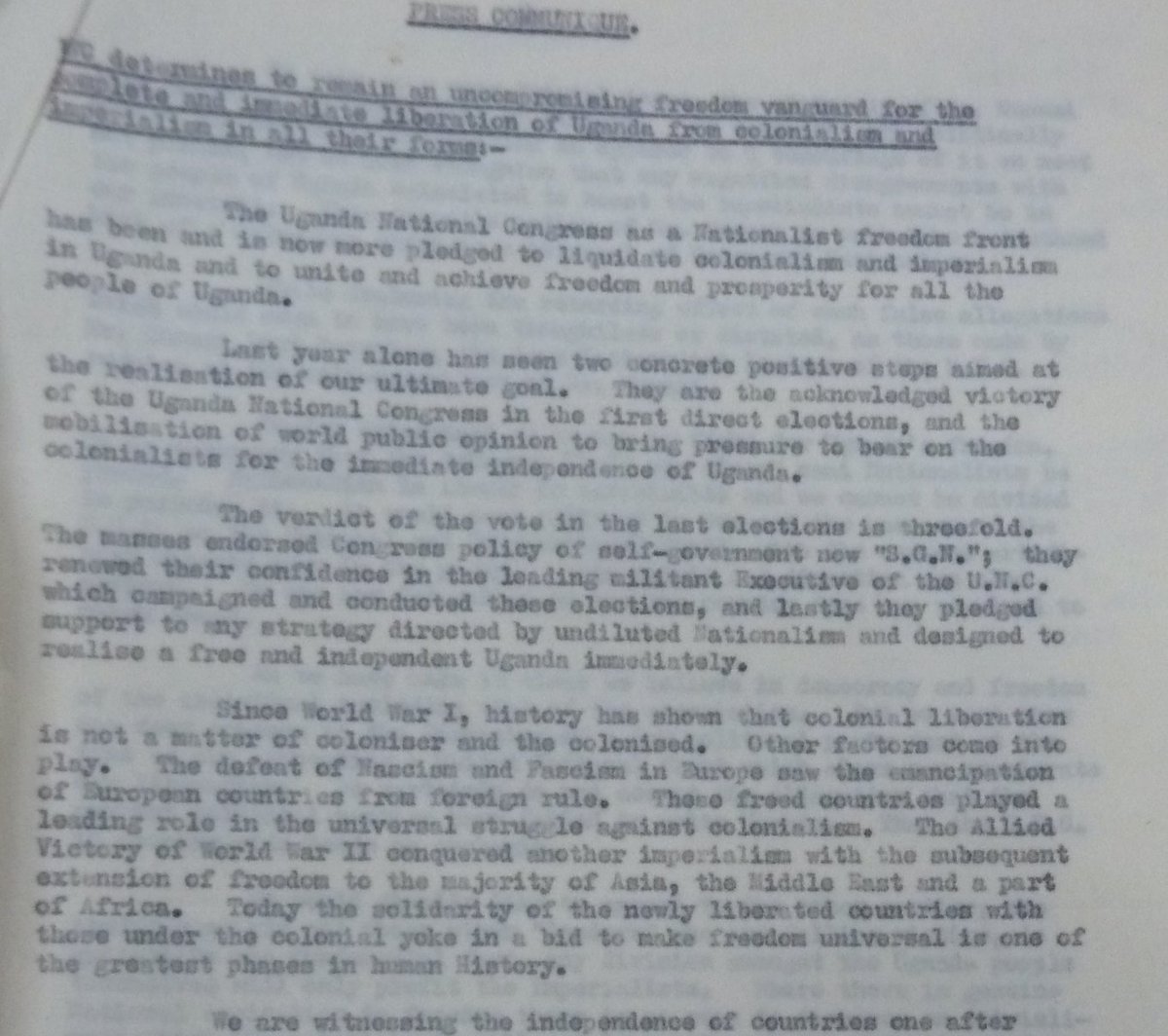
Here's a manifesto from Dec. 1958: 'We are witnessing the independence of countries one after another. This is not relfection of benevolenece from the imperialists. It is a result of struggle from within & without'.
At that time he established a Congress office in Cairo.
Here's a manifesto from Dec. 1958: 'We are witnessing the independence of countries one after another. This is not relfection of benevolenece from the imperialists. It is a result of struggle from within & without'.
5/
In August 1959 Obote expelled Kiwanuka from Congress.
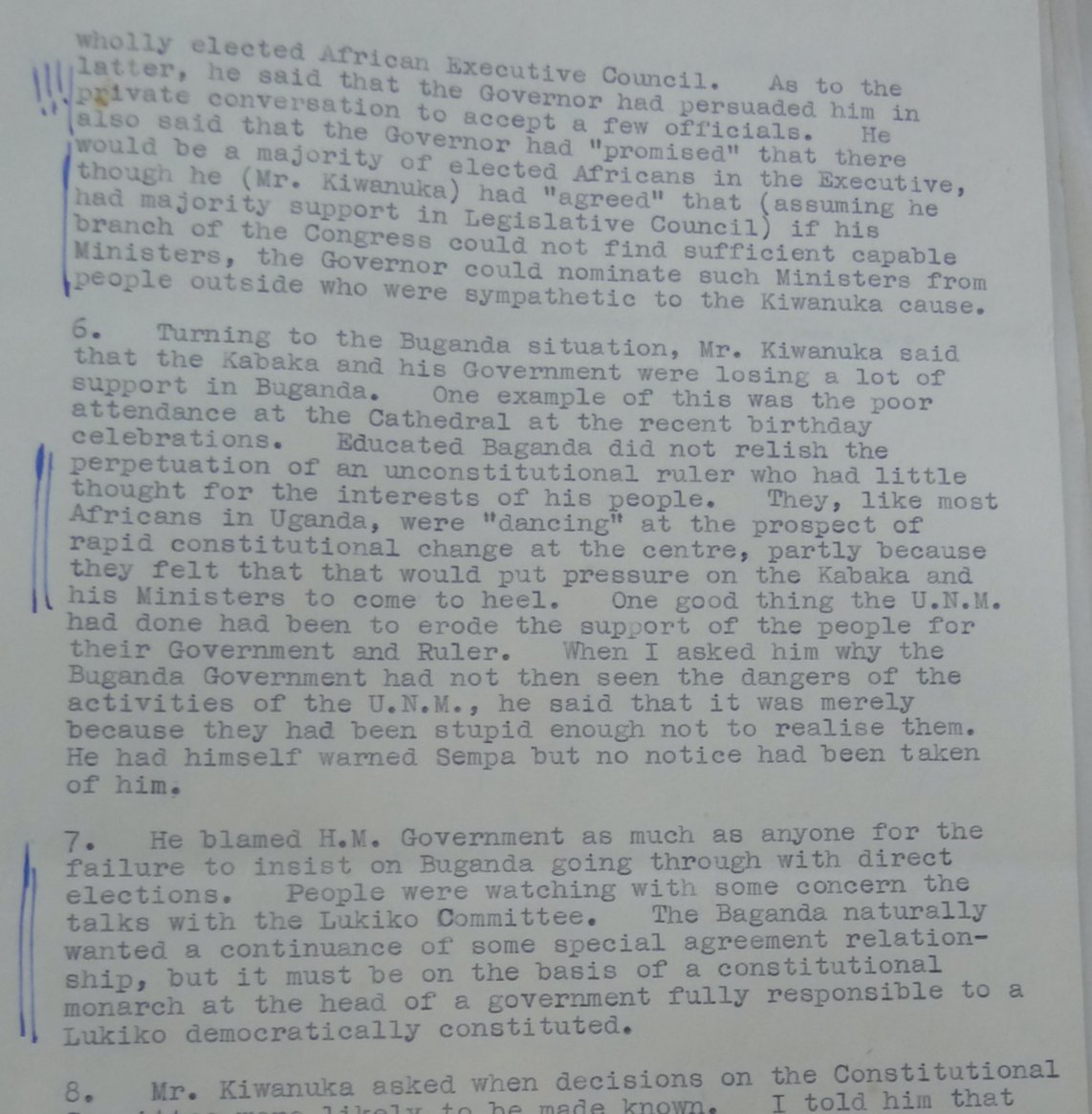
Kiwanuka told a diplomat that--in a free election--he would win a majority. He argued for the democratization of Buganda, since Baganda did not support a 'ruler who had little thought for the interests of his people'.
In August 1959 Obote expelled Kiwanuka from Congress.
Kiwanuka told a diplomat that--in a free election--he would win a majority. He argued for the democratization of Buganda, since Baganda did not support a 'ruler who had little thought for the interests of his people'.

6/
After Uganda's independence Kiwanuka was returned to Parliament as Member for North Mubende.
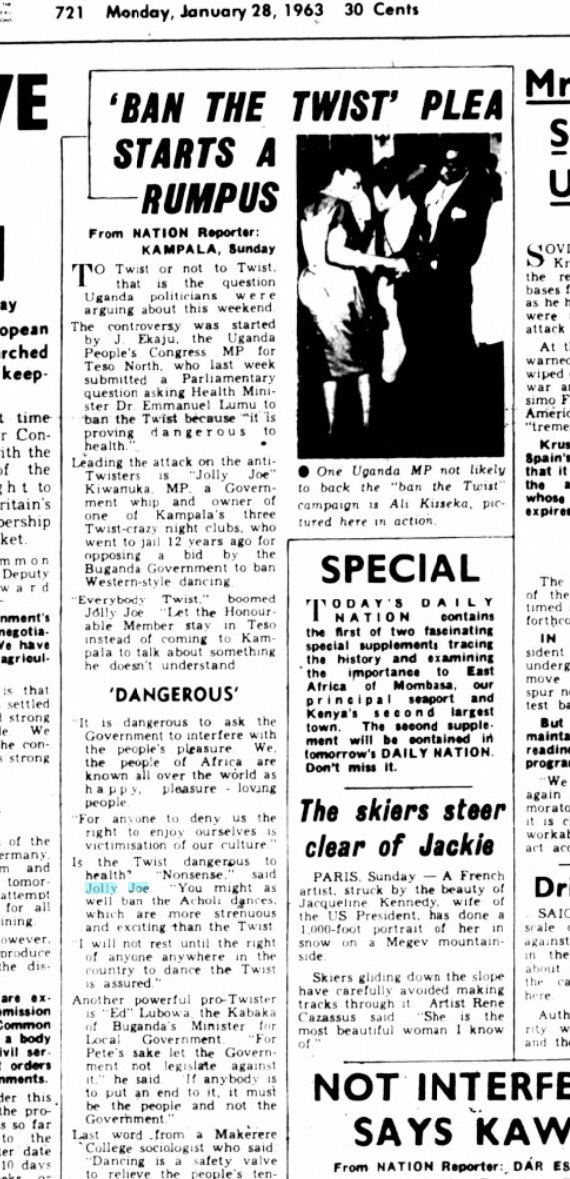
Here he is in 1963, arguing against the banning of the 'Twist'. 'I will not rest until the right of anyone in the country to dance the Twist is assured'.
After Uganda's independence Kiwanuka was returned to Parliament as Member for North Mubende.
Here he is in 1963, arguing against the banning of the 'Twist'. 'I will not rest until the right of anyone in the country to dance the Twist is assured'.
7/
When Idi Amin came to power in 1971 Kiwanuka was enthusiastic. But by 1972 he'd gone into exile in Kenya, fearing for his life.
In Dec. 1973 Kenyatta's gov't agreed to extradite him back to Amin's Uganda. It is thought that Jolly Joe Kiwanuka was murdered shortly thereafter.
When Idi Amin came to power in 1971 Kiwanuka was enthusiastic. But by 1972 he'd gone into exile in Kenya, fearing for his life.
In Dec. 1973 Kenyatta's gov't agreed to extradite him back to Amin's Uganda. It is thought that Jolly Joe Kiwanuka was murdered shortly thereafter.

• • •
Missing some Tweet in this thread? You can try to
force a refresh






