Not understanding the significance of the NFT movement has been a million dollar opportunity cost for me.
I studied the last 250 years of art history to grasp the consequence of this moment.
Here's the knowledge you need to identify the next million $ NFT 👇🧵
I studied the last 250 years of art history to grasp the consequence of this moment.
Here's the knowledge you need to identify the next million $ NFT 👇🧵
1/ I don't have an art history education and I didn't understand the significance of what's unfolding before us. This thread conveys how art changes with time and why the rise of NFTs are historic.
To know where we are going, you must learn from where we came.
To know where we are going, you must learn from where we came.
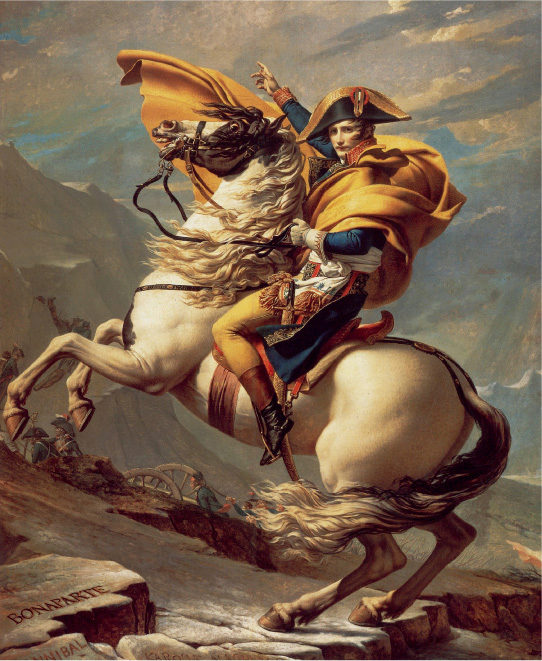
2/ 1750-1850: Neoclassicism drew inspiration from the past and idealism. Archaeological ruins fueled people's imaginations and there was a surge to recreate historically relevant visions.
Jacques-Louis David, Napoleon Crossing the Alps, 1801
Jacques-Louis David, Napoleon Crossing the Alps, 1801
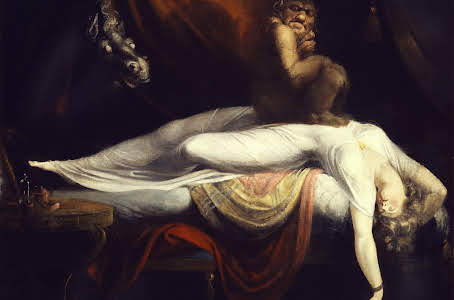
3/ 1780 - 1850: Romanticism celebrated romance, emotion, the rejection of rationality. This art is imaginative, shifting from environments in which artists created to painting outside in "plein air."
Henry Fuseli, The Nightmare, 1781
Henry Fuseli, The Nightmare, 1781
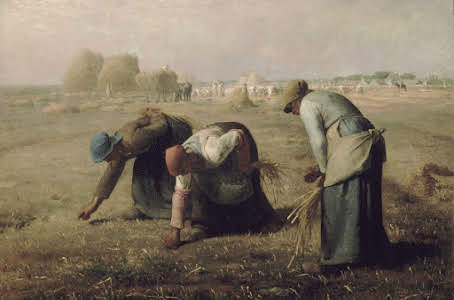
4/ 1848 - 1900: Realism took a cold, hard look at everyday life, inspired by the advent of photography. Accuracy and precision can be seen in these pieces.
Jean-François Millet, The Gleaners, 1857
Jean-François Millet, The Gleaners, 1857
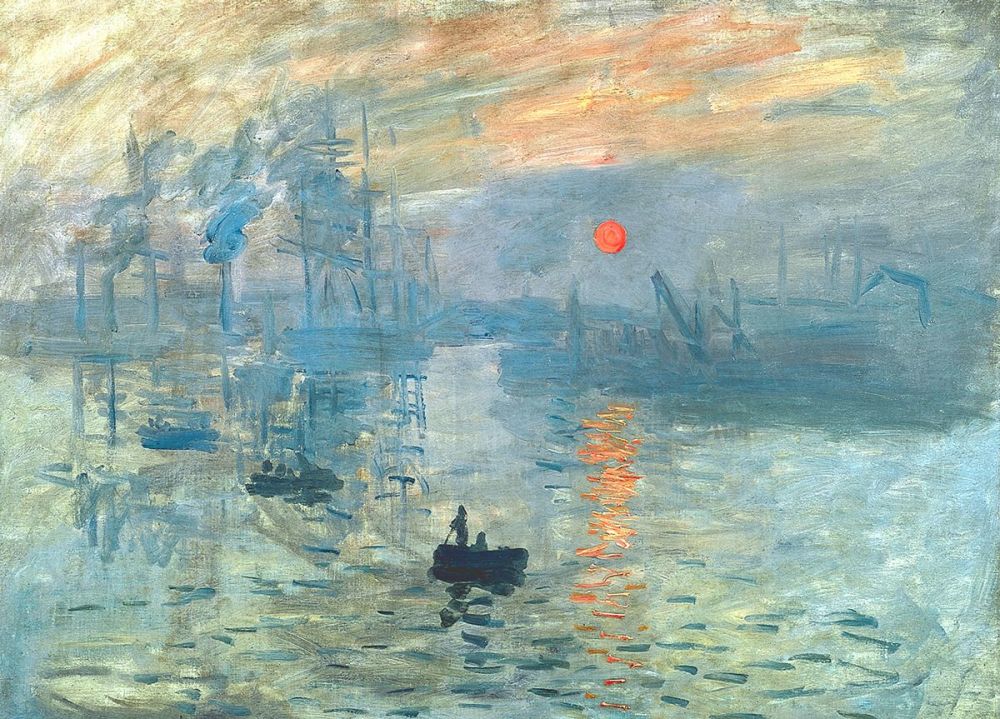
5/ 1865 - 1885: Impressionism stood in stark contrast to the previous era, capturing the immediate moment and its emotional impact. These pieces often have an unfinished look. Moments are fleeting, impressions are forever.
Claude Monet, Impression, Sunrise, 1899
Claude Monet, Impression, Sunrise, 1899
6/ 1885 - 1910: Post-Impressionism is imaginative and abstract, filled with symbolism. These artists were motivated by a search for personal meaning rather than trying to make a commentary about the world.
Vincent van Gogh, The Starry Night, 1889
Vincent van Gogh, The Starry Night, 1889

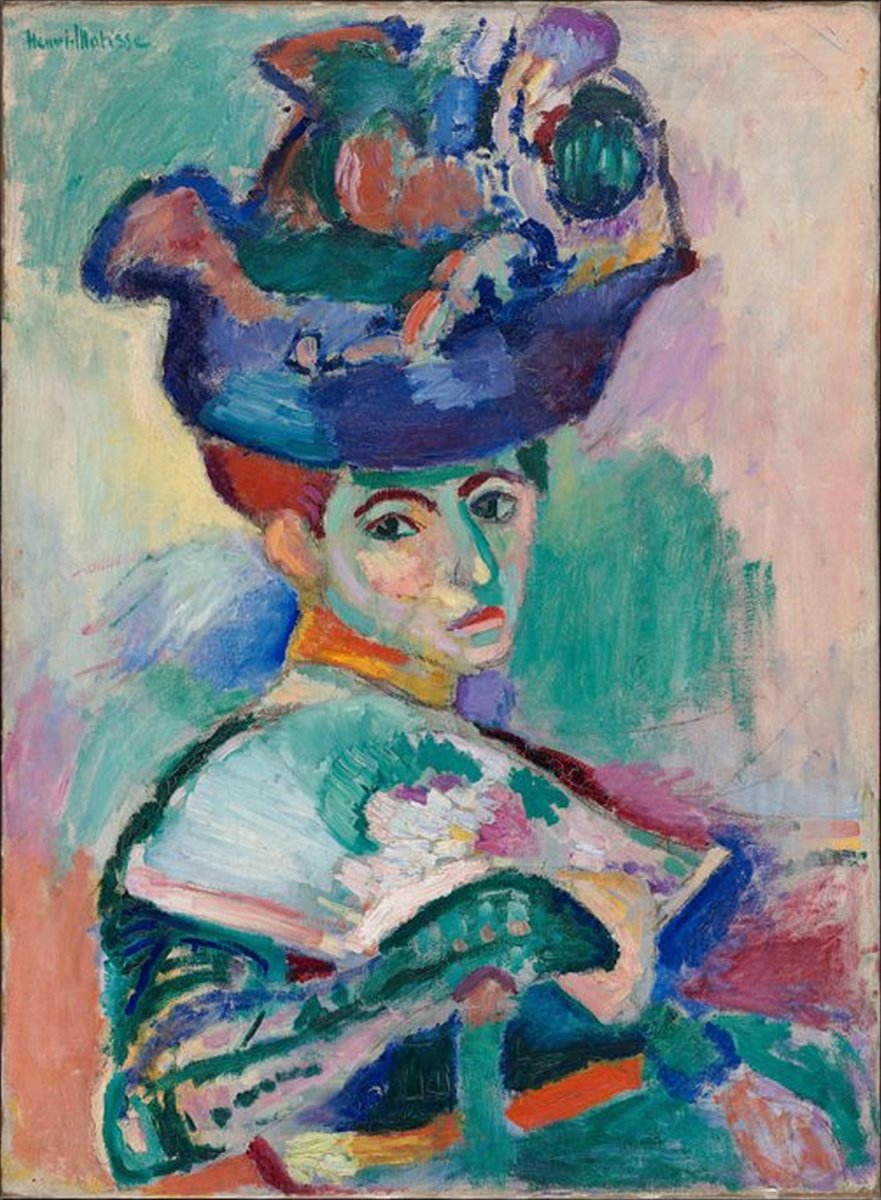
7/ 1900 - 1935: Fauvism is marked by expressive color and clear brushwork with flat compositions.
Henri Matisse, Woman with a Hat, 1905
Henri Matisse, Woman with a Hat, 1905
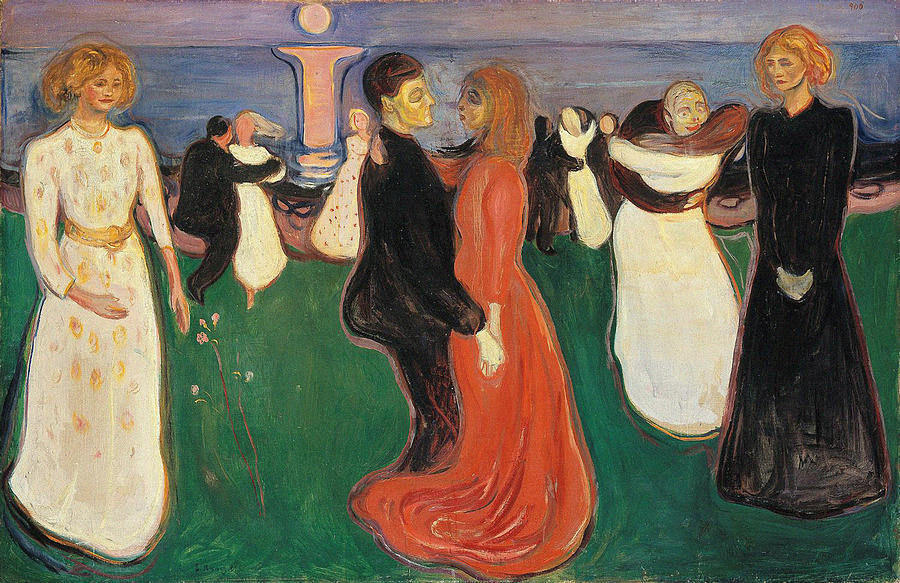
8/ 1905 - 1920: Expressionism distorts form and uses strong color, capturing a world going through a crisis of spirituality and collective anxiety. World war + economic hardship resulted in conflicting world views.
Edvard Munch, The Dance of Life, 1900
Edvard Munch, The Dance of Life, 1900
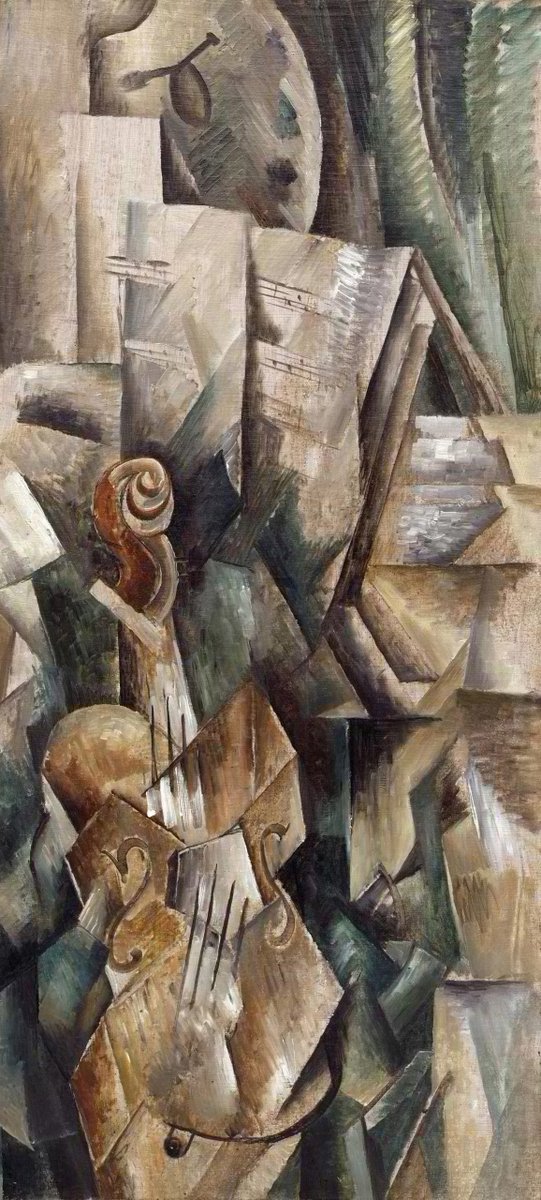
9/ 1907 - 1914: Cubism was pioneered by Picasso, focused on abstraction, two-dimensional surfaces, geometric figures, fragmentation – all challenging the viewer to find their own meaning.
Georges Braque, Violin and Palette, 1909
Georges Braque, Violin and Palette, 1909
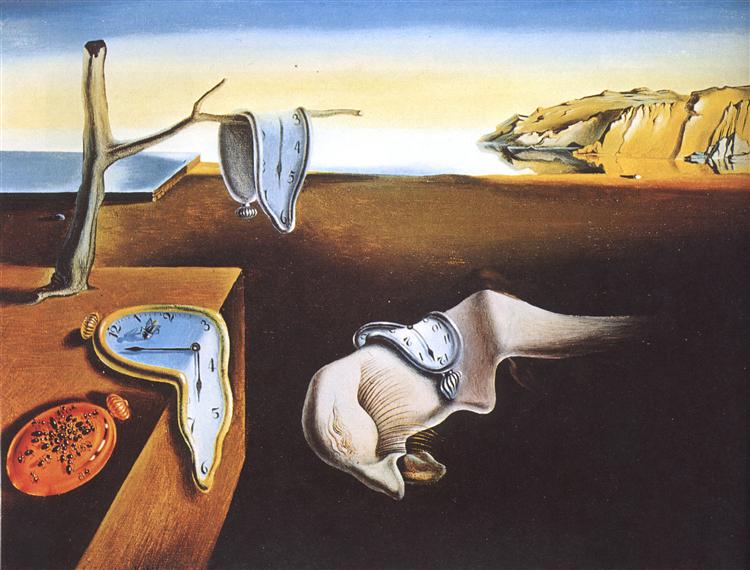
10/ 1917 - 1950: Surrealism explores dreams and unconsciousness in the belief that rationalism represses imagination. Dali's goal was “to systematize confusion and thus discredit completely the world of reality.”
Salvador Dalí, The Persistence of Memory, 1931
Salvador Dalí, The Persistence of Memory, 1931
11/ 1950s - 1960s: Pop Art boldly celebrates everyday objects with Warhol finding art in the mundane, redefining what qualifies as art. This cultural shift is resurging in 2021.
Andy Warhol, Campbell's Soup Cans, 1962
Andy Warhol, Campbell's Soup Cans, 1962
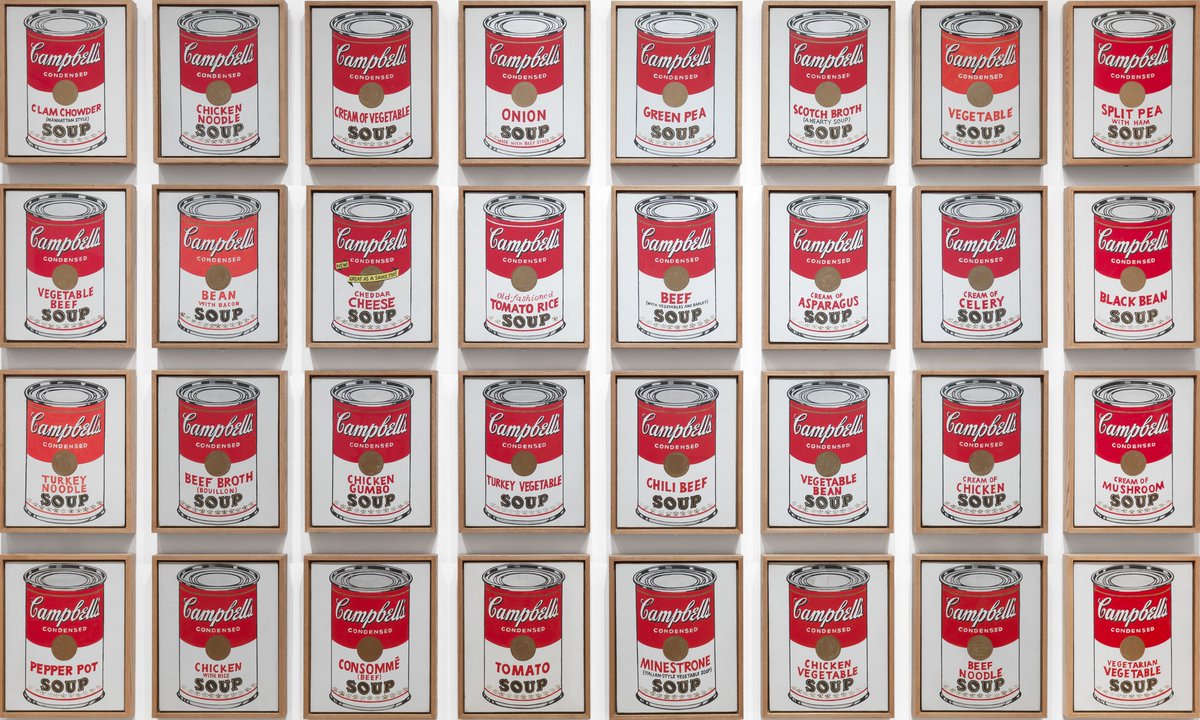
12/ 1960s - 1970s: Minimalism stands in stark contrast from the decade prior as the art attempted to separate itself from the reality of emotion. Artists worked in anonymity, forcing the focus on the art rather than the artist. Hello, anon.
Frank Stella, Black Series I, 1967
Frank Stella, Black Series I, 1967
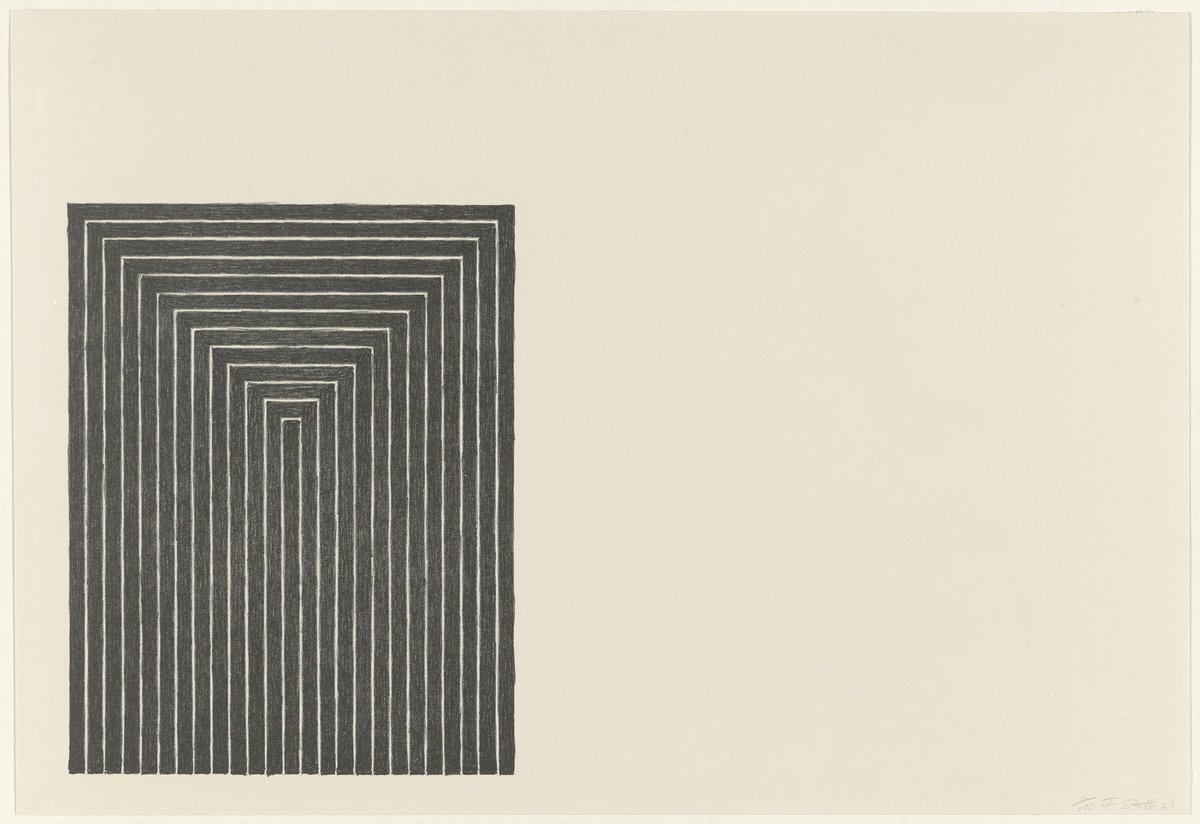
13/ 1970 - 2017: Contemporary Art casts a wide net from street and feminist art to large scale installations. Digital art entered the scene with A/V software.
Yayoi Kusama, Pumpkin, 2010
Yayoi Kusama, Pumpkin, 2010
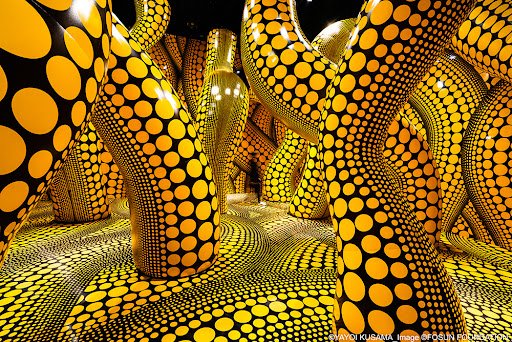
14/ And here we are. Over 25 decades, art has shapeshifted, riding cultural waves and generational character. NFTs are the next chapter in the art history books with a new movement:
Digitalism.
Digitalism.
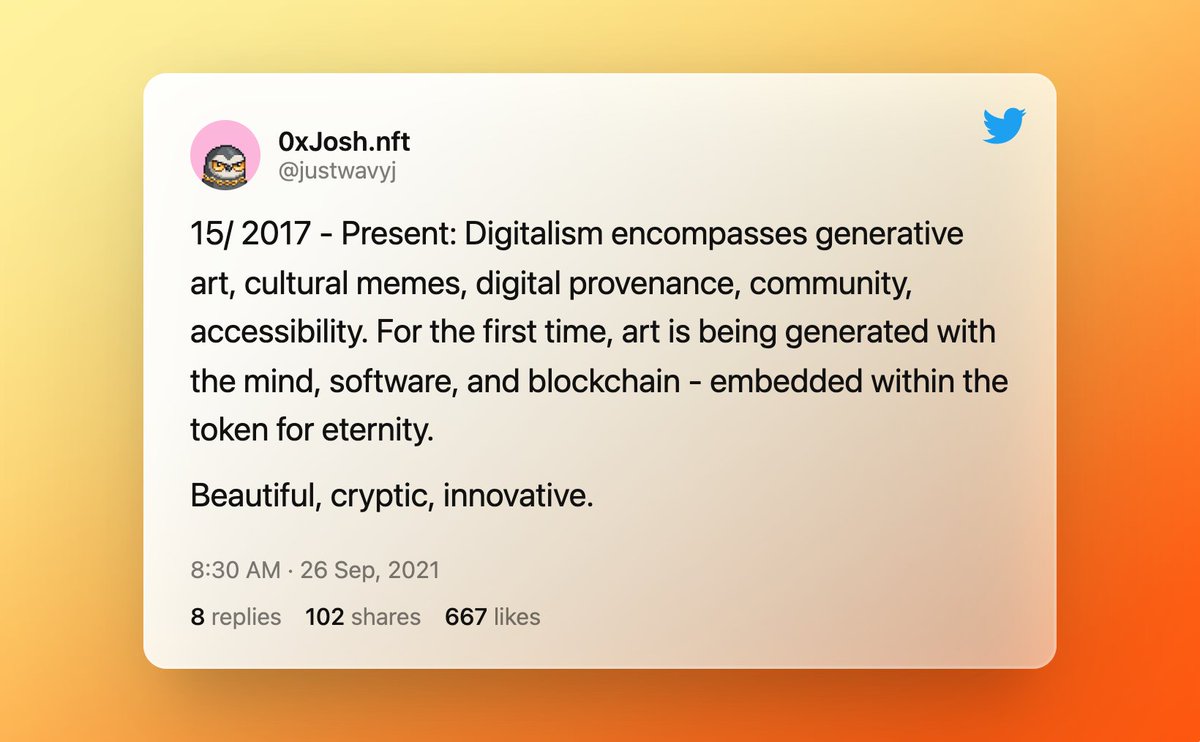
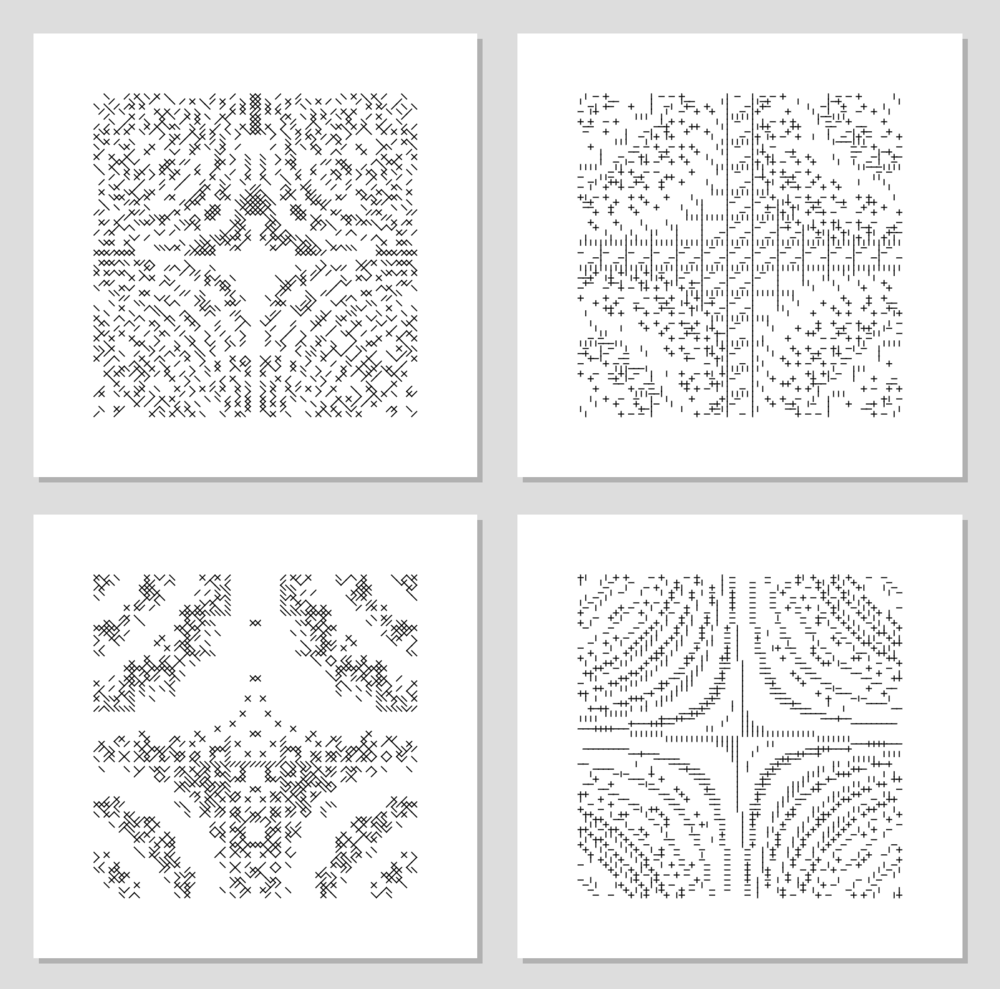
15/ 2017 - Present: Digitalism encompasses generative art, cultural memes, digital provenance, community, accessibility. For the first time, art is being generated with the mind, software, and blockchain - embedded within the token for eternity.
Beautiful, cryptic, innovative.
Beautiful, cryptic, innovative.
16/ @LarvaLabs, Autoglyphs, 2019
The first on-chain generative art on the Ethereum blockchain emerges as a self-contained mechanism for the creation AND ownership of artworks.
Crypto gives art life; forever an NFT grail.
The first on-chain generative art on the Ethereum blockchain emerges as a self-contained mechanism for the creation AND ownership of artworks.
Crypto gives art life; forever an NFT grail.
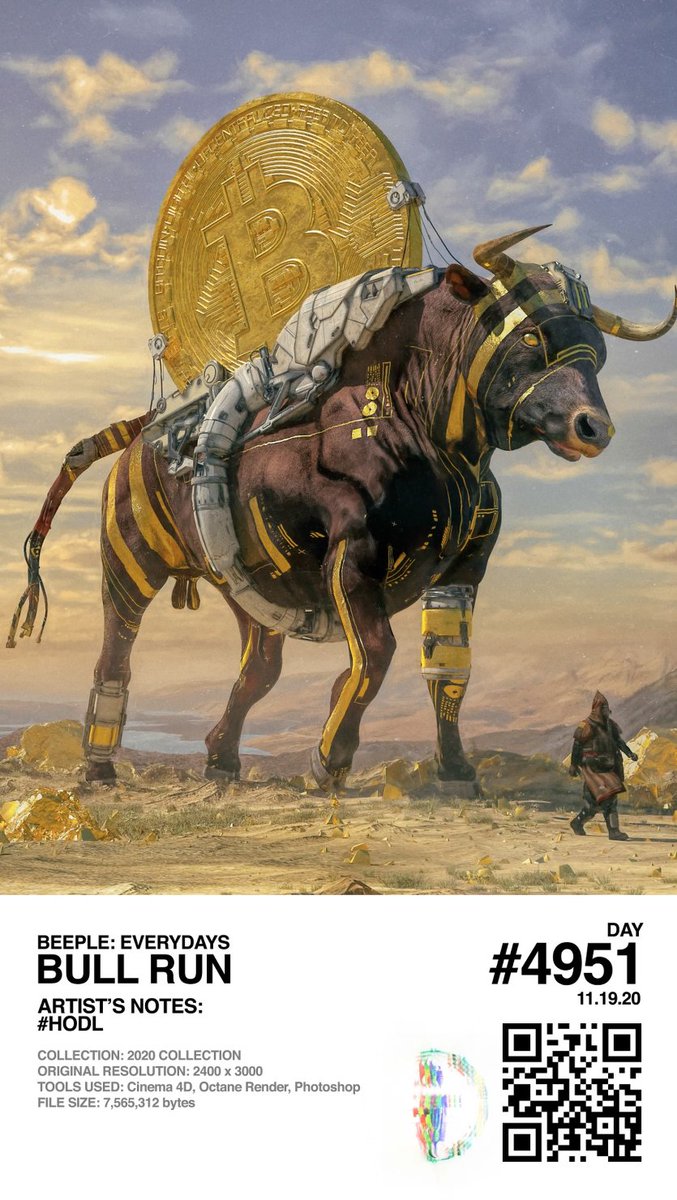
17/ @Beeple, Bull Run, Day #4951
Beeple has created 5262 consecutive "EVERYDAYS." Prolific and rooted in the current moment. Have we ever witnessed an artist's progression like his? I don't think so.
Owning a Beeple piece is at the top of my list.
Beeple has created 5262 consecutive "EVERYDAYS." Prolific and rooted in the current moment. Have we ever witnessed an artist's progression like his? I don't think so.
Owning a Beeple piece is at the top of my list.
18/ @ArtOnBlockchain, Chomie Squiggle, 2020
While not the first example of gen art, this was the 1st release from @artblocks_io, the 1st platform dedicated to the production of verifiably deterministic outputs.
This wording is 🔑 Each piece uses a seed to guarantee uniqueness.
While not the first example of gen art, this was the 1st release from @artblocks_io, the 1st platform dedicated to the production of verifiably deterministic outputs.
This wording is 🔑 Each piece uses a seed to guarantee uniqueness.

19/ What does this say about the current moment we live in?
Equal access and opportunity are being demanded by oppressed groups around the world. Creators want to make a living with their skills. Investors want alternative assets separate from the inequitable world of finance.
Equal access and opportunity are being demanded by oppressed groups around the world. Creators want to make a living with their skills. Investors want alternative assets separate from the inequitable world of finance.
20/ NFTs provide opportunity for people across these issues.
This is a market everyone is one click away from participating in. Creators have new incentive systems to engage audiences with. Investors have innovative financial instruments to bet on.
This is a market everyone is one click away from participating in. Creators have new incentive systems to engage audiences with. Investors have innovative financial instruments to bet on.
21/ I can no longer ignore the power and impact of Digitalism.
Armed with this knowledge of art history, hopefully we can better understand the shift in what art can be, ultimately becoming better NFT collectors.
I won't miss the next million $ NFT. Will you?
Armed with this knowledge of art history, hopefully we can better understand the shift in what art can be, ultimately becoming better NFT collectors.
I won't miss the next million $ NFT. Will you?
Follow me @justwavyj for more writing on web3 innovation and NFTs.
And if you want to send me a historic grail that I missed out on minting.. joshgordon.eth is always open ;)
And if you want to send me a historic grail that I missed out on minting.. joshgordon.eth is always open ;)
• • •
Missing some Tweet in this thread? You can try to
force a refresh